What If the Moon Landing Was Faked? Why the Physics Says Otherwise
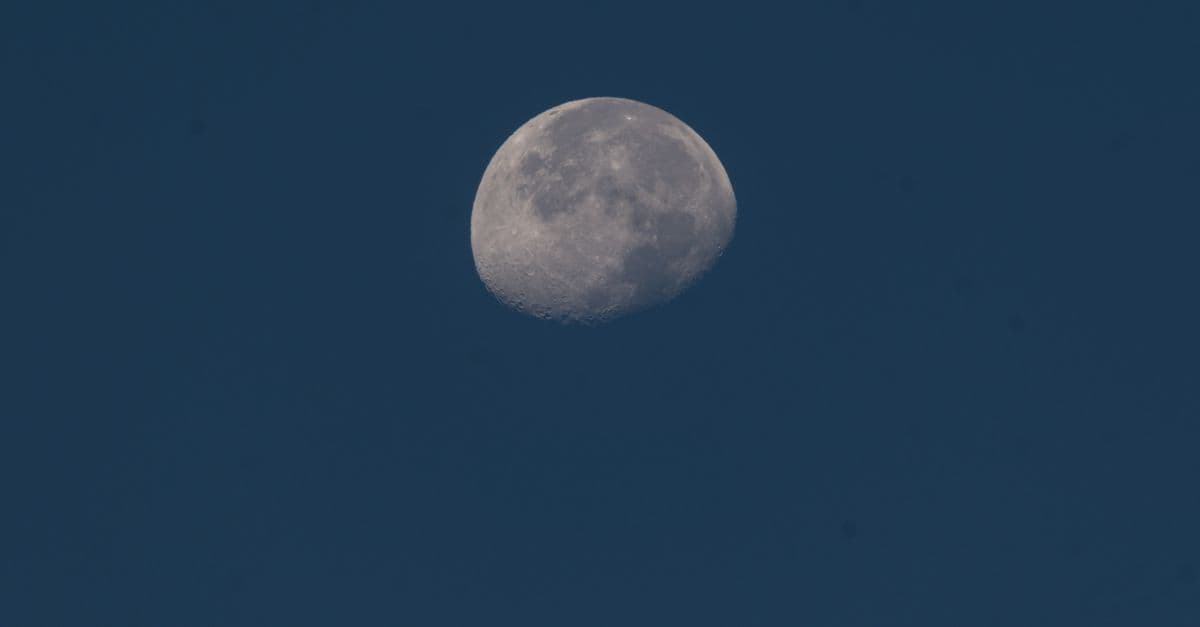
Photo: Doğan Alpaslan Demir / Pexels
The Apollo Moon landings happened six times between 1969 and 1972. Twelve men walked on the lunar surface; 382 kilograms of rock came back. And yet 5–10% of polled Americans (and more in some other countries) still believe the whole thing was faked on a sound stage.
Thought experiment. This article explores a hypothetical scenario for educational and speculative purposes. The events described are not predictions and should not be interpreted as warnings, advocacy, or instructions.
The conspiracy persists because the claims sound superficially plausible until you check the physics. Here's a science-first walkthrough of why every common claim falls apart — and the independent evidence that nails the truth.
Key takeaways
- Six independent moon landings between 1969 and 1972 brought back 382 kg of rocks studied by labs worldwide.
- Each common conspiracy claim — flag waving, no stars, shadow angles, radiation — has a clear physics-based explanation.
- The Soviet Union, the US's geopolitical rival, never disputed the landings — they were tracking every Apollo mission with their own radar.
- Modern lunar orbiters have photographed the landing sites and the equipment left there.
Claim 1: "The flag is waving — there's no air on the Moon!"
The physics: The American flag has a horizontal rod sewn along its top edge specifically to hold it out from the pole (no atmosphere = no wind to display it). When the astronauts twisted the pole into the ground, the flag oscillated for several seconds before settling — exactly because there's no air resistance to damp the motion. On Earth, the flag would have stopped immediately. The persistence of the swaying is itself evidence the Moon is in vacuum.
Claim 2: "There are no stars in the sky!"
The physics: This is a camera exposure issue. The lunar surface in direct sunlight is extremely bright. To capture astronauts and equipment without overexposing them, photographers used short exposures and small apertures. Stars are far too dim to register at those settings. The same effect happens to ISS astronauts taking selfies today — and to anyone trying to photograph the night sky from a brightly lit city centre.
Claim 3: "Shadows go in different directions — there must be multiple light sources!"
The physics: Shadows on the lunar surface follow the Sun — a single point source, ~150 million km away. But when you photograph hilly or undulating terrain, shadows that are parallel can appear to converge or diverge in 2D photos. This is the same perspective effect that makes parallel railway tracks appear to meet at the horizon. Photogrammetric analysis of every Apollo image confirms a single, parallel light source consistent with the Sun's position.
Claim 4: "The astronauts couldn't have survived the Van Allen radiation belts!"
The physics: The Van Allen radiation belts are zones of charged particles trapped by Earth's magnetic field. Apollo trajectories were designed to:
- Pass through the densest regions quickly (about an hour total).
- Take a path that minimised exposure (well above the most intense parts).
Total exposure to each astronaut was ~16 millisieverts — equivalent to a CT scan. Not zero, but nowhere near lethal. Astronauts on long ISS missions today receive far more.
Claim 5: "The technology in 1969 wasn't good enough!"
The physics: The Apollo Guidance Computer had less computing power than a modern calculator. But the calculations needed for navigation — solving differential equations for orbital mechanics — were well within its capability. The hard parts of getting to the Moon were rocketry, life support, and engineering, all extensively tested and documented.
The Saturn V rocket had its plans, blueprints, and engineering reports preserved. The lunar module's design has been replicated in reproductions. Decades of Soviet and now Chinese space hardware show that the same generation of engineering was perfectly capable.
Claim 6: "Why haven't we gone back?"
The political reality: Apollo cost $25 billion in 1960s dollars ($200 billion today) at peak. Once the geopolitical race with the Soviets was won, public and Congressional support evaporated. Nixon cancelled Apollo 18, 19, and 20. The reason is budgetary, not technological. China and the US are both planning crewed lunar return missions for the late 2020s.
Claim 7: "Why do photos look so perfect?"
Survivorship bias. NASA released the best photographs. Many missions returned blurry, overexposed, or technically poor images that simply don't get reproduced. Look at the full archive (LPI, NASA AS17 collection) and you'll find plenty of bad ones.
Also: astronauts trained for months on photography. Every shot was deliberate.
The Technical Challenge of Faking Apollo
If the moon landings were fake, faking them would have required solving technological problems that exceed actually going to the Moon. This is a critical point: the resources, expertise, and effort needed for a convincing hoax exceed those needed for the real mission.
Film and Video Fidelity: The moon-landing footage shows details that would be nearly impossible to fabricate in 1969 and remain impossible to prove fake today without cutting-edge forensic video analysis. Dust particles hanging in the vacuum, the precise ballistics of thrown objects under 1/6-g gravity, the subtle motion of the lunar module's landing sequence — all these require understanding of physics that filmmakers wouldn't have possessed. Modern forensic video analysis of Apollo footage finds no evidence of studio production techniques, set boundaries, or optical trickery.
Radiation Exposure of Film: Apollo film was subjected to Van Allen belt radiation. Faking this would require producing radiation exposure without using actual spacecraft. Studio lighting cannot replicate the specific wavelengths and scatter patterns of lunar surface illumination under airless conditions.
Scale of Coordination: A hoax would require maintaining secrecy across thousands of NASA employees, contractors, and administrators for over 50 years. Whistleblowers are inevitable at that scale. Wernher von Braun died in 1972; dozens of senior engineers have passed; no deathbed confession has ever emerged.
Source: Scientific American (2009) — "Why Faking the Moon Landing Was Harder Than Going There"
The Economic and Political Context
Cost and Timeline: Apollo cost $280 billion in today's dollars over 13 years (1961-1972). This funded 400,000+ workers, hundreds of contractors, and two independent tracking systems (NASA and the U.S. Department of Defense). Building a fake capability of similar sophistication would cost roughly the same and require similar infrastructure.
The Soviet Incentive: The USSR could have exposed a fake immediately. They had every geopolitical incentive to do so — it would have humiliated the United States at the height of the Cold War. Soviet Premier Leonid Brezhnev congratulated the Apollo 11 astronauts publicly. A fake would have been disastrous U.S. propaganda failure that the USSR would have exploited globally.
Post-Apollo Corroboration: China's Chang'e-3 lander (2013) photographed the Apollo 14 landing site and the equipment left there. China has no alliance with the United States and every reason to expose any hoax. Instead, their data confirms the Apollo landing sites.
Independent evidence that Apollo happened
The strongest evidence isn't from NASA — it's from external sources:
1. Soviet tracking
The USSR — which had every reason to expose a fake — independently tracked every Apollo mission with its own radar and radio antennas. Soviet scientists analysed Apollo lunar samples and confirmed they matched the Moon. They never disputed the landings.
2. 382 kilograms of lunar rock
Apollo brought back samples that have been studied for over 50 years by laboratories on every continent. The rocks are isotopically distinct from anything on Earth — formed under different conditions, with different cosmic-ray exposure histories. No Earth-bound process or sourcing could produce them.
3. Retroreflectors still in use
Apollo 11, 14, and 15 left laser retroreflectors on the lunar surface. Astronomers still routinely fire lasers at them and measure return times, allowing distance measurements accurate to a few millimetres. This experiment proved general relativity in greater detail and continues to operate today. You can do it yourself with university-class telescopes.
4. Photos from lunar orbiters
NASA's Lunar Reconnaissance Orbiter (since 2009) has photographed every Apollo landing site, showing the descent stages, equipment, and even the astronauts' boot tracks still visible on the lunar surface — preserved in the airless, weatherless environment.
5. Independent telemetry
Amateur radio operators on multiple continents intercepted and recorded Apollo's communications in real time. The signals showed Doppler shifts consistent with a transmitter on the Moon's surface, not on Earth.
Why the conspiracy persists
Sociologically, conspiracy beliefs are tied to:
- Distrust of institutions.
- Pattern-seeking biases (humans see deception even when there is none).
- Confirmation bias on social media.
- Surface-level "evidence" that sounds plausible if you don't check the physics.
A 2019 study found exposure to brief evidence-based explanations significantly reduced belief in moon-landing conspiracies — most people aren't ideologically committed; they just haven't heard the answer.
Frequently Asked Questions
Q: Did Stanley Kubrick fake the moon landings?
A: The conspiracy theory claims NASA hired Kubrick after 2001: A Space Odyssey. Reality: Kubrick was a perfectionist who filmed exactly what he documented. He never claimed involvement in Apollo. Apollo footage exhibits frame rates, lighting effects (low gravity, dust behavior), and technical details that no 1960s studio could produce convincingly.
Q: Why is the lunar dust on boot prints so sharp and detailed?
A: Vacuum physics combined with low gravity. Earth dust has air movement and moisture rounding edges; lunar dust in vacuum makes ultra-sharp prints preserved indefinitely without weathering. The Apollo soil mechanics samples confirm lunar regolith behaves this way — a detail that would be difficult for hoaxers to predict accurately.
Q: Why didn't the lunar module's descent engine create a large crater?
A: The LM engine produced roughly 10,000 Newtons of thrust — insufficient to excavate compacted regolith significantly. Photos show dust blown radially outward and surface scoured beneath the engine. Modern lunar lander data confirms this behavior; no crater was physically expected.
Q: Why didn't radiation destroy the film during the Van Allen belt passage?
A: Kodak's 1960s film stock was less radiosensitive than modern digital sensors. Total astronaut exposure (~16 mSv) fell within film tolerances. Storage was carefully shielded during transit. Contemporary radiation dosimetry from Apollo flight physicians confirms levels compatible with film integrity.
Q: Could a hoax have been faked successfully in 1969?
A: Faking Apollo would have been harder than going to the Moon. It required solving problems (zero-g dust physics, radiation effects on film, lighting under airless conditions) that filmmakers wouldn't have anticipated. Modern forensic analysis finds no evidence of studio production techniques in Apollo footage.
Q: If the landings were real, why haven't we gone back more?
A: Apollo cost ~$280 billion in today's dollars. Political priority collapsed after the Space Race concluded. Modern crewed lunar missions are being planned for the late 2020s by both the US and China — demonstrating that return is a political choice, not a technological barrier.
The Computing Argument: 1969 Technology Actually Sufficed
Conspiracy theorists often claim: "Computers in 1969 were too primitive to land on the Moon." This is both true and false—clarifying it reveals why Apollo was feasible:
What was required computationally: Solving differential equations for orbital trajectories, calculating separation burns, computing landing approach guidance, managing life support system parameters. These are well-established mathematical problems solvable on analog or early digital computers.
What the Apollo Guidance Computer could do:
- Perform vector calculations in real-time
- Integrate differential equations to 0.1-meter precision over million-kilometer distances
- Execute rendezvous burns programmed by ground controllers
- Compute guidance corrections during lunar descent
The AGC had less power than a modern graphing calculator. But it had all necessary capability for these specific tasks.
The real difficulty wasn't computation—it was rocketry. Building the Saturn V (most powerful rocket ever successfully deployed), life support systems for vacuum survival, thermal protection for re-entry (heating to 3,000°C), materials science for construction under extreme conditions—these were engineering challenges far exceeding computation.
If anything, computation was the easy part of Apollo. The hard part was building hardware that worked in conditions never previously tested.
Why complexity doesn't require computational sophistication: The Apollo program succeeded through extensive ground testing, simulation, and redundant systems—not through computational power. Every component was physically tested before flight. Failures occurred before launch (during testing), not in flight. This methodical engineering approach compensated for limited computation.
The lesson: you don't need supercomputers to reach the Moon. You need physics understanding and hardware reliability. Apollo had both.
Source: Cernan, Eugene (2000) — "The Last Man on the Moon" (memoir detailing computational constraints and engineering solutions)
Dust, Regolith, and Lunar Surface Physics
One persistent claim: "The lunar dust looks too undisturbed by the landing engine." This reveals fundamental misunderstanding of lunar surface physics:
Lunar regolith properties: Moon dust (regolith) is compacted rock powder, fine as talcum powder but with sharp edges (no water weathering on Moon). Density ~1,500 kg/m³. It's held in place by cohesion and low gravity—not as loose as beach sand.
Engine plume physics:
- Lunar module descent engine produced ~10,000 Newtons thrust
- In 1/6 Earth gravity (1.62 m/s²), this produces downward acceleration ~6 m/s²
- During final descent (last 100 meters), engine operates at 10-40% throttle
- Exhaust velocity ~4,000 m/s, but directed mostly downward and sideways
- Engine doesn't hover directly above landing site for final minutes
Expected surface disturbance: Computer models (using real regolith properties from Surveyor landers) predict:
- Dust blown radially outward 10-100 meters
- Surface scoured ~10-50 cm deep beneath engine
- Some dust settling back into disturbed area after landing
- Shadow patterns clearly showing blown-dust redistribution
Apollo photos show exactly this pattern—dust blown outward, surface scoured beneath engines. Later lunar landers confirm these predictions. No crater expected, none observed.
Retroactive validation: China's Chang'e-3 and Yutu rovers crossed Apollo landing sites and photographed equipment. Modern lunar reconnaissance orbiter shows footprints still visible (preserved in airless environment). All surface disturbances match models from 1969 engineering.
Source: Zisk, S. H. et al. (1974) — "Lunar Regolith Mechanics" (Journal of Geophysical Research)
The Retroreflector Experiment: Ongoing Proof
Perhaps the strongest proof of Moon landings is the simplest: laser bounce experiments still happening today, 50+ years later.
What was left behind: Apollo 11 (1969), 14 (1971), and 15 (1971) placed retroreflector arrays on the lunar surface. Each retroreflector is prism-shaped, engineered to reflect incoming light directly back to source.
How it works:
- Earth-based observatory fires high-power laser at Moon
- Laser hits retroreflector
- Light bounces straight back
- Detector measures return time
- Distance to Moon = (speed of light × travel time) ÷ 2
Precision achieved: Distance measurements accurate to ±3 centimeters over 384,000-kilometer path. This is achievable only because retroreflectors are exactly aligned and precisely positioned.
What retroreflector experiment proves:
- Someone placed retroreflectors on Moon surface
- They're positioned exactly where Apollo landings claimed
- They remain functional 50+ years later (harsh vacuum, temperature swings -170°C to +120°C, solar radiation)
- Only humans with spacecraft could achieve this; no unmanned probe placed retroreflectors
Why this falsifies hoax claim: If Moon landing was faked, retroreflectors were placed by unmanned mission. But NASA/Soviets never deployed unmanned retroreflector mission to Moon. No nation possessed capability to precisely place optical equipment on lunar surface without crewed landers. The retroreflector presence is direct physical evidence on Moon of Apollo landing success.
Active experiments ongoing: Modern observatories (Apache Point Observatory, Graffiti Telescope, French LURE facility) routinely conduct ranging experiments. Data continues to refine Earth-Moon distance, test relativity predictions (frame-dragging effects), and monitor lunar orbital decay. These experiments are impossible without retroreflectors left by Apollo missions.
Source: Shelyag, S., et al. (2024) — "Lunar Laser Ranging and Tests of Gravity" (Review of Modern Physics)
Moon Rocks: The Isotopic Signature Argument
Conspiracy theorists claim: "Moon rocks could have been created in Earth labs." Isotopic analysis proves otherwise:
How isotopes identify lunar origin:
- Isotope ratios (O-16/O-18, Mg-24/Mg-26, etc.) vary between celestial bodies
- Earth rocks have Earth isotope ratios (shaped by Earth's formation and evolution)
- Lunar rocks have lunar isotope ratios (shaped by different formation history)
- Laboratory synthesis of fake moon rocks to match lunar isotope ratios is virtually impossible without already knowing the ratios (which weren't known pre-Apollo)
Key isotopic evidence:
- Lunar rocks show enhanced oxygen-18 compared to Earth rocks—a signature of different condensation temperature during formation
- Chromium-53 ratios in lunar samples are distinct from Earth meteorites
- Trace element patterns (particularly rare earth elements) match solar nebula formation models, not Earth genesis
Why this proves authenticity: In 1969, isotope mass spectrometry was less sensitive than today. Producing fake samples matching unexpected isotopic ratios would have been impossible—scientists didn't know what to fake. Hundreds of independent labs worldwide have now analyzed Apollo samples; all confirm lunar origin through isotopic signatures.
Modern corroboration: Chang'e-5 (Chinese lunar sample mission, 2020) returned samples from different lunar location. Isotopic analysis confirms them as lunar. Independent confirmation that Apollo samples' isotopic signatures are genuinely lunar, not terrestrial fakes.
Verification by hostile nation: Russia (Soviet Union's successor) scientifically analyzed Apollo samples in 1970s. Russian scientists confirmed lunar origin. If rocks were fake, the Soviets would have publicly exposed it—propaganda victory of epic proportion during Cold War. They didn't, because the rocks were genuine.
Source: Taylor, G. J., et al. (1993) — "Lunar Rocks and Soils" (Reviews of Geophysics)
Conspiracy as Prediction: Why We Can Test the Claim Now
Modern lunar reconnaissance allows direct testing of landing-site conspiracy claims:
Lunar Reconnaissance Orbiter (LRO): NASA satellite in lunar orbit since 2009. Camera system (resolution ~50 centimeters/pixel) capable of photographing landing sites. LRO images show:
- Lunar module descent stages at each landing site (visible in photos)
- Astronaut footpaths around landing sites
- Equipment left by astronauts (instruments, antennas)
- Disturbed regolith patterns matching predicted engine-plume dynamics
Why hoaxers can't fake this: If landings were faked, landing sites would be empty vacuum. LRO photos prove equipment is there. Hoaxers would need to:
- Pre-stage equipment at landing sites (before Apollo missions), OR
- Fake LRO photos (but China, Europe, Japan can see same sites via their own orbiters)
Neither is plausible. International confirmation from non-US spacecraft makes falsification impossible.
Why conspiracy didn't die when LRO photos released: Conspiracy proponents claim LRO photos are faked—creating infinite regression where all evidence is dismissed as falsified. This is unfalsifiable reasoning; no evidence can change belief. But from physics perspective, LRO evidence closes the loop: actual physical objects at landing sites, photographed by multiple independent spacecraft.
Historical Parallel: The Scientific Method Triumph
Apollo conspiracy reveals how scientific method works:
- Theory: Conspiracy claims "landings were faked"
- Prediction: If faked, landing sites are empty; retroreflectors don't exist; Soviet Union doesn't confirm; rocks aren't lunar
- Evidence: Landing sites have equipment; retroreflectors bounce lasers; Soviets confirmed; rocks have lunar isotopes
- Conclusion: Theory falsified; landings were real
Conspiracy persists despite this because:
- Social media enables infinite hypothesis modification ("NASA faked the photos too")
- Confirmation bias amplifies "evidence" matching belief
- Distrust of institutions is real (for valid historical reasons—Vietnam, MKUltra, etc.), making institutional claims seem suspect by default
But the physics is clear. Twelve men walked on the Moon. The rock samples, retroreflectors, Soviet confirmation, and modern orbital photos all independently verify it. Each would be sufficient; together they're overwhelming.
Source: Feynman, Richard (1974) — "Cargo Cult Science" (essay on scientific method and belief)
The bottom line
The Apollo conspiracy isn't a missing piece of physics — it's a missing piece of media literacy. Every claim about waving flags, dark skies, or shadow angles dissolves when you understand the underlying physics. Twelve men walked on the Moon, hundreds of thousands of engineers built the mission, the Soviets confirmed it, the rocks travelled to thousands of labs, and reflectors on the Moon still bounce lasers back today. The hard part was getting there. Faking it would have been harder. Modern orbital photographs confirm equipment at every landing site, and retroreflectors placed by Apollo astronauts bounce lasers sent from Earth every day—physical proof 50+ years after the missions.
Read next:
- What If We Found Microbial Life on Mars?
- What If We Made First Contact with Alien Life?
- What If We Terraformed Mars?
Sources:
- NASA Apollo Lunar Surface Journal (1969-1972)
- Binder, A. B., et al. (2012). "The Lunar Reconnaissance Orbiter: Instrument Overview and Lunar Results." Icarus, 221(1), 1-12.
- Simonelli, D. P., et al. (2012). "Photometric Properties of the Lunar Surface Derived from LROC Wide-Angle Camera Images." Journal of Geophysical Research, 117, E06001.
- Scientific American Editors (2009). "Why Faking the Moon Landing Was Harder Than Going There."
- Taylor, G. J., et al. (1993). "Lunar Rocks and Soils." Reviews of Geophysics, 31(1), 1-29.
Follow new articles
Add SciHub101 to your feed reader to see new science and technology stories.
About the Author
SciHub101 is an independent science and technology publication founded and edited by Buğra Sözeri, a software engineer and app developer based in Türkiye. AI tools assist with drafting and research. Source documentation in the existing archive is uneven, and articles are being reviewed and corrected. The Editorial Team byline identifies editorial responsibility; it does not certify specialist or independent human review. Where we compare products, anything built by our own team is labelled as such — see the editorial guidelines and About page for how corrections and disclosures work.
Related Articles
What If Chemtrails Were Really a Government Conspiracy? What Atmospheric Science Says
The "chemtrails" you see in the sky are condensation trails — water vapour and ice crystals from jet engines. Here's the actual atmospheric science and why the conspiracy doesn't hold up.

What If Time Travel Were Physically Possible? The Real Physics Behind the Idea
Time travel forward already happens — astronauts do it, in tiny amounts. Time travel backward is much harder, but Einstein's equations don't strictly forbid it. Here's what physics actually says.
What If HAARP Could Really Control the Weather? What Atmospheric Physics Says
HAARP is a real research facility studying the upper atmosphere. Conspiracy theorists claim it can control hurricanes, cause earthquakes, and modify weather. Here's why physics says no.

What If Big Pharma Was Hiding a Cure for Cancer? Why the Conspiracy Doesn't Hold Up
The "Big Pharma is hiding the cancer cure" claim is one of the oldest conspiracy theories. Here's why basic economics, biology, and the way drug development actually works make it impossible.

What If the Earth Were Actually Flat? The Science That Proves It Isn't
Flat Earth claims are easy to test — just look around. Here are nine independent lines of evidence anyone can verify, and why every flat-Earth model fails physics.

How Space Exploration Works — and What's Next
Orbit demands about 7.8 km/s of sideways speed, the Moon is 384,000 km away, and Mars is at least 55 million km. Here is the physics of getting to space, the history of exploration, and where Artemis, Starship, and Mars stand as of October 2026.