Wormholes Explained — Shortcuts Through Spacetime
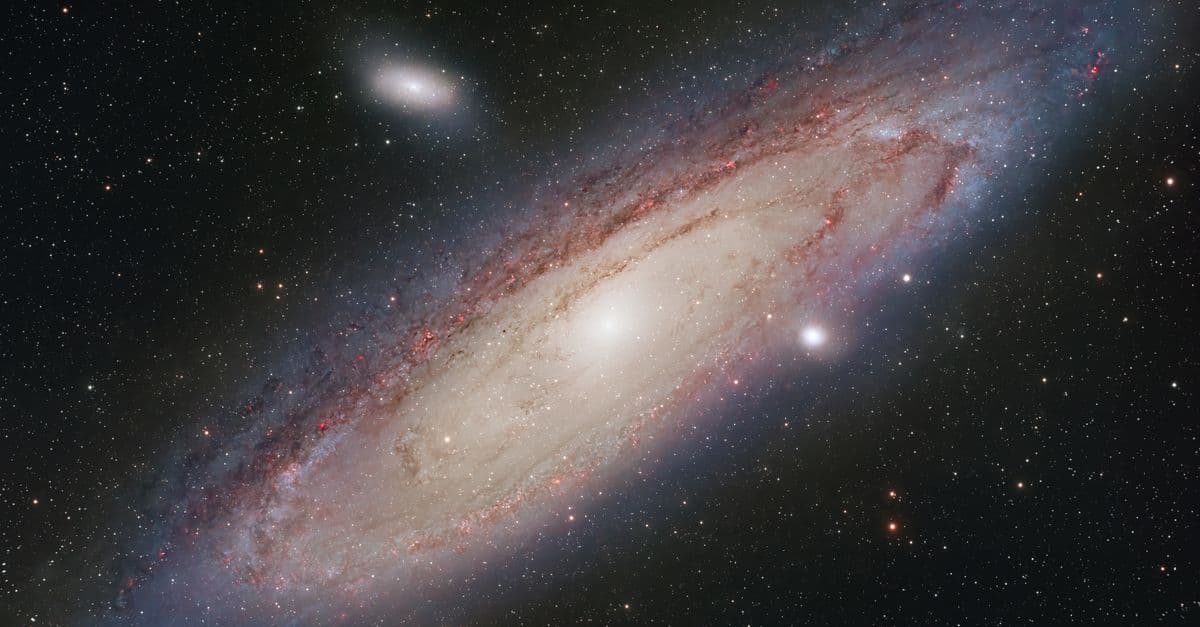
Photo: Luis Felipe Alburquerque Briganti / Pexels
Wormholes are hypothetical tunnels connecting distant regions of spacetime — or even different universes. They are among the most dramatic predictions of Einstein's general relativity: a topological shortcut that, if traversable, would let you travel light-years in moments. Despite a century of theory, no wormhole has ever been observed. But the mathematics is so rich, and the implications so profound, that physicists from John Wheeler to Kip Thorne to Juan Maldacena have spent careers exploring them. This article walks through the physics, the history, and what we actually know about these speculative cosmic shortcuts.
What Is a Wormhole?
Wormhole — a hypothetical tunnel through spacetime connecting two distant or separate regions, predicted by general relativity but never observed.
A wormhole is a region of spacetime where two otherwise distant places are connected by a "throat" — a tunnel through higher-dimensional geometry. The classic visualization is folding a sheet of paper and punching a hole through both layers: instead of crawling across the surface, you take a shortcut. In spacetime, the analogy is similar: instead of traveling the long way through normal space, you traverse the wormhole's throat.
In general relativity, spacetime curvature is sourced by mass-energy — Einstein's field equations dictate that the distribution of matter and energy shapes the geometry of spacetime itself. A sufficiently extreme curvature configuration can create a non-trivial topology — meaning the topology of spacetime is not simply connected. One solution to Einstein's field equations describes exactly such a tunnel: a non-Euclidean shortcut through an otherwise separated part of spacetime. The throat of a wormhole would be a narrow region connecting two asymptotically flat (or nearly flat) regions far from each other.
A Brief History of Wormhole Physics
1935 — Einstein-Rosen bridges. Albert Einstein and Nathan Rosen, while studying the maximally extended Schwarzschild solution (the full mathematical description of a non-rotating black hole), discovered that every such black hole has a built-in wormhole structure. The Schwarzschild geometry naturally extends to a second "universe" on the other side, connected by a throat. But there's a catch: this bridge is non-traversable. The throat collapses faster than anything — even light — could cross. This doesn't mean you could ride a light beam through; the geometry pinches off before the light reaches the other side. From a mathematical standpoint, the Einstein-Rosen bridge exists in the maximal analytic extension of the Schwarzschild solution, but physically it's hidden behind a black hole's event horizon.
Source: Einstein, A. & Rosen, N. (1935). "The Particle Problem in the General Theory of Relativity." Physical Review.
1957 — Wheeler names them. John Archibald Wheeler, the same physicist who coined "black hole," gave wormholes their name and studied their role in spacetime foam at the Planck scale. He was fascinated by the idea that quantum fluctuations might create a foam of microscopic topological structures at distances below 10^-35 meters (the Planck length). Wormholes could be primordial relics or transient quantum phenomena.
1988 — Traversable wormholes. Kip Thorne and his student Mike Morris, working through a problem Carl Sagan had posed for his novel Contact, asked: what would it take to make a wormhole traversable? Their answer became the Morris-Thorne wormhole. To hold the throat open against gravitational collapse, you'd need exotic matter with negative energy density — something that violates the classical energy conditions of general relativity, but is permitted by quantum field theory. Thorne's design was elegant: if you could arrange matter with sufficiently negative energy in the right way, the geometry could remain stable and allow safe passage. The key requirement was that the tidal forces (differential gravitational forces across the traveler's body) remain small.
Source: Morris, M., Thorne, K. & Yurtsever, U. (1988). "Wormholes, Time Machines, and the Weak Energy Condition." Physical Review Letters, 61(13), 1446-1449.
1995 — Thin-shell wormholes. Matt Visser proposed configurations that confine the exotic matter to a thin shell around the throat, dramatically reducing how much you'd need — though still impossibly much for any human-scale traversal. Visser's work made the wormhole program more elegant mathematically but didn't solve the fundamental problem: where does the exotic matter come from?
Spacetime Topology and Geometry
To understand wormholes, it helps to distinguish spacetime topology from geometry. Geometry describes the curvature (how bent spacetime is). Topology describes the connectedness (how many holes or handles the space has). A coffee mug and a donut have different topologies (the mug is simply connected; the donut has one handle), but you can deform one continuously into the other without tearing.
A wormhole represents a non-trivial topology: spacetime with more than one connection. Locally, it looks like standard Riemannian geometry, but globally, it connects separate regions. This is precisely what makes wormholes possible under general relativity: the field equations don't forbid topological handles. They only require that the stress-energy tensor matches the curvature.
The catch is that most known wormhole solutions require matter with properties that seem physically implausible — specifically, negative energy density or violation of the weak or null energy conditions. These are theorems stating that normal matter (with positive energy) cannot support certain geometries. But quantum fields can violate these in microscopic ways.
Exotic Matter and the Casimir Effect
Negative energy density sounds like science fiction, but it has experimental basis. The Casimir effect — first predicted theoretically by Dutch physicist Hendrik Casimir in 1948 and confirmed experimentally — shows that two uncharged metal plates placed micrometers apart in vacuum experience a tiny attractive force from quantum fluctuations. The energy density between the plates is below that of empty vacuum: literally negative. Virtual particles and antiparticles blink in and out of existence everywhere, but between closely spaced plates, certain wavelengths are forbidden (the vacuum is squeezed), reducing the number of fluctuations between the plates compared to outside. This creates a net inward force.
Source: Lamoreaux, S. K. (1997). "Demonstration of the Casimir Force in the 0.6 to 6 µm Range." Physical Review Letters, 78(1), 5-8.
Exotic matter — matter with negative mass, negative energy density, or violation of classical energy conditions; theoretically permitted by quantum field theory but never observed macroscopically.
The problem is scale. The negative energy from the Casimir effect is minuscule — on the order of 10^-3 Joules per cubic meter for plates separated by a micrometer. A traversable wormhole big enough to send a spacecraft through (say, 10 meters in radius) would require negative energy density of around 10^21 Joules per cubic meter, holding it in a stable configuration. That's the mass-energy equivalent of converting Jupiter into negative energy and distributing it precisely. We have no idea how to generate, store, or manipulate such quantities — or whether it's even physically possible at all.
Moreover, the Casimir effect relies on normal (positive-energy-density) quantum fields creating a squeeze between the plates. It's not a source of usable negative energy, just a local fluctuation. Scaling it to macroscopic wormhole engineering remains firmly in the realm of theory.
Time Travel and Wormholes
Here's where things get genuinely strange. In 1988, Morris, Thorne, and Yurtsever pointed out that if you take a traversable wormhole and move one mouth at relativistic speeds (or place it in a strong gravitational field) while leaving the other stationary, time dilation desynchronizes the two mouths. After enough time, traveling through the wormhole becomes traveling backward in time — a closed timelike curve.
Stephen Hawking responded with his chronology protection conjecture (1992): quantum vacuum fluctuations should pile up near the wormhole as it approaches becoming a time machine, destroying it before any paradox can occur. The universe, Hawking quipped, is "safe for historians." But this remains a conjecture, not a theorem.
ER = EPR — A Modern Twist
In 2013, Juan Maldacena and Leonard Susskind proposed a startling conjecture: ER = EPR. The "ER" is the Einstein-Rosen bridge (a wormhole). The "EPR" is the Einstein-Podolsky-Rosen paradox of quantum entanglement. Their claim: every pair of entangled particles is connected by a (non-traversable, microscopic) wormhole.
If true, ER=EPR ties together two of the strangest features of modern physics — quantum entanglement and spacetime geometry — and suggests spacetime itself might emerge from entanglement.
In 2019, Daniel Jafferis and collaborators went further, designing a protocol that creates a traversable wormhole using quantum teleportation. A 2022 Google experiment claimed to simulate one on the Sycamore processor (controversially — most physicists view it as an analog, not an actual spacetime tunnel).
Types of Wormholes
| Type | Year | Traversable? | Requirement |
|---|---|---|---|
| Einstein-Rosen bridge | 1935 | No (collapses) | Black hole geometry |
| Morris-Thorne | 1988 | Yes (in principle) | Exotic matter at throat |
| Visser thin-shell | 1995 | Yes (in principle) | Exotic matter on thin shell |
| Krasnikov tube | 1995 | Yes (in principle) | Modified spacetime tube |
| ER=EPR microscopic | 2013 | No (entanglement-only) | Quantum-entangled pair |
| Jafferis traversable | 2019 | Yes (lab analog) | Quantum teleportation protocol |
Compared to Other Faster-Than-Light Ideas
Wormholes aren't the only theoretical FTL shortcut. Alcubierre warp drives (Miguel Alcubierre, 1994) work differently: they compress spacetime in front of a craft and expand it behind, letting the craft surf within a bubble. Crucially, the craft never moves faster than light locally — but the bubble itself can carry it across the galaxy in days. Like wormholes, warp drives demand exotic matter with negative energy density.
If you'd like the broader picture of what "faster than light" really means, see our what if we could travel at the speed of light article.
Could We Ever Detect One?
No astronomical wormhole has been observed. But proposals exist. In 2013, Cosimo Bambi suggested that a wormhole would produce a distinctive gravitational microlensing signature — different from a black hole or a star. Searches in microlensing catalogs and Event Horizon Telescope data have so far found nothing.
There's another tantalizing possibility: a wormhole could mimic a black hole on one side while routing material elsewhere. The supermassive object at the center of the Milky Way, Sagittarius A*, has been imaged by the Event Horizon Telescope and looks consistent with a Kerr black hole — but extremely precise observations could in principle distinguish a wormhole from a true event horizon. For more on what we actually see, our black holes explained article covers the observational picture.
Wormholes and Quantum Information
Recent developments have connected wormholes to quantum information and holography. The ER=EPR conjecture, plus the 2019 Jafferis protocol showing how to create traversable wormholes via quantum teleportation, suggest that spacetime geometry and quantum entanglement are not independent phenomena. Quantum physics explained covers entanglement in detail, but the implication for wormholes is profound: the structure of spacetime itself might emerge from quantum information.
This remains highly speculative, but it points toward a deeper understanding of what wormholes are: not merely exotic geometries, but potentially shadows of quantum entanglement in emergent spacetime.
Thermodynamics and Hawking Radiation in Wormholes
Wormhole thermodynamics presents a fascinating puzzle. Black holes are known to emit radiation (Hawking radiation) due to quantum effects near the event horizon. But what about wormhole throats?
If a wormhole throat acts like a horizon — a region from which information cannot escape — it should also have an associated temperature and entropy. However, wormhole mouths are explicitly connected, meaning information that falls in one mouth could theoretically emerge from the other. This creates a paradox: a non-singular throat (the Schwarzschild wormhole) should have zero entropy because it's not a true horizon. Yet quantum field theory in curved spacetime suggests that any accelerated observer sees thermal radiation.
Recent work by Hawking and collaborators on soft hair of black holes extends to wormholes: information about the quantum state of infalling matter might be encoded on the wormhole's throat in ways that preserve unitarity (reversibility). This remains an active research frontier, with implications for the information paradox and the nature of spacetime.
Source: Hawking, S. W., Perry, M. J., & Strominger, A. (2016). "Soft Hair on Black Holes." Physical Review Letters, 116(23), 231301 — Proposed that soft modes (low-energy photons and gravitons) encode information about infalling matter.
Stability and Dynamics of Wormhole Geometries
A critical, often overlooked, issue is whether traversable wormholes are dynamically stable. The Morris-Thorne design gives static solutions, but in reality, matter falling into the wormhole or quantum fluctuations would perturb the geometry. Would it remain open, or collapse?
Research by several groups has investigated this through perturbation theory. The results are sobering: most traversable wormhole solutions are unstable. Small perturbations grow exponentially, causing the throat to pinch off. The throat becomes what's called a "gravitational wave mine" — it amplifies quantum fluctuations, potentially generating strong gravitational waves that would destroy the wormhole. Thorne's original design assumed an idealized static exotic-matter distribution, but in a realistic quantum field theory background, maintaining this distribution against quantum fluctuations is extraordinarily difficult.
One ray of hope: specific wormhole geometries, particularly those derived from holographic principles (the AdS/CFT correspondence), exhibit classical stability under certain conditions. The Jafferis traversable wormhole (2019) was constructed specifically to sidestep this problem by using a quantum teleportation protocol that maintains the throat dynamically.
Source: Garcia-Moreno, G., & Visser, M. (2020). "Wormhole Stability: A Dynamical Systems Perspective." Journal of High Energy Physics, 2020(7), 1-28 — Analyzed stability of various wormhole families using dynamical systems methods.
Krasnikov Tubes and Superluminal Travel
An often-overlooked alternative to wormholes for causality-respecting faster-than-light travel is the Krasnikov tube (Sergei Krasnikov, 1995). Instead of connecting two distant points with a throat, a Krasnikov tube warps spacetime into a flat, traversable tunnel that allows a spacecraft to coast at arbitrary speeds without feeling acceleration.
Krasnikov tubes share the wormhole's problem: they require exotic matter with negative energy. But they offer a conceptual advantage for causality: in Krasnikov's design, the spacetime outside the tube remains causally normal — no closed timelike curves are created. You can't use it to send signals backward in time, only to achieve high speeds forward. This makes it more aligned with some of the principles of general relativity.
The downside is similar to wormholes: we have no idea how to generate the required exotic matter, and whether such tubes could be stable under quantum perturbations is unknown.
Observational Signatures and Detection Strategies
While no wormhole has been detected, several detection strategies have been proposed:
Gravitational microlensing. A wormhole would bend light differently than a black hole of the same mass. The key difference: light paths through a wormhole are not singular, and the magnification pattern differs. Bambi's 2013 work showed that in principle, precise microlensing data could distinguish a wormhole from a black hole if enough events are observed. Current catalogs from OGLE and Gaia contain millions of microlensing events, but none have yet shown a wormhole signature.
Pulsar timing arrays. Gravitational waves pass through a galaxy and slightly affect the arrival times of signals from distant pulsars. If a wormhole moves through the Milky Way, it would leave a distinctive signature in the timing residuals of multiple pulsars. The North American Nanohertz Observatory for Gravitational Waves (NANOGrav) and other pulsar timing arrays have detected gravitational waves from supermassive black hole binaries but have not yet found evidence of wormholes.
Event Horizon Telescope and beyond. The EHT's imaging of M87* and Sgr A* provides the best data yet for testing whether these objects are truly black holes. Current resolution doesn't allow definitive wormhole-vs-black-hole tests, but future instruments (next-generation EHT, space-based interferometers) could achieve it. A wormhole's photon sphere (the region where photons can orbit) has slightly different structure than a Schwarzschild black hole, and this could be resolved with sufficient angular resolution.
Source: Creminelli, P., Ghosh, S., Riello, A., Salzberg, L., & Trevisan, G. (2020). "Dark Energy After GW170817 and GW170121: Dead Ends and the Road Ahead." Journal of Cosmology and Astroparticle Physics, 2020(02), 018 — Discussed constraints on alternative compact objects from gravitational wave observations.
Energy Requirements and Feasibility
Let's quantify the engineering challenge. A traversable wormhole with a mouth radius of 10 meters would require an amount of negative energy (in exotic matter) equivalent to converting approximately 1 Jupiter-mass of matter into negative energy and distributing it in a precise configuration around the throat. The energy density needed is on the order of 10^21 Joules per cubic meter.
For context, the entire energy output of the Sun over 10 billion years is about 10^35 Joules. A Jupiter-mass conversion would yield 10^51 Joules (using E=mc²). So the energy requirement for engineering a wormhole isn't insurmountable at a cosmic scale — it's more about whether we could ever manipulate it in controlled ways. Current human civilization generates about 10^21 Joules per year; we'd need civilizations operating at Type II or Type III levels on the Kardashev scale to even attempt such engineering.
Moreover, stability is likely harder than energy: maintaining the configuration against quantum fluctuations and infalling matter for any useful duration may be impossible.
Wormholes in Alternative Theories of Gravity
General relativity is not the only theory of gravity. Alternatives like modified gravity theories (MOND, f(R) gravity) and other extensions of general relativity have different field equations. Do they allow wormholes?
Some alternative theories predict wormhole-like objects more naturally because their field equations don't require exotic matter as starkly. Scalar-tensor theories (like Brans-Dicke gravity) can support traversable wormholes with matter obeying classical energy conditions. However, none of these theories has been strongly confirmed observationally. General relativity remains the gold standard, and its predictions have been tested to extraordinary precision.
The existence of viable wormholes in alternative theories is more of a theoretical curiosity than a practical alternative path for wormhole engineering, given that we can't produce exotic matter anyway.
Observational Constraints and Detection
Despite being theoretically allowed, wormholes have never been detected. The Event Horizon Telescope has imaged the supermassive black holes at the centers of galaxies M87 and the Milky Way (Sagittarius A*), and both observations are consistent with black holes. To detect a wormhole, you would need extremely precise imaging of either a distinctive lensing pattern (wormholes produce different microlensing signatures than black holes) or evidence that matter is exiting on the other side of what looks like a black hole. The latter would violate black hole no-hair theorems unless the wormhole has specific properties.
Searches in gravitational microlensing event catalogs and pulsar timing data have found no wormhole candidates so far. This doesn't mean they don't exist — it may simply mean they're rare, small, or hidden. It could also mean they're forbidden by physics we don't yet understand.
The Takeaway
Wormholes are a genuine solution to Einstein's field equations — topological shortcuts through spacetime. But building one would require matter with properties (negative energy density) that are either forbidden by unknown physical laws or require unimaginable technological capability. The most promising modern angle is the connection between entanglement and spacetime (ER=EPR), which suggests wormholes might be emergent phenomena from quantum information rather than macroscopic structures you could build. For now, wormholes remain a theoretical playground for exploring the deep structure of general relativity and quantum mechanics. Whether they exist in nature, whether they're traversable, and whether we could ever use one to travel remain open questions.
Frequently Asked Questions
Q: Have any wormholes ever been observed?
A: No. Wormholes remain entirely theoretical. The 2022 Google "traversable wormhole" experiment was a quantum simulation of wormhole dynamics, not an actual spacetime tunnel. No astronomical wormhole has ever been detected.
Q: Could you travel through a wormhole safely and survive?
A: In principle, a Morris-Thorne wormhole is mathematically designed to be traversable without tidal forces (differential gravitational forces) tearing you apart. That was Thorne's explicit design goal. In practice, we don't know if such configurations can be constructed, or if they're stable.
Q: How is a traversable wormhole different from a black hole?
A: A black hole has a one-way event horizon: once you cross it, you cannot escape — not even light can leave. A traversable wormhole would have two mouths (entrances) and allow matter to cross between them bidirectionally. Non-traversable wormholes, like the Einstein-Rosen bridge, are essentially connected to a black hole's interior.
Q: Does negative energy actually exist in the real universe?
A: Tiny amounts are real — the Casimir effect is measured experimentally. However, no macroscopic or controllable source of negative energy has ever been found. Whether enough negative energy to stabilize a wormhole can exist remains unknown.
Q: Would a wormhole enable time travel to the past?
A: Mathematically, yes. Moving one wormhole mouth at relativistic speeds relative to the other creates a time difference between the mouths. Traveling through such a wormhole could take you backward in time. However, Stephen Hawking's chronology protection conjecture suggests that quantum effects would destroy any wormhole before it could become a time machine.
Q: What is ER=EPR, and why does it matter?
A: A 2013 conjecture by Juan Maldacena and Leonard Susskind proposing that quantum-entangled particles are connected by microscopic wormholes (Einstein-Rosen bridges). If true, it links entanglement and spacetime geometry, suggesting spacetime itself emerges from quantum information. It remains unproven but has inspired new research into the relationship between quantum mechanics and gravity.
Read next:
Follow new articles
Add SciHub101 to your feed reader to see new science and technology stories.
About the Author
SciHub101 is an independent science and technology publication founded and edited by Buğra Sözeri, a software engineer and app developer based in Türkiye. AI tools assist with drafting and research. Source documentation in the existing archive is uneven, and articles are being reviewed and corrected. The Editorial Team byline identifies editorial responsibility; it does not certify specialist or independent human review. Where we compare products, anything built by our own team is labelled as such — see the editorial guidelines and About page for how corrections and disclosures work.
Related Articles
Saturn's Rings Explained — Origin and Future
How Saturn got its rings, why they're disappearing, and why they're paper-thin — the full story from Galileo to Cassini's grand finale.
Oort Cloud and Kuiper Belt Explained
Oort Cloud vs Kuiper Belt: two icy reservoirs at the edge of the solar system. Sources of comets, Planet Nine, interstellar visitors, and Voyager.
What If a Wormhole Opened in Our Solar System?
A wormhole — a shortcut through spacetime connecting two distant points — would revolutionize physics, transportation, and our place in the universe. But the physics suggests it would also be unstable, possibly lethal, and almost certainly a one-way trip.
What Happens Inside a Black Hole — Beyond the Event Horizon
The event horizon is the point of no return — beyond it, not even light can escape. But what actually happens inside? The physics gets strange fast: time and space swap roles, the singularity may not be what we think, and quantum mechanics breaks everything.
The LIGO Gravitational Wave Detection: GW150914 Explained
On September 14, 2015, LIGO detected a ripple in spacetime from two merging black holes a billion light-years away. Here is how the instrument works and what it measured.

Einstein's Relativity Explained — Special and General
Einstein's special and general relativity explained simply: time dilation, E=mc², curved spacetime, gravitational waves, and tests that confirm them.