Saturn's Rings Explained — Origin and Future
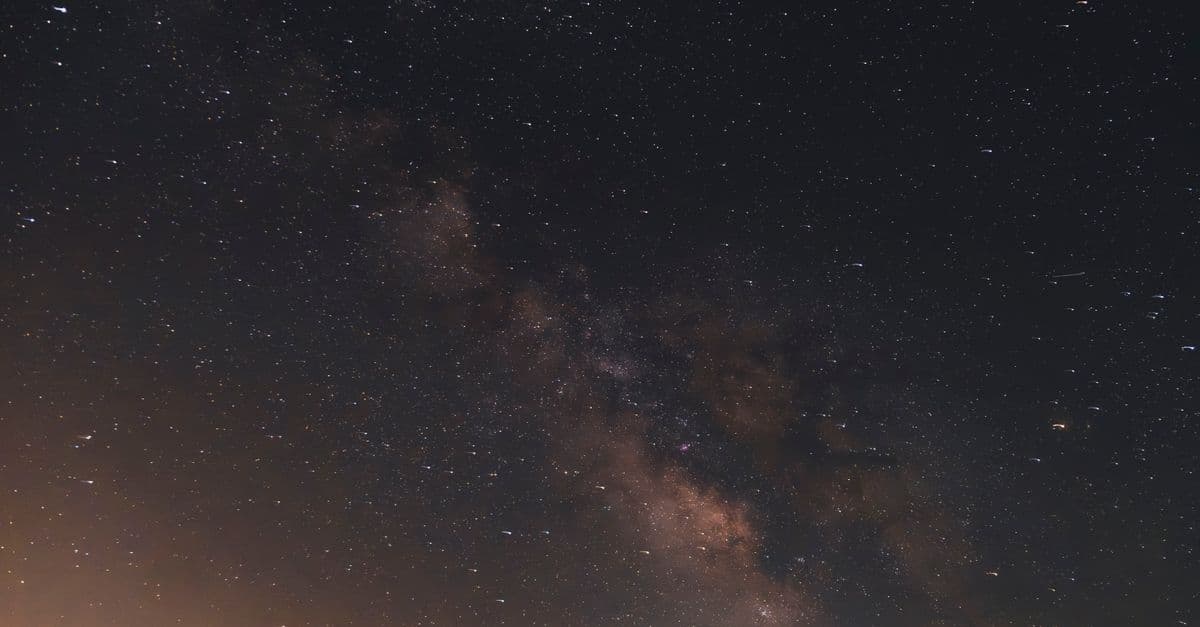
Photo: Luis Felipe Alburquerque Briganti / Pexels
Saturn's rings are the most spectacular feature in the solar system — and one of its most puzzling. Galileo first spotted them in 1610, but his telescope was so primitive he thought Saturn had "ears" on either side. Christiaan Huygens correctly identified them as a flat ring in 1655. Four centuries later, after the Cassini spacecraft's "Grand Finale" dive between the planet and its rings in 2017, we now know something startling: the rings are young — possibly only 100–400 million years old, born long after the dinosaurs first appeared on Earth — and they are disappearing. Within another 100–300 million years, they may be gone.
What the Rings Are Made Of
Saturn's rings are not a single solid disc but billions of individual particles in independent orbits. Composition:
- >99% water ice
- A small fraction of silicate dust and complex organics
- Particle sizes range from micrometers of dust to boulders the size of houses, with most material in the centimeter-to-meter range
The reason they look bright is exactly because they're nearly pure ice — water ice is one of the most reflective natural substances in the solar system.
Structure: The A, B, C, D, E, F, G Rings
The rings are organized into named groups, labeled in order of discovery (not position):
| Ring | Distance from Saturn | Notes |
|---|---|---|
| D ring | 66,900–74,500 km | Faint, innermost |
| C ring | 74,658–92,000 km | Thin, transparent |
| B ring | 92,000–117,580 km | Brightest, densest, contains the famous "spokes" |
| Cassini Division | 117,580–122,170 km | 4,700-km gap (cleared by Mimas resonance) |
| A ring | 122,170–136,775 km | Second brightest; contains Encke and Keeler Gaps |
| F ring | ~140,180 km | Narrow, twisted, shepherded by Prometheus and Pandora |
| G ring | 166,000–175,000 km | Diffuse dust |
| E ring | 180,000–480,000 km | Vast diffuse cloud fed by Enceladus geysers |
The Astonishing Thinness
Here's the most counterintuitive fact about Saturn's rings: they are less than 100 meters thick on average, with some regions as thin as 10 meters. Saturn itself is 116,000 km wide. The ratio is roughly that of a razor blade laid across an American football field — and the razor blade would still be thicker proportionally.
This extreme flatness is the natural result of two effects:
- Collisions damp out vertical motion. Particles in inclined orbits crash into the ring plane and lose vertical velocity, settling into a thin disc — the same process that flattens galaxies and protoplanetary discs.
- The Roche limit — within roughly 2.5 Saturn radii, tidal forces overcome the self-gravity of any large body, preventing the material from clumping into a moon.
The Mass Mystery — And Why It Tells Us the Rings Are Young
For decades, scientists assumed Saturn's rings were primordial — leftovers from the same protoplanetary disc that formed the solar system 4.5 billion years ago. Cassini's Grand Finale dives in 2017 changed everything.
By passing between the rings and Saturn, Cassini measured the gravitational pull of the rings directly for the first time. The total ring mass came in at roughly 1.5 × 10¹⁹ kg — about 40% the mass of Mimas, a small Saturnian moon. That is shockingly little — much less than expected for a 4.5-Gyr-old structure that would have been bombarded by countless micrometeorites contaminating the ice with darker material.
Two key papers — Iess et al. 2019 (gravity measurement) and Crida et al. 2019 (modeling) — argued the rings must be young, probably 100–400 million years old, because:
- They're too clean (low pollution from interstellar dust)
- They're too low in mass (older rings would have lost more material)
- They couldn't have lasted this long without recent formation
Ring Rain — Why They're Disappearing
Cassini's UVIS and INMS instruments measured "ring rain" — charged water and organic molecules cascading down Saturn's magnetic field lines into the upper atmosphere. The rate: roughly 10,000 kilograms per second.
At that rate, Saturn's rings will be substantially diminished in 100 million years and likely gone within 300 million years. We are alive at an extraordinarily lucky moment in solar-system history — the rings are essentially a brief cosmic ornament, and humanity arrived in time to see them.
How Did the Rings Form?
The leading hypothesis: a destroyed moon. A mid-sized icy satellite — possibly captured, possibly perturbed — drifted inside Saturn's Roche limit and was tidally shredded. The icy mantle scattered into orbit and flattened into the rings we see today. A 2022 paper (Wisdom et al., Science) proposed a moon nicknamed "Chrysalis" was lost roughly 160 million years ago, simultaneously explaining the rings, Saturn's odd axial tilt, and Titan's outward migration.
Alternative ideas, now less favored:
- Captured comet that disintegrated inside the Roche limit
- Cometary debris accreted over time
- Primordial leftovers that survived 4.5 Gyr (ruled out by mass)
Shepherd Moons
Several small moons orbit within or near the rings, sculpting their edges through gravity:
- Pan — embedded in the Encke Gap; horseshoe-shaped from accreted ring material
- Daphnis — in the Keeler Gap; raises visible waves in the A ring edge
- Prometheus and Pandora — flank the F ring, shepherding its narrow filament
- Atlas — sits just outside the A ring, with a flying-saucer shape from ring dust
The Mysterious Spokes
The B ring spokes — radial dark features extending across the rings — were first photographed by Voyager 1 in 1981, observed again by Hubble, and studied in detail by Cassini. They appear to be clouds of dust-sized particles levitating above the ring plane, lifted by electrostatic forces tied to Saturn's magnetic field. They are seasonal, appearing most strongly near Saturn's equinoxes and fading when one ring face is fully illuminated. JWST observations in 2024 confirmed they return on a predictable ~15-year cycle.
All Four Giant Planets Have Rings
Saturn isn't unique — it's just the most theatrical.
| Planet | Rings discovered | Composition | Visual prominence |
|---|---|---|---|
| Jupiter | 1979 (Voyager 1) | Dust from Adrastea, Metis impacts | Faint, only seen back-lit |
| Saturn | 1610 (Galileo) | 99%+ water ice | Spectacular |
| Uranus | 1977 (occultation) | Dark organics + ice | 13 narrow rings |
| Neptune | 1989 (Voyager 2) | Dust + ice, "arcs" not full rings | Fragmented |
| Chariklo (centaur asteroid) | 2013 | Ice | First non-planet ring system |
| Quaoar (TNO) | 2023 | Ice | Anomalously far from primary |
The 2013 discovery of rings around Chariklo, a tiny centaur asteroid, was a shock — rings were thought to require a planet-sized host. The 2023 detection of rings around the trans-Neptunian object Quaoar further upended ring physics: Quaoar's ring sits well outside its Roche limit, suggesting ring particles can persist longer than theory predicted.
Comparison: Saturn Rings vs Other Planetary Rings
| Feature | Saturn | Jupiter | Uranus | Neptune |
|---|---|---|---|---|
| Discovery | 1610 | 1979 | 1977 | 1989 |
| Total mass | ~10¹⁹ kg | ~10¹³ kg | ~10¹⁵ kg | ~10¹³ kg |
| Primary composition | Water ice | Silicate dust | Dark organics | Dust + ice |
| Width | ~280,000 km (E ring) | ~6,400 km | ~98,000 km span | ~63,000 km span |
| Visibility from Earth | Easy in 60 mm telescope | Voyager only | Stellar occultation needed | Stellar occultation needed |
FAQ
Q: When did we first know Saturn had rings? A: Galileo saw something in 1610 but couldn't resolve it and called them "ears." Christiaan Huygens correctly identified them as a flat ring in 1655 using a better telescope.
Q: How thick are Saturn's rings? A: On average less than 100 meters, with some sections only ~10 meters thick — astonishing given the rings are nearly 300,000 km across at their widest. Proportionally they are far thinner than a razor blade across a football field.
Q: How old are Saturn's rings? A: Cassini's 2017 gravity measurements suggest they formed only 100–400 million years ago, long after the rest of the solar system. They are not primordial.
Q: Will Saturn lose its rings? A: Yes. The rings are slowly raining into Saturn's atmosphere at about 10,000 kg/second. Estimates put their total remaining lifetime at 100–300 million years.
Q: What are the rings made of? A: More than 99% water ice, with trace silicates and organics. Particles range from micrometer dust to house-sized boulders.
Q: Why don't the rings clump into a moon? A: They orbit inside Saturn's Roche limit, where tidal forces overpower the self-gravity that would otherwise let particles accrete into a single body. Outside the Roche limit, the same material would form moons.
Related Reading
Sources
- Iess, L. et al. "Measurement and implications of Saturn's gravity field and ring mass," Science (2019).
- Crida, A. et al. "Are Saturn's rings actually young?" Nature Astronomy (2019).
- Wisdom, J. et al. "Loss of a satellite could explain Saturn's obliquity and young rings," Science (2022).
- Waite, J.H. et al. "Chemical interactions between Saturn's atmosphere and its rings," Science (2018).
- O'Donoghue, J. et al. "Saturn's 'ring rain' inflow rate," Icarus (2019).
- Morgado, B.E. et al. "A dense ring of the trans-Neptunian object Quaoar," Nature (2023).
Follow new articles
Add SciHub101 to your feed reader to see new science and technology stories.
About the Author
SciHub101 is an independent science and technology publication founded and edited by Buğra Sözeri, a software engineer and app developer based in Türkiye. AI tools assist with drafting and research. Source documentation in the existing archive is uneven, and articles are being reviewed and corrected. The Editorial Team byline identifies editorial responsibility; it does not certify specialist or independent human review. Where we compare products, anything built by our own team is labelled as such — see the editorial guidelines and About page for how corrections and disclosures work.
Related Articles

The Voyager Golden Record Explained
What's actually on the gold disc bolted to Voyager 1 and 2, how aliens could play it, and where the spacecraft are headed next.
The Kardashev Scale — Civilizations by Energy
The Kardashev Scale ranks civilizations by how much energy they can harness — from planetary to stellar to galactic. Where does humanity stand?
What Are Saturn's Rings Made Of — And How Long Will They Last?
Saturn's iconic rings are made of more than 90% water ice and span nearly 300,000 km across, yet they are only about 10 meters thick. Surprisingly young in cosmic terms, the rings are slowly draining into Saturn and will vanish entirely in roughly 100 million years.
Planetary Rings Explained: Not Just Saturn
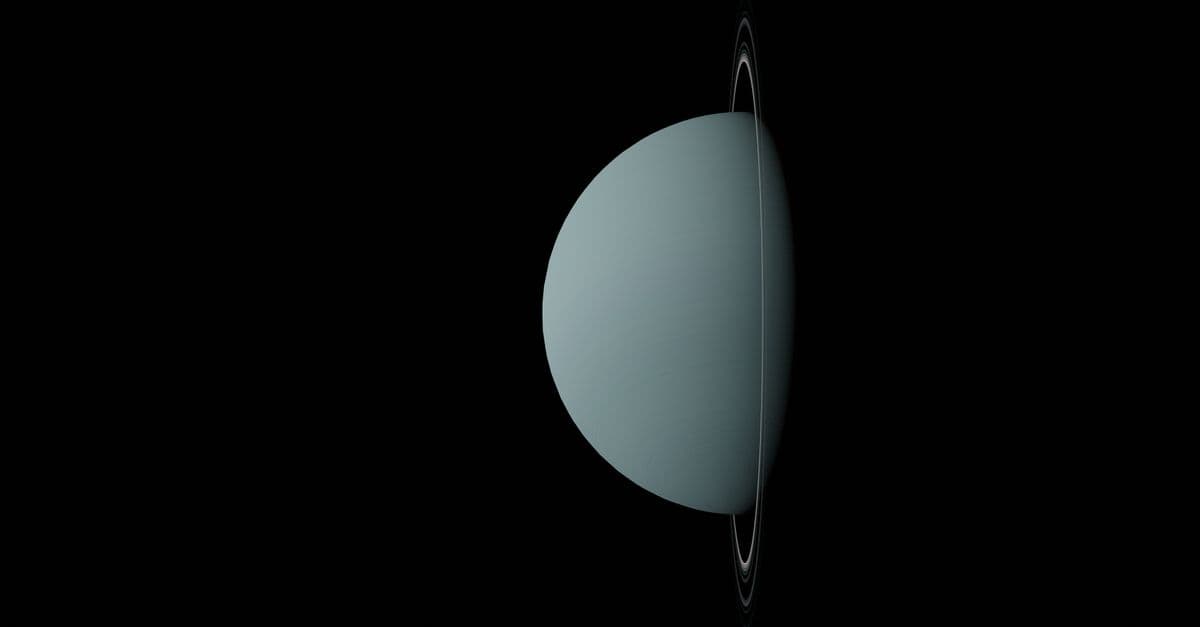
Saturn's rings are the solar system's most famous structure, but they are far from unique. Uranus has 13 dark, narrow rings discovered by accident in 1977. Neptune has incomplete arcs instead of full circles. Jupiter has a faint ring made of dust blasted off its innermost moons by meteorite impacts. All four giant planets have rings — and they all work differently. Saturn's may be geologically young, which raises a question nobody has fully answered: where did they come from?
The Cassini Grand Finale: What 22 Death Dives Taught Us About Saturn
In 2017, NASA deliberately destroyed the Cassini spacecraft by plunging it into Saturn. Before it died, it made 22 passes through a region no spacecraft had ever entered — the 2,000-kilometer gap between Saturn and its innermost rings. The data it collected upended what scientists thought they knew about the rings' age, mass, and origin, and revealed a magnetic field so perfectly symmetrical it has no right to exist.
Enceladus's Hydrothermal Vents and the Case for Life
Saturn's tiny moon Enceladus shoots plumes of water vapor and hydrogen gas into space from cracks in its icy crust. Those plumes carry direct evidence of 90°C hydrothermal vents on the ocean floor — the same kind of environment where life on Earth may have started.