The Voyager Golden Record Explained
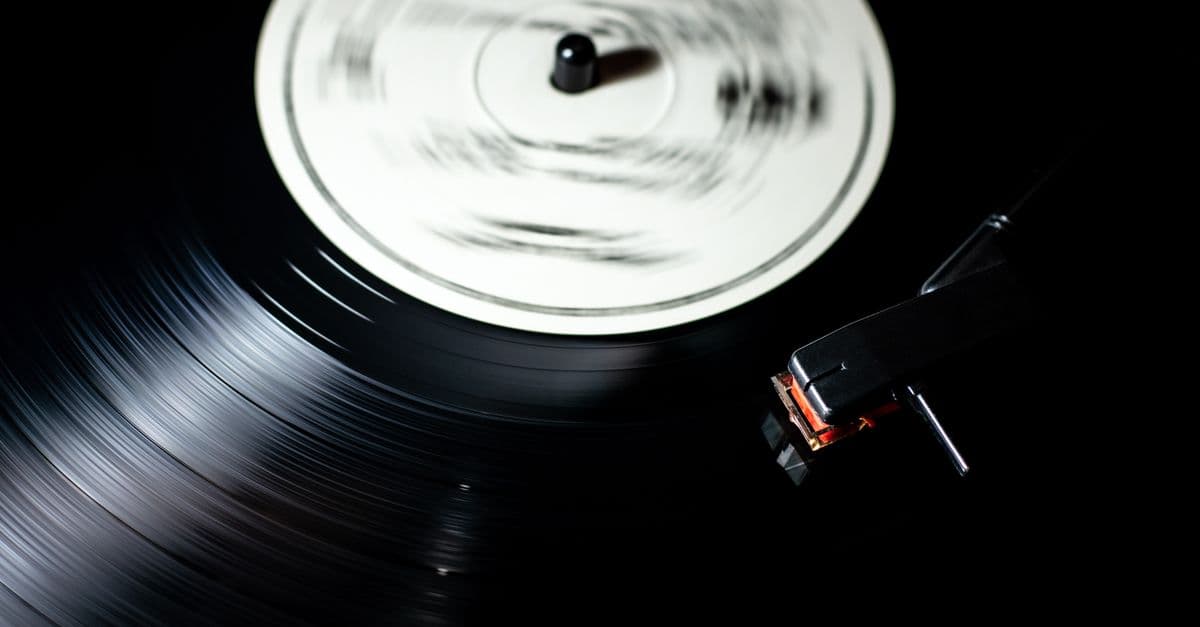
Photo: Miguel Á. Padriñán / Pexels
In 1977, NASA bolted a gold-plated copper phonograph record to the side of each Voyager spacecraft and launched them out of the solar system. Carl Sagan chaired the committee that, in just six weeks, decided what message humanity would send to anyone — or anything — that might find it. The record carries music, images, greetings, brainwaves, and the sound of a kiss. It is the longest-lasting human-made artifact ever created, expected to remain intact for at least a billion years. Here's what's on it, how it works, and where the Voyagers are now.
The Object Itself
Each Golden Record is a 12-inch (30 cm) gold-anodized copper phonograph record, sealed in an aluminum cover etched with playback instructions. Inside the cover is a stylus and cartridge. The recording is grooved like a regular LP but spins at 16⅔ rpm (half the usual 33⅓) to fit more content.
| Specification | Value |
|---|---|
| Material | Copper, gold-plated |
| Size | 30 cm (12 inches) diameter |
| Playback speed | 16⅔ rpm |
| Total runtime | ~115 minutes (audio) + 116 image frames |
| Expected lifetime | ~1 billion years in interstellar space |
| Spacecraft launched | Voyager 1 (Sept 5, 1977), Voyager 2 (Aug 20, 1977) |
| Distance from Sun (2026) | V1 ≈ 165 AU, V2 ≈ 137 AU |
What's On It
The record is divided into four content categories:
1. 116 Images (Encoded as Analog Video)
Encoded into the audio groove as a video-like waveform, these images include:
- Anatomy diagrams (silhouette of a male and female, fetus, DNA structure)
- Earth landscapes (Great Wall, Grand Tetons, ocean wave)
- Humans of various ages, ethnicities, and activities
- Mathematical definitions (units, scales, atomic structure)
- Solar System diagram
- Photographs of food, tools, architecture, vehicles
A notable absence: no images of weapons, religious symbols, or political content — committee decisions, sometimes contentious.
2. ~90 Minutes of Music (27 Tracks)
A cross-cultural sampler:
- Bach — Brandenburg Concerto No. 2, Goldberg Variations excerpt, Partita No. 3
- Beethoven — Symphony No. 5 (1st movement), String Quartet No. 13 "Cavatina"
- Mozart — "Der Hölle Rache" from The Magic Flute
- Chuck Berry — "Johnny B. Goode" (the only rock song)
- Stravinsky — Rite of Spring (Sacrificial Dance)
- Blind Willie Johnson — "Dark Was the Night, Cold Was the Ground"
- Indian raga (Surshri Kesar Bai Kerkar)
- Aboriginal Australian song
- Senegalese percussion
- Solomon Islands panpipes
- Mexican mariachi ("El Cascabel")
- Peruvian wedding song, Bulgarian shepherdess, Navajo night chant, Azerbaijani bagpipes, and more
The Beatles' "Here Comes the Sun" was reportedly considered but rejected due to record-label rights issues — a music-licensing problem followed humanity into interstellar space.
3. Greetings in 55 Languages
From ancient Akkadian ("May all be well") to modern Mandarin, Hindi, Arabic, Wu, English, Spanish, Russian, and 48 others. The English greeting is from Sagan's six-year-old son Nick: "Hello from the children of planet Earth."
4. Sounds of Earth and Ann Druyan's Brainwaves
A 12-minute audio montage:
- Volcanic eruption, earthquake, thunder
- Surf, rain, wind, mud pots
- Crickets, frogs, birds, whale song
- Hyena, elephant, chimpanzee
- Footsteps, heartbeat, laughter
- A kiss
- A baby crying and the mother's soothing response
- Morse code, ships' horns, a horse and cart, tractor, riveter, Saturn V launch
The most personal item is the hour of brainwave and heartbeat data from Ann Druyan, Carl Sagan's then-fiancée (later wife). She lay in a recording booth at Bellevue Hospital with EEG and EKG sensors and thought through "the history of ideas and human social organization" — and, by her own account, the fact that she had just realized she was in love with Sagan. Compressed into the audio, that hour became roughly a minute of clicks and pulses. The committee figured a sufficiently advanced civilization might be able to decode the EEG.
How Aliens Would Play It
The aluminum cover is etched with diagrams:
- Pulsar map — a "you are here" diagram showing the Sun's position relative to 14 nearby pulsars, with each pulsar's rotation frequency encoded as binary tick marks. Because pulsars slow down at predictable rates, this map also acts as a clock dating the record to launch year.
- Hydrogen hyperfine transition diagram — defines a fundamental unit of time (0.7 ns, the period of the 1420 MHz hydrogen line) and length (21 cm, the corresponding wavelength). All other units on the record reference these.
- Playback instructions — how to align the stylus, the rotation speed, how images are encoded, how to reconstruct the picture frames.
Whether any alien intelligence could realistically decode this is debated. The encoding assumes the recipient understands analog modulation, binary, base-2 arithmetic, and hyperfine atomic physics — a tall order, but those are arguably the most "universal" choices available.
Where Are the Voyagers Now?
Both spacecraft have crossed the heliopause and are technically in interstellar space.
| Spacecraft | Heliopause crossing | Distance (May 2026) | Closest stellar approach |
|---|---|---|---|
| Voyager 1 | Aug 2012 | ~165 AU (~24.7 billion km) | Gliese 445, in ~40,000 yrs, ~1.7 ly |
| Voyager 2 | Nov 2018 | ~137 AU | Ross 248, in ~40,000 yrs, ~1.7 ly |
Their nuclear power sources will fall below operational thresholds around 2030, and the last instrument will go silent shortly after. The records will keep flying for billions of years — vastly longer than the spacecraft will be operational, longer than continents in their current arrangement, longer than humans are likely to exist as a species.
Pioneer Plaque vs Voyager Golden Record
The Pioneer 10 (1972) and Pioneer 11 (1973) spacecraft carried an earlier, simpler message: an engraved aluminum plaque.
| Feature | Pioneer Plaque | Voyager Golden Record |
|---|---|---|
| Year | 1972, 1973 | 1977 |
| Medium | Engraved aluminum | Gold-plated copper phonograph |
| Content | Static diagram | Audio + images + 55 languages |
| Designer | Sagan, Drake, Linda Salzman Sagan | Sagan-chaired committee |
| Human figures | Yes (nude man and woman) | Encoded in audio |
| Pulsar map | Yes | Yes (refined) |
| Playable | No | Yes (stylus included) |
Controversies
The selection process was tense. Critics noted the music skewed toward Western classical (3 Bach pieces, 2 Beethoven, 1 Mozart) compared to a single track from many non-Western cultures. Some objected to the omission of religious content. Others felt the depiction of humanity was overly idealistic — no war, no famine, no suffering. The committee responded that, given finite space and a hopeful purpose, they prioritized the best of humanity rather than a complete documentary.
In 2017, NASA released digital copies for free download, and a Kickstarter-funded vinyl reissue produced earthbound playable copies for the first time.
FAQ
Q: What is the Voyager Golden Record? A: It's a gold-plated copper phonograph record attached to both Voyager 1 and Voyager 2, launched in 1977, containing images, music, greetings in 55 languages, and natural sounds intended as a message to any extraterrestrial civilization that might find it.
Q: Who decided what went on it? A: A committee chaired by astronomer Carl Sagan, which included Ann Druyan, Frank Drake, Jon Lomberg, Linda Salzman Sagan, and others. They had about six weeks to select the contents.
Q: How long will it last? A: In interstellar space — far from solar wind, radiation belts, and atmospheric oxygen — the gold-plated copper is expected to remain readable for at least one billion years.
Q: Could aliens actually play it? A: The cover includes pictographic instructions, a stylus, and reference diagrams using the hydrogen hyperfine transition for universal units. A sufficiently advanced civilization could plausibly figure it out, though decoding the analog video encoding for the images is non-trivial.
Q: Why is "Johnny B. Goode" on it? A: Chuck Berry's "Johnny B. Goode" was included to represent rock and roll and 20th-century popular music. It was Sagan and Druyan's pick over committee objections that rock was "adolescent." It is the only rock track on the record.
Q: Where are Voyager 1 and 2 today? A: Both have crossed the heliopause into interstellar space. As of 2026, Voyager 1 is roughly 165 AU from the Sun, Voyager 2 about 137 AU. Their power will run out around 2030, but the records themselves will keep traveling for billions of years.
Related Reading
Sources
- Sagan, C. et al. Murmurs of Earth: The Voyager Interstellar Record (Random House, 1978).
- NASA JPL, "Voyager Mission Status," voyager.jpl.nasa.gov (2026).
- Ferris, T. "How the Voyager Golden Record Was Made," The New Yorker (2017).
- NASA, "What is on the Voyager Golden Record?" science.nasa.gov.
Follow new articles
Add SciHub101 to your feed reader to see new science and technology stories.
About the Author
SciHub101 is an independent science and technology publication founded and edited by Buğra Sözeri, a software engineer and app developer based in Türkiye. AI tools assist with drafting and research. Source documentation in the existing archive is uneven, and articles are being reviewed and corrected. The Editorial Team byline identifies editorial responsibility; it does not certify specialist or independent human review. Where we compare products, anything built by our own team is labelled as such — see the editorial guidelines and About page for how corrections and disclosures work.
Related Articles
What Is a Dyson Sphere? Megastructure Explained
Dyson spheres aren't solid shells — they're swarms of solar collectors around a star. Here's how they'd work, why we'd build one, and how we'd spot aliens using one.
Saturn's Rings Explained — Origin and Future
How Saturn got its rings, why they're disappearing, and why they're paper-thin — the full story from Galileo to Cassini's grand finale.
Voyager and Pioneer — Humanity's Interstellar Probes
Voyager 1 & 2 and Pioneer 10 & 11 — the spacecraft now leaving the solar system, what they found, and what they carry. Discover how it works, why it...
Voyager 1 and 2 — The Most Distant Human-Made Objects in Space
Launched in 1977, the two Voyagers are still flying. They've left the solar system, are over 20 billion km from Earth, and carry a golden record meant for any aliens who might find them.
The Voyager Probes: Humanity's Messengers in Interstellar Space
Launched in 1977, Voyager 1 and 2 are now in interstellar space — and still phoning home after nearly five decades.
Carl Sagan: The Cosmic Poet Who Sent a Golden Record Into Space — SciHub101
Carl Sagan's life, verified quirks, and scientific legacy: the Voyager Golden Record, marijuana essays, nuclear winter, and billions and billions of stars.