What Is a Dyson Sphere? Megastructure Explained
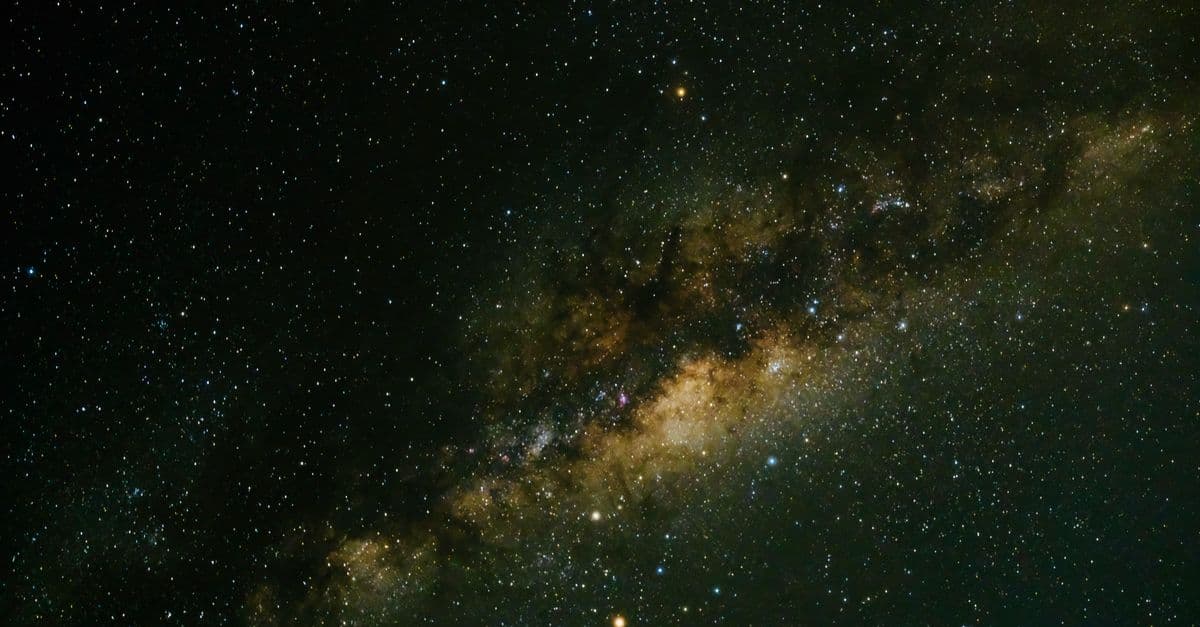
Photo: Jobert Enamno / Pexels
A Dyson sphere is a hypothetical megastructure built around a star to harvest a large fraction of its total energy output. The idea, proposed by physicist Freeman Dyson in a 1960 Science paper titled "Search for Artificial Stellar Sources of Infrared Radiation," is one of the most famous thought experiments in astrobiology and SETI.
Dyson's argument was simple: any sufficiently advanced civilization will keep wanting more energy. A planet-bound species harvests at most a tiny fraction of its star's output — Earth intercepts only about 10^13 watts of sunlight on its dayside, while the Sun radiates roughly 10^26 watts in all directions. Capture even a fraction of that, and your civilization graduates from planetary to stellar scale.
What Dyson Actually Proposed (Not a Solid Shell)
Pop culture pictures a Dyson sphere as a giant solid ball wrapped around a star — like in Star Trek: The Next Generation. That is not what Freeman Dyson proposed, and it's not physically possible:
- Material strength: No known or theoretical material can withstand the stresses of spanning 1 AU as a rigid shell.
- Newton's shell theorem: A spherically symmetric shell exerts zero net gravitational force on objects inside it. The shell would not be gravitationally bound to the star — any tiny perturbation would cause it to drift and eventually crash into the star.
- No stable orbit: A rigid sphere can't "orbit" — only independent pieces can.
What Dyson actually described was a swarm of independent collectors — millions or billions of solar panels and habitats, each in its own orbit around the star. This is now called a Dyson swarm or Dyson cloud.
Types of Dyson Megastructures
| Variant | Description | Feasibility |
|---|---|---|
| Dyson swarm | Many independent collectors in orbits around the star | Most realistic |
| Dyson ring | Single ring of collectors in one orbit | Easier first step |
| Dyson bubble | Statites — held aloft by light pressure, not orbits | Plausible with light-sail tech |
| Dyson shell | Rigid, continuous sphere | Science fiction — physically impossible |
| Matrioshka brain | Nested Dyson swarms used for computation (Robert Bradbury, Anders Sandberg) | Theoretical post-biological |
A Matrioshka brain is a particularly mind-bending variant: the inner layer absorbs starlight to run computations, radiates waste heat outward to a cooler outer layer that runs its computations on that lower-grade energy, and so on. The entire star becomes a computer.
The Kardashev Scale
Soviet astronomer Nikolai Kardashev proposed a classification in 1964 based on energy use:
| Type | Energy Source | Power | Status |
|---|---|---|---|
| Type I | All energy of a planet | ~10^16 W | Humanity ~0.73 (Carl Sagan estimate) |
| Type II | All energy of a star (Dyson sphere) | ~10^26 W | Hypothetical |
| Type III | All energy of a galaxy | ~10^36 W | Hypothetical |
Building a Dyson swarm is essentially the engineering project that takes a civilization from Type I to Type II. For more on where we sit on this scale, see our Kardashev scale and humanity's progress article.
How We Would Detect One
A Dyson swarm absorbs visible starlight and re-emits it as waste heat in the infrared (thermodynamics demands it — energy in must equal energy out). So a star surrounded by a Dyson swarm would look:
- Dimmer than expected in visible light for its spectral type.
- Brighter than expected in mid-infrared (~10 μm wavelengths for habitable-zone collectors).
SETI projects like Dysonian SETI and Project Hephaistos (Uppsala, 2024) systematically search Gaia, WISE, and 2MASS catalogs for such infrared-excess stars. A 2024 Hephaistos paper flagged seven M-dwarf candidates with unexplained mid-infrared excess — though dust disks remain the most boring explanation.
Tabby's Star: The Alien Megastructure That Wasn't
In 2015, citizen scientists with the Planet Hunters project flagged KIC 8462852 (Tabby's star, named after Tabetha Boyajian) for bizarre, irregular dimming events — drops of up to 22% in brightness with no period. Astronomer Jason Wright publicly raised the possibility of an alien megastructure in 2015–2016, briefly making "Dyson swarm" a mainstream news topic.
Follow-up observations between 2016 and 2018 showed the dimming was wavelength-dependent — bluer light was dimmed more than redder. That's the signature of fine dust, not a solid object. The current consensus: an uneven cloud of dust, possibly from a shredded exomoon or comet swarm. Still weird, but not aliens.
How Would You Actually Build One?
Most concrete proposals start with disassembling Mercury. Mercury has a mass of about 3.3 × 10^23 kg, most of it iron and silicates — enough raw material to build a thin shell of solar collectors at 1 AU. For a thought experiment on the consequences, see what if we built a Dyson sphere around the Sun.
Engineering challenges, in rough order of nastiness:
- Energy budget: Lifting that much mass out of Mercury's gravity well requires roughly as much energy as the Sun emits in a few days — you have to bootstrap.
- Self-replicating mining: Manual construction is impossible. You need von Neumann–style self-replicating machines (see our self-replicating machines article).
- Thermal management: Radiating waste heat without melting your collectors.
- Coordination: Billions of orbital elements must avoid collisions over millennia.
- Stability: Solar radiation pressure, gravitational perturbations, and gradual orbital decay all need to be managed.
Why Would a Civilization Build One?
The motivation is computation and longevity. A Type II civilization with 10^26 watts could:
- Run astronomical simulations of itself (see our Fermi paradox and the Great Filter article).
- Support quadrillions of biological or digital minds.
- Power interstellar probes at relativistic speeds.
- Survive the death of nearby ecosystems, asteroid impacts, and even the eventual evolution of its star.
In a Matrioshka-brain scenario, energy is literally thought — every joule extracted is a joule that can drive computation.
The Physics of Dyson Swarms: Why They're Stable (Sort Of)
A Dyson swarm is fundamentally a collection of independent orbital bodies. Unlike a shell, individual collectors maintain their orbits through a balance of gravitational and centrifugal forces. Here's how it works:
Orbital mechanics: Each collector is placed at orbital distance r from the star, moving at velocity v such that gravitational attraction balances centrifugal acceleration:
GM/r² = v²/r
Solving for v, we get the classic orbital velocity formula. At Earth's distance (1 AU) around our Sun, that's about 30 km/s.
Stability challenges: Even though individual orbits are stable, a swarm has coordination problems:
- Gravitational perturbations: Distant planets (Jupiter, etc.) gradually perturb orbits, causing decay or collision over millions of years. Active station-keeping is required.
- Solar wind drag: Particles ejected by the star impart drag, slowly spiraling collectors inward. Over 100 million years, a collector might lose 1% of its orbital energy.
- Light pressure imbalance: If collectors are asymmetric or misaligned, photon pressure can induce spin and orbital precession.
- Debris collisions: A single collision cascade could destroy millions of collectors (Kessler syndrome on a stellar scale).
Advanced proposals (like those from Anders Sandberg and Stuart Armstrong at Oxford) suggest using active megastructure control: a central AI system continuously adjusts collector trajectories using ion beams or focused laser light. With power equal to a large power plant (~1 GW), such a system could maintain the entire swarm against perturbations for billions of years.
Source: Sandberg, A., Armstrong, S. (2013). "Eternity in six hours: Intergalactic spreading of intelligent life and sharpening the Fermi paradox." Journal of the British Interplanetary Society, 66(3): 144–152.
Energy Extraction and Efficiency
Capturing the star's output: The Sun emits ~3.8 × 10^26 watts isotropically in all directions. A Dyson swarm at 1 AU would intercept a sphere-worth of radiation:
Power intercepted = Total power × (Area of swarms / Total area at 1 AU)
At 1 AU, the total spherical surface area is 4π × (1.5 × 10^11 m)² ≈ 2.8 × 10^23 m².
If a swarm covers 50% of that area (reasonable for a mature Type II civilization), it captures about 1.9 × 10^26 watts — enough to power quadrillions of digital minds, or millions of spacecraft at relativistic speeds.
Thermodynamic limits: No energy harvesting is 100% efficient. A photovoltaic cell is typically 15–50% efficient in converting incoming photons to electricity. Even advanced systems (multi-junction cells, concentrators) rarely exceed 50%. The remaining 50–85% becomes waste heat that must be radiated.
For a mature Dyson swarm to avoid overheating, it must radiate all waste heat to the outside (beyond the swarm's outer radius). This creates a temperature gradient:
- Inner collectors (absorbing visible starlight): cool, ~300 K
- Outer radiators (emitting waste heat): warmer, ~300–400 K
A Matrioshka brain leverages this: the outer layers run on the waste heat of the inner layers, achieving a thermodynamic ladder of computation.
Duty cycle and time scales: A Dyson swarm doesn't need 100% coverage to be Type II. Even 5–10% coverage of a star like the Sun yields ~10^25 watts, enough for an advanced civilization. This means the engineering timeline is shorter than building full coverage — perhaps "only" 10,000–100,000 years for a sufficiently advanced species, not millions of years.
Candidates in the Sky: Project Hephaistos and Others
Project Hephaistos (Uppsala University, 2024) analyzed ~5 million WISE (infrared) observations of nearby stars looking for mid-infrared excess. They identified ~22 candidate stars with anomalous IR signatures consistent with partial Dyson swarms or advanced stellar engineering. None are confirmed, but the candidates are studied regularly:
- KIC 8462852 (Tabby's star): Famous for dimming episodes; dust explanation is favored but unsatisfying.
- VGA West J222530.0+311049: An M-dwarf with unexplained IR excess at 22 μm, suggesting a cool dust disk... or a Dyson swarm in early stages.
- Gaia-WISE candidates in the K0–M5 range: Hundreds of cool stars show infrared excess not explained by standard dust models.
The problem: degeneracy. Infrared excess can be explained by:
- A debris disk (asteroids, comets) — mundane
- A protoplanetary disk — signs of star birth
- An active Dyson swarm — Type II civilization
Without spectroscopy or multi-wavelength data, it's often impossible to distinguish. Optical interferometry (like the coming Extremely Large Telescope) may help by resolving whether the IR source is coincident with the star or offset (debris would be offset).
Source: Suazo, M., et al. (2024). "Project Hephaistos II — Searching for Dyson Sphere Candidates." Monthly Notices of the Royal Astronomical Society, 527(2).
Why Detect a Dyson Swarm?
SETI implications: A working Dyson swarm is unambiguous evidence of a Type II civilization. No natural astrophysical process creates the characteristic infrared-bright, visible-dim signature at the scale we'd detect. Finding one would answer "we are not alone" with absolute certainty.
Detection methods:
- Photometry: Multi-wavelength brightness measurements across visible, near-IR, and mid-IR looking for the excess signature.
- Spectroscopy: Line absorption/emission from specialized collector materials might betray artificial origin.
- Radial velocity variations: The swarm's collective gravity might induce minute motions in the star's position.
- Waste heat detection: In the far-infrared (>100 μm), a mature Dyson swarm's waste heat becomes visible.
Strategic search priorities: M-dwarfs (red dwarfs) are prime targets because they:
- Live for trillions of years (vs. the Sun's 10 billion), giving civilizations eons to build megastructures.
- Are abundant (~70% of stars) and nearby.
- Have tight habitable zones, making Dyson swarms more spatially compact and easier to complete.
Surveys focusing on M-dwarf populations (Gaia + WISE) are statistically more likely to find candidates.
The Fermi Paradox Connection
The Dyson sphere idea cuts to the heart of the Fermi paradox: "If advanced civilizations exist, where are they?" One answer: they're there, but invisible. A Type II civilization in a star system wouldn't be seen with radio telescopes or optical searches — it would be detectable only as an anomalous infrared source. The lack of discovered Dyson swarms, despite decades of searching, suggests either:
- Advanced civilizations are exceedingly rare.
- They prefer not to build megastructures (e.g., they achieve post-biological transcendence without massive engineering).
- We haven't looked carefully enough (most recent surveys are only 5 years old).
- They exist, but we haven't searched the right wavelengths or stars yet.
For deeper context, see our explainers on the Fermi paradox and SETI strategies.
Frequently Asked Questions
Q: Did Freeman Dyson invent the solid-sphere version?
A: No. Dyson explicitly described a swarm of independent collectors in his 1960 paper. The idea of a solid shell around a star actually predates Dyson — it appears in Olaf Stapledon's 1937 science fiction novel Star Maker, which Dyson credited as inspiration. Science fiction and pop culture (Star Trek, pop astronomy) later reinforced the solid-shell image, despite it being physically infeasible.
Q: Could humans build a Dyson sphere today?
A: Not remotely. Earth's annual energy consumption is about 6 × 10^20 J — roughly the Sun's energy output for two seconds. We're a Type I civilization (though only ~0.73 on the Kardashev scale), meaning we don't even harness all of our planet's energy. A Dyson sphere is a Type II project — 10 billion times more ambitious. Even with unlimited resources, we lack the materials science, robotics, and engineering maturity. A conservative estimate: at least 100,000–1,000,000 years of technological progress for any civilization to attempt it.
Q: Would a Dyson sphere be visible to the naked eye?
A: No. From light-years away, a Dyson swarm would look like an ordinary (possibly slightly dim) star. It would be bright in the infrared but invisible to human eyes. Space telescopes like JWST or ground-based infrared observatories (WISE, Spitzer, AKARI) can easily detect the infrared excess. To a casual observer, it would just be "a star."
Q: Wouldn't all the panels just heat up and melt?
A: In a vacuum at 1 AU from the Sun, a black surface in thermal equilibrium absorbs ~1,400 W/m² and radiates according to Stefan-Boltzmann law. The equilibrium temperature works out to around 280 K (~7 °C) — cool enough for silicon photovoltaics. Collectors closer to the star (higher flux density) would need active cooling or reflective surfaces. At Jupiter's distance, the solar flux is much lower and panels naturally stay cool. The engineering is tractable; thermal management isn't the barrier.
Q: Is Tabby's star (KIC 8462852) still considered a Dyson sphere candidate?
A: Officially, no — the dust explanation fits the observed dimming patterns (wavelength-dependent dimming is a dust signature). But some researchers, including Jason Wright who popularized the Dyson hypothesis, have noted that the dust explanation feels incomplete. Tabby's star remains "weird" enough to keep studying, but it's not a leading candidate for SETI. Statistically, mundane explanations (debris disks, exomoons, precursor planet breakup) are far more probable.
Q: How long would a Dyson swarm actually last before falling apart?
A: With no maintenance, thousands to millions of years. Collectors would gradually spiral inward due to solar wind drag and gravitational perturbations, eventually hitting the star or colliding with each other. With active station-keeping (requiring ~1 GW of power for a mature swarm), it could last as long as the star itself — billions of years around sun-like stars, trillions around M-dwarfs. This is why interstellar civilizations would likely place Dyson swarms around long-lived red dwarfs, not sun-like stars that exhaust their fuel in 10 billion years.
The Takeaway
A Dyson sphere (more accurately, a Dyson swarm) represents the engineering ambition of a Type II civilization — one that harnesses the entire output of its star. We may never build one, and none may exist nearby. But thinking through the physics reveals deep truths: how stars power computation, why advanced civilizations would pursue stellar-scale engineering, and how we might detect them if they do. The search for Dyson swarms is a search for the grandest products of intelligence in the universe.
Read next:
- The Fermi Paradox — Where Is Everybody?
- Kardashev Scale and Humanity's Progress
- Search for Extraterrestrial Intelligence (SETI) Strategies
Q: Did Freeman Dyson invent the solid-sphere version? A: No. Dyson explicitly described a swarm of independent collectors. The solid-shell version came from science fiction, especially Olaf Stapledon's 1937 novel Star Maker, which Dyson credited as inspiration.
Q: Could humans build a Dyson sphere today? A: Not even close. Earth's annual energy consumption is about 6 × 10^20 J — roughly the Sun's output for two seconds. We're a 0.73 Type I civilization; a Dyson sphere is Type II.
Q: Would a Dyson sphere be visible to the naked eye? A: From light-years away, yes — but it would look like a dim, infrared-bright star, not visible in the night sky to the unaided eye. Telescopes like JWST can easily detect such infrared excesses.
Q: Wouldn't the panels just heat up and melt? A: At 1 AU, a black surface in vacuum equilibrates around 280 K (7 °C) — fine for silicon. Closer-in collectors need active cooling or reflective designs.
Q: Is Tabby's star still considered a Dyson candidate? A: Officially, no. The dust hypothesis fits the data. But Jason Wright has noted that "weird star + dust" remains an unsatisfying explanation, so it's still studied.
Q: How long would a Dyson swarm last? A: With active maintenance, billions of years — until the host star evolves off the main sequence. Around a red dwarf, that's trillions of years, making M-dwarfs the prime target for Hephaistos-style searches.
Sources
- Dyson, F. (1960). "Search for Artificial Stellar Sources of Infrared Radiation." Science 131, 1667–1668.
- Kardashev, N. (1964). "Transmission of Information by Extraterrestrial Civilizations." Soviet Astronomy 8, 217.
- Sandberg, A. (1999). "The Physics of Information Processing Superobjects." Journal of Evolution and Technology.
- Boyajian, T. et al. (2016). "Planet Hunters IX. KIC 8462852 — where's the flux?" MNRAS 457, 3988.
- Suazo, M. et al. (2024). "Project Hephaistos II — searching for Dyson sphere candidates." MNRAS 527.
- Wright, J. T. (2020). "Dysonian Approach to SETI: A Fruitful Middle Ground?" Acta Astronautica 167.
Related Articles
Follow new articles
Add SciHub101 to your feed reader to see new science and technology stories.
About the Author
SciHub101 is an independent science and technology publication founded and edited by Buğra Sözeri, a software engineer and app developer based in Türkiye. AI tools assist with drafting and research. Source documentation in the existing archive is uneven, and articles are being reviewed and corrected. The Editorial Team byline identifies editorial responsibility; it does not certify specialist or independent human review. Where we compare products, anything built by our own team is labelled as such — see the editorial guidelines and About page for how corrections and disclosures work.
Related Articles

Hawking Radiation Explained — Black Holes Die
Black holes aren't black. Hawking radiation makes them slowly evaporate — and the resulting information paradox is rewriting modern physics.

The Voyager Golden Record Explained
What's actually on the gold disc bolted to Voyager 1 and 2, how aliens could play it, and where the spacecraft are headed next.
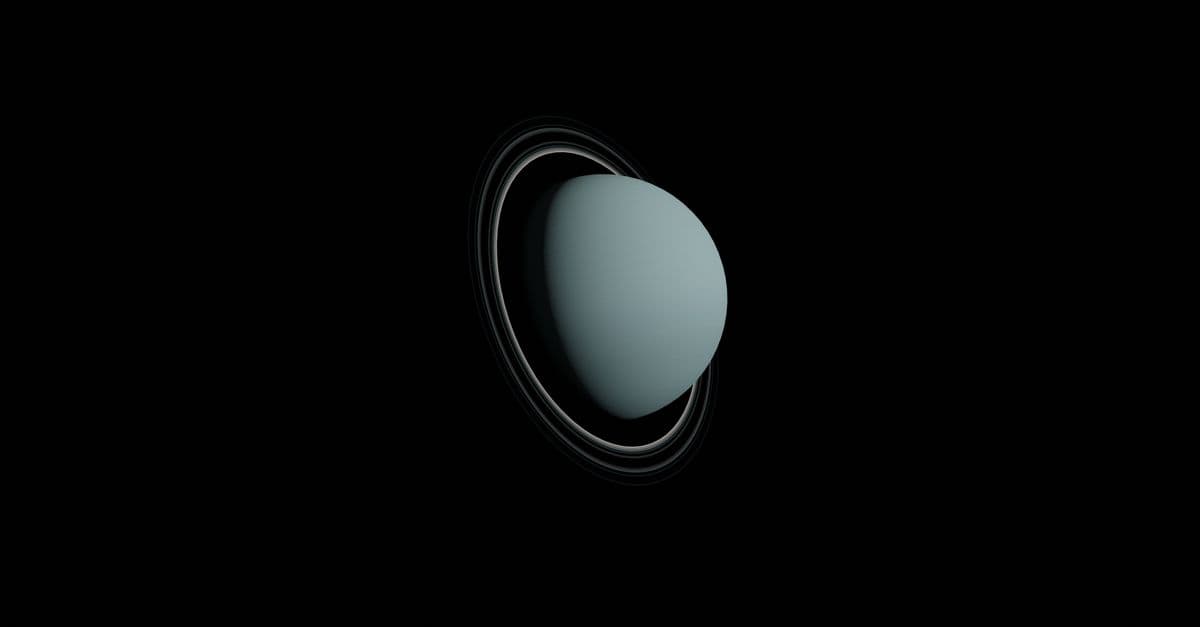
What If We Built a Dyson Sphere Around the Sun?
A Dyson sphere — a structure capturing all of the Sun's energy — would harness 3.86 × 10²⁶ watts, more than a trillion times humanity's current power use. Building it requires more material than exists in any individual planet, but could in principle be done by dismantling Mercury or several asteroids.
The Drake Equation — How Many Aliens Exist?
The Drake Equation estimates how many alien civilizations exist in the Milky Way. Learn each factor, the modern numbers, and what it actually tells us.

The Fermi Paradox — Where Are the Aliens?
If the galaxy has 100 billion stars and is 13.8 billion years old, where is everyone? Eleven serious answers to the Fermi Paradox.

The Dark Forest — Three-Body Problem Explained
Liu Cixin's chilling answer to the Fermi paradox: the universe is a silent hunt, and broadcasting your location is suicide. Here's the theory.