The Drake Equation — How Many Aliens Exist?
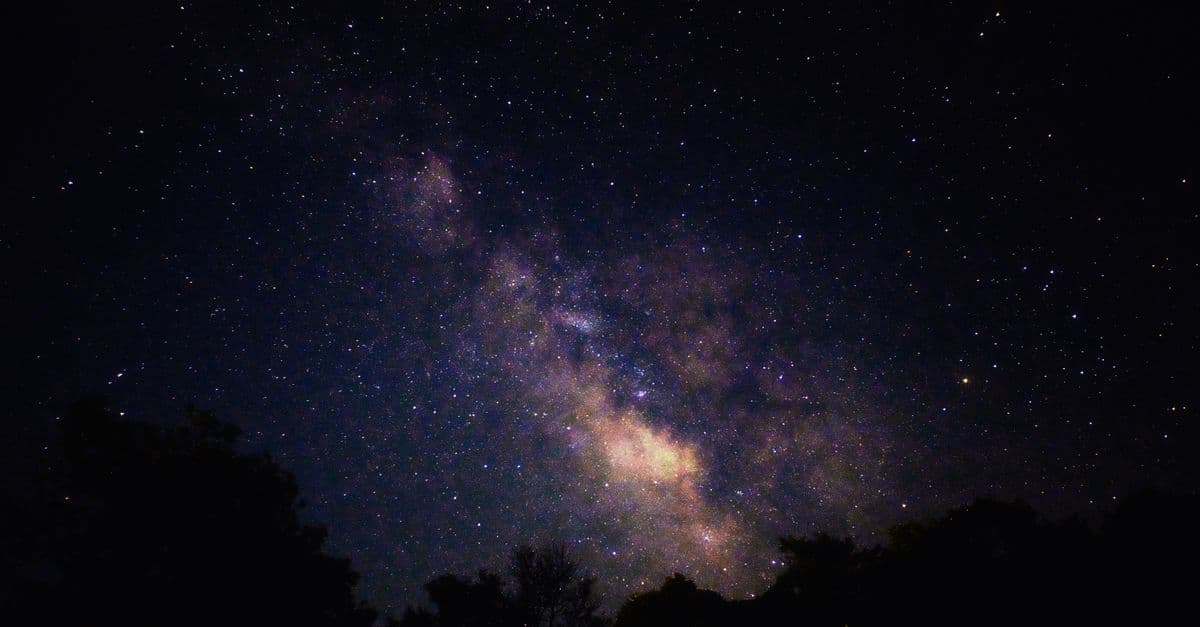
Photo: shota legashvili / Pexels
In November 1961, a small group of scientists met at the National Radio Astronomy Observatory in Green Bank, West Virginia, for the first-ever scientific conference on the search for extraterrestrial intelligence. To structure the discussion, the meeting's organizer — a young radio astronomer named Frank Drake — sketched a simple equation on the chalkboard the night before, as an agenda-organizing tool rather than a scientific prediction. That formula became the most famous equation in astrobiology: the Drake Equation. It multiplies seven factors together to estimate the number of communicating civilizations that might exist in the Milky Way right now.
It does not predict the number of aliens in any strict sense. It is a framework for organizing our ignorance — a checklist of everything we would need to know to answer the question "are we alone?" More than 60 years later, three of its seven terms are essentially solved by direct observation, and four remain almost pure guesswork. Understanding which is which tells you far more about the state of astrobiology than any single number for N ever could.
The Equation, Term by Term
$$N = R_* \times f_p \times n_e \times f_l \times f_i \times f_c \times L$$
Where:
- N = the number of detectable, communicating civilizations in the Milky Way right now
- R* = the average rate of star formation in the galaxy (stars per year)
- f_p = the fraction of stars that host planets
- n_e = the average number of habitable-zone, Earth-like planets per planet-hosting star
- f_l = the fraction of those habitable planets on which life actually arises
- f_i = the fraction of life-bearing planets on which intelligence evolves
- f_c = the fraction of intelligent species that develop technology capable of sending detectable signals into space
- L = the average length of time such a civilization keeps transmitting (in years)
Each term multiplies the last, which means the equation behaves like a funnel: a small change in a late-stage term (especially L) swings the final answer by orders of magnitude, while early terms barely move it once they're pinned down. Think of the equation like a factory assembly line for civilizations. Every stage — star forms, planet forms, life forms, intelligence forms, technology forms, technology persists — has a survival rate. Multiply the survival rates in sequence and you get the number of finished "products" coming out the far end. If any single stage has a near-zero survival rate, nothing downstream matters. That's the core insight the equation was built to expose, not to hide.
Why Drake Wrote It Down in the First Place
Drake wasn't trying to solve astrobiology in an afternoon. He needed an agenda for a two-day meeting with ten attendees, later informally dubbed "the Order of the Dolphin" after a bottle of scotch shaped like a dolphin that attendee John Lilly brought to celebrate his work on dolphin cognition, according to NASA's own history of the meeting (NASA, "SETI: The Search For Extraterrestrial Intelligence"). Drake realized that every open question about the search for extraterrestrial intelligence could be sorted into one of seven boxes, and that sorting them made the discussion tractable even though most of the boxes were empty. That's the equation's real origin: not a formula meant to be solved, but a discussion agenda that happened to be expressible as multiplication.
Walking Through Each Factor — 1961 vs. Today
R* — Star Formation Rate
1961 estimate: roughly 1 star per year, a rough guess based on the galaxy's age and total stellar population.
Modern estimate: approximately 1.5–3 stars per year, based on infrared surveys from the Spitzer and Herschel space telescopes that map star-forming regions across the galactic disk (Robitaille & Whitney, 2010, Astrophysical Journal Letters).
This is the most solid number in the equation. Star formation rate is directly observable — astronomers count young stellar objects, measure infrared emission from dust-shrouded nurseries, and cross-check against supernova remnant statistics. The 1961 guess and the modern measurement land in the same ballpark, which is a rare win for an equation this speculative.
f_p — Fraction of Stars with Planets
1961 estimate: 0.2–0.5, essentially a coin flip based on theoretical planet-formation models with no direct evidence either way.
Modern estimate: approximately 1.0.
This is the single biggest revision the Drake Equation has undergone since 1961, and it happened almost entirely because of one spacecraft. NASA's Kepler Space Telescope, launched in 2009, stared at roughly 150,000 stars for four years and used the transit method (watching for the tiny brightness dip when a planet crosses in front of its star) to confirm thousands of exoplanets. Kepler's statistical surveys, later extended by TESS (the Transiting Exoplanet Survey Satellite, launched 2018), established that planet formation is not the exception around stars, it's the default outcome. Nearly every star in the galaxy is now believed to host at least one planet, with the average closer to two or more (NASA Exoplanet Archive). This factor went from "unknown coin flip" to "essentially settled" within a single generation of astronomers.
n_e — Earth-Like Planets per System
1961 estimate: 1–5 habitable planets per planet-hosting star, again a guess.
Modern estimate: approximately 0.2–0.4 for Sun-like (G-type) stars, based on Kepler's occurrence-rate statistics (Petigura, Howard & Marcy, 2013, Proceedings of the National Academy of Sciences).
Roughly one in five Sun-like stars hosts an Earth-size planet within its habitable zone — the orbital distance range where liquid water could persist on a rocky surface. That number climbs when you include the far more common, smaller, cooler M-dwarf stars, which make up about 75% of all stars in the galaxy. The seven-planet TRAPPIST-1 system, 41 light-years away, is the poster child here: as many as four of its rocky planets (labeled d through h) sit within the habitable zone of their small red star (NASA/JPL TRAPPIST-1 overview). JWST has spent significant observing time on TRAPPIST-1 e specifically, and 2025 transmission-spectroscopy results found that Venus-like or Mars-like thick atmospheres are disfavored, that hydrogen-rich atmospheres are ruled out, and that a thin nitrogen-rich atmosphere with traces of methane and carbon dioxide remains permitted by the data (Glidden et al., 2025, ApJL). No atmosphere has been confirmed on any TRAPPIST-1 planet yet — the star's own surface activity keeps contaminating the spectra — but the fact that we can even ask the question about a specific, named, individual rocky exoplanet 41 light-years away is itself a measure of how far n_e has moved from "guess" to "actively measured."
f_l — Fraction of Habitable Planets Where Life Arises
This is where the equation collapses into pure speculation, and it's worth being honest about exactly how large that collapse is. We know of exactly one data point: Earth. From one data point, you cannot estimate a rate. f_l could plausibly be close to 1 (life is a near-inevitable chemical outcome wherever liquid water, energy, and organic molecules coexist) or it could be as low as 10⁻²⁰ (Earth's origin of life was a staggeringly improbable accident that has essentially never repeated). Serious astrobiologists' published guesses span roughly 20 orders of magnitude — which is another way of saying that, honestly, nobody knows, and pretending otherwise misrepresents the state of the science.
This is not for lack of trying. Origin-of-life researchers have made real progress on individual mechanistic steps — RNA-world chemistry, hydrothermal vent energetics, prebiotic amino acid synthesis in Miller-Urey-style experiments — without being able to stitch those steps into a single probability estimate for how often the whole process succeeds on a random habitable world.
f_i — Fraction Where Intelligence Evolves
Life thrived on Earth for roughly 3.7 billion years before producing a species capable of building radio telescopes, and as far as the fossil record shows, technological intelligence of the human kind evolved exactly once, in one lineage, out of the millions of species that have ever lived on this planet. Was that inevitable given enough time, or a one-off fluke? The paleontologist Stephen Jay Gould famously argued that if you "replayed the tape of life," intelligence of our kind might never re-emerge; the paleontologist Simon Conway Morris argued the opposite, that convergent evolution (the same solution evolving independently multiple times, like eyes or flight) makes something like intelligence a likely outcome of long enough evolutionary time. Neither position has been falsified. We genuinely don't know.
f_c — Fraction That Develop Detectable Technology
Even a genuinely intelligent species might never build anything that leaks electromagnetic radiation into space. Octopuses display sophisticated problem-solving and tool use, but their aquatic environment and lack of manipulable fire access rule out metallurgy and electronics as we know them. A species could be intelligent, even technological, and still never build a radio transmitter, a laser, or anything else we'd currently know how to detect across interstellar distances. f_c could reasonably be anywhere from near 1 down to a small fraction.
L — Civilization Lifetime
This is the dominant factor in the entire equation, by a wide margin. If communicating civilizations last only a century or two before self-destructing, going quiet, or shifting to undetectable communication methods (which is roughly the length of Earth's own radio era so far), N stays vanishingly small no matter how large the earlier terms are. If civilizations instead last for millions of years — Carl Sagan's more optimistic framing — N could be enormous. L's uncertainty alone spans several orders of magnitude, and because it's the last multiplier in the chain, it dominates the final range of N more than any other single term.
The Original Estimate and Its Descendants
At the 1961 Green Bank meeting, Drake's group plugged in the numbers available to them at the time and arrived at an estimate of N ≈ 10,000 communicating civilizations in the Milky Way. Carl Sagan, writing later with I. S. Shklovskii in Intelligent Life in the Universe (1966), pushed the optimistic end of the plausible parameter space and reached figures as high as N ≈ 1,000,000. On the pessimistic end, physicist Frank Tipler and others who assign very low values to f_l, f_i, or L have argued for N ≈ 1 — meaning us, and only us.
The spread between "10,000" and "1" isn't a sign that someone did the math wrong. It's the equation doing exactly what it was built to do: making visible just how much the final answer depends on four numbers nobody can currently measure.
Parameter Ranges — Then and Now
| Factor | Drake's 1961 estimate | Modern best estimate | Confidence level |
|---|---|---|---|
| R* (star formation rate) | ~1/year | 1.5–3/year | High — directly observed |
| f_p (stars with planets) | 0.2–0.5 | ~1.0 | High — Kepler/TESS statistics |
| n_e (habitable planets/star) | 1–5 | 0.2–0.4 (Sun-like stars) | Moderate — Kepler occurrence rates |
| f_l (life arises) | ~1 (optimistic) | 10⁻²⁰ to ~1 | None — single data point |
| f_i (intelligence evolves) | ~1 (optimistic) | 10⁻⁹ to ~1 | None — single data point |
| f_c (detectable technology) | 0.1–0.2 | 0.01 to 1 | None — theoretical |
| L (civilization lifetime, years) | 1,000–100,000,000 | 100 to 10⁹ | None — one ongoing sample (us) |
| N (resulting estimate) | ~10,000 | less than 1 to more than 10 million | Very low |
Table: How each Drake Equation factor's estimated range has changed from the original 1961 Green Bank meeting to current astrobiology and exoplanet-survey data.
The Fermi Paradox — Drake's Uncomfortable Companion Question
If you plug in even modest optimistic numbers for the Drake Equation, you tend to get an N well above 1 — sometimes far above it. That immediately raises a second, harder question, first posed informally by physicist Enrico Fermi over lunch in 1950: if the galaxy should be teeming with civilizations, and the galaxy is roughly 13.6 billion years old (old enough for even slow interstellar colonization to have swept the whole disk many times over), then where is everybody? This tension between "the math says they should be common" and "we've detected exactly zero" is the Fermi Paradox, and it's the essential companion piece to the Drake Equation — one estimates how many civilizations should exist, the other asks why we don't see any of them. We cover the eleven leading proposed resolutions, from the Great Filter to interstellar travel's physical limits, in The Fermi Paradox — Where Are the Aliens?
Criticisms — Is the Drake Equation Actually Useful?
Drake himself was the first to admit the equation is a framework, not a prediction engine. He reportedly said as much at nearly every anniversary retrospective of the 1961 meeting. Several specific criticisms have accumulated in the astrobiology literature since:
- Unknown unknowns. The equation implicitly assumes a roughly Earth-like, carbon-based, radio-transmitting model of civilization. It has no term for panspermia (life spreading between star systems via impact debris), post-biological or artificial intelligence-based civilizations, simulated or virtual existence, or any technology paradigm that doesn't leak electromagnetic radiation the way 20th-century Earth did.
- The Galactic Habitable Zone problem. The equation treats the galaxy as uniform, but some regions are too crowded and supernova-irradiated for stable long-term biospheres, while others are too metal-poor to build rocky planets at all. Spatial structure within the galaxy isn't part of the original formula.
- The independence assumption. Multiplying seven factors together assumes each is statistically independent of the others, but they're plausibly correlated — a planet's habitable-zone lifetime (n_e-adjacent) may directly constrain how much time is available for intelligence to evolve (f_i), for instance.
- The mean-versus-median problem. This is the most consequential modern critique. Sandberg, Drexler, and Ord (2018) showed that when you properly propagate the uncertainty distributions of each Drake factor — rather than multiplying single point estimates — the median outcome for N clusters near 1, even while the average across many simulated draws can look much larger, because a small number of high-N draws skew the mean upward. In plainer terms: past analyses that multiplied "best guess" numbers were quietly hiding just how likely a very small, even lonely, galaxy actually is under the same uncertainty ranges.
The Equation's Real Value
The Drake Equation's brilliance is diagnostic, not predictive. It tells you precisely which of the seven numbers we currently know well (the first two or three) and which we don't (the last four), and it gives every new astrobiology result a specific slot to update. Every new exoplanet catalog, every Mars rover soil analysis, every SETI radio survey that comes back empty, refines one specific term and tightens (or loosens) our estimate of N. That's a genuinely useful function for an equation to serve, even one that will probably never produce a single trustworthy number.
Think of the Drake Equation as being like a household budget spreadsheet built before you know your income. You can lay out every category — rent, food, utilities, savings — and multiply through to a bottom-line number, but if half the categories are blank guesses, the "bottom line" isn't a forecast, it's a to-do list of what you need to find out. That's what the Drake Equation has actually been for 60+ years: a to-do list disguised as an equation.
For instance, finding confirmed microbial life on Mars (in subsurface ice or ancient lakebed sediment) or in the subsurface ocean of Jupiter's moon Europa would push the plausible lower bound on f_l up dramatically, since it would mean life arose independently at least twice in a single solar system. Conversely, a truly exhaustive, deep-drilling search of Mars that comes back empty would nudge estimates of f_l back down, though it would never rule it out entirely — absence of evidence on one planet is weak evidence at best.
Drake vs. Other Frameworks for Thinking About Alien Life
| Framework | What it estimates | Strength | Weakness |
|---|---|---|---|
| Drake Equation | Number of communicating civilizations existing now | Organizes seven distinct unknowns into one structure | Compounding uncertainty across four unmeasurable terms |
| Fermi Paradox | The implication of a plausible N greater than 1 combined with total silence | Anchored in an actual observation (we see nothing) | Not itself quantitative — a question, not a formula |
| Great Filter (Hanson, 1996) | Where in the chain of steps the improbable bottleneck sits | Reframes the paradox as a risk-assessment question for humanity's own future | Currently untestable — we don't know if the filter is behind us or ahead |
| Carter's Doomsday Argument | Our statistical position within a civilization's total timeline | Applies Bayesian reasoning rigorously | Relies on a contested anthropic-reasoning assumption |
| Rare Earth Hypothesis (Ward & Brownlee, 2000) | Whether f_l and f_i are unusually small because complex life requires many coincidences | Makes specific, testable predictions about planetary requirements | Built largely from a single data point (Earth), which is a known statistical weakness |
Table: Five major frameworks scientists and philosophers use to reason about the likelihood and detectability of extraterrestrial life, compared by what each one actually estimates.
What the Search Actually Looks Like Today
The Drake Equation is a thought experiment, but the search for extraterrestrial intelligence it inspired is an active, funded, ongoing observational program. It's worth knowing what real technosignature and biosignature hunting looks like in 2026, because it's the only mechanism by which any term in the equation ever actually moves.
Radio technosignature searches. The Breakthrough Listen initiative, launched in 2015 with a ten-year, $100 million commitment, uses radio telescopes including the Green Bank Telescope and Australia's Parkes (Murriyang) dish to scan nearby stars, the galactic plane, and — in an expansion published in December 2023 — 97 nearby galaxies for artificial narrowband radio signals (Breakthrough Listen, IOPscience, 2023). In October 2024, the project added Italy's Sardinia Radio Telescope to its network, broadening sky coverage further (Breakthrough Initiatives news). A 2025 study reanalyzing the full Green Bank archive with a novel detection algorithm and a separate survey of 27 eclipsing exoplanets selected from the TESS catalog both returned null results — every candidate signal was traced back to human-made radio frequency interference. Those null results aren't failures; they set the most stringent upper limits to date on how common powerful, continuously broadcasting radio transmitters can be within the surveyed volume of space, which is itself a real, if disappointing, update to f_c and L.
Biosignature searches on exoplanet atmospheres. This is the newest and fastest-moving front. JWST's transmission spectroscopy program has already probed TRAPPIST-1's rocky planets multiple times, and while no atmosphere has been confirmed, the 2025 results on TRAPPIST-1 e narrowed the plausible atmospheric compositions considerably, ruling out thick Venus-like or hydrogen-dominated envelopes (arXiv:2509.05407). Future missions explicitly designed for this task, including NASA's planned Habitable Worlds Observatory and ground-based Extremely Large Telescopes under construction in Chile, are being built specifically to search for oxygen, methane, and other biosignature gas combinations in the atmospheres of Earth-size exoplanets.
In-situ life-detection missions. Closer to home, missions targeting Mars's subsurface and the ice-covered oceans of Europa and Enceladus represent the most direct possible test of f_l, because they search for a second, independent origin of life within a single solar system rather than trying to infer biology from a light-year-distant spectrum.
None of these programs will resolve the Drake Equation's four speculative terms overnight. But each one is a real, funded, peer-reviewed mechanism by which an "unknown" term can, over years or decades, become a "measured" one, exactly the way f_p went from a 1961 coin flip to a near-certainty within about fifty years of Kepler-era exoplanet science.
Common Misconceptions About the Drake Equation
"The Drake Equation predicts we're not alone." It does neither — it predicts nothing on its own. Depending entirely on which values you plug into the four speculative terms, you can make it output anything from "we are almost certainly alone in the galaxy" to "the galaxy should be full of civilizations." The equation itself is agnostic; the assumptions you bring to it are what generate the headline number.
"Scientists agree on what N is." They don't, and the disagreement isn't a minor rounding difference — published serious estimates for N span roughly ten orders of magnitude, from "less than one" to "tens of millions." That range is not a bug in the equation; it's an honest reflection of how little is known about four of its seven terms.
"A SETI null result disproves the Drake Equation." A null radio result doesn't disprove anything about the equation's structure. It constrains one specific term (f_c, and indirectly L) within the specific volume of sky and frequency range that was searched. Since Breakthrough Listen and its predecessor projects have covered only a small fraction of the sky, frequency space, and time window in which a signal could theoretically appear, null results tighten upper bounds without coming close to ruling out N greater than 1.
"Since f_l and f_i are unknown, the equation is worthless." This gets the equation's purpose backward. Its value was never in producing a trustworthy final number — it was in making explicit, back in 1961, exactly which of the underlying scientific questions had answers and which didn't. Sixty-plus years later, that diagnostic function still works: it's the reason astrobiologists can point to specific missions (JWST atmospheric spectroscopy, Mars/Europa life-detection landers, next-generation radio surveys) and say precisely which Drake term each one is designed to constrain.
Frequently Asked Questions
Q: Did Frank Drake actually believe his own equation would produce a real number? A: No. He described it repeatedly as a framework for organizing a scientific discussion, not a calculator for a final answer. He emphasized throughout his career that the last four terms are unknowable with the science available in any given era, and that the equation's job was to make that gap visible, not to paper over it.
Q: What's the most rigorous modern estimate of N? A: There isn't a single agreed-upon number, but the most methodologically careful attempt is Sandberg, Drexler, and Ord's 2018 Bayesian analysis, which properly propagates uncertainty through all seven terms instead of multiplying single best-guess values. Their result suggests a non-trivial probability, plausibly in the range of tens of percent, that humanity is alone in the observable galaxy, even using otherwise fairly optimistic input assumptions (arXiv:1806.02404).
Q: How is the Drake Equation different from the Fermi Paradox? A: The Drake Equation estimates how many communicating civilizations should statistically exist in the galaxy right now. The Fermi Paradox asks why, if that number is plausibly large, we haven't detected any of them. They're complementary halves of the same broader question: Drake supplies the "should exist" estimate, Fermi supplies the "then why the silence" challenge. Read the full breakdown of proposed resolutions in The Fermi Paradox — Where Are the Aliens?
Q: Has any Drake factor been fully settled since 1961? A: Yes, two have moved from guesswork to near-certainty. f_p (the fraction of stars with planets) is now understood to be close to 1.0, thanks to NASA's Kepler and TESS exoplanet surveys. n_e (habitable, Earth-size planets per star) is also now constrained by real occurrence-rate statistics, at roughly 0.2 to 0.4 for Sun-like stars, rather than the 1961 team's unconstrained guess of 1 to 5. The remaining four terms — f_l, f_i, f_c, and L — are still effectively unmeasured.
Q: Could the Drake Equation be fundamentally wrong, rather than just uncertain? A: The equation itself isn't "wrong" in a falsifiable sense — it's an accounting identity, a way of decomposing one big unknown into seven smaller ones. But it could be misleading if civilizations are strongly correlated across time or space rather than independent events, for example if a single galaxy-wide catastrophic event (a nearby gamma-ray burst, a wave of self-replicating probes) synchronizes the fate of many potential civilizations at once. The equation's independence assumption doesn't hold in that scenario.
Q: What real experiments or missions could tighten these numbers in the near future? A: Several concrete programs are already underway. JWST and the future Habitable Worlds Observatory are searching exoplanet atmospheres for biosignature gases, directly informing f_l. Mars subsurface drilling missions and proposed landers to Europa and Enceladus test for a second independent origin of life within our own solar system. Breakthrough Listen and its partner radio telescopes continue expanding technosignature searches, constraining f_c and L. Each of these is a real, funded mechanism for converting a guess into a measurement.
Q: Why does the civilization lifetime term (L) matter so much more than the others? A: Because it's the final multiplier in a chain of seven, and because its plausible range is enormous — from a few hundred years (roughly the length of Earth's own radio-broadcasting era so far) to many millions of years. A short L means that even a galaxy that has produced thousands of civilizations over its history might have only one or two transmitting at any given moment, since they'd rarely overlap in time. A long L means civilizations pile up and coexist. No other single term has anywhere near this much leverage over the final answer.
Q: Does a large N from the Drake Equation mean we should expect to find aliens soon? A: Not necessarily. Even a large N tells you nothing about detectability, distance, or willingness to communicate. A civilization could exist a thousand light-years away, using communication technology utterly unlike 20th-century human radio, and remain permanently undetectable to current instruments regardless of how large N actually is. The equation estimates existence, not discoverability.
Q: Is the Rare Earth Hypothesis a rival to the Drake Equation, or does it work within it? A: It works within it. The Rare Earth Hypothesis, proposed by Peter Ward and Donald Brownlee in their 2000 book of the same name, argues that f_l and f_i specifically are far smaller than optimists assume, because complex life requires an unusually long list of coincidences (a stabilizing large moon, a Jupiter-sized planet sweeping up comets, plate tectonics, a particular galactic location, and more). It's a specific, testable claim about two of the Drake Equation's terms, not a replacement for the equation's overall structure.
Q: Why do astronomers still teach and use an equation with four unknown terms? A: Because its usefulness was never contingent on solving it. Every physics and astronomy curriculum that covers the Drake Equation uses it the same way Drake originally intended: as a structured checklist that shows students, in one glance, exactly which parts of the search for life are matters of settled observation and which parts remain genuinely open scientific questions. That teaching function alone has outlived every specific numeric estimate anyone has ever plugged into it.
What this means
The Drake Equation's staying power has nothing to do with accuracy and everything to do with structure. Sixty-plus years after Frank Drake sketched it to fill a two-day meeting's agenda, three of its seven terms have gone from complete guesswork to solid, telescope-measured science, while the other four remain exactly where they started: honest placeholders for questions no one has yet answered. That's not a failure of the equation. It's the equation doing precisely the job it was built for, pointing directly at the four experiments — origin-of-life chemistry, the evolutionary rarity of intelligence, the odds a technological species keeps transmitting, and how long any civilization actually lasts — that would need to be answered before "are we alone" stops being a philosophical question and starts being a scientific one.
Read next:
- The Fermi Paradox — Where Are the Aliens?
- The Dark Forest — Three-Body Problem Explained
- Complete Space Guide 2026
Sources
- Drake, F. (1961). Green Bank Conference notes, National Radio Astronomy Observatory.
- NASA. "SETI: The Search For Extraterrestrial Intelligence." nasa.gov
- Sagan, C. & Shklovskii, I. S. (1966). Intelligent Life in the Universe.
- Robitaille, T. & Whitney, B. (2010). "The Present-Day Star Formation Rate of the Milky Way Determined from Spitzer-Detected Young Stellar Objects." Astrophysical Journal Letters.
- Petigura, E., Howard, A., & Marcy, G. (2013). "Prevalence of Earth-size planets orbiting Sun-like stars." PNAS.
- NASA Exoplanet Archive. exoplanetarchive.ipac.caltech.edu
- NASA/JPL. "TRAPPIST-1 System Overview." exoplanets.nasa.gov/trappist1
- Glidden, A. et al. (2025). "JWST-TST DREAMS: Secondary Atmosphere Constraints for the Habitable Zone Planet TRAPPIST-1 e." Astrophysical Journal Letters. iopscience.iop.org
- JWST-TST DREAMS Collaboration (2025). "NIRSpec/PRISM Transmission Spectroscopy of the Habitable Zone Planet TRAPPIST-1 e." arXiv:2509.05414
- Sandberg, A., Drexler, E., & Ord, T. (2018). "Dissolving the Fermi Paradox." Future of Humanity Institute, Oxford. arXiv:1806.02404
- Hanson, R. (1996). "The Great Filter." Online essay.
- Ward, P. & Brownlee, D. (2000). Rare Earth: Why Complex Life Is Uncommon in the Universe.
- Breakthrough Listen (2023). "Technosignature Search of 97 Nearby Galaxies." Astronomical Journal. iopscience.iop.org
- Breakthrough Initiatives (2024). Sardinia Radio Telescope partnership announcement. breakthroughinitiatives.org
Follow new articles
Add SciHub101 to your feed reader to see new science and technology stories.
About the Author
SciHub101 is an independent science and technology publication founded and edited by Buğra Sözeri, a software engineer and app developer based in Türkiye. AI tools assist with drafting and research. Source documentation in the existing archive is uneven, and articles are being reviewed and corrected. The Editorial Team byline identifies editorial responsibility; it does not certify specialist or independent human review. Where we compare products, anything built by our own team is labelled as such — see the editorial guidelines and About page for how corrections and disclosures work.
Related Articles
How Big Is the Universe? The Real Answer
The observable universe is 93 billion light-years across, but the real universe is far bigger — possibly infinite. Here's how we know.

Asteroid Mining — Trillion Dollar Space Industry
Asteroid mining could unlock trillions in metals and water. Explore the targets, companies, technologies, and economics of mining the sky.

What If Aliens Existed? What Contact Would Actually Look Like
A thought experiment on alien biology, first contact protocols, and Fermi paradox resolutions — what discovering extraterrestrial life would really mean.
The Search for Extraterrestrial Life: Where Do We Stand?
The search for life beyond Earth focuses on two main questions: (1) Has intelligent life evolved elsewhere in the cosmos? (2) Has life in any form (microbial) emerged on exoplanets or moons? The Drake Equation (1961) estimated the number of communicative civilizations in the Milky Way at N = R × f_p × n_e × f_l × f_i × f_c × L, yielding estimates from 1 to 1 million civilizations depending on parameter assumptions. Yet 70 years of SETI (Search for Extraterrestrial Intelligence) has found no confirmed signals. Meanwhile, exoplanet discoveries (5,500+ as of 2026) reveal that habitable-zone Earth-like planets are common. Mars, Europa, and Enceladus show signs of liquid water and reduced carbon compounds. JWST observations have detected biosignature candidates in exoplanet atmospheres. The paradox is stark: habitable worlds appear common, yet no confirmed biosignatures have been found. This article reviews the evidence for habitable zones, biosignature detection, and the Fermi Paradox.

What If We Discovered Intelligent Aliens Tomorrow?
Confirmed contact with an intelligent alien civilization wouldn't just be a science headline. It would trigger a decades-old international protocol, test the resilience of every major religion, and replay a pattern human societies have lived through before: first contact between civilizations of unequal power.

The Fermi Paradox — Where Are the Aliens?
If the galaxy has 100 billion stars and is 13.8 billion years old, where is everyone? Eleven serious answers to the Fermi Paradox.