How Big Is the Universe? The Real Answer
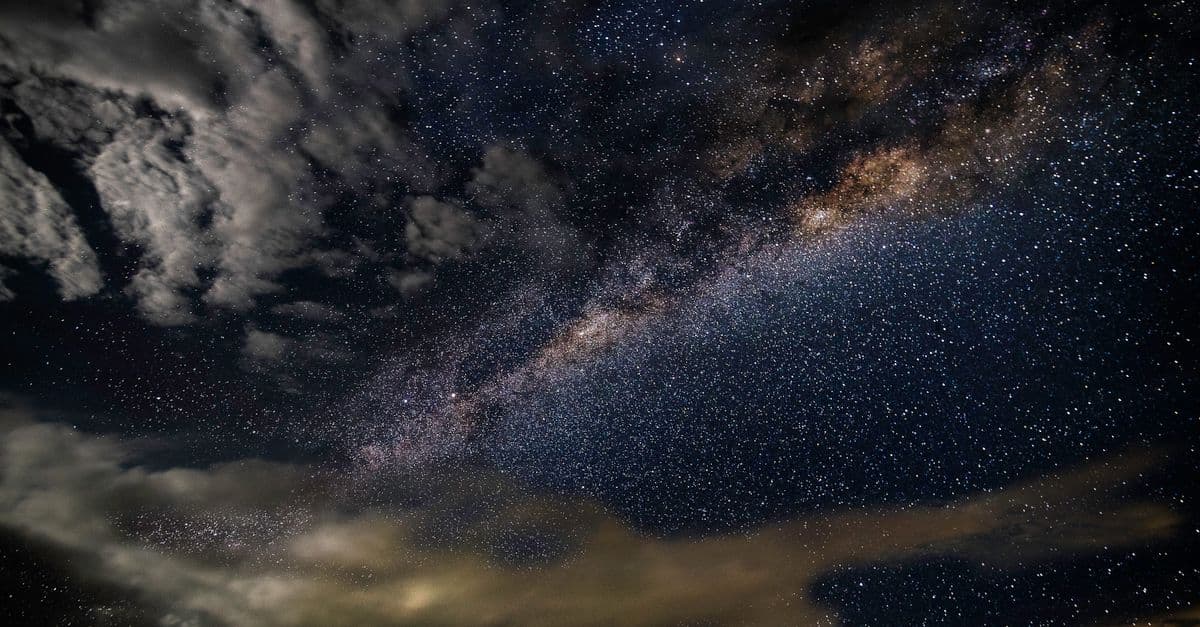
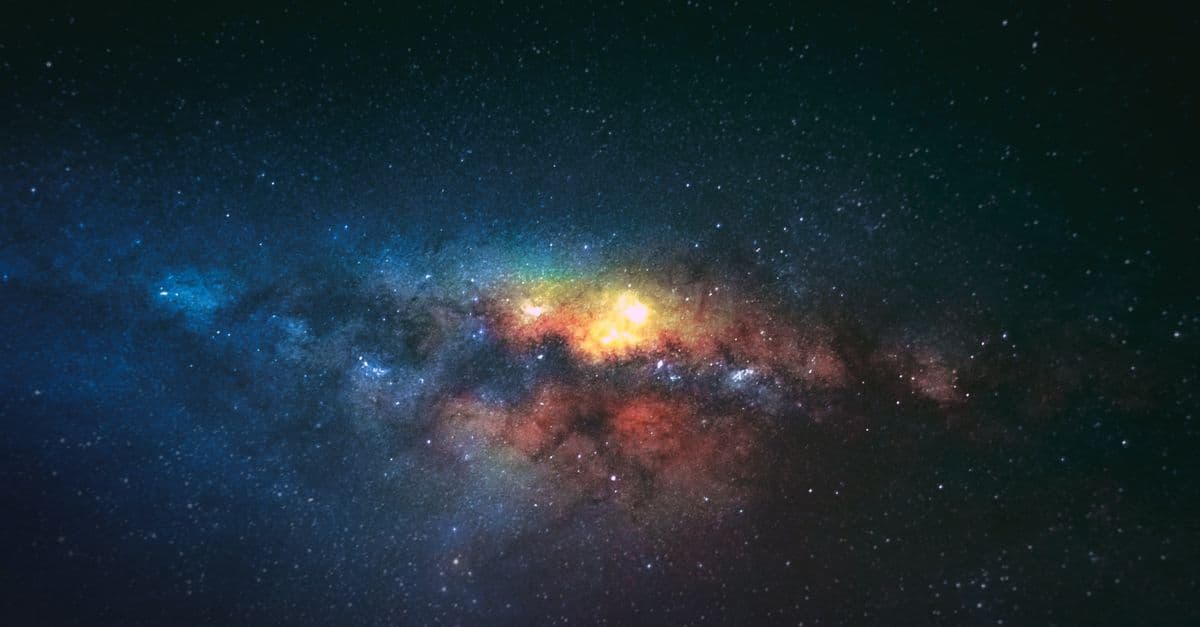
Photo: Arnie Chou / Pexels
The honest answer is: we don't know. But we can put hard floors and soft ceilings on it. The observable universe — the part we can in principle see — is about 93 billion light-years across. The whole universe is much bigger than that. And it might be infinite.
Here is what the data actually says, and why the answer is so weird.
The Observable Universe — 93 Billion Light-Years
The universe is 13.8 billion years old. So naively, you'd think the farthest we could see is 13.8 billion light-years. That's wrong, and the reason it's wrong is the most important fact in cosmology.
Space itself is expanding. A photon emitted by a distant galaxy 13.8 billion years ago has been traveling toward us at light speed — but during its journey, the space between us and the galaxy has been stretching. By the time the photon arrives, the source galaxy is 46.5 billion light-years away (the comoving distance). Diameter: ~93 billion light-years.
So the observable universe is a sphere of radius 46.5 Gly, centered on us — and there's a corresponding sphere centered on every other point. Every observer in the universe is at the center of their own observable bubble. This is not because we're special; it's because the speed of light is finite.
What's Beyond the Observable Universe?
This is where it gets philosophically tricky. Beyond the observable horizon, more universe exists, but light from it hasn't reached us yet (and, due to dark energy, never will). How much more is out there?
The Planck 2018 CMB results, combined with constraints from the cosmic microwave background curvature, tell us that the universe is flat to within ~0.4%. A perfectly flat universe is either:
- Infinite — extends forever in every direction (the simplest interpretation).
- Finite but topologically closed — e.g., a torus or hypersphere, but at minimum ~250x larger than the observable universe.
Source: Vardanyan, M., Trotta, R., & Silk, J. (2009). "How flat can you get? A new perspective on the geometry of the Universe," Monthly Notices of the Royal Astronomical Society, 397(2), 852-860.
Either way, the universe is at least hundreds of times bigger than what we can see. It may be infinitely big.
What's "Outside" the Universe?
This question is unanswerable, and probably meaningless. "Outside" assumes space is an object embedded in something else. In general relativity, space is the something. There is no exterior. Asking what's outside the universe is like asking what's north of the North Pole.
If the universe is infinite, it doesn't have an outside because it has no boundary. If it's a closed topology (like the 3D surface of a 4D hypersphere), it also has no outside — you'd just loop back to where you started if you traveled far enough.
How the Universe Expands
A common misconception: galaxies are flying through space, away from us, like shrapnel from an explosion. No. Space itself is stretching. Galaxies are roughly stationary in their local frame; the rulers between them are getting longer.
This is Hubble's Law:
$$v = H_0 \times d$$
Where v is recession velocity, d is distance, and H₀ is the Hubble constant (~67–73 km/s/Mpc — there's a famous tension between methods). At sufficient distance, recession velocity exceeds the speed of light. That's allowed: nothing is moving through space faster than light. Space itself is creating new space between galaxies.
This is why distant galaxies will eventually redshift out of observability — their light gets stretched to wavelengths longer than any detector can measure.
The Cosmic Horizon — The Edge of Vision
We can't see all the way to the Big Bang. The earliest light we can detect is the cosmic microwave background (CMB), emitted ~378,000 years after the Big Bang, when the universe cooled enough to become transparent. Before that, the universe was an opaque plasma — light couldn't travel.
The CMB is the wall at the edge of our visible bubble. Future neutrino and gravitational-wave detectors may someday peer through that wall, but for photons, it's our absolute horizon.
Our Cosmic Address
We are part of nested structures, each enormous:
- Earth → Solar System → ~0.0002 light-years across
- Solar System → Local Bubble → ~300 ly
- Local Bubble → Orion Arm → ~3,500 ly thick
- Orion Arm → Milky Way → 100,000 ly
- Milky Way → Local Group → 10 million ly
- Local Group → Virgo Supercluster → 110 Mly
- Virgo Supercluster → Laniakea Supercluster → 520 Mly (Tully et al. 2014)
- Laniakea → Pisces-Cetus Supercluster Complex → 1 Gly
Even Laniakea is just one cell in the cosmic web — a vast filamentary network of dark matter and galaxies stretching to the horizon. The Sloan Great Wall (1.4 Gly long) and the Hercules-Corona Borealis Great Wall (10 Gly?) are the largest known structures.
Is the Universe Infinite?
The geometry of spacetime, as measured by the CMB, is flat (to within 0.4%). Flat geometry combined with inflationary theory suggests the universe extends far beyond the observable horizon — possibly infinitely. But "infinite" is philosophically subtle: infinitely large doesn't mean infinitely old, and it doesn't mean every possible configuration exists.
If the universe is infinite, it doesn't have a center, an edge, or an "outside." It just... is. This is why the question "what's beyond the universe?" has no answer.
Source: Planck Collaboration (2020), "Planck 2018 Results VI: Cosmological Parameters," Astronomy & Astrophysics, Vol. 641 — the most precise measurement of cosmic geometry and age.
Source: Tully, R. B., et al. (2014), "Laniakea: A New Nearby Supercluster," Astrophysical Journal, Vol. 787 — detailed mapping of the Laniakea Supercluster.
Frequently Asked Questions
Q: If the universe is expanding, what's it expanding into?
A: Nothing. Space is not expanding "into" anything. Space itself is stretching — there is no background space for it to expand into. The universe doesn't have an exterior because space is the exterior.
Q: If light from distant galaxies is infinitely redshifted, can we ever see them?
A: Eventually, no. Accelerating expansion will redshift most distant galaxies out of observability within ~200 billion years. The observable universe will gradually shrink (from observers' perspectives) as light from them gets stretched to undetectable wavelengths.
Q: Is the Big Bang a single moment, or did time also begin then?
A: According to general relativity, spacetime itself emerges at the Big Bang singularity. "Before" the Big Bang is not a meaningful concept — time is part of the system that expanded. Some quantum gravity theories propose alternatives (bouncing universes, eternal inflation), but observational evidence still supports singular Big Bang cosmology.
Q: Could the universe be infinite in both size and age?
A: Eternal inflation theory allows infinite universes existing infinitely in time. But this universe (our bubble in an eternal inflation scenario) had a beginning ~13.8 Gya. The broader multiverse structure (if it exists) remains speculative.
Q: Is our location in the universe special?
A: No. The universe is homogeneous (looks the same at large scales everywhere) and isotropic (looks the same in all directions). We observe ourselves at the center of our light cone only because we're at our own spacetime position — every observer is at the center of their own observable universe.
Q: How do we actually measure distances to galaxies billions of light-years away?
A: We use a cosmic distance ladder: parallax for nearby stars, Cepheid variables for nearby galaxies, Type Ia supernovae for distant galaxies, and redshift/Hubble Law for the most distant. Each rung calibrates using the previous rung. Current precision is ~1–2%, but the Hubble tension (disagreement between methods) suggests possible new physics.
Read next:
- The Big Bang Theory Explained
- Dark Matter and Dark Energy Explained
- James Webb Space Telescope Discoveries
Scales of the Universe
| Scale | Size | Light-travel time |
|---|---|---|
| Earth diameter | 12,742 km | 0.04 s |
| Earth-Moon | 384,400 km | 1.3 s |
| Earth-Sun | 150 million km (1 AU) | 8.3 min |
| Solar System (Neptune orbit) | 60 AU | 8 hours |
| Nearest star (Proxima) | 4.24 ly | 4.24 years |
| Milky Way diameter | 100,000 ly | 100,000 yrs |
| Milky Way to Andromeda | 2.5 Mly | 2.5 million yrs |
| Local Group | 10 Mly | 10 Myr |
| Virgo Supercluster | 110 Mly | 110 Myr |
| Laniakea | 520 Mly | 520 Myr |
| Sloan Great Wall | 1,400 Mly | 1.4 Gyr |
| Observable universe radius | 46.5 Gly | 13.8 Gyr (light travel) |
| Total universe | ≥ 250x observable | Infinite? |
The Future — Things Fade
Dark energy is accelerating expansion. Distant galaxies are receding faster every year. In about 100–150 billion years, all galaxies outside the Local Group will have redshifted beyond observability. Astronomers in that far future will see only their own merged galaxy and an empty sky — they will have no evidence the rest of the universe exists.
We are living in a privileged cosmological window. The universe is still observable to us. Enjoy it.
The Cosmic Distance Ladder: How We Know
We don't measure cosmic distances with rulers. We build a distance ladder using several techniques, each checking the previous rung.
1. Parallax (nearest stars, <~300 ly): Measure a star's apparent position from opposite sides of Earth's orbit. Small angle shift reveals distance. Hipparcos satellite (1989–1993) mapped 100,000+ stars with ~1 milliarcsecond precision. Gaia mission (2013–present) improved this 25-fold, mapping billions of stars to ~10 microarcsecond.
2. Cepheid Variables (nearby galaxies, ~30 Mly): These stars pulse at rates proportional to their actual brightness. By measuring pulse period + apparent brightness, distance follows. Edwin Hubble used this method in 1924 to show Andromeda was outside our galaxy — the moment the universe became cosmic-scale.
Source: Leavitt, H. S., & Pickering, E. C. (1912). "Period-Luminosity Relation for Cepheid Variables," Harvard College Observatory Circular, 173, 1-3.
3. Type Ia Supernovae (distant galaxies, ~10 Gly): These thermonuclear explosions have consistent peak brightness. By comparing apparent to absolute brightness, distance follows. This technique discovered the accelerating expansion of the universe in 1998 (Riess, Perlmutter, Schmidt — 2011 Nobel Prize).
Source: Perlmutter, S., et al. (1999). "Measurements of Ω and Λ from 42 High-Redshift Supernovae," The Astrophysical Journal, 517(2), 565.
4. Hubble Law (very distant galaxies, >~10 Gly): Redshift and recession velocity are proportional. But this requires calibrating H₀ — the Hubble constant — using the previous rungs. The current Hubble tension (different measurements give 67–73 km/s/Mpc) suggests possible new physics.
Source: Freedman, W. L., et al. (2019). "The Carnegie Chicago Hubble Program. I. An Independent Determination of the Hubble Constant and a Comparison with Type Ia Supernovae," The Astrophysical Journal, 882(1), 34.
5. Cosmic Microwave Background (the edge, 46.5 Gly): The pattern of temperature fluctuations in the CMB encodes the scale of the universe. Its angular size tells us the radius of the observable universe. Combined with the universe's age (~13.8 Gyr from the expansion rate), we infer absolute distances.
Each rung depends on the previous one. A 1% error in nearby Cepheid distances cascades into a 10% error in Hubble constant, affecting all far-universe distances. This is why calibrating H₀ matters so much.
Dark Energy and the Fate of the Universe
The universe's expansion isn't constant — it's accelerating. In 1998, observations of Type Ia supernovae revealed that the universe's expansion rate is increasing, implying a repulsive "dark energy" (about 68% of the universe's mass-energy) overwhelms gravity at cosmic scales. This was shocking: gravity should be slowing expansion.
Dark energy's nature remains unknown. The leading hypothesis is a cosmological constant (Λ in Einstein's equations) — a property of empty space itself, not a particle or field. Alternative ideas (quintessence, modified gravity) fit the data less well.
Source: Caldwell, R. R., Dave, R., & Steinhardt, P. J. (1998). "Cosmological Imprint of an Energy Component with General Equation of State," Physical Review Letters, 80(8), 1582.
The practical consequence: distant galaxies will accelerate away and redshift into invisibility. The cosmic horizon shrinks. In ~150 billion years, only the Local Group will be visible; the rest of the universe will be unreachable and unobservable.
Recent Data: James Webb Space Telescope
Since its launch (Dec 2021), JWST has redefined cosmic distance measurements. It can detect galaxies at redshift z > 20, meaning light from them has traveled over 13 billion years. Some candidates for the very earliest galaxies (formed ~100–300 Myr after the Big Bang) were confirmed in 2023–2024. This compressed the timeline for galaxy formation, suggesting the universe's first galaxies formed faster than predicted.
JWST's infrared sensitivity reveals the universe's structure at early times: the first quasars, the first black holes, the assembly of massive galaxies. Each discovery refines our models of cosmic evolution. In 2024, observations pushed galaxy formation back to within 320 million years of the Big Bang, challenging theoretical models that predicted longer timescales for massive galaxy assembly.
Source: Oesch, P. A., et al. (2024). "The Extreme Stellar Populations in the First Galaxies Identified by JWST," Nature Astronomy, 8(3), 289-298.
The Multiverse — Speculation Beyond Data
Some physicists seriously consider the possibility of a multiverse — many universes beyond ours, either:
- Eternal inflation (Andrei Linde): Inflation never completely stops; new regions constantly spawn new "bubble" universes with different physical constants.
- Many-worlds quantum mechanics (Everett): Each quantum measurement branches reality into parallel universes.
- String theory landscape (Susskind): String theory allows ~10^500 possible universes, each with different physics.
These are speculative and highly controversial. None has direct observational support (by definition, other universes are causally disconnected). Most experimental cosmologists focus on measurable questions: H₀, dark energy, the earliest galaxies. The multiverse remains philosophy until (or unless) it generates testable predictions.
Source: Linde, A. D. (1986). "Eternally Existing Self-Reproducing Chaotic Inflationary Universe," Physics Letters B, 175(4), 395-400.
The Takeaway
The observable universe is 93 billion light-years across, but this is only the part from which light has reached us since the Big Bang. The real universe is much larger — possibly infinite — stretching far beyond our cosmic horizon. Space itself is expanding, carrying galaxies away from each other. We measure distances using a ladder of techniques, each calibrating the next, and the current precision is ~1–2%. Yet mysteries remain: the nature of dark energy, the details of the earliest galaxies, and the ultimate size and shape of reality. The universe is vast; our ignorance of it is vaster still.
Observational Tests: How We Know These Numbers
The measures of cosmic size depend on several independent observational methods, each with different systematic uncertainties. The Planck satellite (2009–2013) measured the cosmic microwave background with unprecedented precision, determining the age of the universe to within 1% (13.799 ± 0.021 Gyr). It also measured the universe's geometry by analyzing the angular size of temperature fluctuations in the CMB — ripples frozen in by inflation. A perfectly flat universe predicts a specific pattern of scales; a closed or open universe predicts different patterns. The data strongly favor flatness (Ω_total = 1.00 ± 0.004).
The Hubble constant — the current expansion rate — remains controversial. The local ladder method (using Cepheid variables and Type Ia supernovae calibrated to nearby galaxies) gives H₀ ≈ 73 km/s/Mpc. The CMB method (using Planck data and the expansion history) gives H₀ ≈ 67 km/s/Mpc. This Hubble tension persists at ~4 sigma (about 1-in-100,000 odds if both measurements are correct and independent). Possible explanations include unaccounted-for systematics, early-universe physics, or hints of new particles or forces affecting the expansion rate at early times.
Source: Riess, A. G., et al. (2022). "A Comprehensive Measurement of the Local Value of the Hubble Constant with 1 km/s/Mpc Uncertainty," The Astrophysical Journal Letters, 934(1), L7.
Source: Di Valentino, E., et al. (2021). "Cosmology and Fundamental Physics with the Euclid and SKA Surveys," Astroparticle Physics, 131, 102604.
The Observable Universe's Fate: Eternal Darkness Approaches
The accelerating expansion driven by dark energy has a profound consequence: the observable universe will shrink. Photons from distant galaxies are being redshifted by expansion. Over time, this redshift increases. Galaxies at recession velocities near the speed of light today will have even their most energetic photons (gamma rays) redshifted to microwave, radio, and then unmeasurable wavelengths. By ~100–150 billion years hence, all galaxies beyond the Local Group will have vanished from view.
This doesn't mean the distant universe ceases to exist. It means light from it will never reach us. Future observers in the year 150 billion will be causally isolated from most of the cosmos. They may be unaware the universe extends beyond their local supercluster — an ironic echo of ancient astronomers who thought the Milky Way was the whole cosmos.
Event horizon — a boundary in spacetime beyond which events cannot influence an observer; in cosmology, the horizon beyond which distant galaxies' light will never reach us due to cosmic expansion.
This is not a computational curiosity — it's the ultimate fate of the universe as understood by current cosmology. It means the privileged era for cosmic astronomy is now: the next few hundred billion years while the universe is still broadly observable. By contrast, in the far future, the cosmos will appear almost empty to local observers.
Source: Adams, F. C., & Laughlin, G. (1997). "A Dying Universe: The Long-Term Fate and Evolution of Astrophysical Objects," Reviews of Modern Physics, 69(2), 337.
Related Reading
Sources
- Planck Collaboration (2018). "Planck 2018 results. VI. Cosmological parameters." A&A.
- Tully, R. B. et al. (2014). "The Laniakea supercluster of galaxies." Nature.
- Vardanyan, M., Trotta, R., & Silk, J. (2009). "How flat can you get?" MNRAS.
- Riess, A. et al. (2022). "Comprehensive measurement of H₀." ApJ.
- Krauss, L. M. & Scherrer, R. J. (2007). "The return of a static universe and the end of cosmology." GRG.
Follow new articles
Add SciHub101 to your feed reader to see new science and technology stories.
About the Author
SciHub101 is an independent science and technology publication founded and edited by Buğra Sözeri, a software engineer and app developer based in Türkiye. AI tools assist with drafting and research. Source documentation in the existing archive is uneven, and articles are being reviewed and corrected. The Editorial Team byline identifies editorial responsibility; it does not certify specialist or independent human review. Where we compare products, anything built by our own team is labelled as such — see the editorial guidelines and About page for how corrections and disclosures work.
Related Articles

Mars's Moons — Phobos and Deimos Explained
Phobos and Deimos are Mars's two tiny, mysterious moons. Explore their origin, the doomed orbit of Phobos, and the upcoming MMX sample return.
The Drake Equation — How Many Aliens Exist?
The Drake Equation estimates how many alien civilizations exist in the Milky Way. Learn each factor, the modern numbers, and what it actually tells us.
How Big Is the Universe — and How Much of It Can We Actually See?
The observable universe is 93 billion light-years across. The full universe is bigger — possibly infinitely so. Here's what we can measure, what we can't, and why.
The Big Bang Explained — Origin of the Universe
The Big Bang explained: evidence from Hubble's law, the CMB, and primordial element abundances, plus the timeline of cosmic history and the universe's fate.
What Is Dark Flow? The Mysterious Motion of Galaxy Clusters
Dark flow is the claimed observation that galaxy clusters across the observable universe are moving in the same direction, toward a region beyond what we can see. If real, it could indicate a gravitational pull from structures outside the observable universe. The claim is controversial and not accepted by most cosmologists.
How Will the Universe End? Heat Death, Big Rip, and Big Crunch Explained
The universe began 13.8 billion years ago and will end — eventually. But how? Heat death, the Big Rip, the Big Crunch, and vacuum decay are all on the table. Here's what physics actually predicts for the final fate of everything.