What Is Dark Flow? The Mysterious Motion of Galaxy Clusters
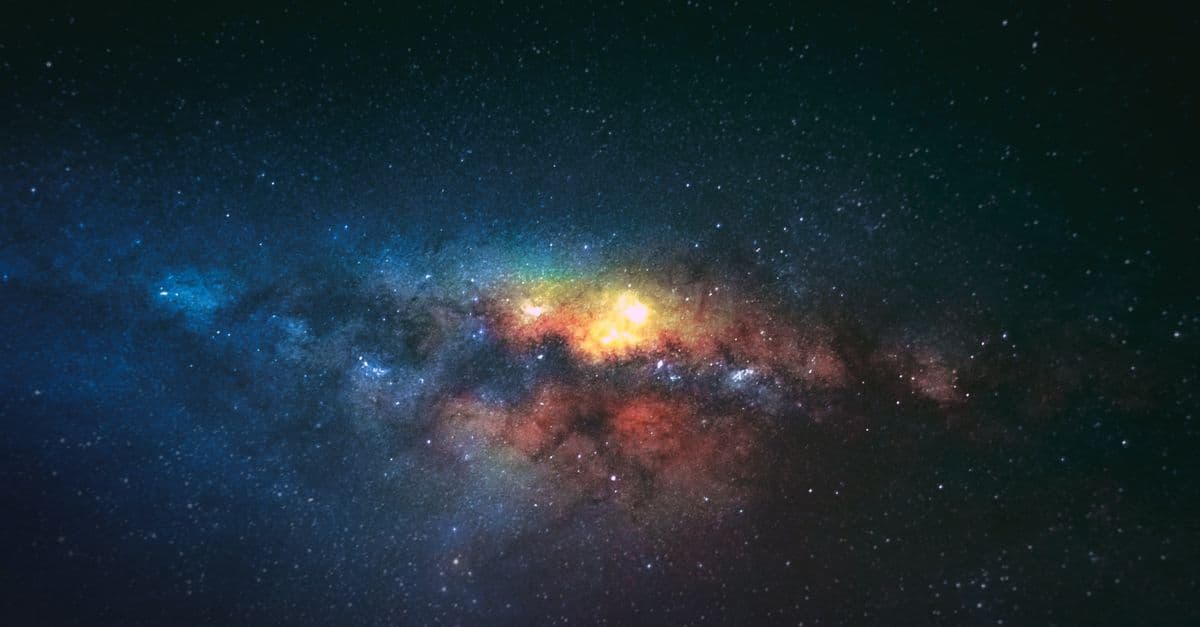
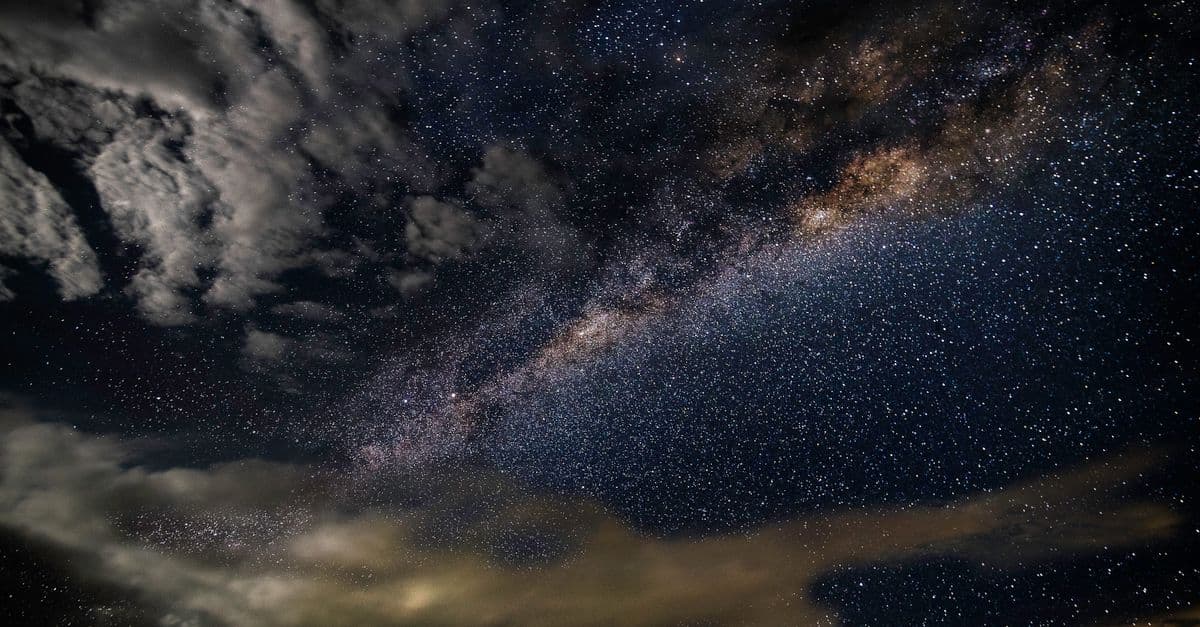
Photo: Rafael Cerqueira / Pexels
In 2008, a NASA team led by Alexander Kashlinsky reported that about 700 galaxy clusters appeared to share a motion in one direction, a drift toward the southern constellations Centaurus and Hydra that standard cosmology does not predict. They called it dark flow. Later analyses, including the Planck satellite's, found no such motion, and the claim remains disputed. Here is how the measurement works, why it is so hard, and what would settle it.
The short version
Dark flow is not an established discovery, and it is not a debunked hoax either. It is a measurement claim sitting in the uncomfortable middle: published in a peer-reviewed journal, defended for years by its authors, and contradicted by the best independent data set available.
Three facts frame everything that follows.
- The original claim used the kinematic Sunyaev-Zel'dovich (kSZ) effect, a tiny shift in the temperature of microwave background light caused by the motion of hot gas in galaxy clusters.
- The signal is far smaller than the noise in any single cluster, so the result depends entirely on statistics and on the details of how the microwave background map is filtered.
- The Planck collaboration, using a more sensitive satellite and an independent cluster catalog, found no bulk flow, which is why most cosmologists regard dark flow as unconfirmed.
The rest of this piece unpacks each of those points, because the controversy is a useful case study in how cosmologists extract faint signals from the oldest light in the universe.
What "peculiar velocity" means, and why large scales should be calm
Space itself is expanding, which carries galaxies apart from one another. This smooth recession is called the Hubble flow, and it is the dominant motion of distant galaxies (see what Hubble's law says about the expanding universe). Think of raisins in rising bread dough: every raisin moves away from every other raisin because the dough between them swells, not because the raisins are walking.
Galaxies also move through space, on top of the expansion. That extra motion is the peculiar velocity, and it is caused by gravity. A galaxy near a heavy concentration of mass gets pulled toward it, the way a boat on a calm lake drifts if someone opens a drain nearby. Peculiar velocities of a few hundred kilometers per second are normal for galaxies and clusters.
The standard model of cosmology, called Lambda-CDM (a universe made mostly of dark energy and cold dark matter, with ordinary matter as a small ingredient), makes a firm prediction about these motions. Averaged over a large enough region, the pulls from mass in every direction should roughly cancel. The bigger the volume you average over, the smaller the leftover net drift should be, because the universe is expected to look statistically the same everywhere on large scales. That assumption is the cosmological principle: no special place, no special direction.
You can see why a large coherent drift would be a surprise. It would mean that the matter on one side of a very large region is not balanced by matter on the other.
A familiar local example
Our own neighborhood shows that the principle has limits at modest scales. The microwave background has a dipole, one side of the sky slightly hotter and the other slightly cooler, produced by our motion through space. The solar system moves at about 369.82 km/s relative to the microwave background, and the Local Group of galaxies moves at roughly 620 km/s, according to the summary of dipole measurements on Wikipedia. That motion is real and well measured. The open question dark flow raises is whether the pull continues, unbalanced, out to billions of light-years.
How galaxy clusters can reveal a flow: the kinematic Sunyaev-Zel'dovich effect
To detect a drift of clusters across the universe, you need a way to measure motion along the line of sight at enormous distances. Redshift cannot do it directly, because the expansion contributes a redshift that swamps the few hundred kilometers per second you are looking for. Kashlinsky's team used a different handle: the way moving gas imprints a signature on the cosmic microwave background, the faint glow left over from when the universe became transparent about 379,000 years after the Big Bang.
A galaxy cluster is a gravitationally bound collection of hundreds to thousands of galaxies, filled with gas heated to tens of millions of degrees. When microwave background photons pass through that gas, some of them scatter off the fast-moving electrons and gain energy. This is the thermal Sunyaev-Zel'dovich (tSZ) effect, first detected from clusters in 1984. It is the larger of the two effects.
The kinematic version (kSZ) is subtler. If the whole cluster, gas and all, is moving toward or away from us, the scattered photons pick up a Doppler shift from that bulk motion. Moving toward us makes the background look slightly hotter at the cluster's position, and moving away makes it slightly cooler. The size of the temperature change is proportional to the cluster's line-of-sight speed and to its optical depth (how much gas the light crosses). The relation is written ΔT = −T × (v/c) × τ, where T is the background temperature of about 2.7255 K, v is the velocity, c is the speed of light, and τ is the optical depth.
Statistical detections of the kSZ effect came only in 2012, from the Atacama Cosmology Telescope, according to the Wikipedia overview of the effect. That date matters: the dark flow papers of 2008 and 2010 were trying to use a signal that nobody had yet cleanly measured in individual objects.
A back-of-envelope sense of scale
The following is an illustrative calculation, not a figure from any paper. Take a massive cluster with an optical depth around 0.01. A line-of-sight speed of 300 km/s is about 0.1 percent of the speed of light, so the temperature shift is roughly 2.7255 K × 0.001 × 0.01, or about 27 microkelvin. At 1,000 km/s the shift would be about 90 microkelvin.
Those numbers sound big, but they sit on top of two contaminants. One is the thermal effect from the same cluster, which is larger. The other is the primordial temperature ripple in the microwave background itself, about one part in 100,000 of 2.7 K, which means tens of microkelvin on exactly the angular scales of a cluster. Pulling a kSZ signal out of a single cluster is like trying to hear one voice in a stadium crowd.
Why a dipole is the telltale sign
The trick Kashlinsky's group used rests on symmetry. The thermal effect has the same sign for every cluster, so across a large sample it adds up to a constant offset, a monopole. A coherent bulk flow behaves differently. Clusters on one side of the sky are mostly moving toward us along the line of sight and clusters on the opposite side are mostly moving away, so the kSZ temperature shifts form a dipole pattern, hotter in one hemisphere and cooler in the other.
Averaging over hundreds of clusters, the random motions of individual clusters cancel and a bulk flow, if present, should survive. This is like a pollster who cannot know any one voter's choice but can estimate an election result from a thousand responses. The method works only if the errors are understood, which is where the argument starts.
The 2008 and 2010 claims
In September 2008, Alexander Kashlinsky, Fernando Atrio-Barandela, Dale Kocevski, and Harald Ebeling posted a paper that appeared in The Astrophysical Journal Letters, volume 686, page L49. They combined the three-year release of data from the Wilkinson Microwave Anisotropy Probe (WMAP) with the largest all-sky X-ray cluster catalog then assembled, reporting a "strong and coherent bulk flow" on scales out to at least 300 h⁻¹ Mpc, a result that, in their view, was hard to reconcile with the standard model. The paper is on arXiv as 0809.3734.
Two notes on units. A megaparsec (Mpc) is about 3.26 million light-years. The "h" is the Hubble constant expressed in units of 100 km/s/Mpc, a bookkeeping factor that lets astronomers quote distances without committing to one value of the expansion rate. With h near 0.7, 300 h⁻¹ Mpc is roughly 430 Mpc, or about 1.4 billion light-years.
A second paper, published in March 2010 in The Astrophysical Journal Letters (volume 712, page L81), roughly doubled the cluster sample and used five-year WMAP data. NASA's summary, republished by ScienceDaily, said the earlier study used a catalog of 700 clusters, that the flow ran along a line toward the southern constellations Centaurus and Hydra at about a million miles per hour, and that it now extended to about 2.5 billion light-years, roughly twice the first estimate. Kashlinsky was quoted as saying, "This is not something we set out to find, but we cannot make it go away."
The team's own 2012 review reports a highly significant dipole out to roughly 800 Mpc and argues that the flow may extend across the whole observable universe. It is available as arXiv:1202.0717.
Why the name
The name echoes dark matter and dark energy: something unseen exerting a gravitational influence. In the dark flow case, the unseen influence would not be a new substance but ordinary matter or some structure lying beyond the visible edge of the cosmos, whose pull we sense only through its effect on what we can see.
Why a real dark flow would be extraordinary
Two features made the claim striking.
The amplitude. In Lambda-CDM, the expected bulk flow shrinks as you average over larger volumes. A different measurement approach, based on galaxy peculiar velocities, comes up again below. A drift of several hundred kilometers per second persisting out to a gigaparsec (a billion parsecs, about 3.3 billion light-years) would be far outside what the standard model expects.
The depth. The observable universe has a comoving radius of about 46.5 billion light-years, according to the Wikipedia article on the observable universe. Comoving distance means the present-day separation after accounting for expansion during the light's journey. If a coherent flow spanned a large fraction of that radius, no known structure inside our horizon could supply the pull, because the mass distribution we can map is too well balanced.
That leaves the idea Kashlinsky's team highlighted: the source might lie outside the observable universe. Our observable universe is only the part from which light has had time to reach us since the Big Bang. The total universe may be much larger, possibly infinite, and the same physics presumably continues beyond the horizon.
The theoretical escape routes
A few families of proposals try to accommodate such a flow. In "tilted universe" models, the large-scale density of the universe is not perfectly uniform but changes slowly across scales bigger than the horizon, leaving a gentle gradient that pulls everything we see in one direction. Others invoke relics of the era before cosmic inflation, the brief burst of extremely rapid expansion in the early universe. Inflation stretches tiny fluctuations to enormous sizes, so a fluctuation much longer than our horizon is allowed in principle.
The authors of the 2012 review mention constraints on pre-inflationary spacetime structure and possibly higher-dimensional gravity among the implications. These are speculative ideas built to fit a claimed signal, not predictions that came before the data.
Why most cosmologists are skeptical
Three lines of argument stand against the claim, and the first is the strongest.
The Planck non-detection
Planck, the European Space Agency's microwave background satellite, mapped the sky with greater sensitivity and resolution than WMAP. In the paper "Planck intermediate results. XIII. Constraints on peculiar velocities" (arXiv:1303.5090), the collaboration combined Planck maps with the Meta-Catalogue of X-ray detected Clusters (MCXC) and searched for the kSZ signature with several filters.
Their findings:
- The average radial peculiar velocity of the cluster sample (mean redshift about 0.18) came out at 72 ± 60 km/s, less than one percent of the sample's Hubble velocity.
- The expected rms radial velocity of clusters at redshift 0.15 in Lambda-CDM is about 230 km/s, and the 95 percent upper limit from the data was 800 km/s, so the data neither confirm nor strongly challenge the standard value on this particular measure.
- No bulk flow was detected in comoving spheres centered on the Local Group out to the sample's maximum redshift, and a blind search placed a 95 percent upper limit of 254 km/s.
The authors concluded that the universe appears largely homogeneous on gigaparsec scales and that the data are consistent with Lambda-CDM. The roughly one million miles per hour (about 450 km/s) in NASA's 2010 summary of the dark flow claim is well above that limit.
An independent statistical check
Soon after the first claim, Ryan Keisler re-examined the 2008 analysis in a paper published in The Astrophysical Journal Letters, volume 707, page L42 (arXiv:0910.4233). His central point was that the residual microwave background in the filtered WMAP maps is correlated across the eight WMAP frequency channels used, and that the original error estimate did not account for those correlations. Including them, he found the significance of the detection fell to 0.7 sigma, which is statistically negligible.
Atrio-Barandela has since published analyses of Planck data that he reports are consistent with the original WMAP findings, so the dispute has continued rather than closed.
The foundation it would shake
The cosmological principle is supported by the microwave background itself, which is uniform to about one part in 100,000 across the whole sky. Overturning homogeneity at the scale of the horizon requires evidence strong enough to survive any plausible systematic error. A signal that appears with one data set and one filter, and vanishes with another, has not yet met that standard.
What the dark flow authors say
The Kashlinsky group's 2012 review says the discrepancies raised by two then-recent claims based on modified microwave background analysis methods are resolved, and Atrio-Barandela has reported Planck-based results consistent with the original finding. In their reading, the difference is a matter of technique rather than a refutation. Neither camp has fully convinced the other, which is why a fair summary is "unconfirmed, and contradicted by the best current data," not "disproved."
The table below lines up the main analyses.
| Analysis | Year | Data | Main result |
|---|---|---|---|
| Kashlinsky et al., ApJL 686, L49 | 2008 | WMAP 3-year, about 700 X-ray clusters | Coherent bulk flow to at least 300 h⁻¹ Mpc |
| Keisler, ApJL 707, L42 | 2009 | Same WMAP data | Significance reduced to 0.7 sigma |
| Kashlinsky et al., ApJL 712, L81 | 2010 | WMAP 5-year, about double the clusters | Flow to roughly 2.5 billion light-years, toward Centaurus and Hydra |
| Planck Collaboration, intermediate results XIII | 2013 | Planck maps plus MCXC clusters | No bulk flow; 95% upper limit 254 km/s |
A different kind of evidence: bulk flows from galaxy velocities
The kSZ method is not the only way to measure large-scale flows. Astronomers can also estimate the peculiar velocities of galaxies directly, by comparing each galaxy's redshift with an independent distance estimate. This approach relies on the cosmic distance ladder, and the distance errors grow quickly with depth, so it works best within a few hundred megaparsecs.
In 2009, Richard Watkins, Hume Feldman, and Mike Hudson combined nine velocity surveys and reported a bulk flow of about 407 km/s within a Gaussian window of radius 50 h⁻¹ Mpc, toward galactic longitude 287 degrees and latitude 8 degrees (arXiv:0809.4041, MNRAS 392, 743). They argued this was larger than Lambda-CDM predicts, at better than 98 percent confidence.
A 2023 analysis by Watkins and colleagues with the CosmicFlows-4 catalog (arXiv:2302.02028) found that the flow within a 150 h⁻¹ Mpc sphere is larger than before, with less than a 0.03 percent chance of arising in the standard model with parameters derived from the microwave background. At 200 h⁻¹ Mpc, the probability drops below 0.003 percent. A further paper by Watkins, Clark, and Feldman, published in The Open Journal of Astrophysics in 2026 (arXiv:2512.03168), reports that the observed flow is dominated by sources beyond 200 Mpc/h, with the external contribution growing steadily with scale, which they say fits a distant, massive overdensity. They also conclude that the assumption of a spatially uniform external flow is questionable.
These results should be kept separate from dark flow. They concern galaxy velocities, not the kSZ signal. They cover scales out to a few hundred megaparsecs, not the gigaparsec reach of the kSZ claim. And other groups analyzing different velocity catalogs have reported flows that are consistent with Lambda-CDM, so the field is not unanimous. Still, they show that the question "is the universe moving more coherently than the standard model expects?" is being asked seriously with independent methods.
The Great Attractor, Laniakea, and Shapley: what is established
Dark flow should not be confused with the Great Attractor, which is firmly established. It is a region of enhanced gravitational pull roughly 150 to 250 million light-years away, in the direction of the Norma Cluster and the Hydra-Centaurus supercluster. A group of astronomers nicknamed the "Seven Samurai" mapped galaxy motions in the 1980s and found the Local Group and its neighbors streaming toward it. It sits behind the plane of the Milky Way, in the Zone of Avoidance where dust and stars block visible light, so astronomers study it with X-ray, infrared, radio, and hydrogen surveys.
In 2014, R. Brent Tully and colleagues published a map in Nature that defined the Laniakea Supercluster, a basin of galaxy flows about 400 million light-years across with a mass of roughly 10¹⁷ Suns, centered near the Great Attractor. The Laniakea, Apus, and Coma superclusters appear to flow toward the more distant Shapley Supercluster, which contributes substantial pull on our region.
All of this lies well inside the observable universe and can be explained by known mass. The related reading below covers the Great Attractor in depth and explains how such structures are arranged into the cosmic web of filaments, sheets, and voids. Dark flow asks whether there is additional pull on top of all that, coming from beyond our horizon.
| Feature | Approximate distance | Status |
|---|---|---|
| Local Group motion relative to the microwave background | Local | Measured: about 620 km/s |
| Great Attractor (Norma region) | 150 to 250 million light-years | Established |
| Laniakea Supercluster | About 400 million light-years across | Defined in 2014 |
| Shapley Supercluster | Farther than the Great Attractor | Established |
| Kinematic SZ "dark flow" | 2.5 billion light-years and beyond (claimed) | Disputed; not seen by Planck |
What lies beyond the observable universe, and why it matters
The edge of the observable universe is not a wall. It is the limit of what light could have reached us during 13.8 billion years of cosmic history. Beyond it, space most likely looks much like the space inside, with more galaxies and the same laws. Some versions of the multiverse idea go further and propose regions with different laws, but dark flow does not require that.
That is where inflation enters. Inflation stretches quantum ripples into seeds of structure, and nothing in the theory forces those ripples to stop at our horizon. If long-wavelength variations exist, regions beyond our view could be a little denser or emptier than average, producing a faint, smooth gravitational gradient across everything we can see. If the gradient were strong enough, it would show up as a coherent flow. This is the logic that links dark flow to early-universe physics, and it is why a confirmed detection would be informative about a region of reality we cannot observe directly.
It is also why the claim attracts both interest and caution. A measurement that could only be explained by something outside the horizon is exactly the kind of result that demands the most careful scrutiny of the instrument, the filter, and the statistics before the interpretation is entertained.
How the question could be settled
Three routes could tighten the constraints.
More sensitive microwave background maps. Ground-based observatories with large detector arrays can map the sky at higher resolution than WMAP, and the Simons Observatory in Chile is taking data. A much larger project, CMB-S4, planned roughly 550,000 detectors at sites in Antarctica and Chile with an estimated cost of $900 million. In July 2025, the Department of Energy and the National Science Foundation said they could no longer support it, according to Scientific American. That leaves existing and upgraded experiments, not a single dedicated flagship, to carry the work.
Pairing microwave maps with galaxy surveys. Instead of relying on an X-ray cluster catalog, researchers can use galaxy redshift surveys to identify positions and velocities and then look for the kSZ signal at those locations. Surveys such as DESI, the Euclid mission, and the Vera C. Rubin Observatory's imaging survey are mapping hundreds of millions of galaxies, giving independent samples with different systematic errors.
Better cluster-by-cluster measurements. Higher angular resolution, at the arcminute scale, can separate the thermal and kinematic effects for individual clusters, reducing dependence on the stacking statistics where the disagreements arose.
Because these projects have different funding and schedules, it would be speculative to promise a date for a resolution. The more useful expectation is that independent datasets will either find a coherent kSZ dipole at the claimed level or push the upper limits low enough that the original result has to be attributed to systematic error.
Common confusions about dark flow
"Dark flow proves there is a giant object outside the universe." No. It is a claimed motion, and the interpretation as an external attractor is one possibility among several. The first question is whether the motion exists at all.
"Scientists ignore dark flow because it threatens the Big Bang." The Big Bang model does not depend on the cosmological principle holding to the last percent. The evidence is the expansion, the microwave background, and light-element abundances. A confirmed flow would refine theories of inflation and the early universe; it would not remove the Big Bang. Scientists are cautious because the signal vanished under independent analysis, which is ordinary scientific behavior.
"Dark flow is the same as the Great Attractor." The Great Attractor is a nearby, well-mapped mass concentration. Dark flow, if real, would be a much larger and more distant effect.
"Dark matter and dark energy are the same kind of mystery." They are different. Dark energy and dark matter are components inferred from many independent lines of evidence. Dark flow is a single contested measurement.
"The flow means the universe is not expanding." The flow is a small departure from the expansion. It would be a few hundred kilometers per second of drift on top of recession speeds that reach a large fraction of the speed of light for the most distant clusters.
Dark flow among other cosmological anomalies
Dark flow is one of several unexplained or contested features, and comparing them shows how cosmologists weigh them.
The Hubble tension. Measurements of the expansion rate in the nearby universe give about 73 km/s/Mpc, while values inferred from the early universe give about 67 km/s/Mpc. This is a disagreement between independent, high-precision methods, and the Hubble constant tension article explains why it is taken seriously. Unlike dark flow, it has been reproduced by many teams.
The microwave background "cold spot" and large-angle anomalies. The microwave background contains a large cold region and some large-angle patterns, including an apparent preferred axis, that are unusual but not wildly so. They may be statistical flukes, since looking at many features of a map makes some of them look odd by chance, or hints of new physics.
The bulk-flow tension from galaxy velocities. The CosmicFlows results described above are the closest relative of dark flow, and they are measured with a different technique.
The common thread is that anomalies deserve attention in proportion to how robust they are under independent analysis. Hubble tension has passed that test better than dark flow has so far.
What this means
Dark flow shows how science handles a surprising claim. The original authors followed a legitimate method, published it, and kept testing it. Other teams ran their own analyses, one using the superior Planck data, and did not find the signal. The disagreement is not about whether a faint drift is interesting but about whether the measurement is reliable.
The deeper lesson is that cosmology often works at the edge of what its instruments can separate from noise. Claims of motion at the level of a few hundred kilometers per second, inferred from temperature shifts of microkelvin size, depend on choices about filters and error estimates that can move a result from "highly significant" to "0.7 sigma." Until independent data converge, the sensible position is to say what is known: the Local Group's motion is measured, the Great Attractor and Shapley are real, large-scale galaxy flows may be bigger than the standard model expects, and a universe-spanning dark flow is a hypothesis the best current data do not support.
FAQ
Q: What is dark flow in simple terms?
A: Dark flow is the claim that many galaxy clusters, spread over billions of light-years, share a common drift toward one patch of sky near Centaurus and Hydra, at a speed too large for known matter to explain. It was reported in 2008 by a NASA-led team using microwave background data. It is not accepted as an established fact.
Q: Who discovered dark flow, and when?
A: Alexander Kashlinsky of NASA's Goddard Space Flight Center led the team, with Fernando Atrio-Barandela, Dale Kocevski, and Harald Ebeling. The first paper appeared in The Astrophysical Journal Letters in 2008, and a follow-up with about twice as many clusters appeared in 2010. Other researchers have disputed the result.
Q: Why did the Planck satellite matter for dark flow?
A: Planck mapped the microwave background more sensitively than WMAP, so it should have seen the claimed flow clearly if it existed. The Planck team, working with an X-ray cluster catalog, reported no detected bulk flow and a 95 percent upper limit of 254 km/s. Some of the original authors dispute the interpretation.
Q: Does dark flow contradict the Big Bang theory?
A: No. Dark flow, if real, would challenge the assumption that the universe is uniform on the very largest scales, and it might constrain models of inflation. The evidence for the Big Bang, including the expansion, the microwave background, and the abundances of light elements, does not depend on it.
Q: Is dark flow the same as the Great Attractor?
A: No. The Great Attractor is a well-established region of high mass density about 150 to 250 million light-years away, pulling on our galaxy and its neighbors. Dark flow would be a much larger, more distant effect reaching billions of light-years. The two are often confused because both involve coherent motion.
Q: What would count as confirmation or refutation of dark flow?
A: Confirmation would be an independent, significant detection of a kSZ dipole at the claimed amplitude from different cluster catalogs, filters, and microwave maps. Refutation would be upper limits low enough, from several independent analyses, to exclude the claimed amplitude. The Planck result is a step toward the second, though not everyone accepts it as final.
Q: Could something outside the observable universe really pull on galaxies we can see?
A: In principle, yes. Inflation allows density variations on scales larger than our horizon, and such a gradient could produce a large-scale flow. Whether it does is an empirical question, and the strongest current evidence for a coherent flow beyond a few hundred megaparsecs is contested.
Related Reading
Follow new articles
Add SciHub101 to your feed reader to see new science and technology stories.
About the Author
SciHub101 is an independent science and technology publication founded and edited by Buğra Sözeri, a software engineer and app developer based in Türkiye. AI tools assist with drafting and research. Source documentation in the existing archive is uneven, and articles are being reviewed and corrected. The Editorial Team byline identifies editorial responsibility; it does not certify specialist or independent human review. Where we compare products, anything built by our own team is labelled as such — see the editorial guidelines and About page for how corrections and disclosures work.
Related Articles
What Is a Binary Star System? When Two Suns Orbit Each Other
Roughly 44% of Sun-like stars have a companion, and the share climbs past 80% for the most massive stars. Binary stars let astronomers weigh stars, produce Type Ia supernovae and millisecond pulsars, and generate the gravitational waves LIGO detects.
How Do Spacecraft Navigate in Deep Space? The Science of Interplanetary Navigation
Deep space navigation is mostly done from the ground: NASA's Deep Space Network measures a spacecraft's range, velocity, and angular position from radio signals, then models its path. Gravity assists and onboard autonomy handle the rest.
How Big Is the Universe — and How Much of It Can We Actually See?
The observable universe is 93 billion light-years across. The full universe is bigger — possibly infinitely so. Here's what we can measure, what we can't, and why.
How Big Is the Universe? The Real Answer
The observable universe is 93 billion light-years across, but the real universe is far bigger — possibly infinite. Here's how we know.
Why Is the Night Sky Dark? Olbers' Paradox Explained
The night sky is dark because the universe has a finite age, not because stars are few. How Olbers' paradox works, who solved it, and what it reveals.
How Many Galaxies Are in the Universe?
Astronomers' galaxy counts have swung from 100 billion to 2 trillion and back to hundreds of billions. Here's why the number keeps changing, and what it actually means.