What Is the Great Attractor? The Mysterious Force Pulling Our Galaxy
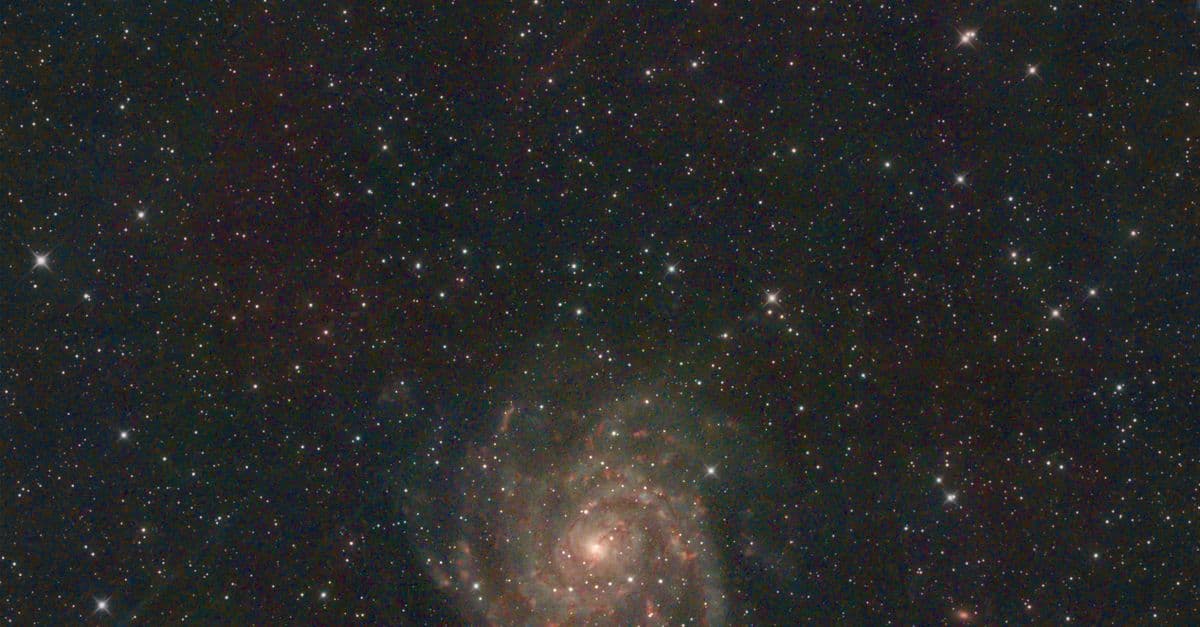
Photo: Marco Milanesi / Pexels
In the 1980s, astronomers found that the Milky Way, and thousands of galaxies around it, were not simply riding the expansion of the universe. On top of that expansion, everything nearby was drifting toward one patch of sky in the direction of the constellations Centaurus and Hydra, at several hundred kilometers per second. They named the unseen destination the Great Attractor.
The patch of sky sat almost exactly behind the thickest part of our own galaxy, the so-called Zone of Avoidance, where dust and stars block visible light. We could measure the pull but not see its source. When astronomers finally looked with radio, infrared, and X-ray instruments, the answer was both satisfying and humbling: the Great Attractor is a region, not an object, and it is only one piece of a larger story.
Key takeaways
- The Local Group of galaxies, which includes the Milky Way, moves at about 620 km/s relative to the cosmic microwave background, toward the Hydra-Centaurus region of the sky.
- The Great Attractor region lies roughly 150 to 250 million light-years away. Its most massive known cluster, the Norma Cluster (Abell 3627), sits about 220 million light-years from us.
- The Great Attractor is not the whole explanation. A more distant mass, the Shapley Supercluster at about 650 million light-years, and a huge underdense void called the Dipole Repeller also shape our motion.
- "Laniakea," the supercluster that astronomers defined in 2014 around the Great Attractor, is a contested boundary, and newer work suggests it may be part of the larger Shapley basin.
- We will not "fall in." At that distance, the expansion of space carries galaxies away far faster than our peculiar motion carries us closer.
The discovery: something is pulling us
To understand why the Great Attractor mattered, start with a basic fact about the universe. In 1929, Edwin Hubble showed that distant galaxies recede from us faster the farther away they are. This pattern, called the Hubble flow, is the expansion of space itself carrying galaxies apart. A galaxy twice as far away recedes about twice as fast.
Real galaxies do not sit still in that flow. Each one also feels the gravity of its neighbors, so it picks up an extra motion called a peculiar velocity (a velocity measured relative to the smooth expansion). Think of a leaf on a wide, slowly moving river. The river carries every leaf downstream at the same pace, but eddies and nearby obstacles nudge individual leaves sideways. The Hubble flow is the river; peculiar velocities are the eddies.
By measuring both the redshift and the independent distance of many galaxies, astronomers can subtract the river and see only the eddies. That gives a map of where gravity is pulling. In the 1980s, a team of seven astronomers (David Burstein, Roger Davies, Alan Dressler, Sandra Faber, Donald Lynden-Bell, Roberto Terlevich, and Gary Wegner, nicknamed the "Seven Samurai") did this for roughly 400 elliptical galaxies, using a relationship between a galaxy's size and the spread of its stars' velocities as a distance gauge. Their result: the galaxies in our neighborhood were streaming toward a common region. Dressler coined the name Great Attractor. (Wikipedia summary of the discovery history, which cites the original papers.)
The streaming was not subtle. Peculiar velocities in the region run from roughly plus 700 to minus 700 km/s relative to uniform expansion, a large swing for galaxies that are on average receding at several thousand kilometers per second.
How do we know how fast the Milky Way is moving?
The best speedometer is the cosmic microwave background (CMB), the faint afterglow of the early universe that fills the sky. Because we are moving through it, the CMB looks slightly hotter in the direction we travel and slightly cooler behind us, a Doppler effect called the dipole. The Planck satellite's 2018 results put the Sun's velocity relative to the CMB at 369.82 ± 0.11 km/s. After correcting for the Sun's orbit around the Milky Way and the Milky Way's motion within the Local Group, the Local Group's velocity comes out at 620 ± 15 km/s, toward galactic longitude about 272 degrees. For how that afterglow was found in the first place, see the discovery of the cosmic microwave background.
The figure you sometimes see quoted, "600 km/s," is a rounded version of that number. A separate analysis published in 2017 (more on it below) found a similar value, about 631 km/s, using a different dataset. The spread tells you something honest: the speed is known to a few percent, not to the last digit.
Piercing the Zone of Avoidance
The Great Attractor sits behind the plane of the Milky Way, where dust and stars hide the extragalactic sky. Astronomer Renée Kraan-Korteweg describes the Zone of Avoidance as leaving about 25 percent of the extragalactic sky unaccounted for in optical surveys, as summarized in her 2000 lecture review on galaxies behind the Milky Way. That is a large blind spot for a map of the universe.
Different wavelengths get around the dust in different ways.
| Method | Why it helps | What it contributed |
|---|---|---|
| Radio (neutral hydrogen, 21 cm) | Radio waves pass through dust almost unhindered | Found gas-rich galaxies deep in the Zone of Avoidance |
| Near-infrared surveys | Dust absorbs infrared light far less than visible light | Revealed galaxy distributions behind the Milky Way's disk |
| X-ray surveys | Hot gas in clusters emits X-rays that penetrate the dust | Located massive clusters, including through the "Clusters in the Zone of Avoidance" project |
For the technology behind two of these approaches, see how radio telescopes listen to the universe and how space telescopes see in infrared.
The turning point came when surveys found that the center of the suspected overdensity hosted a rich galaxy cluster that no one had previously cataloged. Kraan-Korteweg's review says the newly discovered cluster Abell 3627 "seems to constitute" the previously unidentified core of the Great Attractor. Woudt, Kraan-Korteweg, and Fairall describe it as a very massive cluster comparable to the Coma Cluster in size, richness, and mass, but much closer to us, sitting where the Centaurus Wall and the Norma Supercluster intersect (arXiv astro-ph/9909094).
What the Great Attractor actually is
The cluster is named Norma after the constellation in which it appears. Norma lies at a distance of about 68 megaparsecs, or roughly 220 million light-years, the value commonly given for it. It sits at the junction of two larger structures, the Centaurus Wall and the Norma Supercluster, and probably marks the bottom of the local gravitational potential well.
So is Norma the Great Attractor? Partly. Early models of the region put its mass at about 10^16 solar masses (a solar mass is the mass of our Sun). Later X-ray work, including the Clusters in the Zone of Avoidance project of the early 2000s, found that the Norma region is less massive than first estimated. It is a major contributor, not the sole puller.
This is why astronomers now prefer to speak of the Great Attractor region. It is a broad overdensity of galaxies, groups, and clusters, centered somewhere between 150 and 250 million light-years away, with the exact center hard to pin down because the Milky Way's disk gets in the way. Most of its mass, as in every galaxy cluster, is thought to be dark matter, matter that gravitates but does not emit light. We infer it from motion, the same way astronomers weigh whole galaxies from the speeds of their stars and gas.
A useful analogy is a drain in a bathtub. Water everywhere in the tub slides toward the drain, but you would not say the drain is the only thing shaping the flow. The slope of the whole basin matters. The Norma Cluster is the lowest point of the local basin, but the basin is what pulls.
Laniakea: a supercluster defined by flow
In 2014, R. Brent Tully, Hélène Courtois, Yehuda Hoffman, and Daniel Pomarède published a paper in Nature that redefined how astronomers draw supercluster borders. Instead of outlining regions where galaxies are densest, they followed the flows. They looked for the lines where neighboring galaxies' peculiar velocities diverge, like a watershed divide on a map, and defined a supercluster as "the volume within such a surface" (arXiv:1409.0880). The one containing the Milky Way they called Laniakea, Hawaiian for "immense heaven."
By the commonly cited figures, Laniakea spans roughly 400 million light-years, holds on the order of 100,000 galaxies, and has a mass of about 10^17 solar masses, roughly 100,000 times the mass of the Milky Way. In this picture, the Great Attractor sits near its center, and the Virgo Cluster and the Hydra-Centaurus region both belong to the same basin. Your home galaxy is a small tributary in a large drainage system.
The analogy to rain and rivers is more than decoration. A watershed boundary tells you where a raindrop would flow, not whether the land inside is particularly high or heavy. That is also the source of the controversy.
Is Laniakea real?
Not every astronomer agrees that a flow boundary makes a supercluster. A 2015 paper by Chon, Böhringer, and Nowak, "On the definition of superclusters," estimated that Laniakea's average density is only about 0.94 times the cosmic mean, so it is not a significantly overdense region. They argued that it is far from a bound system and will disperse in the future, with only several dense regions inside it collapsing. Their check was simple: if Laniakea were bound, infall velocities of around 5,700 km/s would be needed at its edge, while typical peculiar velocities in the catalog hardly exceed 500 to 700 km/s.
In 2024, Valade and colleagues used the Cosmicflows-4 catalog, which covers about 38,000 groups of galaxies, to map "basins of attraction" probabilistically. They found "a slight probabilistic preference for Laniakea to be part of the much larger Shapley BoA" (basin of attraction), and they found that the largest basin in their sample is tied to the Sloan Great Wall, with more than twice the volume of the Shapley basin (arXiv:2409.17261; published in Nature Astronomy in 2024). The result is probabilistic: the data do not decisively place the Milky Way in one basin or the other.
The takeaway for readers: "Laniakea" is a useful label with a defined meaning, but it is not a physical object with sharp edges, and the literature is still arguing about whether it deserves to stand alone.
Beyond the Great Attractor: Shapley and the Dipole Repeller
The Great Attractor is itself in motion. Another enormous structure lies roughly 650 million light-years away in nearly the same direction: the Shapley Supercluster. Its dense core holds about 1.3 × 10^16 solar masses within a radius of about 12.4 megaparsecs, and it is probably the largest collapsing supercluster core in the local universe, according to its Wikipedia overview (Wikipedia overview with sources). Harlow Shapley and colleagues at Harvard began a southern-sky galaxy survey in 1930, and by 1932 Shapley reported the Centaurus concentration as the most striking galaxy concentration in his data. The structure took his name decades later.
Because Shapley lies close to the direction of the Local Group's motion, it likely contributes part of our pull. That is why the old picture of a single "Great Attractor" has been replaced by a cascade: our local flow runs toward the Norma region, which belongs to a larger basin that is itself drifting toward Shapley.
There is also a push. In 2017, Hoffman, Pomarède, Tully, and Courtois reported in Nature Astronomy a "Dipole Repeller," a huge underdense region in the northern sky about 16,000 ± 4,500 km/s away. Using the Cosmicflows-2 peculiar-velocity catalog, they found that the Local Group's bulk flow, which they measured at about 631 km/s, is closely anti-aligned with the repeller, and that the flow is dominated by one attractor tied to Shapley plus this one repeller (arXiv:1702.02483). In the words of the University of Hawaiʻi release, the Milky Way is both pushed away from the void and pulled toward Shapley, and the two effects are of comparable importance at our location (University of Hawaiʻi news). The void's galaxy deficit has not yet been confirmed by direct observation, so treat the repeller as a well-motivated prediction.
Think of a ball on a hillside. A valley uphill of you does not pull you; it simply lacks the mass that would hold you back, so the surrounding material pushes you away from it, while a distant peak across the plain tugs you the other way. The net motion is the sum.
| Structure | Approximate distance | Role in the Local Group's motion |
|---|---|---|
| Great Attractor region (Norma Cluster at its core) | 150 to 250 million light-years (Norma about 220 million) | Nearby basin bottom; strong local pull |
| Shapley Supercluster | About 650 million light-years | Dominant attractor in the bulk-flow fit |
| Dipole Repeller | About 16,000 km/s in recession velocity (a distance of several hundred megaparsecs) | Underdense region; the "push" |
| Sloan Great Wall basin | Far beyond the local volume | Largest basin in Cosmicflows-4, not a direct local driver |
How fast is 620 km/s, and will we ever get there?
The numbers can be checked with arithmetic. At 620 km/s:
- In one day, the Local Group covers 620 × 86,400 seconds, about 54 million kilometers.
- In one year, it covers about 1.96 × 10^10 kilometers, which is about 0.002 light-years.
- In 100 million years, it covers about 200,000 light-years, roughly twice the diameter of the Milky Way's disk.
The Moon, at an average distance of about 384,400 km, would be crossed in about 10 minutes at that speed. That sounds fast, and by human standards it is. By cosmic standards, it is a crawl. Covering the roughly 225 million light-years to Norma at 0.002 light-years per year would take on the order of 100 billion years, several times the age of the universe, even if nothing else were happening.
Something else is happening. With a Hubble constant of 67.4 ± 0.5 km/s per megaparsec (the Planck 2018 value for the standard cosmological model; other measurement methods give higher values, a disagreement known as the Hubble tension), a galaxy at the Norma Cluster's distance of about 69 megaparsecs recedes at roughly 4,600 km/s from expansion alone. Our extra 620 km/s is a fraction of that. Cosmologists describe this as a peculiar motion superimposed on the expansion: the Local Group still moves away from Norma overall, just more slowly than it would without the pull.
Picture a swimmer in a slow river whose banks are also widening. The swimmer can aim toward a landmark on the far shore and swim hard, yet the widening banks still carry the landmark away faster than the swimmer approaches it. That is why the answer to "when do we arrive?" is "never." For more on the expansion itself, see how big the universe is.
What dark energy changes
Dark energy, the unexplained component driving the accelerating expansion of the universe, adds a long-term twist. As expansion accelerates, the regions in which gravity can win out over expansion shrink in relative terms. Smaller structures such as galaxy groups and clusters stay together because their own gravity is strong enough. The largest structures, such as the whole of Laniakea, are not bound, which fits the Chon et al. conclusion that Laniakea will eventually disperse. The reasons the universe is accelerating are covered in the dark energy explainer, and the broader picture of how dark matter and dark energy compete is in Dark Matter and Dark Energy Explained.
The Local Group itself is a different matter. Its members, including the Milky Way and Andromeda, are held together by their own gravity, so the group is expected to stay together rather than be carried apart. Even the fate of the Milky Way and Andromeda is less settled than it once seemed. Textbooks long said the two galaxies would collide in four to five billion years. A 2025 Nature Astronomy study led by Till Sawala at the University of Helsinki, which reanalyzed Hubble and Gaia measurements and added the gravitational influence of the Large Magellanic Cloud and the galaxy M33, found about a 50 percent chance of a merger within the next 10 billion years, with Andromeda's sideways motion the largest uncertainty (University of Western Australia summary). For the history of such events, see galactic cannibalism and the Milky Way's mergers.
Where the Great Attractor fits in the cosmic web
The Great Attractor is one node in the universe's large-scale structure, the cosmic web of filaments, walls, and voids. Galaxy clusters gather where filaments cross, and the Great Attractor region is one of the most prominent crossings in our local volume. On much larger scales, structures like the Sloan Great Wall stretch for hundreds of millions of light-years.
These structures trace tiny density fluctuations in the early universe, which gravity amplified over about 13.8 billion years. That is the reason the Great Attractor does not require new physics. It is a large pile of ordinary and dark matter, just a particularly inconvenient one to observe. The full picture of the web, and how astronomers arrive at an age of 13.8 billion years, are covered in the related reading at the end of this article.
Gravitational lensing, the bending of light by mass, offers another way to weigh such concentrations. The method is described in how gravitational lensing magnifies galaxies, though the Great Attractor's own mass is mostly estimated from motions rather than lensing.
Common misconceptions about the Great Attractor
"It is a single mysterious object." It is a region containing many clusters, with the Norma Cluster at its core. Nothing about it requires exotic physics.
"It is a black hole." No black hole of the needed mass has been identified, and none is needed. The pull is spread across a vast volume of galaxies, gas, and dark matter.
"We are falling into it." We are moving relative to the expansion, but at the Great Attractor's distance the expansion dominates, so we are still receding from it overall.
"It is the biggest thing pulling us." Shapley's contribution is large, and the Dipole Repeller's push is comparable. Our motion is a sum, not a single pull.
"Laniakea is a settled structure." The definition is a convention based on flow, and 2015 and 2024 papers both challenge how separate it is from larger structures.
"It is dangerous." At 220 million light-years, gravity from the Great Attractor produces motions of hundreds of kilometers per second in a smooth, slowly changing flow. It affects no planet, star, or galaxy interior.
What astronomers still do not know
Several questions remain open.
- Where exactly is the center? Estimates for the Great Attractor region's distance range from 150 to 250 million light-years because the obscured sky is hard to map.
- How much mass is there? Early estimates near 10^16 solar masses were revised downward for the Norma region after X-ray work. Better data on the Zone of Avoidance would sharpen the figure.
- What belongs to what? Whether Laniakea is its own basin or part of Shapley is, per the 2024 study, close to a coin flip with a slight tilt to Shapley.
- Is the repeller a real void? Confirming it requires finding the few galaxies predicted to lie in the underdense region with ultra-sensitive surveys.
- How accurate are the distance ladders? Peculiar velocities depend on independent distances, and those carry their own errors, so each new catalog (Cosmicflows-2, then -4) can shift the picture.
How the picture changed, step by step
The idea of a single Great Attractor gave way to a layered map over about four decades. The timeline shows how each new dataset reshaped the story.
| Year | Development | Why it mattered |
|---|---|---|
| 1929 | Edwin Hubble reports that galaxies recede faster with distance | Established the Hubble flow, the baseline against which peculiar velocities are measured |
| 1930 to 1932 | Harlow Shapley's southern-sky survey finds a striking concentration of galaxies in Centaurus | First hint of the structure later named the Shapley Supercluster |
| 1980s | The "Seven Samurai" find large-scale streaming of elliptical galaxies; Dressler names the Great Attractor | Showed that our neighborhood moves coherently toward a hidden region |
| 1990s to 2000s | Radio, infrared, and X-ray surveys map the Zone of Avoidance; the Norma Cluster (Abell 3627) is identified as the core | Gave the pull a visible source |
| 2014 | Tully and colleagues define Laniakea by galaxy flows | Recast superclusters as basins of attraction |
| 2015 | Chon, Böhringer, and Nowak argue Laniakea is not a bound structure | Raised the question of whether flow boundaries mean anything physical |
| 2017 | Hoffman and colleagues propose the Dipole Repeller | Added a push to the pull |
| 2018 | Planck pins the Local Group's CMB velocity at 620 ± 15 km/s | Tightened the speed we are trying to explain |
| 2024 | Valade and colleagues find Laniakea may sit inside the larger Shapley basin | Reopened the question of where our "home" structure ends |
Notice that the story does not run from confusion to a single clean answer. Each step answered one question and exposed another, which is how a measurement-driven field normally works. The speed we are explaining has barely changed since the 1980s, while the explanation has grown from one attractor to a pattern of pulls and pushes across hundreds of millions of light-years.
Frequently asked questions
Q: Will the Milky Way ever reach the Great Attractor? A: No. At 620 km/s it would take on the order of 100 billion years to cross the distance at constant speed, and cosmic expansion carries the region away faster than we approach. The Local Group stays bound together, but it does not fall into the Great Attractor.
Q: How far away is the Great Attractor? A: The central region lies roughly 150 to 250 million light-years away. Its best-known cluster, the Norma Cluster (Abell 3627), is about 220 million light-years from us.
Q: Why can't we see the Great Attractor in visible light? A: It lies behind the plane of the Milky Way, where dust and stars block optical light. This Zone of Avoidance hides roughly a quarter of the extragalactic sky from optical surveys. Radio, near-infrared, and X-ray observations penetrate the dust and have revealed the clusters behind it.
Q: Is the Great Attractor the same as the Shapley Supercluster? A: No. The Shapley Supercluster is a separate, more distant concentration, about 650 million light-years away. Studies of galaxy flows suggest that the Great Attractor region and its surroundings are themselves moving toward it, and both help explain the Local Group's motion.
Q: Is the Great Attractor dangerous to us? A: No. It exerts a slow, smooth influence at a distance of about 220 million light-years. It does not change the orbit of the Sun, the Earth, or any star in our galaxy.
Q: What is the Dipole Repeller? A: It is a large underdense region in the northern sky, about 16,000 km/s away in recession velocity, identified in 2017 from galaxy velocity data. Because it contains less mass than average, the surrounding matter effectively pushes the Local Group away from it. Its galaxy deficit has not yet been confirmed by direct observation.
The bottom line
The Great Attractor began as a puzzle about an invisible destination and became a lesson in how astronomers map what they cannot see. It is a region of galaxies centered near the Norma Cluster, working together with the distant Shapley Supercluster and a nearby void to set the Local Group's speed at about 620 km/s relative to the cosmic microwave background. We will never arrive, because expansion outruns us, and the labels we use for this neighborhood, including Laniakea, are still being tested. What persists is the method: subtract the expansion, read the eddies, and let the motion of galaxies tell you where the mass is.
Sources
- Tully, Courtois, Hoffman, Pomarède, "The Laniakea supercluster of galaxies," Nature 513, 71 (2014): arXiv:1409.0880
- Kraan-Korteweg, "Galaxies behind the Milky Way and the Great Attractor" (2000): arXiv:astro-ph/0006199
- Hoffman, Pomarède, Tully, Courtois, "The Dipole Repeller," Nature Astronomy 1, 0036 (2017): arXiv:1702.02483
- Valade et al., "Identification of basins of attraction in the local Universe," Nature Astronomy (2024): arXiv:2409.17261
- Chon, Böhringer, Nowak, "On the definition of superclusters" (2015): arXiv:1502.04584
- Planck Collaboration, 2018 results: overview, arXiv:1807.06205 and cosmological parameters, arXiv:1807.06209
Related Reading
Follow new articles
Add SciHub101 to your feed reader to see new science and technology stories.
About the Author
SciHub101 is an independent science and technology publication founded and edited by Buğra Sözeri, a software engineer and app developer based in Türkiye. AI tools assist with drafting and research. Source documentation in the existing archive is uneven, and articles are being reviewed and corrected. The Editorial Team byline identifies editorial responsibility; it does not certify specialist or independent human review. Where we compare products, anything built by our own team is labelled as such — see the editorial guidelines and About page for how corrections and disclosures work.
Related Articles
How Planetary Defence Works: Protecting Earth From Asteroids
In September 2022, NASA's DART spacecraft deliberately hit a small asteroid and shortened its orbit by about 33 minutes. It was the first real test of planetary defense. Here is how humanity finds, tracks, and might one day redirect a dangerous asteroid.
The Cosmic Web: The Largest Structure in the Universe
Zoom out far enough and galaxies stop looking scattered. They trace a web of filaments, walls, clusters, and voids that spans hundreds of millions of light-years. Here is how it formed, how it was mapped, and what it is made of.
How Galaxies Form and Evolve: From the First Stars to Today
Galaxies are not eternal — they are born, grow through mergers, and eventually die. Here's how the universe built these island universes.
What If Dark Matter Doesn't Exist? Modified Gravity vs Invisible Mass
Astronomers can't see dark matter, only its gravitational effects. What if we're wrong about gravity instead? Modified gravity theories try to explain galaxies without invisible mass — and the debate is genuinely open.
The Hubble Constant Tension: A Crisis in Cosmology
Two carefully checked ways of measuring how fast the universe expands disagree by roughly 8 to 10 percent, a gap near 5 sigma. Either a hidden error remains, or standard cosmology is incomplete.
What Are Quasars — The Brightest Objects in the Universe?
Quasars outshine entire galaxies from a region smaller than the solar system. They powered the early universe, shaped galaxy formation, and are now our most powerful probes of cosmic history. Here's what they actually are.