What Is Dark Energy? Why the Universe Is Accelerating
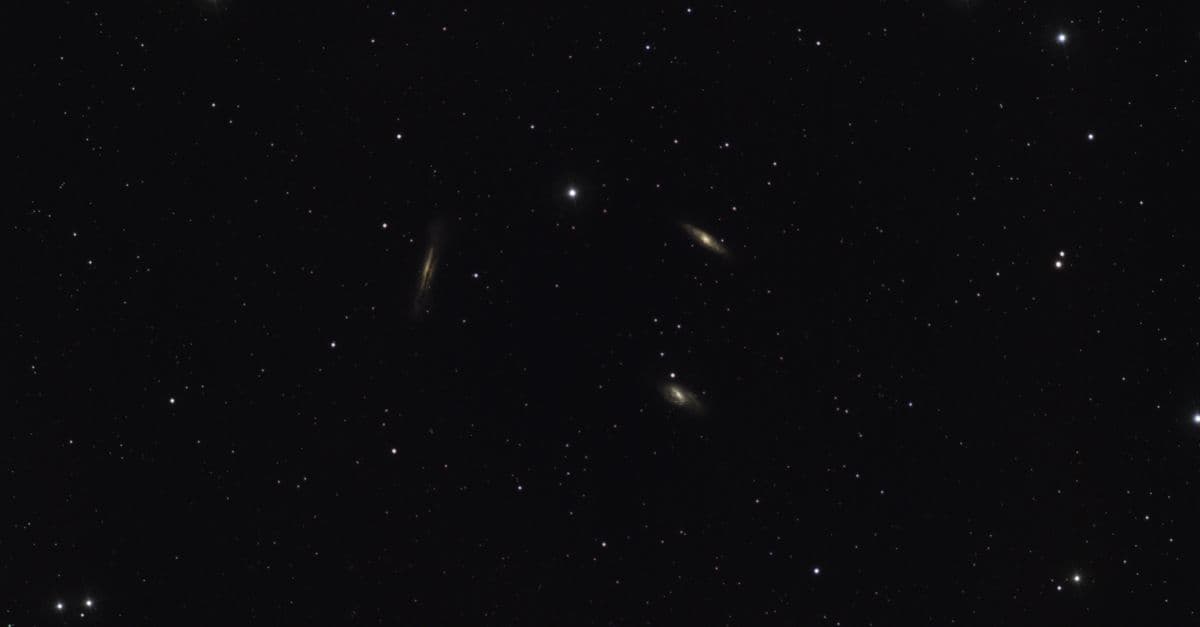
Photo: Jeremy Müller / Pexels
In 1998, two teams measuring the brightness of distant exploding stars expected to find cosmic expansion slowing down under the pull of gravity. They found the opposite: the expansion is speeding up. The cause is called dark energy, and according to the Planck satellite's measurements it accounts for roughly 68% of the universe's energy budget. No one knows what it is. This article covers how the discovery was made, the evidence that backs it, the leading explanations, and the 2024 and 2025 results that suggest the simplest version may not be the full story.
Key takeaways
- Dark energy is the name for whatever causes the expansion of the universe to accelerate. It was inferred in 1998 from Type Ia supernovae that appeared fainter, and so farther away, than a decelerating universe predicts.
- Planck's 2018 data give a matter density of 0.315 (with an uncertainty of 0.007) in units of the critical density. In a spatially flat universe, the rest, about 68%, is dark energy.
- The simplest candidate is Einstein's cosmological constant, a fixed energy density of empty space with an equation-of-state parameter w = -1. It fits nearly all data.
- Estimates of vacuum energy from quantum field theory miss the observed value by about 120 orders of magnitude, a gap often called the worst prediction in physics.
- DESI's 2024 and 2025 results prefer an evolving dark energy over a constant one at 2.8 to 4.2 sigma, depending on the data combined. That is a hint, not a discovery.
How Einstein's constant went out and came back
In 1917, Albert Einstein added a term to his equations of general relativity, the cosmological constant, written with the Greek letter lambda (Λ). He wanted a universe that neither expanded nor contracted, because that was the prevailing assumption and his unmodified equations implied gravity would make the universe collapse. After Edwin Hubble's observations showed the universe is expanding, Einstein dropped the term. He is often quoted as calling it his "biggest blunder," but the remark traces back to the physicist George Gamow, and historians have questioned whether Einstein actually said it.
The constant did not disappear. It stayed in the mathematics as an allowed term: a fixed amount of energy per unit volume of empty space. For most of the twentieth century, nearly all cosmologists set it to zero. That changed in 1998, when observations of distant supernovae gave the first direct evidence that something like Λ was needed. The 2011 Nobel Prize in Physics went to three members of the two teams that made the discovery: Saul Perlmutter, Brian Schmidt, and Adam Riess. For the history of the expansion itself, see our explainer on Hubble's law and the expanding universe.
How supernovae revealed an accelerating universe
To measure how expansion has changed over time, astronomers need two numbers for each distant object: its redshift (how much its light has stretched, which tracks the expansion) and its distance. Redshift is easy to measure. Distance is hard. The trick is to use a standard candle, an object with a known intrinsic brightness. If you know how bright a candle truly is, how dim it looks tells you how far away it is. It works like judging the distance of a car at night by its headlights, assuming every car uses the same bulbs.
Type Ia supernovae are the best-studied standard candles. They occur in binary systems where a white dwarf (the dense remnant of a Sun-like star) accumulates mass from a companion. Slowly rotating carbon-oxygen white dwarfs are limited to just under 1.44 times the Sun's mass, and models suggest the star ignites carbon fusion as it nears about 99% of that mass, triggering a runaway explosion. The typical peak brightness is an absolute magnitude near minus 19.3, about five billion times the Sun's brightness.
Peak brightness is not identical from event to event, but it can be corrected. In 1993 Mark Phillips showed that supernovae that fade more slowly are intrinsically brighter. Using this relation, observations from the Calán/Tololo survey could measure relative distances with an accuracy of about 7% (Type Ia supernova overview).
What the two teams found
Two competing groups used this method. The High-Z Supernova Search Team, led by Brian Schmidt and including Adam Riess, and the Supernova Cosmology Project, led by Saul Perlmutter, each expected to measure the rate at which gravity was slowing expansion. Both found that distant supernovae were fainter than they would be in a decelerating universe. They were farther away than the redshift implied, which means the universe's expansion had been speeding up over the interval of time those supernovae cover.
| High-Z Supernova Search Team | Supernova Cosmology Project | |
|---|---|---|
| Key paper | Riess and colleagues, 1998 | Perlmutter and colleagues, 1999 |
| Sample | 16 high-redshift and 34 nearby supernovae | 42 supernovae at redshifts 0.18 to 0.83 plus nearby ones |
| Conclusion | Favors a positive cosmological constant and present-day acceleration (q₀ < 0) | Strongly inconsistent with a flat universe without Λ; P(Λ > 0) = 99% |
| Significance (as reported) | Acceleration at 2.8 to 3.9 sigma, depending on fitting method | For a flat universe, matter density near 0.28 |
The agreement of two independent teams was crucial. Each had its own telescopes, analysis pipeline, and set of possible biases, and each reached the same conclusion. Neither paper, taken by itself, would have been enough to overturn the assumption of deceleration. Together they were.
Four independent lines of evidence
A claim this large needs support from methods that share no systematic errors with supernovae. There are now several.
| Method | What it measures | What it says about dark energy |
|---|---|---|
| Type Ia supernovae | Distance versus redshift across cosmic time | Expansion rate changed, with acceleration in the later universe |
| Cosmic microwave background (CMB) | Pattern of temperature variations in the afterglow of the Big Bang | Planck fits a spatially flat universe with matter at 0.315 of the critical density, leaving the remainder for something that is not matter |
| Baryon acoustic oscillations (BAO) | A standard ruler of about 150 megaparsecs (490 million light-years), imprinted in galaxy clustering | Tracks expansion history independently of supernovae |
| Growth of structure | Galaxy cluster counts, weak lensing, galaxy clustering | The growth of structure slows as expected when dark energy dominates |
The BAO method deserves a short explanation. Sound waves traveled through the hot early universe until the plasma turned into neutral atoms, which froze the distance they had traveled. That distance, about 150 megaparsecs in today's universe, became a preferred separation between galaxies. Measuring how big the ruler looks at different redshifts reveals the expansion history, and the signal was first detected around 2005 by the Sloan Digital Sky Survey and the 2dF Galaxy Redshift Survey. Galaxy surveys that map this pattern also chart the large-scale web of filaments and voids.
The CMB gives the cleanest single number. The Planck 2018 analysis fit a spatially flat, six-parameter ΛCDM model (Lambda cold dark matter, the standard cosmological model) and found a matter density of 0.315 plus or minus 0.007, and a Hubble constant of 67.4 plus or minus 0.5 kilometers per second per megaparsec. In a flat universe the densities add up to one, so what is left, roughly 68.5%, is dark energy. That figure is a model-dependent inference, not a direct detection of dark energy.
What "equation of state" means, and why negative pressure pushes outward
Physicists describe dark energy with a number w, called the equation-of-state parameter: the ratio of pressure to energy density. For ordinary matter, w is essentially zero. For radiation, it is one-third. For the cosmological constant, w is exactly minus one, which means negative pressure.
Negative pressure sounds paradoxical, but it follows from the math of general relativity. In Einstein's theory, pressure gravitates alongside energy. The acceleration of cosmic expansion depends on the energy density plus three times the pressure, so a component with w below minus one-third pushes expansion to speed up instead of slow down. The constant-density case with w = -1 is the extreme example.
There is a second, more intuitive way to see why this works. Matter thins out as space expands: double the volume and the density halves. Vacuum energy does not thin out, because it is a property of space itself. Each new bit of space created by expansion comes with the same energy density as the old. The negative pressure is what makes the books balance, since a region with fixed energy density that grows in volume must be gaining energy from somewhere, and that work is done by the pressure.
A universe dominated by a cosmological constant expands exponentially, with the scale factor growing as e raised to H times t, where H is the Hubble rate. Using Planck's values, the long-run Hubble rate is about 55.8 kilometers per second per megaparsec, calculated as 67.4 multiplied by the square root of 0.685. That corresponds to a doubling time for distances between unbound galaxies of about 12 billion years. This is the de Sitter future, named for the Dutch physicist Willem de Sitter, who studied such solutions.
The cosmological constant problem
If dark energy is a cosmological constant, it should have a physical explanation. The natural candidate is the vacuum energy. Quantum field theory says empty space is not truly empty. Every field has a minimum-energy state that is not zero, and adding up these contributions gives an energy density for the vacuum.
Estimating that sum is where things go wrong. The calculation depends on where you cut it off, since the contributions from higher-energy fluctuations keep growing. With a cutoff at the Planck scale (the energy where gravity is expected to become quantum), the predicted vacuum energy exceeds the observed dark energy density by roughly 120 orders of magnitude. The exact figure shifts by a few orders depending on the cutoff, but no sensible choice brings it near the observed value. The mismatch has been called the worst theoretical prediction in the history of physics, and it is larger than the roughly 10⁸⁰ atoms in the observable universe by a factor of about 10⁴⁰.
The difficulty is two-sided. First, something must cancel the huge contributions almost exactly. Second, the cancellation must stop just short of zero, since the observed value is small but not zero. An exact zero could be protected by a symmetry, but a tiny positive number looks like fine-tuning to many physicists.
In 1987 Steven Weinberg offered an anthropic argument: if the vacuum energy were much larger, galaxies could not form, so observers could exist only in universes where the value is small. That argument is controversial. It only counts as an explanation if there really are many regions or universes with different values, which is a multiverse hypothesis that has not been tested. Many cosmologists treat it as a possibility to keep in mind rather than as an answer.
A related puzzle is the coincidence problem: today, matter and dark energy have similar densities (0.315 versus about 0.685 of the critical density), even though matter thins out as space expands and dark energy does not. If dark energy were constant, there is nothing obvious in the physics that makes the two comparable right now.
Evolving dark energy: what the DESI results say
If dark energy is not constant, its equation of state would change with time. Cosmologists test this with a two-parameter description called the w₀-wₐ model, in which w₀ is the value today and wₐ describes how it changes with the expansion. A cosmological constant has w₀ = -1 and wₐ = 0.
The Dark Energy Spectroscopic Instrument (DESI) measures BAO using the Mayall 4-meter telescope at Kitt Peak National Observatory in Arizona. It has produced two rounds of results that matter here.
| Release | Data | Main finding |
|---|---|---|
| DESI 2024 (first year) | BAO from the first-year data | BAO alone are consistent with flat ΛCDM, with a constant w = -0.99 (+0.15 / -0.13). Combined with the CMB, an evolving model is preferred at 2.6 sigma; adding supernova samples gives 2.5, 3.5, or 3.9 sigma for Pantheon+, Union3, and DES-SN5YR |
| DESI DR2 (March 2025) | More than 14 million galaxies and quasars | DESI BAO plus the CMB prefers the w₀-wₐ model at 3.1 sigma; adding supernovae gives 2.8 to 4.2 sigma depending on the sample. The preferred region has w₀ above -1 and wₐ below zero |
The DR2 release also improved precision. The Lyman-alpha forest BAO measurement, which uses absorption in quasar light at redshifts above about 2, reached a statistical precision of 0.65%. Galaxy and quasar BAO reached about 0.24%, roughly twice as good as the first year (DESI release guide).
Several cautions apply. A significance of 3 sigma is well below the 5 sigma standard conventionally used for a discovery. The result depends on which supernova sample is combined with DESI, and the supernova samples themselves differ in calibration. The w₀-wₐ model is a convenient parametrization, and extrapolating it into the far future is not reliable.
DESI's data also bear on neutrino mass. The same analysis found that, under standard ΛCDM, the sum of neutrino masses must be below 0.0642 electronvolts, which is in tension (about 3 sigma) with the minimum of 0.059 electronvolts required by laboratory oscillation experiments. If dark energy is allowed to evolve, the limit relaxes to 0.163 electronvolts and the tension goes away. Whether that is a coincidence or a clue is not yet clear.
The DESI hint is exciting, but it is unfinished. It has already changed which models theorists build, and the next data releases will show whether the preference grows or fades. Roman, Euclid, and Rubin, discussed below, will test it with independent methods.
Quintessence, modified gravity, and backreaction
If dark energy is not a constant, what could it be? Three broad families of ideas are under study.
Quintessence
Quintessence replaces the constant with a scalar field, a quantity that has a value at every point in space and changes slowly with time. As the field evolves, w differs from minus one and varies. In the simplest versions, w stays above minus one, which would make the acceleration slightly weaker than a constant would give. These models predict a specific kind of evolution that DESI-like surveys can test. They also face a naturalness problem: the field must be extremely light and extremely weakly coupled to matter to avoid effects we would already have seen.
Modified gravity
A different approach says there is no dark energy at all, but that general relativity fails on cosmic scales. Families of theories include f(R) gravity, which replaces the Ricci scalar in Einstein's action with a function of it, scalar-tensor theories such as Brans-Dicke, and massive gravity. These face tight constraints. The neutron-star merger GW170817 produced gravitational waves and a gamma-ray burst that arrived 1.74 plus or minus 0.05 seconds apart. That limits the difference between the speed of gravity and the speed of light to between minus 3 × 10⁻¹⁵ and plus 7 × 10⁻¹⁶ of the speed of light (Abbott and colleagues, 2017). Many modified-gravity models that predicted a different gravitational-wave speed are ruled out. Others survive by hiding the modification in ways that avoid this test.
Inhomogeneity and backreaction
A more radical idea is that the universe is clumpier than the standard model assumes, and that the averaged effect of clumps (backreaction) mimics acceleration. Thomas Buchert and others have pursued this. Most cosmologists consider the effect too small to explain the full acceleration, but the question is a legitimate one about how to average Einstein's equations, and it keeps being checked.
None of these has displaced the cosmological constant, which remains the model that fits the broadest set of data with the fewest parameters. The point of the DESI result is that the alternatives may soon be tested directly.
The Hubble tension and why it matters here
Dark energy is not the only place cosmology is under strain. The Hubble tension is a disagreement over the present expansion rate. Planck's CMB analysis, assuming ΛCDM, gives 67.4 plus or minus 0.5 kilometers per second per megaparsec. The SH0ES team, using a ladder of distance measurements that includes Cepheid variable stars and Type Ia supernovae, reports 73.04 plus or minus 1.04 and describes a 5 sigma difference from the Planck-based prediction (Riess and colleagues, 2022). The team reports that its checks found no sign that measurement errors cause the difference.
Whether the tension reflects an unrecognized error or new physics is unresolved. It matters for dark energy because many proposed fixes involve changing the expansion history, which includes how dark energy behaves. So far no single modification has resolved both the Hubble tension and the DESI hint in a way that most researchers accept.
What dark energy means for the future of the universe
If dark energy is a true cosmological constant, the long-term future is simple and quiet. Expansion continues at an exponentially growing rate. Galaxies that are not bound by gravity to the Milky Way's neighborhood will recede and eventually cross the cosmic horizon, becoming permanently unobservable. In an influential 2007 paper, Lawrence Krauss and Robert Scherrer argued that distant observers in such a universe would eventually lose all evidence of Hubble expansion, the CMB, and the origin of the light elements, a situation they described as the end of cosmology (Krauss and Scherrer, 2007).
Gravitationally bound systems are not torn apart. A galaxy, a solar system, or an atom is held together by forces far stronger than the tiny repulsion of dark energy at those scales. Acceleration affects only the spacing between systems that are not bound to one another.
If dark energy changes, other futures become possible. If w drops persistently below minus one, the dark energy density grows with time, which leads to the Big Rip, in which structures are pulled apart at progressively smaller scales. Current data do not require this. The best-fit DESI models cross w = -1 and rely on a parametrization that is not meant to be extended far into the future. If dark energy weakens or even changes sign, a collapse is conceivable. Our article on how the universe may end compares these cases, and the piece on the last stars describes the slow fade that is expected under the simplest assumption.
The surveys closing in on the answer
A handful of large projects are designed to measure how dark energy has behaved over cosmic time, using several independent methods so that errors in one do not mimic a signal in another.
| Project | Type | Status and details |
|---|---|---|
| DESI | Ground-based spectroscopy, Mayall 4-meter telescope, Kitt Peak | As of April 15, 2026, more than 47 million galaxies and quasars and over 20 million stars observed. The originally planned five-year survey, which had a target of 34 million galaxies and quasars, is complete and observations continue |
| Euclid (ESA) | Space telescope, 1.2-meter | Launched July 1, 2023, with routine science starting February 14, 2024. A nominal six-year mission to survey over a third of the sky and infer dark energy properties from expansion and structure growth over the past 10 billion years |
| Vera C. Rubin Observatory | Ground-based, 8.4-meter Simonyi Survey Telescope | Its site says it began the 10-year Legacy Survey of Space and Time in July 2026 |
| Nancy Grace Roman Space Telescope (NASA) | Space telescope with a field of view at least 100 times larger than Hubble's | NASA's mission page lists a launch date of August 30, 2026, and its blog describes post-launch checkouts in September and October 2026; the mission is to address questions about dark energy, exoplanets, and astrophysics |
Each facility sees a different slice. DESI measures BAO and the growth of structure from spectra. Euclid combines weak gravitational lensing with galaxy clustering, a technique described in our piece on gravitational lensing. Rubin repeatedly images the southern sky and will find many supernovae and measure lensing, and Roman adds a wide-field space view. The broader effort to measure the expansion history is related to the telescopes described in our explainer on what James Webb has found, though Webb itself is not a dark energy survey.
What people get wrong about dark energy
Dark energy is not dark matter. Dark matter holds galaxies together through ordinary gravity and clumps into halos. Dark energy is spread evenly, as far as we know, and pushes expansion to speed up. They share the word "dark" because we cannot see either one. For the other half of the story, see our guide to dark matter and dark energy and our article on dark matter in 2026.
Dark energy is not an explosion pushing galaxies out from a center. There is no center. Expansion happens everywhere at once, and the Big Bang was not an explosion in a pre-existing space. Our explainer on the Big Bang covers this.
The Milky Way is not being stretched. Bound systems are unaffected by cosmic expansion at any measurable level.
The 68% figure is not a fixed constant of nature. It is today's value in a particular model, derived from the matter density in a flat universe. Earlier in cosmic history, matter dominated and dark energy was a smaller fraction.
"Accelerating" does not mean every galaxy speeds up. It means the rate at which the distance between widely separated galaxies grows is itself increasing.
Frequently asked questions
Q: What is dark energy in simple terms? A: It is the name for whatever makes the expansion of the universe accelerate. The simplest candidate is a constant energy density of empty space, called the cosmological constant. Measurements say it makes up about 68% of the universe's energy budget today, but its physical origin is unknown.
Q: How do we know dark energy exists? A: Several independent methods point to it. Distant Type Ia supernovae appear fainter than a decelerating universe predicts. The CMB indicates a flat universe with only about 31.5% matter. BAO and the growth of galaxy structure fit the same picture. No single method proves it alone, but they agree.
Q: Is dark energy the same as the cosmological constant? A: The cosmological constant is the simplest version of dark energy, with an unchanging density. It fits nearly all data. DESI's 2024 and 2025 results prefer an evolving dark energy at 2.8 to 4.2 sigma, depending on the data used, so the constant is not yet ruled out and not yet confirmed.
Q: Why is the cosmological constant problem so serious? A: Quantum field theory predicts a vacuum energy roughly 120 orders of magnitude larger than the observed dark energy, depending on the cutoff used. Something must cancel almost all of it, and no known mechanism does. The mismatch has been called the worst theoretical prediction in physics.
Q: Will dark energy tear the universe apart? A: Not if it is a true cosmological constant, which leaves galaxies, stars, and atoms intact and only spreads unbound galaxies apart. A Big Rip requires dark energy whose density grows over time, which current data do not require.
Q: What would change if dark energy weakens over time? A: The future would depend on how it evolves. A fading dark energy could slow the acceleration, and in extreme cases lead to a slower expansion or even a collapse. DESI's hint points in that direction but is not strong enough to decide.
The takeaway
Dark energy is a measurement before it is a theory. The accelerating expansion has been seen with supernovae, the CMB, and galaxy clustering, and the simplest model fits them together. What it is remains the deepest open problem in the field: the cosmological constant that works so well cannot be derived from the physics we know, and the best estimate of its source misses by about 120 orders of magnitude. DESI's recent results have opened a new question, which is whether the constant is truly constant. Over the next few years, Euclid, Rubin, Roman, and DESI's continued observations will either firm up that hint or let it fade, and either answer will reshape what physicists think empty space is.
Sources
- Riess and colleagues, Observational Evidence from Supernovae for an Accelerating Universe and a Cosmological Constant, 1998
- Perlmutter and colleagues, Measurements of Omega and Lambda from 42 High-Redshift Supernovae, 1999
- Planck Collaboration, Planck 2018 results. VI. Cosmological parameters
- DESI Collaboration, DESI 2024 VI: Cosmological constraints from the measurements of baryon acoustic oscillations
- DESI Collaboration, DESI DR2 Results II, and the DR2 release guide
- Riess and colleagues, A Comprehensive Measurement of the Local Value of the Hubble Constant, 2022
- LIGO, Virgo, Fermi, and INTEGRAL collaborations, Gravitational Waves and Gamma-rays from a Binary Neutron Star Merger, 2017
- Krauss and Scherrer, The Return of a Static Universe and the End of Cosmology, 2007
- ESA, Euclid overview; NASA, Roman Space Telescope; Rubin Observatory, About; DESI, project page
Related Reading
Follow new articles
Add SciHub101 to your feed reader to see new science and technology stories.
About the Author
SciHub101 is an independent science and technology publication founded and edited by Buğra Sözeri, a software engineer and app developer based in Türkiye. AI tools assist with drafting and research. Source documentation in the existing archive is uneven, and articles are being reviewed and corrected. The Editorial Team byline identifies editorial responsibility; it does not certify specialist or independent human review. Where we compare products, anything built by our own team is labelled as such — see the editorial guidelines and About page for how corrections and disclosures work.
Related Articles
What Is the Habitable Zone? Why Earth Is the Goldilocks Planet
The habitable zone is the band of orbital distances where a rocky planet could hold liquid water on its surface. For the Sun, one widely used model puts it at 0.99 to 1.70 AU. Venus and Mars show why that is only the first filter.
What Are Variable Stars? Cepheids, RR Lyrae, and Stellar Pulsations
Variable stars change brightness over time, from gentle pulsations to eclipses and explosions. Cepheids follow a period-luminosity law found by Henrietta Swan Leavitt that turned them into distance markers, proved Andromeda lies outside the Milky Way, and still anchors measurements of the Hubble constant.
Dark Matter and Dark Energy Explained
What is dark matter and dark energy? Discover the invisible forces shaping 95% of the universe — from galaxy rotation curves to the accelerating cosmos.
What If Cosmic Expansion Suddenly Reversed?
The universe has been expanding for 13.8 billion years, and dark energy is currently accelerating that expansion. If it suddenly reversed and the universe began contracting, we would be heading toward a 'Big Crunch' — but the change would be too slow for any individual to notice.
The Hubble Constant Tension: A Crisis in Cosmology
Two carefully checked ways of measuring how fast the universe expands disagree by roughly 8 to 10 percent, a gap near 5 sigma. Either a hidden error remains, or standard cosmology is incomplete.
White Dwarfs: The Fate of 97% of All Stars
When the Sun dies, it will leave behind a white dwarf — a city-sized object containing half the Sun's mass, supported not by nuclear fusion but by quantum mechanics. White dwarfs are already the most common stellar remnants in the galaxy, and every star you see in the night sky under 8 solar masses will eventually become one. Some will detonate as the universe's most reliable distance markers. Others will crystallize into diamond-like spheres and cool for trillions of years.