What If Cosmic Expansion Suddenly Reversed?
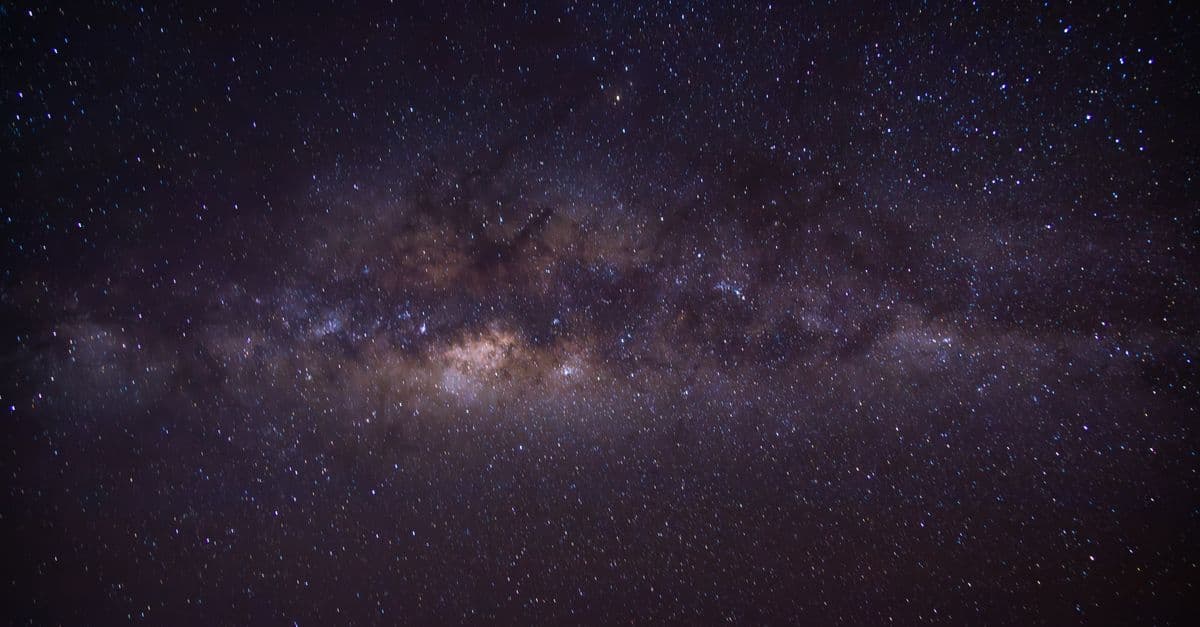
Photo: Sergey Guk / Pexels
This is a thought experiment, not a prediction. In 1998, two teams studying distant exploding stars found that the universe's expansion is not slowing down under gravity's pull, as everyone had assumed. It is speeding up. That discovery, later honored with the 2011 Nobel Prize in Physics, pinned the acceleration on a mysterious component called dark energy, which makes up roughly 68% of the universe's total energy budget. But what if that trend flipped? What if the force driving galaxies apart suddenly reversed and started pulling everything back together? Here is what the physics actually says would happen, on what timescale, and why the answer hinges on one of the biggest open questions in cosmology.
What dark energy is actually doing right now
To understand what a reversal would require, you first need to know what is currently pushing the universe apart. According to Planck satellite measurements of the cosmic microwave background, the universe's contents break down into roughly 5% ordinary matter (the atoms that make up stars, planets, and us), 27% dark matter (mass that we detect only through gravity, not light), and 68% dark energy (Planck Collaboration, 2018 results VI, Astronomy & Astrophysics).
Dark energy is strange because it behaves like a fluid with negative pressure. Ordinary matter and radiation dilute as the universe expands, their density dropping as space stretches. Dark energy, by contrast, appears to keep a roughly constant density even as the volume of space grows. That negative pressure acts gravitationally repulsive on cosmic scales, and it is what powers the acceleration first measured by Saul Perlmutter, Brian Schmidt, and Adam Riess's supernova teams in 1998.
Cosmologists describe dark energy's behavior with a number called the equation-of-state parameter, w, which is the ratio of its pressure to its energy density. A pure cosmological constant, the simplest explanation, has w exactly equal to −1 and never changes. Planck's 2018 analysis, combined with supernova data, measured w₀ = −1.03 ± 0.03, a value statistically indistinguishable from −1 (Planck 2018 VI). For years, that was the whole story: dark energy looks constant, so expansion should accelerate forever.
Could dark energy actually flip from repulsive to attractive?
For cosmic expansion to reverse, dark energy would need to stop pushing and start pulling, which means its effective pressure would need to cross from negative to positive. That is a much bigger deal than it sounds, because it means the fundamental nature of the dominant component of the universe would have to change. Physicists have sketched out a handful of ways this could happen in principle, even though none currently has observational support.
The first possibility is quintessence, a term coined by researchers Robert Caldwell, Rahul Dave, and Paul Steinhardt in 1998 to describe a dynamical scalar field, rather than a fixed constant, that could evolve over cosmic time. Think of quintessence like a ball rolling down a very gentle hill: its behavior today depends on where it currently sits on that slope, and it could in principle roll into a region where its effective pressure turns positive, slowing and eventually reversing expansion.
The second is vacuum decay, sometimes called false-vacuum decay. The idea, developed rigorously by physicist Sidney Coleman in the late 1970s, is that what we call empty space might not be in its true lowest-energy state. If the vacuum tunneled into a truly stable state with a different energy density, the effective cosmological constant could shift, potentially becoming attractive. This is genuinely unsettling territory in theoretical physics, and it is part of why physicists take vacuum stability calculations seriously even though there is no sign it is imminent.
The third is modified gravity: theories that alter Einstein's general relativity on cosmological scales rather than adding a new energy component. Some of these models predict crossover behavior, where gravity's effective strength changes sign at large distances. The fourth is a more abrupt phase transition in dark energy's properties, analogous to the phase transitions physicists believe occurred in the first fraction of a second after the Big Bang, when the universe cooled through several distinct states.
None of these mechanisms is currently required by data. But the DESI results are the first serious observational crack in the "dark energy is just a constant" story, and they are worth understanding in more depth.
What did DESI actually find?
DESI's 2024 and 2025 data releases, based on spectra from millions of galaxies and quasars, showed a preference for a dark energy equation of state that evolves with cosmic time rather than sitting fixed at w = −1, described using a two-parameter model called w₀wₐCDM (DESI Collaboration DR2 analyses, 2025). The statistical significance strengthened between the first-year and three-year data releases, which is why it drew heavy media coverage. It is important to be precise about what this means: it is a hint of evolution, not confirmation of reversal, and it is still being scrutinized by independent teams checking for systematic errors in supernova calibration and galaxy survey selection effects.
Timeline: what a reversal would actually look like
Suppose, for the sake of the thought experiment, that dark energy's equation of state instantly flipped from behaving like a cosmological constant to behaving like ordinary matter. The universe would not stop expanding immediately. Expansion has enormous momentum built up over 13.8 billion years, so a reversal would unfold as a long deceleration, a full stop, and then a contraction, stretched across a timescale that dwarfs the current age of the universe.
| Time after reversal | What happens |
|---|---|
| 0 – 1 billion years | No detectable change on Earth. Galaxy recession continues almost exactly as currently predicted. |
| 1 – 10 billion years | Distant galaxies begin showing slightly smaller redshifts than the standard model predicts. Cosmologists notice a deviation in survey data. |
| 10 – 100 billion years | Deceleration becomes unmistakable. The most distant galaxies stop flying apart at the accelerating rate seen today. |
| 100 – 500 billion years | Expansion reaches zero. The universe is at its maximum possible size in this scenario. |
| 500 billion – 1 trillion years | Contraction begins. The most distant galaxies, instead of redshifting, start showing blueshift as they move toward us. |
| 1 – 10 trillion years | Galaxy clusters merge with their neighbors. The average density of the universe starts rising for the first time since the Big Bang. |
| 10 – 100 trillion years | The cosmic microwave background, currently at 2.725 K (NASA/COBE FIRAS measurement), blueshifts as space contracts, heating in inverse proportion to the shrinking scale factor. |
| Final phase | CMB temperature climbs past 3,000 K, hot enough to re-ionize atoms — recombination running in reverse — en route to a final singularity. |
Table 1. Approximate timeline of a hypothetical Big Crunch, assuming dark energy flips instantly from a cosmological constant to matter-like behavior.
The key takeaway from this table is scale. Even in this hypothetical, nothing dramatic happens for at least a billion years, and the truly destructive phases do not begin until hundreds of billions to trillions of years have passed. Compare that to the roughly 5 billion years the sun has left before it exhausts its hydrogen fuel and becomes a red giant, an event that will boil away Earth's oceans on its own, dark energy notwithstanding (NASA solar evolution overview). A cosmic reversal, on any timescale physics currently allows, is a non-event for anyone alive today, and arguably a non-event for any civilization that could plausibly exist between now and the deceleration becoming detectable.
How hot would things get before the end?
As contraction proceeds, blueshifted cosmic microwave background radiation would heat everything uniformly, starting with the thinnest, most exposed matter and working inward. It is a bit like slowly turning up an oven that surrounds the entire universe rather than heating one object at a time. Ice in the outer solar system would begin sublimating once the background temperature passed roughly 100 K. Planetary atmospheres would be stripped and heated from outside once it passed a few hundred kelvin. By the time the background reached tens of thousands of kelvin, planetary and stellar surfaces would vaporize, and by a million kelvin, all matter anywhere in the universe would exist as ionized plasma, since atoms cannot hold their electrons at those temperatures. That is the same physics, run in reverse, that governs recombination — the moment 380,000 years after the Big Bang when the universe cooled enough for the first neutral hydrogen atoms to form and light could travel freely, which is what the CMB itself is a snapshot of (NASA WMAP mission overview of the CMB and recombination).
Why nobody would be around to see it
It is worth being explicit about something the timeline implies: stars themselves have a finite lifespan that is far shorter than any of the Big Crunch timescale above, dark energy or not. The sun-like stars being born today will be dead in a matter of billions of years, and stellar formation across the universe as a whole is expected to wind down over roughly 100 trillion years as galaxies exhaust their reservoirs of star-forming gas, a period astronomers sometimes call the "Stelliferous Era" giving way to the much longer, darker era that follows (Fred Adams and Gregory Laughlin's widely cited work on the far future of the universe, published in Reviews of Modern Physics, 1997). In other words, long before a Big Crunch's most destructive phases arrive in this scenario, star formation itself has already largely ended, and any life dependent on starlight would already have faced an entirely separate set of existential problems.
This matters for the thought experiment because it reframes the question. A reversed expansion is not really a threat to any specific civilization the way an asteroid impact or a supernova is. It is closer to a different ending chapter for the universe as a whole, arriving so far in the future that it is functionally irrelevant to anything happening now. The interesting part is not "should we worry," it is "what does this tell us about the true nature of dark energy."
How would astronomers actually detect a reversal starting?
If dark energy did begin evolving toward an attractive phase, the earliest warning signs would show up in precision cosmological surveys, not in anything visible to the naked eye or even most telescopes.
Type Ia supernovae are the same "standard candles" that revealed acceleration in 1998. Because they explode with a highly consistent peak brightness, comparing their apparent brightness to their redshift lets astronomers trace the universe's expansion history directly. A reversal would show up as those distant supernovae gradually shifting from the accelerating pattern seen today back toward, and eventually past, the decelerating pattern expected under gravity alone.
Baryon acoustic oscillations (BAO) are a subtler tool: a faint, regular pattern in how galaxies cluster together, left over from sound waves that rippled through the hot plasma of the early universe before recombination. That pattern acts as a "standard ruler" whose apparent size at different cosmic epochs depends sensitively on the expansion history, which is exactly what DESI is built to measure with extraordinary precision by cataloging tens of millions of galaxy and quasar spectra (DESI Collaboration overview).
Large-scale galaxy surveys, including the ongoing DESI program and the upcoming Euclid, Roman Space Telescope, and Vera C. Rubin Observatory LSST surveys, are all designed in part to pin down whether dark energy's equation of state is truly constant or evolving, by mapping how galaxies cluster and move across billions of years of cosmic history with far tighter statistical precision than has previously existed.
Q: Would humans on Earth actually feel anything if expansion reversed today?
No. Cosmic expansion only measurably affects distances between objects that are not gravitationally bound to each other, such as far-flung galaxies. Earth, the solar system, and even the Milky Way galaxy are held together by gravity, which overwhelms the expansion effect at those scales. Even a reversal would take billions of years before it produced any detectable change in how distant galaxies appear in telescopes.
Q: Is the Big Crunch the same thing as the Big Rip?
No, they are opposite outcomes. A Big Crunch requires dark energy to weaken and eventually turn attractive, pulling everything back into a single point. A Big Rip is the opposite: it requires dark energy to strengthen over time into "phantom energy," with pressure more negative than a cosmological constant, tearing apart galaxies, then stars, then atoms, at an ever-accelerating rate. Current data disfavors phantom energy about as strongly as it disfavors a reversal, since w₀ sits close to −1 rather than below it.
Q: What is the Big Freeze, and is it still the leading prediction?
The Big Freeze, also called heat death, is the scenario where dark energy stays constant (a true cosmological constant) and expansion continues accelerating forever. Under this model, star formation eventually ceases, black holes slowly evaporate over spans of time vastly longer than the current age of the universe, and the universe approaches a state of maximum entropy with no more useful energy differences to do work. Until the DESI hints emerged, this was the strongly favored outcome under standard ΛCDM cosmology, and it remains the default null hypothesis that any evolving dark energy claim has to beat.
Q: What is the "cosmological constant problem" and why does it matter here?
It is the roughly 120-order-of-magnitude gap between the vacuum energy density predicted by quantum field theory and the tiny value actually observed driving cosmic acceleration, widely described as one of the largest unsolved discrepancies in physics. It matters because any theory that lets dark energy evolve or reverse has to also explain why its value is so small in the first place, and no current model does both convincingly.
Q: Could a Big Crunch lead to a new Big Bang?
Some theoretical models, including cyclic or "Big Bounce" cosmologies explored by physicists such as Paul Steinhardt and Neil Turok, propose that a contracting universe could rebound into a new expansion phase rather than ending in a singularity, potentially repeating the cycle indefinitely. This remains speculative and is not testable with current instruments, since it requires understanding physics at the Planck scale, where general relativity breaks down and a full theory of quantum gravity would be needed.
Q: How confident are scientists that expansion is accelerating, not slowing?
Very confident for the "is it accelerating" question, based on more than two decades of independent confirmation from multiple methods, including supernova surveys, the cosmic microwave background, and baryon acoustic oscillations, all converging on the same ΛCDM picture. The open question is not whether acceleration is happening, but whether the thing causing it, dark energy, is perfectly constant or gradually changing, which is what DESI's results are probing.
Q: What's the difference between quintessence and a cosmological constant?
A cosmological constant is a fixed property of space itself: its energy density never changes no matter how the universe expands. Quintessence is a dynamical field that can change value over cosmic time, the way a temperature can drift over the course of a day, meaning its effective pressure and its influence on expansion could theoretically shift, including toward the kind of reversal this article explores.
Q: Does the Hubble tension have anything to do with a possible reversal?
The Hubble tension is a separate, currently unresolved problem: measurements of the universe's current expansion rate from the early universe (CMB) and from the local, nearby universe (supernovae and Cepheid variable stars) disagree by several percent, more than measurement uncertainty alone should allow. It is not direct evidence of reversal, but it is another sign that the standard cosmological model may be missing something, in the same broad category of unresolved dark energy physics as the DESI evolving-w hints.
Q: If dark energy is evolving, when would we know for certain?
Cosmologists generally expect that combining several more years of DESI data with Euclid, the Vera C. Rubin Observatory's Legacy Survey of Space and Time, and the Nancy Grace Roman Space Telescope, all of which are specifically designed to map the expansion history to sub-percent precision, should either confirm or rule out evolving dark energy at high statistical confidence within roughly the next five to ten years, well before any of these missions has run its full survey program.
The takeaway
A reversed cosmic expansion is not a doomsday scenario in any meaningful human sense: even in the most direct version of this thought experiment, the destructive phases lie hundreds of billions to trillions of years away, long after stars have stopped forming and long after any life dependent on starlight would already be gone for entirely unrelated reasons. What makes the question worth asking is not the ending, it's what answering it would require: proof that dark energy, the least understood 68% of the universe, is not the fixed constant physicists have modeled it as for over two decades. Recent DESI results suggest that possibility is at least worth taking seriously, though they fall well short of confirming it. Either way, the fate of everything hinges on a number we still cannot fully explain.
Read next:
Follow new articles
Add SciHub101 to your feed reader to see new science and technology stories.
About the Author
SciHub101 is an independent science and technology publication founded and edited by Buğra Sözeri, a software engineer and app developer based in Türkiye. AI tools assist with drafting and research. Source documentation in the existing archive is uneven, and articles are being reviewed and corrected. The Editorial Team byline identifies editorial responsibility; it does not certify specialist or independent human review. Where we compare products, anything built by our own team is labelled as such — see the editorial guidelines and About page for how corrections and disclosures work.
Related Articles
What If a Wormhole Opened in Our Solar System?
A wormhole — a shortcut through spacetime connecting two distant points — would revolutionize physics, transportation, and our place in the universe. But the physics suggests it would also be unstable, possibly lethal, and almost certainly a one-way trip.
What If We Could See in All Wavelengths of Light?
Human eyes detect a tiny slice of the electromagnetic spectrum — visible light. If we could see ultraviolet, infrared, microwaves, X-rays, and radio waves simultaneously, the world would become a chaotic visual feast revealing hidden information at every wavelength.
How Will the Universe End? Heat Death, Big Rip, and Big Crunch Explained
The universe began 13.8 billion years ago and will end — eventually. But how? Heat death, the Big Rip, the Big Crunch, and vacuum decay are all on the table. Here's what physics actually predicts for the final fate of everything.
What If Dark Energy Suddenly Disappeared?
Dark energy makes up 68% of the universe's energy content and drives cosmic acceleration. If it vanished, the universe would no longer expand at an accelerating rate. Instead, gravity would decelerate expansion, and the universe would either stabilize into a steady expansion, re-contract (Big Crunch), or remain nearly stable — depending on the matter density.

The Most Massive Objects in the Universe: Stars, Black Holes, and Cosmic Walls
Stephenson 2-18 is a star so large that if it replaced the Sun, its surface would engulf Saturn's orbit. The black hole at the center of galaxy TON 618 contains 66 billion solar masses — more than the combined mass of every star in the Milky Way. The Hercules-Corona Borealis Great Wall spans 10 billion light-years, a structure so enormous that its very existence challenges the standard cosmological model. Mass in the universe operates at scales that have no human analogy, and each record reveals a different physical constraint — or its violation.
The Hubble Constant Tension: A Crisis in Cosmology
Two carefully checked ways of measuring how fast the universe expands disagree by roughly 8 to 10 percent, a gap near 5 sigma. Either a hidden error remains, or standard cosmology is incomplete.