The Hubble Constant Tension: A Crisis in Cosmology
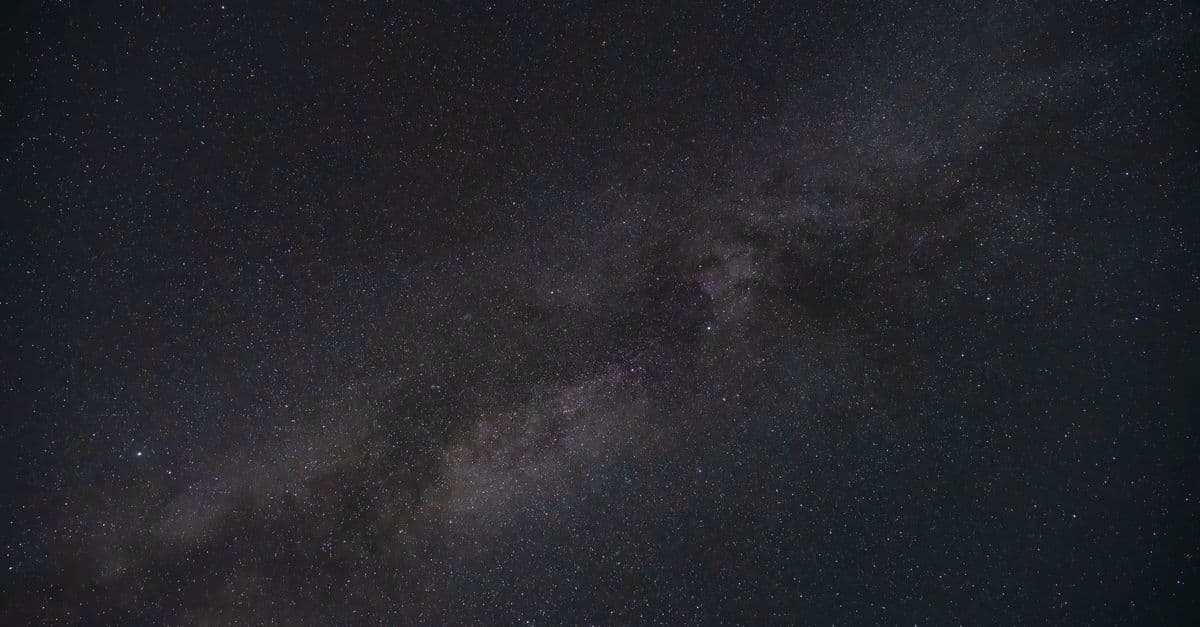
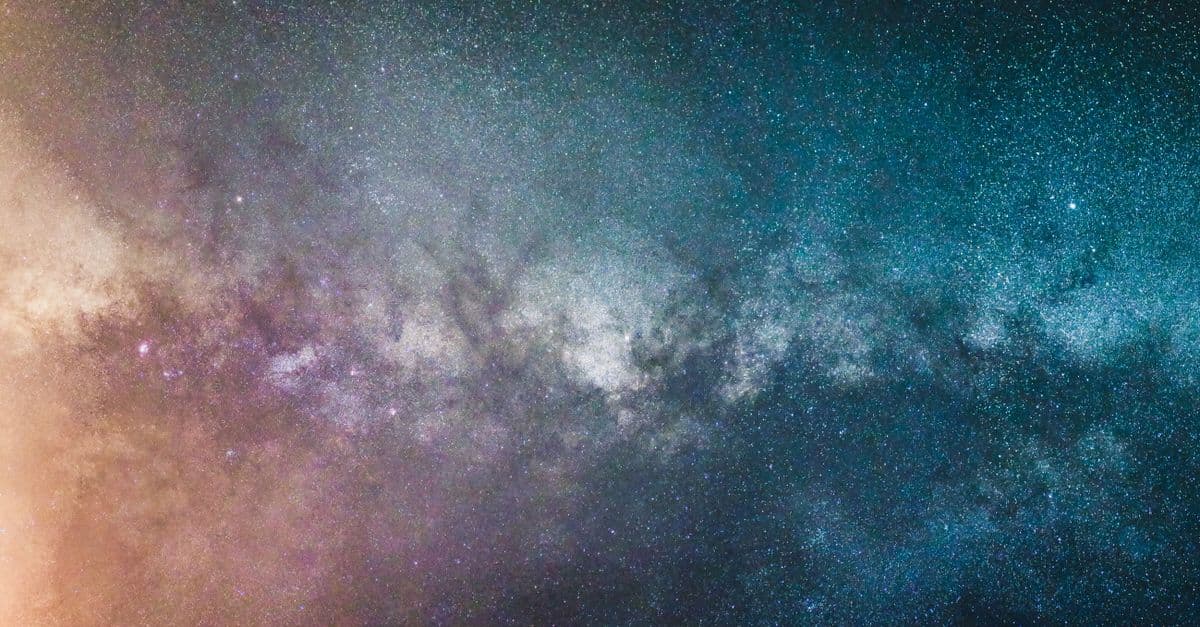
Photo: foad shariyati / Pexels
The universe is expanding. That has been known since 1929. What is not agreed upon is how fast. Two separate, independently calibrated, methodologically distinct approaches — one measuring nearby galaxies, one reading the afterglow of the Big Bang — give answers that differ by roughly 8 to 10 percent. That gap, now assessed at more than 5 sigma in statistical confidence, is large enough to suggest a measurement error has eluded detection across decades of refinement, or that the standard model of cosmology is fundamentally incomplete.
Key takeaways
- The Hubble constant (H₀) describes how fast the universe is expanding: the recession velocity in km/s per megaparsec of distance.
- Local measurements using Cepheid variable stars and Type Ia supernovae yield approximately 73 km/s/Mpc (SH0ES team).
- CMB-based measurements from the Planck satellite, assuming the standard ΛCDM model, yield approximately 67.4 km/s/Mpc.
- The discrepancy now exceeds 5 sigma — a threshold traditionally signaling a real effect rather than statistical noise.
- JWST data published in 2024 confirmed the Cepheid calibration from Hubble Space Telescope. The gap did not close.
- Proposed resolutions include early dark energy, extra sterile neutrinos, and modifications to gravity — all of which would constitute new physics beyond the standard model.
What the Hubble Constant Actually Measures
Edwin Hubble established in 1929 that distant galaxies are moving away from us, and that the farther a galaxy is, the faster it recedes. The Hubble constant (H₀) is the number that describes this relationship: it gives the recession velocity in kilometers per second for every megaparsec (roughly 3.26 million light-years) of distance.
Megaparsec — a unit of distance equal to one million parsecs, or roughly 3.26 million light-years. Used as the standard distance unit in cosmology because galaxies and galaxy clusters are measured in these scales.
A value of 70 km/s/Mpc means a galaxy one megaparsec away is receding at 70 km/s. A galaxy two megaparsecs away recedes at 140 km/s. The constant sets the scale of the entire observable universe, determines the universe's age, and is a cornerstone input for every cosmological model.
Getting it wrong by 8% is not a minor calibration issue. A systematic error of that magnitude propagates through estimates of the universe's age, the amount of dark matter, and the behavior of dark energy — the dominant component of the energy budget of the cosmos.
The Two Measurements That Disagree
The disagreement has a name in the community: the Hubble tension. It sits between two measurement chains that are built from completely different physics.
The local distance ladder begins with parallax — direct geometric measurement of nearby star distances — and bootstraps outward through several rungs. Parallax anchors the calibration of Cepheid variable stars, which pulsate in brightness in a predictable period-luminosity relationship. Cepheids are visible in nearby galaxies, where they anchor the calibration of Type Ia supernovae — standard candles bright enough to measure across billions of light-years. The SH0ES (Supernova H₀ for the Equation of State) team, led by Adam Riess, has spent two decades refining this chain. Their most recent published value is 73.17 ± 0.86 km/s/Mpc.
The early-universe method works from the opposite direction. The Planck satellite mapped the cosmic microwave background (CMB), the thermal radiation left over from 380,000 years after the Big Bang. The CMB contains acoustic oscillations — pressure waves frozen into the photon-baryon fluid at recombination. Their scale is a precise physical ruler. Fitting those patterns to the ΛCDM (Lambda Cold Dark Matter) model extrapolates forward to today's expansion rate. Planck's result: 67.4 ± 0.5 km/s/Mpc.
Source: SH0ES Team, Riess et al. (2022) in The Astrophysical Journal — H₀ = 73.04 ± 1.04 km/s/Mpc, 5σ tension with Planck.
Source: Planck Collaboration (2020) — H₀ = 67.4 ± 0.5 km/s/Mpc from CMB power spectrum.
Why 5 Sigma Matters
In physics, a result is considered a "detection" at 5 sigma — meaning the probability that the observed discrepancy arose by chance is less than about one in 3.5 million. This is the threshold used for particle physics discoveries, including the Higgs boson in 2012.
The Hubble tension has crossed that threshold. The two measurements disagree not because of noisy data but because both have been refined to remarkable precision. The statistical confidence that this is a real discrepancy, not noise, is now overwhelming.
Think of it this way: two separate teams independently weigh an object using completely different instruments calibrated to different reference standards. One gets 73 grams, the other gets 67 grams, and both have error bars of less than 1 gram. At that point, arguing about experimental uncertainty becomes implausible. Something deeper is off.
What JWST Found — and Did Not Fix
The most obvious candidate explanation for the tension was that Cepheid measurements from the Hubble Space Telescope had some systematic bias. Hubble's optics, operating primarily in visible and near-infrared light, struggle with crowded stellar fields — nearby Cepheids can be contaminated by background stars, inflating brightness measurements.
JWST's infrared sensitivity is dramatically superior. In 2023 and 2024, the SH0ES team used JWST to observe Cepheids in eight galaxies previously measured by Hubble. The results, published in 2024, were decisive in the wrong direction for easy optimism: JWST confirmed the Hubble measurements. The Cepheid distances did not shift. The local H₀ value remained near 73.
Source: NASA Science blog, JWST team (2024) — JWST Cepheid cross-check confirms Hubble measurements, tension persists.
Source: CCHP team, Freedman et al. (2024) — JWST TRGB (Tip of the Red Giant Branch) measurements yield 69–72 km/s/Mpc, intermediate but still not matching Planck.
The CCHP (Chicago-Carnegie Hubble Program), using JWST to measure an alternative distance indicator called the Tip of the Red Giant Branch (TRGB), found values between 69 and 72 km/s/Mpc — intermediate between the two camps, but still not reaching Planck's 67.4. Even the lower local measurements do not resolve the tension.
Comparison of Key H₀ Measurements
| Method | Team / Mission | H₀ Value (km/s/Mpc) | Uncertainty |
|---|---|---|---|
| Cepheids + Type Ia SNe | SH0ES (Riess et al.) | 73.17 | ±0.86 |
| CMB (ΛCDM fit) | Planck Collaboration | 67.4 | ±0.5 |
| TRGB (JWST) | CCHP (Freedman et al.) | ~69–72 | ~±2 |
| Strong gravitational lensing | H0LiCOW / TDCOSMO | ~73 | ±2 |
| Baryon acoustic oscillations | DESI (2024) | ~68 | ±1 |
The pattern is clear: methods that measure the local universe tend to cluster near 73. Methods that either derive from the early universe or use large-scale structure tend to cluster near 67–68.
What Could Cause the Tension: New Physics Options
If neither measurement chain contains a systematic error — and both have survived extraordinary scrutiny — then the standard cosmological model must be incomplete. Several candidate modifications are under active investigation.
Early dark energy is perhaps the most studied proposal. In the standard ΛCDM model, dark energy is a cosmological constant — it has always existed at a fixed density. Early dark energy models postulate an additional energy component that was significant in the early universe (before recombination) and has since diluted away. This would alter the acoustic oscillation scale in the CMB, effectively changing what value of H₀ is inferred from Planck data without changing the Planck observations themselves. The revised fit would point toward higher H₀. The difficulty is that early dark energy models create new tensions with other observational constraints, including matter clustering (σ₈).
Sterile neutrinos are hypothetical particles that interact only through gravity (unlike standard neutrinos, which also interact via the weak force). Adding a light sterile neutrino species — sometimes called N_eff modifications — would change the expansion rate in the early universe in ways that shift the inferred H₀ upward. Current neutrino physics experiments have constrained but not ruled out certain sterile neutrino masses relevant to this fix.
Modified gravity theories propose that general relativity, while accurate across tested scales, departs from its predictions at cosmological scales. If dark energy or gravity behaves differently than ΛCDM assumes, the CMB-to-H₀ extrapolation would yield a systematically wrong value. Testing this requires separating gravity's behavior across many different physical scales — a challenge that future surveys like EUCLID are designed to address.
Interacting dark matter and dark energy models allow the two dominant dark components to exchange energy over cosmic time. This would alter the expansion history in subtle ways that could reconcile local and early-universe measurements.
None of these fixes is clean. Each introduces new parameters and creates its own predictions that must be reconciled with a growing body of observational constraints.
Source: CERN Courier, Silk et al. (2021) — Overview of early dark energy and N_eff modifications as Hubble tension resolutions.
What DESI 2024 Added to the Picture
In April 2024, the Dark Energy Spectroscopic Instrument (DESI) released its first-year baryon acoustic oscillation (BAO) measurements — the most precise large-scale structure survey to date. DESI measured H₀ at roughly 68 km/s/Mpc from BAO alone, consistent with Planck and inconsistent with SH0ES.
More provocatively, DESI's first-year data showed weak evidence that dark energy may not be a cosmological constant — that its equation of state parameter w may be evolving over time. A constant dark energy has w = -1. DESI's best fit suggested w might be closer to -0.7 to -0.9, and evolving. That finding was not yet at 5 sigma, but it was enough to reopen discussion about dynamical dark energy models that had largely been set aside.
If dark energy is dynamical, then the CMB extrapolation using a constant w = -1 would be wrong. But whether the resulting correction closes the Hubble tension or creates new discrepancies depends heavily on which dark energy model you adopt.
Source: DESI Collaboration (2024) — BAO first-year results, H₀ and dark energy equation of state measurements.
Why the Stakes Are High
The Hubble constant is not just a number. It sets the age of the universe (a value of 73 gives roughly 12.9 billion years; 67 gives about 13.8 billion years), the physical size of the observable universe, and the inferred densities of dark matter and dark energy. An error of 8% in H₀ propagates directly into all of these.
Beyond the numerical consequences, the tension matters because the standard cosmological model — ΛCDM — has been extraordinarily successful. It correctly predicts the CMB power spectrum, the large-scale structure of the universe, and the abundances of primordial light elements. It is one of the most predictively successful models in the history of science.
If the Hubble tension is real and requires new physics, it is a fracture in that success. The question is not whether cosmology is wrong in some trivial way. It is whether our picture of the universe's first billion years, its dark sector, or its gravitational law needs to be fundamentally revised.
For more on the cosmological framework that H₀ tension puts under pressure, see the article on gravitational waves and what they reveal about the universe's expansion, and what quasars tell us about the early universe.
JWST's Verdict: The Tension Survives Scrutiny
When JWST launched in late 2021, many cosmologists quietly hoped it would resolve the Hubble tension by finding a systematic error in Hubble Space Telescope's Cepheid measurements. JWST's infrared detectors are sharper and more sensitive, capable of resolving individual Cepheids in crowded stellar fields without the optical contamination that could, in principle, have biased HST brightness measurements. The 2024 results answered that hope definitively — and not in the way the optimists expected.
The SH0ES team, led by Adam Riess, used JWST to observe Cepheid variable stars in eight galaxies previously measured by HST. Their published analysis confirmed the HST Cepheid distances essentially unchanged. The local H₀ value remained at approximately 73 km/s/Mpc. No significant bias from stellar crowding was found. The tension did not shrink.
Source: Riess et al. (SH0ES team), Astrophysical Journal Letters (2024) — JWST Cepheid cross-check across 8 galaxies confirms HST measurements; tension with Planck CMB value of 67.4 km/s/Mpc persists at greater than 5 sigma.
The Chicago-Carnegie Hubble Program (CCHP), led by Wendy Freedman, took a different approach with JWST. Rather than re-examining Cepheids, Freedman's team used the Tip of the Red Giant Branch (TRGB) method — a separate distance indicator based on the well-understood luminosity at which red giant stars ignite helium fusion and brighten abruptly before fading. The TRGB is, in principle, less susceptible to metallicity and crowding effects than Cepheids.
Tip of the Red Giant Branch (TRGB) — a standard candle based on the predictable peak luminosity reached by low-mass stars just before helium ignition in their cores. In the I-band (near-infrared), this luminosity is nearly metallicity-independent, making it a powerful distance indicator for nearby galaxies.
CCHP's JWST TRGB measurements yielded H₀ values in the range of 69 to 72 km/s/Mpc, with a representative published value near 69.8 km/s/Mpc. This sits between the Planck value (67.4) and the SH0ES value (73.17) — closer to the CMB result, but still not reaching it. Even the lower end of CCHP's range does not resolve the tension with Planck; it merely narrows the gap by a portion.
The SH0ES team's response to the CCHP analysis was direct: they applied the same JWST data to Cepheids and found that the two methods, when applied carefully to the same galaxy anchor points, converge near 73 rather than near 70. The discrepancy between CCHP and SH0ES JWST results became a secondary controversy within the primary tension, centered on calibration choices for TRGB zero-point and dust corrections.
What JWST has firmly established is that the Cepheid distance ladder, as calibrated by HST, was not the source of a large systematic error. The local measurements cluster near 73 regardless of whether you use Cepheids (SH0ES) or TRGB (some analyses). The gap with the CMB-inferred value near 67 has not narrowed. The universe, measured today, expands faster than the universe's own history predicts it should — and no known instrumental bias in any current dataset explains why.
Source: Freedman et al. (CCHP), Astrophysical Journal (2024) — JWST TRGB measurements yielding H₀ ≈ 69.8 km/s/Mpc; compared to SH0ES JWST Cepheid result near 73 km/s/Mpc from the same dataset epoch.
The Takeaway
The Hubble tension is the most statistically significant crack in standard cosmology discovered in the past two decades. Both measurement chains — local and early-universe — have been scrutinized, refined, and cross-checked by JWST without the discrepancy disappearing. The universe itself appears to be giving different answers to the same question depending on which era you measure it in. Either something subtle has been missed in 30 years of observations, or dark energy, the neutrino sector, or gravity itself behaves differently than the standard model assumes. The next decade of surveys — EUCLID, DESI, the Vera Rubin Observatory — will either narrow the measurements to a single consistent value or sharpen the crack into something that cannot be ignored.
Read next:
- Gravitational Waves Explained: Listening to the Universe
- What Are Quasars: The Brightest Objects in the Universe
- Black Holes Explained: How They Work
Q: What is the Hubble constant tension?
A: It is the disagreement between two independent methods of measuring H₀, the universe's expansion rate. Local measurements (Cepheids + supernovae) give ~73 km/s/Mpc; CMB-based measurements (Planck) give ~67.4 km/s/Mpc. The gap exceeds 5 sigma and has not narrowed despite decades of refinement.
Q: Did JWST solve the Hubble tension?
A: No. JWST observed Cepheids in eight galaxies previously measured by Hubble and confirmed those measurements. The local expansion rate remained near 73 km/s/Mpc. The gap with Planck's CMB value was not closed.
Q: What is early dark energy and could it explain the tension?
A: Early dark energy is a proposed additional energy component that was significant before recombination and has since diluted. It would alter the acoustic scale in the CMB, making the Planck-inferred H₀ higher — closer to local measurements. However, it creates new tensions with matter clustering constraints and has not been confirmed observationally.
Q: How is the Hubble constant measured locally?
A: The local (distance ladder) method uses parallax to calibrate Cepheid variable stars, which calibrate Type Ia supernovae. Supernovae are bright enough to measure across billions of light-years, allowing direct recession velocity measurements at cosmological distances.
Q: What does a 5-sigma discrepancy mean?
A: It means the probability that the disagreement arose by chance (random statistical fluctuation) is less than roughly one in 3.5 million. Physicists use 5 sigma as the threshold for a real detection or a real discrepancy, as opposed to a statistical artifact.
Q: What happens if neither measurement is wrong?
A: Then the standard ΛCDM cosmological model is incomplete. New physics — such as early dark energy, extra neutrino species, interacting dark sector components, or modified gravity — would be required to reconcile the two measurements. This would be among the most significant revisions to cosmology since the discovery of dark energy in 1998.
Weekly digest
Stay ahead of the curve
Get the best science, AI, and tech stories delivered to your inbox every week. No spam — unsubscribe any time.
About the Author
SciHub101 is an independent science and technology publication founded and edited by Buğra Sözeri, a software engineer and app developer based in Türkiye. Articles are drafted against peer-reviewed literature and primary sources, fact-checked, and edited by a human before publication. Where we compare products, anything built by our own team is labelled as such — see the editorial guidelines and About page for how corrections and disclosures work.
Related Articles
The Last Stars: What the Universe Looks Like in a Trillion Years
The Sun has about 5 billion years left. The last stars in the universe will burn for 10 trillion. After they go out, the cosmos enters an era so dark and cold that physics itself may eventually dissolve the matter we're made of.

The Fermi Bubbles: Two Giant Lobes Hiding Above Our Galaxy
In 2010, NASA's Fermi telescope found two colossal gamma-ray structures erupting from the center of the Milky Way, each 25,000 light-years tall. In 2020, an X-ray telescope found even larger versions of the same structures. Nobody fully agrees on what made them.
How Big Is the Universe — and How Much of It Can We Actually See?
The observable universe is 93 billion light-years across. The full universe is bigger — possibly infinitely so. Here's what we can measure, what we can't, and why.
The Big Bang Explained — Origin of the Universe
The Big Bang explained: evidence from Hubble's law, the CMB, and primordial element abundances, plus the timeline of cosmic history and the universe's fate.
How the Universe Began: Evidence for the Big Bang
Thirteen billion years ago, all of space, time, and matter emerged from an infinitely hot, infinitely dense point. Here's the evidence that proves it — and what still puzzles us.
How Old Is the Universe — And How Do We Actually Know?
The universe is 13.8 billion years old. But how do we know? Three independent methods — the cosmic microwave background, the oldest stars, and Hubble's constant — converge on the same answer. Here's the evidence.