How Big Is the Universe — and How Much of It Can We Actually See?
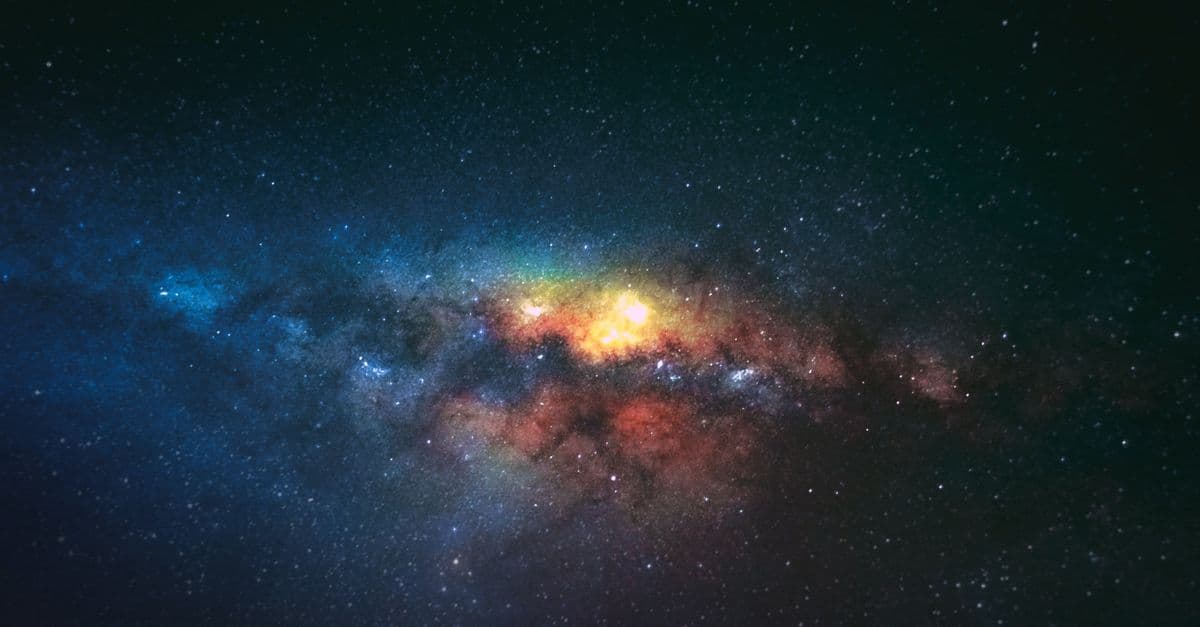
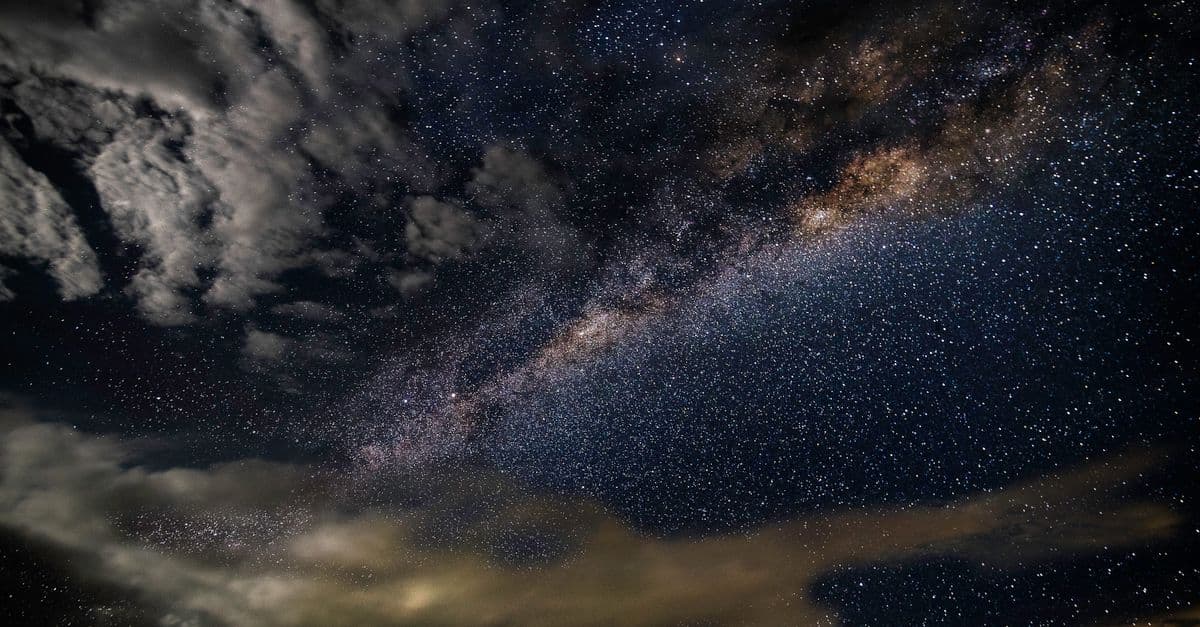
Photo: Rafael Cerqueira / Pexels
The universe is one of the only things in science where the honest answer to "how big is it?" might be infinite. We don't know its true size, and there's a real chance we never will. What we can measure is the observable universe — the region close enough that light has had time to reach us since the Big Bang, 13.8 billion years ago. That region alone is roughly 93 billion light-years across, contains an estimated two trillion galaxies, and is only a fraction of whatever the full universe actually is.
Key takeaways
- The observable universe is about 93 billion light-years across, with Earth at the center of what we can see (not the center of the universe itself).
- Its size is bigger than 13.8 billion light-years — the universe's age times the speed of light — because space has been expanding the entire time light was traveling toward us.
- The full universe is estimated to be at least 250 times bigger than what we can see, and current data can't rule out that it's infinite.
- We can't see beyond the cosmic horizon, the distance light hasn't yet had time to cross, and beyond the cosmological event horizon, the point past which expansion outruns light permanently.
- Astronomers measure all of this with a chain of independent techniques called the cosmic distance ladder, and two of those techniques currently disagree by about 9%, a puzzle known as the Hubble tension.
The observable universe
The observable universe is a sphere centered on Earth, with a radius of about 46.5 billion light-years, giving it a diameter of roughly 93 billion light-years. NASA astrophysicist Amber Straughn has given a similar public-facing figure of about 92 billion light-years across, with the small difference coming down to rounding and which cosmological parameters a given calculation uses (NASA, "Cosmic Distances," 2024).
That number is difficult to hold in your head, so it helps to break it into what's actually inside it.
| Quantity | Estimated value | Notes |
|---|---|---|
| Diameter of observable universe | ~93 billion light-years | Radius ~46.5 billion ly |
| Age of the universe | 13.8 billion years | From Planck CMB data |
| Estimated number of galaxies | ~2 trillion | Hubble Deep Field extrapolation, refined by JWST |
| Estimated number of stars | ~10²² (10 sextillion) | Rough order-of-magnitude estimate |
| Estimated number of atoms | ~10⁸⁰ | Based on average matter density |
| Most distant confirmed galaxy | JADES-GS-z14-0 | Redshift z = 14.32, seen ~290 million years after the Big Bang |
| Current distance to that galaxy | ~33.6 billion light-years | Because space has expanded since the light was emitted |
Table: Rough scale of the observable universe, compiled from NASA, ESA/Webb, and peer-reviewed JWST spectroscopy.
Every galaxy anyone has ever photographed, from Andromeda next door to the faint smudges in JWST's deepest exposures, sits inside that 93-billion-light-year sphere. Nothing we have ever detected, in any wavelength, from any instrument, comes from outside it. That's not because nothing exists out there. It's because light from farther away hasn't had time to arrive yet, or, in some cases, never will.
Why is the observable universe bigger than its age times light speed?
This is where most people's intuition breaks, and it's worth slowing down on. The universe is 13.8 billion years old, so it's natural to assume light could have only traveled 13.8 billion light-years to reach us. Instead, the edge of what we can see is about 46.5 billion light-years away. The gap isn't a mistake. It's a direct consequence of an expanding universe.
Think of it like an ant walking across a rubber sheet that's being stretched from underneath while it walks. If the ant starts at one edge and crawls toward a mark on the sheet, the mark keeps moving farther away even as the ant is closing the gap, because the sheet itself is growing between them. The ant still eventually reaches where the mark used to be, but by the time it gets there, the mark has moved somewhere new. Light traveling across the universe is that ant. Space is the rubber sheet.
A galaxy whose light is reaching us right now was much closer to us when that light left it, sometimes only a few billion light-years away. As the photon traveled, the space between the galaxy and Earth kept stretching. By the time the light arrives, the source galaxy has been carried, by the expansion of space itself, to a much greater distance. That's why the CMB-emitting region, whose light took 13.8 billion years to reach us, is calculated to now be about 46.5 billion light-years away (National Radio Astronomy Observatory, "Inconsistency Between the Age and Diameter of the Universe").
This is also the mechanism behind an idea that trips people up every time: distant galaxies appearing to recede faster than the speed of light. Nothing is physically moving through space faster than light. Instead, the space between us and those galaxies is expanding, and enough space stacked up over enough distance can make the rate of separation exceed c, even though no object or signal within that space ever breaks the speed limit. Special relativity governs motion through space. It says nothing about how fast space itself can grow.
Is the universe expanding faster than the speed of light?
Locally, no object moves faster than light. But over large enough distances, the cumulative expansion of space between two points can separate them faster than light could cross that same distance, which is why galaxies far enough away are receding from us at superluminal apparent speeds without violating relativity.
Why can't we see further?
There are two distinct limits, and conflating them is a common source of confusion.
1. Light hasn't had time to arrive yet
The most distant light reaching us today was emitted just 380,000 years after the Big Bang. Before that point, the universe was a hot, dense plasma, opaque to light in the same way fog is opaque to a flashlight beam. Photons couldn't travel freely; they scattered constantly off free electrons. Once the universe cooled enough for electrons to bind to protons and form neutral hydrogen, in an event cosmologists call recombination, light was finally free to stream outward. We detect that light today as the cosmic microwave background (CMB), the faint microwave glow that fills the entire sky and marks the literal edge of what we can observe. There is no light for us to see from before that moment, not because our instruments aren't good enough, but because the universe itself was opaque.
2. Expansion outpaces light permanently
Separately, some regions of space are now receding from us so fast, driven by dark energy's acceleration of cosmic expansion, that light leaving those regions today will never reach us, no matter how much time passes. Those regions lie beyond what's called the cosmological event horizon. As dark energy continues to accelerate the expansion, more galaxies will cross this horizon over time and vanish from our future view, even though they still exist. This is the opposite of a black hole's event horizon, which traps light trying to escape. Here, it's space itself outrunning the light trying to reach us.
What's the difference between the cosmic horizon and the cosmological event horizon?
The cosmic horizon marks the farthest point we can see today, set by how much time light has had since the Big Bang. The cosmological event horizon marks the point beyond which light emitted right now will never reach us, because expansion is accelerating faster than the light can close the distance. One is about the past; the other is about the future.
How big is the whole universe?
This is genuinely unknown, and it's one of the more honest gaps in modern cosmology. There are three broad possibilities cosmologists take seriously, and current data can distinguish between them only partially.
Possibility 1: Finite but much larger than what we see
A widely cited 2011 study, based on analyzing patterns in the cosmic microwave background for signs of a repeating or wrapped geometry, put a lower bound on the universe's total size at roughly 250 times the diameter of the observable region — implying a universe at least 23 trillion light-years across, and potentially far larger still. That figure is a floor, not a ceiling; it comes from the fact that no repeating patterns were detected at smaller scales, which sets a minimum size but says nothing about the true maximum.
Possibility 2: Infinite
If space is geometrically flat, which current measurements support to within about 0.4% based on Planck satellite data on the CMB, and if the universe's topology is simply connected rather than looping back on itself, then the universe extends infinitely in every direction. There's no edge, no boundary, and no center in any meaningful sense — just more space, presumably filled with more galaxies, forever. This is currently the leading interpretation among cosmologists, though "leading" here means "consistent with the data," not "proven."
Possibility 3: Closed and finite, but without an edge
A third option is that the universe is finite but unbounded, similar to how the two-dimensional surface of a sphere has no edge even though it has a finite area. In this scenario, if you traveled far enough in one direction, you would eventually return to your starting point, the way circumnavigating Earth brings you back to where you began. Current CMB flatness measurements disfavor this model, but they don't rule it out entirely, since a sufficiently large closed universe would appear nearly flat to any measurement precision we currently have.
How do we actually measure the universe?
Astronomers can't run a tape measure between here and a distant galaxy, so they built something else: a chain of measurement techniques called the cosmic distance ladder, where each rung is calibrated using the one below it, and errors would compound if any single rung were badly wrong.
- Parallax. Nearby stars appear to shift slightly against the background sky as Earth orbits the Sun, the same way holding a finger up and closing one eye then the other makes the finger seem to jump. Measuring that shift gives a direct geometric distance, reliable out to a few thousand light-years, and it's the only method on the ladder that doesn't depend on any assumptions about the object being measured.
- Cepheid variable stars. These are pulsating stars whose brightness rises and falls in a cycle, and the length of that cycle is directly related to the star's true (intrinsic) brightness. Comparing true brightness to apparent brightness as seen from Earth reveals distance, a relationship first established by Henrietta Leavitt in 1908 and still central to distance measurement today.
- Type Ia supernovae. These are exploding white dwarf stars that detonate at a remarkably consistent peak brightness, making them "standard candles" visible across most of the observable universe. Their consistency is what let astronomers discover, in 1998, that the universe's expansion is accelerating rather than slowing, a result that won the 2011 Nobel Prize in Physics.
- The cosmic microwave background. As the most distant light there is, the CMB anchors the entire cosmological model. Its tiny temperature fluctuations, mapped in exquisite detail by the Planck satellite, encode information about the universe's age, geometry, and composition all at once.
Stacked together, these rungs let astronomers pin down the Hubble constant, the rate at which the universe is expanding, to within a few percent. From the Hubble constant, combined with the CMB and models of dark energy, cosmologists derive both the universe's age and the radius of the observable region.
How is the age of the universe calculated from the Hubble constant?
Running the expansion rate backward in time, like rewinding a video of the universe growing, tells you how long ago everything would have been squeezed into a single point. Combined with corrections for how the expansion rate has changed over cosmic history, largely due to shifting contributions from radiation, matter, and dark energy, this calculation gives an age of 13.8 billion years, consistent across multiple independent methods.
The Hubble tension
Here's a wrinkle that's become one of the most closely watched problems in cosmology. When the Hubble constant is measured locally, using Cepheids and Type Ia supernovae in relatively nearby galaxies, the SH0ES collaboration's analysis gives a value of about 73.17 ± 0.86 km/s/Mpc. When it's derived instead from the CMB, using the Planck satellite's model of the early universe, the result comes out to about 67.4 km/s/Mpc. That's roughly a 9% disagreement, and the tension between the two values has reached a statistical significance of about 5.8 sigma, well past the threshold physicists usually require before taking a discrepancy seriously (Physics World, "Cosmic conflict continues," 2025).
At the American Astronomical Society meeting in January 2025, cosmologist Dan Scolnic described the Hubble tension as having escalated to a "crisis," reflecting how stubbornly the gap has resisted explanation despite years of increasingly precise measurements from both camps. There are two broad possibilities. Either the local distance ladder has a subtle, undetected bias somewhere in its chain, or the standard cosmological model, called Lambda-CDM, is missing something, perhaps a more complex, evolving form of dark energy rather than the constant value it currently assumes. Data from the DESI survey in 2024 and 2025 has offered hints that dark energy's strength may not be perfectly constant over cosmic time, which would be exactly the kind of revision that could help close the gap. JWST observations, capable of measuring Cepheids and supernovae with less contamination from crowded starfields than Hubble could achieve, are actively being used to test whether the local measurement itself needs correcting.
Whichever explanation turns out to be right, the resolution matters far beyond a technical disagreement between two teams of astronomers. The Hubble constant is a foundational input for calculating the size and age of the observable universe, so a real, physical explanation for the tension would mean current estimates of both need updating too.
What's in the unseen — and unmeasured — universe?
It's worth pausing on a separate but related point: even within the 93-billion-light-year sphere we can observe, most of what's there isn't something we can directly see at all.
- Only about 5% of the universe's total energy content is ordinary matter, the atoms that make up stars, planets, gas, and every living thing, including you.
- About 27% is dark matter, an invisible form of mass detected so far only through its gravitational effects on galaxies and galaxy clusters, never directly observed in a lab or telescope.
- The remaining roughly 68% is dark energy, the mysterious property of space itself that's driving the accelerating expansion discussed above.
In other words, the parts of the universe made of familiar stuff, the stuff physics textbooks are mostly about, make up a small minority of what's actually out there. The dominant ingredients of the cosmos remain, in a very literal sense, unidentified.
What people get wrong about the size of the universe
A few misconceptions come up constantly, and they're worth addressing directly.
"Earth is at the center of the universe." Earth is at the center of our observable universe, but that's true for every point in the universe simultaneously. An observer in a galaxy ten billion light-years away would have their own observable sphere, also centered on themselves, overlapping with ours but not identical to it. There's no special, privileged center to the universe as a whole; the "center of what we can see" is simply an artifact of us being the one doing the looking.
"The Big Bang happened at a point in space, and the universe expanded outward from it into empty space that was already there." This is arguably the most persistent misconception in popular cosmology, and it's flatly wrong. The Big Bang was an expansion of space itself, everywhere at once, not an explosion that occurred at one location and threw matter outward into a pre-existing void. There was no "outside" for it to expand into. Space, matter, and time began together.
"If the universe is infinite, that contradicts the Big Bang." It doesn't. An infinite universe can still have begun in a hot, dense state 13.8 billion years ago; infinite density and infinite extent aren't the same claim. A genuinely infinite universe would simply have always been infinite, even in its earliest, densest moments, with density (not size) being what changed dramatically over time.
"We'll eventually build a telescope powerful enough to see the whole universe." No telescope, however advanced, can see past the cosmic horizon, because the limiting factor isn't sensitivity, it's that the light literally hasn't arrived yet, or, beyond the cosmological event horizon, never will. This is a fact about the geometry and history of spacetime, not an engineering problem awaiting a better mirror.
The takeaway
The observable universe is 93 billion light-years across, holds an estimated two trillion galaxies, and represents only a fraction of what may exist beyond it. Whether the full cosmos is 250 times larger, staggeringly larger still, or truly infinite is a question current physics genuinely cannot answer, and the honest scientific position is to say so rather than guess. What we do have is a rigorous, cross-checked method for measuring the slice we can see, one accurate enough to reveal both the age of everything and a stubborn 9% disagreement in that very method that cosmologists are still racing to explain. We're looking outward from a small planet in one galaxy among trillions, working with a finite window onto an unknown whole, and the fact that we can measure even this much, precisely, repeatedly, and with mounting evidence rather than speculation, is itself the achievement worth sitting with.
Frequently asked questions
Q: How far away is the most distant galaxy ever seen? A: JADES-GS-z14-0, confirmed by JWST spectroscopy in 2024, sits at redshift z ≈ 14.32. Its light was emitted about 290 million years after the Big Bang, and due to cosmic expansion during the light's journey, the galaxy's current distance is estimated at roughly 33.6 billion light-years.
Q: Could anything be bigger than the universe? A: By definition, no. The universe is everything that exists, so nothing can be larger than it. The "observable universe" is simply the portion of that larger, possibly infinite, whole that lies within our cosmic horizon.
Q: What's outside the universe? A: If the universe is infinite, there is no "outside," since infinite space has no boundary to be outside of. If it's finite but unbounded, the question may not be meaningful at all: spacetime is the universe, so there's no separate "place" beyond it, the same way there's no location beyond the surface of a sphere.
Q: Will we ever see more of the universe than we do now? A: Less, actually, over sufficiently long timescales. As dark energy continues accelerating cosmic expansion, more distant galaxies will cross the cosmological event horizon and vanish from our reachable future view. Current models suggest that in roughly 150 billion years, only our local Virgo Supercluster will still be visible.
Q: How long is a light-year, exactly? A: About 9.46 trillion km (5.88 trillion miles), the distance light travels in one year at roughly 299,792 km/s (186,282 miles/s). The 93-billion-light-year diameter of the observable universe therefore works out to roughly 8.8 × 10²³ km.
Q: Is the universe still expanding today? A: Yes, and the expansion is accelerating, not slowing down, a discovery made through Type Ia supernova observations in 1998 that won its discoverers the 2011 Nobel Prize in Physics. The acceleration is attributed to dark energy, which makes up roughly 68% of the universe's total energy content.
Q: Why do we say the universe is 13.8 billion years old if it might be infinite in size? A: Age and size are separate measurements. The 13.8-billion-year figure describes how long ago the universe was in an extremely hot, dense state, derived from the CMB and the expansion rate. It says nothing about the universe's total spatial extent, which is a distinct, and far less settled, question.
Q: What is the cosmic microwave background, and why does it matter for measuring the universe? A: The CMB is the oldest light we can detect, released about 380,000 years after the Big Bang when the universe cooled enough to become transparent. Its tiny temperature variations, mapped by missions like Planck, provide the single most precise dataset for calculating the universe's age, geometry, and composition.
Q: Does the Hubble tension mean the Big Bang theory is wrong? A: No. The Hubble tension is a disagreement between two methods of measuring the current expansion rate, not a challenge to whether the Big Bang happened. Even the most aggressive proposed resolutions modify details of the standard cosmological model; none seriously threaten the basic Big Bang framework, which rests on multiple independent lines of evidence.
Q: How do astronomers know galaxies are moving away from us at all? A: Through redshift: light from a receding galaxy is stretched to longer, redder wavelengths, the same Doppler effect that lowers the pitch of a siren as it drives away. The amount of redshift correlates with distance, a relationship first established by Edwin Hubble in 1929 and still the backbone of cosmic distance measurement today.
Related Reading
Follow new articles
Add SciHub101 to your feed reader to see new science and technology stories.
About the Author
SciHub101 is an independent science and technology publication founded and edited by Buğra Sözeri, a software engineer and app developer based in Türkiye. AI tools assist with drafting and research. Source documentation in the existing archive is uneven, and articles are being reviewed and corrected. The Editorial Team byline identifies editorial responsibility; it does not certify specialist or independent human review. Where we compare products, anything built by our own team is labelled as such — see the editorial guidelines and About page for how corrections and disclosures work.
Related Articles
The James Webb Space Telescope Explained — How It Works and What It's Found
JWST sits 1.5 million kilometers from Earth, sees light from galaxies 280 million years after the Big Bang, and is actively rewriting cosmology. Here's how the most ambitious telescope ever built actually works, and what it has found through 2026.
Mars Rovers Explained — From Sojourner to Perseverance
Five rovers have driven on Mars over 30 years. They've found water, organic molecules, and possibly biosignatures. Here's what each rover discovered and what's coming next.
How Big Is the Universe? The Real Answer
The observable universe is 93 billion light-years across, but the real universe is far bigger — possibly infinite. Here's how we know.
The Big Bang Explained — Origin of the Universe
The Big Bang explained: evidence from Hubble's law, the CMB, and primordial element abundances, plus the timeline of cosmic history and the universe's fate.
The Hubble Constant Tension: A Crisis in Cosmology
Two carefully checked ways of measuring how fast the universe expands disagree by roughly 8 to 10 percent, a gap near 5 sigma. Either a hidden error remains, or standard cosmology is incomplete.
What Is Dark Flow? The Mysterious Motion of Galaxy Clusters
Dark flow is the claimed observation that galaxy clusters across the observable universe are moving in the same direction, toward a region beyond what we can see. If real, it could indicate a gravitational pull from structures outside the observable universe. The claim is controversial and not accepted by most cosmologists.