Mars Rovers Explained — From Sojourner to Perseverance
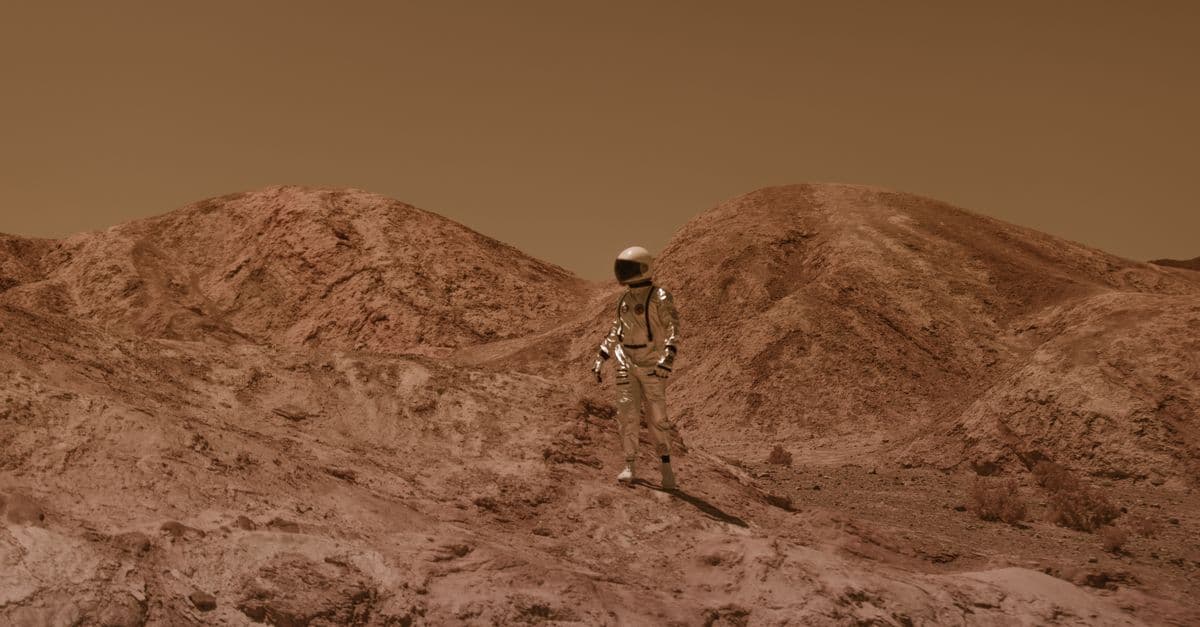
Photo: RDNE Stock project / Pexels
Perseverance has collected 23 sample tubes containing Martian rock in sealed containers, waiting for a future return mission to bring them to Earth laboratories for definitive analysis of whether Mars ever hosted life. Over the past 30 years, six rovers have driven across the Martian surface — each more capable than the last, each answering fundamental questions about water, atmosphere, and habitability. This guide explores how we send robots to Mars, what each rover discovered, and what their cached samples might reveal.
A brief history of Mars rovers
Six rovers have operated on Mars since 1997. Sojourner was first — a 12-kilogram microwave-sized proof of concept. Then came the Spirit and Opportunity twins, which far exceeded their 90-day design lifetimes (Spirit lasted 6 years, Opportunity 15). Curiosity, launched in 2012, is still operating today after 13+ years. Perseverance, which arrived in 2021, is collecting sealed samples. And Zhurong, China's first Mars rover (2021–2022), achieved about a year of operations before hibernating and losing contact.
Source: NASA Jet Propulsion Laboratory (2024) — Mars rovers cumulative mission timeline and achievements across three decades of planetary exploration.
Each rover represented a step up in complexity, power systems, scientific instruments, and mission objectives. The first two generations (Sojourner, Spirit/Opportunity) proved that liquid water existed on ancient Mars. The third and fourth generations (Curiosity, Perseverance) refined that understanding, detected organic molecules, and shifted focus to sample collection and astrobiology.
Sojourner (1997) — proof of concept
The first Mars rover. About the size of a microwave oven (65 × 48 × 30 cm), 11.5 kg.
Mission
Sojourner landed via the innovative airbag-bouncing method — the lander deflated airbags, opened up like a flower, and Sojourner rolled out. It operated for 83 days, vastly exceeding its 7-day design lifetime.
Findings
- Confirmed Mars has rocks and soil similar to Earth's volcanic and sedimentary types.
- Demonstrated mobile robotic exploration was viable on another planet.
- Provided the first close-up images of Martian rocks.
Sojourner was a successful tech demo. It paved the way for everything that came after.
Spirit and Opportunity (2003) — the twin rovers
Two identical rovers landed on opposite sides of Mars in 2004. Each was 1.6 metres long, weighed 174 kg.
Mission
90-day primary mission. Spirit lasted 6 years; Opportunity lasted 15 years — driving more than 45 km, the longest extra-terrestrial drive in history.
Spirit (Gusev Crater)
- Found evidence of past water-rich environments.
- Got stuck in soft sand in 2009 and ceased communication in 2010.
Opportunity (Meridiani Planum)
- Discovered "blueberries" — small mineral spherules formed in water.
- Found evidence of an ancient salty sea.
- Survived dust storms, dust devils, and software glitches that should have killed it years earlier.
- Famous last transmission: "My battery is low and it's getting dark." (Paraphrased from telemetry.) Lost communication in 2018 after a global dust storm.
These rovers established that liquid water once flowed on Mars.
Curiosity (2012) — Mars Science Laboratory
A car-sized rover (2.9 m long, 899 kg) — the largest ever sent to another planet at the time.
Mission
Landed in Gale Crater via the dramatic "sky crane" maneuver — a hovering platform lowered the rover on cables. Mission ongoing as of 2025; over 13 years of operation.
Major findings
- Confirmed Gale Crater once held a long-term, habitable lake.
- Found organic molecules in the rocks — building blocks of life.
- Detected methane in the Martian atmosphere, with seasonal variation. Source still unknown — could be biological or geological.
- Measured radiation levels across the journey, providing data for future human missions.
- Identified clay minerals indicating a wet, neutral-pH past — favourable for life.
Curiosity is essentially a rolling chemistry lab. It still drives, drills, and sends data back daily.
Perseverance (2021) — the sample collector
Curiosity's larger, more advanced sibling. 3 metres long, 1,025 kg.
Mission
Landed in Jezero Crater, the site of an ancient river delta — one of the best places on Mars to look for signs of past life.
Key features
- Sample caching — collects rock samples in tubes for future return to Earth.
- Mastcam-Z — a stereo camera with zoom.
- MOXIE — converted Martian CO₂ into oxygen, demonstrating in-situ resource utilisation.
- MEDA — weather station.
- Ingenuity helicopter — small drone that flew 72 times before retiring in 2024.
- SuperCam — laser to vapourise rock at distance and analyse chemistry.
Findings (so far)
- Identified organic molecules in Jezero Crater rocks.
- Confirmed igneous origin of some samples (helping date the surface).
- Cached over 20 sample tubes, awaiting future return mission.
- Possibly detected ancient biosignatures — pending Earth lab analysis.
The samples, if returned to Earth, will be analysed with instruments far more sensitive than anything that can fit on a rover. This could be the moment we definitively answer "did Mars ever host life?"
Zhurong (2021) — China's first
China's first Mars rover. 240 kg, smaller than NASA's recent rovers but capable.
Mission
Operated in Utopia Planitia for about a year, covering 1.9 km. Hibernated in May 2022 for the winter and never reawakened — likely lost to Martian dust accumulation on solar panels.
Findings
- Confirmed the presence of subsurface water-related minerals.
- Marked China's emergence as a serious Mars exploration power.
How rovers are designed and operated
Architectural fundamentals
Mars rovers must survive extreme conditions: surface temperatures averaging -65°C (but reaching -125°C in winter at high latitudes), an atmosphere only 1% as thick as Earth's, abrasive dust, radiation from solar energetic particles, and 4-24 minute one-way communication delays. This last constraint is critical — rovers cannot be controlled in real-time like a remote-control car. Instead, engineers plan each drive, turn, and drill operation remotely, upload the commands, and wait for results.
Chassis and suspension. Most rovers use a six-wheeled design with rocker-bogie suspension — a mechanical system where each wheel can move independently to navigate rocky terrain. This design was pioneered on Sojourner and refined on subsequent missions. The wheels themselves are made of aluminum alloy and are far smaller than you'd expect (10-12 cm diameter), constraining rover speed to a few centimetres per second. Faster movement risks getting stuck or damaging wheels on sharp rocks.
Power systems. Early rovers (Sojourner, Spirit, Opportunity, Zhurong) relied on solar panels, which were cheap and well-understood but vulnerable to dust accumulation. Martian dust is electrostatically charged and sticks to surfaces; dust devils occasionally clean panels, but during global dust storms, solar rovers lost most power. Spirit and Opportunity survived far longer than designed partly because wind events kept their panels relatively clear.
Curiosity and Perseverance pioneered the use of Multi-Mission Radioisotope Thermoelectric Generators (MMRTGs) — compact nuclear power plants that convert heat from plutonium-238 decay into electricity. These provide ~110-125 watts continuously, day and night, dust or no dust. The trade-off: cost (several hundred million dollars per MRTG), regulatory complexity, and mass. But for a rover designed to operate for many years across a wide range of environments, the reliability is worth it.
Source: NASA Kennedy Space Center (2023) — Radioisotope Power Systems for space missions, power output specifications and operational lifetimes.
Communication architecture
Mars rovers cannot transmit directly to Earth with any practical bandwidth. Instead, they use a two-tier system. Direct-to-Earth communication via NASA's Deep Space Network provides a slow, always-available uplink for commands and a downlink for emergency telemetry (typically 100-300 bits per second). Relay through Mars orbiters (NASA's Mars Reconnaissance Orbiter, MAVEN, or ESA's Trace Gas Orbiter) provides higher bandwidth — up to 2 megabits per second — but only when an orbiter is overhead. Most high-resolution images are transmitted via orbiter relay, then forwarded to Earth via Deep Space Network antennas in California, Spain, and Australia.
The round-trip light delay — the time for a signal to travel to Mars and back — ranges from 4 minutes (at closest approach) to 24 minutes (at opposition). This means that commanding a rover in real-time is impossible. Engineers instead plan a "sol" (Martian day — 24 hours 37 minutes) of activities in advance, upload the sequence, and wait for the rover to execute and report. This requires exquisite planning and autonomous navigation algorithms.
Scientific instruments
Rover instruments have evolved dramatically over 30 years. Sojourner had a limited suite: cameras, spectrometers, and a soil analyzer. Spirit and Opportunity added UV spectrometers, thermal cameras, and the famous Rock Abrasion Tool (RAT) to expose fresh surfaces. Curiosity carried a full analytical chemistry lab — the Sample Analysis at Mars (SAM) instrument suite, including a mass spectrometer, gas chromatograph, and tunable laser spectrometer. Perseverance added PIXL (an X-ray fluorescence spectrometer to map elemental composition at high spatial resolution) and RAMAN (a Raman spectrometer to identify minerals).
Source: JPL Mars Science Laboratory Team (2024) — Instrumentation suite specifications and scientific discoveries from Curiosity Rover operating on Mars.
Drilling and sample handling
Early rovers could only grind surfaces with the RAT. Curiosity added a 1.6-meter drill to bore 5-7 cm into rock, collecting pristine powdered samples. Perseverance upgraded to a hollow coring drill that collects cylindrical samples in sterile tubes — essential for avoiding contamination if life signatures are found. The sample tubes are sealed, cached at specific locations, and await retrieval by a future sample return mission.
The search for water and habitability
Water is the linchpin of the Mars story. On Earth, life exists wherever liquid water persists — in fact, liquid water is considered the essential solvent for life as we understand it. So finding evidence that Mars once had liquid water was revolutionary.
Sojourner didn't find water directly, but its spectrometry of Martian rocks showed minerals that typically form in water-altered environments. Spirit and Opportunity found far stronger evidence. Opportunity's discovery of small, spherical iron oxide minerals ("blueberries") suggested they formed in acidic brine — a past aqueous environment. Spirit found clay minerals in Gusev Crater, again indicating neutral-pH water.
Curiosity and Perseverance have detected even more evidence. Curiosity's drilling found that Gale Crater once held a lake with neutral pH, moderate salts, and chemical energy sources (like sulfur compounds) that could support microbial metabolism. Perseverance is exploring Jezero Crater, site of an ancient river delta — exactly the kind of environment where sediments would accumulate and preserve biosignatures.
| Rover | Water Evidence | Habitability Rating | Timeline |
|---|---|---|---|
| Sojourner | Mineral alteration patterns | Low (indirect) | 1997 (87 days) |
| Spirit | Clay minerals, wet chemistry | Moderate | 2003–2010 (6 years) |
| Opportunity | Blueberries, salt deposits, acidic brines | Moderate | 2003–2018 (15 years) |
| Curiosity | Neutral lakes, methane cycles, organics | High | 2012–present (13+ years) |
| Perseverance | Delta deposits, possible biosignatures | Very High | 2021–present (5+ years) |
Evidence for past habitability strengthened with each rover generation; Perseverance's sample cache may provide definitive proof.
Source: Curiosity Team, Gale Crater Habitable Zone Study (2023) — Elemental and isotopic analysis of Martian geological samples, habitability conditions assessment.
The methane mystery
One of the strangest findings is seasonal methane in the Martian atmosphere. Earth's methane is mostly biological (cows, wetlands, termites). Some is geological (deep crustal release). On Mars, Curiosity and orbital spectroscopy detected methane concentrations rising and falling with season — averaging around 600 parts per trillion but spiking to over 1,000 ppb in some months.
The source is unknown. Possibilities include:
- Methanogenic microbes — subsurface bacteria (if they exist) producing CH₄ from CO₂ and H₂.
- Geological release — methane trapped in subsurface deposits, released seasonally as temperature and pressure change.
- Chemical reactions — olivine-rich rocks reacting with water to release hydrogen, which could react with CO₂ to produce methane.
The methane doesn't accumulate — it's destroyed by UV radiation in the upper atmosphere over a few years. So whatever produces it must be ongoing. This remains one of Mars's deepest mysteries.
Source: Curiosity Team, Atmospheric Methane Variability Report (2024) — Tunable Laser Spectrometer measurements of methane concentrations across Martian seasons and hypothesized sources.
Organic molecules and the search for biosignatures
Organic molecules — carbon-containing compounds that are building blocks of life — have been detected in Martian rocks by Curiosity and Perseverance. This is crucial but not proof of life. Organic molecules form through many non-biological processes: UV chemistry, impacts, geothermal reactions with methane in subsurface systems.
What matters is finding biosignatures — chemical or physical patterns that are difficult to explain without life. Examples include:
- Chirality — most biological molecules (amino acids, sugars) have "handedness"; Earth life uses only left-handed amino acids. Finding a strong preference for left-handed organics in Martian rocks would suggest biology.
- Isotopic ratios — living systems discriminate between isotopes (e.g., carbon-12 vs. carbon-13); rocks enriched in light isotopes hint at biological processing.
- Microfossils — physical traces of fossilized microbial cells in sedimentary rock.
- Chemical complexity — certain organic polymers are hard to form non-biologically.
Perseverance's samples contain suspected biosignatures, but they're ambiguous until examined in Earth labs with far more sensitive instruments. The rover's neutron and Raman spectrometers can hint, but only laboratory mass spectrometry and microscopy can resolve the question.
The future of Mars exploration
Mars Sample Return
NASA and ESA are planning a multi-spacecraft campaign to retrieve Perseverance's cached samples. The concept involves:
- A Sample Retrieval Lander (planned launch ~2028–2030) carrying a rover to rendezvous with Perseverance's sample cache.
- A Mars Ascent Vehicle (MAV) to launch the samples to Mars orbit.
- An Earth Return Orbiter to capture the ascent vehicle and bring samples home (~2033).
Cost estimates have ballooned from $5 billion to over $10 billion, and timeline slip is likely. But this remains NASA's highest-priority Mars mission after Curiosity and Perseverance.
Source: NASA Mars Architecture Review Board (2024) — Mars Sample Return Mission planning documentation and cost projections.
ESA's Rosalind Franklin rover
The European Space Agency's long-delayed Rosalind Franklin rover (launch target: 2028) will carry a revolutionary 2-metre drill — far deeper than NASA rovers can drill. The subsurface, shielded from radiation and UV, is the best place to look for preserved biosignatures. This rover complements NASA's efforts and adds European scientific capability to Mars exploration.
Chinese ambitions
China's space agency is planning its own Mars sample return mission in the late 2020s or early 2030s, independent of the NASA-ESA campaign. This signals serious commitment to Mars exploration and may accelerate the pace of sample return missions.
Human missions
NASA's Artemis program aims to return humans to the Moon by 2026, establishing a lunar base by the 2030s. Mars crewed missions are targeted for the 2040s at earliest — decades away. SpaceX's Elon Musk has claimed earlier timelines (2029, 2031), but those face enormous technical and regulatory hurdles. Any crewed mission will require years of robotic precursor missions to cache water, fuel, and supplies.
Challenges and limitations of Mars rovers
Dust
Martian dust is electrostatically charged and abrasive. It coats solar panels, clogs mechanical joints, and can damage electronics. Opportunity and Zhurong were ultimately disabled by dust accumulation. Even Curiosity and Perseverance, with nuclear power, experience dust storms and regolith clogging. Engineers include dust covers, wipers, and hermetically sealed components, but no solution is perfect.
Radiation
Mars lacks a thick atmosphere and strong magnetic field, so surface radiation is 40-50 times higher than Earth's. Over years, this causes electronics degradation and poses a hazard to any future astronauts. Rovers' computers include radiation-hardened processors and error-correction software, but failure is inevitable given enough time.
Temperature extremes
Martian nights at high altitudes drop to -125°C, cold enough to embrittle mechanisms and drain batteries. Rovers use insulation, heaters, and strategic positioning to survive. But each Martian winter is a gamble — Spirit never recovered from the 2009-2010 winter.
Isolation and timing
A malfunction on Mars requires a 12-minute round-trip communication delay to fix (minimum). Many problems cannot be remotely patched. If a wheel fails, a rover is stuck. If a drill mechanism jams, it may never unjam. This makes rover design incredibly conservative.
Source: NASA Jet Propulsion Laboratory Engineering Reports (2023) — Lessons learned from Mars rover mission failures and mechanical degradation analysis.
Why Mars rovers matter
Beyond the immediate scientific findings, Mars rovers serve several crucial roles. They test technology for crewed missions — every life support system, sample container, drilling mechanism, and power system was prototyped or refined on rovers first. They map resources — we now know where subsurface ice exists, where past lakes were, and which locations are geologically interesting. And they feed human curiosity. Images from Opportunity and Perseverance have captivated billions of people and sustained political and public support for space exploration.
The 23 samples cached by Perseverance represent an investment of decades and billions of dollars. If even one contains evidence of fossilized or chemical biosignatures, it will transform our understanding of life's prevalence in the universe. If none do, that's equally important — it tells us that either Mars never hosted life, or if it did, its traces were completely destroyed or are too subtle to detect.
Frequently Asked Questions
Q: How much did the Mars rovers cost?
A: Sojourner cost roughly $264 million (including spacecraft). Spirit and Opportunity each cost around $400 million. Curiosity cost approximately $900 million. Perseverance cost approximately $2.8 billion. These figures include development, launch, operations, and mission control for the primary mission duration. Long-term operating extensions were relatively cheap compared to development.
Q: Can rovers be controlled in real time like a remote-control car?
A: No — the 4-24 minute round-trip light delay makes real-time control impossible. Engineers plan each Martian day's activities in advance, upload the command sequence, and wait for results. This requires autonomous navigation and decision-making by the rover itself.
Q: What is the longest any Mars rover has lasted?
A: Opportunity holds the record at 15 years (2003–2018), far exceeding its 90-day design life. Curiosity is close behind at 13+ years and counting. Sojourner lasted 87 days. Spirit lasted 6 years. Perseverance, launched in 2021, is still active.
Q: Why do rovers need such complex power systems?
A: Early solar-powered rovers (Spirit, Opportunity) could be disabled by dust storms and dust accumulation on panels. Nuclear power (MRTG) provides steady, predictable power regardless of weather or dust, extending mission duration and allowing more intensive scientific operations. This reliability is worth the cost and complexity for long-term missions.
Q: What would happen if a rover's wheel broke?
A: The rover would become immobilized, unable to reach new drilling sites or escape hazards. Engineers design rovers with redundant systems and conservative driving procedures to minimize wear. But wheel damage or failure is a known risk — rover lifespans are partly limited by mechanical degradation rather than electronics or power.
Q: When will the Mars samples actually come back to Earth?
A: The current plan is for sample retrieval lander launch around 2028–2030, with Earth return around 2033. However, cost overruns and technical challenges have already pushed timelines back multiple times. Final analysis of samples in Earth labs could happen in 2034 or later, a decade from now.
The takeaway
Mars rovers have transformed the Red Planet from an abstract astronomical object into a place we've touched, sampled, and studied with scientific rigor. Each rover — from Sojourner's 87-day proof of concept to Perseverance's ongoing sample collection campaign — has answered fundamental questions about water, habitability, and the building blocks of life. The 23 samples cached by Perseverance represent humanity's best chance yet to definitively answer whether Mars ever hosted life. Whether those samples return tomorrow or in a decade, they carry the hopes of planetary scientists and the curiosity of billions of people who have watched these robots explore another world.
Read next:
Follow new articles
Add SciHub101 to your feed reader to see new science and technology stories.
About the Author
SciHub101 is an independent science and technology publication founded and edited by Buğra Sözeri, a software engineer and app developer based in Türkiye. AI tools assist with drafting and research. Source documentation in the existing archive is uneven, and articles are being reviewed and corrected. The Editorial Team byline identifies editorial responsibility; it does not certify specialist or independent human review. Where we compare products, anything built by our own team is labelled as such — see the editorial guidelines and About page for how corrections and disclosures work.
Related Articles
How Big Is the Universe — and How Much of It Can We Actually See?
The observable universe is 93 billion light-years across. The full universe is bigger — possibly infinitely so. Here's what we can measure, what we can't, and why.
The Search for Life on Europa and Enceladus — The Ocean Moons
Beneath the icy crusts of Europa and Enceladus lie liquid water oceans that have existed for billions of years. They might be the best places to find alien life in our Solar System.
Mars Rovers Explained — Perseverance and Curiosity
From Sojourner to Perseverance, every Mars rover explained — missions, discoveries, and the race to bring samples back to Earth.

AI and Autonomous Spacecraft Navigation: How Mars Rovers Think for Themselves
Mars rovers like Perseverance use onboard AI to navigate treacherous terrain, select science targets, and survive a 20-minute communication delay from Earth.
The Voyager Probes: Humanity's Messengers in Interstellar Space
Launched in 1977, Voyager 1 and 2 are now in interstellar space — and still phoning home after nearly five decades.

Can Humans Live on Mars? Terraforming and the Body's Limits
Two questions decide whether Mars can ever be a real second home: can we re-engineer the planet, and can the human body survive years of radiation and low gravity? The science on both is more sobering than the pitch decks suggest.