Mars Rovers Explained — Perseverance and Curiosity
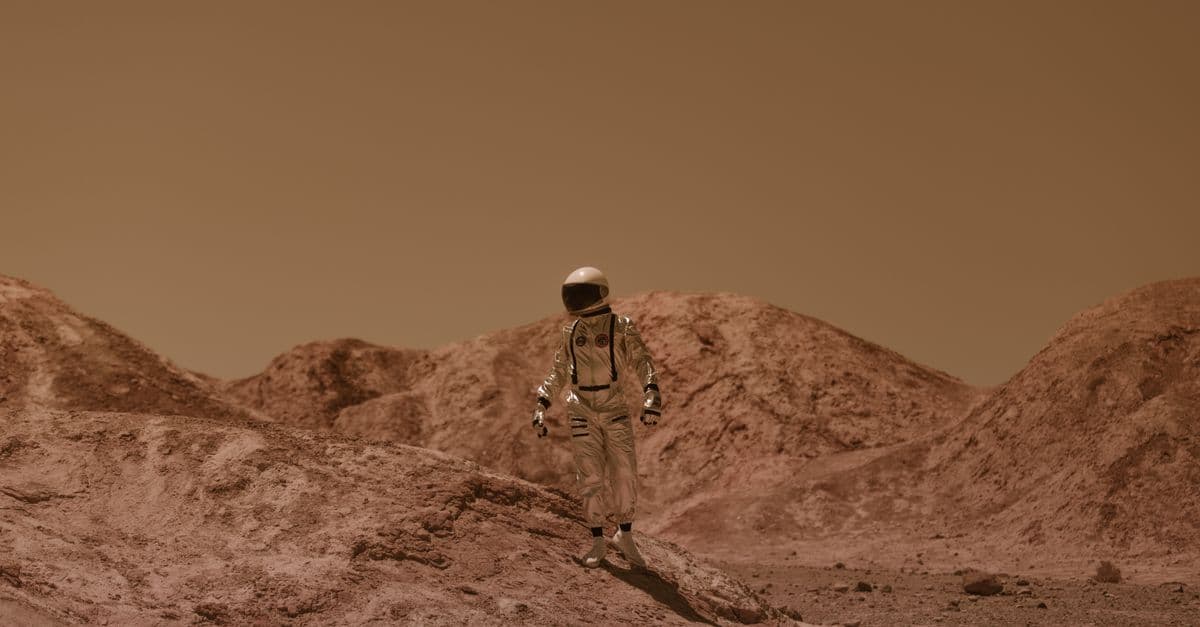
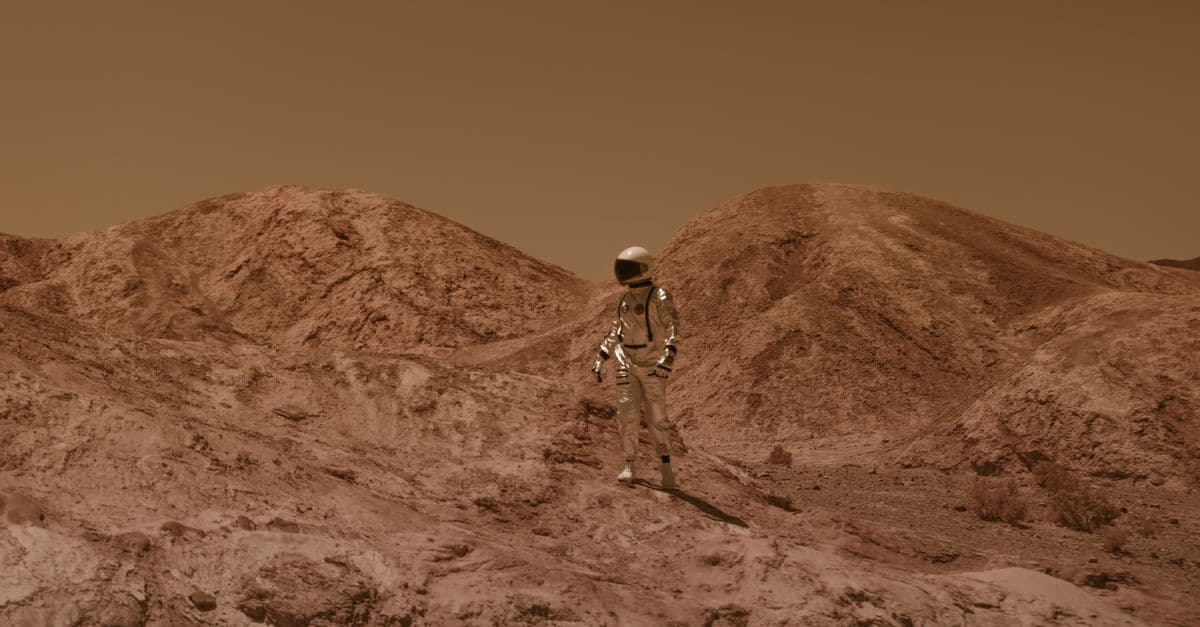
Photo: RDNE Stock project / Pexels
Humans have never set foot on Mars. But over the past three decades, a fleet of robotic surrogates has driven, drilled, photographed, and flown across the red planet on our behalf. Nine landers and rovers have successfully reached the Martian surface, and each one has rewritten what we know about the planet next door.
Here's the full story of the Mars rovers — from the toaster-sized pioneer that almost no one thought would work, to the nuclear-powered SUV currently caching samples for the most ambitious sample-return mission ever attempted.
Sojourner (1997) — The Pioneer
NASA's Mars Pathfinder mission landed on July 4, 1997, in Ares Vallis. It carried Sojourner — a 65-cm, 11.5-kilogram solar-powered rover roughly the size of a microwave oven. The mission was meant to be a 7-day technology demonstration. It lasted 84 days and drove just 100 meters total.
Sojourner proved the airbag-bounce landing method worked and that a wheeled robot could survive and operate on Mars. Without Sojourner, none of what followed would have happened.
Spirit & Opportunity (2004) — The Twin Marathon
In January 2004, two identical, golf-cart-sized solar rovers landed on opposite sides of Mars. Each was designed for a 90-day mission. They became some of the most successful spacecraft in history.
- Spirit drove 7.7 km in Gusev Crater before getting permanently stuck in soft soil in 2009. NASA declared it lost in 2010.
- Opportunity drove 45.16 km across Meridiani Planum — a Mars driving record — and operated until June 2018, when a planet-wide dust storm finally killed its solar panels. Its final telemetry inspired the unofficial last-words paraphrase: "My battery is low and it's getting dark."
Together, the twins confirmed past liquid water on Mars by identifying minerals like hematite "blueberries" and gypsum veins — direct chemical fingerprints of long-vanished groundwater.
Curiosity (2012) — The Mars Science Laboratory
Curiosity was a step change. The size of a small SUV, weighing 899 kg, it couldn't be lowered by airbags. NASA invented the sky crane — a hovering descent stage that gently lowered the rover on cables before flying off to crash a safe distance away. Engineers called the landing "seven minutes of terror." It worked on the first try.
Curiosity carries a plutonium-238 RTG (radioisotope thermoelectric generator), so dust storms don't threaten it. It's still operational in 2026, over 13 years after landing.
Its biggest discovery: Gale Crater was once a habitable lake. Curiosity found mudstone, clay minerals, sulfates, and organic carbon — all the conditions a microbial ecosystem would need, billions of years ago.
Perseverance & Ingenuity (2021) — The Astrobiologist
Perseverance landed in Jezero Crater in February 2021 — an ancient river delta that was, three billion years ago, a lake fed by inflowing rivers. It's the most plausible Martian fossil-hunting site we've ever sent hardware to.
Perseverance is mechanically similar to Curiosity but loaded for astrobiology: ground-penetrating radar, a UV Raman spectrometer (SHERLOC), an X-ray fluorescence instrument (PIXL), and a sample caching system that seals rock cores into titanium tubes for future retrieval.
By 2026, Perseverance has cached over 20 sample tubes — some on the rover, some pre-deposited at backup depots — and has found organic molecules consistent with both biological and non-biological origins.
Piggybacking on Perseverance was Ingenuity, a 1.8-kg helicopter intended as a 30-day technology demo. It performed the first powered, controlled flight on another world on April 19, 2021. It flew 72 times over nearly three years before a damaged rotor ended its mission in January 2024 — an outcome no one at JPL dared predict.
Zhurong (2021) — China's First Mars Rover
China's Tianwen-1 mission delivered the Zhurong rover to Utopia Planitia in May 2021, making China the second country to successfully operate a rover on Mars. Zhurong drove 1.9 km before entering planned hibernation in May 2022. It never reawakened, presumably buried by dust. It still represented a landmark — China achieved orbit, landing, and rover deployment on a single first mission.
Mars Rover Comparison
| Rover | Year | Size | Power | Status | Key Find |
|---|---|---|---|---|---|
| Sojourner | 1997 | 65 cm | Solar | Lost (battery) | Proved rovers work |
| Spirit | 2004 | 1.6 m | Solar | Stuck 2009, lost 2010 | Past hot springs |
| Opportunity | 2004 | 1.6 m | Solar | Lost in 2018 dust storm | Hematite, water minerals |
| Curiosity | 2012 | 3 m SUV | RTG nuclear | Active 2026 | Habitable lake at Gale |
| Perseverance | 2021 | 3 m SUV | RTG nuclear | Active 2026 | Organics in Jezero delta |
| Ingenuity | 2021 | 1.8 kg drone | Solar | Lost Jan 2024 | First flight on Mars |
| Zhurong | 2021 | 1.85 m | Solar | Lost in hibernation | China's first |
The Mars Sample Return Problem
The whole point of Perseverance's cached samples is to bring them home. Mars Sample Return (MSR) is a joint NASA–ESA mission with an originally planned 2031 return. As of 2024, the architecture was redesigned after cost estimates ballooned to over $11 billion, with a new target return window around 2033–2035.
The architecture involves:
- A Sample Retrieval Lander to pick up Perseverance's tubes.
- A Mars Ascent Vehicle — the first rocket ever launched from another planet's surface.
- An Earth Return Orbiter (ESA) to grab the sample container in Mars orbit and ferry it home.
- A sealed quarantine receiving facility on Earth.
If it works, MSR will be the most complex robotic mission in history.
What's Next on Mars
- ExoMars Rosalind Franklin — ESA's life-hunting rover, originally planned with Roscosmos. Frozen after Russia's 2022 invasion of Ukraine, now restructured with NASA components for a possible 2028 launch.
- Tianwen-3 — China's sample return, planned for the 2028–2030 window. Could beat NASA-ESA back to Earth.
- Mars 2026/2028 helicopters — NASA is planning two larger Ingenuity successors as recon scouts.
What All These Rovers Have Taught Us
Decades of robotic Mars exploration converge on a few solid conclusions:
- Liquid water flowed abundantly on Mars for hundreds of millions of years. This is no longer controversial. Mineral assemblages in rocks tell the story: clay minerals, sulfates, and hematite only form in liquid water. Erosion patterns show ancient river deltas (Jezero) and lake beds (Gale). The water is gone now, trapped in subsurface ice or chemically bound in rocks.
- Habitable environments existed — the right temperature, chemistry, and energy for microbial life. Acidic environments (sulfates, not ideal) gave way to neutral pH near-surface water. Energy sources (chemical gradients, geothermal) were available. If microbial life emerged anywhere, Mars 3-4 billion years ago was a plausible habitat.
- Organic molecules are present, though they can form abiotically. Meteorites deliver organics; reactions of simple chemicals in Mars's dusty regolith produce complex organic compounds. Finding organics tells you conditions were favorable; it's not a biosignature by itself.
- Trace methane is sometimes detected by Curiosity, with seasonal variation no one fully explains yet. Methane could be biological (microbes) or geological (serpentinization reactions). Perseverance carries upgraded methane sensors; future missions will try to explain this mystery.
- No direct evidence of past or present life has been found yet. This is the honest answer. Mars may have harbored life, but proving it requires either finding fossilized microbial structures or detecting living organisms. Both are hard. That's why sample return is so important.
Rover Engineering: Wheels, Power, and Martian Survival
Every rover must solve the same brutal constraints: survive -80°C nights, dust that clogs every mechanism, low atmospheric pressure (0.6% Earth's), and a communication delay that makes remote operation a chess game of prediction and autonomy.
Wheels: Early rovers (Spirit, Opportunity) had aluminum wheels that wore thin on sharp basalt rocks. Curiosity and Perseverance use grousered (lugged) aluminum wheels ~50 cm diameter, designed to handle sand and rocks without sinking. Recent engineering focuses on spoked wheels (like bicycle spokes) that are lighter and handle rocks better.
Power systems:
- Solar panels (Spirit, Opportunity, Sojourner): cheap, no radiation, but limited power and vulnerable to dust storms. Opportunity lasted 15 years; solar dust accumulation and a planet-wide dust storm finally killed it in 2018.
- Radioisotope Thermoelectric Generators (RTG) (Curiosity, Perseverance): convert heat from decaying plutonium-238 (238Pu half-life 87.7 years) into electricity. Continuous ~110 W output regardless of dust, season, or dust storms. Trade-off: expensive, requires strict nuclear handling protocols, limited by plutonium-238 availability (US production restarted in 2013 after decades of dormancy).
The trend is toward RTGs for long-duration missions because Mars dust is a rover's worst enemy.
Thermal management: Mars nights reach -80°C. Electronics fail without heating. Early rovers used heater units that consumed 30-40% of power. Curiosity uses waste heat from its RTG; Perseverance improves on this with better insulation. Surviving a full Mars winter (still unsolved for some missions) requires engineering trade-offs between heating and other functions.
Dust mitigation: Mars dust is electrostatically charged and incredibly fine — it infiltrates every bearing. Rovers use dust-resistant seals, but over time, dust reduces efficiency. Curiosity and Perseverance carried out multiple sensor cleaning cycles using mechanical brushes and wipers (with mixed success).
Source: NASA Jet Propulsion Laboratory Engineering Briefings (2004-2026) and Mars Science Laboratory / Perseverance technical papers.
Autonomous Navigation and AI Decision-Making
With 8–48 minute one-way light delays, rovers can't be driven like remote-control cars. They must navigate autonomously.
Terrain hazard avoidance:
- Rover takes stereo photographs of terrain ahead
- Onboard AI (RASM — Rover Autonomous Science Management) identifies obstacles: rocks, slopes >30°, loose soil
- Plans a safe path avoiding hazards
- Executes the drive overnight (takes 8–12 hours)
- Sends confirmation and photos back to Earth in the morning
This autonomy lets rovers cover ~200 meters per day, vs. 10-30 meters if every movement required Earth approval.
AI limitations: The autonomous system is sophisticated but brittle. Curiosity has gotten stuck (temporarily) several times when wheels broke through thin crusty soil overlying deep sand. These incidents require human intervention: controllers remotely send new commands after the rover is confirmed stuck.
Software evolution: Early rovers ran stripped-down embedded systems. Modern rovers run modified Linux kernels with more sophisticated AI. Perseverance carries an upgraded AI model, improving hazard prediction and path planning.
Scientific Instruments: From Cameras to Biosignature Hunters
Each rover is a mobile laboratory. Perseverance's instrument suite exemplifies the evolution:
PIXL (Planetary Instrument for X-ray Lithochemistry): An X-ray fluorescence spectrometer that maps elemental compositions element-by-element, revealing chemical signatures of past water and life potential. Its discoveries of organic carbon in Jezero clay were landmark findings.
SHERLOC (Scanning Habitable Environments with Raman & Luminescence for Organics & Chemicals): A UV Raman spectrometer that excites molecules with UV light and reads their vibrational signatures — detecting organic compounds including amino acids (building blocks of proteins) and complex hydrocarbons.
RAD (Radiation Assessment Detector): Measures cosmic radiation — data essential for planning human missions. Curiosity measured ~0.3 millisieverts per day, confirming that long-term human presence requires shielding (lead, water, or subsurface habitats).
SAM (Sample Analysis at Mars) on Curiosity: A gas chromatograph, mass spectrometer, and tunable laser spectrometer that can detect and identify organic compounds to sub-part-per-billion levels. SAM discovered seasonal methane variations and confirmed organic carbon in ancient muds.
Microphones: Perseverance is the first rover to carry microphones. Audio of wind, rover vibrations, and rockfall helps calibrate instruments and provides unexpected sensory data about the Martian environment.
Core drill: Perseverance carries a 2-meter drilling system, reaching deeper than rover-surface instruments. It collects samples and seals them in tubes for future sample return.
Mars's Hostile Environment: Challenges Rovers Face
Dust storms: Mars's thin atmosphere (0.6% Earth's) still generates dust devils and planet-wide dust storms. The 2018 storm that killed Opportunity had dust optical depth > 10 (meaning sunlight dimmed 100-fold). Solar rovers can't generate enough power in such conditions.
Temperature extremes: Days at the equator reach +15°C in summer; nights drop to -80°C or colder at high latitudes. Ice deposits and frost accumulate. Thermal cycling weakens components over time.
Oxidizing chemistry: Mars's soil is rich in perchlorates (oxidizing salts) and iron oxides. This chemistry corrodes electronics and can inactivate biosignatures if samples aren't carefully protected. Sample return requires hermetically sealed containers to preserve pristine organics.
Radiation: Without Earth's magnetic field, Mars surface receives ~50-100 times more cosmic radiation than Earth. This erodes electronics over time (single-event upsets = bit flips in memory) and would be lethal to humans without shielding.
Isolation: Rovers can't be repaired or resupplied in situ. Every component must be designed for multi-year operation with no human intervention. A failed wheel is permanent; rovers are robots built to fail gracefully, not catastrophically.
Perseverance's Organic Discoveries (2021–2026)
Perseverance's major finding: Organic carbon detected at multiple sites in Jezero Crater's 3.8-billion-year-old clay-rich rocks.
Key discoveries:
- Hydrocarbons (carbon chains) and their oxidized cousins in clay matrices
- Lack of specific biological markers — no distinctive isotope ratios that would unambiguously point to life (life preferentially uses lighter carbon-12; abiotic processes don't show this pattern strongly)
- Implication: The chemistry is consistent with both biotic (biological) and abiotic (chemical) origins. Not a biosignature, but evidence of complex organic chemistry in a once-habitable environment.
The honest interpretation: Perseverance proved that carbon-rich organics can persist in Martian rocks over billions of years, contradicting earlier concerns that Mars's harsh surface would destroy biosignatures. This increases confidence that if life ever existed, evidence might survive long enough for sample return to detect it.
Source: Perseverance Science Team (Mahaffy et al., Nature Astronomy 2024) — "Organic carbon in Jezero Crater samples; implications for biogenicity."
The International Dimension: Landers Beyond NASA
Zhurong and Tianwen-1 (China, 2021–2022): China's first interplanetary mission achieved orbit, landing, and rover deployment in a single mission — technically impressive and diplomatically significant. Zhurong drove 1.9 km before entering hibernation and failing to reawaken. Even the loss shows China's competence; returning home empty-handed is still a functioning first mission.
ExoMars Rosalind Franklin (ESA, delayed): The most ambitious non-US/China rover ever built, with a 2-meter drill to hunt for subsurface life. Originally a Roscosmos–ESA collaboration, it was reassigned after Russia's 2022 Ukraine invasion. NASA is providing components for a potential late-2020s launch. Its drill is unmatched — if it flies, it could revolutionize subsurface astrobiology.
India's Chandrayaan program: While focused on the Moon (Chandrayaan-3 landed south polar region in 2023), India has expressed Mars rover ambitions. A Bharatiya Mars rover would mark South Asian entry into Mars exploration.
The diversification of Mars rovers (China ahead of schedule, ESA persisting despite setbacks, India emerging) shifts the geopolitics of planetary science from a US monopoly toward genuine multilateral exploration.
The limitations of rovers: why we need humans and samples
For all they've accomplished, rovers are slow, fragile, and limited. Curiosity drives at 4 cm/s. A human geologist on foot can cover 30 km per day and make intuitive leaps about rock formations. Rovers need explicit commands from Earth for complex decisions; humans adapt in real time.
The sample return rationale: Rovers can analyze rocks at the surface with spectrometers and can drill a meter or so underground. But Mars's subsurface is better protected from cosmic radiation and harsh conditions. If organic molecules survived (or if microbial fossils exist), they're more likely a few meters down. And even Perseverance's onboard instruments (complex, heavy, power-hungry) can only do so much. A laboratory on Earth, with no power or mass constraints, can run isotope ratio mass spectrometry, genetic sequencing, and other techniques that could definitively detect past or present life.
This is the promise of Mars Sample Return: bring rocks home to answer the question that rovers alone cannot — was there life?
For more context on Mars's future as a destination, see our deep dive on Mars Colonization: Realistic Timeline and Challenges. For other reachable worlds, see Exoplanets and the Habitable Zone Explained, and for how we find these worlds see How Telescopes Detect Exoplanets.
Q: How do rovers communicate with Earth?
A: Rovers send data via UHF radio to Mars orbiters (MRO, MAVEN, ESA's Mars Express, Tianwen-1 orbiter), which relay it back to Earth via X-band. Direct rover-to-Earth links exist but are very slow. Round-trip light delay is 8–48 minutes depending on planetary positions, which means controllers on Earth command rovers hours after they take photos.
Q: How do nuclear-powered rovers actually work?
A: An RTG (radioisotope thermoelectric generator) converts heat from decaying plutonium-238 into electricity via thermocouples. Curiosity's RTG produces about 110 W continuously, with enough fuel to operate for decades. No moving parts, no solar panels needed — this is why Curiosity survives dust storms and operates regardless of season.
Q: Why hasn't NASA sent a human to Mars yet?
A: Multiple hard constraints: cosmic radiation exposure over 2–3 years, life support for that duration, entry/descent/landing for human-scale spacecraft (much heavier than rovers), fuel for return, and budget ($500 billion+ estimate). Mars Sample Return is a technological dress rehearsal for critical infrastructure humans will need.
Q: How fast do rovers actually drive?
A: Painfully slow. Curiosity tops out at 4 cm/s (0.14 km/h). It spends most of its day stationary, running autonomous navigation software to plan the next day's drive and avoid hazards. Solar-powered rovers like Opportunity were even slower due to power constraints.
Q: Could Ingenuity have flown longer if it hadn't damaged a rotor?
A: Likely yes. It was engineered as a 30-day, 5-flight technology demonstration. It survived three Mars winters and completed 72 flights before blade damage ended powered operations. Engineers celebrate this vastly exceeding expectations; the helicopter proved rotorcraft flight on Mars is viable for future missions.
Q: What would it take to actually find evidence of past Martian life?
A: A biosignature — not just organic molecules (which form without life), but a specific pattern that life produces: isotope ratios unusual in non-biological chemistry, complex organic structures arranged in ways abiotic processes can't explain, or fossilized microbial cells. Earth laboratories can run multimillion-dollar analyses that rover instruments can't. This is why Mars Sample Return is essential.
Read next:
Follow new articles
Add SciHub101 to your feed reader to see new science and technology stories.
About the Author
SciHub101 is an independent science and technology publication founded and edited by Buğra Sözeri, a software engineer and app developer based in Türkiye. AI tools assist with drafting and research. Source documentation in the existing archive is uneven, and articles are being reviewed and corrected. The Editorial Team byline identifies editorial responsibility; it does not certify specialist or independent human review. Where we compare products, anything built by our own team is labelled as such — see the editorial guidelines and About page for how corrections and disclosures work.
Related Articles
Andromeda-Milky Way Collision Explained
In ~4.5 billion years, Andromeda will collide with the Milky Way. Here's what will actually happen — and why no stars will hit each other.
The Dark Forest — Three-Body Problem Explained
Liu Cixin's chilling answer to the Fermi paradox: the universe is a silent hunt, and broadcasting your location is suicide. Here's the theory.

AI and Autonomous Spacecraft Navigation: How Mars Rovers Think for Themselves
Mars rovers like Perseverance use onboard AI to navigate treacherous terrain, select science targets, and survive a 20-minute communication delay from Earth.
Mars Rovers Explained — From Sojourner to Perseverance
Five rovers have driven on Mars over 30 years. They've found water, organic molecules, and possibly biosignatures. Here's what each rover discovered and what's coming next.

Can Humans Live on Mars? Terraforming and the Body's Limits
Two questions decide whether Mars can ever be a real second home: can we re-engineer the planet, and can the human body survive years of radiation and low gravity? The science on both is more sobering than the pitch decks suggest.
The Mars Viking Life Detection Experiments
NASA's Viking landers ran the first direct biology tests on Mars. The results were provocative, disputed, and still important.