The Mars Viking Life Detection Experiments
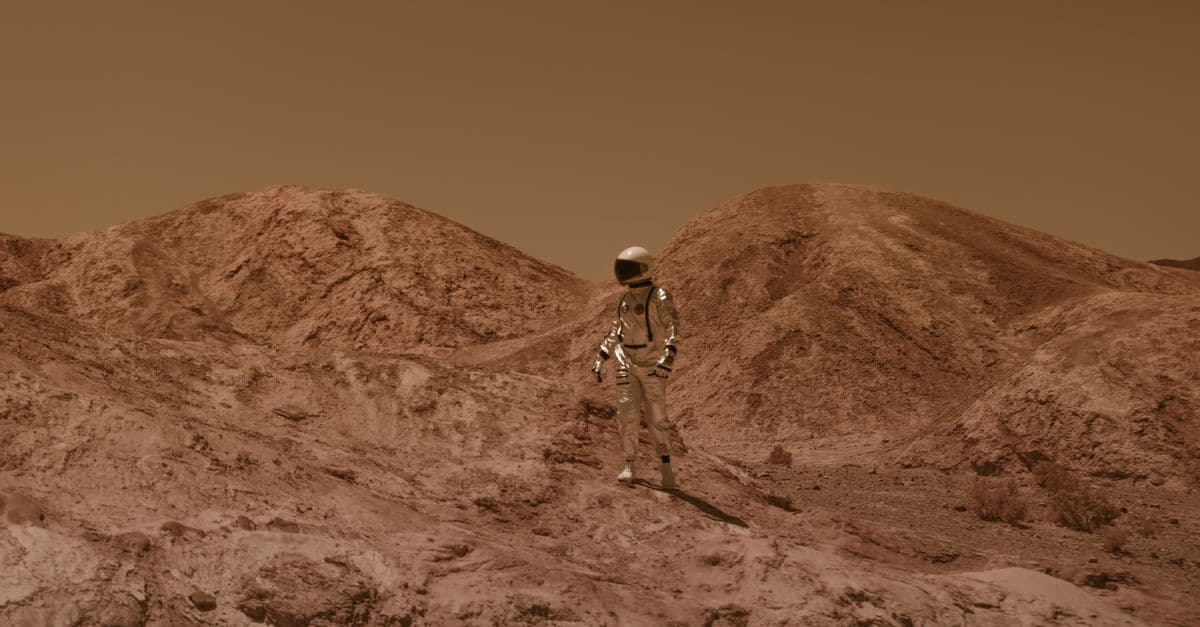
Photo: RDNE Stock project / Pexels
In the summer of 1976, two NASA landers scooped up handfuls of Martian soil, fed it a radioactive meal, and watched to see if anything on the Red Planet burped. One test came back positive. Four times, at two landing sites thousands of kilometers apart. Nearly fifty years later, scientists still cannot agree on whether Viking found life, found chemistry that mimics life, or found something else entirely. This is the story of the only biology experiments ever run on the surface of another world, and why the argument they started has never fully closed.
What Viking was built to find
NASA's Viking program sent two identical spacecraft to Mars in 1975: Viking 1, which landed in the Chryse Planitia region on July 20, 1976, and Viking 2, which touched down in Utopia Planitia on September 3, 1976 (NASA Viking Project overview). Each lander carried a compact biology instrument with three separate experiments, plus a gas chromatograph-mass spectrometer (GCMS) built to sniff out organic molecules in the soil. The whole package weighed less than a large suitcase and had to run its chemistry autonomously, millions of kilometers from the nearest technician.
The three biology experiments approached the same question from different angles. The Gas Exchange (GEx) experiment humidified soil samples and watched for gases released by metabolism. The Pyrolytic Release (PR) experiment exposed soil to a simulated Martian atmosphere spiked with radioactive carbon dioxide and carbon monoxide under a xenon lamp mimicking sunlight, then checked whether anything had "fixed" that radioactive carbon into organic matter, the way plants fix carbon on Earth. The Labeled Release (LR) experiment, designed by biomedical engineer Gilbert Levin, wet the soil with a nutrient broth built from radioactively tagged carbon compounds and watched for radioactive gas rising out of the sample, on the theory that any microbe eating the nutrients would exhale labeled carbon dioxide.
None of these tests could see a microbe directly. Viking carried no microscope. Instead, each experiment inferred biological activity indirectly, from a chemical signature a living metabolism should leave behind. That indirection is the root of everything that went wrong, and everything that stayed interesting, about the results.
How the Labeled Release experiment actually worked
Levin's Labeled Release experiment is the one that keeps this story alive, so it is worth walking through carefully. A small scoop of Martian soil went into a test cell. A nutrient solution, laced with carbon-14 (a radioactive isotope of carbon), was dripped onto the sample. If living organisms in the soil metabolized the nutrients, they would release carbon dioxide or other gases carrying that radioactive tag. A detector above the sample measured any rise in radioactivity in the headspace gas.
On July 30, 1976, ten days after landing, Viking 1's LR experiment returned exactly that: a rapid, substantial rise in radioactive gas after the nutrients were added. It looked, on first read, like the textbook signature of respiration. Viking scientists ran the same test again with a twist: they heated a second soil sample to 160 degrees Celsius (320 degrees Fahrenheit) for three hours before adding nutrients, a step meant to kill any living organism the way pasteurization kills bacteria. The heated sample gave no response. A moderate heat treatment, three hours at 50 degrees Celsius (122 degrees Fahrenheit), partially suppressed the response, again consistent with damaging something biological rather than destroying it outright (Levin, Labeled Release Interim Results, Science 1976).
Viking 2, at a different site nearly 6,500 kilometers away, produced a similar pattern. Four positive gas releases across the two landers, five controls that behaved the way a biological control should behave. On paper, it is a clean result. The problem is what happened next: a different instrument on the very same lander appeared to contradict it.
Why the GCMS result muddied everything
Here is the twist that has fueled five decades of argument. If Martian soil truly hosted living microorganisms, basic biochemistry says it should also contain organic molecules, the carbon-based building blocks every known life form is made of, dead cells and metabolic byproducts included. The GCMS instrument on both landers was sensitive enough to detect those molecules down to the parts-per-billion range for larger organics and parts-per-million for smaller ones (PNAS, Navarro-González et al., 2006). It found essentially nothing, not even the trace organics expected simply from meteorite dust that has been raining onto Mars for billions of years.
A planet with life but zero detectable organic chemistry is a genuine paradox. Most Viking scientists in 1976 resolved it the simple way: no organics meant no life, and the LR "positive" result had to be a non-biological chemical reaction, most likely soil oxidants reacting with the nutrient solution in a way that mimicked respiration.
The chemistry-only explanation, and why it took thirty years to firm up
For most of the 1980s and 1990s, the leading non-biological explanation was vague: something in Martian soil, probably an oxidizing agent created by ultraviolet radiation and atmospheric chemistry, was reactive enough to release gas from the nutrient broth without any organism involved. It was a plausible story with no specific culprit.
That changed in 2008, when NASA's Phoenix lander, digging into arctic Martian soil roughly 6,300 kilometers from either Viking site, detected perchlorate salts (a chlorine-oxygen compound) at concentrations of roughly 0.4 to 0.6 percent by weight (NASA Phoenix mission findings, cited in Mars Viking reanalysis literature). Perchlorate is a strong oxidizer. Heated in an instrument oven, it decomposes and can destroy organic molecules on contact, which would neatly explain why Viking's GCMS found no organics even in soil that had organics to begin with. Under Martian surface conditions, cosmic radiation can also convert perchlorate into more reactive byproducts, including hypochlorite, which reacts vigorously with organic nutrient solutions.
That gave skeptics of the biological explanation a specific mechanism: perchlorate-derived oxidants in the soil reacting with Levin's nutrient broth, mimicking a metabolic gas release, while simultaneously explaining why the GCMS saw no organics. Subsequent laboratory work simulating Mars-like soils with perchlorate has reproduced gas-release patterns that resemble the Viking LR data reasonably well, though not perfectly in every detail (reanalysis discussion, ScienceDirect 2025).
Why the debate never actually closed
If perchlorate chemistry explains the data so well, why do reputable scientists, not just Levin, still argue the question is open? Three reasons keep resurfacing in the literature.
First, the heat-kill controls. Perchlorate itself is not obviously deactivated by the specific heat treatments Viking applied, so a purely mineral explanation has to also account for why moderate heating (50 degrees Celsius) partially suppressed the LR signal and strong heating (160 degrees Celsius) eliminated it, a pattern that looks biological by design, since those temperatures were chosen specifically to denature proteins and kill microbes without necessarily destroying inorganic oxidants.
Second, the GCMS itself had a documented weak spot. A 2006 PNAS study tested the Viking GCMS's actual sensitivity on Antarctic Dry Valley soils, an Earth environment often used as a Mars analog, and found the instrument could miss organics present at concentrations that would still register clearly in modern instruments, meaning "no organics detected" may partly reflect 1970s hardware limits rather than a truly organics-free planet (PNAS, 2006).
Third, and most consequential: Curiosity's Sample Analysis at Mars (SAM) instrument, a vastly more sensitive descendant of the Viking GCMS, has since found organic molecules preserved in 3.5-billion-year-old mudstone in Gale Crater, including thiophene, aromatic and aliphatic compounds, and chlorinated organics such as chlorobenzene (NASA JPL, Curiosity organics announcement; Science, Eigenbrode et al., 2018). Mars does have organic chemistry after all. It was there the whole time; Viking's instruments in the 1970s just were not sensitive enough, or the perchlorate in the sample destroyed it before the GCMS could see it. That single fact undercuts the cleanest argument against Viking's biology, which was: no organics, therefore no life, therefore the LR signal must be abiotic.
| Experiment | What it measured | Result | Leading interpretation today |
|---|---|---|---|
| Labeled Release (LR) | Radioactive gas released after adding nutrient broth to soil | Strong positive at both landing sites; suppressed by heat | Disputed: perchlorate oxidant chemistry (majority view) vs. residual biological signal (minority view, led by Gilbert Levin) |
| Gas Exchange (GEx) | Gases released after humidifying soil, with and without nutrients | Surge of oxygen release, largest with humidity alone | Now attributed mainly to reactive soil oxidants, likely perchlorate-related, releasing oxygen on contact with water vapor |
| Pyrolytic Release (PR) | Radioactive carbon "fixed" into organic form under simulated sunlight | Small but statistically significant positive signal | Ambiguous; weaker and more inconsistent than LR, generally read as non-biological |
| GCMS (organics detector) | Organic molecules released by heating soil samples | No organics detected above ppb-ppm sensitivity | Instrument likely destroyed or missed organics that Curiosity's SAM later found using better technology |
Table: The four Viking instruments, what each measured, and how the scientific consensus on their results has shifted since 1976.
What the confusion is actually about
The most common misconception about Viking is that it was a failure, or that "no life was found" the way a blood test comes back negative. Neither framing is accurate. Viking did not fail to detect a signal; it detected a strong, repeatable, heat-sensitive signal that behaved exactly the way scientists predicted a biological signal would behave. What it failed to do was rule out every conceivable non-biological explanation for that signal, and in 1976 nobody knew perchlorate existed on Mars, so the debate simply had no resolution to reach for thirty-two years.
The second misconception runs the other direction: that Levin's continued advocacy for a biological explanation is fringe science. It is a minority position, but Levin published his case in peer-reviewed venues throughout his career, including a 2019 paper making the argument that the LR data remains best explained by extant microbial life (PMC, Levin & Straat, "The Case for Extant Life on Mars," 2019). Most astrobiologists remain unconvinced, largely because a single ambiguous experiment from 1976 is thin evidence next to the alternative explanation now backed by an actual perchlorate detection on the planet. But "thin evidence" is different from "no evidence," and that distinction is exactly why the paper still gets cited.
Think of it like a smoke detector that goes off in an empty house. You can rule out fire, but you still have to explain the smoke, and until you find the burnt toast, you cannot rule out fire with total confidence either. Viking's instruments detected something. The disagreement is entirely about what that something was, not about whether the needle moved.
A second useful comparison: it is a bit like the early days of ulcer research, when doctors were certain stomach ulcers were caused by stress and diet, not bacteria, because "everyone knew" bacteria could not survive stomach acid. It took a specific, later discovery, Helicobacter pylori, to force a reinterpretation of decades of prior clinical data. Perchlorate played a similar role for Viking: a missing puzzle piece that was not conceivable in 1976 became decisive once someone actually found it in 2008.
What Viking's design teaches about designing a life-detection test at all
Viking's deepest legacy is not the disputed data. It is the lesson about what a life-detection instrument has to be built to survive. Every one of Viking's three biology experiments assumed Earth-like biochemistry: that Martian organisms, if present, would metabolize nutrients dissolved in liquid water, the same way terrestrial microbes do. If Martian life (if it exists) uses a radically different biochemistry, one that does not touch a water-based nutrient broth the way Earth microbes do, none of the three experiments would ever register it, positive or negative. A test built around one specific hypothesis about how life works can only answer questions shaped like that hypothesis.
That single design flaw reshaped every Mars mission that followed. Instead of chasing another direct "is it alive" test, NASA's post-Viking strategy shifted to "follow the water," then "follow the habitability," then eventually "follow the organics and cache the samples for a lab on Earth." Curiosity was built to characterize whether Gale Crater ever could have supported life, not to test soil for microbes directly. Perseverance, which landed in Jezero Crater on February 18, 2021, is caching rock cores specifically so a future Mars Sample Return mission can bring them to Earth, where scientists have far more sensitive instruments, and far more freedom to design tests, than anything that fits on a lander (NASA, Mars Sample Return program).
In other words, the space agency's answer to "how do we avoid another Viking-style ambiguity" was to stop trying to answer the biology question on Mars at all, and instead build the infrastructure to bring the evidence home.
Did the Viking landers accidentally kill the life they were looking for?
A minority hypothesis, revived around Viking's 50th anniversary, argues the experiments may have been too wet. If Martian microbes are adapted to an extremely dry environment and survive by pulling trace moisture from salts in the soil, dousing a sample in liquid water and nutrient broth, as GEx and LR both did, could have osmotically shocked and killed the very organisms the test was designed to detect, producing a burst of activity followed by no repeatable signal. This idea remains speculative and unconfirmed, but it illustrates how thoroughly Viking's Earth-centric assumptions could have masked results in either direction (The Brighter Side of News, 2026 retrospective).
Has any later Mars mission repeated the Viking biology tests?
No mission since Viking has carried a dedicated biology experiment of this kind. Every subsequent Mars lander and rover, from Pathfinder through Perseverance, has focused on habitability, geology, and organic chemistry instead, deliberately avoiding another single ambiguous "life or no life" verdict. The current strategy is to identify the most promising samples, cache them, and let scientists run direct biology tests in terrestrial laboratories once Mars Sample Return delivers the material to Earth.
What this means
Viking never delivered a clean yes or no, and the honest reading of the evidence is that it could not have, given what scientists knew about Mars in 1976. The Labeled Release signal was real, repeatable, and heat-sensitive in a way that still resembles biology more than most chemical explanations do, but the Phoenix perchlorate discovery gave skeptics a specific, testable mechanism that the 1970s debate never had. Curiosity's later organics discovery proves the "no life because no organics" argument was built on a false premise, which reopens the question without proving Levin right. The most accurate summary, five decades on, is not "Viking found life" or "Viking found nothing." It is that Viking found a genuine anomaly, and every Mars mission since has been an attempt, direct or indirect, to finally resolve it.
Read next:
- The Miller-Urey Experiment: Did a Flask Crack the Origin of Life?
- The Double-Slit Experiment: How Light Proved the Universe Is Weird
- Black Holes Explained: How They Work
Frequently Asked Questions
Q: Did the Viking landers find life on Mars? A: No mission has confirmed life on Mars, and Viking's results remain disputed. The Labeled Release experiment produced a strong, repeatable, heat-sensitive positive signal, but most scientists now attribute it to reactive perchlorate chemistry in the soil rather than biology, while a minority, led by the experiment's designer Gilbert Levin, still argue the data best fits a biological explanation.
Q: What was the Labeled Release experiment? A: It was one of three Viking biology experiments. Martian soil was wetted with a nutrient solution containing radioactively tagged carbon. A detector measured whether radioactive gas rose from the sample, which would suggest microbes were metabolizing the nutrients and releasing labeled carbon dioxide.
Q: Why did Viking's biology results contradict its organic chemistry results? A: The onboard GCMS instrument found no organic molecules in the soil, which seemed to rule out life since even dead cells should leave organic traces. That contradiction drove most scientists toward a chemical, not biological, explanation for the Labeled Release signal.
Q: What is perchlorate and why does it matter to the Viking results? A: Perchlorate is a chlorine-oxygen salt discovered in Martian soil by NASA's Phoenix lander in 2008. It is a strong oxidizer that can destroy organic molecules when heated and can react with nutrient solutions in ways that mimic a biological gas release, giving skeptics a specific non-biological explanation for Viking's Labeled Release data.
Q: Has any later mission found organic molecules on Mars? A: Yes. NASA's Curiosity rover detected organic molecules, including thiophene, aromatic and aliphatic compounds, and chlorinated organics such as chlorobenzene, in 3.5-billion-year-old mudstone in Gale Crater starting in 2018, using its more sensitive Sample Analysis at Mars (SAM) instrument.
Q: Why hasn't NASA repeated the Viking biology experiments? A: Viking's experiments assumed Earth-like biochemistry, and their ambiguous results showed how a single, hypothesis-locked test can produce data nobody can fully interpret. Every mission since has focused on habitability and organic chemistry instead, building toward Mars Sample Return, so that direct biology tests can eventually be run in far better-equipped labs on Earth.
Q: Who was Gilbert Levin and what did he believe about the Viking results? A: Gilbert Levin was the biomedical engineer who designed the Labeled Release experiment. He argued from 1997 until his death in 2021 that the data represented genuine evidence of microbial life on Mars, publishing peer-reviewed papers defending that position even as most of the astrobiology community favored a chemical explanation.
Q: Could the Viking experiments have killed the microbes they were trying to detect? A: It is a speculative but discussed hypothesis. If Martian life is adapted to extreme dryness, adding liquid water and nutrient broth, as the Labeled Release and Gas Exchange experiments both did, could have shocked and killed the very organisms being tested, potentially explaining a burst of initial activity that did not repeat consistently.
Q: What were the two Viking landing sites and dates? A: Viking 1 landed in Chryse Planitia on July 20, 1976. Viking 2 landed in Utopia Planitia on September 3, 1976, roughly 6,500 kilometers (4,000 miles) away. Both landers ran the same three biology experiments and returned broadly similar Labeled Release results despite the distance between sites.
Sources
- NASA Astrobiology, "Viking 1 and 2" mission overview
- Levin & Straat, "Viking Labeled Release Biology Experiment: Interim Results," Science, 1976
- Levin & Straat, "The Case for Extant Life on Mars and Its Possible Detection by the Viking Labeled Release Experiment," Astrobiology, PMC, 2019
- Navarro-González et al., "The limitations on organic detection in Mars-like soils by thermal volatilization–gas chromatography–MS and their implications for the Viking results," PNAS, 2006
- Response/rebuttal, "On the ability of the Viking gas chromatograph–mass spectrometer to detect organic matter," PNAS, 2007
- NASA JPL, "How NASA's Curiosity Instrument Made First Detection of Organic Matter on Mars"
- Eigenbrode et al., "Organic molecules on Mars," Science, 2018
- NASA Science, "The Hunt for Life on Mars – and Elsewhere in the Solar System"
- ScienceDirect, "The Viking biology experiments on Mars revisited," 2025
- The Brighter Side of News, "50 years ago, did NASA's Viking landers destroy the Martian life they were searching for?," 2026 retrospective
Follow new articles
Add SciHub101 to your feed reader to see new science and technology stories.
About the Author
SciHub101 is an independent science and technology publication founded and edited by Buğra Sözeri, a software engineer and app developer based in Türkiye. AI tools assist with drafting and research. Source documentation in the existing archive is uneven, and articles are being reviewed and corrected. The Editorial Team byline identifies editorial responsibility; it does not certify specialist or independent human review. Where we compare products, anything built by our own team is labelled as such — see the editorial guidelines and About page for how corrections and disclosures work.
Related Articles
The Voyager Grand Tour Explained
Voyager used rare planetary alignment, gravity assists, and durable engineering to transform knowledge of the outer Solar System.

The Manhattan Project Science Explained
The Manhattan Project combined nuclear physics, engineering, secrecy, and wartime urgency. This article explains the science without glorifying the weapon.
Mars Rovers Explained — Perseverance and Curiosity
From Sojourner to Perseverance, every Mars rover explained — missions, discoveries, and the race to bring samples back to Earth.

Can Humans Live on Mars? Terraforming and the Body's Limits
Two questions decide whether Mars can ever be a real second home: can we re-engineer the planet, and can the human body survive years of radiation and low gravity? The science on both is more sobering than the pitch decks suggest.
Most Earth-Like Planets Discovered So Far
TRAPPIST-1e, Proxima b, LHS 1140 b, TOI-700 d and more: how the most Earth-like planets compare, and what each has and has not shown about air and water.

Olympus Mons — Solar System's Biggest Volcano
Olympus Mons on Mars: 21.9 km tall, 600 km base diameter, fed by a stationary hotspot for 4 billion years. Why Mars's gravity and lack of plate tectonics enable giants.