Most Earth-Like Planets Discovered So Far
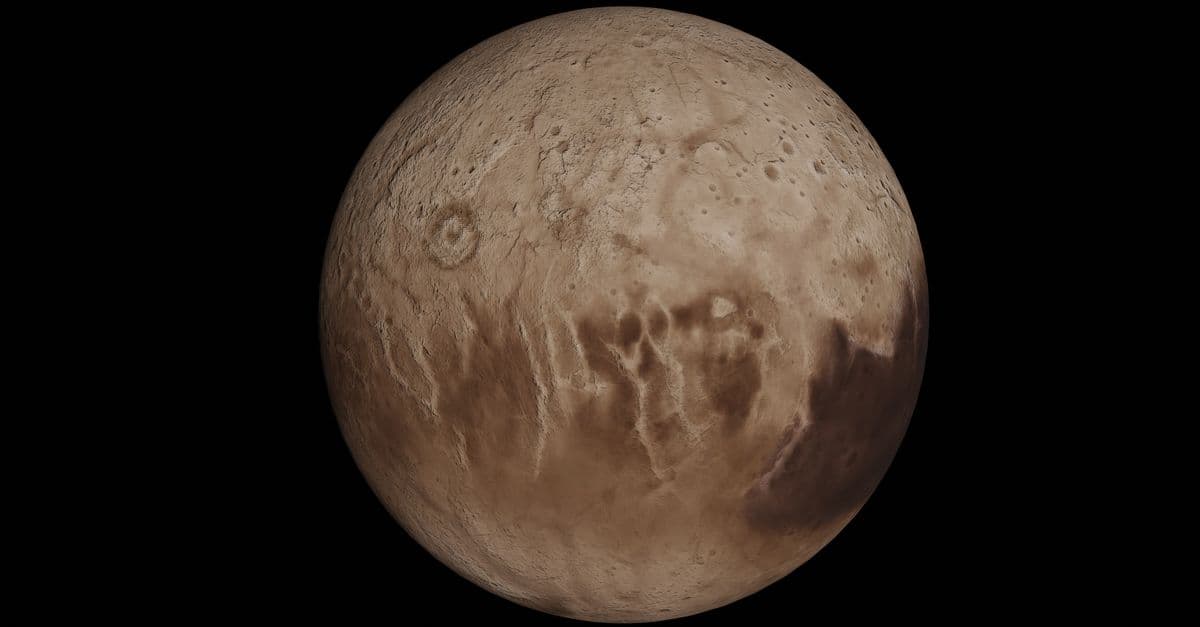
Photo: Zelch Csaba / Pexels
No planet beyond our solar system has been confirmed as an Earth twin. What astronomers have is a short list of rocky worlds, TRAPPIST-1e, Proxima Centauri b, LHS 1140 b, TOI-700 d, and Kepler-186f among them, that match Earth on one or two measurable traits such as size or the starlight they receive. None has a confirmed surface, and only one has produced evidence of an atmosphere. Here is how the most Earth-like planets compare, what each has and has not shown, and why the ranking keeps shifting.
As of October 15, 2026, the NASA Exoplanet Archive lists 6,451 confirmed planets (NASA Exoplanet Archive). Only a small fraction are both roughly Earth-sized and in the habitable zone, the range of distances where a planet could have liquid water on its surface (NASA Science, habitable zone).
What "Earth-like" actually measures
When astronomers call a planet Earth-like, they are usually using one yardstick: the Earth Similarity Index, or ESI. It runs from 0, no similarity, to 1, Earth-like, and NASA says planets scoring from 0.8 to 1.0 are more likely to resemble Earth. For solar-system planets the index uses radius, density, escape velocity, and surface temperature. For exoplanets it uses fewer inputs, stellar flux (how much starlight arrives) plus either radius or mass (NASA Astrobiology, Earth Similarity Index).
NASA's own page is blunt about the limits. Some exoplanet data have large error margins or rely on assumptions. Surface temperature is unknown for every exoplanet, so the index uses equilibrium temperature, which is typically lower than the real surface temperature because it ignores atmospheric heating. And "even with perfectly measured inputs, the ESI does not determine habitability."
Think of the ESI as judging how human a mannequin looks by measuring its height, weight, and proportions. It can match the tape measure and still have no pulse. A second analogy: it is like a weather report that lists only the temperature. Useful, but it says nothing about wind, humidity, or whether the sky is on fire.
How astronomers find and weigh these worlds
None of the planets on this list has been photographed directly. They are too small and too close to much brighter stars. Astronomers infer them from the way they disturb their host star, and two techniques do most of the work.
The transit method watches a star's brightness dip when a planet crosses its face. The depth of the dip tracks the planet's radius relative to the star's. An Earth-size planet crossing a Sun-like star covers only about 0.008 percent of the stellar disk, a dip that is extremely hard to catch. Around an ultra-cool red dwarf about a tenth of the Sun's width, the same planet blocks about a hundred times more light, which is one reason so many Earth-size candidates orbit small stars.
The radial velocity method watches the star wobble. A planet's gravity tugs its star back and forth, shifting the star's light slightly toward blue and then red, an effect called the Doppler shift. The size of the shift scales with the planet's mass. Proxima Centauri b was found this way, using the HARPS spectrograph on the European Southern Observatory's 3.6-meter telescope at La Silla in Chile (ESO, Planet found in the habitable zone around Proxima Centauri).
Imagine finding a large dog behind a curtain. The transit method tells you how big it is, by how much the curtain bulges. The radial velocity method tells you how heavy it is, by how hard the floor shakes when it moves. Neither tells you its breed or temperament, and you still have to combine the clues. For the full toolkit, including methods not used on this list, see how we actually find exoplanets and TESS, the satellite finding worlds around nearby stars.
How do scientists calculate a planet's mass without seeing it?
They measure the gravitational wobble the planet induces in its star using radial velocity spectroscopy, which detects tiny Doppler shifts in the star's light. A bigger wobble means a heavier planet. If the planet also transits, combining mass and radius gives density, which hints at whether it is rocky, watery, or gassy. Proxima b does not transit, so only a minimum mass is known.
Can we know if these planets have water or an atmosphere?
Only indirectly, and only for a handful of nearby systems. Astronomers analyze starlight that filters through a planet's atmosphere during a transit, a technique called transmission spectroscopy, to look for gases such as water vapor, carbon dioxide, or helium. For how that works and what JWST has found so far, see the exoplanet atmosphere revolution. Small rocky planets are much harder, because their atmospheres are thin and their stars are noisy.
The five strongest Earth-like candidates
Any list of "most Earth-like planets" recombines the same few names, because few rocky, habitable-zone worlds are close enough to measure well. The five below appear consistently in NASA data. They are ordered roughly by how much is known about them, not by headline similarity.
TRAPPIST-1e has a radius of 0.92 times Earth's and a mass of 0.692 Earth masses, according to NASA's exoplanet catalog. It orbits every 6.1 days at 0.02925 AU, discovered in 2017 by the transit method (NASA Science, TRAPPIST-1e). Its star is an ultra-cool red dwarf about 40 light-years away, and TRAPPIST-1 has seven rocky planets in all, three of them (e, f, and g) in the habitable zone (NASA Science, TRAPPIST-1).
JWST's NIRSpec recorded four transmission spectra of TRAPPIST-1e in June, July, and October 2023. Three papers in The Astrophysical Journal Letters, reported in December 2025, ruled out a puffy hydrogen-dominated atmosphere. The results do not say whether the planet has a nitrogen-rich atmosphere with traces of methane, a bare surface, or an atmosphere hidden by clouds, because the star's flares and spots contaminate the data. Fifteen more transit observations are scheduled (Sky & Telescope).
Proxima Centauri b is the nearest known exoplanet, just over four light-years away. The Pale Red Dot campaign announced it on August 24, 2016, after roughly 60 nights of observation. It orbits every 11.2 days at about 7 million kilometers, about 5 percent of the Earth-Sun distance, and still sits in the habitable zone because its star is so faint. ESO's 2016 announcement gave a minimum mass of at least 1.3 Earth masses, and NASA's catalog now lists about 1.07 (ESO; NASA Science, Proxima Centauri b).
The caveats are large. The star produces ultraviolet and X-ray flares far more intense than the Sun's output at Earth, and the planet is likely tidally locked, with one hemisphere in permanent daylight. ESO noted that liquid water cannot be ruled out, but might exist only in the sunniest regions. The planet has not been seen to transit, so its radius is an estimate of about 1.02 Earth radii.
LHS 1140 b was found in 2017 by the MEarth Project using the transit method. It is a super-Earth about 49 light-years away with a radius of about 1.73 Earth radii, a mass of about 5.6 Earth masses, and a 24.7-day orbit (NASA Science, LHS 1140 b). It receives about 42 percent of the sunlight Earth does. Its host star is a quiet red dwarf at least 5 billion years old with no major flares detected (Wikipedia, LHS 1140 b).
A 2023 study put its water content at 9 to 19 percent by mass, up from 4 percent in an earlier 2020 estimate, which would make it either an ocean world or a dense mini-Neptune. As the Carnegie release notes, its temperature is consistent with liquid water, but it is unknown whether planets this size have Earth-like surfaces. Earlier JWST work ruled out a hydrogen-rich atmosphere, and the helium result above is the strongest sign so far that it kept any atmosphere at all.
TOI-700 d was found by NASA's Transiting Exoplanet Survey Satellite (TESS) and announced in 2020. It is Earth-size, about 1.14 times Earth's radius, orbiting every 37 days around a small, cool M dwarf about 100 light-years away, within the conservative habitable zone (NASA Science, TOI-700 d; NASA JPL, TESS discovers second Earth-size world). Its mass has not been directly measured, and NASA's catalog lists model-based estimates between about 1.25 and 1.58 Earth masses. A fourth planet, TOI-700 e, announced in 2023, orbits in the optimistic habitable zone.
Kepler-186f holds the historical title of the first validated Earth-size planet in another star's habitable zone, announced by NASA on April 16, 2014. Its radius is less than 10 percent larger than Earth's, it orbits a star half the size and mass of the Sun every 130 days, and it receives about one-third of the sunlight Earth does, near the cold outer edge of the zone. Its mass, composition, and density are unknown, and at about 500 light-years it is far too distant for atmospheric study (NASA Science, Kepler-186f).
| Planet | Distance | Radius (Earth = 1) | Mass (Earth = 1) | Orbit | Found by (year) |
|---|---|---|---|---|---|
| TRAPPIST-1e | about 40 light-years | 0.92 | 0.692 | 6.1 days | Transit (2017) |
| Proxima Centauri b | just over 4 light-years | about 1.02 (estimate) | at least about 1.07 | 11.2 days | Radial velocity (2016) |
| LHS 1140 b | about 49 light-years | about 1.73 | about 5.6 | 24.7 days | Transit (2017) |
| TOI-700 d | about 100 light-years | about 1.14 | Unmeasured | 37 days | Transit, TESS (2020) |
| Kepler-186f | about 500 light-years | Less than 1.1 | Unmeasured | 130 days | Transit, Kepler (2014) |
Sources: NASA Exoplanet Catalog pages, NASA JPL, NASA Science, and ESO, as linked above. Values are rounded and can differ between catalog entries.
The runners-up that rewrite the list
Two other planets belong in any honest list. Kepler-1649c is about 1.06 times Earth's radius and orbits a small red dwarf about 300 light-years away every 19.5 days, receiving about 75 percent of the sunlight Earth does. It was found in 2020 in old Kepler data, because an automated algorithm called Robovetter had mislabeled its transit as a false positive and human reviewers later caught the error. "Without that manual review," discoverer Andrew Vanderburg said, "we would have missed it" (NASA JPL, Earth-size habitable-zone planet found hidden in early Kepler data).
What we know and do not know about each planet
A single table of radius and mass hides the real gap. For almost every planet on the list, the information that matters most for habitability is the information that is missing.
| Planet | Size known? | Mass known? | Atmosphere evidence | Biggest open issue |
|---|---|---|---|---|
| TRAPPIST-1e | Yes, measured | Yes, measured | Hydrogen-rich ruled out; otherwise inconclusive | Stellar flares and spots contaminate the data |
| Proxima Centauri b | Estimated only | Minimum only | None yet | Intense flares; no transit to study |
| LHS 1140 b | Yes, measured | Yes, measured | Variable helium escape in 2024, none in 2025 | Surface conditions unknown |
| TOI-700 d | Yes, measured | No | None yet | Too faint for current atmosphere work |
| Kepler-186f | Yes, measured | No | None possible with current tools | About 500 light-years away |
Sources: NASA exoplanet catalog entries, Carnegie Science, Sky & Telescope, ESO. "Inconclusive" and "none yet" reflect results published as of October 2026.
This is why careful scientists avoid the word "twin." A twin would need a measured mass and radius, a detected atmosphere with plausible composition, evidence of a stable surface, and a star that does not strip the air away. The best candidates currently satisfy one or two of those four conditions.
Two different bets: Proxima b and LHS 1140 b
The two most discussed planets on the list illustrate a trade-off that runs through exoplanet science. Each is a bet on a different kind of progress.
Proxima Centauri b is the bet on proximity. At just over four light-years it is the only candidate near enough that future instruments could image it directly, and the only one that might one day be visited by a probe on a human timescale. The cost is a hostile star. Proxima produces ultraviolet and X-ray flares far stronger than the Sun's output at Earth, the planet is likely tidally locked, and because it does not transit, astronomers cannot use the transmission spectroscopy that works so well on other systems.
LHS 1140 b is the bet on stability. At about 49 light-years it is more than ten times farther away, but its star is quiet and old, it transits, and its mass and radius are both measured. That combination lets astronomers ask what the planet is made of. The 2023 water estimate of 9 to 19 percent by mass, the JWST result that ruled out a hydrogen-rich atmosphere, and the 2024 helium detection all follow from having a transiting planet around a calm star. The cost is size: at about 1.73 Earth radii and 5.6 Earth masses, it is a super-Earth, and nobody knows whether planets that large have Earth-like surfaces.
Neither bet has paid off completely. Proximity has yielded a name and a minimum mass, and stability has yielded a partial atmosphere constraint. A reasonable reading is that the first confirmed temperate rocky atmosphere will probably come from a planet that is transiting and orbiting a quiet star, even if the first planet visited, someday, is the nearest one.
Why the answer keeps changing
A "most Earth-like planets" list from 2015 looks very different from one written now, and the planets did not change. The instruments did, and so did the analysis.
- Algorithms miss things. Kepler-1649c sat in archived data for years before human review rescued it in 2020.
- Estimates get revised. LHS 1140 b's water fraction rose from about 4 percent in a 2020 study to 9 to 19 percent in 2023.
- Systems grow. TOI-700 gained a fourth planet in 2023, which changed the picture of the habitable zone around that star.
- New instruments change the question. JWST turned TRAPPIST-1e from a planet with a radius and mass into a planet with a partial atmosphere constraint.
The timeline below shows how the candidate list has been built, one announcement at a time. Each entry comes from the sources linked in this article.
| Year | Milestone |
|---|---|
| 2014 | Kepler-186f is announced as the first validated Earth-size planet in a habitable zone |
| 2015 | Kepler-452b is announced as a larger, older cousin of Earth around a Sun-like star |
| 2016 | Proxima Centauri b is announced from radial velocity data |
| 2017 | TRAPPIST-1 and its seven planets are reported; LHS 1140 b is found by MEarth |
| 2020 | TOI-700 d is announced from TESS data; Kepler-1649c is rescued from old Kepler data |
| 2023 | TOI-700 e is announced; a new study raises LHS 1140 b's water estimate to 9 to 19 percent; first JWST results on TRAPPIST-1b show little sign of an atmosphere |
| December 2025 | JWST spectra of TRAPPIST-1e rule out a puffy hydrogen atmosphere but remain inconclusive |
| July 2026 | Helium escaping from LHS 1140 b is reported in Science |
Notice what the timeline does not contain: a confirmed twin. Ten years of progress moved the field from "does an Earth-size planet in the habitable zone exist" to "does it have air," which is a much better question.
This is how most of astronomy works. A record is rarely a fact about the universe changing. It is a fact about what we can currently measure. A galaxy was not fainter last year, and a black hole did not grow overnight; the camera or the model improved. Any Earth-like ranking, including this one, should be read as the best current evidence rather than a final scoreboard. Related reading on how habitability is defined appears in what makes a planet habitable and what the habitable zone is and why Earth sits in it.
What stands between a good candidate and a twin
Four obstacles recur across the list, and each one is a research program rather than a footnote.
The star is part of the planet's climate
Most planets on this list orbit red dwarfs, and NASA notes that about 75 percent of all stars are red dwarfs. Their habitable zones are narrow and close in, so planets there can receive X-ray and ultraviolet radiation up to hundreds of thousands of times more intense than Earth gets from the Sun. Young red dwarfs often produce flares powerful enough to sterilize close-orbiting planets (NASA Science, habitable zone). NASA also notes that orange dwarfs burn steadily for tens of billions of years and are about three times as numerous as Sun-like stars, which is why they interest planet hunters.
The calm star helps explain why LHS 1140 b gets more attention than flare-prone neighbors with similar sizes. A quiet star is less likely to blast away an atmosphere over billions of years.
Many of these worlds are probably tidally locked
A planet close to a dim star usually ends up tidally locked, with one face always toward the star, like the Moon always showing us one face. NASA's JPL says the TOI-700 planets are probably tidally locked, and ESO says the same of Proxima b. That does not rule out habitability, because winds and oceans can redistribute heat, but it makes the climate very unlike Earth's, with a permanent day side and night side.
Keeping an atmosphere is not guaranteed
Whether a planet holds on to its air depends on its gravity, its temperature, and the radiation it receives. The Carnegie team places LHS 1140 b and its hotter companion LHS 1140 c on opposite sides of the "cosmic shoreline," the boundary between planets that keep atmospheres for billions of years and those whose atmospheres boil off quickly. Planet b may be on the keeping side and planet c on the losing side, and the variable helium escape from planet b hints that the line is not sharp.
Detection bias distorts the list
NASA points out that most Earth-size planets found so far orbit red dwarfs, while Earth-size planets in wide orbits around Sun-like stars are much harder to detect. The list is dominated by red dwarf planets partly because they are easy to find, not because they are the best places for life. A truly Earth-like planet, a rocky world in a one-year orbit around a Sun-like star, would be very hard to spot with today's methods.
How to read a headline about a new "Earth-like" planet
Announcements arrive often, and the language is rarely careful. A short checklist helps separate a measurement from a mood.
- Is the radius measured or assumed? A transit gives a radius. A radial velocity detection alone gives only a minimum mass, as with Proxima Centauri b, and any radius is an estimate.
- Is the mass measured? Earth-size radius with no mass, as with TOI-700 d and Kepler-186f, leaves density and composition open.
- How much starlight does it get? Flux matters more than orbital distance, because stars differ enormously in brightness. LHS 1140 b gets about 42 percent of Earth's sunlight, and Kepler-186f about one-third.
- What kind of star is it? A flare-prone red dwarf and a quiet one are very different neighbors.
- Has anyone seen an atmosphere? If the answer is "no" or "not conclusively," the word "habitable" is a hope, not a finding.
- Is it a catalog entry or a peer-reviewed result? Catalog values can differ between entries. NASA's own pages for LHS 1140 b and TOI-700 d list two slightly different masses each.
Apply the checklist to any headline and most "Earth twin" claims shrink to "Earth-sized planet at a habitable-zone distance," which is still a notable discovery, only a different one.
What comes next
Several projects aim at the gap between "candidate" and "confirmed."
- More JWST time. Fifteen more transits of TRAPPIST-1e are scheduled, alongside TRAPPIST-1b to help model stellar activity, as the Sky & Telescope report describes.
- Wider surveys. ESA's PLATO mission, designed to find rocky planets in the habitable zones of Sun-like stars, had been planned for launch in late 2026, but ESA's current schedule points to early 2027 (check ESA for the latest date).
- A dedicated direct-imaging flagship. NASA's Habitable Worlds Observatory is a concept for a large infrared, optical, and ultraviolet telescope whose stated goal is to identify and directly image 25 potentially habitable worlds and search them for biosignatures such as oxygen and methane. NASA has not set a launch date, and it describes the mission as the next flagship after the Nancy Grace Roman Space Telescope, which is slated to launch by May 2027 (NASA Science, Habitable Worlds Observatory).
Direct imaging is the technique that could one day photograph a nearby planet as a separate point of light. For now, every world on this list is known indirectly. For what a successful detection would mean, see what if we discovered an Earth-twin planet and the nearest exoplanets that could host life.
What people get wrong about "Earth-like"
Habitable zone does not mean habitable. A planet in the zone gets about the right amount of starlight for liquid water to exist on its surface, if it has a suitable atmosphere. Our own solar system makes the point: Venus and Mars both lie near the edges of the zone in many estimates, and neither has liquid water on its surface. The zone describes a possibility, not a result.
Earth-sized does not mean Earth-like. A radius says nothing about density, composition, or gravity. A planet with Earth's radius could be a solid iron ball, a water world with no continents, or a small rocky core wrapped in thick hydrogen, and a transit light curve alone cannot tell them apart. LHS 1140 b, at about 1.73 Earth radii, shows how the ambiguity plays out: the same measurements fit an ocean world or a mini-Neptune.
The star is not background. A planet's habitability is a package deal that includes its star's temperament. A calm red dwarf and a flare-prone one can host planets with identical radii and very different prospects.
Closest does not mean best. Proxima b is the nearest, so it is the easiest to imagine visiting or imaging, but it orbits a flaring star and does not transit. Kepler-186f and Kepler-452b are far too distant for follow-up. "Earth-like" and "reachable for study" are separate rankings, and a planet can score well on one and poorly on the other.
A high similarity score is not a verdict. NASA's page says outright that even perfect inputs would not settle habitability. Treat any list that ranks planets by a single index as a starting point.
The takeaway
No confirmed exoplanet is a proven twin of Earth, and none is likely to earn the title soon, because atmosphere, surface, and climate stay hard to measure across interstellar distances. What exists is a short and useful list: TRAPPIST-1e, Proxima Centauri b, LHS 1140 b, TOI-700 d, and Kepler-186f, plus runners-up such as Kepler-1649c. Each matches Earth on size or starlight and fails on at least one thing that matters more. The most interesting recent result is also the most cautionary: helium escaping from LHS 1140 b in 2024 and missing in 2025 is the strongest sign of an atmosphere on a rocky habitable-zone planet, and it is variable, indirect, and model dependent. The planets are not changing. Our instruments are, and each new telescope turns a plausible candidate into a measured one, or into a reminder of how much is still unknown.
Frequently Asked Questions
Q: What is the most Earth-like planet discovered so far? A: By radius and mass among well-studied planets, TRAPPIST-1e (0.92 Earth radii, 0.692 Earth masses) is the closest overall match, while LHS 1140 b has the strongest evidence of an atmosphere. No planet is a confirmed Earth twin, and the answer depends on which property is weighted most.
Q: Has NASA ever found a true Earth twin? A: No. Every candidate matches Earth on some traits, usually size or orbital distance, but none has a confirmed Earth-like atmosphere, surface, or magnetic field. NASA's own description of the Earth Similarity Index says that even perfect inputs would not determine habitability.
Q: What does it mean for a planet to be in the habitable zone? A: It means the planet orbits at a distance where it could have liquid water on its surface, assuming it has a suitable atmosphere. Being in the zone is a possibility, not proof. Venus and Mars both sit near the zone's edges in many estimates and lack liquid surface water.
Q: How do scientists measure an exoplanet's size if they cannot see it directly? A: Mainly through the transit method, which measures how much a star's brightness dips when a planet crosses it. The depth of the dip is proportional to the planet's area relative to the star's, so a larger dip means a larger radius. An Earth-size planet crossing a Sun-like star blocks only about 0.008 percent of its light.
Q: Why are so many Earth-like candidates found around red dwarf stars? A: Red dwarfs are about 75 percent of all stars, and their small size and dim light make Earth-size planets easier to detect. Their habitable zones are close in, so planets there orbit quickly, transit often, and tug the star harder. The tradeoff is that red dwarfs flare, and radiation in their habitable zones can be hundreds of thousands of times stronger than Earth receives.
Q: What is the Earth Similarity Index and how is it calculated? A: It is a 0-to-1 scale comparing a planet with Earth. For solar-system planets it uses radius, density, escape velocity, and surface temperature. For exoplanets it uses fewer inputs, stellar flux plus radius or mass, and an equilibrium temperature in place of the unknown surface temperature. Scores of 0.8 to 1.0 suggest similarity but do not measure habitability.
Q: Is Proxima Centauri b the closest potentially habitable exoplanet? A: It is the closest known exoplanet and sits in its star's habitable zone, just over four light-years away. Whether it is habitable is unknown. Its star flares intensely, the planet is likely tidally locked, and its atmosphere, if any, has not been detected.
Q: Why did LHS 1140 b become a major story in 2026? A: A team reported in Science in July 2026 that helium was escaping from its upper atmosphere, seen in 2024 observations with the WINERED spectrograph on the Magellan Clay telescope. It is described as the strongest evidence yet of an atmosphere on a rocky habitable-zone planet. The helium was not seen in 2025, so the escape appears to vary, and surface conditions remain unknown.
Q: Can we ever get a photograph of one of these planets? A: Not with current telescopes. These planets are found indirectly, because they are too small and too close to their stars to resolve. NASA's planned Habitable Worlds Observatory aims to directly image about 25 potentially habitable worlds, but the mission has no launch date.
Q: How many exoplanets has NASA confirmed in total? A: The NASA Exoplanet Archive listed 6,451 confirmed planets on October 15, 2026. The number rises as new discoveries are validated.
Read next:
- Why Red Dwarf Stars Matter for Life Searches
- The Search for Extraterrestrial Life: Where Do We Stand?
- What James Webb Telescope Has Actually Found (2022-2026)
Sources
- NASA Exoplanet Archive
- NASA Astrobiology, Earth Similarity Index
- NASA Science, habitable zone
- NASA Science, TRAPPIST-1
- NASA Science, TRAPPIST-1e catalog entry
- NASA Science, Proxima Centauri b catalog entry
- NASA Science, LHS 1140 b catalog entry
- NASA Science, TOI-700 d catalog entry
- NASA JPL, TESS Discovers Planetary System's Second Earth-Size World
- NASA Science, Kepler-186f
- NASA, Kepler Mission Discovers Bigger, Older Cousin to Earth
- NASA JPL, Earth-size habitable-zone planet found hidden in early Kepler data
- NASA Science, Habitable Worlds Observatory
- ESO, Planet found in the habitable zone around Proxima Centauri (eso1629)
- Carnegie Science, Detected: Rocky, Habitable-zone Exoplanet With An Atmosphere (July 16, 2026)
- Sky & Telescope, Webb's first look at TRAPPIST-1e hints at a Titan-like atmosphere
- Wikipedia, LHS 1140 b
Follow new articles
Add SciHub101 to your feed reader to see new science and technology stories.
About the Author
SciHub101 is an independent science and technology publication founded and edited by Buğra Sözeri, a software engineer and app developer based in Türkiye. AI tools assist with drafting and research. Source documentation in the existing archive is uneven, and articles are being reviewed and corrected. The Editorial Team byline identifies editorial responsibility; it does not certify specialist or independent human review. Where we compare products, anything built by our own team is labelled as such — see the editorial guidelines and About page for how corrections and disclosures work.
Related Articles
Most Important Space Missions of the 2020s
From JWST and Artemis to asteroid samples and planetary defense, these missions are changing what humanity knows and can do in space.
How Space Telescopes See the Early Universe
Space telescopes do not look back in time by magic. They collect ancient light stretched by cosmic expansion. Here is how redshift reveals the early universe.

Nearest Exoplanets That Could Host Life
A guide to the nearest potentially habitable exoplanets, from Proxima b to TRAPPIST-1e, what JWST has found, and why 'habitable' rarely means confirmed.
The Exoplanet Atmosphere Revolution: What JWST Has Found So Far
For most of the history of exoplanet science, astronomers could detect planets but not smell them. They could measure orbital periods, estimate masses, and infer temperatures — but the chemical composition of another world's atmosphere was almost entirely out of reach. JWST changed that. In its first two years, it detected carbon dioxide on a gas giant 700 light-years away, found evidence of methane and CO₂ on a possible ocean world 120 light-years out, and ruled out thick atmospheres on the rocky TRAPPIST-1 planets — all using a technique called transmission spectroscopy that is as elegant as it is precise.
What Is the Habitable Zone? Why Earth Is the Goldilocks Planet
The habitable zone is the band of orbital distances where a rocky planet could hold liquid water on its surface. For the Sun, one widely used model puts it at 0.99 to 1.70 AU. Venus and Mars show why that is only the first filter.