How Space Telescopes See the Early Universe
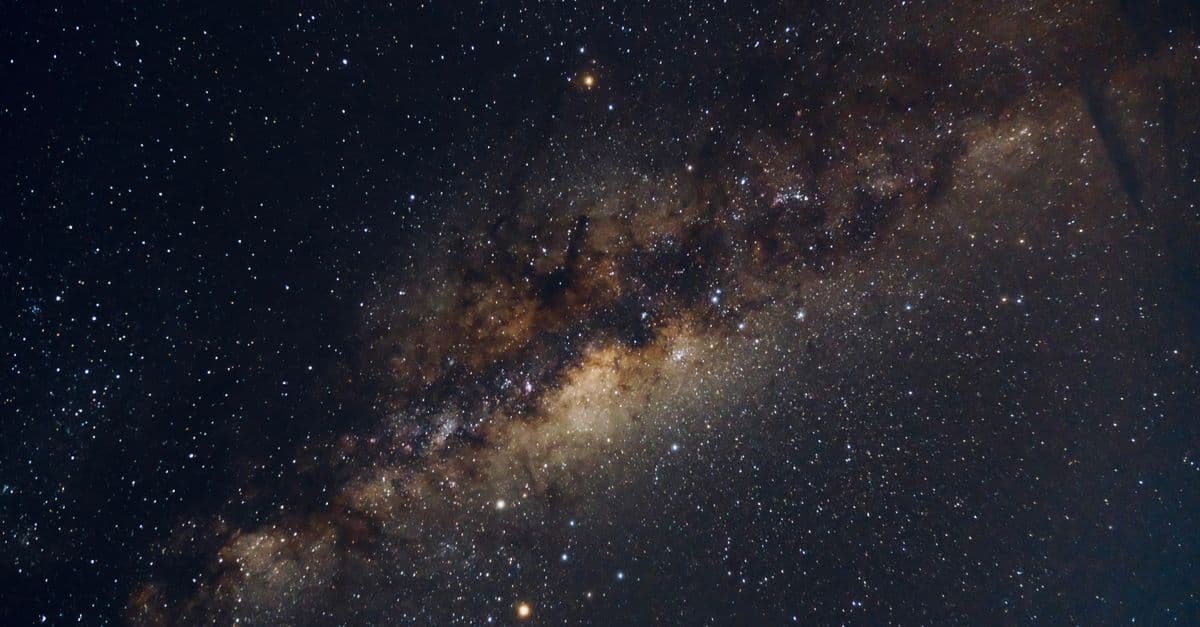
Photo: Jobert Enamno / Pexels
In January 2024, astronomers pointed the James Webb Space Telescope's spectrograph at a faint smudge of light for almost ten hours and confirmed something startling: the light had left its source when the universe was less than 300 million years old, at a redshift of 14.32 (NASA, 2024). That galaxy, JADES-GS-z14-0, is not a time machine trick. It is a direct consequence of two facts: light travels at a fixed speed, and the universe has been expanding since the Big Bang. Understanding how telescopes turn those two facts into a baby picture of the cosmos means understanding redshift, infrared detection, and why a mirror the size of a tennis court has to fly a million miles from Earth to do the job.
Light is a time machine, whether you want it to be or not
Every photon that reaches a telescope left its source at some point in the past and took time to arrive. Light moves at 299,792 kilometers per second (186,282 miles per second) in a vacuum, a fixed speed confirmed by more than a century of experiment. Because nothing carries information faster, any image of a distant object is necessarily an image of the past.
The Sun's light takes about 8 minutes and 20 seconds to reach Earth, so a person watching a sunset is seeing sunlight that is already 8 minutes old. Extend that logic outward. The Andromeda Galaxy is roughly 2.5 million light-years away, so its light left when early hominins were still evolving on Earth. Push the distance further, to galaxies billions of light-years away, and the light arriving today left before Earth itself existed.
This is the first, most literal sense in which "seeing the early universe" is not a metaphor. A telescope pointed at a sufficiently distant galaxy is not predicting or reconstructing the past. It is directly registering photons that began their journey in the past and have been traveling, undisturbed, ever since.
Why distance alone is not enough — the universe is stretching the light itself
Travel time explains why old light exists. It does not explain why astronomers need infrared telescopes specifically to see it. That second piece comes from cosmic expansion.
Space itself has been expanding since the Big Bang, a conclusion built on Edwin Hubble's 1929 observation that distant galaxies recede from us at speeds roughly proportional to their distance, and reinforced since by decades of independent measurements including the cosmic microwave background. As light travels through expanding space, the space itself stretches the light wave along with it, lengthening its wavelength. Astronomers call this cosmological redshift, and they measure it with the number z: a galaxy at z = 1 has had its light wavelengths stretched to roughly double their original length; a galaxy at z = 14, like JADES-GS-z14-0, has had its light stretched by a factor of more than 15.
Think of redshift like the pitch of an ambulance siren as it drives away from you. The siren's frequency does not change at the source, but the sound waves stretch out as the distance between you and the source grows, so the pitch drops. Light works the same way, except instead of the source moving through fixed space, it is the space itself expanding and dragging the light's wavelength along with it. Visible light emitted by a young galaxy 13 billion years ago does not arrive at Earth as visible light. By the time it gets here, expansion has stretched it well past the red end of the visible spectrum and deep into the infrared.
This is why a telescope built to look at "old" galaxies is, by necessity, an infrared telescope. Hubble, launched in 1990, observes primarily in visible and near-infrared light and can see galaxies out to roughly redshift 11. Beyond that, the light has stretched so far into the infrared that Hubble's instruments simply cannot register it. James Webb was purpose-built to solve this problem: its instruments cover wavelengths from 0.6 to 28.5 microns, reaching deep into the mid-infrared where the most redshifted light from the first galaxies actually arrives (ESA Webb factsheet).
Why can't ground-based telescopes just do this instead?
Earth's atmosphere absorbs most infrared light before it reaches the ground and also emits its own infrared heat radiation, which floods out the faint signal from distant galaxies. Space telescopes avoid both problems by operating above the atmosphere entirely, in a cold, radiation-clear environment where faint infrared signals are not drowned out.
The instrument stack that makes this possible
Detecting redshifted infrared light from the first galaxies is not one invention but a stack of engineering solutions, each solving a different piece of the problem.
James Webb's 6.5-meter (21.3 ft) primary mirror, built from 18 gold-coated hexagonal beryllium segments, is nearly seven times the light-collecting area of Hubble's 2.4-meter mirror (NASA Science, Webb's Mirrors). Larger mirrors gather more photons, which matters enormously for objects whose light has been traveling — and thinning out — for over 13 billion years. A galaxy at redshift 14 is not just far away; it is also extraordinarily faint, and faint infrared sources require every square centimeter of collecting area a telescope can carry.
Collecting the light is only half the job. Infrared detectors are sensitive to heat, including the telescope's own heat, so Webb operates near minus 233 degrees Celsius (minus 388 degrees Fahrenheit), cooled passively by a tennis-court-sized, five-layer sunshield that blocks heat from the Sun, Earth, and Moon simultaneously. To stay in that shadow permanently, Webb orbits the Sun at the second Lagrange point (L2), about 1.5 million kilometers (930,000 miles) from Earth, roughly four times farther away than the Moon.
| Property | Hubble Space Telescope | James Webb Space Telescope |
|---|---|---|
| Launched | 1990 | December 25, 2021 |
| Primary mirror diameter | 2.4 m (7.9 ft) | 6.5 m (21.3 ft) |
| Wavelength range | Near-UV to near-infrared (~0.1–2.5 microns) | Near- to mid-infrared (0.6–28.5 microns) |
| Orbit | Low Earth orbit, ~540 km altitude | Sun-Earth L2, ~1.5 million km from Earth |
| Operating temperature | Ambient, actively cooled instruments | ~-233°C (-388°F), passive multi-layer sunshield |
| Deepest confirmed redshift reached | z ≈ 11 | z = 14.32 (JADES-GS-z14-0) |
Table: Hubble and James Webb Space Telescope specifications compared. Sources: NASA Science Webb factsheet, ESA Webb factsheet.
How does a spectrograph confirm a galaxy's exact distance?
A telescope image alone only estimates distance from a galaxy's color, a method called photometric redshift. To confirm it, astronomers use a spectrograph — Webb's is called NIRSpec — to split the galaxy's light into a detailed spectrum and measure the exact wavelength shift of known emission lines, such as hydrogen's Lyman-alpha line. That precise measurement is what turned JADES-GS-z14-0 from a candidate into a confirmed record holder after nearly ten hours of observation time (NASA Science, 2024).
The telescope that saw the problem coming: Spitzer, and the one built to scale it up
James Webb wasn't the first infrared observatory to study the distant universe, and understanding what came before it clarifies why Webb's specific design choices mattered so much. NASA's Spitzer Space Telescope, launched in 2003 with a much smaller 85-centimeter (33.5-inch) mirror, spent more than 16 years gathering infrared data before it was decommissioned in January 2020. Spitzer detected infrared radiation from galaxies so distant that it was effectively looking back nearly 13 billion years, to when the universe was under a billion years old, and found that some of those early galaxies had already grown surprisingly large (NASA Science, Spitzer Space Telescope). That finding, years before Webb existed, was an early hint that galaxy formation happened faster than models predicted, a pattern Webb's more powerful instruments would later confirm and sharpen with JADES-GS-z14-0 and similar discoveries.
Spitzer's limitation was straightforward: a smaller mirror collects less light, which caps how faint and how distant an object can be before it drops below the detection threshold. Spitzer could see that early galaxies existed and had unexpected properties; it generally couldn't resolve them in the same detail or confirm their exact redshifts spectroscopically the way Webb's NIRSpec instrument now can. It's the difference between spotting a shape on the horizon through fog and reading the text on a sign after the fog clears — Spitzer proved something interesting was out there and worth building a bigger instrument to examine.
That bigger-instrument approach continues with NASA's Nancy Grace Roman Space Telescope, built with a mirror the same 2.4-meter size as Hubble's but paired with a field of view roughly 100 times larger, letting it survey huge swaths of sky at infrared wavelengths in a single exposure rather than the narrow, deep pointings Webb specializes in (NASA Science, Nancy Grace Roman Space Telescope). Where Webb is built to stare at one faint, ancient galaxy for ten hours and squeeze out every photon, Roman is built to survey millions of galaxies across large regions of sky, finding the rare, unusual, or record-breaking objects that a narrow-field telescope like Webb would simply never happen to point at. The two are complementary rather than competing: Roman finds candidates across the sky, and instruments like Webb's NIRSpec can then follow up on the most interesting ones with the detailed spectroscopy needed to confirm exact redshifts.
What "seeing the early universe" actually reveals
The payoff is not just a record-breaking distance number. Each confirmed high-redshift galaxy is a data point about how the universe assembled its first structures, and the data has been surprising astronomers rather than simply confirming expectations.
JADES-GS-z14-0 is brighter than theoretical models predicted a galaxy that young should be. Researchers analyzing it reported they could not find a suitable analog among hundreds of other high-redshift galaxies in their survey, meaning early galaxies may have formed stars faster, or grown more massive more quickly, than pre-Webb simulations assumed (NASA Science, 2024). A companion NIRSpec survey of the GLASS field, published in January 2025, spectroscopically confirmed six galaxies and active galactic nuclei between redshift 9.5 and 10.4, including one X-ray-detected supermassive black hole progenitor at z = 10.145 (Astronomy & Astrophysics, 2025). Finding an actively feeding black hole that early complicates the standard timeline for how quickly the first massive black holes could have grown.
A separate benchmark study compiled roughly 500 spectroscopically confirmed galaxies at redshift 5 and above using Webb's NIRSpec data, giving astronomers a statistical population to test against theory rather than a handful of record-setters (IOPscience, 2024). This is the quieter, more important part of the work: individual record galaxies make headlines, but it is the accumulation of hundreds of confirmed spectra that lets astronomers build and test models of how the first stars, galaxies, and black holes actually formed.
There is also a boundary these telescopes cannot cross, no matter how sensitive their detectors become. Before roughly 380,000 years after the Big Bang, the universe was an opaque plasma of ionized hydrogen and free electrons that scattered light constantly, so no telescope will ever directly image anything from that era. The oldest light observable by any instrument is the cosmic microwave background, radiation released the moment the universe cooled enough for neutral atoms to form and photons to travel freely — redshifted by expansion down to microwave wavelengths and mapped in detail by missions like Planck and WMAP. Everything JWST and Hubble see, including JADES-GS-z14-0, comes from after that boundary, during the era when the first stars and galaxies were igniting.
What people get wrong about "looking back in time"
The most common misconception is that telescopes somehow reconstruct the past, the way a historian pieces together a timeline from fragments. They don't. The light itself is the artifact. A telescope observing a galaxy at redshift 14 is registering photons that have been in continuous, uninterrupted transit for roughly 13.5 billion years; nothing about the image is inferred or simulated. The "time travel" framing that shows up in headlines is really just a description of the finite speed of light applied to very large distances.
A second common error is treating redshift as a measure of a galaxy's speed through space, the way a car's radar gun measures speed. Cosmological redshift is different: it is caused by the expansion of space between the source and the observer, not by the galaxy physically moving away through a static void. A galaxy far enough away can, in the standard cosmological model, recede from us faster than the speed of light in this sense without violating relativity, because it is space itself that is expanding, not the galaxy moving through space.
A third confusion is comparing look-back time with actual present-day distance. JADES-GS-z14-0's light took 13.5 billion years to reach Earth, but because the universe has continued expanding during that transit, the galaxy's current distance from Earth, if you could freeze time and measure it today, is estimated at roughly 34 billion light-years — far greater than the 13.5-billion-year travel time might suggest. Look-back time and present proper distance are two different numbers, both correct, both answering different questions.
Finally, people sometimes assume redshift measurements are estimates or guesses. The photometric method that first flags a candidate galaxy does carry uncertainty, which is why headlines about record-breaking distant galaxies are often later revised. But spectroscopic confirmation, measuring the precise wavelength shift of a known atomic emission line, is a direct physical measurement, not a model-dependent estimate, and it is the standard astronomers require before a redshift record is accepted by the field.
The takeaway
Space telescopes see the early universe by doing something almost boringly literal: collecting ancient light that has been redshifted into the infrared by billions of years of cosmic expansion, using mirrors, detectors, and orbits engineered specifically to catch that faint, stretched signal above Earth's infrared-blocking atmosphere. The record for the most distant confirmed galaxy will keep falling as instruments improve, but the underlying physics, finite light speed plus cosmological redshift, will not change. What does change is how much of the universe's first few hundred million years astronomers can actually resolve into confirmed, spectroscopically verified galaxies rather than statistical guesses.
Read next:
- How Do We Actually Find Exoplanets?
- Black Holes Explained: How They Work
- Quantum Mechanics Foundations Explained
Frequently Asked Questions
Q: How do space telescopes literally see the early universe? A: They collect light that left distant galaxies billions of years ago and has been traveling toward Earth ever since. Because light has a fixed, finite speed, any image of something far away is automatically an image of how it looked when that light departed, not how it looks now.
Q: Why do telescopes need infrared instruments to see the earliest galaxies? A: Cosmic expansion stretches light's wavelength as it travels through expanding space, a process called redshift. Light from the earliest galaxies started out as visible or ultraviolet light but arrives at Earth stretched deep into the infrared, which only instruments like JWST's NIRCam and NIRSpec are built to detect.
Q: What is the most distant galaxy ever confirmed? A: JADES-GS-z14-0, confirmed by JWST's NIRSpec instrument in 2024 at a redshift of 14.32. Its light left the galaxy when the universe was under 300 million years old, roughly 13.5 billion years ago (NASA Science, 2024).
Q: Why is James Webb better at this than Hubble? A: Webb's 6.5-meter mirror collects nearly seven times more light than Hubble's 2.4-meter mirror, and its instruments cover wavelengths up to 28.5 microns, well into the mid-infrared range where the most redshifted early-universe light arrives. Hubble's instruments largely stop working past a redshift of about 11.
Q: What is the difference between look-back time and a galaxy's actual distance? A: Look-back time is how long the light took to travel, for JADES-GS-z14-0, about 13.5 billion years. Present proper distance accounts for continued cosmic expansion during that transit and is estimated at roughly 34 billion light-years, a separate and larger number describing where the galaxy is estimated to be today.
Q: Can telescopes ever see all the way back to the Big Bang? A: No. Before about 380,000 years after the Big Bang, the universe was an opaque, ionized plasma that scattered light and blocked any clear signal. The oldest observable light is the cosmic microwave background, released at that boundary and mapped by missions like Planck, not a direct image of anything earlier.
Q: Is redshift the same thing as a galaxy moving away through space? A: Not exactly. Cosmological redshift comes from the expansion of space itself between the source and observer, not from a galaxy moving through a fixed background the way a car moves down a road. This distinction lets very distant galaxies recede faster than light in an expansion sense without violating relativity.
Q: Why does James Webb orbit so far from Earth instead of near it like Hubble? A: Webb orbits the Sun at the second Lagrange point (L2), about 1.5 million kilometers (930,000 miles) from Earth, where its five-layer sunshield can permanently block heat from the Sun, Earth, and Moon at once. That constant cold, around minus 233 degrees Celsius (minus 388 degrees Fahrenheit), is necessary for its infrared detectors to register extremely faint signals without being swamped by the telescope's own heat.
Q: How do astronomers confirm a galaxy's redshift instead of just estimating it? A: An initial estimate comes from a galaxy's color in broadband images, called a photometric redshift, which carries real uncertainty. Confirmation requires a spectrograph, such as Webb's NIRSpec, to measure the precise wavelength shift of a known atomic emission line, a direct physical measurement rather than a model-based guess.
Q: Why did JADES-GS-z14-0 surprise astronomers? A: It is significantly brighter and more massive than theoretical models predicted a galaxy could be so soon after the Big Bang, and researchers found no comparable galaxy among hundreds of others surveyed at similar redshifts. That suggests early galaxies may have formed stars, or grown massive, faster than pre-Webb simulations assumed (NASA Science, 2024).
Sources
- NASA Science: James Webb Space Telescope Finds Most Distant Known Galaxy (2024)
- ESA Webb Factsheet
- NASA Science: Webb's Mirrors
- Astronomy & Astrophysics: Seven Wonders of Cosmic Dawn — JWST GLASS Field (2025)
- IOPscience: Between the Extremes — JWST Spectroscopic Benchmark for High-Redshift Galaxies (2024)
- Wikipedia: JADES-GS-z14-0 (summary of published discovery data)
- NASA Science: Spitzer Space Telescope
- NASA Science: Nancy Grace Roman Space Telescope
Follow new articles
Add SciHub101 to your feed reader to see new science and technology stories.
About the Author
SciHub101 is an independent science and technology publication founded and edited by Buğra Sözeri, a software engineer and app developer based in Türkiye. AI tools assist with drafting and research. Source documentation in the existing archive is uneven, and articles are being reviewed and corrected. The Editorial Team byline identifies editorial responsibility; it does not certify specialist or independent human review. Where we compare products, anything built by our own team is labelled as such — see the editorial guidelines and About page for how corrections and disclosures work.
Related Articles
Most Earth-Like Planets Discovered So Far
TRAPPIST-1e, Proxima b, LHS 1140 b, TOI-700 d and more: how the most Earth-like planets compare, and what each has and has not shown about air and water.
How Many Galaxies Are in the Universe?
Astronomers' galaxy counts have swung from 100 billion to 2 trillion and back to hundreds of billions. Here's why the number keeps changing, and what it actually means.
Hubble's 1929 Redshift Observation: The Data That Proved the Universe Expands
Hubble's 1929 redshift observation tied galaxy speed to distance. See what the 24-galaxy data showed, why his constant was off 7x, and the tension today.
Why Is the Night Sky Dark? Olbers' Paradox Explained
The night sky is dark because the universe has a finite age, not because stars are few. How Olbers' paradox works, who solved it, and what it reveals.