Hubble's 1929 Redshift Observation: The Data That Proved the Universe Expands
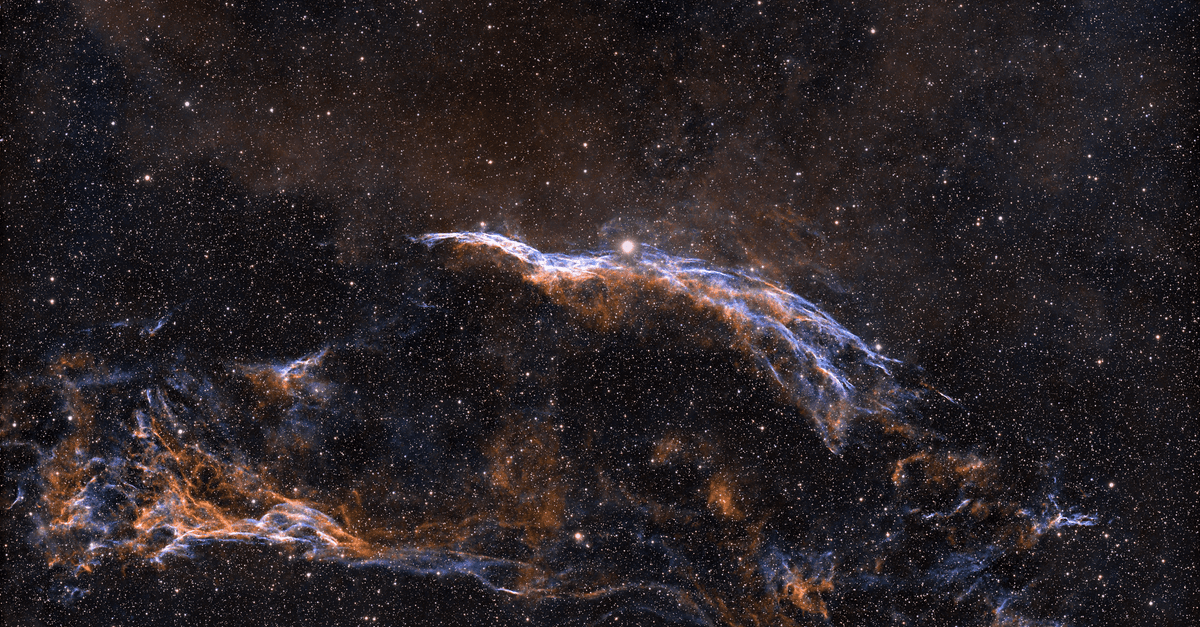
Photo: Adrian Monserrat / Pexels
In January 1929, Edwin Hubble submitted a paper to the Proceedings of the National Academy of Sciences that contained two columns of numbers and a graph. The columns listed galaxy distances and recession velocities. The graph showed that the two were proportional — the farther a galaxy, the faster it appeared to be moving away. That linear relationship, now called the Hubble-Lemaître Law, established that the universe is not static but expanding, overturning a view that had been held as obvious for centuries. The implications have only deepened since.
The Steady-State World Hubble Stepped Into
When Hubble began his observations at Mount Wilson Observatory in the 1920s, the dominant view among astronomers was that the universe is essentially static. Einstein had introduced his field equations of general relativity in 1915, and those equations allowed — even predicted — an expanding or contracting universe. Einstein himself found this unsatisfying and introduced the cosmological constant, a repulsive term added to his equations, specifically to force the equations to describe a static universe.
Source: NASA Science. "Edwin Hubble." https://science.nasa.gov/people/edwin-hubble/
The "nebulae" — cloudy objects visible in long-exposure photographs — were debated. Were they gas clouds within our own Milky Way, or were they distant "island universes" comparable to the Milky Way itself? This debate, known as the "Great Debate," had been staged in April 1920 between Harlow Shapley and Heber Curtis at the Smithsonian Institution. Shapley argued the nebulae were part of our galaxy; Curtis argued they were exterior. At the time, neither had decisive evidence.
Hubble resolved the debate in 1923–1924, when he identified Cepheid variable stars in the Andromeda Nebula (M31) using the 100-inch Hooker telescope at Mount Wilson — the most powerful telescope in the world at the time.
Source: Australia Telescope National Facility. "Edwin Hubble and the Expanding Universe." https://www.atnf.csiro.au/resources/education/senior-cosmicengine/cosmology/hubble/
The Tools: Cepheid Variables and Radial Velocity
Two independent measurements were required for the 1929 paper: the distances to galaxies, and their velocities along the line of sight (radial velocities). Each required a different technique.
Measuring distance: Cepheid variables
Cepheid variable stars pulsate with a period — the time from one brightness maximum to the next — that is tightly correlated with their absolute luminosity. This period-luminosity relationship was discovered by Henrietta Swan Leavitt in 1908 while analyzing photographs at the Harvard College Observatory. See Henrietta Leavitt for the full story of how she derived this tool from studying thousands of stars in the Small Magellanic Cloud.
Source: Penn State Astronomy. "Hubble's Law." https://courses.ems.psu.edu/astro801/book/export/html/1967
The logic is: measure the period of a Cepheid's brightness variation; use Leavitt's calibration to determine its true luminosity; compare the true luminosity to the observed (apparent) brightness; the difference gives the distance. A Cepheid that appears ten thousand times fainter than its true luminosity is ten times farther away than one that appears one hundred times fainter. Distance falls out of the ratio of apparent to absolute brightness.
Source: PNAS. "Hubble's diagram and cosmic expansion." 100(52): 14124–14125 (2003). https://www.pnas.org/doi/10.1073/pnas.2536799100
Hubble found Cepheids in M31 and determined its distance at roughly 900,000 light-years — well outside any conceivable boundary of the Milky Way. The nebulae were galaxies. The universe was vastly larger than anyone had assumed.
Measuring velocity: Spectral redshift
The velocity of a galaxy relative to Earth is measured using the Doppler effect applied to light. When a light source moves away from an observer, the light waves are stretched — their wavelength increases toward the red end of the spectrum. This is called a redshift. The size of the redshift is directly proportional to the recession velocity.
Source: Wikipedia. "Hubble's law." https://en.wikipedia.org/wiki/Hubble%27s_law
Known spectral lines from atoms — the characteristic wavelengths at which hydrogen, calcium, or sodium absorb or emit light — appear at shifted positions in galaxy spectra. Measuring the shift gives the recession velocity precisely.
The recession velocity measurements Hubble used in his 1929 paper were largely not his own observations. They came from Vesto Slipher, an astronomer at Lowell Observatory who had been measuring galaxy spectra since 1912. By the mid-1920s, Slipher had measured the recession velocities of dozens of galaxies, finding that almost all were redshifted — moving away. Hubble combined Slipher's velocity data with his own Cepheid distance measurements.
Source: PNAS. "Hubble's Law and the expanding universe." 112(11): 3173–3175 (2015). https://www.pnas.org/doi/10.1073/pnas.1424299112
The 1929 Paper: What It Actually Showed
Hubble's 1929 paper, "A Relation between Distance and Radial Velocity among Extra-Galactic Nebulae," contained data on 46 galaxies. For 24 of them, Hubble had Cepheid-based distances of his own. For the remaining 22, he used distances estimated from the brightest stars in each galaxy (a less precise method). Recession velocities came primarily from Slipher's catalog.
| Galaxy group | Distance method | Number of galaxies |
|---|---|---|
| Individual Cepheids | Most precise | ~24 |
| Brightest cluster stars | Less precise | ~22 |
| Combined total | Mixed | 46 |
Plotting velocity (vertical axis) against distance (horizontal axis) produced a scatter diagram with a clear linear trend. Hubble fitted a straight line through the data and found:
v = H₀ × d
Where v is the recession velocity in kilometers per second, d is the distance in megaparsecs (1 Mpc = approximately 3.26 million light-years), and H₀ is the slope of the line — what we now call the Hubble constant.
From his 1929 data, Hubble estimated H₀ ≈ 500 km/s/Mpc. This was dramatically higher than the value accepted today (~67–73 km/s/Mpc) and implied a universe much younger and smaller than current measurements indicate. The error came primarily from his distance calibration: Hubble was using a Cepheid distance scale that was later found to be wrong by a factor of roughly seven, because the Cepheids he used in other galaxies were a different (intrinsically brighter) type than those used to set the calibration.
Source: EBSCO Research Starters. "Hubble Confirms the Expanding Universe." https://www.ebsco.com/research-starters/history/hubble-confirms-expanding-universe
The linear relationship itself, however, was correct. The specific value of H₀ has been revised repeatedly since 1929; the proportionality between velocity and distance has not.
A universe in which recession velocity scales linearly with distance looks the same from every galaxy in all directions — every observer sees all other galaxies receding, with no special position or center. Hubble's graph implied an expansion without a specific point of origin.
The Controversy: Priority and the Missing Paragraph
The discovery of the velocity-distance relationship is attributed to Hubble, but he was not the first to derive it theoretically or even to state it observationally.
Georges Lemaître, a Belgian astronomer and Catholic priest, published a paper in 1927 in the Annales de la Société Scientifique de Bruxelles in which he derived an expanding universe from Einstein's field equations and estimated a value for the proportionality constant between velocity and distance — using the same Slipher velocity data that Hubble would later use, combined with distances he had assembled from various sources.
Source: Science.org. "Move over, Hubble: Discovery of expanding cosmos assigned to little-known Belgian astronomer-priest." https://www.science.org/content/article/move-over-hubble-discovery-expanding-cosmos-assigned-little-known-belgian-astronomer
Lemaître's 1927 paper was in French, published in an obscure Belgian journal, and received almost no attention outside a small circle. When it was translated into English in 1931, the section in which Lemaître had estimated the proportionality constant — which would have established his priority — was omitted from the translation. For decades, it was unclear whether Lemaître himself had made or consented to the omission. A 2011 analysis of letters between Lemaître and the editors found that Lemaître had voluntarily removed the section, apparently because Hubble had already published in 1929 and Lemaître saw no point in repeating the earlier tentative result.
Source: Armagh Planet. "The Hubble-Lemaître Law: recognising where credit is due in science." https://armaghplanet.com/the-hubble-lemaitre-law-recognising-where-credit-is-due-in-science.html
In 2018, the International Astronomical Union voted to rename Hubble's Law as the Hubble-Lemaître Law, formally recognizing both scientists' contributions. The IAU resolution noted that Lemaître's 1927 derivation preceded Hubble's 1929 paper by two years.
Source: The Conversation. "Game-changing resolution: whose name on the laws of physics for an expanding universe?" https://theconversation.com/game-changing-resolution-whose-name-on-the-laws-of-physics-for-an-expanding-universe-102099
Slipher's contribution — measuring the recession velocities that Hubble plotted — was also underrecognized. Hubble's 1929 paper acknowledges Slipher's velocity data, but the paper's fame eclipsed Slipher's role.
For more on Hubble's life and career, see Edwin Hubble: The Man Who Discovered the Universe.
Replication and Reanalysis: Refining the Hubble Constant
The velocity-distance relationship established in 1929 has been confirmed and refined by every subsequent generation of observational cosmologists. The disputes have been about the precise value of H₀, not the reality of the relationship.
Walter Baade, working at Mount Wilson during World War II (when Los Angeles was blacked out at night, improving astronomical seeing), discovered in 1952 that there were two distinct populations of Cepheid variable stars with different period-luminosity calibrations. Hubble had used Type II Cepheids to calibrate his distance scale, but the Cepheids he found in other galaxies were Type I — intrinsically brighter. Correcting for this roughly halved H₀ from ~500 to ~250 km/s/Mpc.
Source: Wikipedia. "Hubble's law." https://en.wikipedia.org/wiki/Hubble%27s_law
The revision continued. By the 1970s, the accepted value of H₀ had dropped to somewhere between 50 and 100 km/s/Mpc, with two camps — one led by Allan Sandage arguing for ~50, one led by Gérard de Vaucouleurs arguing for ~100 — in persistent disagreement. The Hubble Space Telescope, launched in 1990 specifically in part to resolve this disagreement, measured H₀ = 72 ± 8 km/s/Mpc in 2001 using an improved Cepheid distance ladder.
Source: Freedman WL et al. "Final Results from the Hubble Space Telescope Key Project to Measure the Hubble Constant." Astrophysical Journal 553(1): 47–72 (2001). https://iopscience.iop.org/article/10.1086/320638
The H₀ Tension: An Unresolved Crisis
The current state of the Hubble constant is one of the most discussed problems in physics. Two distinct classes of measurements give values that disagree at a level of statistical significance that is difficult to dismiss as measurement error.
Local distance ladder measurements — using Cepheids, Type Ia supernovae, and other distance indicators to measure H₀ directly from nearby galaxies — consistently give values around 73 km/s/Mpc. The most precise 2026 community measurement combining Cepheids, the Tip of the Red Giant Branch, and Mira variables gives 73.5 ± 0.7 km/s/Mpc.
Early-universe measurements — using the cosmic microwave background (CMB) radiation, which is the afterglow of the Big Bang as mapped by the Planck satellite — give H₀ ≈ 67.4 ± 0.5 km/s/Mpc when combined with the standard cosmological model (ΛCDM).
Source: Academic Jobs. "Hubble Tension 2026: Universe Expanding Too Fast." https://www.academicjobs.com/research-publication-news/hubble-tension-2026-universe-expanding-too-fast-or-academicjobs-12760
The discrepancy — roughly six km/s/Mpc — corresponds to a statistical tension of approximately five sigma. In physics, five sigma is the conventional threshold for claiming a discovery. Here it represents a problem: if both measurements are correct, something is wrong with our understanding of either the universe's current expansion rate, its early history, or the standard cosmological model that connects the two.
Source: Physics World. "Cosmic conflict continues: new data fuel the Hubble tension debate." https://physicsworld.com/a/cosmic-conflict-continues-new-data-fuel-the-hubble-tension-debate/
Proposed explanations fall into several categories. Some invoke uncharacterized systematic errors in one or both measurement chains — for example, that Cepheid distance calibrations have a subtle bias, or that the CMB analysis depends on model assumptions that are incorrect. Others invoke new physics: an early dark energy component that modified the universe's expansion in the period before the CMB was emitted, or modifications to general relativity on cosmological scales.
JWST has provided new Cepheid observations in the infrared, which suffers less from dust absorption than the optical wavelengths Hubble Space Telescope used. The JWST results, published in 2023 and refined since, have not resolved the tension — if anything, they have confirmed the distance ladder value more precisely, deepening the disagreement with the CMB result.
Source: Riess AG et al. "A Comprehensive Measurement of the Local Value of the Hubble Constant with 1 km/s/Mpc Uncertainty from the Hubble Space Telescope and the SH0ES Team." Astrophysical Journal Letters 934(1): L7 (2022). https://iopscience.iop.org/article/10.3847/2041-8213/ac5c5b
Where It Stands Today
Hubble's 1929 paper is one of the most cited in the history of astronomy. Its central claim — that recession velocity scales linearly with distance — is the observational foundation of modern cosmology. Every standard cosmological model, including ΛCDM (Lambda cold dark matter), takes cosmic expansion as a given.
The physical interpretation of expansion has been refined since 1929. The universe is not expanding into anything — there is no "outside" into which it expands. Rather, the space between galaxy clusters is stretching, and the stretching carries galaxies apart from one another. Galaxies that are gravitationally bound to each other (like the Local Group, which includes the Milky Way and Andromeda) do not separate — the local gravitational binding is stronger than the cosmological expansion at those scales.
Source: Beyond Tomorrow. "The Hubble Tension: Why Scientists Cannot Agree on How Fast the Universe Is Expanding." https://beyondtmrw.org/article/the-hubble-tension-why-scientists-cannot-agree-on-how-fast-the-universe-is-expanding
In 1998, two teams independently discovered that cosmic expansion is accelerating — the recession velocity of distant supernovae is increasing over time, not merely persisting. This implied the existence of dark energy, a mysterious repulsive energy filling space that drives the acceleration. The discovery earned the 2011 Nobel Prize in Physics for Saul Perlmutter, Brian Schmidt, and Adam Riess.
Dark energy, combined with dark matter (required to explain galaxy rotation curves and large-scale structure), means that roughly 95% of the universe's content is in forms we cannot directly observe. Hubble's 1929 two-column table opened this chain of inference.
FAQs
Q: Did Hubble discover that the universe is expanding? A: Hubble provided the observational evidence — the linear velocity-distance relationship — that implied expansion. The theoretical framework for an expanding universe had been provided earlier by Alexander Friedmann (1922) and Georges Lemaître (1927), both of whom derived expanding-universe solutions from Einstein's field equations. The IAU now calls the relationship the Hubble-Lemaître Law to recognize both the theoretical and observational contributions.
Q: What is the Hubble constant, and what does it measure? A: The Hubble constant (H₀) is the proportionality factor between recession velocity and distance in the Hubble-Lemaître Law: v = H₀ × d. It has units of km/s/Mpc (kilometers per second per megaparsec). Its value tells you how fast a galaxy at a given distance appears to be receding due to cosmic expansion. The inverse of H₀ gives a rough estimate of the age of the universe (approximately 13–14 billion years for current values).
Q: Why was Hubble's original value of H₀ ≈ 500 km/s/Mpc so wrong? A: Hubble's distance calibration was based on Cepheid variables that he believed were of a single type. Walter Baade discovered in 1952 that there are two distinct populations of Cepheid stars with different period-luminosity relationships. Hubble had calibrated using Type II Cepheids but observed Type I (Population I) Cepheids in external galaxies. Since Type I Cepheids are intrinsically brighter, Hubble underestimated their distances, making the calculated H₀ too large.
Q: What is the Hubble tension? A: The Hubble tension is the discrepancy between H₀ measured from the local universe (using Cepheids, supernovae, and other distance indicators, giving ~73 km/s/Mpc) and H₀ inferred from the cosmic microwave background radiation combined with the standard cosmological model (giving ~67 km/s/Mpc). The disagreement is statistically significant at roughly five sigma, suggesting either systematic measurement error or a gap in the standard cosmological model.
Q: What happens to galaxies beyond the Hubble radius? A: The Hubble radius (also called the Hubble horizon) is the distance at which recession velocity equals the speed of light. Beyond this distance, galaxies recede faster than light can travel — not because they are moving through space faster than light, but because the space between us and them is expanding faster than light can traverse it. These galaxies are causally disconnected from us; light they emit today will never reach us. This does not violate special relativity, which applies to motion through space, not the expansion of space itself.
Q: Did Einstein change his cosmological constant because of Hubble's result? A: Einstein had introduced the cosmological constant Λ into his field equations to produce a static universe. After Hubble's 1929 paper demonstrated cosmic expansion, Einstein reportedly called the cosmological constant his "greatest blunder," as the equations without it would have predicted expansion. Ironically, the discovery of accelerating expansion in 1998 brought the cosmological constant back: dark energy behaves mathematically like a positive cosmological constant. Einstein's "blunder" turned out to be real — just not in the form he intended.
Q: How does cosmic expansion affect light from distant galaxies? A: As light travels through expanding space, its wavelength stretches proportionally to the expansion of the universe. This is cosmological redshift — the light arrives at a longer wavelength than it was emitted with. For nearby galaxies, cosmological redshift and Doppler redshift give approximately the same answer; for very distant galaxies, the two diverge, and cosmological redshift (based on the expansion of space itself) is the more accurate description. The redshift of the cosmic microwave background corresponds to an expansion factor of about 1,100 since the CMB was emitted.
The Takeaway
Hubble's 1929 paper established a single empirical fact with world-altering consequences: the universe is expanding. The data were not perfect — his H₀ value was off by a factor of seven — but the relationship was real. Every subsequent measurement has confirmed the linear velocity-distance proportionality, even as the precise value of the proportionality constant has been disputed for nearly a century and remains disputed today. The Hubble-Lemaître tension, as it stands in 2026, is either the most significant systematic error in observational cosmology or the first crack in the standard model of the universe. Either answer will be important.
Read next:
Weekly digest
Stay ahead of the curve
Get the best science, AI, and tech stories delivered to your inbox every week. No spam — unsubscribe any time.
About the Author
SciHub101 is an independent science and technology publication founded and edited by Buğra Sözeri, a software engineer and app developer based in Türkiye. Articles are drafted against peer-reviewed literature and primary sources, fact-checked, and edited by a human before publication. Where we compare products, anything built by our own team is labelled as such — see the editorial guidelines and About page for how corrections and disclosures work.
Related Articles

The Iowa Gambling Task: How Emotions Drive Decisions
How a 1994 card game revealed that gut feelings guide rational decisions. The Iowa Gambling Task and the somatic marker hypothesis, explained.

The Hodgkin-Huxley Squid Axon Experiment: How We Cracked the Action Potential
Hodgkin and Huxley used squid giant axons and voltage-clamp to decode the action potential's ionic machinery. Their 1952 model still powers neuroscience today.
What Is Hubble's Law? How We Discovered the Universe Is Expanding
In 1929, Edwin Hubble announced that galaxies are receding from us at speeds proportional to their distances — the farther a galaxy, the faster it moves away. This 'Hubble's Law' revealed that the universe is expanding. Traced back in time, everything emerges from a single point — the Big Bang. The rate of expansion, the Hubble constant, is one of cosmology's most debated measurements, with two methods giving incompatible answers.
How Space Telescopes See the Early Universe
Space telescopes do not look back in time by magic. They collect ancient light stretched by cosmic expansion. Here is how redshift reveals the early universe.
The Big Bang: How the Universe Began
What was the Big Bang? Explore the evidence, timeline, and science behind the origin of the universe — from CMB to cosmic inflation.
How Do We Measure Cosmic Distances? The Distance Ladder Explained
From parallax to supernovae, astronomy has built an extraordinary chain of overlapping distance measurement methods spanning 10 orders of magnitude — from nearby stars to galaxies at the edge of the observable universe. Here's how each rung of the cosmic distance ladder works.