How Many Galaxies Are in the Universe?
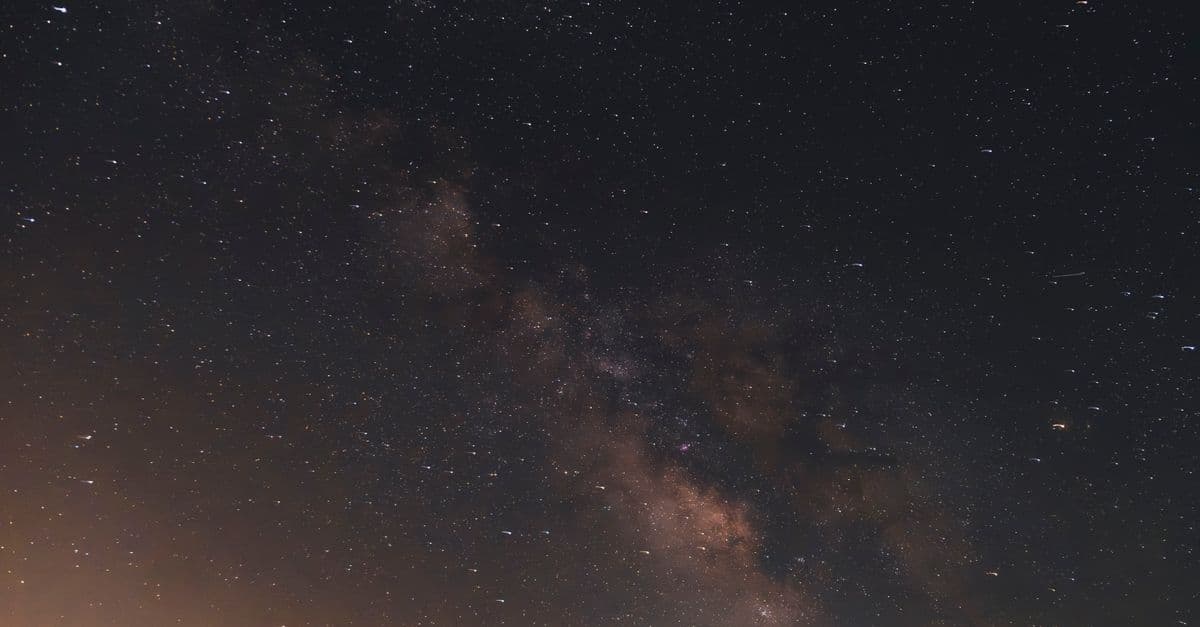
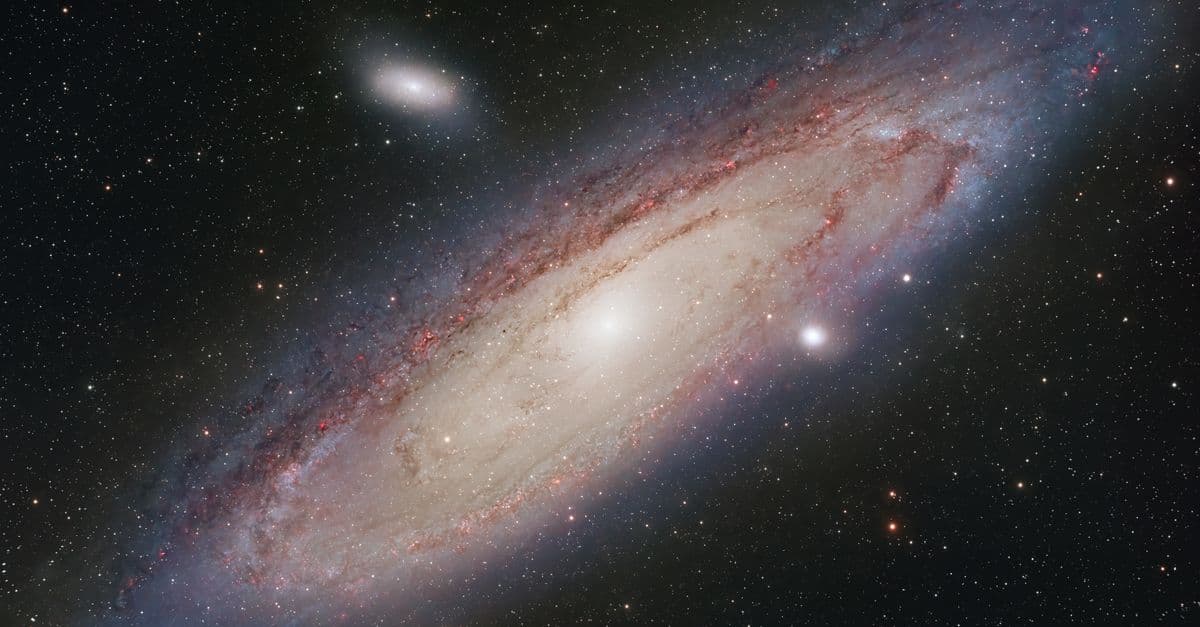
Photo: Necati Ömer Karpuzoğlu / Pexels
For most of the 2010s, the confident answer to "how many galaxies are in the universe" was two trillion. That number came from a 2016 study built on decades of Hubble Space Telescope images. Then, in 2021, a spacecraft built to fly past Pluto measured the same question from the far edge of the solar system and got a very different answer: a few hundred billion. Neither team was wrong. They were measuring different things, with different tools, and running into the same wall every galaxy census eventually hits: most galaxies are too faint to count directly, so scientists have to estimate them, and the estimate depends heavily on the method.
Why there isn't one settled number
Counting galaxies sounds like it should work the way counting anything else works: point a camera at the sky, tally what shows up, done. That approach works fine for the galaxies bright enough to register on a detector. The problem is that the overwhelming majority of galaxies in the observable universe are not bright enough to register on any detector humans have built.
A galaxy's apparent brightness falls off with the square of its distance, so a galaxy twice as far away looks four times fainter even before accounting for cosmic redshift, the stretching of light wavelengths caused by the expansion of space itself. Push a galaxy far enough back in time and its visible light gets redshifted into the infrared, then further redshifted until it falls below whatever wavelength range a given telescope is built to detect. Every galaxy count, therefore, is really two numbers stitched together: the galaxies actually seen in an image, and a statistical extrapolation for the ones the researchers infer must be there based on the pattern of galaxy sizes and brightnesses at closer, better-measured distances.
That second number is where all the disagreement lives. It's the difference between a park ranger counting deer she can see in a clearing and a park ranger estimating the total deer population of a forest from a footprint survey. Both are legitimate ways to answer "how many deer are in this forest," but they will not produce the same number, and neither is "the truth" in isolation.
The Hubble Deep Field and the 100 billion baseline
Before 1995, nobody had a rigorous galaxy count at all, only rough guesses based on what the biggest ground-based telescopes could resolve. That changed when astronomers pointed Hubble at a patch of sky in the constellation Ursa Major that looked, to the naked eye and to smaller telescopes, completely empty. It was a deliberate choice: an empty-looking patch meant no bright foreground stars or galaxies would drown out anything fainter behind them.
Hubble stared at that single patch, no wider than a grain of sand held at arm's length, for ten consecutive days in December 1995, collecting over 340 exposures. The resulting image, the Hubble Deep Field, showed roughly 3,000 galaxies packed into that tiny sliver of sky, most of them never seen before, some so faint and red they appeared to be among the most distant objects then known. Extrapolating that density across the entire sky gave astronomers their first real, if crude, empirical galaxy count: something in the neighborhood of 100 billion to 200 billion galaxies in the observable universe. That figure stood as the working consensus for two decades.
Hubble repeated the trick in 2003 and 2004 with the Hubble Ultra Deep Field, staring at an even smaller patch of southern sky for 11.3 days across 800 exposures, this time using both visible and near-infrared cameras. It found nearly 10,000 galaxies in that single frame, some seen as they existed when the universe was only about 800 million years old (NASA/ESA Hubble Ultra Deep Field release). The deeper Hubble looked, the more galaxies it found, and that pattern itself became a clue that the true galaxy count had to be far higher than 100 billion.
How does the Hubble Deep Field relate to the total galaxy count?
The Hubble Deep Field gave astronomers a galaxy density per unit of sky area from one small, carefully chosen patch. Multiplying that density by the total area of the sky produced the first empirical estimate of roughly 100 billion to 200 billion galaxies, a number later revised upward as deeper images resolved fainter, more distant galaxies the original survey missed.
The 2016 study that pushed the number to 2 trillion
In 2016, an international team led by Christopher Conselice at the University of Nottingham revisited the deep-field data with a new statistical approach. Rather than simply counting visible galaxies and extrapolating linearly, they built a 3D model of galaxy distribution using data from Hubble and other telescopes, converting two-dimensional images into a volume-based census stretching back roughly 13 billion years.
Their key finding wasn't a new photograph. It was a mathematical argument: the number of galaxies per unit volume of space appears to increase sharply going back in time, meaning the early universe was full of small, faint, closely packed galaxies that later merged into the larger galaxies we see today. Because so many of those small early galaxies fall below the detection threshold of even Hubble's deepest exposures, the team extrapolated that the true total, including everything too faint and too distant to directly image, was approximately 2 trillion galaxies, about ten times higher than the older Hubble Deep Field estimate (Conselice et al. 2016, Astrophysical Journal; Scientific American coverage). By the team's own accounting, telescopes in 2016 could still directly resolve only about 10 percent of that total; the other 90 percent was inference, not imagery.
That distinction matters enormously for how the "2 trillion" figure should be read. It was never a claim that anyone had counted 2 trillion galaxies. It was a claim, built on a specific evolutionary model of how galaxy density changes with cosmic time, about how many galaxies should exist given what the visible fraction implied about the invisible fraction.
Why the count came back down in 2021
Five years later, a very different team asked whether that 2-trillion extrapolation was consistent with an entirely independent measurement: the total background glow of the night sky itself, known as the cosmic optical background. In principle, if 2 trillion galaxies exist, their combined starlight, even the light from galaxies too individually faint to resolve, should add up to a measurable diffuse glow across the whole sky.
The trouble is that measuring this glow from Earth, or even from Hubble's orbit, is nearly impossible. Sunlight scattered by interplanetary dust in our own solar system (called zodiacal light) and light pollution from Earth's atmosphere both swamp the true cosmic signal by orders of magnitude. So the research team, led by Marc Postman and Tod Lauer, turned to an unlikely instrument: the Long Range Reconnaissance Imager (LORRI) aboard NASA's New Horizons spacecraft, which had already completed its historic 2015 Pluto flyby and was, by 2021, more than 4 billion miles (6.4 billion km) from the sun, well beyond most of the solar system's dust.
From that vantage point, LORRI measured the cosmic optical background directly, without the zodiacal light contamination that had always limited Earth-based measurements. The result: the diffuse glow was fainter than the 2-trillion-galaxy model predicted. Postman described the total measured light as equivalent to the glow of a single firefly viewed from about 3 feet (1 meter) away, spread across the entire sky (NASA feature on the New Horizons cosmic optical background result). Matching that faint a signal to a galaxy population implied a total closer to a few hundred billion galaxies, not 2 trillion, undercutting the idea that trillions of undetected dwarf galaxies were hiding just below Hubble's detection floor.
Why did the galaxy count go down instead of up?
Because the 2016 estimate depended on an extrapolation model, not a direct measurement, and the 2021 study tested that model against the total light output the universe should produce if the model were correct. The measured background glow was fainter than 2 trillion galaxies would generate, suggesting the extrapolation had overcounted faint, undetected galaxies.
How James Webb changed the picture again
The James Webb Space Telescope, launched in December 2021, was built specifically to solve the redshift problem that limited Hubble: its instruments are tuned to infrared wavelengths, which is exactly where light from the earliest, most distant galaxies ends up after billions of years of cosmic expansion stretch it out of the visible spectrum. Webb's first deep field image, released in July 2022, pointed at galaxy cluster SMACS 0723 and captured light that had been traveling for 13.1 billion years, reaching back to when the universe was less than a billion years old, in just 12.5 hours of exposure time, compared to the two weeks Hubble needed for a comparable deep field (NASA: Webb Delivers Deepest Infrared Image of Universe Yet).
Webb has since found galaxies that appear to be more massive and more fully formed at earlier cosmic times than the standard model of galaxy formation predicted, a genuine puzzle that is still being worked out in the astrophysics literature. What Webb has not done is settle the total galaxy count debate outright. Instead, it has added a third, still-developing data point: direct images of a population of early galaxies that neither the 2016 extrapolation nor the 2021 background-light measurement had access to. Reconciling Webb's direct galaxy counts with the New Horizons background-light constraint is one of the active open questions in observational cosmology as of this writing.
What "the observable universe" actually limits
Every number in this article describes the observable universe only, and that boundary matters as much as any telescope's sensitivity. The observable universe is the region from which light has had time to reach us since the Big Bang, roughly 13.8 billion years ago (Planck Collaboration age-of-universe result, summarized by Princeton University Press). Because space itself has continued expanding during that light's 13.8-billion-year journey, the observable universe today has a radius of about 46 billion light-years, giving it a diameter close to 93 billion light-years, even though nothing in it is more than 13.8 billion years old (overview of observable universe geometry).
Beyond that boundary, the universe likely continues, possibly without any edge at all, but nothing from beyond it has had time to reach Earth, so no telescope, however advanced, can count galaxies that live there. Every galaxy figure in this article, whether it's 100 billion or 2 trillion, is bounded by that 93-billion-light-year sphere. It is a statement about what could ever, in principle, be observed from Earth, not a statement about the total universe.
What people get wrong about the galaxy count
The most common misunderstanding is treating "2 trillion" as a settled fact rather than a specific model's output. Headlines from 2016 through the early 2020s often repeated the figure as though it were a direct measurement, the same way "8 billion people on Earth" is a direct measurement. It never was. It was the output of a specific extrapolation model that a later, independent measurement partially contradicted.
A second common error is confusing the observable universe with the entire universe. Cosmologists generally think the full universe, whatever exists beyond the boundary of what light has had time to reach us from, is far larger than the observable portion, and some models suggest it may be effectively infinite. Any galaxy count, no matter how carefully derived, describes only the sliver of the cosmos causally connected to Earth's location in space and time.
A third mistake is assuming that a more powerful telescope automatically means a more accurate galaxy count. Webb sees deeper and sharper than Hubble in infrared wavelengths, but "deeper" does not automatically mean "resolves every galaxy in its field of view." Even Webb's most sensitive deep-field images still miss galaxies below its detection threshold, meaning some fraction of any Webb-based count is still statistical inference, not direct imaging, just as it was for Hubble.
What this means for the bigger picture
The galaxy count matters for reasons well beyond trivia. It's a direct input into estimates of the total number of stars in the observable universe, which in turn feeds into rough calculations about how many planets, and potentially how many habitable environments, might exist. It also serves as a stress test for models of galaxy formation and evolution: if a model predicts far more (or far fewer) faint dwarf galaxies than the cosmic background light actually shows, that's a signal something in the model of how galaxies form and merge over cosmic time needs revision.
The back-and-forth between the 2016 extrapolation and the 2021 background-light measurement is also a useful, honest example of how science actually works day to day. It isn't a straight line from ignorance to certainty. It's a series of independent measurements, made with different instruments and different assumptions, converging slowly on a narrower range of plausible answers, and sometimes disagreeing loudly along the way. Webb's ongoing deep-field surveys are the next data point in that same process, not the final word.
Table: How the galaxy count has changed over time
| Era / Study | Method | Estimated galaxy count | Key limitation |
|---|---|---|---|
| Pre-1995 | Ground-based telescope surveys | Rough guesses, no rigorous figure | Limited resolution and light-gathering power |
| 1995 Hubble Deep Field | 10-day stare at one small patch of sky, extrapolated | ~100–200 billion | Extrapolated from one tiny sky patch |
| 2003–2004 Hubble Ultra Deep Field | 11.3-day exposure, ~10,000 galaxies in one frame | Higher than 1995 figure, exact total not stated | Still limited to visible + near-infrared light |
| 2016 Conselice et al. | 3D volume modeling of galaxy density over cosmic time | ~2 trillion | ~90% of the total was statistical inference, not direct imaging |
| 2021 New Horizons (Lauer/Postman) | Cosmic optical background measured from beyond the solar system's dust | Hundreds of billions | Cannot resolve individual faint galaxies, only total light |
| 2022–present James Webb Space Telescope | Direct infrared deep-field imaging | Ongoing; not yet a single stated total | Even Webb's floor still requires some extrapolation |
Caption: Each galaxy census used a different method and answered a subtly different question, which is why the headline numbers vary by more than a factor of ten.
The takeaway
There is no single correct number for how many galaxies exist in the observable universe, and treating any headline figure, 100 billion, 2 trillion, or otherwise, as a settled fact misses the more interesting story. Each number is the output of a specific method applied to a specific slice of sky or a specific kind of light, and each new instrument, from Hubble to a Pluto-bound spacecraft to Webb, has narrowed or shifted the range rather than closed the question. The honest current answer is that the observable universe most likely holds somewhere between a few hundred billion and roughly 2 trillion galaxies, with the lower end better supported by direct background-light measurements as of the early 2020s. What's certain is that the overwhelming majority of them, whatever the true total turns out to be, are too faint for any telescope built so far to see directly.
Read next:
- Black Holes Explained: How They Work
- How Do We Actually Find Exoplanets?
- The Mysteries of Time: Why Aging Slows Down in Space
Frequently Asked Questions
Q: How many galaxies are in the universe? A: The observable universe most likely contains somewhere between a few hundred billion and roughly 2 trillion galaxies. A 2016 study extrapolated to about 2 trillion, while a 2021 measurement of the sky's total background light, taken by NASA's New Horizons spacecraft beyond the solar system's dust, suggested a lower figure closer to a few hundred billion.
Q: Why did the estimate drop from 2 trillion to hundreds of billions? A: The 2-trillion figure came from a statistical extrapolation of galaxy density going back in cosmic time, not a direct count. In 2021, researchers tested that extrapolation against an independent measurement, the total diffuse glow of the sky, and found it was fainter than 2 trillion galaxies would produce, implying fewer undetected faint galaxies than the 2016 model assumed.
Q: What is the observable universe, and why does it limit the galaxy count? A: The observable universe is the region from which light has had time to reach Earth since the Big Bang, about 13.8 billion years ago. Because space expanded during that light's journey, it now spans roughly 93 billion light-years across. Nothing beyond that boundary can be observed, so no galaxy count can include what lies past it.
Q: How many galaxies has Hubble actually photographed directly? A: Individual Hubble deep-field images, like the 1995 Hubble Deep Field and the 2003–2004 Hubble Ultra Deep Field, captured a few thousand to nearly 10,000 galaxies in single tiny patches of sky. Astronomers then extrapolate sky-wide totals from the galaxy density in those patches, rather than photographing every galaxy individually.
Q: Has the James Webb Space Telescope found more galaxies than expected? A: Webb has found galaxies in the early universe that appear more massive and more evolved than standard galaxy-formation models predicted for their age, a puzzle still under active study. Webb has not yet produced a single revised total galaxy count for the observable universe; its deep-field surveys are ongoing.
Q: What is the cosmic optical background, and how was it measured? A: The cosmic optical background is the combined faint glow of all the starlight ever emitted by galaxies across cosmic history, including light from galaxies too faint to see individually. NASA's New Horizons spacecraft measured it directly in 2021 from more than 4 billion miles (6.4 billion km) beyond the sun, far enough to avoid the zodiacal light and atmospheric glow that block the same measurement from Earth or Earth orbit.
Q: Is the total number of galaxies in the entire universe different from the number in the observable universe? A: Yes. Every figure discussed here applies only to the observable universe, the roughly 93-billion-light-year-wide region visible from Earth. Cosmologists generally think the full universe extends well beyond that boundary, possibly without any edge, meaning the true total number of galaxies in existence is unknown and likely far larger.
Q: Why can't astronomers just count every galaxy directly instead of extrapolating? A: A galaxy's brightness falls off with the square of its distance, and light from the most distant galaxies is redshifted into wavelengths that fall outside what most telescopes can detect. Past a certain distance and age, individual galaxies become too faint and too red for even the most sensitive instruments, so astronomers infer their existence statistically from patterns in the galaxies they can detect.
Q: Does a bigger or more powerful telescope always find more galaxies? A: Generally yes for direct detections, since deeper, more sensitive instruments resolve fainter and more distant galaxies that earlier telescopes missed, which is exactly what happened between the 1995 Hubble Deep Field and the 2003–2004 Hubble Ultra Deep Field. But even the most powerful telescope still has a detection floor, so some portion of any total galaxy estimate remains a statistical extrapolation rather than a direct count.
Sources
- Lauer, T. R., et al. (2021), "New Horizons Observations of the Cosmic Optical Background," The Astrophysical Journal, IOPscience
- Astronomy.com: "New Horizons measures how dark the universe can get"
- Conselice, C. J., et al. (2016), summarized via AAS Nova: "Selections from 2016: Counting Galaxies in the Observable Universe"
- Scientific American: "Universe Has 10 Times More Galaxies Than Researchers Thought"
- NASA/ESA: Hubble Ultra Deep Field release
- NASA: "NASA's Webb Delivers Deepest Infrared Image of Universe Yet"
- Wikipedia, summarizing peer-reviewed cosmology literature: "Observable universe" (size and age figures)
- Princeton University Press, summarizing Planck Collaboration results: age of the universe
Follow new articles
Add SciHub101 to your feed reader to see new science and technology stories.
About the Author
SciHub101 is an independent science and technology publication founded and edited by Buğra Sözeri, a software engineer and app developer based in Türkiye. AI tools assist with drafting and research. Source documentation in the existing archive is uneven, and articles are being reviewed and corrected. The Editorial Team byline identifies editorial responsibility; it does not certify specialist or independent human review. Where we compare products, anything built by our own team is labelled as such — see the editorial guidelines and About page for how corrections and disclosures work.
Related Articles
How Space Telescopes See the Early Universe
Space telescopes do not look back in time by magic. They collect ancient light stretched by cosmic expansion. Here is how redshift reveals the early universe.

Can Humans Live on Mars? The Real Challenges
A realistic look at Mars settlement: radiation, dust, low gravity, water, food, power, medicine, psychology, and the economics of staying alive.
How Galaxies Form and Evolve: From the First Stars to Today
Galaxies are not eternal — they are born, grow through mergers, and eventually die. Here's how the universe built these island universes.
James Webb Deep Field: The Universe's Ancient Light
How the James Webb Space Telescope revealed galaxies from the universe's earliest years, transforming our understanding of cosmic history
The James Webb Space Telescope Explained — How It Works and What It's Found
JWST sits 1.5 million kilometers from Earth, sees light from galaxies 280 million years after the Big Bang, and is actively rewriting cosmology. Here's how the most ambitious telescope ever built actually works, and what it has found through 2026.
Edwin Hubble: The Man Who Discovered the Universe
Edwin Hubble proved galaxies exist beyond the Milky Way and that the universe is expanding. His 1924 and 1929 discoveries rewrote cosmology forever.