Can Humans Live on Mars? The Real Challenges
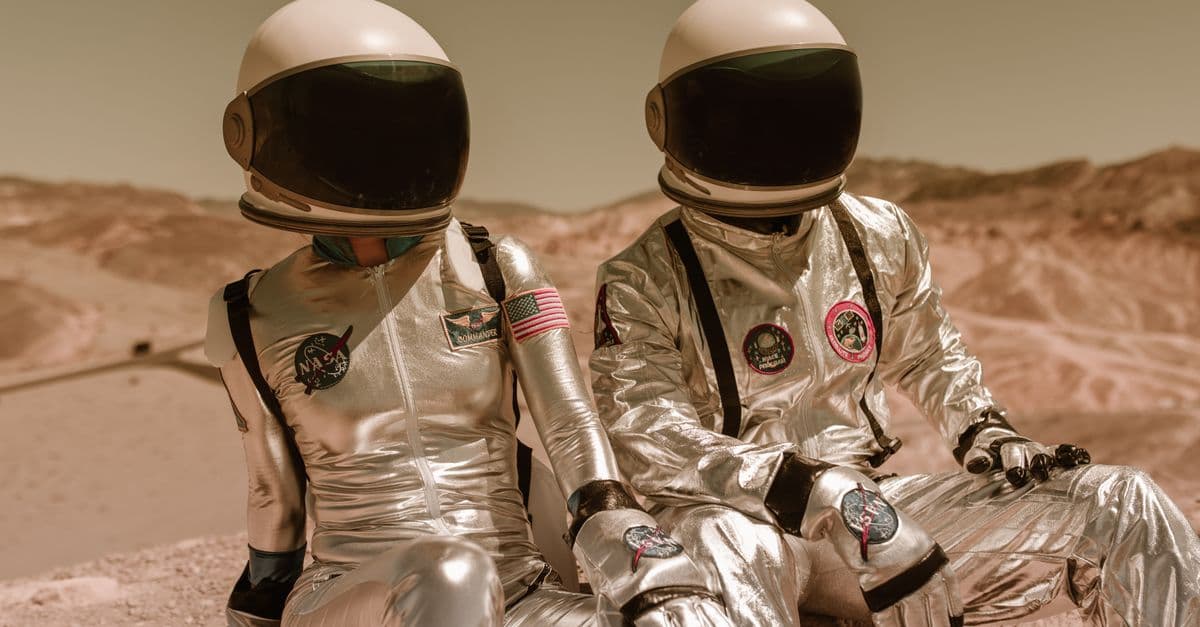
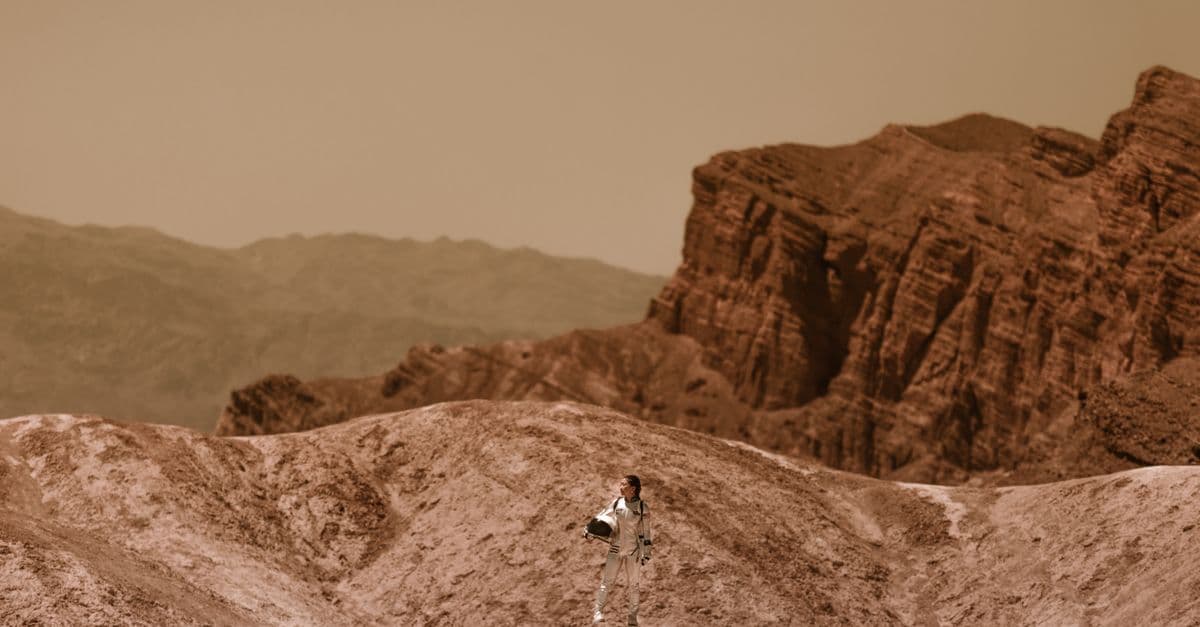
Photo: RDNE Stock project / Pexels
A crew that lands on Mars will absorb roughly 0.64 millisieverts of radiation every single day just standing on the surface, according to measurements from NASA's Curiosity rover. That is not a hypothetical hazard from a science-fiction script. It is a measured number from an instrument that has been sitting in Gale Crater since 2012. Getting humans to Mars is now mostly an engineering problem. Keeping them alive there for years, healthy enough to reproduce a functioning society, is a much harder one, and this piece walks through exactly why.
Why "visiting" and "living" are two different problems
Landing on Mars and living on Mars sound like a matter of degree, but they are different engineering categories entirely. A visit, like the Apollo missions to the Moon, is a sprint: bring everything you need, survive on stored supplies, and leave before anything breaks down for good. A settlement is a marathon that never ends, where every system has to run for years without a resupply ship showing up next week.
The distance is the first constraint that separates the two. Mars sits between 54.6 million and 401 million kilometers (33.9 million to 249 million miles) from Earth depending on where both planets are in their orbits, and a one-way radio signal takes anywhere from 3 to 22 minutes to arrive. There is no real-time mission control. If a life support system fails, the crew fixes it themselves or they die, because Houston cannot talk them through it in real time.
Rockets also cannot fly to Mars whenever they want. Because Earth and Mars orbits align favorably only once every 26 months, cargo and crew have to travel in batches during narrow launch windows, and SpaceX has publicly targeted the next such window, which opens in late 2026, to send a fleet of uncrewed Starship vehicles carrying cargo and robotic explorers, according to reporting from Space.com. Miss the window and the next chance is more than two years away, which means a colony cannot simply order a spare part and wait a few weeks. It has to already have the part, the raw material to make it, or the skill to build a substitute from what is on hand.
That single fact reframes the whole problem. Mars settlement is not primarily a rocket challenge anymore. SpaceX, NASA, and other agencies have demonstrated the propulsion and landing techniques needed to get large payloads to the surface. What has not been demonstrated at scale is a closed system that keeps humans alive, sane, and reproducing 225 million kilometers (140 million miles) from every backup Earth could send.
Radiation: the invisible dose that never stops
Earth's magnetic field and thick atmosphere work together like a two-layer umbrella, deflecting most charged particles from the sun and deep space before they ever reach the ground. Mars lost its global magnetic field roughly 4 billion years ago and kept only about 1 percent of Earth's atmospheric pressure, so that umbrella simply is not there. Every day on the Martian surface, unshielded skin and unshielded electronics sit exposed to galactic cosmic rays and solar particle events.
The numbers from Curiosity's Radiation Assessment Detector, published through NASA and detailed in a 2013 Science paper covered by Scientific American and Space.com, put the surface dose rate at about 0.64 to 0.67 millisieverts per day. The transit phase is worse: astronauts in a spacecraft cruising between Earth and Mars would absorb radiation nearly three times faster, at about 1.84 millisieverts per day, because the ship's hull offers far less shielding than a planet's crust and thin atmosphere combined.
Add it all up across a full mission profile and you land close to 1 sievert of total exposure, which the European Space Agency treats as a career limit for astronauts because of the associated cancer risk. A permanent settler does not get to stop after one mission. Someone living on Mars for a decade needs shielding that a visiting crew does not.
How would a colony actually block that radiation?
The leading approach is not exotic. Peer-reviewed modeling published in the European Physical Journal Plus and in arXiv preprints on radiation shielding shows that piling roughly 1 to 3 meters (3 to 10 feet) of Martian regolith, the loose dust and broken rock that covers the surface, over a habitat can cut radiation dose by more than 90 percent. Water tanks built into habitat walls work almost as well, because hydrogen-rich material is unusually good at absorbing charged particles. Neither solution is glamorous. Both mean colonists live under mounds of dirt or behind walls of water rather than in glass domes with a view.
Dust that fights back: perchlorates and the fine-particle problem
Martian dust is not like beach sand. It is a fine, electrostatically clingy powder that got ground down by billions of years of wind and impact, and it carries a chemical hazard that Apollo-era lunar dust did not: perchlorate salts. NASA's Phoenix lander detected perchlorate at roughly 0.5 percent by weight in the soil it sampled near the Martian north pole in 2008, a concentration that NASA researchers describe as several orders of magnitude higher than anywhere naturally occurring on Earth.
Perchlorate is a problem specifically because it interferes with the thyroid gland's ability to absorb iodine, which regulates metabolism. On Earth, perchlorate contamination is treated as an environmental hazard requiring cleanup; on Mars, it is baked into essentially the entire surface layer, which means any dust that gets tracked into a habitat, embedded in a spacesuit joint, or kicked up during an EVA (extravehicular activity, meaning a spacewalk or surface excursion) carries a low-grade toxin with it.
Engineers already know the mitigation playbook, because it is a modified version of what Apollo astronauts learned the hard way: airlock decontamination stages, suit ports that let colonists climb directly into a suit from inside the habitat without ever bringing dust indoors, and HEPA-grade filtration on internal air handling. None of that is exotic engineering. It is closer to a hospital clean room protocol, permanently bolted onto the front door of every building on the planet.
Thin air, cold nights, and a pressure problem underneath everything
Mars's atmosphere is roughly 95 percent carbon dioxide, with small amounts of nitrogen and argon, and its average surface pressure is about 6 to 7 millibars, or less than 1 percent of sea-level pressure on Earth, according to atmospheric data compiled by NASA and reviewed in planetary science literature. At that pressure, exposed liquid water boils at close to body temperature rather than staying liquid, and any unprotected human loses consciousness from lack of oxygen within seconds. There is no version of "step outside without a suit" on Mars, ever, anywhere on the planet.
Temperature swings compound the problem. Average surface temperature on Mars sits around 210 kelvins (about −63°C or −81°F), with summer highs near a dark surface occasionally reaching roughly 17°C (62°F) at midday and winter nights at the poles dropping past −125°C (−195°F). A habitat has to handle that daily swing of 80°C to 100°C (roughly 150°F to 200°F) between noon and midnight, every single day, indefinitely, without the thermal buffering effect that Earth's dense atmosphere and oceans provide.
This is where the "thin blanket versus thick blanket" analogy helps. Earth's atmosphere behaves like a heavy quilt: it absorbs and redistributes heat slowly, which is why deserts here rarely swing more than 20°C to 30°C (35°F to 55°F) between day and night. Mars's atmosphere is more like a bedsheet: too thin to hold heat, so the ground radiates its warmth into space the moment the sun sets. Every Mars habitat design, from NASA's concept studies to SpaceX's public Starship renderings, treats thermal regulation as a core structural requirement, not an add-on.
Building a closed loop: the water, air, and food problem
The International Space Station's Environmental Control and Life Support System (ECLSS), the hardware that recycles air and water for the crew, currently recovers about 90 to 93 percent of the water astronauts use, reclaiming it from urine, sweat, and cabin humidity, according to NASA documentation and a 2023 university-published review of ISS water systems. That sounds impressive until you realize what it means for Mars: a 7 to 10 percent water loss every cycle is sustainable when a cargo ship can resupply you every few months from 400 kilometers (250 miles) away. It is not sustainable when the nearest water might be 26 months and tens of millions of kilometers away.
NASA engineers have stated that Mars-bound systems need to reclaim at least 98 percent of onboard water to make a mission logistically viable, and a 2023 upgrade to the ISS's brine processor pushed recovery rates high enough that the 98 percent target is now considered reachable, though a compact, flight-ready version for a Mars-bound spacecraft is still in development. Every fraction of a percent matters here in a way it rarely does in other engineering problems, because the alternative to a tighter loop is hauling water from Earth, and even reaching low Earth orbit costs on the order of thousands of dollars per liter.
Food is the part science fiction usually skips past with a hydroponics montage, but the chemistry is the hard part. Martian regolith cannot simply be planted in, because of that same perchlorate contamination discussed earlier, plus the near-total absence of the organic matter and beneficial microbial life that make Earth soil fertile. Realistic near-term plans favor hydroponics and aeroponics, growing plants in nutrient solution or a nutrient mist rather than soil, inside pressurized, radiation-shielded greenhouses, with regolith processed and detoxified over years before it becomes usable growing medium, if it ever fully does at scale.
| Life-support metric | Earth / ISS baseline | Mars settlement requirement | Why the gap matters |
|---|---|---|---|
| Water recovery rate | ~90–93% (current ISS ECLSS) | ~98%+ (NASA target) | Every unrecovered liter must be replaced from a 26-month resupply cycle |
| Atmospheric pressure | 1,013 millibars (Earth sea level) | 6–7 millibars ambient; habitat must be pressurized artificially | No unsuited exposure is survivable, ever |
| Radiation dose (surface) | ~2–3 mSv/year background | ~0.64 mSv/day (roughly 230+ mSv/year unshielded) | Multi-year stays require ~1–3 m of regolith or water shielding |
| Perchlorate in soil | Trace/absent in most regions | ~0.5% by weight (Phoenix lander site) | Direct soil farming and unfiltered dust exposure are unsafe |
| Round-trip radio delay | Real-time (ISS to ground) | 6–44 minutes round trip | Emergency systems must be autonomous, not ground-controlled |
Table: Key figures a permanent Mars settlement has to close the gap on, compared with current Earth-orbit baselines. Sources: NASA ECLSS documentation, Curiosity RAD data, NASA Phoenix lander findings, NASA planetary atmosphere data.
Gravity, bones, and a threshold nobody has actually tested
Mars's surface gravity is 0.38 times Earth's, and this is one of the few Mars challenges where scientists genuinely do not have a firm answer, because nobody has ever kept a human at partial gravity for more than a few minutes of aircraft parabolic flight. What researchers do have is decades of microgravity data from the ISS, where astronauts lose roughly 1 to 1.5 percent of bone mineral density per month in weight-bearing bones without aggressive resistance exercise, plus newer research specifically probing the gravity threshold where muscle and bone stop deteriorating.
A study using mice aboard the ISS with a centrifuge to simulate different gravity levels, described in reporting on partial-gravity musculoskeletal research and in a 2025 review in the American Journal of Physiology, found that gravity below roughly 0.67g caused measurable muscle deterioration in the animals, and separate human studies point to a similar threshold somewhere between 0.5g and 0.75g. Mars's 0.38g sits well under that line. Researchers describe the current state of knowledge on intermediate gravity levels, meaning anything between Earth's full 1g and true weightlessness, as a genuine data gap rather than a solved problem.
Think of it like a dimmer switch instead of an on-off light. Zero gravity is the switch fully off, and researchers know exactly what that does to bones and muscles because decades of ISS missions have documented it in detail. Full Earth gravity is the switch fully on. Mars sits somewhere in the dim middle, and nobody has run the switch at that exact setting for long enough to know whether resistance exercise, like the machines ISS crews already use for roughly two hours a day, is enough to compensate, or whether Martian children born and raised at 0.38g would develop permanently different skeletons that could never safely return to Earth.
Would returning to Earth ever be safe for a Mars-born generation?
Nobody knows yet. Bone density and cardiovascular conditioning studies from spaceflight suggest partial recovery is possible after months of rehabilitation following full microgravity exposure, but no data exists for someone who developed from birth at 0.38g rather than adapting to it as an adult. This is one of the most cited open questions in Mars settlement research.
Psychology: the isolation nobody engineers around
NASA-funded HI-SEAS missions in Hawaii isolated crews of six volunteers inside a Mars-analog habitat for periods up to 12 months, with results published across multiple peer-reviewed studies in journals including Acta Astronautica and Frontiers in Physiology. Researchers documented a recurring pattern: an initial adrenaline-driven adjustment phase, followed by a mid-mission dip in mood and social engagement tied to falling dopamine and serotonin levels, then disrupted sleep-wake cycles and shifting group dynamics as the mission dragged on.
That is a simulation with air conditioning, a rescue team a phone call away, and an exit door. A real Mars crew adds the psychological weight of a communication delay stretching up to 22 minutes each way, meaning no real-time conversation with anyone back home, ever, for the length of the mission. It also adds genuine, non-simulated risk: equipment failure on Mars does not have a research director standing by to intervene.
Space agencies have started building autonomous behavioral health tools specifically because of this gap. A NASA-supported computer program called the Virtual Space Station, tested during an 8-month HI-SEAS mission, delivered self-guided modules for conflict resolution, stress management, and depression, and crew members rated the conflict and stress modules highly usable in post-mission surveys. That kind of tool exists because mission planners already assume that by the time a crew is far enough from Earth for it to matter, ground-based therapists will be functionally useless.
The economics: why cost, not physics, sets the real pace
Physics says Mars settlement is possible. Economics says it is slow. SpaceX has stated a target launch cost of roughly $100 million per Starship flight in expendable configuration, and has separately floated a rate near $100 million per metric ton of cargo delivered to the Martian surface for early research and exploratory missions, according to public SpaceX statements and industry reporting. Getting a single fully fueled Starship to Mars also requires refueling it in Earth orbit through roughly 8 to 12 separate tanker launches beforehand, meaning one Mars-bound ship can represent 9 to 13 total launches once refueling flights are counted.
Multiply that by the handful of vehicles SpaceX has said it intends to send during the Mars transfer window that opens in late 2026, and the total launch count for that single window alone could run into the dozens, all within a window that only stays open for a few weeks. A permanent, self-sufficient colony, meaning one that does not depend on constant resupply from Earth, would require this scale of launch campaign repeated across many transfer windows over decades, each one costing hundreds of millions to billions of dollars depending on cargo mass and crew size.
This is the part often left out of Mars enthusiasm: the hardest constraint on colonization right now is not a single unsolved physics problem. It is the fact that every solved engineering problem — radiation shielding, water recycling, dust mitigation, thermal control — still has to be manufactured, launched, and landed at a price someone is willing to pay, repeatedly, for decades, before "settlement" stops being a word for a research outpost and starts meaning a self-sustaining civilization.
What people get wrong about Mars settlement
The most common misconception is that Mars will eventually be terraformed into something Earth-like, with a breathable atmosphere and blue skies, within a human lifetime. Peer-reviewed atmospheric modeling, including a widely cited 2018 NASA-affiliated study published in Nature Astronomy, concluded that Mars does not have enough accessible carbon dioxide in its polar caps, regolith, and dust to build a thick enough atmosphere using current technology, even if every gram of it were released at once. Terraforming Mars, if it is possible at all, is a centuries-to-millennia-scale project, not something an early settlement generation will see completed.
A second misconception is that living on Mars will feel like living in a more remote version of Antarctica. Antarctic research stations sit on a planet with a breathable atmosphere just outside the door, a magnetic field blocking most radiation, and rescue flights that can reach the pole within days in an emergency. Mars offers none of those safety nets. The honest comparison is closer to permanently crewing a submarine that can never surface, sitting at a depth where a hull breach is instantly fatal, with a supply ship that visits once every 26 months.
A third misconception, often repeated in casual coverage, is that radiation on Mars is "similar to what airline pilots get." Airline crews accumulate elevated but still comparatively modest doses over a career specifically because they fly at altitude for hours at a time, not permanently. A Mars settler accumulates a comparable daily dose to what a frequent-flying pilot gets over an entire month, every single day, indefinitely, unless shielded by meters of regolith or water. The difference between temporary occupational exposure and permanent unshielded residency is the entire ballgame.
The takeaway
Every individual obstacle to living on Mars, radiation, dust, thin air, low gravity, water recycling, and isolation, already has a partial engineering answer on paper, and most of those answers have already been tested in some form on the ISS, in Antarctic and Hawaiian analog habitats, or in Curiosity's decade of surface measurements. What has never been tested is running all of those partial solutions simultaneously, for years, with a resupply chain that visits once every 26 months and a rescue option that does not exist. Mars will likely host research outposts and short-duration crews well before it hosts anything resembling a self-sufficient settlement, and the gap between those two milestones is measured in decades of engineering, not in a single rocket launch.
Read next:
Frequently Asked Questions
Q: How much radiation would a person get living on Mars? A: About 0.64 to 0.67 millisieverts per day at the surface, based on measurements from NASA's Curiosity rover. A full round-trip mission, including transit, would total roughly 1 sievert, which matches the European Space Agency's entire career radiation limit for astronauts.
Q: Can plants grow directly in Martian soil? A: Not safely without treatment. Martian regolith contains roughly 0.5 percent perchlorate salts by weight, detected by NASA's Phoenix lander, which are toxic to the human thyroid and harmful to most plant life. Near-term food plans rely on hydroponic and aeroponic systems inside shielded greenhouses instead of open soil farming.
Q: Why can't humans just walk outside on Mars without a full pressure suit? A: Mars's atmospheric pressure is roughly 6 to 7 millibars, less than 1 percent of Earth's sea-level pressure, and made almost entirely of carbon dioxide. At that pressure, exposed body fluids can boil at body temperature and a person loses useful consciousness within seconds without a fully pressurized suit.
Q: Is Mars's lower gravity dangerous for long-term health? A: It's an open question. Research suggests gravity below roughly 0.5g to 0.75g may be insufficient to prevent bone and muscle loss based on ISS microgravity studies and newer partial-gravity animal research, and Mars's 0.38g sits below that estimated threshold. No human has ever lived at that gravity level long enough to confirm the long-term effects.
Q: How long would it take to send supplies to Mars if something ran out? A: Efficient transfer windows between Earth and Mars only open roughly every 26 months, when the two planets' orbits align favorably. Missing a window means waiting more than two years for the next resupply opportunity, which is why closed-loop life support and local manufacturing matter far more on Mars than they do for missions closer to Earth.
Q: Could Mars ever be terraformed to have a breathable atmosphere? A: A 2018 NASA-affiliated study published in Nature Astronomy found Mars does not currently have enough accessible carbon dioxide in its polar caps and regolith to build a thick enough atmosphere with current technology, even if all of it were released. Any terraforming that is possible would likely take centuries to millennia, not a human lifetime.
Q: How does life support on Mars differ from life support on the ISS? A: The ISS currently recycles about 90 to 93 percent of water used by the crew, which works because cargo ships can resupply the station every few months. NASA has stated Mars missions need roughly 98 percent water recovery or better, since resupply from Earth would only be possible once every 26 months at best.
Q: Does the psychological strain of living on Mars differ from Antarctic research stations? A: Yes, significantly. Antarctic stations sit under Earth's magnetic field and atmosphere and can typically be reached by emergency flights within days. Mars settlers would face a communication delay of up to 22 minutes each way and no realistic rescue option, a combination studied in NASA-funded HI-SEAS isolation missions in Hawaii lasting up to 12 months.
Q: What does it currently cost to send cargo to the Martian surface? A: SpaceX has publicly discussed a target cost around $100 million per metric ton of cargo delivered to the Martian surface for early research missions, alongside a roughly $100 million per-launch cost for an expendable Starship, though each Mars-bound flight also requires about 8 to 12 separate orbital refueling launches beforehand.
Q: What is the single biggest reason we don't have a Mars colony yet? A: No individual technical problem is unsolvable on paper, but no mission has combined every partial solution — radiation shielding, closed-loop life support, dust mitigation, psychological support, and low-gravity health countermeasures — into one continuously operating system for years at a time, which is what permanent settlement actually requires.
Sources
- NASA / Southwest Research Institute — Curiosity RAD radiation measurements, Science (2013), covered by Space.com
- Scientific American — "Radiation on Mars 'Manageable' for Manned Mission, Curiosity Rover Reveals"
- NASA — Perchlorate on Mars workshop findings
- NASA / Astrobiology — Chlorate and perchlorate soil chemistry from Phoenix lander
- NASA ECLSS overview — Environmental Control and Life Support System
- Florida International University / FIU News — ISS water recycling systems explained
- American Journal of Physiology-Cell Physiology — Musculoskeletal responses to spaceflight (2025 review)
- Universe Today — Partial-gravity muscle deterioration threshold research
- NCBI / Frontiers in Physiology — Biobehavioral and psychosocial stress in Mars analog missions (HI-SEAS)
- PubMed — Behavioral health countermeasure evaluation at HI-SEAS Mars analog
- Space.com — SpaceX Starship Mars launch plans for the 2026 transfer window
- SpaceX — Mission: Mars, official program page
- Britannica — Mars atmosphere, climate, and dust storm data
Follow new articles
Add SciHub101 to your feed reader to see new science and technology stories.
About the Author
SciHub101 is an independent science and technology publication founded and edited by Buğra Sözeri, a software engineer and app developer based in Türkiye. AI tools assist with drafting and research. Source documentation in the existing archive is uneven, and articles are being reviewed and corrected. The Editorial Team byline identifies editorial responsibility; it does not certify specialist or independent human review. Where we compare products, anything built by our own team is labelled as such — see the editorial guidelines and About page for how corrections and disclosures work.
Related Articles
How Many Galaxies Are in the Universe?
Astronomers' galaxy counts have swung from 100 billion to 2 trillion and back to hundreds of billions. Here's why the number keeps changing, and what it actually means.
Biggest Black Holes Ever Found
The most massive black holes challenge galaxy formation models. This article explains ultramassive black holes, how mass is measured, and why records change.
Mars Settlement Engineering — Life Support, Radiation, and ISRU Explained — SciHub101
The engineering challenges of permanent Mars settlement: life support systems, radiation shielding, food production, water extraction, and in-situ resource utilization.
How Do Planetary Magnetic Fields Work? Earth, Jupiter, and Beyond
Planetary magnetic fields are made by dynamos: electrically conducting fluid, stirred by heat and rotation, that regenerates its own field. Earth's runs in liquid iron, Jupiter's in metallic hydrogen, and Uranus and Neptune's in shallower layers that give them tilted, off-center fields. Mars lost its global field billions of years ago.
What Is Space Colonization? The Physics and Challenges of Living Off Earth
Establishing a permanent human presence on the Moon, on Mars, or in free-space habitats means solving problems in radiation, partial gravity, closed-loop life support, local resources, and population size. Here is what the measurements and the physics actually demand.