How Do We Actually Find Exoplanets?
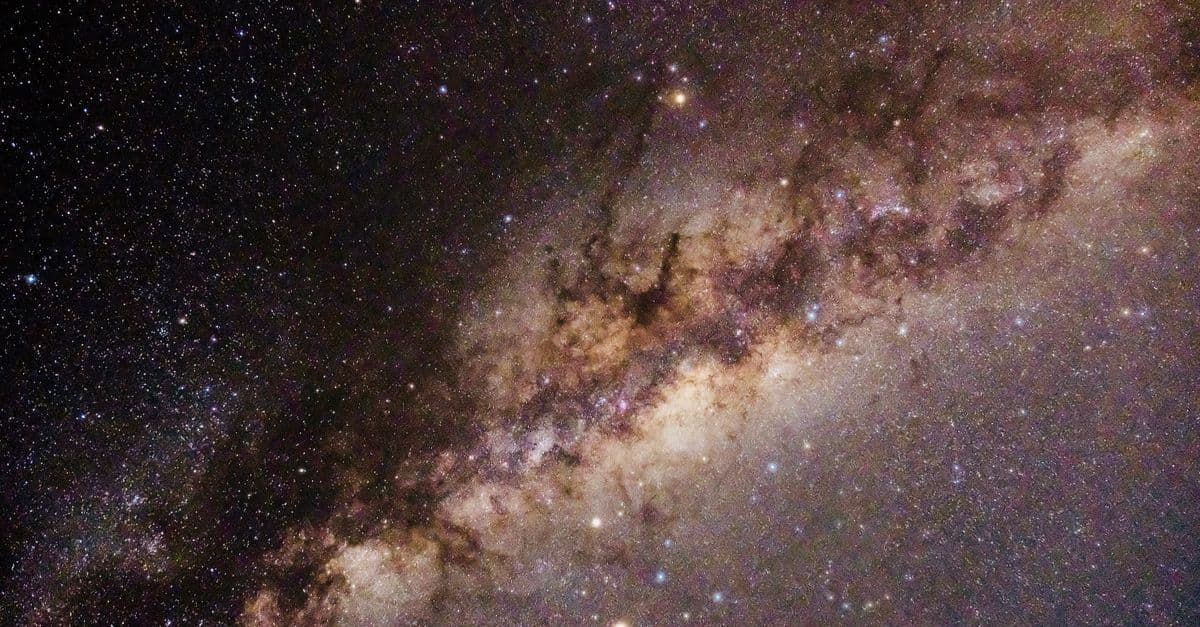
Photo: Jobert Enamno / Pexels
Until the early 1990s, every planet anyone knew of orbited the Sun. Today NASA's Exoplanet Archive lists more than 6,000 confirmed planets around other stars, and the count keeps climbing as surveys deliver new candidates and follow-up teams confirm them. The remarkable part is that we found nearly all of them without ever seeing them. A planet is a dim, small object pressed against the glare of a star billions of times brighter, so astronomers mostly detect planets through what they do to their stars: the light they block, the wobble they cause, the way they bend light passing nearby.
This article walks through each detection method, the physics behind it, what it can and cannot tell us, and why the planets we know about are a biased sample of the planets that exist. For background on what these worlds turn out to be like, see our companion piece on what exoplanets are and whether any could host life.
Key takeaways
- Five main detection methods: transit, radial velocity, direct imaging, microlensing, astrometry, plus several timing techniques.
- The transit method (a planet briefly dims its star) has found roughly three quarters of all confirmed exoplanets in NASA's archive.
- Each method sees a different slice of the planet population; combining them gives mass, radius, density and sometimes atmosphere.
- Every method is biased toward certain planets, so raw counts overstate big, close-in worlds.
- JWST and new missions such as Roman and PLATO shift the field from counting planets to characterising them.
The numbers at a glance
NASA's Exoplanet Archive, run by Caltech's IPAC, keeps a running tally of confirmed planets broken down by the method that first detected them. When we checked in October 2026, the archive's count page showed 6,451 confirmed planets. The split by method looks like this:
| Discovery method | Confirmed planets | Share of total | Best at finding |
|---|---|---|---|
| Transit | 4,785 | ~74% | Close-in planets of all sizes |
| Radial velocity | 1,204 | ~19% | Massive planets, short to medium orbits |
| Microlensing | 292 | ~4.5% | Planets at several AU, distant stars |
| Direct imaging | 98 | ~1.5% | Young, hot giants on wide orbits |
| Transit timing variations | 29 | <1% | Unseen companions of transiting planets |
| Eclipse timing variations | 17 | <1% | Planets around eclipsing binaries |
| Orbital brightness modulations | 9 | <1% | Very close-in giants |
| Pulsar timing | 8 | <1% | Planets around neutron stars |
| Astrometry | 6 | <1% | Massive planets on wide orbits |
Source: NASA Exoplanet Archive, Exoplanet and Candidate Statistics, accessed October 2026. Shares are rounded; a planet is credited to the method that discovered it, though many are later confirmed by other methods too.
The table is the single best summary of the field's history: one technique dominates because of a single mission, Kepler, and several methods with enormous potential have barely started contributing.
A short history of the hunt
The first planets confirmed outside the solar system were not around a normal star at all. In 1992, radio astronomers Aleksander Wolszczan and Dale Frail reported planets orbiting the pulsar PSR B1257+12, detected through tiny regularities in the arrival times of its radio pulses. Pulsars are the collapsed remnants of exploded stars, so those planets are exotic and almost certainly lifeless, but they proved planets could exist elsewhere.
The real turning point came in October 1995, when Michel Mayor and Didier Queloz of the University of Geneva announced 51 Pegasi b, the first planet found orbiting a Sun-like star. It was a shock: a gas giant about half Jupiter's mass that circles its star in about four days, far closer than Mercury is to the Sun. Nobody's theory of planet formation predicted such "hot Jupiters." American astronomers Geoff Marcy and Paul Butler confirmed the signal within days. Mayor and Queloz shared the 2019 Nobel Prize in Physics for the discovery, as NASA's account of the discovery describes.
The late 1990s and 2000s belonged to radial-velocity surveys, which found hundreds of giant planets. The first transiting planet, HD 209458 b, was observed in 1999. Then in March 2009 NASA launched Kepler, which stared at one patch of sky in Cygnus and Lyra and changed the scale of the field. By the time it ran out of fuel and was retired on 30 October 2018, Kepler had produced more than 2,600 confirmed planet discoveries, according to NASA's Kepler mission page. TESS took over in 2018 with a near all-sky search of brighter, nearer stars.
Method 1: The Transit Method
The most prolific detection technique.
How it works
When an exoplanet passes between Earth and its star (a transit), the star appears to dim slightly. The fraction of light blocked equals the ratio of the planet's disk area to the star's disk area. That makes the arithmetic simple: Jupiter's radius is about a tenth of the Sun's, so a Jupiter crossing a Sun-like star blocks roughly 1% of its light. Earth's radius is about 1/109 of the Sun's, so an Earth-Sun transit dims the star by only about 0.008%, roughly 84 parts per million.
Astronomers monitor stars continuously, looking for these tiny, periodic dips. One dip could be anything: a starspot, an instrument glitch, a passing asteroid in our own solar system. Three evenly spaced dips of the same depth and shape are a strong planet candidate.
What you can learn
- Period: time between transits = orbital period, which with the star's mass gives orbital distance via Kepler's third law (the same relationship Johannes Kepler worked out for our own planets).
- Size: depth of dimming = planet's radius relative to the star's.
- Multiple planets: separate dimming events at different periods.
- Atmosphere: starlight passing through the planet's atmosphere during transit gets filtered, revealing chemical composition (transmission spectroscopy).
What you can't learn directly
- Mass (without follow-up via radial velocity or timing variations).
- Density (requires mass plus radius).
The geometry problem
Transits only happen if the orbit is lined up almost edge-on to us. The probability is roughly the star's radius divided by the planet's orbital distance. For an Earth-like orbit around a Sun-like star that is about 0.5%: for every Earth twin that transits, about 200 others with randomly tilted orbits never do. Close-in planets are far more likely to transit, which is one reason the known population is crowded with short-period worlds.
False positives
A dip can mimic a planet when it is really an eclipsing binary star in the background whose light blends with the target. Teams rule these out with high-resolution imaging, checks for a shifting centre of light, and radial-velocity measurements. Some Kepler planets were "validated" statistically rather than confirmed by mass, because their stars were too faint for follow-up. Machine-learning classifiers now help sort the flood of candidates, a story told in our piece on how AI is used in exoplanet detection.
Major surveys
- Kepler (2009–2018): the breakthrough mission, with more than 2,600 confirmed discoveries.
- K2 (2014–2018): after a 2013 reaction-wheel failure, engineers used the pressure of sunlight to steady the spacecraft. K2 completed 19 observing campaigns along the ecliptic.
- TESS (2018–): the Transiting Exoplanet Survey Satellite, surveying nearly the whole sky for planets around bright, nearby stars that are easier to follow up.
- CHEOPS (2019–): ESA's CHaracterising ExOPlanet Satellite, which measures sizes of already known planets precisely.
- PLATO (planned launch March 2027): ESA's next major planet hunter, designed to find Earth-sized planets in the habitable zones of Sun-like stars. ESA's mission page lists a launch on Ariane 6 planned for March 2027; some ESA material describes it more loosely as early 2027.
- JWST: not a survey, but the most powerful tool yet for follow-up of known transiting planets.
Why it dominates
You can monitor tens of thousands of stars at once with a single wide-field camera. Long missions accumulate years of continuous data, which is what you need to catch planets with periods of months. And the measurement, a change in brightness, needs no spectrograph, only extremely stable photometry above Earth's twinkling atmosphere.
Method 2: Radial Velocity (Doppler Method)
The first method to find a planet around a Sun-like star (1995).
How it works
A star and its planet both orbit their shared centre of mass. Because the star is so much heavier, its orbit is tiny, but it is real. Jupiter makes the Sun move at about 12 metres per second; Earth makes it move at only about 9 centimetres per second, slower than a walking pace.
This wobble is measured via the Doppler effect: when the star moves toward us, its spectral lines shift slightly toward the blue; when it moves away, toward the red. Spectrographs spread starlight into thousands of absorption lines, and by tracking all of them at once, the shift can be measured to a tiny fraction of a single line's width. The technique descends directly from the 19th-century work described in how the spectroscope revealed what stars are made of.
What you can learn
- Period of the orbit.
- Minimum mass of the planet (with the star's mass). Because we usually do not know how the orbit is tilted, radial velocity alone gives "m sin i", a lower limit. If the planet also transits, the tilt is known and the true mass follows.
- Eccentricity of the orbit, from the shape of the velocity curve.
What you can't directly learn
- Size without a transit.
- Atmospheric composition.
Major instruments
- HARPS (High Accuracy Radial velocity Planet Searcher): on ESO's 3.6 m telescope at La Silla, Chile.
- HARPS-N: the northern twin on the Telescopio Nazionale Galileo in the Canary Islands.
- ESPRESSO: on ESO's Very Large Telescope, designed for even higher precision.
- NEID: a NASA–NSF instrument on the WIYN telescope at Kitt Peak, Arizona.
The stellar-noise wall
The best instruments are now designed to reach tens of centimetres per second, close to what an Earth twin requires. The hard part is no longer the hardware but the star. The surface of a Sun-like star boils with convection, rings with oscillations, and carries dark spots that rotate in and out of view. Each of these produces apparent velocity shifts of a metre per second or more, swamping an Earth's 9 cm/s. Separating real planetary signals from this stellar "jitter" is one of the central problems of the field, and why no true Earth twin around a Sun-like star has yet been confirmed by radial velocity.
Notable finds
Beyond 51 Pegasi b, radial velocity found Proxima Centauri b (announced 2016), a roughly Earth-mass planet in the habitable zone of the nearest star to the Sun. Red dwarfs like Proxima are small, so a planet tugs them harder and the signal is easier to detect.
Method 3: Direct Imaging
The conceptually simplest method: photograph the planet.
Why it's hard
In visible light, a Sun-like star outshines an Earth-like planet by a factor of around ten billion, and the two are separated on the sky by a fraction of an arcsecond. It is like trying to photograph a firefly beside a lighthouse from across a continent.
How it's done
- Coronagraph: a mask inside the instrument blocks the star's light, so faint nearby objects can be seen.
- Adaptive optics: deformable mirrors correct atmospheric blurring hundreds of times per second.
- Differential imaging: the telescope or field is rotated over a night, so the starlight pattern stays fixed while a real planet moves, letting software subtract the glare.
- Infrared observations: young planets glow with heat left from formation, and the star-planet contrast is far smaller in the infrared. This is why infrared observatories matter so much, as explained in how space telescopes see in infrared.
Limitations
Best for:
- Large planets (several Jupiter masses and up).
- Far from their stars (tens of AU), so the glare doesn't drown them.
- Young, hot planets still glowing from formation.
- Nearby stars, where the angular separation is largest.
The archive credits 98 planets to imaging. Notable examples:
- HR 8799: a system with four directly imaged giant planets, filmed moving along their orbits over more than a decade.
- 51 Eridani b: a young, Jupiter-like planet.
- Beta Pictoris b: imaged and tracked through part of its orbit.
What imaging uniquely offers
Imaging captures the planet's own light, not a shadow or a tug. That light can be split into a spectrum directly, revealing temperature, clouds and chemistry without needing a transit. It also works for planets on wide orbits that would take decades to transit or produce a detectable wobble.
Method 4: Gravitational Microlensing
Perhaps the most exotic method.
How it works
Einstein's general relativity predicts that mass bends light. When a foreground star drifts almost exactly in front of a more distant star, its gravity acts as a lens and briefly magnifies the background star, producing a smooth, symmetric brightening that lasts days to weeks. If the foreground star has a planet, the planet adds its own small lens, producing a brief extra spike or dip on the curve, lasting hours to days.
What it can find
- Planets a few AU from their stars, the region where Jupiter and Saturn sit in our system and where transits and radial velocity struggle.
- Planets around stars too faint or distant to study by other methods, including stars thousands of light-years away toward the galactic centre.
- Free-floating planets not bound to any star, which show up as short lensing events with no host.
Limitations
- One-shot: the alignment never repeats, so the planet cannot be re-observed by the same method.
- Hard to characterise: mass and distance are often degenerate unless extra effects (such as parallax) are measured.
- Needs dense star fields: surveys watch the crowded bulge of the Milky Way, where chance alignments are most common.
Surveys
- OGLE and MOA: long-running ground-based microlensing surveys, with KMTNet, a network of telescopes in Chile, South Africa and Australia.
- Nancy Grace Roman Space Telescope: launched on 30 August 2026 on a Falcon Heavy, per NASA's launch report. Among its core goals is a statistical census of planetary systems; its survey of the galactic bulge is expected to add large numbers of microlensing planets, including small ones on wide orbits.
Method 5: Astrometry
Measuring a star's position on the sky with extreme precision.
How it works
Radial velocity measures the line-of-sight part of a star's wobble. Astrometry measures the sideways part: the tiny ellipse the star traces across the sky as its planet tugs it around. Because it sees the full orbit in two dimensions, astrometry can give the true mass and orbital tilt.
Limitations
The motion is minuscule. Seen from about 33 light-years away, Jupiter's pull moves the Sun by roughly half a milliarcsecond, the width of a coin seen from thousands of kilometres. For most of history, telescopes could not measure positions that precisely, and several claimed astrometric planets in the 20th century turned out to be instrumental errors.
Gaia
ESA's Gaia spacecraft, launched in December 2013, has been measuring the positions of more than a billion stars. Its astrometry is expected to reveal many massive planets on orbits of a few years once full multi-year data are released. The archive currently credits only a handful of discoveries to astrometry, so this is the method with the most untapped potential.
Timing methods
Some planets are found by watching a clock rather than a brightness or colour.
- Pulsar timing: pulsars spin with extreme regularity. Orbiting planets make the pulses arrive slightly early or late. This found the very first exoplanets in 1992.
- Transit timing variations (TTVs): in a multi-planet system, planets pull on each other, so transits come slightly early or late. The pattern reveals unseen planets and can measure masses without a spectrograph. TTVs gave mass estimates for the seven planets of TRAPPIST-1, a red-dwarf system announced in 2017.
- Eclipse timing: the same idea applied to binary stars that eclipse each other.
Combining methods
The best characterisations come from more than one method.
Transit plus radial velocity
Together they give size plus mass, which yields density. A density near Earth's (about 5.5 g/cm³) suggests rock and iron; a much lower density points to a thick gas envelope or a water-rich interior.
Transit plus spectroscopy
JWST observes known transiting planets as they pass in front of their stars and as they slip behind them, measuring which wavelengths their atmospheres absorb or emit. This is how water vapour and other molecules have been identified, as described in how astronomers detect water on exoplanets.
Astrometry plus radial velocity
Both trace the same wobble from different angles, so combining them pins down the orbit's tilt and the planet's true mass.
All of the above plus modelling
Stellar physics models are needed throughout, because every planet's size and mass are measured relative to its star. A 10% error in the star's radius is a 10% error in the planet's radius.
The bias problem: why the catalogue is not the galaxy
Each method has blind spots, and the known population reflects them.
| Method | Favours | Struggles with |
|---|---|---|
| Transit | Short periods, large radius, edge-on orbits | Long periods, tilted orbits |
| Radial velocity | High mass, short to medium periods, quiet stars | Small planets, active stars |
| Direct imaging | Young giants far from nearby stars | Old, cool, close-in planets |
| Microlensing | Planets at a few AU, distant stars | Repeat observation, precise parameters |
| Astrometry | Massive planets on long orbits | Small planets, short periods |
Hot Jupiters looked common in early catalogues simply because they are the easiest planets to detect by both transit and radial velocity. Careful statistical work that corrects for these biases suggests hot Jupiters are actually rare, orbiting around 1% of Sun-like stars, while planets between Earth and Neptune in size are among the most common in the galaxy. Correcting for bias is how astronomers move from "planets we found" to "planets that exist."
What we've found
After three decades of hunting:
By type
- More than 6,000 confirmed exoplanets in NASA's archive, with thousands more candidates awaiting confirmation.
- Most known planets are larger than Earth, a detection bias rather than a statement about nature.
- Rocky planets in or near habitable zones: a small number, mostly around red dwarfs.
Diversity surprised us
- Hot Jupiters: giants on orbits of a few days.
- Super-Earths: between Earth and Neptune in size, common in the galaxy but absent from our solar system.
- Mini-Neptunes: smaller than Neptune with thick hydrogen-rich atmospheres.
- Compact systems: like TRAPPIST-1, with seven Earth-sized planets packed closer to their star than Mercury is to the Sun.
- Free-floating planets: drifting through the galaxy with no star.
Statistics
Bias-corrected surveys suggest that most stars host at least one planet, which means planets in the Milky Way likely outnumber stars. Estimates of how many Sun-like stars host an Earth-sized planet in the habitable zone still vary widely between studies, because Kepler found few true Earth analogues and the result depends heavily on extrapolation.
Habitable zone — and beyond
The habitable zone is the range of distances where a planet could keep liquid water on its surface, given its star's energy output. It is a useful first cut, but limited.
What it doesn't capture
- Atmospheric composition and greenhouse effect.
- Magnetic field protection.
- Geological activity that recycles carbon.
- Stellar flares, which are frequent around young red dwarfs.
"Habitable" is a low bar
Venus and Mars both lie near the edges of the Sun's habitable zone, and neither has surface water today. "In the habitable zone" means only that conditions could allow liquid water, not that they do.
Sub-surface oceans
Moons well outside habitable zones, such as Europa and Enceladus, hold liquid water under ice, kept warm by tidal heating. They widen the range of places where life might exist, though such hidden oceans are almost impossible to detect around other stars.
What JWST adds
The James Webb Space Telescope has transformed what we can learn about planets already found. Parked near the second Sun-Earth Lagrange point, a location explained in how Lagrange points hold space telescopes, it can observe transits without interruption.
Atmospheric chemistry
JWST has detected carbon dioxide, water, methane and other gases in the atmospheres of close-in giant and sub-Neptune planets.
Biosignature searches
In September 2023 NASA reported that JWST spectra of K2-18 b, a sub-Neptune in its star's habitable zone, showed methane and carbon dioxide. The team also reported a possible hint of dimethyl sulfide, a molecule produced on Earth mainly by marine life, but NASA described that inference as much less robust, and later analyses have disputed it. K2-18 b is a good example of how cautious biosignature claims must be: a single tentative molecule is not evidence of life.
Direct imaging
JWST's coronagraphs have imaged several giant planets directly and are pushing toward colder, older ones.
Atmospheric escape
Observations of helium and hydrogen around close-in planets show atmospheres being stripped away by stellar radiation in real time.
What's coming next
PLATO
ESA's planet hunter, planned for launch in March 2027, will monitor bright Sun-like stars for long enough to catch Earth-sized planets on year-long orbits, and their brightness will make follow-up mass measurements feasible.
Roman Space Telescope
Launched in August 2026, Roman will carry out microlensing surveys of the galactic bulge and test a coronagraph that could image giant planets in reflected light.
Habitable Worlds Observatory (HWO)
A proposed NASA flagship, recommended by the 2020 US astrophysics decadal survey, designed to directly image Earth-like planets around nearby Sun-like stars and search their atmospheres for biosignatures. It would launch no earlier than the 2040s.
Extremely Large Telescope (ELT)
ESO's ground-based telescope in Chile, with a 39 m primary mirror, is designed to image and take spectra of exoplanets, including rocky planets around the nearest red dwarfs.
Gaia data releases
Future Gaia releases with full time-series astrometry could add many massive planets on long orbits, filling a region the transit method rarely reaches.
Common misconceptions
- "We have photographed most exoplanets." Fewer than 2% were found by imaging. Most "pictures" of exoplanets in the media are artists' impressions.
- "An Earth-sized planet in the habitable zone is an Earth twin." Size and orbit say nothing direct about atmosphere, water or geology.
- "Hot Jupiters are typical." They dominate early catalogues only because they are easiest to detect.
- "A molecule detection means life." Gases like methane have non-biological sources; biosignatures need multiple lines of evidence and ruled-out alternatives.
Frequently asked questions
Q: Which method has found the most exoplanets? A: The transit method, by a wide margin. NASA's Exoplanet Archive credits about three quarters of confirmed planets to transits, most of them from the Kepler mission, which ran from 2009 to 2018.
Q: How small a planet can we detect? A: Transits have found planets smaller than Earth around nearby stars, especially small red dwarfs. Earth-sized planets on Earth-like orbits around Sun-like stars remain at the edge of current capability, mainly because of stellar noise.
Q: How far away can we detect exoplanets? A: Most planets found by transit and radial velocity lie within a few thousand light-years. Microlensing reaches planets toward the galactic centre, tens of thousands of light-years away. The Milky Way is roughly 100,000 light-years across.
Q: Have we found Earth 2.0? A: Not yet. Candidates such as Proxima Centauri b, TRAPPIST-1e and Kepler-186f are roughly Earth-sized and in habitable zones, but none has a measured atmosphere showing Earth-like conditions.
Q: Why can't we just photograph planets with a big telescope? A: The star is billions of times brighter and very close to the planet on the sky. Imaging needs coronagraphs, adaptive optics and image subtraction, and today it works mainly for young, hot giants far from their stars.
Q: Could we have missed whole classes of planets? A: Yes. Every method has blind spots, such as small planets on long orbits around Sun-like stars. Missions like Roman, PLATO and Gaia are designed partly to fill those gaps.
The bottom line
Exoplanet detection is one of the great scientific achievements of the past 30 years. By exploiting faint dimming, tiny gravitational tugs, bent light and precise clocks, astronomers have gone from knowing only the Sun's planets to cataloguing more than 6,000 others. The galaxy turns out to be full of worlds, many unlike anything in our solar system. The next step is characterisation: measuring the atmospheres of small, temperate planets. With JWST working now and Roman, PLATO, the ELT and eventually the Habitable Worlds Observatory to come, the question "are we alone?" is becoming a research programme with measurable answers.
Sources
- NASA Exoplanet Archive: Exoplanet and Candidate Statistics
- NASA: Kepler mission
- NASA: Nobel winners changed our understanding with exoplanet discovery
- NASA: Webb discovers methane, carbon dioxide in atmosphere of K2-18 b
- NASA: Roman Space Telescope launches
- ESA: PLATO mission
Related Reading
Follow new articles
Add SciHub101 to your feed reader to see new science and technology stories.
About the Author
SciHub101 is an independent science and technology publication founded and edited by Buğra Sözeri, a software engineer and app developer based in Türkiye. AI tools assist with drafting and research. Source documentation in the existing archive is uneven, and articles are being reviewed and corrected. The Editorial Team byline identifies editorial responsibility; it does not certify specialist or independent human review. Where we compare products, anything built by our own team is labelled as such — see the editorial guidelines and About page for how corrections and disclosures work.
Related Articles
Voyager 1 and 2 — The Most Distant Human-Made Objects in Space
Launched in 1977, the two Voyagers are still flying. Voyager 1 is now over 25 billion km from Earth, both have entered interstellar space, and they carry a golden record meant for any aliens who might find them.
What Are Exoplanets — and Could Any of Them Host Life?
We've found over 5,500 planets orbiting other stars. Some are hot Jupiters, some are super-Earths, and a handful sit in habitable zones. Here's the science of finding them and the search for life elsewhere.
How AI and Machine Learning Are Revolutionizing Exoplanet Detection
Machine learning is transforming the search for alien worlds, helping scientists find thousands of exoplanets hidden in Kepler's vast data.
Nearest Exoplanets That Could Host Life
A guide to the nearest potentially habitable exoplanets, from Proxima b to TRAPPIST-1e, what JWST has found, and why 'habitable' rarely means confirmed.
Kepler's Three Laws: Why Planets Speed Up Near the Sun
Kepler's three laws explained with NASA data: why orbits are ellipses, why planets speed up near the Sun, and how P² = a³ weighs planets and finds exoplanets.
JWST's WASP-39b: First Clear CO₂ in an Exoplanet Atmosphere
In 2022, the James Webb Space Telescope returned the first clear, detailed evidence of carbon dioxide in a planet outside the solar system. The same planet later gave up sulfur dioxide made by starlight chemistry, water, carbon monoxide, sodium, and potassium, and showed that its morning and evening edges differ.