How Space Telescopes See In Infrared
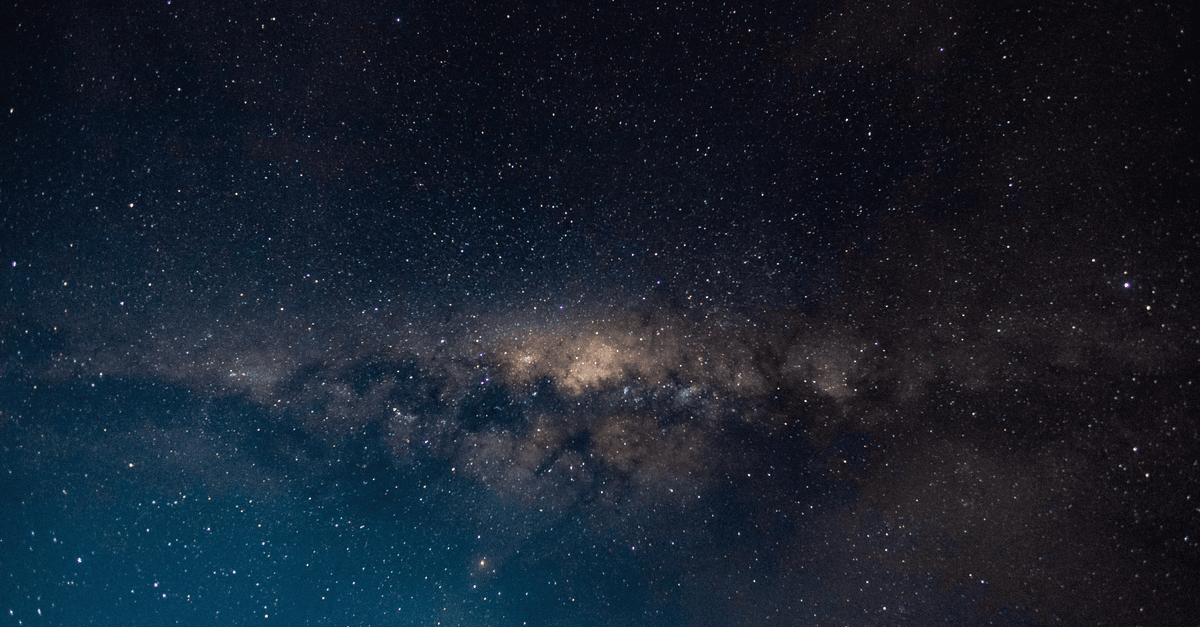
Photo: Brett Sayles / Pexels
The James Webb Space Telescope (JWST) operates at roughly 40 kelvin, or minus 233 degrees Celsius (minus 387 degrees Fahrenheit), cooled largely by a tennis-court-sized sunshield built from five layers of aluminum-and-silicon-coated Kapton film, each thinner than a sheet of paper (NASA, Sunshield Membrane Coatings). That extreme cold is not incidental to the mission; it is the mission. Detecting infrared light from the earliest galaxies in the universe requires a telescope colder than nearly everything it is trying to observe, because a warm telescope drowns out the faint signals it is built to catch. This article explains why infrared matters so much to modern astronomy, how engineers keep a spacecraft that cold in the vacuum of space, and what instruments like JWST, Spitzer, and WISE have found by working outside the narrow slice of light our eyes can see.
Why the human eye misses most of what the universe is doing
Human vision detects electromagnetic radiation only between about 380 and 700 nanometers, a band astronomers call the visible spectrum. That range exists because it corresponds to wavelengths where the sun emits most of its energy and where Earth's atmosphere is relatively transparent, a coincidence of evolution rather than any special property of light itself. Everything outside that narrow window, radio waves, microwaves, infrared, ultraviolet, X-rays, and gamma rays, carries information our unaided eyes simply cannot register.
Infrared radiation — electromagnetic radiation with wavelengths roughly between 700 nanometers and 1 millimeter, longer than visible red light but shorter than microwaves — sits just past the red end of what we can see, which is where its name comes from ("infra" meaning below, as in below red in frequency). Every object with a temperature above absolute zero radiates some of this energy, a principle called blackbody radiation. The wavelength at which an object radiates most strongly depends on its temperature, described by Wien's displacement law: hotter objects peak at shorter wavelengths, and cooler objects peak at longer ones.
A star like the sun, with a surface temperature around 5,500 degrees Celsius (5,778 kelvin), peaks in visible light, which is why our eyes evolved to be most sensitive there. But most of the universe is not that hot. Brown dwarfs, failed stars too small to sustain hydrogen fusion, planets, and the enormous clouds of gas and dust scattered through galaxies sit at temperatures ranging from a few hundred kelvin down to just tens of kelvin above absolute zero. Nearly all of their radiated energy falls in the infrared, completely invisible to even the largest ground-based optical telescope. If astronomers only observed in visible light, they would be blind to most of the mass and most of the activity in the cosmos: cold dust reservoirs, planet-forming disks, brown dwarfs drifting between stars, and the coldest phases of the interstellar medium where new stars are born.
This is the first and most basic reason space agencies build dedicated infrared observatories. It is not a specialty niche; it is a necessary complement to visible-light astronomy, because a huge fraction of what exists in the universe simply does not shine in colors we can see.
Why the most distant galaxies only appear in infrared
The second major reason infrared astronomy matters involves the expansion of the universe itself, and it is arguably the more surprising one. Light traveling across billions of light-years does not arrive at Earth unchanged. As space itself expands, the wavelength of light traveling through it stretches along with it, a phenomenon called cosmological redshift — the lengthening of a photon's wavelength caused by the expansion of the universe during the time that photon spends in transit.
The further back in time astronomers look, meaning the more distant the galaxy, the more its light has been stretched by cosmic expansion. A galaxy that formed a few hundred million years after the Big Bang emitted light primarily in the ultraviolet and visible range, the same kind of light young, hot, blue stars produce today. But by the time that light completes a journey of more than 13 billion years to reach a telescope's mirror, cosmic expansion has stretched those short wavelengths dramatically, shifting them well into the infrared portion of the spectrum.
This is precisely why JWST was built as a near- and mid-infrared observatory, covering roughly 0.6 to 28.5 micrometers, rather than an optical telescope like its predecessor Hubble, which observes chiefly in ultraviolet, visible, and a comparatively narrow slice of near-infrared light. To see the first galaxies that formed after the Big Bang, a telescope has no choice but to observe in infrared, because that is the only band in which the light from those galaxies still exists by the time it arrives at Earth. Optical telescopes, no matter how large their mirrors, are structurally incapable of detecting light that has redshifted entirely out of the visible range.
Why infrared light cuts through dust that blocks visible light
A third practical reason infrared astronomy matters has nothing to do with cold objects or cosmic distance and everything to do with dust. Interstellar space is not empty; it is threaded with clouds of gas and microscopic dust grains, remnants of dying stars and the raw material for new ones. These dust grains scatter shorter wavelengths of light, like blue and violet visible light, far more effectively than they scatter longer wavelengths.
That is the same physics behind why sunsets look red on Earth: as sunlight passes through more atmosphere near the horizon, blue light scatters away in all directions while red light, with its longer wavelength, passes through relatively undisturbed. Interstellar dust does the same thing on a much larger scale. Visible light from stars forming deep inside a dense nebula gets scattered and absorbed by dust grains before it can escape, making the interior of stellar nurseries essentially opaque to optical telescopes. Infrared light, with its longer wavelength, slips through that same dust largely unimpeded.
This gives infrared telescopes a kind of X-ray vision for star formation. Regions like the Orion Nebula or the dense molecular clouds near the center of the Milky Way are shrouded in visible light but can be observed in remarkable detail in infrared, revealing protostars, disks of planet-forming material, and the structure of star clusters still buried inside their birth clouds. The galactic center itself, home to the supermassive black hole Sagittarius A*, is almost completely hidden from optical telescopes by intervening dust along the line of sight, yet infrared and radio observations can see straight through to it.
How much does dust block visible light near the galactic center?
Optical extinction toward the galactic center is severe enough that essentially no visible light from stars orbiting close to Sagittarius A* reaches Earth-based optical telescopes; those orbits were mapped using infrared and radio observations instead, which pass through the intervening dust far more efficiently than visible wavelengths.
Why the telescope itself has to be colder than what it observes
Here is the engineering problem infrared astronomy creates for itself: every object radiates infrared energy in proportion to its own temperature, and that includes the telescope. A spacecraft's mirrors, camera housings, wiring, and structural frame are all, technically, infrared sources in their own right. If JWST operated at a typical room temperature of about 20 degrees Celsius (293 kelvin), the telescope's own thermal glow would be many orders of magnitude brighter, in infrared terms, than the extraordinarily faint light arriving from a galaxy billions of light-years away. The instrument would essentially be trying to photograph a candle flame while sitting inside a bonfire.
Wien's displacement law again explains why this matters so precisely: an object at room temperature radiates most strongly at wavelengths right in the middle of the infrared range JWST is designed to detect. Cooling the telescope is not a comfort measure, the way climate control is for a server room; it is the only way to push the telescope's own thermal emission down to wavelengths the science instruments are not sensitive to, clearing the way for faint astronomical signals to be measured accurately.
JWST solves this with a combination of passive and active cooling. Its sunshield, deployed after launch to roughly the footprint of a tennis court, consists of five separate layers of Kapton, a heat-resistant polymer film coated with reflective aluminum and, on the two hottest-facing layers, doped silicon (NASA, Sunshield Membrane Coatings). Each layer blocks and re-radiates heat sideways, out into space, rather than letting it conduct through to the next layer, so each successive layer runs significantly cooler than the one facing the sun. By the time heat would reach the telescope's optical side, on the far side of that fifth layer, the sunshield has done the bulk of the cooling work passively, without consuming power or requiring mechanical refrigeration (NASA, The Sunshield).
That passive cooling gets JWST's mirrors and most instruments down to around 40 kelvin. But one instrument, the Mid-Infrared Instrument (MIRI), observes at even longer infrared wavelengths than the telescope's other cameras and spectrographs, and at 40 kelvin its own residual heat would still interfere with those particular measurements. MIRI therefore has its own dedicated active cryocooler, a mechanical refrigeration system that pumps its detectors down to around 7 kelvin, just a few degrees above absolute zero, specifically so its own thermal signal does not swamp the faint mid-infrared light it is built to detect.
Why can't engineers just put a heater-free telescope permanently in Earth's shadow instead?
Earth's shadow is not stable or large enough to keep a telescope permanently shielded from the sun while also maintaining a clear view of deep space; it also puts the telescope inside Earth's own significant infrared glow. JWST instead orbits the L2 Lagrange point, roughly 1.5 million kilometers (930,000 miles) from Earth on the side facing away from the sun, where its sunshield can permanently block sunlight, Earth-light, and moonlight simultaneously (NASA, Webb's Orbit).
What infrared telescopes have actually found
The abstract case for infrared astronomy becomes concrete once you look at what these missions have discovered. Spitzer, launched in 2003 and operated by NASA's Jet Propulsion Laboratory, spent five and a half years in its primary cryogenic mission observing between roughly 3 and 180 micrometers, followed by an extended "warm mission" using its two shortest-wavelength channels after its coolant ran out (NASA/JPL, Spitzer Quick Facts). Among its results: some of the first direct measurements of exoplanet atmospheres, obtained by watching a planet's infrared brightness dim slightly as it passed behind its host star, and the detection of seven roughly Earth-sized planets orbiting the star TRAPPIST-1 (NASA/JPL, Spitzer Legacy).
WISE, the Wide-field Infrared Survey Explorer, took a different approach: rather than staring deeply at individual targets, it surveyed the entire sky across four infrared bands centered near 3.4, 4.6, 12, and 22 micrometers, cataloging hundreds of millions of objects, including previously unknown asteroids, brown dwarfs, and ultra-luminous galaxies (NASA/JPL, WISE Launch Press Kit).
JWST, the newest and largest of the three, has pushed both frontiers, distant galaxies and dust-penetrating detail, further than either of its predecessors could. Spectroscopic observations released in 2024 confirmed a galaxy, cataloged as JADES-GS-z14-0, existing roughly 290 million years after the Big Bang, among the earliest galaxies ever spectroscopically confirmed (NASA-supported JADES survey results, reported by ScienceDaily, May 2024). More broadly, JWST surveys have found a larger population of bright, massive galaxies in the early universe than most pre-launch models predicted, a pattern researchers are still working to reconcile with standard galaxy-formation theory; proposed explanations include bursty early star formation, differences in the mix of stellar masses being formed, and unusually efficient star formation in the earliest galactic environments (summarized in Nature Astronomy, "The first billion years according to JWST," 2025). None of these findings overturn the broader Big Bang cosmological framework, but they do show that the standard models of how quickly galaxies assembled after the Big Bang need refinement, a genuinely open question in active research.
| Telescope | Primary wavelength range | Cooling approach | Notable finding |
|---|---|---|---|
| Hubble Space Telescope | Ultraviolet, visible, limited near-infrared (~0.1–1.7 micrometers) | Passive radiators, no deep cryocooling needed | Deep Field images revealing thousands of distant galaxies |
| Spitzer Space Telescope (1993–2020) | Infrared, 3–180 micrometers (cryogenic mission) | Onboard liquid helium cryostat | First direct exoplanet atmosphere measurements; TRAPPIST-1 planets |
| WISE / NEOWISE | Infrared, four bands centered near 3.4–22 micrometers | Onboard solid hydrogen cryostat (mission-phase cooling) | All-sky infrared survey; asteroid and brown dwarf discoveries |
| James Webb Space Telescope | Near/mid-infrared, 0.6–28.5 micrometers | Passive 5-layer sunshield (~40 K) + active cryocooler for MIRI (~7 K) | Spectroscopically confirmed galaxies from ~290 million years after the Big Bang |
Each successive infrared mission pushed either fainter, colder, more distant, or dustier targets into reach by improving how effectively the telescope itself could be isolated from its own heat.
Why not just build every telescope to observe in infrared?
Infrared astronomy is not a strict upgrade over visible-light astronomy; each band reveals different physics, and a complete picture of any object usually requires combining several. Visible and ultraviolet light trace hot, young stars and ionized gas directly, without the added complexity of accounting for a telescope's own thermal emission, and building an optical telescope like Hubble is dramatically cheaper and mechanically simpler because it does not need cryogenic cooling at all. Optical telescopes also achieve sharper angular resolution for a given mirror size than infrared telescopes operating at the longest infrared wavelengths, since angular resolution depends on the ratio of wavelength to aperture, and infrared's longer wavelengths work against resolution unless the mirror is correspondingly larger.
Ground-based infrared astronomy also faces a specific obstacle space telescopes largely avoid: Earth's atmosphere itself is warm and emits copious infrared radiation, and water vapor absorbs large swaths of the infrared spectrum before it ever reaches a ground-based mirror. That is a major reason infrared observatories are frequently placed in space or at extremely high, dry, cold sites, such as the Atacama Desert or Mauna Kea, and even then, ground-based infrared astronomers can only work in narrow atmospheric "windows" where the sky is not opaque.
The practical answer is that astronomers build telescopes across many bands because a galaxy, a planet, or a nebula radiates real, physically distinct information at every wavelength, and instruments tuned to visible, infrared, ultraviolet, radio, and X-ray light each capture a piece of the story visible-light imaging alone would miss entirely. JWST and Hubble, for instance, are frequently used together on the same targets, with Hubble's ultraviolet and visible data revealing hot, active regions and JWST's infrared data revealing the cooler, dustier structure surrounding them.
What people get wrong about infrared telescopes
A common misconception is that "infrared" simply means "heat vision," implying these telescopes function like night-vision goggles that make faint, cold objects glow visibly brighter. In reality, infrared telescopes detect a specific band of electromagnetic radiation using specialized detectors, and the resulting data is typically converted into false-color images for human viewing; the actual measurement is a precise map of radiation intensity across specific wavelength bands, not a general-purpose thermal picture. The vivid orange-and-blue JWST images that circulate widely are deliberately color-mapped from infrared data that the human eye cannot perceive directly, a standard and clearly documented practice in astronomical imaging, not an attempt to mislead.
Another frequent misunderstanding is that JWST replaced Hubble. The two telescopes were designed to complement each other, not substitute for one another. Hubble still operates in visible and ultraviolet light that JWST is not built to observe, and many major astronomical results now come from combining data from both observatories on the same target, since each shows physically different aspects of the object being studied. Retiring Hubble was never part of JWST's design goal, and both missions have overlapped in operation since JWST's 2021 launch.
A third point of confusion involves how "cold" JWST actually needs to be, with some assuming any spacecraft in the vacuum of space is automatically freezing. Vacuum alone does not guarantee cold temperatures; without shielding, direct sunlight would heat JWST's sun-facing side to over 85 degrees Celsius (185 degrees Fahrenheit) while its shaded side would need to stay near 40 kelvin, a temperature difference of roughly 300 degrees Celsius across a single spacecraft (NASA, Sunshield Membrane Coatings). The sunshield's entire purpose is maintaining that extreme gradient reliably for years at a time, not simply relying on the general coldness of space.
The takeaway
Space telescopes observe in infrared because three separate physical realities converge there: cool objects like brown dwarfs, planets, and interstellar dust radiate primarily in infrared rather than visible light; the most distant galaxies have had their original ultraviolet and visible light stretched into infrared wavelengths by billions of years of cosmic expansion; and infrared light passes through the dust clouds that make visible-light observation of star-forming regions and the galactic center nearly impossible. Making that observation possible requires solving a self-inflicted engineering problem, keeping the telescope's own structure colder than the faint signals it is trying to detect, which is why JWST's elaborate sunshield and MIRI's active cryocooler were core requirements from the mission's earliest design phase, not late additions. The result, evident in spectroscopically confirmed galaxies from roughly 290 million years after the Big Bang, is a genuinely new view of how early and how fast the first galaxies assembled, one that current models are still catching up to. For related mechanisms in observational astronomy, see how gravitational lensing magnifies galaxies, how astronomers weigh galaxies, and why Venus is hotter than Mercury for a related look at how radiation and temperature shape what we can observe.
FAQ
Q: Why does JWST observe in infrared instead of visible light?
Distant, high-redshift galaxies have their visible and ultraviolet light stretched into infrared wavelengths by cosmic expansion, and cool objects like brown dwarfs and dust clouds radiate primarily in infrared, so JWST is tuned specifically to detect that light across roughly 0.6 to 28.5 micrometers.
Q: How cold does a space telescope need to be to see infrared light?
JWST's mirrors and main instruments operate around 40 kelvin (minus 233 degrees Celsius), while its most infrared-sensitive instrument, MIRI, is actively cooled to about 7 kelvin (minus 266 degrees Celsius) to prevent its own heat from swamping faint cosmic signals.
Q: What is cosmological redshift and why does it matter for infrared astronomy?
Cosmological redshift is the stretching of light's wavelength caused by the expansion of the universe as it travels toward Earth. For the most distant galaxies, this stretches originally visible or ultraviolet light all the way into the infrared by the time it arrives, which is why only infrared telescopes can detect the earliest galaxies.
Q: Can infrared telescopes see through dust clouds?
Yes. Infrared light is scattered far less by interstellar dust grains than visible light, letting infrared telescopes observe dense star-forming regions and the galactic center that are nearly opaque to optical telescopes.
Q: Why did Hubble need less cooling than JWST?
Hubble primarily observes ultraviolet and visible light, wavelengths where the telescope's own thermal glow at ambient temperatures does not interfere significantly with observations, unlike JWST's infrared instruments, which require extreme cold to avoid self-generated interference.
Q: Did JWST replace the Hubble Space Telescope?
No. Both telescopes have operated simultaneously since JWST's 2021 launch, and they observe different, complementary wavelength ranges. Hubble continues to gather ultraviolet and visible-light data that JWST's infrared instruments are not designed to capture.
Q: What did the Spitzer Space Telescope discover?
Spitzer, operational from 2003 to 2020, made some of the first direct measurements of exoplanet atmospheres and helped confirm seven roughly Earth-sized planets orbiting the star TRAPPIST-1, among other infrared surveys of star-forming regions and galaxies.
Follow new articles
Add SciHub101 to your feed reader to see new science and technology stories.
About the Author
SciHub101 is an independent science and technology publication founded and edited by Buğra Sözeri, a software engineer and app developer based in Türkiye. AI tools assist with drafting and research. Source documentation in the existing archive is uneven, and articles are being reviewed and corrected. The Editorial Team byline identifies editorial responsibility; it does not certify specialist or independent human review. Where we compare products, anything built by our own team is labelled as such — see the editorial guidelines and About page for how corrections and disclosures work.
Related Articles
How Spacecraft Survive Extreme Temperature Swings
How spacecraft survive extreme temperature swings: coatings, multi-layer insulation, radiators, heaters, and coolant loops, from the ISS to the Webb telescope.
How Many Galaxies Are in the Universe?
Astronomers' galaxy counts have swung from 100 billion to 2 trillion and back to hundreds of billions. Here's why the number keeps changing, and what it actually means.
How Space Telescopes See the Early Universe
Space telescopes do not look back in time by magic. They collect ancient light stretched by cosmic expansion. Here is how redshift reveals the early universe.