What Are Exoplanets — and Could Any of Them Host Life?
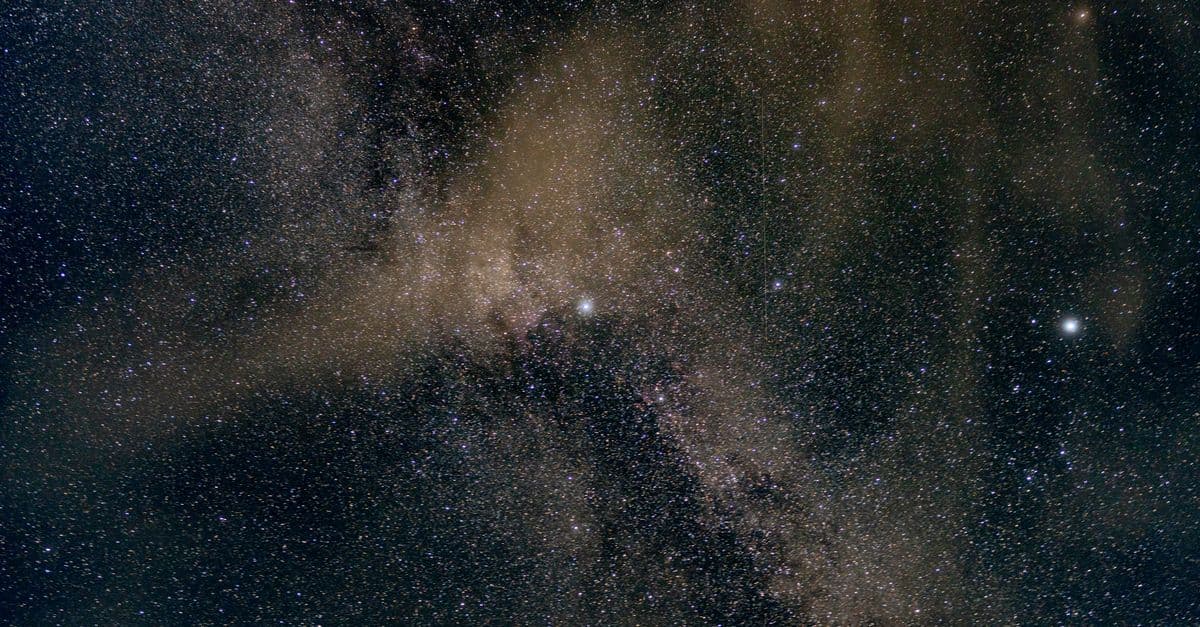
Photo: _mamadvali / Pexels
Until 1992, humans knew of exactly 8 planets — all orbiting our Sun. Today, NASA's archive lists over 5,500 confirmed exoplanets (planets orbiting other stars), and statistics suggest there are roughly as many planets as stars in the Milky Way alone. Some are bizarre worlds — hot Jupiters, lava planets, diamond cores. Others sit in habitable zones where liquid water could exist. Here's how we find them, what we've found, and what it might take to confirm life elsewhere.
Key takeaways
- We've confirmed 5,500+ exoplanets and detect thousands more candidates yearly.
- Most are found via the transit method (planet briefly dims its star) and radial velocity (star wobbles).
- A planet's "habitable zone" is where temperature could allow liquid water on the surface.
- The James Webb Space Telescope is now sniffing exoplanet atmospheres for biosignatures.
- We have no confirmed signs of life elsewhere — but the search has dramatically improved.
How we find planets we can't see
Exoplanets are far too small and dim to image directly in most cases. Instead, astronomers use indirect methods.
Transit method (~75% of discoveries)
When a planet passes between Earth and its star, the star appears slightly dimmer. By measuring this dimming precisely, we can detect the planet and estimate its size. NASA's Kepler and TESS missions have used this technique to find thousands of planets.
Radial velocity (Doppler method)
A planet's gravity tugs its star slightly back and forth. By measuring shifts in the star's spectrum, we can detect this wobble and estimate the planet's mass.
Direct imaging
For a few large, bright young planets far from their stars, we can actually image them directly using coronagraphs that block starlight. Most exoplanets are too dim or too close to their stars for this to work.
Microlensing
When one star passes in front of another, its gravity bends and amplifies the background star's light. Planets around the foreground star cause additional, brief lensing events.
Astrometry
Precisely tracking a star's position over time can reveal it being pulled by orbiting planets.
What kinds of exoplanets exist?
Exoplanet diversity has been the biggest surprise of the field. Categories include:
Hot Jupiters
Gas giants the size of Jupiter but orbiting closer to their stars than Mercury does to ours. Atmospheres can reach 2,500 °C. They were the first exoplanets discovered around Sun-like stars.
Super-Earths
Planets between 1× and 10× Earth's mass with rocky surfaces. There's no equivalent in our solar system. Many fall in the habitable zone, making them prime targets.
Mini-Neptunes
Slightly larger than super-Earths but with thick gaseous atmospheres. Likely too crushing for surface life as we know it.
Lava worlds
Rocky planets so close to their stars they have surface oceans of molten rock.
Ocean worlds
Hypothesised planets entirely covered in deep oceans hundreds of km thick.
Tidally locked planets
Planets that always show the same face to their star — one side perpetually day, the other perpetually night. Many planets around small red dwarf stars are like this.
Rogue planets
Planets that don't orbit any star at all, drifting through interstellar space. Some might warm themselves with internal heat — exotic but possible homes for life.
The habitable zone
The "habitable zone" (also called the Goldilocks zone) is the range of distances from a star where a rocky planet could potentially have liquid water on its surface — not too hot, not too cold.
It's a useful first cut, but it's misleading on its own:
- Mars is in the habitable zone but lost its atmosphere.
- Venus is just barely outside but has runaway greenhouse effect.
- Europa (Jupiter's moon) is far outside the habitable zone but has a liquid ocean under ice.
For real habitability, you also need:
- A magnetic field to protect against stellar radiation.
- A stable atmosphere of the right pressure and composition.
- A stellar environment without frequent flares.
- Sufficient time (billions of years) for life to develop.
Top exoplanet candidates for life
TRAPPIST-1 system (40 light-years)
Seven Earth-sized planets around a small red dwarf star, three in the habitable zone. JWST is actively studying their atmospheres.
Proxima Centauri b (4.2 light-years)
The closest exoplanet to Earth. About 1.3× Earth's mass, in the habitable zone of the closest star to the Sun. Likely tidally locked; the host star produces frequent strong flares.
Kepler-186f (500 light-years)
The first Earth-sized planet found in a habitable zone, orbiting a red dwarf.
LHS 1140 b (40 light-years)
A super-Earth with a thick atmosphere, recently re-evaluated as one of the most promising candidates.
K2-18b (124 light-years)
In 2023, JWST detected possible signs of dimethyl sulfide — a molecule produced by life on Earth — in its atmosphere. The detection is unconfirmed and contested but generated huge excitement.
How JWST is changing the search
The James Webb Space Telescope, launched 2021, can analyse exoplanet atmospheres in detail. When a planet transits its star, starlight passes through the planet's atmosphere. Different molecules absorb specific wavelengths, leaving fingerprints. JWST can detect:
- Water vapour (already detected on multiple planets).
- Carbon dioxide (detected on WASP-39b).
- Methane and ammonia.
- Possibly biosignature combinations like oxygen + methane (which would suggest active biology).
JWST's data is the closest we've come to direct evidence of alien biospheres — but no smoking gun yet.
The Drake equation and Fermi paradox
The Drake equation estimates how many communicative civilisations might exist in the Milky Way, multiplying factors like star formation rate, fraction with planets, fraction habitable, fraction developing intelligence, etc. Plug in best guesses and you get anywhere from 1 to millions.
The Fermi paradox asks: if there are so many likely civilisations, where is everyone? Possible answers:
- Life is rare (the Rare Earth hypothesis).
- Civilisations destroy themselves before becoming detectable.
- We're listening for the wrong signals.
- They're avoiding us deliberately.
- The universe is just too big for contact in the time available.
We don't know which is right.
The Tipping Point for Life Detection
JWST's detection of dimethyl sulfide (DMS) on K2-18b in 2023 marked a turning point. DMS is produced on Earth primarily by phytoplankton and bacteria — a potential biosignature. The detection was unconfirmed and controversial (could be geological), but it demonstrated that biosignature detection is now possible with current instruments.
The next tier of evidence would be:
- Oxygen + methane together (disequilibrium) — hard to explain without life
- Phosphine (PH₃) — a potential biosignature if detected with confidence
- Ozone (O₃) from photochemistry driven by biological oxygen
- Spectroscopic lines of complex organic molecules (though these form abiotically too)
No single measurement is proof. The scientific standard is: multiple independent lines of evidence, each improbable without biology. We're getting close to that capability.
The Next Generation: Habitable Exoplanet Observatory
NASA is studying the Habitable Exoplanet Observatory (HabEx), a proposed space telescope that would:
- Image Earth-sized exoplanets directly
- Analyze atmospheres for biosignatures
- Detect both terrestrial and aquatic surfaces
- Expected launch: 2040s
HabEx would be to exoplanet detection what JWST was to galaxy science — a transformative leap in capability. But at ~$8-15B cost, it faces political and budgetary hurdles. If built, it could definitively answer the "are we alone" question within a decade.
Frequently Asked Questions
Q: Could humans ever travel to an exoplanet?
A: With current propulsion, no. Even the closest exoplanet (Proxima Centauri b) would take 80,000+ years to reach. Future propulsion concepts (light sails, nuclear pulse) could shorten this to 100s or 1000s of years — still beyond a human lifetime.
Q: Have we ever directly imaged an exoplanet?
A: Yes — about 50, mostly young, hot, gas giants far from their stars. Earth-like planets are still beyond our direct imaging capability.
Q: What's a biosignature?
A: Atmospheric chemistry that strongly implies life. Earth's atmosphere is 21% oxygen, which would disappear without continuous biological replenishment. Detecting such disequilibrium chemistry on another planet would be the strongest indirect evidence.
Q: Why is the habitable zone called "habitable" if no life is found there?
A: It's based on Earth biochemistry — water-based, surface-dwelling life. Other forms of life (subsurface oceans, methane-based biology) might exist outside this zone. The name reflects "potentially habitable for life like ours."
Q: How many planets does the Milky Way have?
A: Estimates suggest there are roughly 100 billion to a trillion planets in our galaxy alone. Several of those planets are likely Earth-sized and in habitable zones.
Q: Could life exist on exoplanets we haven't found yet?
A: Certainly — many planets orbit stars we haven't surveyed. Statistical models suggest that for every star, there's at least one planet. Some estimates put the number of exoplanets in the observable universe at 10 septillion (10²⁴), most undiscovered. Life on some fraction of those is plausible, even if we never observe it directly.
Read next:
- The James Webb Space Telescope Explained — How It Works and What It's Found
- What If We Made First Contact With Alien Life?
- The Search for Life on Europa and Enceladus — The Ocean Moons
Subsurface Oceans: Expanding the Habitable Zone
The traditional habitable zone assumes surface liquid water. But a growing body of evidence suggests subsurface oceans — water trapped beneath ice or rock layers — could harbor life even far from their stars.
Key examples:
- Europa (Jupiter's moon) has a subsurface ocean beneath kilometers of ice, likely with more water than all Earth's oceans combined.
- Enceladus (Saturn's moon) has a liquid water ocean venting through geysers — discovered by Cassini spacecraft.
- K2-18b — the exoplanet that might show biosignatures — could be an "ocean world" with no solid surface, just deep oceans.
How subsurface oceans could support life:
Liquid water + chemical energy from hydrothermal vents (where hot, mineral-rich water from the interior meets cooler water) creates conditions for chemosynthetic life. On Earth, such life thrives near deep-sea hydrothermal vents even without sunlight.
For exoplanets: if an exoplanet is tidally locked (one side always facing its star), the heated side could have liquid water near the surface. But the planet could also harbor a subsurface ocean kept liquid by tidal heating — gravitational squeezing from the star causes internal friction, generating heat.
This dramatically expands the habitability search. Planets previously dismissed as too far from their stars might be habitable.
Source: Seager, S. (2013). "Exoplanet Habitats." Scientific American 308(5): 30–37.
Red Dwarfs: The Most Common Habitable Zone Hosts
Red dwarf stars (M-class) are the most abundant stars in the Milky Way — about 70% of all stars. This makes exoplanets around red dwarfs statistically the most likely homes for life, even if individually less habitable.
Advantages:
- Long stellar lifetimes (~100 billion years, much longer than Sun's 10 billion). Gives life more time to evolve.
- Smaller habitable zones orbit closer to the star (easier to detect with transits).
Disadvantages:
- Stellar flares: red dwarfs produce frequent, intense UV flares that could sterilize planetary atmospheres.
- Tidal locking: planets in the habitable zone orbit so close they're tidally locked (one face always day, one always night).
- Atmospheric erosion: X-ray and UV radiation may strip away atmospheres over time.
Recent findings:
A 2024 study by Lingam et al. found that planets in red dwarf habitable zones experience UV radiation hundreds of times Earth's level. Yet life on Earth survived similar or higher UV levels billions of years ago (when no ozone layer existed). So red dwarf habitability isn't ruled out — just more demanding.
Proxima Centauri b orbits a red dwarf and remains the closest exoplanet to Earth at 4.2 light-years, making it a priority target despite its flare-prone star.
Exoplanet Atmospheres: Composition and Biosignatures
When a planet passes in front of its star during transit, a tiny fraction of starlight passes through the planet's atmosphere. JWST and other spectrometers analyze this light to determine atmospheric composition.
Detectable molecules (to date):
| Molecule | Biological Significance | Detections |
|---|---|---|
| H₂O (water vapor) | Universal solvent for life | 15+ exoplanets |
| CO₂ (carbon dioxide) | Product of respiration; greenhouse gas | 7+ exoplanets |
| CH₄ (methane) | Produced by life or geology | 2+ exoplanets (weak) |
| DMS (dimethyl sulfide) | Produced by biota on Earth | K2-18b (unconfirmed) |
| O₂ (oxygen) | Produced by photosynthesis | None yet |
The ideal biosignature pair: oxygen + methane together. Methane lasts ~10 years in an oxygen-rich atmosphere, so if both are present at high levels, something must be continuously producing methane — suggesting biology.
Confounding factors:
- Geological processes can produce methane, oxygen, and other molecules.
- Planets with thick clouds or haze are harder to analyze (clouds block light).
- Most exoplanet atmospheres studied so far are hot, puffy planets (easier to analyze, but less likely habitable).
A realistic timeline: JWST and future telescopes may detect tentative biosignatures by 2030–2035, but confident confirmation of extraterrestrial life likely requires multiple independent detections or direct spacecraft samples (much further in future).
Discovery Statistics: The Exoplanet Boom
Exoplanet discoveries have accelerated dramatically. The first exoplanet (51 Pegasi b) was confirmed in 1995. By 2010, we had 500. By 2023, we passed 5,500.
Key milestones:
- 1995–2009: ~350 exoplanets discovered (slow, radial velocity method)
- 2009–2014: ~800 exoplanets discovered (Kepler's first four years)
- 2014–2023: ~4,350 exoplanets discovered (Kepler + ground-based transit surveys + TESS)
Discovery method breakdown (current):
- Transit method: 75%
- Radial velocity: 15%
- Direct imaging: 5%
- Microlensing: 3%
- Other: 2%
Habitable zone exoplanets:
As of 2026, approximately 350–400 exoplanets are confirmed to be in the habitable zone of their star. Only ~60 are Earth-sized (1–2× Earth's radius). Most habitable-zone exoplanets are super-Earths or mini-Neptunes (sizes without solar-system analogs).
Surprising statistics:
- Multi-planet systems are common: ~35% of Sun-like stars have at least one planet. Some systems (like TRAPPIST-1) have 7+ planets.
- Hot Jupiters were unexpected: Jupiter-sized planets orbiting extremely close to their stars were theoretically "impossible" until we found them. This forced a rethink of planetary migration theory.
- Super-Earths dominate: in solar systems we've detected, super-Earths (1–10× Earth mass) are more common than either Earth-sized or Jupiter-sized planets.
This diversity of planetary configurations is still reshaping our understanding of planetary formation and system architecture.
The TESS Mission: Finding Planets Around Nearby Stars
TESS (Transiting Exoplanet Survey Satellite) launched 2018 and is designed to find exoplanets around bright, nearby stars — ideal targets for follow-up atmospheric studies with JWST.
Key achievements:
- 5,800+ exoplanet candidates identified (as of 2024)
- 500+ confirmed exoplanets
- ~70% of TESS targets are brighter than Kepler targets, making them better for ground-based follow-up
- Focus on red dwarfs, increasing chances of finding habitable-zone planets
Game-changer: TESS exoplanets are close enough (within ~300 light-years) that their host stars are among the brightest in our sky. This means:
- JWST can analyze their atmospheres more easily (brighter host star = more light to analyze)
- Future direct imaging telescopes could potentially resolve the planets themselves
- Radial velocity follow-up is more precise
TESS is essentially building a catalog of the "low-hanging fruit" — the easiest exoplanets to study in detail.
False Positives and Confirmation Challenges
Not all exoplanet detections are reliable. The threshold for "confirmation" has been refined over decades.
False positive sources:
- Stellar activity: spots and flares on the star can mimic planetary transit signals
- Binary stars: two stars orbiting each other can produce signals resembling planetary transits
- Instrumental noise: detector glitches can produce fake signals
- Systematic errors: calibration problems can create statistical artifacts
Confirmation process:
- Initial detection (usually from one mission: Kepler, TESS, etc.)
- Independent confirmation (a different method or telescope)
- Detailed characterization (spectroscopy, follow-up transit observations)
- Publication in peer-reviewed journal
- International Astronomical Union review
This process takes months to years. Some "exoplanet" candidates announced with great fanfare are later retracted when follow-up observations fail to confirm them.
Example: some TRAPPIST-1 planet periods were initially uncertain; confirmation required additional transit observations. The effort paid off — all planets were confirmed, making TRAPPIST-1 one of the most valuable exoplanet systems for habitability research.
Gaia and the Era of Precision: The 2020s Revolution
The Gaia Space Telescope, launched 2013 and now in full data-release mode, is revolutionizing exoplanet discovery by precisely measuring stellar distances and motions.
Gaia's impact:
- Precise distances allow calculation of true planet sizes and orbital periods (previously uncertain)
- Proper motion measurements improve radial velocity sensitivity (can detect smaller planets)
- Stellar brightness correction enables better transit detection for faint planets around faint stars
Consequence: exoplanet discoveries are accelerating. The current discovery rate (~500–1000 per year) is expected to jump to 10,000+ per year in the next 5–10 years with Gaia + ground-based surveys + next-generation telescopes.
The "exoplanet era" is just beginning. We've barely scratched the surface of the galaxy's planetary inventory.
The bottom line
In just three decades, we've gone from knowing 8 planets to over 5,500. The galaxy is full of worlds — some weirder than science fiction, others potentially Earth-like. We're now examining their atmospheres for signs of life, with JWST as the most powerful tool ever pointed at exoplanets. Subsurface oceans expand the habitable zone beyond traditional boundaries. Red dwarfs, though flare-prone, are statistically the most likely home for extraterrestrial life due to their abundance and longevity. We haven't confirmed life elsewhere, but the question has shifted from philosophical to empirical. The answer is now a measurement, not a guess — and we're closer to finding it than humanity has ever been.
Read next:
Follow new articles
Add SciHub101 to your feed reader to see new science and technology stories.
About the Author
SciHub101 is an independent science and technology publication founded and edited by Buğra Sözeri, a software engineer and app developer based in Türkiye. AI tools assist with drafting and research. Source documentation in the existing archive is uneven, and articles are being reviewed and corrected. The Editorial Team byline identifies editorial responsibility; it does not certify specialist or independent human review. Where we compare products, anything built by our own team is labelled as such — see the editorial guidelines and About page for how corrections and disclosures work.
Related Articles
How Do We Actually Find Exoplanets?
NASA's archive now lists more than 6,000 planets around other stars, almost all found without seeing them directly. Here's the physics that lets astronomers detect tiny worlds across thousands of light-years.
What Is a Supernova — and Why They Matter to Life on Earth
A supernova outshines an entire galaxy for weeks. It also forges every element heavier than iron — the calcium in your bones, the iodine in your thyroid, the gold in jewellery. Here's how they work.
Nearest Exoplanets That Could Host Life
A guide to the nearest potentially habitable exoplanets, from Proxima b to TRAPPIST-1e, what JWST has found, and why 'habitable' rarely means confirmed.

AI and Astrobiology: Machine Learning in the Search for Life Beyond Earth
From Mars rock targeting to exoplanet spectra, AI is helping astrobiologists sort possible signs of life from chemistry that looks alive but is not. Here is what it does, what it has not done, and why the hardest step is still human.
How AI and Machine Learning Are Revolutionizing Exoplanet Detection
Machine learning is transforming the search for alien worlds, helping scientists find thousands of exoplanets hidden in Kepler's vast data.
What Are Exomoons? The Hunt for Moons Beyond Our Solar System
Exomoons are moons orbiting planets beyond our solar system. None has been confirmed, despite two serious candidates, because their signals are tiny and easily mimicked. If they exist around giant planets, some could hold liquid water through tidal heating, even far from any star.