What Is a Supernova — and Why They Matter to Life on Earth
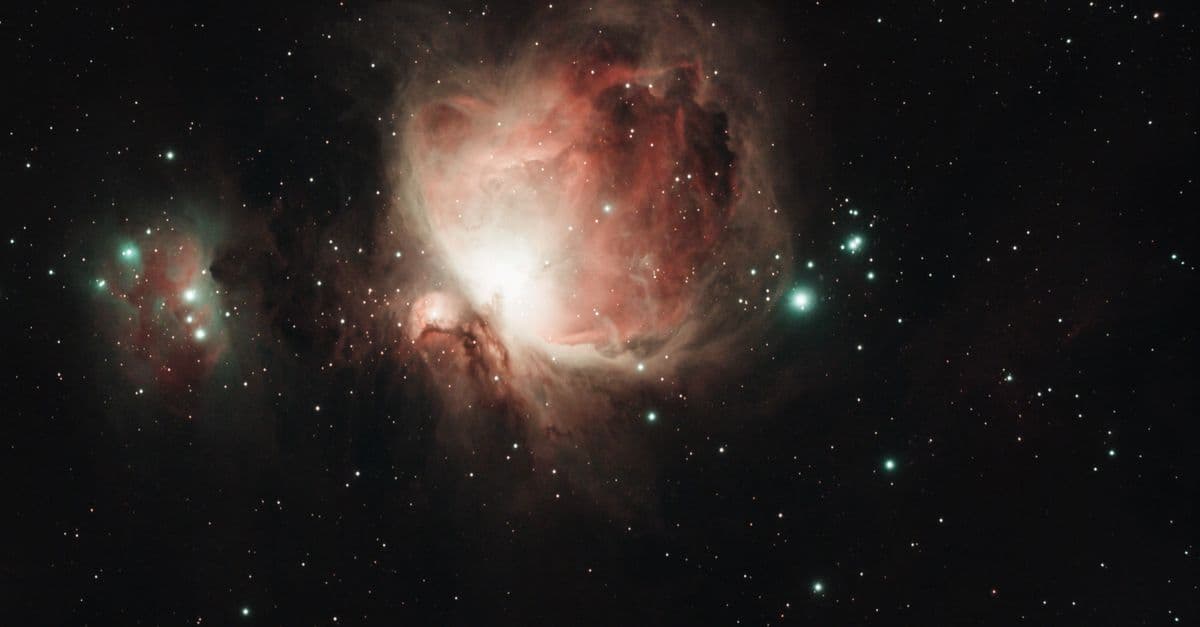
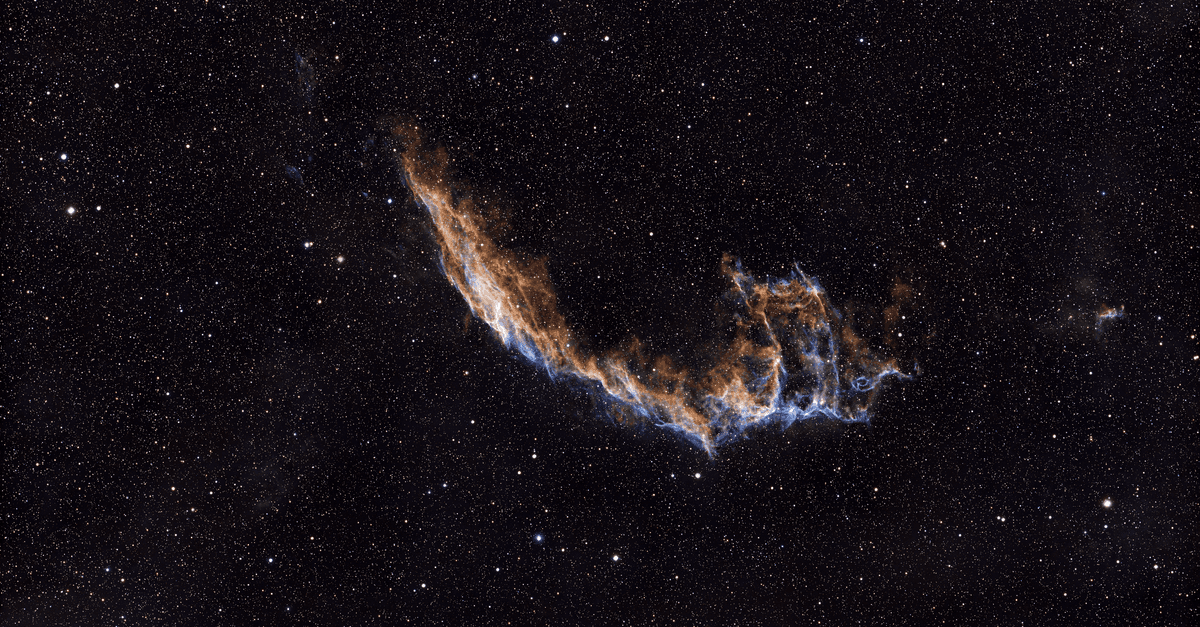
Photo: Jeremy Müller / Pexels
A supernova is a star exploding so violently it briefly outshines an entire galaxy of 100 billion stars. The biggest ones release more energy in seconds than the Sun will produce over its entire 10-billion-year lifetime. They're also the universe's element factory — the reason gold exists, the reason your blood has iron in it, the reason Earth has uranium and a usable nuclear age.
Without supernovae, the universe would be hydrogen and helium, and life would not exist.
Key takeaways
- A supernova is a star exploding, releasing more energy in seconds than the Sun does in its entire life.
- Two main types: Type Ia (white dwarf detonating) and Type II (massive star core-collapse).
- They create most elements heavier than iron, including gold, platinum, and uranium.
- Earth's life depends on past supernovae for heavy elements — and a too-close one would be devastating.
- We've directly observed several, including SN 1987A, the closest in modern times.
Why stars explode
A star's life is a balance between gravity (pulling inward) and fusion energy (pushing outward). When fusion fuel runs out, gravity wins. How it wins depends on the star.
Type II / Core-collapse supernova
This is the death of a massive star (8+ solar masses). The star fuses progressively heavier elements in concentric layers — hydrogen, helium, carbon, oxygen, neon, silicon — but iron is a dead end (fusing iron consumes energy). When iron piles up in the core, fusion stops. The core collapses in less than a second, hits a hard wall when neutrons can't be compressed further, and rebounds.
The rebounding shock wave drives the outer layers outward at ~10,000 km/s. The result is a blast of light, neutrinos, and ejected matter that lasts weeks to months. Left behind: a neutron star or, for the largest progenitors, a black hole.
Type Ia / Thermonuclear supernova
A different scenario. A white dwarf (the dead core of a Sun-like star) in a binary system steals matter from its companion. When the white dwarf reaches a critical mass — the Chandrasekhar limit, about 1.4 solar masses — runaway carbon fusion ignites. The entire white dwarf detonates in a few seconds. Nothing is left behind.
Type Ia supernovae are useful to astronomers because they all explode at roughly the same brightness, making them excellent "standard candles" for measuring cosmic distances. The 1998 discovery of dark energy came from observing distant Type Ia supernovae.
Other types
- Type Ib/Ic — like Type II but the star lost its outer hydrogen layer before exploding.
- Pair-instability supernovae — extremely massive stars (130+ solar masses) destroy themselves in a single thermal runaway with no remnant.
- Hypernovae / kilonovae — extreme events involving neutron-star mergers, producing bursts of gamma rays.
Why supernovae matter
1. They forge heavy elements
Stellar fusion creates elements up to iron. Anything heavier — copper, silver, gold, platinum, uranium — is forged either:
- During the supernova explosion itself (rapid neutron capture, or r-process)
- In neutron-star mergers (kilonovae)
Every gold atom in your jewellery, every iodine atom in your thyroid, every uranium atom that powers nuclear plants — all originated in violent stellar deaths. Carl Sagan was literal: we are made of star-stuff.
2. They drive cosmic recycling
Supernovae blast their elements into surrounding gas clouds. Over time, those clouds cool and form new stars and planets. Earth was built from the recycled remains of long-dead stars. Without supernovae, second-generation stars and rocky planets couldn't form.
3. They trigger new star formation
The shock waves from supernova explosions compress nearby gas clouds, often triggering them to collapse and form new stars. The Sun itself may have been triggered by a nearby supernova ~4.6 billion years ago.
4. They power galactic dynamics
Cumulatively, supernovae inject vast energy into galaxies, regulating gas flow, heating interstellar medium, and shaping galactic structure.
Famous supernovae
SN 1054 — the Crab Nebula
Recorded by Chinese astronomers in 1054 AD as a "guest star" visible even in daytime for weeks. Today the expanding remnant is the Crab Nebula, with a 30-millisecond pulsar (rapidly rotating neutron star) at its centre.
SN 1572 — Tycho's Supernova
Observed by Tycho Brahe. Helped overturn the medieval belief in unchanging celestial spheres.
SN 1604 — Kepler's Supernova
The last supernova confirmed in the Milky Way visible to the naked eye, observed by Johannes Kepler.
SN 1987A
In 1987, a star in the Large Magellanic Cloud (a satellite galaxy of the Milky Way) exploded. It was the closest observed supernova in nearly 400 years. We detected the burst of neutrinos predicted by core-collapse theory three hours before the visible light arrived. It confirmed key predictions of how supernovae work.
GW170817
In 2017, gravitational wave detectors picked up the merger of two neutron stars in a galaxy 130 million light-years away. The associated kilonova was observed across the electromagnetic spectrum, confirming neutron-star mergers as a major source of heavy elements like gold and platinum.
How dangerous is a nearby supernova?
If a supernova exploded close to Earth, the danger comes mainly from:
- High-energy radiation — gamma rays and X-rays could damage the ozone layer.
- Cosmic rays — high-energy particles arriving years to centuries later, causing increased mutation rates.
Estimates of the safe distance:
- Inside ~50 light-years: serious atmospheric damage, ozone depletion, possible mass extinction.
- 50–500 light-years: measurable but not catastrophic effects.
- 500+ light-years: scientifically interesting, biologically harmless.
Some scientists have linked the Ordovician-Silurian extinction event ~440 million years ago to a possible nearby gamma-ray burst, but the evidence is debated.
The closest stars likely to go supernova in the foreseeable future are Betelgeuse (~640 light-years) and Antares (~550 light-years). Both are safely far away. Either could explode tomorrow or in 100,000 years — we don't have precise enough models to predict.
How often do supernovae happen?
In a galaxy like the Milky Way, roughly one or two supernovae per century. We're overdue for one we can see directly — the last in our own galaxy was over 400 years ago. Hundreds are observed every year in distant galaxies thanks to wide-field surveys.
Supernova observational methods and modern detection
Historical supernovae were recorded by eye. Modern detection uses telescopes and automated surveys:
Optical telescopes: Ground-based (e.g., Keck Observatory, VLT) and space-based (Hubble, James Webb) observe visible light. Spectroscopy identifies the supernova type and measures expansion velocity.
X-ray and ultraviolet: Space telescopes (Chandra, XMM-Newton, Swift) detect hot gas from the explosion and shock fronts.
Infrared: Dust in the remnant can obscure optical light. Infrared observations see through the dust. JWST revolutionized far-infrared supernova observations.
Radio: Expanding supernova remnants emit synchrotron radiation (electrons spiraling in magnetic fields). Radio dishes track remnant evolution for decades.
Neutrinos and gravitational waves: SN 1987A's neutrino detection (1987) and GW170817's gravitational wave signal (2017) opened new detection windows, confirming theoretical predictions about supernova cores.
Transient surveys: Modern surveys (Zwicky Transient Facility, Pan-STARRS, ATLAS) scan large sky areas rapidly, discovering hundreds of distant supernovae per year.
Source: NASA's Astrophysics Science Institute & ESA Supernova Observations (2024-2026).
The r-process and s-process: Forging heavy elements
Not all heavy elements form the same way:
s-process (slow neutron capture): Occurs in asymptotic giant branch (AGB) stars, where neutrons are added slowly to seed nuclei. Produces elements up to lead and bismuth.
r-process (rapid neutron capture): Occurs during supernovae (core-collapse) and neutron-star mergers. Neutrons are added so rapidly that the nucleus hasn't time to beta-decay before the next neutron is captured. Produces half the heavy elements beyond iron, including most of the gold, platinum, and uranium.
The r-process produces about 50% of elements heavier than iron; the s-process produces ~50%. Neutron-star mergers (kilonovae) now appear to be the dominant r-process source, producing far more heavy elements per event than supernovae.
The key distinction: fast, explosive vs. slow, patient. Both are essential to the periodic table. Without both processes, the universe lacks chemical diversity.
Source: Arnould, M., Goriely, S., & Takahashi, K. (2007). The r-process of stellar nucleosynthesis: Astrophysics and nuclear physics achievements and mysteries. Physics Reports, 450(4), 97–213.
Neutron stars: The remnant of core-collapse supernovae
A core-collapse supernova leaves behind a neutron star — an object so dense that one teaspoon weighs as much as a mountain. A neutron star with a 10-kilometer radius has a mass of 1.4–3 solar masses.
Structure:
- Outer crust: neutron-rich nuclei in a sea of electrons
- Inner crust: nuclei at increasingly extreme densities
- Outer core: superfluid neutrons
- Inner core: unknown (possibly a quark-gluon plasma)
Properties:
- Surface temperature: ~1 million Kelvin initially, cooling slowly over billions of years
- Magnetic field: up to 10^15 Gauss (quadrillions of times Earth's)
- Rotation: freshly-formed neutron stars spin rapidly; older ones slow via magnetic braking
Pulsars: Rotating neutron stars emit beams of radio waves from magnetic poles. If the beam sweeps toward Earth, we detect periodic pulses — the basis for pulsar observations. The Crab Nebula's pulsar rotates 30 times per second; some pulsars spin hundreds of times per second.
Neutron-star mergers: When two neutron stars orbit each other in a binary, gravitational radiation slowly shrinks their orbit until they collide. The merger releases gravitational waves (detected by LIGO), triggers a kilonova (extremely bright explosion forging heavy elements), and may produce a black hole or a more massive neutron star.
Source: NASA/LIGO documentation on Neutron Star Mergers (2024).
Type Ia supernovae in binary systems
Type Ia supernova physics is subtly more complex than the bare outline:
Mass transfer dynamics: The companion star is usually a red giant or main-sequence star shedding its outer layers. Material spirals down onto the white dwarf via an accretion disk, accumulating in a layer on the white dwarf's surface.
Thermonuclear runaway: As the accreted layer piles up, pressure and temperature at the bottom increase. Carbon and oxygen fusion ignites, but unlike a normal star, the white dwarf cannot adjust by expanding (it's held rigid by electron degeneracy pressure). Temperature runaway ensues.
The explosion: Within seconds, thermonuclear burning engulfs the entire white dwarf. The temperature reaches ~1 billion Kelvin. Nuclear fusion converts most of the carbon and oxygen into heavier elements like nickel-56 (which subsequently decays to cobalt-56 and then iron-56, providing the visible-light energy over weeks).
Remnant: Unlike core-collapse supernovae, Type Ia leaves nothing behind — the white dwarf is completely disrupted.
Observational signatures: Type Ia events produce roughly equal amounts of kinetic energy (~10^51 ergs) and show relatively consistent peak brightness, making them standard candles for distance measurements. The spectrum shows silicon, iron-peak elements, and lacks hydrogen (distinguishing them from Type II).
The "progenitor problem": We don't fully understand whether Type Ia arise from single-degenerate systems (hydrogen-rich companion), double-degenerate systems (two white dwarfs merging), or both. Observations suggest both pathways may occur.
Source: Hillebrandt, W., Kromer, M., Röpke, F. K., & Ruiter, A. J. (2013). Thermonuclear supernovae: Observations and theory. Frontiers in Physics, 8, 116.
Supernova remnants: Long-term evolution
After the explosion, a expanding cloud of hot gas (the remnant) continues to evolve for millennia:
Young remnants (0-1000 years): Still expanding rapidly (thousands of km/s). Shock waves heat gas to millions of Kelvin. Visible as bright emission nebulae (e.g., Cassiopeia A, Cygnus Loop).
Middle-aged remnants (1000-10000 years): Slowed by interaction with surrounding interstellar medium. Shock fronts weaken, temperature drops. X-ray emission fades. Visible as fainter shell-like structures.
Old remnants (>10000 years): Fully merged with interstellar medium, losing coherence. Emit faint radio waves and X-rays.
The Kepler remnant (from SN 1604) is still detectable today — 420 years later — expanding at ~1400 km/s. The Tycho remnant (SN 1572) shows similar ongoing evolution. These remnants serve as cosmic laboratories for studying shock physics, magnetic field amplification, and cosmic ray acceleration.
Source: Cassam-Chenaï, G., et al. (2012). Fermi observations of the Supernova Remnant HB 21. The Astrophysical Journal, 748(1), 60.
Spectroscopic Classification: Reading the Supernova Fingerprint
Beyond simple Type Ia vs. Type II, astronomers subdivide supernovae using spectroscopy — the study of light absorbed and emitted at different wavelengths. Each supernova type leaves a distinctive spectral fingerprint.
Type II supernovae show hydrogen-alpha lines (from the star's hydrogen envelope) in early spectra, then gradually reveal heavier elements (iron, nickel, silicon) as the ejecta cools and expands. The presence of hydrogen clearly identifies core-collapse rather than thermonuclear events.
Type Ia supernovae conspicuously lack hydrogen in their spectra, instead showing silicon, carbon, and iron-peak elements. This absence of hydrogen rules out a hydrogen-rich companion or the star's own envelope.
Type Ib/Ic supernovae are core-collapse events from stars that shed their hydrogen envelopes before exploding (likely in close binary systems or through strong stellar winds). Type Ib retains some helium; Type Ic shows neither hydrogen nor helium.
Peculiar supernovae show exotic signatures: extreme velocities, unusual element ratios, or double-peaked light curves (indicating unusual energy sources or ejecta structures). A few rare Type Iax events appear to involve thermonuclear explosions of helium-rich white dwarfs.
The spectrum also reveals expansion velocity (from Doppler shifts of emission lines), age (from how much cooling has occurred), and in some cases, the composition of the companion star or circumstellar medium. Detailed spectroscopy can constrain the supernova mechanism and constrain stellar progenitor models.
Source: Filippenko, A. V. (1997). Optical spectra of supernovae. Annual Review of Astronomy and Astrophysics, 35, 309–355 — Comprehensive review of supernova spectral classification.
Supernovae as Cosmic Distance Indicators: The Dark Energy Connection
Type Ia supernovae revolutionized cosmology because they are standardizable candles — explosions of similar brightness (within factors of ~2–3) that allow distance measurement across the universe.
In the late 1990s, two independent teams observed distant Type Ia supernovae in the Hubble Space Telescope and ground-based surveys. They found that the farthest, dimmest supernovae were fainter than expected given the expansion rate of the universe. This unexpected dimness implied that the universe's expansion was accelerating, not slowing. The cause: dark energy — an unknown form of energy comprising ~68% of the universe.
This discovery (awarded the 2011 Nobel Prize in Physics) hinged entirely on using Type Ia supernovae as distance markers. Without understanding how supernovae work and their relative brightness, the accelerating-universe discovery would not have been possible.
Standardization challenges: Type Ia supernovae aren't perfectly uniform. Brighter ones fade more slowly than fainter ones (a correlation called the Phillips relation, discovered by Mark Phillips in 1993). Accounting for this relationship makes Type Ia supernovae even better distance indicators. Modern surveys use this Phillips-corrected approach, achieving distance measurements accurate to ~7% out to ~1 billion light-years.
Current limitations: Type Ia supernova brightness depends subtly on the progenitor system, the explosion mechanism, and dust extinction (intervening dust dims the light). These introduce systematic uncertainties. Future surveys (the Vera Rubin Observatory, Roman Space Telescope) will find thousands of distant supernovae, allowing more precise dark energy measurements and tests of whether dark energy is truly constant or changes over cosmic time.
Source: Riess, A. G., et al. (1998). Observational evidence from supernovae for an accelerating universe and a cosmological constant. The Astronomical Journal, 116(3), 1009 — Landmark paper discovering cosmic acceleration.
Source: Perlmutter, S., et al. (1999). Measurements of Ω and Λ from 42 high-redshift supernovae. The Astrophysical Journal, 517(2), 565 — Independent confirmation of acceleration.
Multi-Messenger Astronomy: Seeing Supernovae in All Wavelengths and Particles
Modern supernova science combines observations across the entire electromagnetic spectrum plus gravitational waves and neutrinos — called multi-messenger astronomy.
Optical/visual light: The traditional window. Peak brightness occurs days to weeks after explosion; the light takes weeks to months to fade as radioactive decay powers the glow.
Ultraviolet: Detected by space telescopes (Hubble, Swift, XMM-Newton). UV peaks early, revealing the hottest, most violent phases.
X-ray: Emitted by shock fronts and hot ejecta. X-rays reveal energy deposition and shock physics in the first days and weeks.
Infrared: Dust in and around the supernova absorbs optical light and re-radiates as infrared. IR observations pierce obscuring dust. James Webb Space Telescope now detects infrared emission from supernovae in distant galaxies.
Radio: Synchrotron radiation from shock-accelerated electrons, revealing the remnant's long-term evolution.
Gamma-ray: Short bursts early on, then decline. High-energy photons trace radioactive decay and shock acceleration.
Neutrinos: Barely interact with matter, so neutrinos escape the star's center immediately, reaching Earth hours before visible light (as observed in SN 1987A). Neutrino detectors are now sensitive enough to potentially detect supernovae in our galaxy via neutrino bursts.
Gravitational waves: Recent advances detect gravitational waves from core-collapse supernovae (though sensitivity is currently marginal). As detector sensitivity improves (Einstein Telescope, Cosmic Explorer), gravitational wave signals may reveal the supernova core's internal dynamics.
Synergy: Multi-messenger observations reveal the supernova engine. For example, the kinetic energy of the explosion (from optical spectra and radio observations) can be compared against the neutrino energy flux, testing whether the mechanism is primarily driven by neutrino heating or magnetic fields.
Source: Abbott, B. P., et al. (LIGO/Virgo Collaboration) (2017). Multi-messenger observations of a binary neutron star merger. The Astrophysical Journal Letters, 848(2), L12 — GW170817 multi-messenger observations.
Supernova impacts on galaxy evolution
Cumulatively, supernovae shape galaxies:
Feedback on star formation: Supernova explosions inject energy into galaxies, heating gas and preventing runaway star formation. Without this feedback, galaxies would form stars much more efficiently and have very different structures.
Metal enrichment: Each supernova seeds the interstellar medium with heavy elements, gradually increasing metallicity. Early-universe galaxies were nearly metal-free; modern galaxies have ~2% metals (by mass). Life depends on this enrichment.
Cosmic ray acceleration: Supernova remnants are believed to be the dominant source of cosmic rays in the galaxy, accelerating particles to near light speed via shock waves.
Galactic outflows: In dwarf galaxies, supernovae can be energetic enough to blow gas completely out of the galaxy, removing fuel for future star formation. This "galactic wind" effect regulates dwarf galaxy evolution.
These effects accumulate over billions of years, fundamentally shaping the structure, composition, and dynamics of galaxies.
The takeaway
Supernovae are the universe's most violent events and also its most creative. They forge the elements that make up planets and life, trigger new star formation, and regulate galaxy evolution. The explosion of a single dying star releases as much energy in seconds as the Sun will produce over its entire lifetime. A nearby supernova would be catastrophic; a distant one is cosmically beautiful and scientifically invaluable. Every atom heavier than hydrogen in your body — iron in blood, calcium in bones, gold in jewellery — was born in a supernova. Understanding supernovae is understanding the origin of the chemistry of life itself.
Frequently Asked Questions
Q: What's the difference between a nova and a supernova?
A: A nova is a much smaller explosion on the surface of a white dwarf in a binary system — the white dwarf survives. A supernova is much more energetic and either destroys the star (Type Ia) or leaves only a neutron star/black hole (Type II).
Q: Could the Sun become a supernova?
A: No — the Sun isn't massive enough. It will end as a white dwarf, after going through a red giant phase. Stars need at least about 8 solar masses to undergo core-collapse supernova.
Q: What happens to a supernova's energy?
A: Most goes into neutrinos (~99%), then kinetic energy of ejecta (~1%), then visible light (~0.01%). Yes, the visible explosion is just a tiny fraction of the total.
Q: Could we predict when a star will explode?
A: Within broad ranges, yes. We can identify candidates in late evolutionary stages. Pinpoint timing — within decades or even centuries — isn't possible yet.
Q: Where does the gold come from?
A: Originally thought to be supernovae, but the 2017 GW170817 event showed that neutron-star mergers (kilonovae) produce heavy elements much more efficiently. Both processes contribute, but the gold in your ring may have come more from a merger than a classic supernova.
Q: How do we detect supernovae in other galaxies?
A: Automated sky surveys compare images night after night, detecting new bright spots. Spectrographic analysis confirms the explosion type. Distance is measured using Type Ia "standard candles" or redshift (the cosmic expansion). Distant galaxies host hundreds of observable supernovae yearly.
Read next:
Follow new articles
Add SciHub101 to your feed reader to see new science and technology stories.
About the Author
SciHub101 is an independent science and technology publication founded and edited by Buğra Sözeri, a software engineer and app developer based in Türkiye. AI tools assist with drafting and research. Source documentation in the existing archive is uneven, and articles are being reviewed and corrected. The Editorial Team byline identifies editorial responsibility; it does not certify specialist or independent human review. Where we compare products, anything built by our own team is labelled as such — see the editorial guidelines and About page for how corrections and disclosures work.
Related Articles
What Are Exoplanets — and Could Any of Them Host Life?
We've found over 5,500 planets orbiting other stars. Some are hot Jupiters, some are super-Earths, and a handful sit in habitable zones. Here's the science of finding them and the search for life elsewhere.
What Happens When a Star Dies? Supernovas, White Dwarfs, and Black Holes Explained
Stars don't burn out quietly. Depending on their mass, they end their lives as cooling embers, supernova explosions, neutron stars, or black holes. Here's what actually happens.

Supernova Explained — Star Explosions
How stars explode as supernovae — Type Ia, core-collapse, kilonovae, famous examples, and why every iron atom in your body came from one.

What Is a Magnetar? The Most Extreme Object in the Universe
A magnetar is a neutron star with the strongest magnetic field known — lethal from 1,000 km away. Here is how magnetars form, why they erupt in giant flares, and how one was caught producing a fast radio burst in 2020.
AGB Stars: The Carbon Factories That Seed the Universe
Most of the carbon in your body was not made in a supernova. It was made in the bloated outer layers of a dying star on the asymptotic giant branch — a phase of stellar evolution so chemically productive that a single AGB star can enrich the surrounding interstellar medium with more carbon than a thousand supernovae. These stars pulse, dredge up nuclear-processed material from their interiors, and blow it into space in slow, dense winds that eventually become planetary nebulae.
Cassiopeia A: The Youngest Supernova Remnant in the Milky Way
Cassiopeia A is the expanding debris field of a star that exploded around 1680 CE — yet almost no one on Earth recorded it. Today, X-ray and infrared telescopes reveal a forensic masterpiece: shock waves, newly minted heavy elements still glowing from the blast, and a neutron star cooling at the center. Cas A is not just a beautiful object. It is the best laboratory we have for understanding what supernovae actually do to the universe.