What Happens When a Star Dies? Supernovas, White Dwarfs, and Black Holes Explained
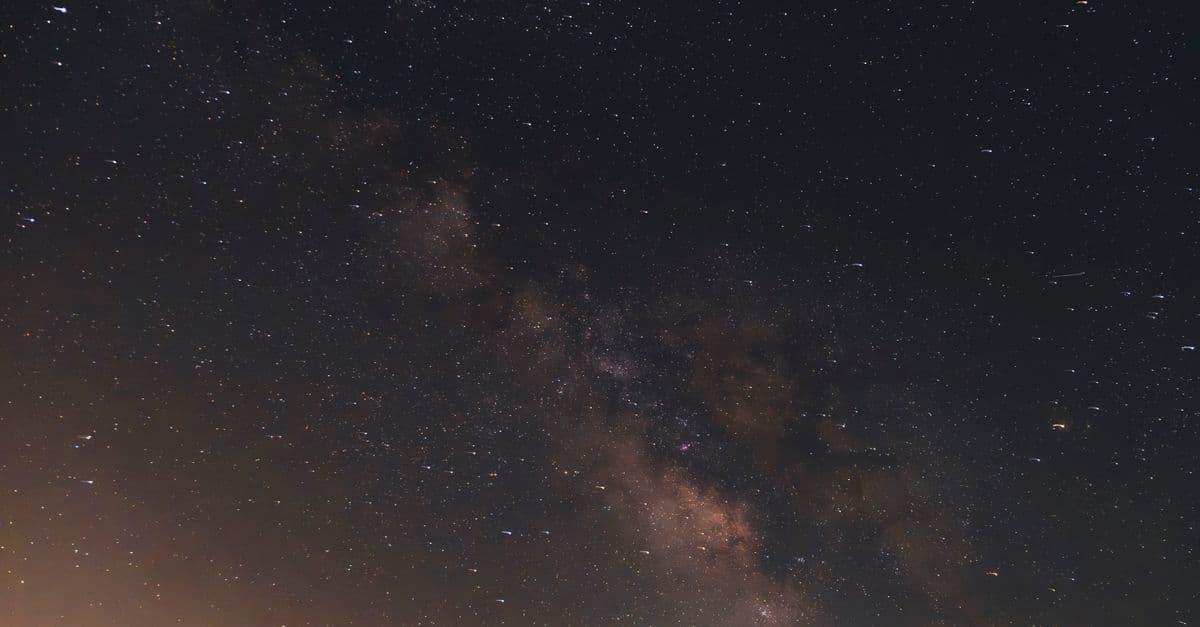
Photo: Necati Ömer Karpuzoğlu / Pexels
Stars look eternal from Earth, but every one of them is on a slow march toward death. The way a star dies depends almost entirely on one number: its mass. A small red dwarf will quietly fade over trillions of years. A star like our Sun will swell, shed its outer layers, and leave behind a glowing ember. The biggest stars detonate as supernovae and collapse into objects so dense they bend spacetime itself. This article walks through all three paths in detail, the physics that decides which one a star takes, and why the wreckage of dead stars is the reason you're alive to read about it.
Key takeaways
- Low-mass stars (red dwarfs) burn so slowly that none have died since the universe began — models predict they will cool into white dwarfs over trillions of years.
- Medium-mass stars like the Sun expand into red giants, fuse helium, shed a planetary nebula, and leave behind a dense, Earth-sized white dwarf.
- Massive stars (roughly 8+ solar masses) explode as core-collapse supernovae and leave behind either a neutron star or a black hole, depending on the mass of the remnant core.
- The dividing line between a white dwarf and a neutron star is the Chandrasekhar limit, about 1.4 solar masses — a number named after the astrophysicist who first calculated it.
- Every element heavier than iron in your body — including the iodine in your thyroid and calcium in your bones — was forged in a dying star and scattered into space by its death.
Why stars die in the first place
A star is a delicate, decades-to-eons-long balancing act between two forces pulling in opposite directions.
- Gravity pulls all of a star's mass inward, trying to crush it into a single point.
- Fusion pressure — the heat and radiation released by nuclear reactions in the core — pushes outward, holding the star up against its own weight.
A star "lives" for as long as fusion in its core generates enough outward pressure to counteract gravity. Think of it like a fire in a fireplace holding up a stack of logs balanced precariously on top of it: as long as the fire burns hot enough, the logs stay suspended. The moment the fire dies down, the whole stack collapses.
The trouble is that fusion needs fuel, and that fuel gets used up. A star starts by fusing hydrogen into helium. When the hydrogen in the core runs low, it eventually starts fusing helium, and — in the most massive stars — keeps working its way through progressively heavier elements. Eventually, one way or another, the fuel that a particular star can burn runs out. When it does, gravity wins, and the star begins the process of dying. How it dies, and what it becomes, depends almost entirely on how heavy the star was to begin with.
Astronomers sort stellar death into three broad categories based on the star's initial mass, measured against the mass of our Sun (written M☉). It's not a hard cutoff — the boundaries blur depending on rotation, chemical composition, and whether the star has a companion — but the three-path framework captures the physics well enough to build the rest of this explainer on it.
Path 1: Low-mass stars — the slow fade
Stars smaller than about half the Sun's mass are red dwarfs, and they are the most common type of star in the galaxy by far — current estimates put them at roughly 70–75% of all stars in the Milky Way. Despite that abundance, astronomers have never actually observed one die.
That's because red dwarfs burn their hydrogen fuel so slowly and so efficiently — thanks to their low core temperatures and thoroughly convective interiors, which continuously stir fresh hydrogen into the fusion zone — that their projected lifespans run from hundreds of billions to several trillion years. The universe itself is only about 13.8 billion years old, according to measurements from the European Space Agency's Planck mission, so no red dwarf has had time to burn through its fuel yet. Everything we know about how they die comes entirely from stellar-evolution models, not observation.
Those models predict an ending that is almost anticlimactic. A red dwarf never gets hot enough in its core to fuse helium into anything heavier. Instead, as hydrogen depletes, the star simply contracts and slowly cools, dimming over unimaginable spans of time until it becomes a white dwarf — without ever ballooning into a red giant, without shedding a nebula, and without a dramatic final act. It just keeps getting fainter until, in principle, it goes fully dark as a hypothetical black dwarf. As with the death itself, no black dwarf has ever been observed, because even the oldest red dwarfs are nowhere near old enough to have cooled that far.
Path 2: Medium-mass stars — the fate of our Sun
Stars with roughly 0.5 to 8 solar masses — including the Sun — follow a far more eventful path. Astronomers have watched thousands of stars in this mass range go through each stage below, in other galaxies and star clusters across the sky, which is how the sequence for our own Sun's death, roughly five billion years from now, has been reconstructed in such detail.
Stage 1: Red giant
When the Sun exhausts the hydrogen fuel in its core, the core itself contracts and heats up, while a shell of hydrogen just outside the core keeps fusing and dumps energy into the star's outer layers. Those outer layers respond by expanding dramatically. Models published by NASA and peer-reviewed solar-evolution studies suggest the Sun will swell to roughly the size of Earth's current orbit, engulfing Mercury and Venus, with Earth's own fate genuinely uncertain — the Sun will also be losing mass as a stellar wind during this phase, which loosens its gravitational grip and could let Earth drift to a slightly wider orbit even as the Sun's surface reaches toward it.
Stage 2: Helium fusion
Once the core is hot and dense enough — around 100 million kelvin — it ignites helium fusion, converting helium into carbon and oxygen through a process called the triple-alpha process. This buys the star a few hundred million more years of stable-ish burning, though the outer layers remain swollen and the star is now classified as being on the "horizontal branch" or, later, the asymptotic giant branch.
Stage 3: Planetary nebula
The Sun doesn't have enough mass to compress its core hard enough to fuse carbon or oxygen into anything heavier. Instead, the outer layers — which by this point are only loosely bound to the star — drift away into space, pushed out by stellar winds and radiation pressure. What's left glowing around the dying core is a planetary nebula, a name coined in the 18th century by William Herschel because these glowing shells looked disc-like through his telescope, similar to a planet. They have nothing to do with actual planets. Famous examples visible from Earth today include the Ring Nebula (Messier 57) and the Cat's Eye Nebula, both documented extensively by the Hubble Space Telescope.
Stage 4: White dwarf
What remains at the center is the exposed core: a hot, city-sized ball of carbon and oxygen, with roughly the Sun's mass packed into a sphere the size of Earth. This is a white dwarf. It has no fuel left to fuse. Instead of burning, it is held up against further collapse by a purely quantum-mechanical effect called electron degeneracy pressure — essentially, the Pauli exclusion principle refusing to let any two electrons occupy the same quantum state, which creates an outward pressure independent of temperature. A white dwarf simply radiates away its leftover heat and cools, extremely slowly, over many billions of years, eventually becoming a cold, dark, theoretical black dwarf. As with red dwarfs, the universe isn't old enough for any black dwarf to exist yet; every white dwarf ever observed is still, technically, cooling.
Path 3: Massive stars — supernova and beyond
Stars with roughly eight or more solar masses die in the most violent and consequential way in the universe. Their deaths are also the best-understood in some ways, because — unlike the slow fades of red dwarfs — they've actually been caught in the act, including one close enough to study in extraordinary detail (more on that below).
The onion-layer phase
In the final stages of a massive star's life, it develops a layered structure that astronomers often describe as looking like an onion in cross-section. Each layer fuses a progressively heavier element: hydrogen in the outermost shell, then helium, then carbon, then neon, then oxygen, then silicon, with an iron core at the very center. Crucially, each stage burns dramatically faster than the last. A massive star might fuse hydrogen for around ten million years, but its silicon-burning stage — the very last one — lasts only about a day before the core is entirely iron.
The iron problem
Iron-56 sits at the bottom of the nuclear binding energy curve, which means it's the most stable atomic nucleus there is. Fusing lighter elements into iron releases energy; fusing iron into anything heavier actually consumes energy rather than releasing it. Once a massive star's core is made of iron, fusion can no longer generate the outward pressure needed to hold the star up. The fire, in the log-stack analogy from earlier, effectively goes out all at once. Gravity, which has been waiting the entire time, wins instantly.
Core collapse
The iron core — by this point roughly the size of Earth but with more mass than the Sun — collapses in well under a second, a process astrophysicists have modeled down to fractions of a millisecond using supercomputer simulations. As it collapses, protons and electrons are crushed together into neutrons, releasing an enormous burst of neutrinos (nearly massless particles that pass through ordinary matter almost undisturbed). The collapsing core suddenly "bounces" once it reaches nuclear density, and the star's outer layers — still falling inward under gravity — slam into that rebounding core and are blasted back outward as a Type II supernova, briefly outshining its entire host galaxy.
The neutrino connection
The neutrino burst released during core collapse carries away roughly 99% of the total energy of the explosion — far more than the light and visible fireworks that make supernovae famous. This isn't just theory: on February 23, 1987, three separate underground detectors on opposite sides of the planet — Kamiokande-II in Japan, IMB in the United States, and Baksan in the Soviet Union — recorded a burst of 25 neutrino events within a span of about 13 seconds, arriving roughly two to three hours before the visible light from the explosion reached Earth. That explosion, SN 1987A, occurred in the Large Magellanic Cloud, a satellite galaxy of the Milky Way about 160,000 light-years away, and remains the closest supernova observed since telescopes were invented.
What's left behind
Once the shockwave clears, one of two remnants remains at the center, and which one you get depends almost entirely on the mass of the collapsed core:
- If the leftover core is between roughly 1.4 and about 2–3 solar masses — a range bounded on the low end by the Chandrasekhar limit and on the high end by the Tolman–Oppenheimer–Volkoff (TOV) limit — it becomes a neutron star: a sphere roughly 20 kilometers (12 miles) across, so dense that a single teaspoon of its material would weigh billions of tonnes.
- If the leftover core exceeds the TOV limit — commonly cited around 2 to 3 solar masses, though the precise value depends on the poorly-constrained physics of matter at nuclear densities — gravity overwhelms even the neutron degeneracy pressure holding a neutron star up, and the core collapses into a black hole, a region of space where the escape velocity exceeds the speed of light.
Some neutron stars are born spinning hundreds of times per second and sweep beams of radio waves across space like a cosmic lighthouse; when those beams sweep past Earth, we detect them as pulsars. A smaller subset of neutron stars, called magnetars, carry magnetic fields trillions of times stronger than Earth's — a topic explored in detail in SciHub101's magnetar explainer.
Failed supernovae — dying without an explosion
Not every massive star manages to produce a visible explosion on its way to becoming a black hole. Astronomers have identified candidate stars, observed over years with telescopes like the Large Binocular Telescope, that simply vanish from view without any accompanying flash — a phenomenon nicknamed a "failed supernova." The leading explanation is that in the most massive progenitor stars, the in-falling material overwhelms the rebounding shockwave before it can escape, and the entire star quietly collapses directly into a black hole instead of exploding outward.
Star size versus how it dies
The table below summarizes the three main pathways, using approximate initial (birth) mass in solar masses (M☉). Boundaries are approximate — rotation rate, chemical composition, and binary companions can shift a star from one category into another.
Table: How initial stellar mass determines the outcome of stellar death
| Initial mass (M☉) | Star type | Final stages | Remnant |
|---|---|---|---|
| Less than ~0.5 | Red dwarf | Slow cooling, no red giant phase | White dwarf (eventually theoretical black dwarf) |
| ~0.5 to ~8 | Sun-like / medium star | Red giant → helium fusion → planetary nebula | White dwarf |
| ~8 to ~20–25 | Massive star | Onion-layer fusion → iron core collapse → Type II supernova | Neutron star |
| Greater than ~20–25 | Very massive star | Core collapse supernova, or direct collapse ("failed supernova") | Black hole |
Why stellar death matters for life
Every element in your body heavier than hydrogen and helium — the carbon in your DNA, the oxygen you breathe, the iron in your blood, the calcium in your teeth and bones, the iodine your thyroid needs to function — was forged inside a star and only reached you because that star eventually died and scattered its contents into space. Without dying stars, the universe would still be almost entirely hydrogen and helium, essentially the same composition it had minutes after the Big Bang.
Medium-mass stars, through their planetary-nebula phase, are responsible for spreading carbon, nitrogen, and oxygen — the backbone elements of organic chemistry — into the galaxy. Massive stars go further: the intense heat and neutron flood of a core-collapse supernova is one of the main sites where elements heavier than iron are built, through a process called rapid neutron capture (the r-process). Gold, platinum, and uranium owe at least part of their cosmic origin to violent stellar deaths and, more recently discovered, to neutron star collisions — an area of active research following the 2017 detection of gravitational waves from a neutron star merger (event GW170817) by the LIGO and Virgo collaborations.
Carl Sagan's famous line that "we are made of star-stuff" isn't poetry so much as a literal accounting of where the periodic table came from. Every supernova that has ever exploded enriched the gas and dust clouds from which the next generation of stars, and their planets, eventually formed. The rocky ground under your feet, and the elements running through your bloodstream right now, are recycled stellar wreckage — several generations of it, in most cases, since the earliest stars were made almost purely of hydrogen and helium and none of the heavier elements existed yet.
What people get wrong about stellar death
A few misconceptions come up constantly when people talk about how stars die, and they're worth clearing up directly.
"The Sun is going to explode." It isn't. Only stars above roughly 8 solar masses die as supernovae. The Sun will swell into a red giant, shed a planetary nebula, and settle down as a white dwarf — dramatic on cosmic timescales, but nothing like the explosive death of a massive star.
"A black hole is a hole in space that sucks everything in." A black hole is simply an extremely dense object with a very strong gravitational field concentrated in a small volume. From a safe distance, its gravity behaves exactly like that of any other object of the same mass — if the Sun were somehow replaced by a black hole of equal mass, Earth's orbit wouldn't change. The "sucking in" only becomes dramatic if you get very close to it, the same way any dense object's gravity gets stronger the closer you approach.
"Nova and supernova are the same thing, just different sizes." They're actually different mechanisms entirely. A nova happens when a white dwarf in a binary star system pulls matter off a companion star; the stolen material piles up on the white dwarf's surface until it triggers a runaway thermonuclear flash — but the white dwarf itself survives, and the process can repeat. A supernova, by contrast, either destroys the star's core entirely (Type Ia, when a white dwarf's mass creeps past the Chandrasekhar limit and detonates completely) or triggers a total core collapse (Type II, the massive-star scenario described above). Neither type of supernova leaves the original star intact.
"Black holes and neutron stars are basically the same thing, just black holes are bigger." They're governed by entirely different physics. A neutron star is held up against gravity by neutron degeneracy pressure — a real, measurable quantum force. A black hole has no such support; gravity has won completely, and general relativity, not quantum mechanics, governs everything about it. SciHub101's explainer on what happens inside a black hole goes deeper into what current physics can and can't say about the interior.
Frequently asked questions
Q: When will the Sun die? In about five billion years, the Sun will begin expanding into a red giant as it exhausts hydrogen fuel in its core. It will most likely become a white dwarf within roughly the following billion years or so after that. Earth's fate is genuinely uncertain — it may be engulfed, or it may drift outward as the Sun loses mass, but either way it will be scorched and almost certainly uninhabitable long before the red giant phase even peaks.
Q: What's the difference between a nova and a supernova? A nova is a surface explosion on a white dwarf that has stolen matter from a companion star; the white dwarf survives and the event can repeat. A supernova either completely destroys a white dwarf that crossed the Chandrasekhar limit (Type Ia) or triggers the total core collapse of a massive star (Type II). In both supernova cases, the original stellar structure does not survive intact.
Q: Can a star turn into a black hole without a supernova? Yes. Extremely massive stars can collapse directly into black holes through what astronomers call "failed supernovae," where the star simply disappears from view with no accompanying explosion. Astronomers monitoring stars over multi-year surveys have identified candidate cases of stars vanishing this way.
Q: What's the smallest star that will end as a black hole? Current estimates suggest stars need roughly 20 to 25 solar masses at birth to end up as black holes, though the exact threshold depends on the star's chemical composition (metallicity) and rotation rate. Below that range, a core-collapse supernova typically leaves behind a neutron star instead.
Q: Has anyone ever seen a star die in real time? Yes. SN 1987A, in the Large Magellanic Cloud roughly 160,000 light-years away, exploded in February 1987 and was visible to the naked eye — the closest and best-observed supernova since the invention of the telescope. Three underground detectors recorded a burst of 25 neutrino events from the explosion, arriving hours before the visible light, confirming core-collapse theory in remarkable detail.
Q: What is the Chandrasekhar limit, and why does it matter? The Chandrasekhar limit is about 1.4 solar masses — the maximum mass a white dwarf can have while still being supported by electron degeneracy pressure. Push a white dwarf past that limit, commonly by feeding it matter from a companion star, and it can no longer support itself; it either collapses further or, in the case of certain binary systems, detonates completely as a Type Ia supernova.
Q: What is the difference between a neutron star and a pulsar? All pulsars are neutron stars, but not all neutron stars are pulsars. A pulsar is specifically a rapidly spinning neutron star whose beam of radiation sweeps past Earth, producing the regular pulses that first led to their detection in 1967. Neutron stars that don't happen to have their beam aimed at Earth, or that have slowed down too much, aren't detected as pulsars even though they're the same type of object.
Q: Do all massive stars explode the same way? No. Core-collapse supernovae come in several sub-types depending on how much of the star's outer hydrogen and helium envelope remains at the time of collapse, which itself depends on how much material the star has shed through stellar winds or lost to a binary companion beforehand. Type II supernovae retain a substantial hydrogen envelope; Type Ib and Ic supernovae have shed most or all of it before collapsing.
Q: What will happen to Betelgeuse? Betelgeuse, a red supergiant roughly 650 light-years away in the constellation Orion, is a nearby supernova progenitor — meaning it will eventually explode as a core-collapse supernova. Astronomers don't know whether that will happen in thousands of years or much sooner, but even if it went supernova today, Earth is far too distant — several times beyond the roughly 160-light-year danger radius researchers use as a rough safety threshold — to be harmed by it.
The takeaway
Stellar death isn't really an ending so much as a redistribution. White dwarfs, neutron stars, and black holes are the physical gravestones of stars, but the material blown outward in the process — planetary nebulae, supernova debris, neutron star mergers — becomes the raw material for the next generation of stars, planets, and, at least in one confirmed case, life. The mass a star is born with almost entirely determines its fate, from the slow fade of a red dwarf to the total collapse of a supergiant, and every one of those fates leaves fingerprints on the universe that outlast the star itself by billions of years. The fact that you can stand on a rocky planet built from the ashes of stars that died before the Sun even formed, and look up to trace the outlines of stars still working toward their own endings, is one of the more grounded facts astronomy has to offer.
Read next:
Follow new articles
Add SciHub101 to your feed reader to see new science and technology stories.
About the Author
SciHub101 is an independent science and technology publication founded and edited by Buğra Sözeri, a software engineer and app developer based in Türkiye. AI tools assist with drafting and research. Source documentation in the existing archive is uneven, and articles are being reviewed and corrected. The Editorial Team byline identifies editorial responsibility; it does not certify specialist or independent human review. Where we compare products, anything built by our own team is labelled as such — see the editorial guidelines and About page for how corrections and disclosures work.
Related Articles
What Is a Supernova — and Why They Matter to Life on Earth
A supernova outshines an entire galaxy for weeks. It also forges every element heavier than iron — the calcium in your bones, the iodine in your thyroid, the gold in jewellery. Here's how they work.
What Is Antimatter? The Mysterious Mirror of the Universe
For every particle of matter, physics predicts a mirror twin made of antimatter. We make it, store it, and use it in medicine — but we still don't know why the universe has so little of it.

Supernova Explained — Star Explosions
How stars explode as supernovae — Type Ia, core-collapse, kilonovae, famous examples, and why every iron atom in your body came from one.
Cassiopeia A: The Youngest Supernova Remnant in the Milky Way
Cassiopeia A is the expanding debris field of a star that exploded around 1680 CE — yet almost no one on Earth recorded it. Today, X-ray and infrared telescopes reveal a forensic masterpiece: shock waves, newly minted heavy elements still glowing from the blast, and a neutron star cooling at the center. Cas A is not just a beautiful object. It is the best laboratory we have for understanding what supernovae actually do to the universe.
Neutron Stars Explained: Dense Matter and Cosmic Mergers
Neutron-star interiors remain uncertain. X-ray observations and mergers let researchers test dense-matter models and investigate heavy-element production.
Machine Learning and Gravitational Wave Detection: How AI Listens to the Universe
LIGO's gravitational wave detectors produce a constant roar of noise. Machine learning is the ear that hears the cosmos whispering beneath it.