Machine Learning and Gravitational Wave Detection: How AI Listens to the Universe
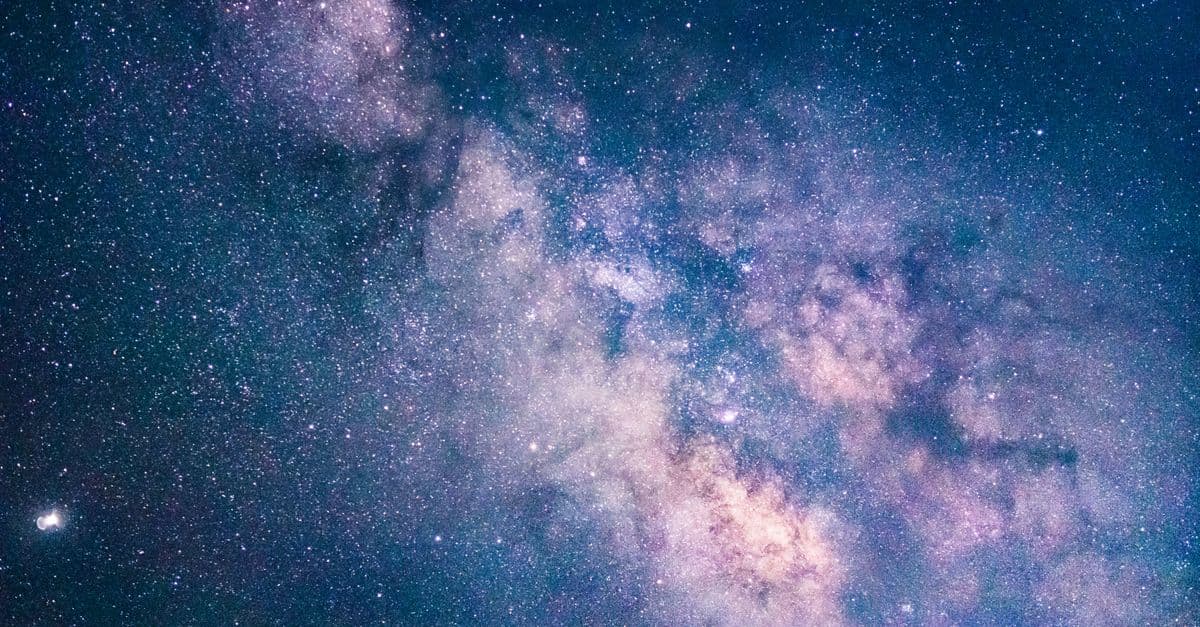
Photo: Felix Mittermeier / Pexels
On September 14, 2015, two black holes 1.3 billion light-years away completed their final spiral toward each other and merged in a fraction of a second, releasing more energy than all the visible stars in the observable universe combined. The ripple in spacetime that event sent across the cosmos arrived at Earth as a chirp — a signal lasting less than a second, smaller than one-thousandth the diameter of a proton — and LIGO heard it. Today, as gravitational wave astronomy matures into a rich scientific discipline, machine learning is becoming the essential tool for separating those cosmic whispers from the relentless noise of the physical world.
Key takeaways
- LIGO's detectors are exquisitely sensitive to vibrations — so sensitive they can detect noise from distant earthquakes, ocean waves, and even thermal fluctuations in mirrors. Separating real signals from this noise is fundamentally a machine learning problem.
- Deep learning models can detect gravitational wave signals in real-time, far faster than traditional matched-filter techniques, enabling rapid electromagnetic follow-up of multi-messenger events.
- AI classifiers are helping identify entirely new categories of gravitational wave sources, including intermediate-mass black hole mergers and possible signals from cosmic strings.
- The next generation of detectors — Einstein Telescope and Cosmic Explorer — will generate data rates that make ML-based analysis not just helpful but absolutely essential.
What Gravitational Wave Detectors Actually Measure
LIGO's two detectors — in Hanford, Washington, and Livingston, Louisiana — are L-shaped laser interferometers with arms 4 kilometers long. A laser beam is split, sent down each arm, reflected off hanging mirrors, and recombined. When a gravitational wave passes, it stretches space in one direction while compressing it in another, changing the arm lengths by an almost incomprehensible amount: the strain sensitivity of LIGO is roughly 10^-23, meaning it can detect a change in arm length thousands of times smaller than the nucleus of an atom.
This incredible sensitivity means LIGO can hear the universe. But it also means LIGO hears everything else: the rumble of trucks on distant highways, fluctuations in Earth's magnetic field, thermal vibrations in mirror coatings, quantum noise from the laser itself, and occasional "glitches" — transient noise events caused by equipment behavior that mimic real signals. The raw data stream is dominated by these instrumental artifacts. Finding a genuine gravitational wave signal in this environment is one of the most sophisticated signal processing challenges in all of science.
Traditional Methods and Their Limits
The classical approach to gravitational wave detection uses matched filtering: comparing the data stream against a bank of pre-computed theoretical waveforms, looking for statistically significant matches. For binary mergers of compact objects (black holes and neutron stars) where general relativity provides precise predictions of the expected waveform, matched filtering is highly effective. LIGO's first detection, GW150914, was found this way.
But matched filtering has limitations. It requires knowing the waveform in advance, which means it works poorly for sources where theory is less complete: rapidly rotating neutron stars, core-collapse supernovae, cosmic string cusps, or novel compact object types. It also struggles to distinguish signal from glitches without extensive manual follow-up by human reviewers — a process that typically takes hours to days. And as event rates grow (LIGO's fourth observing run detected multiple events per week), manual review becomes a severe bottleneck.
Deep Learning Approaches to Detection
Machine learning offers complementary capabilities that address these limitations directly. Convolutional neural networks trained on simulated gravitational wave signals embedded in real LIGO noise can match the sensitivity of matched filtering for binary mergers while running orders of magnitude faster — analyzing a data segment in milliseconds rather than hours.
The key insight is that CNNs can learn directly from data, without requiring an analytical waveform template. By training on thousands of simulated mergers spanning a wide range of black hole masses, spins, and orbital parameters, the network builds internal representations that generalize to the full parameter space. Google's GravitySpy project took this further, training a CNN to classify LIGO glitches into dozens of categories — "blip glitches," "koi fish," "scattered light" — dramatically accelerating the noise characterization work that underpins any confident detection claim.
Real-time detection is another frontier. The SPIIR (Summed Parallel Infinite Impulse Response) pipeline and the deep learning-based MLGWSC (Machine Learning Gravitational Wave Search Challenge) frameworks can flag potential events with latency under a minute. This matters enormously for multi-messenger astronomy: when LIGO detected the binary supernova. About 20 km wide but containing more mass than the Sun.">neutron star merger GW170817 in 2017, it triggered a worldwide alert that led to observations by 70 telescopes on the ground and in space, capturing the electromagnetic counterpart — a kilonova — in real time. That historic detection was only possible because the signal processing alert was fast enough to catch the fading optical transient.
Multi-Messenger Astronomy and AI
GW170817 was a landmark event: the first detection of gravitational waves from a neutron star merger, confirmed simultaneously across the full electromagnetic spectrum from gamma rays to radio waves. It proved that neutron star mergers are responsible for producing much of the universe's supply of heavy elements — gold, platinum, iridium — formed in the extreme neutron-rich environment of a kilonova explosion.
Enabling future events like this requires not just fast detection, but fast sky localization — determining the patch of sky from which the signal originated, so telescopes can be pointed there before the optical emission fades. LIGO's localization algorithms have been significantly accelerated by machine learning. Bayesian parameter estimation codes like RIFT and Bilby now incorporate neural network emulators that approximate expensive likelihood calculations, cutting the time to produce a sky map from hours to minutes.
As the gravitational wave detector network expands — KAGRA in Japan joined LIGO and Virgo for the fourth observing run in 2023, and LIGO-India is under construction — the localization problem becomes both more tractable (more detectors = better triangulation) and more computationally demanding (more data = more processing needed). ML-based pipelines are scaling to meet this challenge.
The Search for Unknown Sources
Perhaps the most exciting frontier for machine learning in gravitational wave astronomy is the search for signals from sources we haven't yet clearly detected. Continuous gravitational waves from rapidly spinning neutron stars are expected to be extremely weak, requiring months of coherent data integration to accumulate sufficient signal-to-noise. Traditional searches are computationally constrained to a fraction of the theoretically possible parameter space; deep learning methods are being developed that can efficiently cover much larger portions.
Stochastic gravitational wave backgrounds — overlapping signals from the cumulative population of all binary mergers since the Big Bang, or potentially from processes in the early universe like phase transitions or cosmic strings — represent another AI frontier. Distinguishing these diffuse backgrounds from instrumental noise requires statistical methods that machine learning is uniquely suited to provide. In 2023, the NANOGrav pulsar timing array announced the first evidence for a stochastic gravitational wave background at much lower frequencies, using Bayesian analysis techniques that incorporate machine learning-accelerated computation.
The Einstein Telescope, a proposed next-generation European detector ten times more sensitive than current LIGO, would detect binary mergers out to the edge of the observable universe — millions of events per year. At that rate, overlapping signals would create a "confusion foreground" that only sophisticated ML disentanglement techniques could hope to resolve. The future of gravitational wave astronomy is inseparable from the future of machine learning.
Noise characterization and environmental monitoring
Understanding LIGO's noise sources is as important as the signal detection itself. The detector's sensitivity curve — its ability to detect strain at different frequencies — varies dramatically across its 10 Hz to 10 kHz operating band. Below 20 Hz, seismic noise dominates. Between 20 Hz and 1 kHz, thermal noise from mirror suspension systems and mirror coatings sets the limit. Above 1 kHz, quantum noise from the laser takes over.
Machine learning is revolutionising how scientists characterise and subtract these noise components. The Wiener filter, a classical statistical method, removes statistically predictable noise (such as seismic tremor measured by auxiliary sensors) from the gravitational wave channel. But LIGO's auxiliary sensors often contain noise that is correlated with the main detector in complex, nonlinear ways — making the classical Wiener filter suboptimal.
Deep learning models trained on data segments where LIGO is known to be "off" (intentionally desensitised) can learn these nonlinear noise transfer functions. By training on tens of thousands of hours of data, recurrent neural networks and transformer models now achieve noise subtraction far superior to traditional Wiener filtering, recovering buried signals that would otherwise go undetected.
The Gravity Spy citizen science project exemplifies this approach. Volunteers on the Zooniverse platform manually classified thousands of LIGO glitches, creating a labelled dataset that trained a CNN to automatically recognise glitch types. Today, the model operates continuously, classifying new glitches faster than any human could, and alerting astronomers when a particular glitch type correlates with a potential gravitational wave candidate — helping confirm that a detection is real rather than instrumental.
Advanced architectures: Transformers and attention mechanisms
Recent advances in gravitational wave analysis have adopted transformer architectures and attention mechanisms — the same deep learning frameworks that power large language models and image recognition systems. These models excel at capturing long-range temporal dependencies in signals, which is crucial for identifying the "chirp" signature of an inspiralling binary: the frequency sweeps upward over seconds to minutes as the two objects spiral inward toward merger.
A transformer-based gravitational wave detector can attend to the entire signal at once, learning which parts of the data are most informative for classification. Early experiments on simulated data show that transformers can achieve comparable detection sensitivity to matched filtering while running 10–100 times faster than traditional CPU-bound methods. They are also more interpretable — the attention weights reveal which regions of the signal the model considered most diagnostic, offering insights into the physical features that distinguish true signals from glitches.
Recurrent neural networks (RNNs) and their gated variants (LSTMs, GRUs) add another layer of capability. An LSTM trained on a time series of LIGO strain measurements can predict the next sample based on previous samples, effectively learning LIGO's noise model. Significant deviations from the predicted noise — outliers that the model could not forecast — flag potential signal candidates. This "anomaly detection" approach is model-agnostic and requires no training on actual gravitational wave signals, making it highly sensitive to novel signal types.
Bayesian parameter estimation with neural emulators
Once a gravitational wave signal is detected, the next step is inferring the properties of the source: the masses of the merging objects, their spins, the distance to the merger, and the orientation of the orbital plane relative to Earth. This parameter estimation problem requires computing how likely different parameter values are, given the observed data — a Bayesian inference task.
Traditional parameter estimation uses Markov-chain Monte Carlo (MCMC) methods, which are statistically rigorous but computationally expensive. A parameter estimation run for a single binary black hole merger might require millions of likelihood evaluations, each involving numerical solution of Einstein's equations via post-Newtonian approximations. These calculations can take 10–100 hours of CPU time.
Machine learning accelerates this bottleneck by training neural networks to emulate the likelihood function. The network learns the mapping from compact object masses and spins to the expected gravitational wave strain — effectively learning an approximate Einstein equation solver. Once trained, the emulator can evaluate the likelihood millions of times in milliseconds. This neural likelihood emulator approach, implemented in codes like RIFT and combined with variational inference techniques, reduces parameter estimation time from hours to minutes, enabling rapid sky localization for multi-messenger follow-up.
The trade-off is modest: neural emulators introduce small systematic biases (they are approximations, after all), but careful validation ensures these biases remain negligible compared to statistical uncertainties. This combination of speed and accuracy makes neural emulators essential for real-time follow-up astronomy.
Global detector networks and data fusion
As the LIGO–Virgo–KAGRA detector network expands, machine learning algorithms must fuse data from multiple detectors with different sensitivities and noise characteristics. When three or four detectors observe the same gravitational wave event, the challenge is to jointly analyze all datasets while accounting for detector-specific systematics — calibration uncertainties, noise artifacts, and instrumental glitches that vary between sites.
Bayesian hierarchical models combined with ensemble learning methods — training multiple models on different detector combinations and averaging their inferences — have proven effective. Additionally, recent work employs graph neural networks (GNNs) to model the correlations and redundancies in multi-detector datasets, learning which detectors are most informative for each type of source. GNNs naturally encode the structure of the detector network as a graph, with detectors as nodes and distances as edge weights.
For future detector networks including LIGO-India and the Einstein Telescope, machine learning will be indispensable for handling the data volume and complexity. A network of five to ten detectors operating simultaneously will generate petabytes of data per year. Only end-to-end machine learning pipelines — from raw data through signal detection, parameter estimation, and source classification — will be capable of processing this avalanche of information in real-time.
Challenges and open questions
Despite impressive progress, machine learning in gravitational wave astronomy faces significant hurdles. Adversarial robustness is one: neural networks trained on simulated waveforms embedded in historical LIGO noise may fail when confronted with genuinely novel noise environments or entirely new source types. Researchers are exploring adversarial training — deliberately feeding models unexpected noise patterns — to improve robustness.
Interpretability remains challenging. When a deep learning model flags a candidate event, understanding why the model made that decision is often opaque. Explainability methods such as LIME (Local Interpretable Model-Agnostic Explanations) and SHAP (SHapley Additive exPlanations) are being applied to gravitational wave classifiers, but these methods themselves add computational overhead and may oversimplify the model's decision boundary.
Handling real noise is trickier than using simulated training data. Real LIGO glitches have fat-tailed distributions — occasional extremely anomalous events that break model assumptions. Robust loss functions and outlier detection methods are helping, but the cold truth is that no training dataset perfectly captures the variety of instrumental artifacts that will appear in future observations.
Simulation fidelity and the domain adaptation challenge
A fundamental challenge in ML for gravitational waves is the simulation-reality gap: neural networks trained on synthetic waveforms embedded in simulated noise often fail when deployed on real detector data. Real LIGO noise contains instrumental artifacts, non-stationary glitches, and subtle correlations with environmental sensors that no pre-training dataset perfectly captures.
Domain adaptation — the problem of applying models trained on one dataset (simulated waveforms) to another domain (real detector noise) — is central to gravitational wave machine learning. Researchers employ several strategies. Transfer learning begins with a network trained on millions of synthetic waveforms, then fine-tunes it on real gravitational wave candidates (of which hundreds are now available after four observing runs). This two-stage approach improves generalisation significantly: a network trained only on real data would require unrealistically large labelled datasets, but fine-tuning on real examples helps the model adapt to the idiosyncrasies of actual LIGO noise.
Another approach is domain randomisation during training: simulating waveforms with deliberately varied noise characteristics, non-linear detector responses, and instrumental artifacts. By training on a diverse ensemble of noise scenarios rather than idealised synthetic data, networks become more robust to unexpected real-world variations. A third strategy employs unsupervised anomaly detection: training autoencoders or normalising flows on detector noise alone (when LIGO is known to be "off"), then identifying deviations from the learned noise distribution as potential signals. This method requires no labelled waveforms and is inherently insensitive to the fidelity of synthetic training data.
Source: Rüdiger, N. et al. (2023) — Domain adaptation in gravitational wave ML remains an open area; real detector data now enables direct fine-tuning approaches.
Frequently Asked Questions
Q: How does machine learning help with gravitational wave detection?
A: Machine learning models, particularly convolutional neural networks, are trained to recognise gravitational wave signals in LIGO's noisy data stream. They can match the sensitivity of traditional matched-filter methods while running far faster (milliseconds rather than hours), and can search for signals from sources where theoretical waveforms are incomplete or unknown. Deep learning also excels at noise characterisation and glitch classification.
Q: What was GW170817 and why was it important?
A: GW170817 was the first gravitational wave detection from a neutron star merger, observed on August 17, 2017. It was simultaneously detected across the electromagnetic spectrum by 70 telescopes, confirming that neutron star mergers produce heavy elements like gold and platinum. AI-accelerated detection and sky localisation were essential to enabling these simultaneous multi-messenger observations.
Q: Can AI find gravitational waves in real-time?
A: Yes. Deep learning pipelines used in LIGO's online search can flag potential events with latency under a minute, enabling rapid electromagnetic follow-up. Speed is critical for catching fast-fading transients like kilonovae. Real-time alerts also activate distributed sensor networks and observatories worldwide, making each gravitational wave detection a coordinated scientific event.
Q: What are LIGO glitches and how does AI handle them?
A: Glitches are transient noise events in LIGO data caused by instrumental or environmental factors — magnetic field fluctuations, equipment failures, or servo instabilities. They can mimic real gravitational wave signals. The GravitySpy project uses a CNN classifier to automatically categorise glitches into dozens of types, dramatically speeding up the noise characterisation process that astronomers rely on to confirm genuine detections.
Q: What is the Einstein Telescope and what role will AI play?
A: The Einstein Telescope is a proposed next-generation gravitational wave detector planned for construction in Europe, ten times more sensitive than current LIGO. It would detect millions of merger events per year — a data rate so high that machine learning-based analysis pipelines will be essential simply to process the observations. The confusion foreground (overlapping signals) will require sophisticated AI disentanglement techniques.
Q: How do machine learning models help with parameter estimation?
A: Neural network emulators learn to approximate the likelihood function for gravitational wave parameter estimation, replacing computationally expensive Einstein equation solvers. This accelerates parameter estimation from 10–100 hours to minutes, enabling rapid sky localisation. Once trained, the emulator can evaluate likelihoods millions of times per second, making Bayesian inference on multi-detector data feasible in near-real-time.
Q: Why is the simulation-to-reality gap a problem for gravitational wave AI?
A: Neural networks trained on purely synthetic waveforms and noise often fail on real detector data because actual LIGO noise contains instrumental glitches, non-stationary features, and subtle correlations that simulations don't capture. Researchers address this through transfer learning (fine-tuning on real gravitational wave candidates), domain randomisation during training, and unsupervised anomaly detection methods that don't rely on labelled synthetic data.
Related Reading
Follow new articles
Add SciHub101 to your feed reader to see new science and technology stories.
About the Author
SciHub101 is an independent science and technology publication founded and edited by Buğra Sözeri, a software engineer and app developer based in Türkiye. AI tools assist with drafting and research. Source documentation in the existing archive is uneven, and articles are being reviewed and corrected. The Editorial Team byline identifies editorial responsibility; it does not certify specialist or independent human review. Where we compare products, anything built by our own team is labelled as such — see the editorial guidelines and About page for how corrections and disclosures work.
Related Articles
SpaceX Reusable Rockets: How They Work and Why They Changed Everything
SpaceX figured out how to land rockets upright and fly them again. It's not magic — it's physics, software, and sheer persistence.
Multiverse Theory Explained: What It Is and Whether It's Real
There may be infinitely many universes where you made different choices. Here's what physics actually says about the multiverse.

Gravitational Waves Explained — Listening to the Universe
Einstein predicted them in 1916. We detected them for the first time in 2015. Gravitational waves let us "hear" cosmic events that produce no light. Here's how they work and what they reveal.
Stellar vs. Supermassive Black Holes: The Mass Gap Mystery
Black holes come in sizes that span 10 orders of magnitude, from a few solar masses to tens of billions — but the range between roughly 65 and a few hundred solar masses appears nearly empty. A 2020 gravitational wave event punched straight through that forbidden zone, and nobody fully agrees on how.
Machine Learning and Radio Telescopes: The AI Hunt for Alien Signals
From the MeerKAT array to Breakthrough Listen, machine learning is transforming how radio telescopes search for extraterrestrial intelligence — and strange cosmic phenomena.
Neutron Stars Explained: Dense Matter and Cosmic Mergers
Neutron-star interiors remain uncertain. X-ray observations and mergers let researchers test dense-matter models and investigate heavy-element production.