Machine Learning and Radio Telescopes: The AI Hunt for Alien Signals
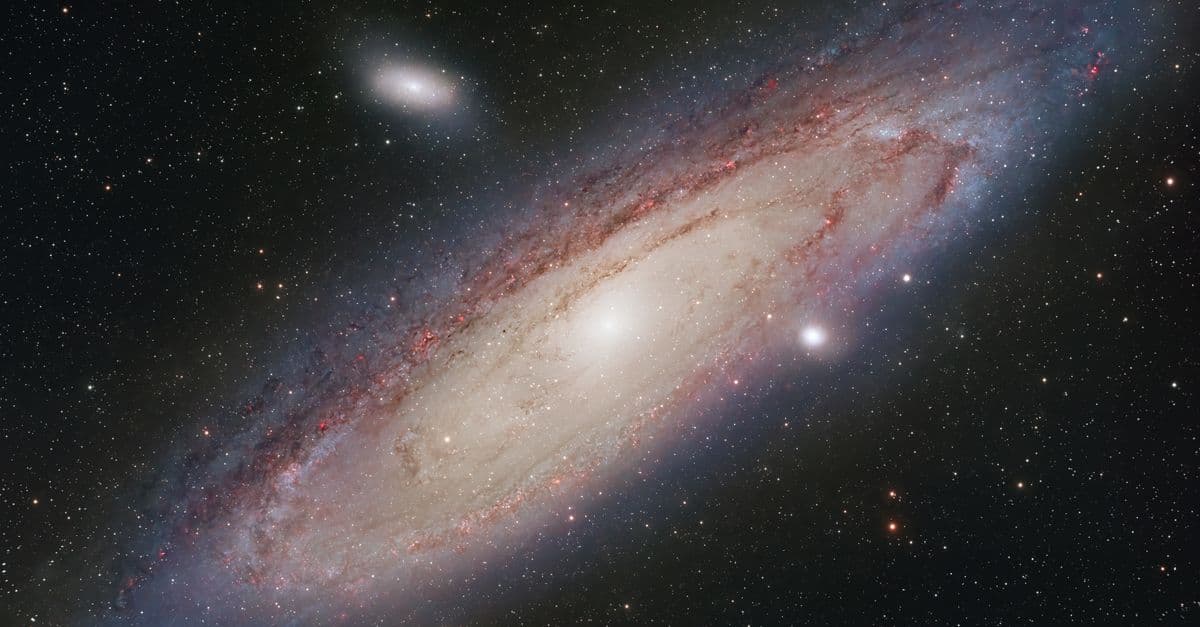
Photo: Luis Felipe Alburquerque Briganti / Pexels
The world's largest radio telescope, China's FAST (Five-hundred-meter Aperture Spherical Telescope), can detect a signal equivalent to a mobile phone on the Moon. Every second, it pours petabytes of raw data into processing systems that must sift through an ocean of radio frequency interference — from satellites, aircraft, Wi-Fi, radar, and the Sun itself — searching for signals that might originate from somewhere far more interesting. Without machine learning, the search for extraterrestrial intelligence would be like trying to find a specific voice in a stadium by hand-sorting every decibel. With it, we're listening to the universe in a way never before possible.
Key takeaways
- Radio telescope data is dominated by terrestrial radio frequency interference (RFI) at a ratio of millions to one relative to potential astronomical signals; machine learning is essential for distinguishing them.
- The Breakthrough Listen program uses neural networks to search for technosignatures — signs of advanced technology — across the full radio spectrum of thousands of nearby stars simultaneously.
- Fast Radio Bursts (FRBs), mysterious millisecond flashes of radio energy from extragalactic distances, are now being detected and classified by AI systems that process telescope data in real-time.
- Pulsar timing arrays, networks of precisely monitored pulsars used as cosmic clocks, use machine learning to detect the gravitational wave background from supermassive black hole binaries.
The Radio Universe and Its Noise Problem
Radio astronomy operates in a frequency range perpetually crowded with human-made transmissions. Cell phones, GPS systems, aircraft transponders, Wi-Fi networks, industrial equipment, and military radar all produce signals that, from a radio telescope's perspective, are orders of magnitude brighter than most cosmic radio sources. The RFI environment at even the most remote telescope site is complex, dynamic, and partially unpredictable.
Traditional RFI mitigation relied on static frequency flagging (marking known interference-prone bands as unusable), median-filter excision of strong transients, and geographic isolation of telescopes in radio quiet zones. These methods work well for stable, predictable RFI sources but fail for intermittent or wideband interference and for the weak, narrowband signals that might constitute a technosignature from a distant civilization.
Machine learning approaches to RFI identification treat the problem as it actually is: a pattern recognition challenge across high-dimensional time-frequency data. Convolutional neural networks trained on labeled examples of both RFI and genuine astronomical signals can distinguish between them with accuracy exceeding 97 percent in controlled tests — identifying the subtle spectral and temporal signatures that separate a terrestrial transmitter from a cosmic source. The key discriminator for SETI purposes is directional: RFI follows the telescope as it moves across the sky, while a genuine extraterrestrial signal tracks with the target star.
Breakthrough Listen and the Deep Neural Network Search
Launched in 2015 with $100 million in funding from Yuri Milner, the Breakthrough Listen program is the most comprehensive SETI search in history. Using the Green Bank Telescope in West Virginia, the Parkes Observatory in Australia, MeerKAT in South Africa, and the FAST telescope in China, it is systematically scanning one million nearby stars, 100 nearby galaxies, and the galactic plane for technosignatures.
The data volume is staggering: Green Bank alone generates about 3 petabytes per year of raw radio data. Processing this with traditional matched-filter techniques would require prohibitive computational resources and still miss signals of unknown form. Breakthrough Listen's analysis pipeline uses deep learning classifiers designed to search for signals that are narrowband (concentrated in frequency, as opposed to the broadband noise of natural radio sources), drifting in frequency (as expected from the Doppler shift of a moving transmitter), and repeating — the combination most consistent with artificial origin.
In 2020, a Breakthrough Listen neural network flagged an interesting signal from the Proxima Centauri system — the closest star to Earth, host to at least two known planets. The signal, designated BLC1, passed initial AI screening but was Eventually, attributed to RFI from a human-made transmitter after extensive follow-up analysis. The episode illustrated both the sensitivity of modern AI-powered SETI searches and the critical importance of rigorous verification protocols.
Fast Radio Bursts: An AI-Powered Astronomical Mystery
Beyond SETI, machine learning is transforming our understanding of one of radio astronomy's most tantalizing mysteries: Fast Radio Bursts (FRBs). These are millisecond-duration flashes of radio energy from extragalactic sources, with energies equivalent to the entire output of the Sun over hundreds of millions of years, compressed into a fraction of a second. First discovered in 2007 in archival Parkes data, FRBs were initially so rare and surprising that their very existence was questioned. Today, thanks to AI-powered real-time detection, we know they occur at a rate of thousands per day across the entire sky.
The CHIME (Canadian Hydrogen Intensity Mapping Experiment) telescope in British Columbia has detected hundreds of FRBs using a real-time machine learning pipeline that processes the telescope's radio data stream continuously. The classifier, a modified neural network trained on simulated FRBs and real RFI, flags potential FRB candidates within seconds of their arrival — critical because the burst itself lasts mere milliseconds and follow-up telescopes must be notified immediately if complementary observations are to be obtained.
CHIME's AI pipeline has revealed that many FRBs repeat — ruling out cataclysmic single-event explanations for those sources — and has detected FRBs associated with magnetars (highly magnetized neutron stars) within our own galaxy, providing crucial evidence for at least one formation mechanism. The dispersion measure of each burst, which encodes the density of ionized gas between source and Earth, is automatically extracted by the pipeline to estimate source distances, building a census of FRBs as cosmological probes of the intergalactic medium.
Pulsar Timing Arrays and the Gravitational Wave Background
Pulsars — rapidly spinning neutron stars that emit precisely timed radio pulses — are nature's most accurate clocks. A pulsar timing array (PTA) uses dozens of millisecond pulsars monitored for decades to create a Galaxy-scale gravitational wave detector. Tiny variations in pulse arrival times, correlated across multiple pulsars with the specific spatial pattern predicted by general relativity, reveal the passage of gravitational waves at nanohertz frequencies — far below the audio-band frequencies detectable by LIGO.
The analysis of pulsar timing data is exquisitely sensitive to noise: variations in the interstellar medium through which pulsar signals travel, intrinsic pulsar spin irregularities, and instrumental systematics all contaminate the gravitational wave signal. Machine learning methods are essential for disentangling these effects. Neural network models trained on simulated PTA data can extract the correlated gravitational wave signal even in the presence of complex, non-Gaussian noise processes.
In 2023, the NANOGrav collaboration, using 15 years of data from the Green Bank and Arecibo telescopes combined with sophisticated Bayesian analysis incorporating ML-accelerated computation, announced the first evidence for a stochastic gravitational wave background — almost certainly produced by the cumulative gravitational wave emission from hundreds of millions of supermassive black hole binary systems across the observable universe. The signal had been predicted theoretically for decades; it took AI-powered analysis to finally extract it from the data.
The Future: AI-Powered Total Sky Monitoring
The next generation of radio astronomy infrastructure is being designed from the start around AI-powered processing. The Square Kilometre Array (SKA), currently under construction in South Africa and Australia, will comprise thousands of antennas spanning a kilometer-scale baseline, generating data at a rate of 157 petabytes per year from its mid-frequency component alone. The SKA's computing requirements exceed the internet traffic of the entire world at current rates.
Processing this data stream requires AI pipelines that can run at hardware throughput limits, autonomously classifying sources, flagging transients, mapping the polarized radio sky, and searching for technosignatures — all simultaneously. The SKA's science data processor is specifically designed to incorporate deep learning models as first-class components, not afterthoughts. When the full SKA comes online in the late 2020s, humanity's ear to the cosmos will be more sensitive — and more intelligent — than anything built before.
FAQ
What is Breakthrough Listen? Breakthrough Listen is the largest SETI program in history, launched in 2015. Using major radio telescopes including Green Bank, Parkes, MeerKAT, and FAST, it searches one million nearby stars and hundreds of galaxies for technosignatures using AI-powered data analysis pipelines.
What are Fast Radio Bursts? Fast Radio Bursts are millisecond flashes of intense radio energy from extragalactic sources. Their origin remains an active research question, though magnetars (highly magnetized neutron stars) are established as at least one source type. The CHIME telescope detects hundreds using real-time neural network classifiers.
How does AI help distinguish alien signals from interference? Machine learning classifiers trained on labeled RFI and simulated technosignature data can distinguish between them based on spectral, temporal, and directional characteristics. A genuine extraterrestrial signal tracks with the target star as the telescope moves; RFI does not.
What is a pulsar timing array? A pulsar timing array uses multiple precisely monitored millisecond pulsars as a Galaxy-scale gravitational wave detector. Correlated variations in pulse arrival times across multiple pulsars can reveal gravitational waves at nanohertz frequencies from supermassive black hole binaries.
What is the Square Kilometre Array? The SKA is a next-generation radio telescope array under construction in South Africa and Australia. When complete, it will be the world's largest radio telescope, generating 157 petabytes of data per year from its mid-frequency component alone — requiring AI-powered processing pipelines running at hardware speed limits.
Read next:
Follow new articles
Add SciHub101 to your feed reader to see new science and technology stories.
About the Author
SciHub101 is an independent science and technology publication founded and edited by Buğra Sözeri, a software engineer and app developer based in Türkiye. AI tools assist with drafting and research. Source documentation in the existing archive is uneven, and articles are being reviewed and corrected. The Editorial Team byline identifies editorial responsibility; it does not certify specialist or independent human review. Where we compare products, anything built by our own team is labelled as such — see the editorial guidelines and About page for how corrections and disclosures work.
Related Articles

Neutron Stars Explained: Dense Matter and Cosmic Mergers
Neutron-star interiors remain uncertain. X-ray observations and mergers let researchers test dense-matter models and investigate heavy-element production.

How Astronauts Live in Space: The Complete Guide to Daily Life in Orbit
Sleeping in a sleeping bag on a wall, recycling urine into drinking water, and exercising to save your bones. This is life in space.

Machine Learning and Gravitational Wave Detection: How AI Listens to the Universe
LIGO's gravitational wave detectors produce a constant roar of noise. Machine learning is the ear that hears the cosmos whispering beneath it.
How AI and Machine Learning Are Revolutionizing Exoplanet Detection
Machine learning is transforming the search for alien worlds, helping scientists find thousands of exoplanets hidden in Kepler's vast data.

AI and Astrobiology: Machine Learning in the Search for Life Beyond Earth
From Mars rock targeting to exoplanet spectra, AI is helping astrobiologists sort possible signs of life from chemistry that looks alive but is not. Here is what it does, what it has not done, and why the hardest step is still human.

AI and Space Debris Tracking: Protecting Satellites from a Growing Orbital Crisis
Over 27,000 tracked debris objects threaten every satellite in Earth orbit. AI is becoming humanity's best defense against a cascade of collisions that could seal off space.