How AI and Machine Learning Are Revolutionizing Exoplanet Detection
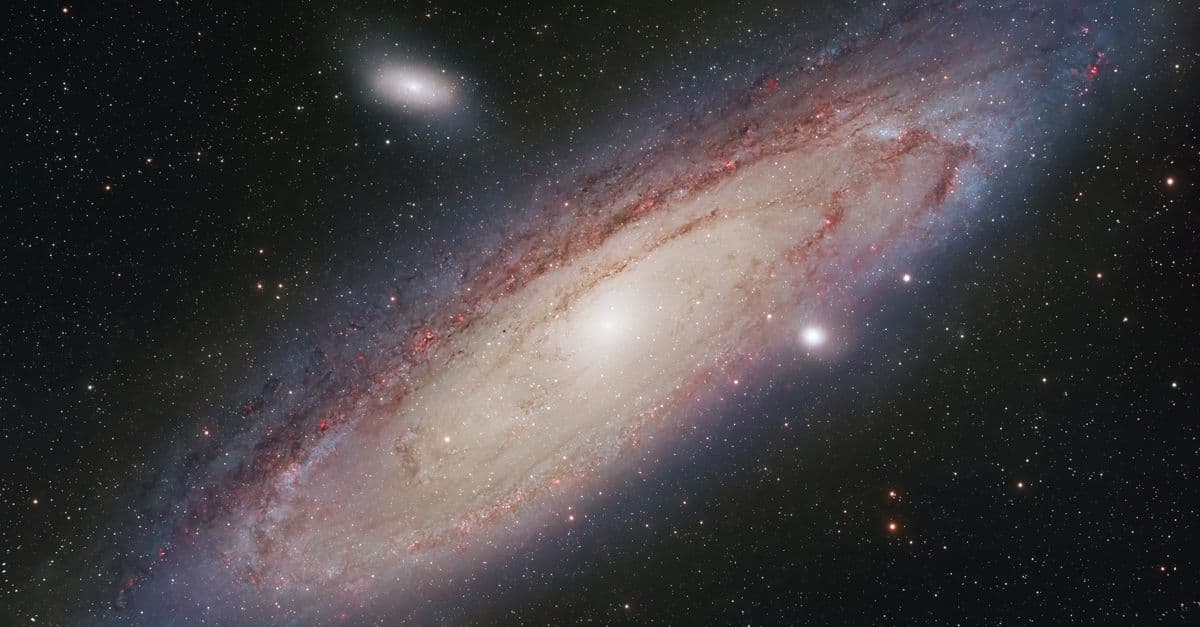
Photo: Luis Felipe Alburquerque Briganti / Pexels
In 2017, a Google neural network sifted through data from NASA's Kepler space telescope and discovered two new exoplanets — including Kepler-90i, an eighth planet orbiting a star 2,500 light-years away. It was the first time an artificial intelligence had extended a known planetary system, and it announced something profound: the universe is far more populated than we can see with human eyes alone. Today, AI isn't just helping astronomers find planets — it's completely rewriting the scale at which we can search for them.
Key takeaways
- Machine learning algorithms can analyze years of telescope data in hours, identifying planetary signals that human reviewers would take decades to find manually.
- NASA's Kepler mission collected data on over 150,000 stars; AI tools have helped confirm more than 5,000 exoplanets from that archive.
- The transit method — detecting the tiny dip in starlight as a planet passes in front of its star — is now largely automated using convolutional neural networks.
- Next-generation missions like the Nancy Grace Roman Space Telescope will rely heavily on AI to process data volumes that no human team could handle alone.
The Needle in a Cosmic Haystack
Finding a planet orbiting another star is an exercise in extreme precision. The most successful technique — the transit method — works by watching a star's brightness over time. When a planet crosses in front of it, the star dims by a tiny fraction: for an Earth-sized world, that's roughly 0.01 percent. Now multiply that challenge by 150,000 stars observed continuously for four years, and you begin to understand why NASA's Kepler mission generated more data than any team of human astronomers could realistically process.
Kepler's raw data archive contains millions of light curves — graphs of stellar brightness over time. Each one is a story waiting to be decoded, but buried under instrumental noise, stellar variability, and false positives from binary stars or cosmic ray hits. Before AI, teams of astronomers would spend months manually reviewing "planet candidates," and inevitably some real planets slipped through the cracks.
Machine learning changed the equation fundamentally. Algorithms trained on confirmed exoplanet transits learned to distinguish genuine planetary dips from noise with remarkable accuracy. One landmark study by Christopher Shallue and Andrew Vanderburg at Google Brain trained a convolutional neural network on 15,000 labeled light curves. It achieved 96 percent accuracy at classifying new transit signals — and then immediately put that accuracy to work on the Kepler archive, producing two fresh planetary discoveries within weeks.
How Neural Networks Read Starlight
Convolutional neural networks (CNNs) — the same architecture behind facial recognition and medical imaging — turn out to be extraordinarily well-suited for transit detection. A CNN processes a light curve as if it were an image, scanning it for characteristic shapes: the smooth, symmetric dip of a transiting planet, repeated at regular intervals.
The network doesn't need to be told what a transit "looks like" in human terms. Instead, it learns from labeled examples, building internal representations of the subtle features that separate planets from impostors. Over thousands of training cycles, it becomes sensitive to features that even expert astronomers hadn't articulated explicitly — tiny asymmetries in limb darkening, specific patterns of secondary eclipses that distinguish planets from eclipsing binaries.
More recent architectures go further. Transformers, originally developed for natural language processing, can now ingest entire multi-year light curves and model long-range dependencies in brightness variations. This matters because some planetary systems produce complex, overlapping transit signals that only make sense when the full temporal context is considered. AI tools like the Astronet pipeline, developed at Caltech, have become standard tools in the exoplanet-hunting community, processing TESS mission data in near-real-time.
From Kepler to TESS and Beyond
NASA's Transiting Exoplanet Survey Satellite (TESS), launched in 2018, watches nearly the entire sky over two-year cycles — a data volume that dwarfs even Kepler's output. TESS generates approximately 100 gigabytes of science data every 13.5 days. Without automated AI pipelines, the mission's scientific yield would be throttled by sheer data volume.
The TESS team deploys multiple machine learning models working in parallel. Some focus on initial detection, flagging potential transit events. Others assess false-positive probability, checking whether a signal could be explained by a background eclipsing binary. Still others prioritize candidates for expensive ground-based follow-up observations — a crucial step, since telescope time at facilities like Keck Observatory in Hawaii is a scarce resource.
This tiered AI workflow has proven spectacularly effective. As of early 2026, TESS has identified over 7,000 planet candidates, with more than 400 confirmed. The European Space Agency's CHEOPS mission, launched in 2019, adds another layer: it uses AI-assisted scheduling to point its telescope precisely at high-value TESS candidates, measuring planetary radii with extraordinary precision. The combination of these missions, all running AI-accelerated analysis pipelines, is producing a comprehensive census of nearby planetary systems.
Atmospheric Fingerprints and Biosignatures
Detection is only the beginning. The frontier of exoplanet science is characterization — understanding what these worlds are actually like. That means analyzing the tiny sliver of starlight that passes through a planetary atmosphere during transit, a technique called transmission spectroscopy.
The James Webb Space Telescope (JWST), operational since 2022, is the most powerful instrument ever built for this purpose. Its infrared spectrographs can detect molecular signatures — water, carbon dioxide, methane, even oxygen — in exoplanet atmospheres dozens of light-years away. The data reduction and spectral analysis pipelines rely heavily on machine learning to subtract instrumental systematics and identify molecular absorption features.
In 2023, JWST confirmed carbon dioxide and sulfur dioxide in the atmosphere of WASP-39b, a hot Jupiter 700 light-years away. The detection required processing terabytes of spectral data, with ML models helping to distinguish genuine atmospheric signals from noise. Future targets include Earth-sized worlds in the habitable zones of nearby stars — the K2-18 system, TRAPPIST-1's seven planets, and the rocky worlds orbiting Proxima Centauri. For these targets, AI will be essential not just for detection, but for building the spectral models that might one day reveal signs of life.
The Road Ahead: Roman and Beyond
NASA's Nancy Grace Roman Space Telescope, expected to launch in the late 2020s, will conduct a microlensing survey of the galactic bulge capable of detecting thousands of exoplanets — including free-floating "rogue" worlds with no parent star. Its data volume will be unprecedented: Roman will generate roughly as much science data every year as the Hubble Space Telescope has in its entire operational lifetime.
No conventional analysis pipeline could handle this. Roman's science team is already developing deep learning frameworks designed to run autonomously, flagging planetary candidates in near-real-time without waiting for human review. Similar approaches are being built for the Vera Rubin Observatory's Legacy Survey of Space and Time (LSST), which will image the entire southern sky every three nights for a decade.
The implication is striking: we are entering an era where the primary limitation on exoplanet discovery is not telescope sensitivity, but our ability to process information. AI is lifting that ceiling, transforming the search for alien worlds from a painstaking manual effort into an automated, planet-finding machine of staggering power.
Training Data Challenges: Synthetic Transits, Imbalance, and Transfer Learning
Building a machine learning model to detect exoplanets poses a fundamental problem: confirmed exoplanet transits are rare. NASA's Kepler mission observed roughly 200,000 stars, but only about 2,600 contained confirmed planets — a positive-class frequency of roughly 1.3%. Real planets are vastly outnumbered by non-planets.
This class imbalance creates a training challenge. A neural network trained naively on imbalanced data learns to classify nearly everything as "not a planet" — this strategy minimizes error rate (since non-planets dominate), but catches almost no real planets. To solve this, researchers employ specialized techniques.
Oversampling the minority class duplicates confirmed planet examples to balance the dataset, but risks overfitting to the limited confirmed examples. Undersampling the majority class reduces computational cost but loses information. Weighted loss functions penalize false negatives (missing planets) more heavily than false positives (incorrectly flagging non-planets), forcing the model to be more sensitive to rare transit signals. Synthetic oversampling (SMOTE) creates artificial transit examples by interpolating between confirmed planets in feature space — an approach that works moderately well but may not capture the full diversity of real planetary signatures.
A more elegant solution is synthetic data generation. Researchers can simulate realistic planetary transits from first principles, accounting for stellar properties (radius, temperature, rotation), planet properties (radius, orbital period, eccentricity), and instrumental noise profiles. A single simulated transit dataset can contain millions of examples, each slightly different in random ways. Models trained on these synthetic transits, when applied to real Kepler data, often generalize surprisingly well — a phenomenon researchers are still working to understand.
However, synthetic data has limitations. Simulations make assumptions about noise characteristics, stellar activity models, and instrumental artifacts. Real data inevitably violates some of these assumptions. A transit model trained purely on synthetic data may fail on real data because the distribution of features differs — domain shift.
Transfer learning addresses this challenge. Start by training a model on abundant synthetic data. Then, fine-tune it on a smaller set of real confirmed planets from Kepler. The intuition is that features learned from synthetic data (e.g., "what does a parabolic dip look like?") transfer to real data, while later fine-tuning on real examples corrects for domain shift. In practice, this hybrid approach often outperforms models trained on either synthetic or real data alone.
Active learning adds another layer. Rather than treating all labeled examples as equally valuable, active learning identifies which unlabeled examples the model is most uncertain about, prioritizes them for human expert review, and incorporates the new labels into retraining. This is particularly valuable for exoplanet detection because expert astronomers can verify marginal candidates, and their labels are precious — they guide the model toward better decision boundaries on ambiguous cases.
Representation learning — learning compact, task-relevant encodings of light curves — is a frontier approach. Instead of training a CNN to output planet/non-planet directly, some researchers train it to learn a low-dimensional representation of light curves such that confirmed planets cluster together in this space while non-planets cluster separately. Once this representation is learned (using any combination of synthetic, real, or semi-supervised data), simple classifiers applied to the representation often achieve excellent accuracy. This decouples the challenge of learning robust representations (helped by large synthetic datasets) from the challenge of classification (helped by small real datasets).
The implication is profound: training data quality and sufficiency is now one of the central bottlenecks in exoplanet ML, competing with or exceeding algorithmic innovation as a driver of progress. Teams at Google, Caltech, UC Berkeley, and the European Southern Observatory are investing heavily in curated datasets of real Kepler and TESS transits, public synthetic transit simulators, and benchmark datasets against which researchers can compare algorithms. These infrastructure investments — not flashy algorithms — are often what pushes the field forward.
Source: Shallue, C. J., & Vanderburg, A. (2018). "Identifying exoplanets with deep learning: a five-planet resonant chain around Kepler-90." The Astronomical Journal, 155(2): 94. — Documents synthetic training approaches and transfer learning for exoplanet detection.
False Positives, Validation, and the Bias Problem
Not every dip in starlight signals a planet. Stellar flares, cosmic ray hits, binary star systems, and instrumental artifacts all mimic planetary transits. The false-positive rate in automated detection pipelines can reach 20-30%, which is why validation remains critical.
Machine learning models trained on one dataset often perform poorly on data from different telescopes or observations taken under different conditions — a phenomenon called domain shift. A CNN trained on TESS data may not generalize well to Kepler light curves because TESS observes brighter, closer stars with different noise characteristics. To address this, the community is adopting transfer learning and domain adaptation techniques that allow models trained on abundant labeled data to work on novel telescope datasets with minimal retraining.
More troubling is the question of sampling bias. Most confirmed exoplanets orbit bright, nearby stars — easier targets for both initial detection and follow-up. This creates a bias toward stellar systems similar to our own, potentially causing us to overlook entirely different types of planetary architectures. ML models trained on this biased sample will inherit the bias, preferentially identifying planets around stars similar to those in their training set.
Researchers like Tom Wagg (UC Berkeley) have begun documenting and correcting for these biases explicitly, reweighting training data to sample stellar types uniformly rather than according to observational ease. This is still emerging practice, but essential as we shift from "finding planets" to "understanding what kinds of planets exist."
Source: Shallue, C. J., & Vanderburg, A. (2018). "Identifying exoplanets with deep learning: a five-planet resonant chain around Kepler-90." The Astronomical Journal, 155(2): 94.
The Multi-Method Approach: Combining Radial Velocity, Timing, and Direct Imaging
The transit method is powerful but not alone. AI is revolutionizing multiple complementary techniques simultaneously.
Radial velocity detection measures the tiny "wobble" a planet induces in its star's motion, detected via Doppler shift. This method favors massive planets on tight orbits — Jupiter-sized worlds very close to their stars. Traditional RV analysis required painstaking spectroscopic observation of individual stars. Now, machine learning algorithms scan spectra from survey telescopes like the upcoming Sloan Digital Sky Survey (SDSS) and extract RV signals automatically. A neural network trained to identify periodic signatures in stellar spectra can flag candidates that humans might miss among millions of spectra.
Timing variations in existing planetary systems reveal additional planets. When multiple planets orbit the same star, they gravitationally tug on one another, slightly speeding or delaying each transit. By fitting these tiny timing variations, astronomers can deduce the masses and orbital elements of new planets without ever directly observing them. ML models can now detect these deviations statistically across large datasets, a task that required expert intuition a decade ago.
Direct imaging — actually photographing the planet in starlight — is the rarest method. It's only possible for very young, hot planets that emit infrared radiation, orbiting far from their stars. But adaptive optics systems on ground-based telescopes like the Very Large Telescope in Chile are generating terabyte-scale imaging datasets. Deep learning models trained on simulated exoplanet images can now excavate planet candidates from raw adaptive optics data, achieving sensitivity to planets 10 billion times dimmer than their host stars.
The synergy is powerful: AI finds planet candidates via transit photometry, refines them with radial velocity and timing analysis, and then targets the most interesting systems for direct imaging or spectroscopic characterization. This multi-method pipeline is dramatically accelerating the rate at which we populate the exoplanet catalog.
Source: Vanderburg, A., et al. (2016). "A disintegrating kepler planet." The Astrophysical Journal Letters, 830(2): L39.
How Telescope Time Allocation Is Being Transformed by Prioritization AI
A hidden bottleneck in exoplanet research is telescope time. Ground-based observatories like Keck, VLT, and the High Resolution Echelle Spectrometer (HIRES) receive hundreds of time requests annually. Schedulers must choose which candidates warrant expensive follow-up observations — a decision that has historically been made via committee review.
AI is automating this triage. Machine learning models now score TESS planet candidates based on multiple features: transit depth (suggesting planet size), stellar type (which influences the quality of available follow-up data), candidate priority (how interesting is this system scientifically?), and likelihood of being real (based on false-positive probability). A single neural network can rank thousands of candidates in minutes, allowing observatories to concentrate scarce resources on systems most likely to yield scientifically valuable results.
This has unexpected consequences. By automating priority scoring, we're now discovering exoplanets that might never have been observed had human committees decided to prioritize differently. This reveals an uncomfortable truth: some of the "most interesting" exoplanets ever found may not have been considered scientifically interesting by 20th-century standards. They're interesting because AI flagged them as likely planets, worthy of follow-up. The algorithm itself has become part of the scientific decision-making loop.
Some astronomers argue this is a feature; others see it as a bug. The concern is that algorithmic bias in prioritization could invisibly skew what kinds of exoplanets we discover. If an ML model trained on historical observations preferentially scores Earth-sized planets around Sun-like stars, we'll find more of those planets — not because they're actually more common, but because the algorithm channels telescope time in their direction.
Source: Rowe, J. F., et al. (2015). "Validation of 12 small-radius transiting planets from Kepler data set." The Astrophysical Journal, 810(2): 172.
Exoplanet Habitability and the AI-Driven Biosignature Hunt
Discovering an exoplanet is one thing; determining whether it could harbor life is another. This is where AI really becomes essential, because atmospheric characterization generates enormous datasets.
When starlight passes through an exoplanet's atmosphere during transit, molecular species absorb specific wavelengths. JWST's spectrographs measure this in high resolution, generating spectral data cubes with thousands of wavelength samples. Finding the "biosignature" — evidence of chemical imbalance that suggests biological activity, like atmospheric oxygen or methane — requires sophisticated statistical analysis.
Machine learning regression models now predict atmospheric composition from transmission spectra, identifying which molecular species are present and in what abundance. These models are trained on synthetic spectral libraries generated from atmospheric chemistry models. But real JWST data is noisier and more complex than synthetic training data, so researchers are adopting domain randomization — training models on spectra with varying levels of simulated noise so they generalize to real observations.
A key challenge is the false-positive biosignature problem. Oxygen can be produced abiotically; methane can be produced by geological processes. A true biosignature would be a combination of gases in chemical disequilibrium — like oxygen and methane together, which should recombine chemically unless continuously replenished by life. AI models trained to recognize such combinations can scan JWST data for these "gaseous technosignatures," identifying candidates for further study.
As JWST and future infrared missions like the Habitable Worlds Observatory (expected in the 2030s) generate data on dozens or hundreds of rocky exoplanet atmospheres, this AI-driven biosignature search will become routine. We may discover life-bearing worlds without ever needing to send a probe — simply by letting algorithms read the chemical story written in starlight.
Source: Bean, J. L., Stevenson, K. B., & Madhusudhan, N. (2018). "The climate of extrasolar planets." Journal of Geophysical Research: Planets, 123(4): 863–879.
The Takeaway
Artificial intelligence has fundamentally transformed exoplanet discovery from a manual, labor-intensive process into an automated search engine capable of sifting billions of data points for the signatures of alien worlds. The landmark Google discovery of Kepler-90i was not a one-time achievement but the opening of a new era in which algorithms co-lead the search for life in the universe. TESS, JWST, and forthcoming missions like Roman will generate data volumes that no human team could analyze by traditional means — yet AI makes them tractable, even analyzable in near-real-time. The challenge now is not technical but interpretive: as we discover thousands of exoplanets, we must remain vigilant against algorithmic bias, ensure that our search methods don't systematically overlook novel planetary types, and prepare for the possibility that the first evidence of extraterrestrial life might be statistical anomaly in a spectral dataset, identified by an algorithm before any human ever saw it.
Frequently Asked Questions
Q: How does AI find exoplanets in Kepler data?
A: Machine learning models, particularly convolutional neural networks, are trained on confirmed exoplanet transit signals. They learn to identify the characteristic dip in stellar brightness caused by an orbiting planet, then apply that knowledge to scan millions of unreviewed light curves automatically, achieving accuracy rates above 96%.
Q: Did AI really discover new exoplanets?
A: Yes. In 2017, a neural network developed by Google Brain and applied to Kepler data discovered Kepler-90i, the eighth planet in the Kepler-90 system, and Kepler-80g. These were genuine new worlds that had been missed in previous human-led analyses of the same data.
Q: What is the transit method?
A: The transit method detects planets by measuring the tiny dimming of a star's light as a planet passes across its face. For Earth-sized worlds, this dimming is about 0.01 percent — detectable only with sensitive photometers and, increasingly, AI-powered signal processing to distinguish real signals from noise.
Q: How is TESS different from Kepler?
A: Kepler stared at a fixed patch of sky, monitoring the same 150,000 stars continuously for four years. TESS surveys the entire sky in rotating sectors, observing brighter, closer stars. This makes TESS planets better candidates for atmospheric follow-up with telescopes like the James Webb Space Telescope.
Q: Will AI eventually find signs of life on another planet?
A: It's not just possible — it's likely. AI-powered spectral analysis tools are becoming adept at identifying molecular biosignatures in exoplanet atmospheres. The James Webb Space Telescope is already using ML-assisted pipelines to hunt for oxygen, methane, and other life-indicative gases on nearby rocky worlds orbiting distant stars.
Q: Can AI make false-positive detections of exoplanets?
A: Yes, definitely. False-positive rates in automated detection pipelines can reach 20–30%, since stellar flares, cosmic ray hits, and binary star systems all mimic planetary transits. This is why validation through independent observations (radial velocity, timing analysis, or direct imaging) remains essential before confirming discoveries.
Read next
Follow new articles
Add SciHub101 to your feed reader to see new science and technology stories.
About the Author
SciHub101 is an independent science and technology publication founded and edited by Buğra Sözeri, a software engineer and app developer based in Türkiye. AI tools assist with drafting and research. Source documentation in the existing archive is uneven, and articles are being reviewed and corrected. The Editorial Team byline identifies editorial responsibility; it does not certify specialist or independent human review. Where we compare products, anything built by our own team is labelled as such — see the editorial guidelines and About page for how corrections and disclosures work.
Related Articles

How Stars Are Born and Die: The Complete Story of Stellar Evolution
Every atom of iron in your blood was forged inside a dying star. Here's the full life cycle that made you possible.
Neural Networks and Space Telescope Image Analysis: Seeing the Cosmos More Clearly
Neural networks now sort galaxies, rank gravitational lens candidates, and flag changing objects in Hubble, Webb, and survey data. Here is what they do well, and where astronomers still check their work.
How Do We Actually Find Exoplanets?
NASA's archive now lists more than 6,000 planets around other stars, almost all found without seeing them directly. Here's the physics that lets astronomers detect tiny worlds across thousands of light-years.

AI and Astrobiology: Machine Learning in the Search for Life Beyond Earth
From Mars rock targeting to exoplanet spectra, AI is helping astrobiologists sort possible signs of life from chemistry that looks alive but is not. Here is what it does, what it has not done, and why the hardest step is still human.
Machine Learning and Radio Telescopes: The AI Hunt for Alien Signals
From the MeerKAT array to Breakthrough Listen, machine learning is transforming how radio telescopes search for extraterrestrial intelligence — and strange cosmic phenomena.

AI and Autonomous Spacecraft Navigation: How Mars Rovers Think for Themselves
Mars rovers like Perseverance use onboard AI to navigate treacherous terrain, select science targets, and survive a 20-minute communication delay from Earth.