neutron-stars
17 articles tagged with #neutron-stars
Space
What Are Fast Radio Bursts? The Universe's Brightest Millisecond Flashes
Fast radio bursts emit as much energy in a few milliseconds as the Sun does in days, yet last only briefly and come from across the universe. Their origin remained hidden for 17 years until a breakthrough discovery revealed that repeating FRBs originate from magnetars.

World Records
The Strongest Materials in the Universe: From Graphene to Nuclear Pasta
A single layer of carbon atoms one atom thick — graphene — is 200 times stronger than steel by weight and flexible enough to wrap around a pencil. Carbon nanotubes theoretically approach 100 GPa tensile strength. Diamond resists compression better than any other naturally occurring mineral. Yet all of these materials are demolished in comparison to what forms inside neutron stars: nuclear pasta, a substance requiring approximately 10 billion times the force needed to shatter steel. The physics behind each record reveals something fundamental about how matter itself is held together.
Space
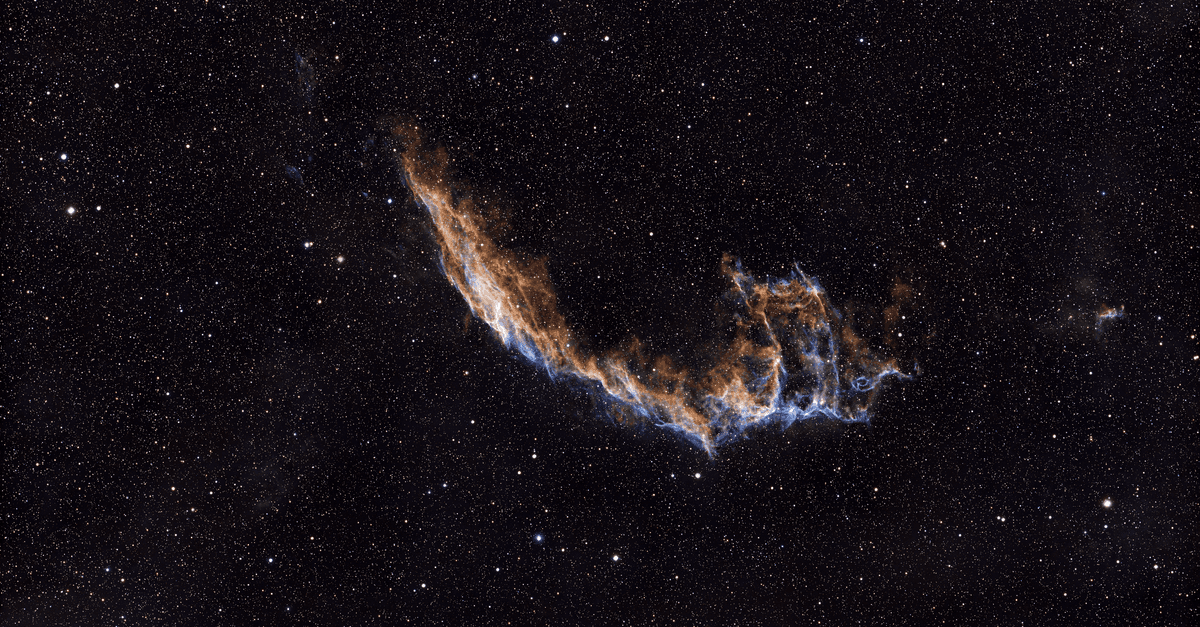
Cassiopeia A: The Youngest Supernova Remnant in the Milky Way
Cassiopeia A is the expanding debris field of a star that exploded around 1680 CE — yet almost no one on Earth recorded it. Today, X-ray and infrared telescopes reveal a forensic masterpiece: shock waves, newly minted heavy elements still glowing from the blast, and a neutron star cooling at the center. Cas A is not just a beautiful object. It is the best laboratory we have for understanding what supernovae actually do to the universe.
Experiments
The Bell Burnell Pulsar Discovery: The Signal That Changed Astrophysics
In 1967, graduate student Jocelyn Bell Burnell detected CP 1919 — the first pulsar. The discovery confirmed neutron stars exist and sparked the most debated Nobel Prize omission in physics history.

Space
Supernova Explained — Star Explosions
How stars explode as supernovae — Type Ia, core-collapse, kilonovae, famous examples, and why every iron atom in your body came from one.
Space
Neutron Stars Explained: Dense Matter and Cosmic Mergers
Neutron-star interiors remain uncertain. X-ray observations and mergers let researchers test dense-matter models and investigate heavy-element production.
Space
Machine Learning and Gravitational Wave Detection: How AI Listens to the Universe
LIGO's gravitational wave detectors produce a constant roar of noise. Machine learning is the ear that hears the cosmos whispering beneath it.

Science
Gravitational Waves: LIGO's Historic Detection
How LIGO detected gravitational waves from colliding black holes, confirming Einstein's prediction
Space
How Do Black Holes Form? Every Pathway, From Stars to Seeds
Black holes form through several distinct pathways: massive stars collapsing after fusion ends, neutron star mergers that exceed the mass limit, direct collapse of gas clouds in the early universe, and possibly primordial black holes from density fluctuations just after the Big Bang. Supermassive black holes remain partly mysterious in origin, but likely grew through a mix of heavy seeds, mergers, and accretion.
Space
What Is Nucleosynthesis? How Atoms Are Forged in Stars and Stellar Explosions
Nucleosynthesis is the process by which atomic nuclei are built from simpler components. Hydrogen and helium were made in the first three minutes after the Big Bang. Every heavier element was forged inside stars or in their violent deaths. Much of the gold and platinum is made in neutron star mergers — cosmic events detected as gravitational waves.
Space
What Are X-Ray Binaries? Neutron Stars and Black Holes That Feed
X-ray binaries are binary star systems where a neutron star or black hole pulls gas from a companion star, converting gravitational energy into X-rays with an efficiency that dwarfs nuclear fusion. They are among the brightest X-ray sources in the sky and natural laboratories for extreme physics.
Page 1 of 2Next →