The Bell Burnell Pulsar Discovery: The Signal That Changed Astrophysics
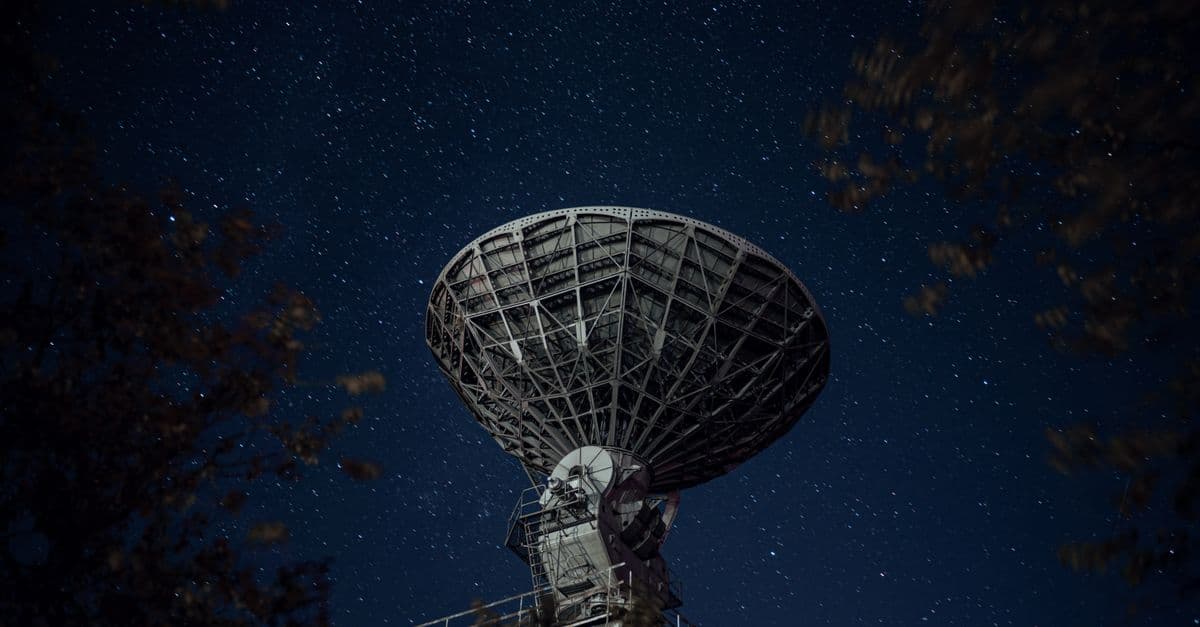
Photo: Marek Pavlík / Pexels
In the summer of 1967, a 24-year-old PhD student at Cambridge was doing what graduate students do: processing enormous quantities of data that no one else wanted to sift through. Jocelyn Bell had spent two years helping construct a four-acre radio telescope and was now responsible for analyzing the several hundred feet of chart paper it produced every day. What she found in that paper — a faint, impossibly regular blip she initially called "scruff" — turned out to be the first detected pulsar, confirmed neutron stars as a physical reality rather than a theoretical curiosity, and provoked one of the most debated Nobel Prize decisions in the history of science.
What Pulsars Are and Why They Were Not Expected
A pulsar is a rapidly rotating supernova. About 20 km wide but containing more mass than the Sun.">neutron star that emits beams of electromagnetic radiation from its magnetic poles. Because the rotation axis and the magnetic axis are misaligned — like a lighthouse whose beam sweeps around rather than shining straight up — an observer in the path of the beam detects a regular pulse each time the beam sweeps past. The rotation period, which determines the pulse period, ranges from milliseconds to several seconds depending on the pulsar's age and history.
Neutron star — the collapsed remnant of a massive star after a supernova explosion. With a mass comparable to the sun compressed into a sphere roughly 20 kilometers (12 miles) across, neutron stars have densities of approximately 10¹⁷ kg/m³ — a cubic centimeter of neutron star material would weigh around 100 million tonnes on Earth.
The theoretical existence of neutron stars had been proposed by Walter Baade and Fritz Zwicky in 1934, shortly after James Chadwick's discovery of the neutron. They suggested that a supernova explosion could leave behind a stellar remnant composed almost entirely of neutrons, compressed beyond the point where normal atomic structure could survive. In 1939, J. Robert Oppenheimer and George Volkoff calculated the maximum mass such a neutron star could have before further collapse into a black hole, a limit now called the Tolman-Oppenheimer-Volkoff (TOV) limit.
Source: Baade, W. & Zwicky, F. (1934), "Remarks on super-novae and cosmic rays," Physical Review, 46, 76–77 — the original theoretical proposal for neutron stars.
For more than three decades, neutron stars remained theoretical. They were hot enough and compact enough that the thermal radiation they emitted would be detectable only from very nearby, and no telescope of the era was sensitive enough to find them by their heat alone. By the mid-1960s, most astrophysicists regarded neutron stars as a solved theoretical problem with no obvious observational handle.
The idea that a neutron star might be detectable as a radio pulsar had not been published before Bell's discovery. Thomas Gold proposed the rotating neutron star model to explain pulsars in 1968 — after the discovery, not before it.
Source: Gold, T. (1968), "Rotating neutron stars as the origin of the pulsating radio sources," Nature, 218, 731–732 — the first published model identifying pulsars as rotating neutron stars.
The Instrument: A Four-Acre Radio Telescope Built by Hand
The telescope Bell helped build at the Mullard Radio Astronomy Observatory near Cambridge was not a dish. It was an array — 2,048 dipole antennas spread over a four-acre (1.6 hectare) field, all connected and tuned to operate at 81.5 MHz (a wavelength of about 3.7 meters). The design was intended to study quasars — quasi-stellar radio sources — by exploiting a phenomenon called interplanetary scintillation.
Interplanetary scintillation — the rapid flickering of radio signals from compact, distant sources caused by density irregularities in the solar wind. Point-like sources (quasars) scintillate strongly; extended sources (diffuse radio nebulae) do not, because the scintillation patterns average out. The technique allowed the Cambridge team to distinguish compact extragalactic sources from extended Galactic ones without needing extremely high angular resolution.
Source: Hewish, A. et al. (1968), "Observation of a rapidly pulsating radio source," Nature, 217, 709–713 — the discovery paper, reporting CP 1919.
The telescope produced its output as pen traces on paper chart rolls. At survey speed, this meant roughly 100 feet (30 meters) of chart paper per day. Bell's job was to scan this output visually, classify sources, and flag anomalies. The work was painstaking and, in the way of most data reduction tasks, mostly uneventful.
Bell had been analyzing charts for about six months when she noticed an anomaly in records from late July and early August 1967 — a patch of signal she described as "scruff." It did not look like a quasar scintillation signature, and it did not look like terrestrial radio interference, both of which she had become expert at recognizing. It was something else.
The Detection: From "Scruff" to Something Unprecedented
The signal Bell noticed was faint and intermittent in the early recordings. It appeared near midnight local sidereal time — meaning it came from a fixed point on the sky rather than from a terrestrial transmitter, which would appear at all sidereal times. This was the first indication it was astrophysical.
Source: Bell Burnell, J. (1977), "Little Green Men, White Dwarfs, or Pulsars?" Annals of the New York Academy of Sciences, 302, 685–689 — Bell's own account of the discovery process, written in retrospect.
When Bell pointed out the anomaly to her supervisor, Anthony Hewish, he initially thought it was interference from a local source — a nearby television set, an electric fence, or some other terrestrial emitter producing radio hash. Bell was skeptical: the signal tracked sidereal time too faithfully.
The critical observation came on November 28, 1967. Using a faster chart recorder that could resolve individual pulses, Bell and Hewish saw the signal resolve into a series of discrete, extremely regular pulses separated by approximately 1.337 seconds. The regularity was startling. Nothing in nature known at that time produced a radio signal with that kind of clockwork periodicity.
Source: Hewish, A. et al. (1968), Nature, 217, 709–713 — the measured period of CP 1919 was 1.3373 seconds with an uncertainty in the last digit.
The period was so precise that the Cambridge team's first, half-joking hypothesis was extraterrestrial intelligence. If a technologically advanced civilization were transmitting a regular beacon, this is what it might look like. The team designated the source LGM-1 — "Little Green Men 1" — as an internal notation while they investigated further. Bell later described the acronym as reflecting the team's awareness of the absurdity rather than any serious belief in the hypothesis.
The LGM hypothesis was quickly ruled out on practical grounds. First, Bell found a second source with different periodicity in a different part of the sky shortly afterward. A civilization could be broadcasting in one direction; two independent civilizations broadcasting simultaneously in different directions, detected by the same instrument in the same weeks, stretched credulity. Second, the signal showed a characteristic of astrophysical sources — dispersion, the frequency-dependent delay in arrival time caused by free electrons in the interstellar medium — that was inconsistent with a nearby artificial transmitter.
Source: Bell Burnell, J. (1977), Annals of the New York Academy of Sciences, 302, 685–689 — Bell's account of finding the second pulsar and ruling out LGM.
Dispersion measure — the integrated column density of free electrons between a radio source and the observer, in units of parsecs per cubic centimeter (pc/cm³). Higher dispersion measure indicates a more distant source. The measured dispersion of CP 1919 placed it well within the Galaxy, at a distance of roughly 300–400 parsecs — confirming it was a Galactic object, not a nearby artificial source.
The Data: What the Charts Showed
The original discovery paper, submitted to Nature in late 1967 and published in February 1968, reported the key measurements from CP 1919:
| Parameter | Measured Value |
|---|---|
| Pulse period | 1.3373011 seconds |
| Pulse width | ~0.04 seconds (approximately 3% of period) |
| Dispersion measure | 12.4 pc/cm³ |
| Estimated distance | ~65 parsecs (at publication; later revised) |
| Flux density at 81.5 MHz | approximately 20 Jansky |
| Approximate galactic latitude | −1.9° (near Galactic plane) |
| Approximate galactic longitude | 50° |
Source: Hewish, A. et al. (1968), Nature, 217, 709–713 — full observational parameters of CP 1919 as reported in the discovery paper.
The period stability was remarkable. Over weeks of observation, the period of CP 1919 did not drift by more than a few microseconds. This ruled out most proposed models: orbital motion in a binary system would produce systematic period changes; oscillations of a white dwarf or neutron star would have periods in seconds, but not this stable; thermal pulsation of a star would produce far longer and irregular periods.
By the time the paper was published, the Cambridge team had identified four separate pulsating radio sources with different periods and positions. Bell had found all four.
Source: Bell, J. & Hewish, A. (1967), discovery of four pulsars documented in sequence of Cambridge radio telescope records, reported in Hewish et al. (1968) and subsequent Nature papers in 1968.
The rotating neutron star model, published by Thomas Gold in May 1968, explained everything: a neutron star spinning once every 1.337 seconds, its magnetic axis offset from the rotation axis, emitting a narrow beam of radio waves from its magnetic poles. The observed pulse width of about 3% of the period corresponded to a beam opening angle of roughly 10–11 degrees — consistent with beaming from a compact magnetized rotator.
Source: Gold, T. (1968), Nature, 218, 731–732 — Gold's rotating neutron star model was initially resisted by Hewish, who favored an oscillating white dwarf model, before accumulating evidence favored Gold's explanation.
The Physics: Why Neutron Stars Pulse
To understand why a neutron star produces such a precise signal, it helps to think about what happens when a star much more massive than the sun exhausts its nuclear fuel. The outward pressure of nuclear fusion, which for billions of years balanced the inward pull of gravity, disappears. The stellar core collapses on a timescale of seconds.
In this collapse, the conservation of two physical quantities drives the pulsar's remarkable properties: angular momentum and magnetic flux.
A star like the sun rotates once every 25 days. When its core collapses from a radius of roughly 10,000 km to a radius of 10 km — a factor of 1,000 reduction in radius — conservation of angular momentum requires the rotation rate to increase by a factor of 1,000² = one million. A star rotating once every 25 days becomes a neutron star rotating thousands of times per second if collapse were instantaneous and lossless. In practice, energy losses to neutrinos and other processes reduce this, but the resulting rotation periods are still seconds or milliseconds.
Source: Shapiro, S. L. & Teukolsky, S. A. (1983), Black Holes, White Dwarfs, and Neutron Stars (Wiley) — the standard astrophysics reference for neutron star formation and properties.
Similarly, the magnetic field of the progenitor star, threaded through its volume, gets compressed into a much smaller volume. Magnetic flux conservation means the magnetic field strength increases by the same factor of 1 million squared. A stellar magnetic field of around 1 gauss becomes a neutron star magnetic field of around 10¹² gauss — a trillion gauss, or 10⁸ tesla. No laboratory on Earth comes close to producing a field of that strength.
This ultra-strong magnetic field, anchored to a rapidly rotating neutron star, accelerates charged particles — primarily electrons and positrons — along the magnetic field lines near the poles. These accelerated charges emit radiation across a broad electromagnetic spectrum, but most detectably in radio wavelengths for ordinary pulsars. The result is two narrow beams, one from each magnetic pole, sweeping around the sky like a lighthouse as the neutron star spins.
Lighthouse analogy: just as a ship's captain sees a lighthouse flash only when the beam points at the ship, a radio telescope detects a pulsar pulse only when the neutron star's beam sweeps across Earth. Pulsars that exist but whose beams never intersect Earth are invisible to us entirely — meaning the observed population is only a fraction of the total.
Timeline: From Discovery to Nobel Prize
| Date | Event |
|---|---|
| July 1967 | Bell first notices anomalous "scruff" on chart records |
| August 1967 | Signal recurs; Bell begins systematic recording |
| November 28, 1967 | High-speed recording resolves individual pulses at 1.337 s period |
| December 1967 | LGM hypothesis briefly considered; second pulsar found by Bell |
| January 1968 | Discovery paper submitted to Nature; four pulsars total identified |
| February 1968 | Hewish, Bell, et al. paper published in Nature, 217, 709–713 |
| May 1968 | Thomas Gold publishes rotating neutron star model in Nature |
| October 1968 | Vela pulsar and Crab pulsar detected — millisecond-range periods confirm rotation model |
| 1974 | Nobel Prize in Physics awarded to Hewish and Martin Ryle — Bell not included |
| 1977 | Bell (now Bell Burnell) publishes her personal account of the discovery |
| 2018 | Bell Burnell awarded $3 million Breakthrough Prize; donates entire sum to diversity scholarships |
Source: Hewish, A. et al. (1968), Nature, 217, 709–713; Nobel Prize Committee press release (1974); Breakthrough Prize Foundation (2018).
The Nobel Prize: What Was Decided and Why It Was Contested
On October 15, 1974, the Royal Swedish Academy of Sciences announced the Nobel Prize in Physics. The award went to Anthony Hewish "for his decisive role in the discovery of pulsars" and to Martin Ryle for aperture synthesis techniques in radio astronomy. Jocelyn Bell Burnell — who had built the telescope, analyzed the data, identified the anomaly, found the first four pulsars, and was listed as the second author on the discovery paper — received nothing.
Source: Nobel Prize Committee (1974), Physics Prize announcement, nobelprize.org — Hewish citation: "for his decisive role in the discovery of pulsars."
The omission provoked immediate public protest from prominent scientists. Fred Hoyle, the astronomer and cosmologist, wrote in a letter published in The Times of London that the Nobel Committee had made an error of the first order and that Bell deserved to share the prize. Sir Bernard Lovell, director of Jodrell Bank Observatory, also expressed concern about the decision.
Source: Hoyle, F. (1974), letter to The Times (London) — Hoyle's public protest is documented in multiple histories of the Nobel Prize controversy, including Bell Burnell's own account.
The Nobel Committee's position, never stated with precision, appeared to rest on two arguments: first, that the Nobel Prize in Physics had historically gone to senior scientists for programs of research rather than to students for individual observations; second, that Hewish deserved credit for designing the scientific program and the instrument that made the discovery possible.
Neither argument was entirely wrong. Hewish had conceived the interplanetary scintillation survey, secured the funding, and led the team. Graduate students do work under supervisors, and credit for a discovery does not always belong exclusively to the person who made a specific observation. The history of science is full of cases where a team leader received recognition for a program of work that junior colleagues executed.
But the specifics of this case were uncomfortable for that framing. Bell had not merely executed instructions — she had independently noticed an anomaly, investigated it against skepticism from her supervisor, identified it as astrophysical rather than terrestrial, and found three additional pulsars before the discovery was published. The discovery paper's author list placed her second of five, which in astrophysics convention typically indicates a major contributor.
Source: Bell Burnell, J. (1977), Annals of the New York Academy of Sciences, 302, 685–689 — Bell's own account explicitly describes Hewish's initial dismissal of the signal as interference.
Bell Burnell herself has consistently refused to express bitterness about the Nobel omission. In interviews over decades, she has argued that the prize was defensibly awarded to Hewish as the architect of the scientific program, and that her own subsequent career — she has received nearly every other major prize in astronomy — demonstrates that the omission did not impede her recognition. She has also noted that graduate student prizes were not the Nobel Committee's practice and that changing norms were not her responsibility to enforce through resentment.
Source: Bell Burnell, J. (2004), "So Few Pulsars, So Few Females," Science, 304, 489 — Bell Burnell's reflection on gender and recognition in physics.
What she has said more pointedly is that the pattern of women's contributions to science being systematically attributed to male supervisors has a history that extends well beyond her own case. The astronomer Cecilia Payne-Gaposchkin determined the composition of the sun in 1925, was pressured by Henry Norris Russell to retract her conclusion, and received no Nobel Prize. Rosalind Franklin's X-ray diffraction work on DNA contributed directly to Watson, Crick, and Wilkins' model — and their Nobel Prize. Bell Burnell's case sits in that tradition.
The Science After: What Pulsars Have Revealed
The discovery of pulsars opened observational windows that had not previously existed.
The first millisecond pulsars — neutron stars spinning hundreds of times per second — were discovered in the 1980s. Their periods are so stable that they rival atomic clocks in precision. Arrays of millisecond pulsars distributed across the sky are now used as a galaxy-scale detector for gravitational waves at nanohertz frequencies (much lower than the kilohertz band that LIGO detects), in a program called Pulsar Timing Arrays.
Source: Lorimer, D. R. (2008), "Binary and Millisecond Pulsars," Living Reviews in Relativity, 11, 8 — review of millisecond pulsar science and timing array applications.
The binary pulsar PSR 1913+16, discovered by Russell Hulse and Joseph Taylor in 1974, provided the first indirect evidence for gravitational waves: the two neutron stars in the binary orbit were losing orbital energy at exactly the rate predicted by general relativity for gravitational wave emission. Hulse and Taylor received the Nobel Prize in Physics in 1993.
Source: Hulse, R. A. & Taylor, J. H. (1975), "Discovery of a pulsar in a binary system," The Astrophysical Journal Letters, 195, L51–L53 — discovery of PSR 1913+16.
This is relevant because the same discovery lineage — Bell Burnell's initial identification of pulsars enabling the Hulse-Taylor binary pulsar — supported a Nobel-winning research program that built directly on her work. She was not recognized. Hulse and Taylor were.
Source: For the connection between Bell's discovery and later Nobel work, see Lyne, A. G. & Graham-Smith, F. (1998), Pulsars as Physics Laboratories (Oxford University Press).
Pulsars have also been used to test general relativity in strong-field conditions inaccessible to Solar System tests (which probe weak-field, slow-motion limits). The double pulsar PSR J0737-3039A/B, discovered in 2003, is a binary system containing two pulsars — the only such system known — and has allowed tests of general relativity at the 0.05 percent level.
Source: Kramer, M. et al. (2006), "Tests of General Relativity from Timing the Double Pulsar," Science, 314, 97–102 — double pulsar GR tests.
What People Get Wrong About the Discovery
"Bell Burnell just happened to notice the signal by luck." She noticed an anomaly that occupied roughly a quarter-inch on hundreds of feet of chart paper. Recognizing it as anomalous and systematically pursuing it, against initial dismissal, required expertise, persistence, and scientific judgment. She found three more pulsars before the discovery paper was published.
"Hewish didn't deserve credit." He did. He conceived the survey program, built the team, and designed the instrument. The discovery emerged from his scientific vision. The question is not whether Hewish deserved the Nobel — he arguably did — but whether Bell Burnell also deserved to share it.
"Pulsars were already predicted before the discovery." Neutron stars were predicted; rotating pulsars were not. No published paper before 1968 predicted that neutron stars would be detectable as regular radio pulsars. Gold's rotating neutron star model was published in May 1968 to explain the already-discovered phenomenon.
"The signal was immediately recognized as a neutron star." It was not. The LGM hypothesis, while half-joking, reflected genuine uncertainty. The explanation as a rotating neutron star came months after the discovery and was initially resisted by Hewish himself, who favored a white dwarf oscillation model.
FAQs
Q: Who actually discovered the first pulsar?
A: Jocelyn Bell Burnell first noticed the anomalous signal in July 1967, pursued it systematically, and identified it as astrophysical. She found the first four pulsars. The discovery paper listed her as second author, with Hewish first. Most historians of science credit both Bell Burnell and Hewish for the discovery, while acknowledging Bell's role as the person who actually identified the phenomenon.
Q: Why is the pulsar called CP 1919?
A: CP stands for "Cambridge Pulsar," and 1919 refers to its right ascension coordinate (19 hours, 19 minutes in the sky). Its modern designation is PSR B1919+21, where PSR stands for "pulsar" and B1919+21 gives its position in B1950.0 coordinates.
Q: How regular are pulsar pulses?
A: Extremely regular. CP 1919 pulses every 1.3373011 seconds, with period stability rivaling atomic clocks over short basescales. Millisecond pulsars are even more stable and are used as cosmic timekeeping references in gravitational wave detection programs.
Q: Why didn't Bell Burnell receive the Nobel Prize?
A: The Nobel Committee awarded the 1974 Physics Prize to Hewish (and Ryle) without including Bell. The Committee never provided a detailed public explanation. The most common justification offered is that Hewish, as the program leader, received credit for the scientific program. Many scientists have argued this was unjust given Bell Burnell's direct role in the discovery.
Q: What has Bell Burnell achieved since the pulsar discovery?
A: She went on to a distinguished career in astrophysics. She has served as Dean of Science at the University of Bath, President of the Royal Astronomical Society (twice), President of the Institute of Physics, and Chancellor of the University of Dundee. She received the Oppenheimer Prize, the Michelson Medal, the Jansky Prize, the Herschel Medal, and in 2018 the Breakthrough Prize in Fundamental Physics — worth $3 million, which she donated entirely to fund diversity scholarships in physics.
Q: What is a pulsar timing array?
A: A network of millisecond pulsars spread across the sky, monitored with high precision over years or decades. Gravitational waves passing through the galaxy produce correlated timing shifts in the observed pulse arrival times. In 2023, multiple independent collaborations announced evidence for a gravitational wave background using pulsar timing arrays — a detection made possible by Bell Burnell's 1967 discovery.
The Takeaway
Jocelyn Bell Burnell built a telescope, processed data that no one else was sifting through, recognized a signal that did not fit any known category, and pursued it past initial dismissal until it revealed an entirely new class of astrophysical object. The discovery of pulsars confirmed neutron stars as physical reality, opened a new branch of observational astronomy, and eventually enabled gravitational wave detection at galaxy-spanning scales. That the person most directly responsible for the initial identification did not share in the Nobel Prize has become one of the clearest examples of how credit in science does not always follow discovery. Bell Burnell herself has channeled the recognition she did receive into removing barriers for the next generation — a more durable contribution than any prize.
Read next:
Follow new articles
Add SciHub101 to your feed reader to see new science and technology stories.
About the Author
SciHub101 is an independent science and technology publication founded and edited by Buğra Sözeri, a software engineer and app developer based in Türkiye. AI tools assist with drafting and research. Source documentation in the existing archive is uneven, and articles are being reviewed and corrected. The Editorial Team byline identifies editorial responsibility; it does not certify specialist or independent human review. Where we compare products, anything built by our own team is labelled as such — see the editorial guidelines and About page for how corrections and disclosures work.
Related Articles
The Perrin Brownian Motion Experiment: Proving Atoms Are Real
Jean Perrin's 1908–1909 experiments on Brownian motion confirmed Einstein's 1905 atomic theory and measured Avogadro's number to 1% accuracy — ending 2,400 years of debate about whether atoms exist.
The Beadle-Tatum Experiment: One Gene, One Enzyme
In 1941, Beadle and Tatum X-rayed bread mold and proved that each gene controls one enzyme. The experiment that bridged genetics and biochemistry — and won a Nobel Prize.
Jocelyn Bell Burnell: The Astronomer Who Found Pulsars
Jocelyn Bell Burnell discovered pulsars in 1967 as a PhD student. Her Nobel Prize snub became science's most debated injustice. Here is the full story.

What Is a Pulsar? The Universe's Most Precise Clocks
Pulsars are rapidly rotating neutron stars that emit beams of electromagnetic radiation — detectable as precise pulses every time the beam sweeps past Earth. The first pulsar, discovered in 1967 by Jocelyn Bell Burnell, was initially nicknamed 'LGM-1' (Little Green Men). Millisecond pulsars rotate up to 716 times per second and are more accurate than atomic clocks — used to detect gravitational waves from supermassive black hole mergers.
The Cosmic Microwave Background Discovery: Hearing the Big Bang
In 1964, Penzias and Wilson found persistent noise in a Bell Labs antenna they could not explain. It turned out to be the afterglow of the Big Bang. Here is how they found it.