The Beadle-Tatum Experiment: One Gene, One Enzyme
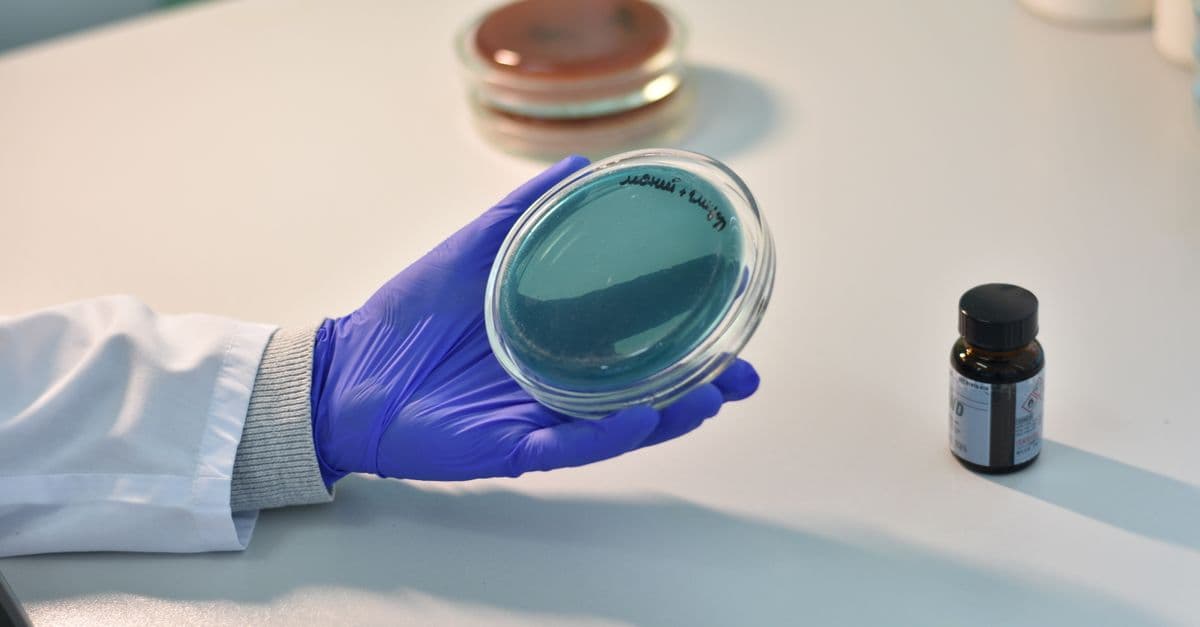
Photo: Нурлан Шлюмбаев / Pexels
Before 1941, geneticists knew that genes existed and that they carried heritable information, but they had no clear picture of what genes actually did inside a cell. The question "how does a gene produce a trait?" was genuinely open. George Beadle and Edward Tatum answered it by bombarding bread mold with X-rays, growing the survivors on chemically defined diets, and watching which nutrients each mutant strain could no longer make for itself. Their conclusion — one gene controls one enzyme — was one of the most clarifying ideas in the history of biology.
The Problem They Were Trying to Solve
By the late 1930s, geneticists knew that genes occupied specific loci on chromosomes and that mutations in those genes produced altered phenotypes. Mendel had shown that heritable traits followed mathematical rules. Morgan had mapped genes on chromosomes in fruit flies. But the molecular mechanism connecting a gene to a visible trait remained a black box.
The prevailing suspicion was that genes somehow influenced proteins, because proteins — and specifically enzymes — controlled the chemistry of living cells. But "somehow influenced" was not a mechanism. It was a placeholder.
Beadle had actually worked on a related problem earlier in his career, collaborating with Boris Ephrussi at the California Institute of Technology in the mid-1930s. They transplanted eye-tissue precursors between fruit fly larvae and showed that two genes, vermilion and cinnabar, controlled sequential steps in eye-pigment synthesis. Each gene appeared to control a distinct chemical transformation. But fruit fly biochemistry was too complex to work out in detail with the tools available.
Source: Beadle, G. W. (1945), "Biochemical genetics," Chemical Reviews, 37(1), 15–96 — Beadle's own review of the pathway from Drosophila eye pigment work to Neurospora, describing the logical continuity of the research program.
What Beadle needed was a simpler organism whose chemistry was easier to track. He found it in Neurospora crassa.
Why Neurospora crassa Was the Perfect Organism
Neurospora crassa — the pink bread mold that ruins loaves left on humid countertops — turned out to be an ideal model organism for exactly the problem Beadle wanted to solve.
The mold is a fungus with a haploid phase (one copy of each gene per cell, not two like humans), which meant that mutations would show their effects immediately rather than being masked by a second healthy copy. It grows rapidly, producing a new generation in days. It reproduces sexually, so crosses between strains could be performed. And critically, wild-type Neurospora is prototrophic: it can grow on "minimal medium" — a nutrient solution containing only inorganic salts, simple sugar, and the vitamin biotin. The mold synthesizes every other molecule it needs from those starting materials.
Minimal medium — a growth medium containing only the bare chemical inputs a prototrophic organism requires, with no pre-formed vitamins or amino acids. If a mutant cannot grow on minimal medium, it has lost the ability to synthesize something it needs.
This prototrophy was the key. If Beadle and Tatum could knock out individual biosynthetic enzymes by mutation, the resulting strains would fail to grow on minimal medium but would grow fine if the missing product was added back. The mutation would create a nutritional requirement that could be identified by chemical supplementation.
Source: Perkins, D. D. & Davis, R. H. (2000), "Evidence for safety of Neurospora species for laboratory research and teaching," Fungal Genetics Reports, 47, 13–16 — summary of Neurospora biology and its properties as a model organism.
Tatum had been working with Neurospora's nutritional requirements and vitamin synthesis. The collaboration with Beadle, which began at Stanford in 1941, combined Tatum's biochemical expertise with Beadle's genetic framework.
The Experimental Design: Mutants, Minimal Media, and Supplementation
The logic of the experiment was elegant in its simplicity, though carrying it out required substantial technical work.
Step 1: Mutagenesis. Beadle and Tatum exposed Neurospora spores (conidia) to X-rays. X-ray irradiation causes random DNA damage, producing point mutations, deletions, and rearrangements throughout the genome. Most of these changes are either neutral or lethal. A small fraction create mutations in genes that encode biosynthetic enzymes.
Step 2: Recovery on complete medium. The irradiated spores were transferred to "complete medium" — a rich broth containing all amino acids, vitamins, and other growth factors. Any spore with a viable genome, even one carrying a biosynthetic mutation, could grow here. This step ensured they captured mutants that were nutritionally crippled but not otherwise fatally damaged.
Source: Beadle, G. W. & Tatum, E. L. (1941), "Genetic control of biochemical reactions in Neurospora," Proceedings of the National Academy of Sciences, 27(11), 499–506 — the foundational paper reporting the experimental method and first results.
Step 3: Transfer to minimal medium. Samples from each colony growing on complete medium were transferred to minimal medium. A wild-type strain would continue growing. A strain with a mutation in any biosynthetic gene would stop growing — it was now an auxotroph (an organism that requires a nutritional supplement it cannot synthesize itself, in contrast to a prototroph that can make its own).
Auxotrophic mutant — a strain that has lost the ability to synthesize an essential molecule and therefore requires that molecule to be provided in the growth medium.
Prototroph — an organism able to synthesize all molecules required for growth from simple inorganic sources, needing no organic nutritional supplements.
Step 4: Systematic supplementation to identify the deficiency. For each auxotrophic strain, Beadle and Tatum tested what it needed to grow. They added individual vitamins, individual amino acids, and other metabolites to minimal medium and observed which supplement restored growth. If adding vitamin B6 — and only vitamin B6 — restored growth, the mutation had disabled an enzyme in the B6 biosynthesis pathway.
This supplementation screen was the core diagnostic. Each mutant had a single nutritional requirement, and each requirement pointed to a single blocked enzymatic step.
Step 5: Genetic analysis. Beadle and Tatum crossed mutant strains with wild-type Neurospora and analyzed the offspring. If a single mutation were responsible for each nutritional requirement, and if each mutation affected one gene, then crossing a mutant with wild-type should produce offspring that segregate in a 1:1 ratio — half requiring the supplement, half not. That is exactly what they observed.
Source: Beadle, G. W. & Tatum, E. L. (1945), "Neurospora II. Methods of producing and detecting mutations concerned with nutritional requirements," American Journal of Botany, 32(10), 678–686 — expanded description of the screening methodology.
Dissecting a Biosynthetic Pathway: The Arginine Example
The arginine biosynthesis pathway became one of the most powerful demonstrations of the one gene–one enzyme principle. Arginine — an amino acid essential for protein synthesis — is built from simpler precursors through a series of chemical steps, each catalyzed by a specific enzyme.
Beadle and Tatum isolated multiple Neurospora mutants that required arginine to grow. At first glance, this might seem like one thing: "needs arginine." But the mutants were not identical. When the researchers tested whether simpler precursors in the arginine pathway could restore growth, they found three distinct classes:
- Class I mutants could grow if given ornithine, citrulline, or arginine. Their biosynthetic block was early in the pathway, before ornithine.
- Class II mutants could grow if given citrulline or arginine, but not ornithine. Their block was between ornithine and citrulline.
- Class III mutants could only grow if given arginine itself. Their block was the final step, converting citrulline to arginine.
This was the decisive evidence. Three genes, three enzymes, three distinct steps in one metabolic pathway. A mutation in any one gene knocked out one specific enzymatic reaction, blocking the pathway at that point. You could diagnose which step was blocked by which precursor restored growth.
Source: Srb, A. M. & Horowitz, N. H. (1944), "The ornithine cycle in Neurospora and its genetic control," Journal of Biological Chemistry, 154, 129–139 — the arginine pathway dissection, one of the earliest complete demonstrations of the one gene–one enzyme principle.
The pathway logic worked like a factory assembly line. Imagine a car assembly line with three stations: the frame welder, the engine installer, and the wheel fitter. If the engine installer is absent (mutated gene), you can still complete cars if someone delivers pre-assembled engines from outside (supplementation with citrulline, the downstream product). But delivering raw steel bars (ornithine) will not help, because the downstream problem remains. Each supplementation test was, in effect, asking: at which station is the line stopped?
What the Experiment Actually Proved — and What It Did Not
The one gene–one enzyme hypothesis, as originally stated, was a significant overstatement of what the data strictly required. The experiments proved that each identified mutation knocked out one enzymatic activity and that each such mutation mapped to a single genetic locus. This is consistent with one gene controlling one enzyme, but the experiments did not prove universality.
Several important qualifications emerged over subsequent decades:
Enzymes can be multimeric. Many enzymes are built from multiple protein subunits. Some of those subunits are encoded by different genes. A mutation in any one of several genes can disable the same enzyme. The one gene–one enzyme relationship is not always one-to-one.
One gene, one polypeptide. Vernon Ingram's work in 1957 on sickle-cell hemoglobin showed that a single point mutation changed one amino acid in one polypeptide chain — not a whole enzyme, but one protein chain. The hypothesis was refined: one gene codes for one polypeptide. Since enzymes are proteins (or protein complexes), and since polypeptides are the building blocks of proteins, this is a more precise statement.
Non-coding genes. Ribosomal RNA and transfer RNA genes produce RNA molecules that function directly without being translated into protein. A gene can encode RNA without encoding a protein or enzyme. The modern version of the hypothesis is closer to: one gene encodes one functional RNA or polypeptide.
Source: Horowitz, N. H. (1996), "The one gene–one enzyme hypothesis: history and development," Perspectives in Biology and Medicine, 39(3), 313–323 — Horowitz was a Beadle student and collaborator; this paper traces the intellectual history and refinements.
These qualifications do not diminish the original achievement. For the vast majority of protein-coding genes — which constitute most of the genes most biologists work with — the one gene–one polypeptide principle holds, and it provided a clear, testable framework that drove decades of productive research.
The Path to the Nobel Prize
Beadle and Tatum published their first paper in November 1941. The outbreak of World War II disrupted many research programs, but work on Neurospora continued throughout the 1940s. By the mid-1940s, the laboratory had isolated mutants blocked in the synthesis of vitamins B1, B2, B3, B6, pantothenic acid, choline, and a range of amino acids. Each mutant had a single nutritional requirement, and genetic analysis confirmed that each requirement mapped to a single gene.
The work attracted immediate recognition. Beadle and Tatum were awarded the Nobel Prize in Physiology or Medicine in 1958, shared with Joshua Lederberg (who used Neurospora's relatives to discover genetic recombination in bacteria). The Nobel Committee specifically cited the one gene–one enzyme hypothesis as the contribution that revealed how genes control chemistry.
Source: Nobel Committee for Physiology or Medicine (1958), Nobel Prize award announcement for George W. Beadle, Edward L. Tatum, and Joshua Lederberg — available at nobelprize.org.
Seventeen years between the foundational paper (1941) and the Nobel Prize (1958) is not unusual for fundamental biology. The recognition came after the field had had time to fully absorb and build on the insight — including through the Watson-Crick double helix paper of 1953, which made the molecular basis of genes clear, and through the deciphering of the genetic code in the early 1960s.
Timeline of the Beadle-Tatum Research Program
| Year | Event |
|---|---|
| 1934–1937 | Beadle and Ephrussi, Caltech — Drosophila eye pigment transplant experiments suggest genes control chemical reactions |
| 1937 | Beadle moves to Stanford; begins thinking about simpler model organisms |
| 1940 | Beadle and Tatum begin Neurospora X-irradiation experiments at Stanford |
| 1941 | First X-ray-induced auxotrophic mutants isolated; one gene–one enzyme hypothesis proposed |
| November 1941 | Foundational paper published in PNAS — "Genetic Control of Biochemical Reactions in Neurospora" |
| 1942–1945 | Rapid expansion: mutants blocked in synthesis of multiple vitamins and amino acids; arginine pathway dissected |
| 1944 | Srb and Horowitz publish the arginine biosynthesis pathway analysis |
| 1945 | Beadle publishes a comprehensive review; the hypothesis is widely adopted |
| 1953 | Watson and Crick propose the double helix; genes are now understood as DNA sequences |
| 1957 | Vernon Ingram shows one gene encodes one polypeptide chain (sickle-cell hemoglobin) |
| 1958 | Beadle and Tatum receive Nobel Prize in Physiology or Medicine |
| 1960s | Deciphering of the genetic code confirms the mechanism by which genes specify proteins |
What the Experiment Changed About Biology
Before Beadle and Tatum, genetics and biochemistry were largely separate disciplines. Geneticists worked with phenotypes — visible or measurable traits — and mapped them to chromosomal loci. Biochemists worked with enzyme reactions and metabolic pathways. The two fields rarely spoke in the same conceptual language.
The one gene–one enzyme hypothesis was a Rosetta Stone. It said: a gene does not directly produce a wing color or a growth pattern or a flower shape. A gene produces an enzyme. That enzyme catalyzes a chemical reaction. That reaction, in the context of a whole biochemical network, contributes to the phenotype. Trait differences are, at their root, differences in enzyme activity.
This reframing made the abstract gene a concrete biochemical entity. It set up the subsequent twenty years of molecular biology — the double helix, the genetic code, the central dogma — by making clear that the next question was: how does a gene specify an enzyme? Once that question was precise, it became answerable.
Source: Morange, M. (1998), A History of Molecular Biology (Harvard University Press) — chapter on the Beadle-Tatum contribution and its role in founding molecular biology as a discipline.
The experiment also created the practical framework for genetic screening. The logic of "mutate, grow on selective medium, identify the deficiency" is used today in every drug discovery effort that involves microorganisms, in every forward genetic screen in model organisms, and in the diagnosis of inborn errors of metabolism in human patients. When a newborn is screened for phenylketonuria (PKU) — a condition caused by a defective enzyme in the phenylalanine degradation pathway — the conceptual structure underlying that screen is continuous with Beadle and Tatum's supplementation experiments.
What People Get Wrong About One Gene–One Enzyme
"The hypothesis is still the standard model." The refined version — one gene, one polypeptide — is standard, but even that is now understood to be an oversimplification. Alternative splicing allows a single gene to produce multiple different protein products in eukaryotes. Post-translational modifications further diversify protein function. The relationship between gene and protein is real but not always one-to-one.
"Beadle and Tatum were the first to link genes to proteins." Others, including Archibald Garrod with his 1902–1909 studies of alkaptonuria (a human metabolic disease caused by a missing enzyme), had proposed similar ideas earlier. Garrod called these conditions "inborn errors of metabolism" and correctly inferred that genes controlled specific enzymatic reactions. Beadle acknowledged Garrod's precedence. The difference is that Beadle and Tatum provided rigorous experimental proof of the principle across a systematic set of biosynthetic pathways.
Source: Garrod, A. E. (1909), Inborn Errors of Metabolism (Oxford University Press) — the pioneering human clinical genetics work that anticipated the one gene–one enzyme hypothesis by three decades.
"The experiment proved what genes are made of." It did not. The Beadle-Tatum experiments said nothing about the chemical nature of the gene itself. That question was answered by the Avery-MacLeod-McCarty experiment in 1944 (showing genes are DNA) and ultimately by the Watson-Crick structure in 1953. Beadle and Tatum described what genes do; Avery and colleagues identified what genes are.
"All genes encode enzymes." Roughly 2% of the human genome encodes proteins of any kind; the rest includes regulatory sequences, structural elements, and RNA-encoding sequences. Even among protein-coding genes, many encode structural proteins, receptors, transcription factors, and signaling molecules — not catalytic enzymes in the strict sense. The hypothesis correctly identified the gene-enzyme connection for metabolic genes, but it should not be overgeneralized.
FAQs
Q: What was the one gene–one enzyme hypothesis?
A: The idea, proposed by Beadle and Tatum in 1941, that each gene controls the production of exactly one enzyme, and that each enzyme catalyzes one specific step in a metabolic pathway. The later, more precise version is "one gene–one polypeptide," since genes encode polypeptide chains, and enzymes are made of one or more polypeptides.
Q: Why did Beadle and Tatum choose Neurospora crassa?
A: Because Neurospora is haploid (mutations show their effects immediately), grows rapidly, can be grown on minimal medium (making nutritional mutants easy to detect), and reproduces sexually (allowing genetic mapping). Its biochemistry was also well understood from earlier nutritional studies by Tatum.
Q: How did X-ray irradiation produce the mutants?
A: X-rays cause random DNA damage — breaks, deletions, and base changes — throughout the genome. Most irradiated spores grow normally because their mutations are neutral or their damage is lethal. A small fraction carry mutations in genes encoding biosynthetic enzymes, making them unable to grow without nutritional supplements.
Q: What is an auxotrophic mutant?
A: An organism that has lost the ability to synthesize a specific compound required for growth, and therefore requires that compound to be supplied in its growth medium. Beadle and Tatum isolated Neurospora strains that were auxotrophic for specific vitamins and amino acids — each unable to make one particular molecule because one specific enzymatic step in its synthesis was blocked.
Q: Did Beadle and Tatum win the Nobel Prize for this work?
A: Yes. In 1958, Beadle and Tatum shared the Nobel Prize in Physiology or Medicine with Joshua Lederberg. The committee specifically cited the one gene–one enzyme hypothesis and its demonstration through Neurospora experiments as the awarded contribution.
Q: How does the Beadle-Tatum experiment connect to human disease?
A: Inborn errors of metabolism — genetic conditions in which a person is born lacking a specific metabolic enzyme — are the human analog of the Neurospora auxotrophic mutants. Conditions like phenylketonuria (PKU), alkaptonuria, and maple syrup urine disease each result from mutations in genes encoding single biosynthetic enzymes, exactly as Beadle and Tatum's hypothesis predicts.
Q: How was the one gene–one enzyme hypothesis eventually refined?
A: Vernon Ingram's 1957 work on hemoglobin showed that a single gene encodes a single polypeptide chain, not necessarily a whole enzyme. Many enzymes are built from multiple polypeptide subunits, each from a different gene. The modern statement is "one gene–one polypeptide." Further refinement acknowledges that some genes encode functional RNA molecules rather than polypeptides at all.
Q: Who anticipated the one gene–one enzyme idea before Beadle and Tatum?
A: Archibald Garrod, a British physician, proposed in 1902–1909 that certain inherited human diseases resulted from the inability to produce specific enzymes — "inborn errors of metabolism." He correctly linked heredity to enzyme defects, but without the experimental demonstration across multiple defined pathways that Beadle and Tatum provided.
The Takeaway
Beadle and Tatum took a fungus that grows on stale bread, bombarded it with X-rays, and turned biochemistry into genetics. By showing that each mutation knocked out exactly one enzymatic step, they built the conceptual bridge that connected the abstract gene on a chromosome to the concrete chemistry of a living cell. The one gene–one polypeptide principle that followed from their work is embedded in every modern description of how genetic information becomes biological function — from the basic biochemistry textbook to the clinical genetics lab diagnosing metabolic disease in a newborn.
Read next:
Weekly digest
Stay ahead of the curve
Get the best science, AI, and tech stories delivered to your inbox every week. No spam — unsubscribe any time.
About the Author
SciHub101 is an independent science and technology publication founded and edited by Buğra Sözeri, a software engineer and app developer based in Türkiye. Articles are drafted against peer-reviewed literature and primary sources, fact-checked, and edited by a human before publication. Where we compare products, anything built by our own team is labelled as such — see the editorial guidelines and About page for how corrections and disclosures work.
Related Articles

The Bell Burnell Pulsar Discovery: The Signal That Changed Astrophysics
In 1967, graduate student Jocelyn Bell Burnell detected CP 1919 — the first pulsar. The discovery confirmed neutron stars exist and sparked the most debated Nobel Prize omission in physics history.

The Anderson Positron Discovery: The First Antiparticle Seen in Nature
In 1932, Carl Anderson photographed a positron in a cloud chamber — the first antiparticle ever detected, confirming Dirac's 1928 relativistic quantum theory and opening the field of antimatter physics.
The Nirenberg Experiment: Cracking the Genetic Code
In 1961, Marshall Nirenberg used a synthetic poly-U RNA to show UUU codes for phenylalanine — the first codon ever cracked, starting the complete decipherment of the genetic code.
Barbara McClintock: The Geneticist Who Saw Jumping Genes Nobody Believed — SciHub101
Barbara McClintock discovered transposons — genes that move within genomes — in 1950. She waited 30 years for the Nobel. She said she could imagine herself inside the chromosome.

Proteins and Amino Acids — Life's Building Blocks
Proteins are chains of 20 amino acids that fold into 3D shapes powering every cell. Learn structure levels, the genetic code, folding, and AlphaFold.
Crick and Watson's DNA Discovery: Unraveling the Code of Life
In 1953, Watson and Crick revealed DNA's double helix structure, explaining how genetic information is stored and replicated. This discovery launched modern molecular biology.