Barbara McClintock: The Geneticist Who Saw Jumping Genes Nobody Believed
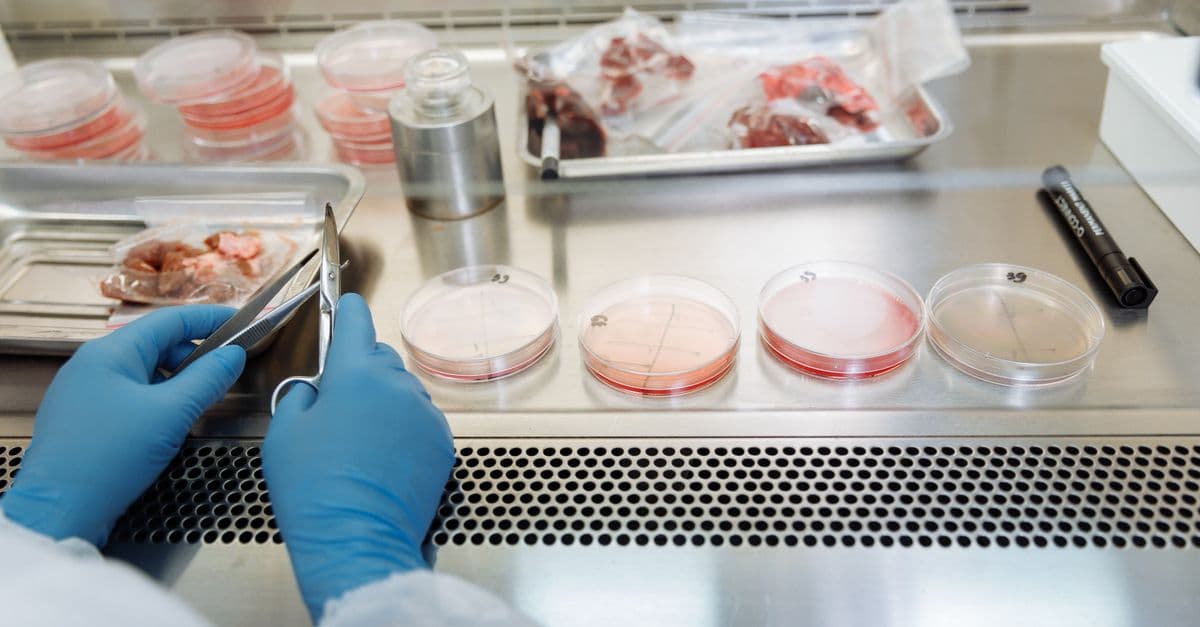
Photo: Thirdman / Pexels
Barbara McClintock (1902–1992) spent several decades working alone in a cornfield at Cold Spring Harbor Laboratory, producing discoveries so far ahead of the field's conceptual framework that her peers could not follow them. In 1950 she presented evidence that genes could physically move from one location on a chromosome to another — transposable elements, which she called controlling elements. The genetics community found the idea incomprehensible. She continued working. She published less and less, not out of discouragement, but out of her own judgment that the field was not yet ready to receive what she knew. When molecular biologists discovered transposons independently in bacteria and other organisms in the 1960s and 1970s, and confirmed everything she had proposed, she was in her seventies. She received the Nobel Prize in Physiology or Medicine in 1983 — alone, without a co-recipient, for work she had done thirty years earlier. She was the first woman to receive an unshared Nobel Prize in that category. In her Nobel lecture she explained that during her microscopy work she would imagine herself so small that she was inside the cells looking at the chromosomes directly.
Quick Biography
Eleanor McClintock was born on June 16, 1902, in Hartford, Connecticut, the third of four children of Thomas Henry McClintock, a physician, and Sara Handy McClintock. She called herself Barbara from childhood, a name she preferred to Eleanor. Her mother found her difficult — too self-sufficient, too absorbed in solitary pursuits, too uninterested in the social roles expected of a girl of her class. By her own account, she was happy. She learned to be alone as a condition of thinking, and thinking was what she most wanted to do.
She entered Cornell University in 1919 intending to study plant breeding. The genetics program at Cornell was not officially open to women undergraduates, but she was placed in the graduate course by a professor who recognized her immediately. She completed her undergraduate degree in 1923, her master's in 1925, and her doctorate in 1927, all from Cornell. Her dissertation was on chromosome cytology in maize — corn — a choice that defined her entire career. She stayed at Cornell as an instructor, then worked on National Research Council fellowships that took her to the University of Missouri and the California Institute of Technology. She was always excellent; she was never given a permanent position.
The structural situation for women in American academic science in the 1930s was not as formally restrictive as in Germany, but it was effectively limiting. She was not offered a faculty position at any major research university. When she was at the University of Missouri, the atmosphere was sufficiently uncomfortable — she was passed over for promotions given to men of lesser accomplishment — that she applied for and received a Guggenheim Fellowship in 1933 to work in Germany, only to cut the stay short when she saw what Nazi rule was doing to German science.
In 1941 she was given a position at Cold Spring Harbor Laboratory on Long Island, New York, which was then the center of genetics research in the United States. She remained there for the rest of her life — over fifty years. She grew corn in a field outside the laboratory, performed her own chromosome preparations under the microscope, and worked through the genetics of maize coloration with an intensity and precision that her colleagues recognized as exceptional even when they could not follow her conclusions. She never married. She died on September 2, 1992, at ninety.
Personal Life: Solitude, Friendship, and the Cornell Circle
McClintock never married and never described this as a loss. Her personal life was organized around the work and around a small group of lifelong scientific friendships, the most significant of which was with Marcus Rhoades. She and Rhoades had been fellow graduate students at Cornell in the 1920s, part of the extraordinary cohort assembled around Rollins Emerson's maize genetics program that included George Beadle and Charles Burnham. Rhoades and McClintock shared an interest in maize cytogenetics from the beginning, and they remained in close correspondence and mutual scientific support for the rest of their careers.
The connection with Rhoades had a practical consequence for her life: it was at his invitation that she first came to Cold Spring Harbor. In the summer of 1941, Rhoades was a summer investigator at the laboratory, and he invited McClintock to work there with him. She came for the summer and never left. The position she was eventually given there was permanent, but the initial arrival was through the invitation of a friend. The Cold Spring Harbor cornfield she would tend for fifty years became her laboratory because a colleague who understood her work offered her a space where she could do it.
Her other significant long-term friendship was with Harriet Creighton, her Cornell collaborator on the 1931 paper demonstrating cytological crossing-over. They had worked together as graduate students and maintained a correspondence across their separate careers. The scientific partnership with Creighton was brief but foundational; the personal friendship was longer.
McClintock's relationship to recognition and institutional status was unusual. She received the MacArthur Foundation "genius grant" in 1981, which came with no strings and significant financial support, and she found this form of recognition easier to absorb than the prizes that came with ceremony. She described the MacArthur as giving her the freedom to continue working without pressure — which was, in her scale of values, the best thing anyone could do for her.
She spent no money on anything unnecessary. Her apartment on the Cold Spring Harbor grounds was sparely furnished. She ate in the laboratory cafeteria. When honors and prizes began arriving with increasing frequency in her seventies and eighties, she was courteous about them and privately bewildered by the attention. She had been doing the same work all along.
Major Scientific Contributions
Transposable Elements: Genes That Move
McClintock's central discovery was that genes are not fixed in position on a chromosome. She demonstrated this through a systematic genetic analysis of the color patterns in maize kernels, which she began in the late 1940s. The colors of individual kernels — spotted, streaked, patchy, uniform — are determined by the activity of pigmentation genes. McClintock found patterns of coloration that could not be explained by standard Mendelian genetics, in which genes stay in place and their activity is determined by which alleles are inherited.
She traced the anomalies to two controlling elements she named Dissociation (Ds) and Activator (Ac). Ds caused chromosomal breakage at a specific location, but only when Ac was also present in the genome — and Ac could be in different positions in different plants. She showed that both Ds and Ac physically changed their chromosomal positions over successive generations, moving from one location to another. The activity of nearby genes was altered by the presence and position of these elements. She called this phenomenon the control of gene action by transposable elements.
She presented these findings at the Cold Spring Harbor Symposium in 1951, in a talk that her colleagues received with silence and confusion. The dominant paradigm was the static gene — a bead on a string, fixed in position. The idea that a genetic element could move was not simply novel; it contradicted the framework within which everyone in the room was thinking. James Watson, who was present, later said the talk was met with incomprehension. She was not rejected with hostility; she was not understood at all.
She continued her work, published her primary paper in 1953, and then largely stopped publishing her most advanced findings, maintaining detailed notebooks that she shared selectively. She knew what she knew. She waited for the field to develop the tools to see what she had seen.
When François Jacob and Jacques Monod published their model of gene regulation in E. coli in 1961 — work that won the 1965 Nobel Prize — the genetic community began to have a conceptual framework for the idea that genes could be regulated. When Peter Starlinger and Heinz Saedler discovered transposable elements in bacteria in the late 1960s, and when Nina Fedoroff and others used molecular techniques in the 1970s and early 1980s to characterize the Ds and Ac elements McClintock had described in maize, every detail of her account was confirmed.
Transposable elements are now understood to constitute a significant fraction of most eukaryotic genomes. In the human genome, approximately 45 percent of the sequence derives from transposable elements or their remnants. Their roles in genome evolution, gene regulation, and disease are active research areas. For related context on how the genome's structure shapes biology, see CRISPR gene editing explained.
Cytogenetics of Maize Chromosomes
Before the transposon work, McClintock made foundational contributions to the cytogenetics of maize — the study of chromosomes under the microscope. In the 1930s she developed methods for individually identifying each of maize's ten chromosome pairs by their distinctive features under the microscope. She worked out the behavior of chromosomes during meiosis — the cell division that produces eggs and sperm — in detail that established the maize chromosome as the best-characterized chromosome complement in plant genetics. Her collaborative work with Harriet Creighton in 1931 provided the first direct cytological demonstration that genes recombine by physical exchange of chromosome segments — a result that confirmed what geneticists had inferred indirectly but never directly seen.
Thomas Hunt Morgan, who had built his entire genetics program on inferring chromosomal behavior from inheritance patterns, said of the McClintock-Creighton paper that it was "the kind of thing we've been waiting for many years."
The Neurospora Work: An Overlooked Chapter
Between the maize cytogenetics work of the 1930s and the transposon discoveries of the 1940s and 1950s, McClintock made a significant contribution to a completely different organism: Neurospora crassa, a bread mold that had been adopted by geneticists as an experimental system because of its simple genetic architecture. George Beadle and Edward Tatum were developing the experiments with Neurospora that would eventually win the 1958 Nobel Prize for demonstrating the one gene-one enzyme relationship, but the system required cytological characterization — someone needed to identify and describe the Neurospora chromosomes under the microscope before the genetic work could proceed rigorously.
McClintock took on this problem and solved it. In 1945 she published a paper characterizing the chromosomes of Neurospora crassa in detail sufficient to support the genetic mapping work Beadle and Tatum were pursuing. The paper required the same microscopic precision that characterized her maize work, applied to a very different organism. The Neurospora cytogenetics paper is rarely mentioned in popular accounts of her career, but it was recognized at the time as an important technical contribution — and it extended her reputation beyond maize genetics to the broader experimental biology community. Beadle credited her work specifically.
Ring Chromosomes and the Breakage-Fusion-Bridge Cycle
In the late 1930s and early 1940s, McClintock described what she called the breakage-fusion-bridge cycle in maize chromosomes. When a chromosome undergoes breakage and the broken ends fuse to form a ring chromosome, specific and reproducible patterns of instability result during subsequent cell divisions. McClintock traced these patterns in detail, showing how ring chromosomes behave during mitosis and meiosis and what genetic consequences result from their instability.
This work had consequences beyond maize genetics. The breakage-fusion-bridge cycle she described is now recognized as a mechanism that operates in cancer cells undergoing chromosomal instability. The unstable chromosomes characteristic of many cancers show exactly the kind of repeated breakage and fusion cycles McClintock had characterized decades earlier in corn. Her model for the cycle's mechanics is still cited in cancer cytogenetics literature.
Lesser-Known Habits and Quirks
She Worked Alone by Choice and Design
For most of her career at Cold Spring Harbor, McClintock grew her own corn, performed her own field observations, made her own chromosome preparations, ran her own genetic crosses, and drew her own conclusions. This was not isolation imposed from outside; it was a deliberate working method based on her conviction that the most important work required a single continuous mind tracking the material over time.
Her corn field was her laboratory. She knew individual plants by their history across multiple growing seasons. She kept records of thousands of crosses with a precision that allowed her to reconstruct genetic events that had occurred in specific plants in specific generations. The epistemic consequence of this method was that her data were extraordinarily rich but also extremely difficult for anyone else to evaluate without following the same material through the same years. Her colleagues could read her papers and not see what she saw because they had not spent the seasons with the plants that she had.
The loneliness of this position is occasionally over-romanticized. McClintock said in multiple interviews that she was not lonely; she was absorbed. The work was the company. She described getting up before dawn to be in the field when the light was right for observation. She ate simply, spent little on clothes or furnishings, and organized her life around the seasonal demands of corn genetics with what her colleagues described as serene practicality.
She Claimed to "See" the Chromosomes from the Inside — and This Is Documented in Primary Sources
The most frequently cited and potentially mythologized element of McClintock's story is her claim about her relationship to the material she studied. In her 1983 Nobel lecture, and more extensively in Evelyn Fox Keller's biography A Feeling for the Organism (1983), she described a practice of intense imaginative identification with her material during microscopy. She said that when she looked through the microscope at chromosomes, she did not merely observe from the outside. She would become so absorbed that she imagined herself at the scale of the chromosomes — looking at the chromosome from close beside it, understanding its structure by imagining what it would be like to be in it.
Keller's biography, which is based on extensive interviews with McClintock, is the primary source for this account. The phrase most often quoted is: "I was right down there with them, and everything got big. I even was able to see the internal parts of the chromosomes — actually everything was there. It surprised me because I actually felt as if I was right down there and these were my friends."
This description has been interpreted as metaphor, as a description of exceptional perceptual attentiveness, and — by some critics of Keller's biographical framework — as overstatement. Keller herself was explicit that she was not arguing McClintock had supernatural perception; she was arguing that McClintock's cognitive relationship to her experimental material was unusually intimate and productive, and that this relationship was not captured by standard accounts of scientific method.
The factual claim — that McClintock produced detailed correct structural accounts of maize chromosomes and transposable elements that others could not see — is not in dispute. How she achieved this accuracy is the interesting question.
She Withheld Her Most Advanced Results Because She Judged the Field Unready
Between approximately 1953 and the early 1970s, McClintock published relatively little about her most advanced findings on controlling elements. This was not because she had stopped working; her notebooks from this period show continuous, detailed experimental work. She had concluded that the conceptual framework of genetics in the 1950s and 1960s was not capable of receiving what she knew, and she preferred to work and wait rather than publish results that would be misunderstood or dismissed.
This is an unusual position in science — most researchers publish continuously, partly for priority and partly because the evaluation system depends on publication. McClintock's decision not to publish is documented in her correspondence and in her later interviews. She described it without apparent bitterness. She had been ignored once in 1951 and had decided not to repeat the experience of watching colleagues fail to understand her work.
The practical consequence of this decision was that when molecular genetics developed the tools to confirm her transposon findings in the 1970s, the confirmation was sometimes treated as independent discovery rather than vindication of existing published work. McClintock had published enough in 1950 and 1953 to establish priority, and the Nobel Committee in 1983 recognized her as the original discoverer. But the gap between her findings and the field's comprehension — thirty years — is a significant episode in the sociology of scientific knowledge.
Her position is directly comparable, in structural terms, to Rosalind Franklin's: a woman scientist whose contributions were not assimilated into the standard account of a discovery at the time they were made. For that history, see Rosalind Franklin's biography.
She Lived Simply, Frugally, and Without Any Interest in Scientific Fame
Multiple accounts from Cold Spring Harbor colleagues describe McClintock as entirely indifferent to recognition. She had a modest apartment on the laboratory grounds, ate in the cafeteria, wore practical clothes, and spent her money on little. When the prizes and honors began to arrive in the late 1970s and accelerated in the 1980s — she received the MacArthur Foundation "genius grant" in 1981, two years before the Nobel — she found the attention somewhat bewildering.
Her response to the Nobel Prize announcement in 1983 was characteristic. She told a journalist that she hoped people would not make too much of it. She had known for years that the work would eventually be recognized; she was more interested in what remained to be understood than in the recognition of what had already been found.
She Was Part of One of the Most Productive Graduate Cohorts in American Genetics
The Cornell maize genetics program under Rollins Emerson in the 1920s was extraordinary by any measure. The cohort that overlapped with McClintock there included George Beadle (1958 Nobel Prize in Physiology or Medicine), Marcus Rhoades (a major maize geneticist in his own right), and Charles Burnham. McClintock was not, in this group, the outlier she later became at Cold Spring Harbor; she was one of several exceptional people working in an exceptional environment. The difference is that her Cornell colleagues moved into academic positions and received the professional recognition the field offered; she did not, largely because no major research university would give a permanent position to a woman.
This context matters for evaluating her isolation at Cold Spring Harbor. The isolation was not the result of difficulty working with others — her Cornell collaborations were productive and warm. It was the result of being directed, by institutional exclusion, toward the only position that would take her, which happened to be a solo position.
Famous Quotes
"If you know you are on the right track, if you have this inner knowledge, then nobody can turn you off... no matter what they say." From an interview late in her career, describing the orientation that sustained her through the decades when her work was not understood.
"It never occurred to me that there was going to be any stumbling block. Not that I had the answer, but [I had] the joy of going at it." From Evelyn Fox Keller's A Feeling for the Organism (1983) — characterizing her relationship to the work itself rather than to outcomes.
"I was so interested in what I was doing I could hardly wait to get up in the morning and get at it." Describing her daily experience of the corn genetics work at Cold Spring Harbor — a statement consistent with multiple accounts of her working style.
"I never thought of stopping, and I just hated sleeping. I can't imagine having a better life." From a late interview, summarizing a scientific life organized entirely around sustained attention to a single problem.
Legacy
Transposable elements — McClintock's jumping genes — are now understood as major drivers of genome evolution in almost every organism studied. In humans, repetitive sequences derived from transposable elements account for nearly half the genome. Some of these elements can still move under certain conditions; others are silenced by epigenetic mechanisms that are themselves an active research area. The regulatory roles of transposable elements in gene expression — closely related to the "controlling element" function McClintock described in maize — are studied in the context of development, cancer, and evolution.
The breakage-fusion-bridge cycle she described in the 1940s is now recognized as a mechanism of chromosomal instability in cancer cells. The Neurospora cytogenetics work she contributed to in the 1940s helped provide the platform for the one gene-one enzyme experiments that won the 1958 Nobel. Her influence extends considerably beyond the transposon work for which she is known.
Her methodological legacy is harder to quantify but significant. The practice of following individual plants across multiple generations, tracking anomalies rather than averaging them away, and being willing to reach conclusions that the prevailing framework cannot yet accommodate — these are not standard scientific virtues, but they are what produced her discovery.
The Cold Spring Harbor cornfield where she worked for over fifty years still stands. She is commemorated there and at the National Academy of Sciences, which she joined in 1944 — one of the first women elected. She received the Nobel at eighty-one. She continued working until shortly before her death at ninety, in 1992. For another scientist whose work with crops changed the world, see Norman Borlaug.
FAQ
Q: What are transposons or jumping genes? A: Transposons (transposable elements) are DNA sequences that can change their position within a genome. McClintock called them "controlling elements" and demonstrated that they could move from one chromosomal location to another, altering the activity of nearby genes in the process. They were subsequently found in bacteria, flies, yeast, and essentially all organisms — and constitute roughly 45 percent of the human genome.
Q: Why did it take 30 years for McClintock to receive the Nobel Prize? A: The conceptual framework of genetics in the 1950s treated genes as fixed elements on chromosomes. McClintock's evidence that genetic elements could move was genuinely incomprehensible within that framework, and her 1951 presentation was met with incomprehension rather than hostility. Molecular confirmation of transposons in bacteria and maize in the 1960s–1970s provided the framework within which her work could be recognized. The Nobel Committee awarded the prize in 1983 once the field had fully verified her findings.
Q: Did McClintock really claim to imagine herself inside the chromosome? A: Yes, and the claim is documented in Evelyn Fox Keller's biography A Feeling for the Organism (1983) and in McClintock's own Nobel lecture. She described imagining herself at the scale of the chromosomes, looking at them from alongside rather than from outside. Whether this is literal description or scientific metaphor is debated, but it is her own account of how she worked, and it is consistent with her extraordinary accuracy in cytological observation.
Q: Was McClintock the first woman to win an unshared Nobel Prize in Physiology or Medicine? A: Yes. The 1983 Nobel Prize in Physiology or Medicine was awarded to McClintock alone — no co-recipients. Marie Curie won unshared prizes (in Physics in 1903, shared with her husband Pierre and Henri Becquerel; in Chemistry in 1911, which was hers alone), but not in Physiology or Medicine. McClintock's 1983 prize was the first unshared Nobel in that category awarded to a woman.
Q: Why did McClintock stop publishing her most advanced results? A: She judged that the conceptual framework of genetics in the 1950s and 1960s was not capable of understanding what she had found, based on the reception her 1951 talk received. She continued working and keeping detailed notebooks but published selectively, waiting for the field to develop. She described this decision without bitterness in later interviews.
Q: What was McClintock's connection to Marcus Rhoades? A: Marcus Rhoades was a fellow graduate student at Cornell in the 1920s and became a lifelong friend and scientific colleague. He was a summer investigator at Cold Spring Harbor in 1941 and invited McClintock to work there that summer. She arrived, found a working environment suited to her methods, and remained for over fifty years. Rhoades was one of the few colleagues who consistently understood and supported her work during the decades when most of the genetics community did not.
Q: What was the breakage-fusion-bridge cycle McClintock described? A: The breakage-fusion-bridge cycle is a pattern of chromosomal behavior that results when a broken chromosome end fuses to form a ring or when two broken ends fuse incorrectly. The fused chromosome behaves abnormally in subsequent cell divisions, breaking again at each cycle. McClintock characterized this process in maize in the late 1930s and early 1940s. The same cycle is now recognized in cancer cells undergoing chromosomal instability — the mechanism she described in corn operates in human tumors.
Q: Did McClintock's work contribute to anything beyond transposons? A: Yes. Her cytogenetics work in the 1930s established the maize chromosome as the best-characterized plant chromosome set of the era. Her 1931 paper with Harriet Creighton provided the first direct visual proof of genetic recombination by chromosomal exchange. Her 1945 Neurospora cytogenetics paper helped characterize the chromosomes of the organism used in the Nobel-winning one gene-one enzyme experiments. And her breakage-fusion-bridge cycle work is still cited in cancer research. The transposon discovery is the best-known contribution, but it sits within a broader body of work that was exceptional throughout.
Sources
- Keller, Evelyn Fox. A Feeling for the Organism: The Life and Work of Barbara McClintock. W.H. Freeman, 1983. (Primary biographical source; based on extensive interviews.)
- McClintock, Barbara. "The Origin and Behavior of Mutable Loci in Maize." Proceedings of the National Academy of Sciences 36 (1950): 344–355.
- McClintock, Barbara. "Induction of Instability at Selected Loci in Maize." Genetics 38 (1953): 579–599.
- McClintock, Barbara. Nobel Lecture: "The Significance of Responses of the Genome to Challenge." Nobel Prize in Physiology or Medicine, December 8, 1983.
- Fedoroff, Nina, and David Botstein, eds. The Dynamic Genome: Barbara McClintock's Ideas in the Century of Genetics. Cold Spring Harbor Laboratory Press, 1992.
- Comfort, Nathaniel C. The Tangled Field: Barbara McClintock's Search for the Patterns of Genetic Control. Harvard University Press, 2001.
- Creighton, Harriet B., and Barbara McClintock. "A Correlation of Cytological and Genetical Crossing-Over in Zea Mays." Proceedings of the National Academy of Sciences 17 (1931): 492–497.
- McClintock, Barbara. "Neurospora. I. Preliminary Observations of the Chromosomes of Neurospora crassa." American Journal of Botany 32 (1945): 671–678.
Follow new articles
Add SciHub101 to your feed reader to see new science and technology stories.
About the Author
SciHub101 is an independent science and technology publication founded and edited by Buğra Sözeri, a software engineer and app developer based in Türkiye. AI tools assist with drafting and research. Source documentation in the existing archive is uneven, and articles are being reviewed and corrected. The Editorial Team byline identifies editorial responsibility; it does not certify specialist or independent human review. Where we compare products, anything built by our own team is labelled as such — see the editorial guidelines and About page for how corrections and disclosures work.
Related Articles

Chien-Shiung Wu: The Physicist Who Proved the Universe Is Not Left-Right Symmetric
Chien-Shiung Wu proved parity violation in 1956, overturning a 30-year assumption in physics. Lee and Yang got the Nobel. She didn't. She worked on the Manhattan Project and always wore a qipao.
Archimedes: The Naked Run, the Claw, and the Man Who Almost Invented Calculus
Archimedes of Syracuse: buoyancy, levers, war machines, and verified quirks — the Eureka story examined, the circle and the soldier, and why he came closer to calculus than anyone for 1,800 years.

Ernest Rutherford: The New Zealander Who Split the Atom
Ernest Rutherford discovered the atomic nucleus, named alpha and beta radiation, and mentored 11 future Nobel laureates. His biography, gold foil experiment, and legacy.
Murray Gell-Mann: The Man Who Named the Quark
Murray Gell-Mann discovered quarks, built the Eightfold Way, won the 1969 Nobel Prize, and co-founded the Santa Fe Institute. His biography, science, and verified quirks.

Donna Strickland: Third Woman to Win Physics Nobel, Still an Associate Professor When She Won
Donna Strickland's chirped pulse amplification technique is the laser physics behind LASIK eye surgery. Wikipedia rejected her as 'not notable' five months before her 2018 Nobel Prize.

Norman Borlaug: The Iowa Farm Boy Who Fed a Billion People
Norman Borlaug bred disease-resistant dwarf wheat in Mexican fields, launched the Green Revolution, and won the 1970 Nobel Peace Prize. An honest account of the man and the controversy.