Donna Strickland: Third Woman to Win Physics Nobel, Still an Associate Professor When She Won — SciHub101

Photo: ThisIsEngineering / Pexels
Donna Strickland (born 1959) invented chirped pulse amplification — a technique for generating ultra-short, ultra-intense laser pulses — in work she did as a PhD student in the early 1980s. The method made it possible to produce laser pulses of extraordinary peak power without destroying the equipment that generated them, which enabled precision laser applications in medicine, physics research, and manufacturing. LASIK eye surgery, which has corrected the vision of tens of millions of people, depends directly on this technique. In 2018, Strickland shared the Nobel Prize in Physics for this work. She was the third woman to win the Nobel Prize in Physics — after Marie Curie in 1903 and Maria Goeppert Mayer in 1963, a gap of fifty-five years between Mayer and Strickland. When she received the call from Stockholm, she was not a full professor at her university. Wikipedia had rejected a draft article about her five months earlier on the grounds that she was not yet notable enough to merit an entry. The Nobel Committee apparently disagreed. Another woman whose work was long under-recognized is Marie Tharp.
Quick Biography
Donna Theo Strickland was born on May 27, 1959, in Guelph, Ontario, Canada. She grew up in Guelph and attended Guelph Collegiate Vocational Institute before enrolling in the engineering physics program at McMaster University in Hamilton, Ontario, completing her bachelor's degree in 1981. She then entered the PhD program in optics at the University of Rochester, where she worked in the laboratory of Gérard Mourou.
The work that would eventually win her the Nobel was done primarily between 1984 and 1985, as a PhD student. Strickland and Mourou developed chirped pulse amplification, published the key paper in 1985, and Strickland incorporated the work into her doctoral thesis, which she completed in 1989.
After her PhD, she worked as a research associate at the National Research Council of Canada, then at Lawrence Livermore National Laboratory, and then at Princeton University's Advanced Technology Center for Photonics and Optoelectronic Materials. She joined the faculty of the University of Waterloo in 1997 as an assistant professor in the Department of Physics and Astronomy, becoming an associate professor. When she won the Nobel Prize in 2018, she had not yet been promoted to full professor — an anomaly in the standard academic career trajectory that attracted considerable comment after the announcement.
She has continued at Waterloo since the prize. She was promoted to full professor in 2018, following the Nobel announcement. She served as president of the Optical Society (now Optica) in 2013.
Personal Life and the Laser Physics Household
Donna Strickland met her husband, Doug Dykaar, while both were graduate students at the University of Rochester in the 1980s. Dykaar is also a laser physicist. Their shared professional background — both working in optics and laser physics through the same period — is unusual even in the relatively small world of ultrafast laser research. Strickland has spoken in interviews about the practical benefits of a partner who understands the work: the ability to talk about experiments over dinner without extensive translation, the mutual understanding of why a measurement might take weeks to get right.
Dykaar went on to work in industry and at Bell Labs. Strickland pursued the academic path. They have two children together. Strickland has noted in interviews that having a partner who understood the demands of experimental physics research made the sustained commitment to academic work more practical — an observation that is less a comment on personal life and more a data point about the structural requirements of scientific careers.
Her attachment to Guelph and to Canada is genuine and long-standing. She returned to a Canadian institution — Waterloo — after positions in the United States, and she has been an active presence in Canadian physics and optics communities throughout her career. Her Nobel lecture in Stockholm in December 2018 was characteristically direct: she walked through the science, explained what chirped pulse amplification actually does at the level of the pulse's frequency content, and declined to frame her story primarily as a women-in-science narrative, even as the context of being the third woman to win the prize was acknowledged in every press account that week.
Major Scientific Contributions
Chirped Pulse Amplification: How It Actually Works
The fundamental problem chirped pulse amplification (CPA) solves is this: amplifying a laser pulse increases its energy, but a very short, very intense pulse carries enough power per unit area to damage or destroy the amplifying medium and the optical components of the system before the pulse even exits. This set an apparent ceiling on the intensity of laser pulses that could be practically generated.
Strickland and Mourou's solution drew on an analogy from radar technology. In radar, chirped pulses — pulses in which the frequency changes over time, like a siren sweeping upward in pitch — are stretched out in duration (and therefore reduced in peak power) before transmission, then compressed back to their original duration after reception. Strickland and Mourou applied this principle to laser pulses.
Here is the mechanism step by step: A short laser pulse contains a spread of frequencies simultaneously, like a chord rather than a single note. The pulse is sent through a dispersive element — Strickland used a diffraction grating and an optical fiber — that delays different frequencies by different amounts, causing the frequencies to arrive at different times. The pulse is now longer in time (chirped), which means its peak power is lower. That stretched pulse can be safely fed into a laser amplifier and boosted by many orders of magnitude without damaging the system. Finally, a second dispersive element reverses the frequency delay, recombining all the frequencies and compressing the pulse back to its original short duration. The result: a pulse that is both short and carries the full amplified energy. Think of it as temporarily unweaving a rope to get it through a narrow slot, then reweaving it on the other side.
The 1985 paper by Strickland and Mourou, published in Optics Communications, demonstrated the principle and reported an increase in pulse power by a factor of approximately one thousand. Current CPA systems operate at factors of ten to the fifteenth (one quadrillion) or more.
CPA became the standard technique for generating high-intensity ultrashort laser pulses. Its applications include: laser eye surgery (LASIK and related procedures use ultrashort pulses from CPA lasers to reshape corneal tissue with precision that was not achievable with continuous or longer-pulse lasers); material processing (precision cutting and drilling in manufacturing); cancer treatment (proton and heavy-ion beams generated with CPA-based lasers for radiotherapy); and fundamental physics research (CPA-based lasers produce intensities high enough to investigate laser-matter interactions at relativistic intensities, to generate X-ray pulses for imaging, and to study plasma physics).
The Nobel committee's citation credited Strickland and Mourou with "their method of generating high-intensity, ultra-short optical pulses."
Beyond CPA: Strickland's Ongoing Research
Strickland's post-Nobel research program at Waterloo has continued to develop the applications of ultrafast laser pulses, including work on laser pulse shaping for precision material processing and on the use of ultrashort pulses in biological imaging. The Strickland lab at Waterloo has published on topics including the nonlinear optical properties of materials under intense ultrashort illumination and the development of novel laser sources.
Her broader contribution to the field extends through the students she has trained. The technology that emerged from the 1985 paper is now used in thousands of laboratories and medical facilities worldwide. The graduate students who learned pulse-laser techniques from her group at Waterloo carry those methods into their own research careers. Scientific contributions propagate partly through direct citation and partly through the training of people who go on to apply and extend the work — and Strickland has been doing the latter for nearly three decades at Waterloo.
Quirks
Wikipedia Said She Was Not Notable Enough
In May 2018, five months before the Nobel Prize announcement in October, a Wikipedia editor submitted a draft article about Donna Strickland. The submission was declined by a reviewer, who judged that the available sourcing was insufficient to establish notability under Wikipedia's standards. The editor who submitted the draft noted after the Nobel announcement that they had tried to create the article and had been turned down.
The incident attracted significant media attention after the prize was announced. It was widely interpreted as an illustration of the gender gap in Wikipedia coverage of scientists: many male scientists of equivalent or lesser distinction than Strickland have Wikipedia articles, while women in science are systematically underrepresented on the platform, in part because the volunteer editor community skews heavily male and tends to have more familiarity with — and sources for — male figures in any field. Studies of Wikipedia's science coverage have consistently found that women scientists are less likely to have articles, and that existing articles about women scientists are shorter and less well-sourced than comparable articles about men.
Strickland's response to the coverage of the Wikipedia incident was characteristically understated. She noted that she had been focused on research and teaching, not on public profile management, which was accurate — she had not sought media coverage or maintained a public presence that would have generated the third-party sources Wikipedia required. The Nobel Prize supplied those sources retroactively.
Third Woman, Fifty-Five-Year Gap
When Strickland's prize was announced, she became only the third woman to win the Nobel Prize in Physics in the award's history, after Marie Curie in 1903 and Maria Goeppert Mayer in 1963. The gap between Goeppert Mayer and Strickland is fifty-five years. The gap between Curie and Strickland is one hundred and fifteen years. In that time, the prize has been awarded to approximately two hundred and ten men.
The Nobel Prize in Physics has been awarded 117 times between 1901 and 2023. Women have won it four times (the fourth being Anne L'Huillier in 2023, five years after Strickland). This is not a reflection of the distribution of contributions to physics over that period; it is partly a reflection of the historical exclusion of women from physics careers and institutions, partly a reflection of how recognition and visibility accrued to men in mixed teams, and partly a reflection of the prize committee's own patterns. Strickland's prize noted this context explicitly in press coverage, though Strickland herself declined to make her story primarily about gender barriers, emphasizing instead the work.
The comparison to Goeppert Mayer — who won for the nuclear shell model in 1963 and was a part-time, informally compensated researcher at the University of Chicago for much of her career because nepotism rules prevented institutions from employing both her and her husband as faculty — is instructive. Both women did foundational work; both operated in institutional environments that did not fully accommodate them; both eventually received the highest recognition in the field.
Not a Full Professor When the Nobel Called
When the Nobel Prize announcement came on October 2, 2018, Donna Strickland was an associate professor in the Department of Physics and Astronomy at the University of Waterloo. She had been at Waterloo since 1997 — twenty-one years. She was not a full professor.
In the standard North American academic trajectory, a faculty member who joins at the assistant professor level is typically evaluated for tenure and promotion to associate professor after six years, and for promotion to full professor after roughly a further six to eight years of significant achievement. Strickland had been at Waterloo for more than two decades and had made contributions that were, as it turned out, Nobel-level. She had not been promoted to full professor.
Waterloo promoted her shortly after the Nobel announcement. Strickland herself noted in interviews that the rank had not seemed important to her, that she had been doing her research, and that she had not pushed for promotion. The episode is discussed in analyses of how academic institutions value and advance scientists who are not in the most prestigious institutional positions or the most prominently visible research networks.
She Was a PhD Student When She Did the Work
The chirped pulse amplification paper was published in 1985, when Strickland was twenty-five and in the fourth year of her PhD. Her contribution to the paper was substantive: she designed and ran the experiments, developed the key component of the technique (the pulse stretcher using a diffraction grating and fiber), and performed the analysis. Mourou was the senior scientist who identified the problem and the research direction; it was collaborative work in the way advisor-student projects typically are.
What is unusual is that foundational Nobel-caliber experimental work was done by the junior researcher — the student — not just as a technical support role but as the hands, the design, and the measurement. Strickland is consistently credited in the Nobel documentation as having done the experimental work; this is her work in the way that a dissertation is a student's work, even when done under supervisory guidance.
The Radar Analogy She Uses to Explain Her Own Work
Strickland is unusually good at explaining chirped pulse amplification to non-physicists. In her Nobel lecture and in subsequent public talks, she uses the radar analogy directly — explaining that the idea of chirping a pulse (sweeping its frequency) before amplifying it and then compressing it back was borrowed from radar engineering, where the same principle had been used since the 1960s. The insight was to recognize that this technique, which solved a radar problem, could also solve the laser amplification problem.
This is a useful window into how scientific advances actually happen. CPA was not discovered by staring at laser physics until a new idea appeared; it was discovered by looking sideways at a solved problem in a different field and asking whether the solution transferred. Strickland credits Mourou with identifying the radar analogy as the conceptual starting point; she built the apparatus that proved it worked. The translation of an engineering solution from one domain to another, carried out by a PhD student with the practical ability to actually build the experiment, is how a Nobel Prize gets born.
Famous Quotes
"I thought it was a scam at first. I didn't think I was going to win the Nobel Prize." (On receiving the call from the Royal Swedish Academy of Sciences, October 2, 2018)
"We need to celebrate women physicists because we're out there, and hopefully in time it'll start to move forward at a faster rate." (Press conference, University of Waterloo, October 2, 2018)
"I see myself as a scientist, not as a woman scientist. But clearly there aren't enough women in science, and we need to change that." (CBC interview, October 2018)
"The laser changed the world in ways that nobody foresaw in 1960. The possibilities for what this work could do weren't clear to me when I was doing it. They rarely are." (Paraphrased from multiple interviews on the unpredictability of fundamental research)
Legacy
Chirped pulse amplification is the foundational technique behind the most intense laser systems currently operating. Every tabletop laser system that produces terawatt or petawatt-class peak powers uses CPA. The applications range from the immediately practical — LASIK has been performed on more than forty million people worldwide as of the early 2020s — to the frontier of physics research, where CPA-based lasers are used to study matter under conditions previously accessible only in nuclear explosions.
The Nobel Prize announcement explicitly named LASIK as one of the applications. This is unusual — Nobel Prizes in physics typically recognize contributions at the level of fundamental physics rather than specific applications — and reflects the scope of CPA's practical impact.
Strickland's career trajectory, particularly the Wikipedia rejection and the full professor gap, has become a reference point in discussions of how institutions and platforms recognize scientific contribution and how those recognition systems interact with gender. She has been candid about her own story without making it the center of her public persona. Her stated preference is for attention to go to the work, which is reasonable, and to the training of future scientists.
Q: What is chirped pulse amplification?
A: Chirped pulse amplification (CPA) is a technique for generating ultra-intense laser pulses. A short laser pulse is stretched in time by introducing a frequency sweep — making the pulse longer and weaker — then amplified to high energy without damaging the laser system, then recompressed back to its original short duration, yielding a pulse of very high peak intensity. This solves the problem that amplifying a short, intense pulse directly would destroy the amplifying medium.
Q: What is CPA used for?
A: CPA enables laser pulses with peak powers orders of magnitude higher than were previously achievable. Applications include LASIK and other precision eye surgeries; precision laser cutting and drilling in manufacturing; cancer radiotherapy systems; and fundamental physics research requiring extreme laser intensities, such as plasma physics and the generation of X-ray pulses.
Q: Why was Donna Strickland not a full professor when she won the Nobel?
A: When the 2018 Nobel Prize was announced, Strickland was an associate professor at the University of Waterloo, where she had worked since 1997. She had not been promoted to full professor despite more than two decades on the faculty. She was promoted to full professor shortly after the Nobel announcement. She indicated in interviews that she had not prioritized seeking promotion; the structural reasons for the gap were not publicly elaborated by either Strickland or the university.
Q: Why was Strickland's Wikipedia article rejected before the Nobel?
A: A draft Wikipedia article about Strickland was submitted by an editor in May 2018 and declined by a reviewer on the grounds that available third-party sourcing was insufficient to establish notability under Wikipedia's guidelines. This reflected both Strickland's relatively low public profile before the prize and a well-documented systemic gap in Wikipedia's coverage of women scientists. After the Nobel announcement, the article was created quickly and thoroughly.
Q: How many women have won the Nobel Prize in Physics?
A: As of 2023, four women have won the Nobel Prize in Physics: Marie Curie (1903), Maria Goeppert Mayer (1963), Donna Strickland (2018), and Anne L'Huillier (2023). The 55-year gap between Goeppert Mayer and Strickland is one of the longest such gaps between any two consecutive women winners in Nobel history.
Q: Where did the idea for chirped pulse amplification come from?
A: The conceptual basis for CPA came from radar engineering, where "chirped" pulses — pulses that sweep through a range of frequencies — had been stretched and recompressed since the 1960s to improve radar resolution without increasing transmitted power. Mourou recognized that the same principle could solve the laser intensity problem; Strickland built the experimental apparatus that proved it worked, using a diffraction grating and an optical fiber as the pulse stretcher. The 1985 paper documenting the results was Strickland's first published paper.
Q: Who is Donna Strickland married to?
A: Strickland is married to Doug Dykaar, also a laser physicist, whom she met while both were graduate students at the University of Rochester in the 1980s. They have two children. Strickland has noted in interviews that having a partner who understands experimental physics made sustaining a research career more practically manageable.
Sources
- Strickland, Donna, and Gérard Mourou. "Compression of Amplified Chirped Optical Pulses." Optics Communications 56, no. 3 (1985): 219–221.
- Nobel Committee for Physics. "Scientific Background: Optical Tweezers and the CPA Technique." Nobel Prize in Physics 2018. Royal Swedish Academy of Sciences, 2018.
- Knapton, Sarah. "Nobel Prize Winner Donna Strickland Did Not Have a Wikipedia Page Because Editors Thought She Was Not Important Enough." The Telegraph, October 3, 2018.
- Overbye, Dennis, and Knvul Sheikh. "Nobel Prize in Physics Awarded to Arthur Ashkin, Gérard Mourou and Donna Strickland." New York Times, October 2, 2018.
- Strickland, Donna. Nobel Prize lecture: "Generating High-Intensity Ultrashort Optical Pulses." Stockholm, December 8, 2018.
- Woolston, Chris. "Nobel Laureate Donna Strickland Was Not a Full Professor When She Won." Nature, October 3, 2018.
Follow new articles
Add SciHub101 to your feed reader to see new science and technology stories.
About the Author
SciHub101 is an independent science and technology publication founded and edited by Buğra Sözeri, a software engineer and app developer based in Türkiye. AI tools assist with drafting and research. Source documentation in the existing archive is uneven, and articles are being reviewed and corrected. The Editorial Team byline identifies editorial responsibility; it does not certify specialist or independent human review. Where we compare products, anything built by our own team is labelled as such — see the editorial guidelines and About page for how corrections and disclosures work.
Related Articles
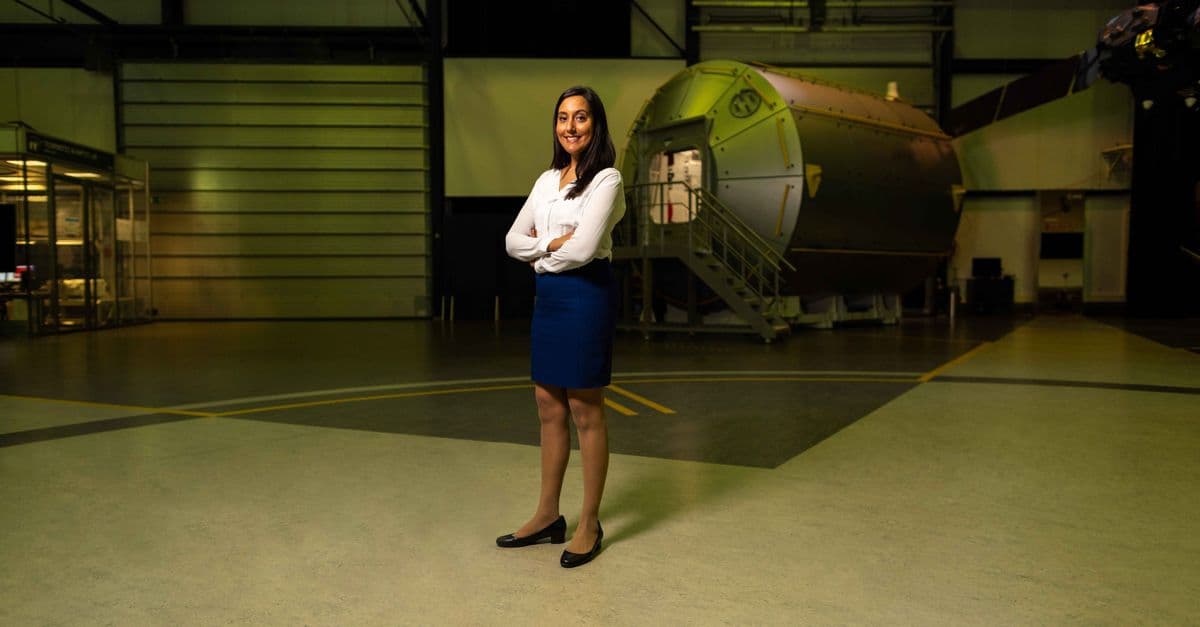
Marie Tharp: The Woman Who Mapped the Ocean Floor and Proved Plate Tectonics Was Real — SciHub101
Marie Tharp mapped the entire ocean floor from shore, banned from research ships. Her discovery of the Mid-Atlantic Ridge rift valley confirmed plate tectonics — called 'girl talk' by her own colleague.
Watson and Crick: The Double Helix, Photo 51, and the Most Consequential Discovery in Biology — SciHub101
Watson and Crick solved DNA's double helix structure in 1953 using Franklin's X-ray data without her knowledge. Crick shouted 'the secret of life' in a Cambridge pub. The full story is complicated.
Ernest Rutherford: The New Zealander Who Split the Atom — SciHub101
Ernest Rutherford discovered the atomic nucleus, named alpha and beta radiation, and mentored 11 future Nobel laureates. His biography, gold foil experiment, and legacy.
Murray Gell-Mann: The Man Who Named the Quark — SciHub101
Murray Gell-Mann discovered quarks, built the Eightfold Way, won the 1969 Nobel Prize, and co-founded the Santa Fe Institute. His biography, science, and verified quirks.
Jocelyn Bell Burnell: The Astronomer Who Found Pulsars
Jocelyn Bell Burnell discovered pulsars in 1967 as a PhD student. Her Nobel Prize snub became science's most debated injustice. Here is the full story.
Maria Goeppert Mayer: The Nuclear Shell Model and 30 Years Without Pay
Maria Goeppert Mayer built the nuclear shell model that explains why certain atoms are extraordinarily stable, then waited decades for a paid academic position.