Jocelyn Bell Burnell: The Astronomer Who Found Pulsars
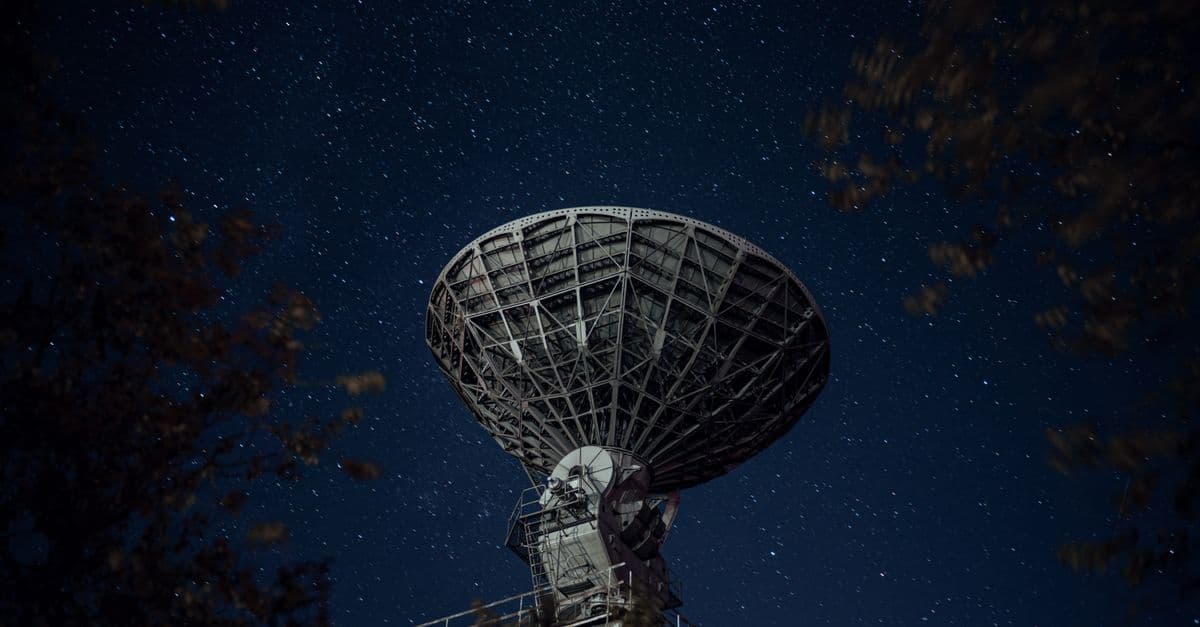
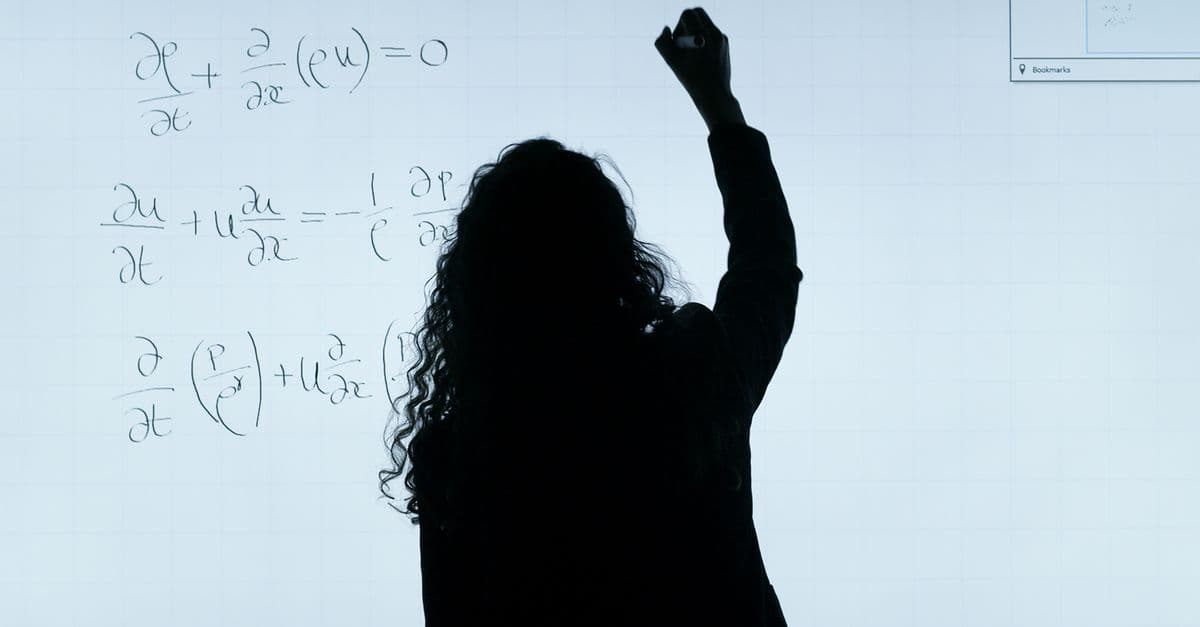
Photo: Igor Mashkov / Pexels
In the summer of 1967, a 24-year-old PhD student in Cambridge noticed something that didn't belong in her radio telescope data — a precise, repeating pulse of signal appearing every 1.337 seconds. She didn't dismiss it. She chased it. Six months later she and her supervisor had identified the first known pulsar, one of the most significant astronomical discoveries of the 20th century. In 1974, the Nobel Prize in Physics went to her supervisor. Her name was not mentioned in the citation. The debate over whether that was right or wrong has never really ended.
Early Life: Quakers, Armagh, and a School That Changed Its Rules
Susan Jocelyn Bell was born on July 15, 1943, in Belfast, Northern Ireland. She grew up in Lurgan, County Armagh, in a family that was both educated and Quaker. Her father, Philip Bell, was an architect who had helped design the Armagh Planetarium — a circumstance that gave Jocelyn early, unusual access to a working astronomical facility and its staff.
The Armagh connection planted the interest. The family home was near the observatory, and from childhood Jocelyn read her father's books on astronomy. By the time she was a teenager, the subject had become a serious ambition.
At age eleven she sat the exam for grammar school entry and failed it — what in Northern Ireland was called the eleven-plus examination. She was sent instead to the Mount School in York, England, a boarding school run by the Quaker community. The match was fortunate. The Mount offered rigorous academic training alongside its religious tradition, and Bell Burnell has said that Quakerism and science fit naturally together for her: both require developing personal understanding through direct experience rather than accepting received dogma.
There was one early obstacle that is less discussed but formative. At her first secondary school, before the Mount, the science classes were for boys only. The girls were sent to cookery and other domestic subjects. Bell Burnell's parents — both of them — went to the school and protested until the rules were changed and she was admitted to the science classes. That willingness to push institutional resistance proved characteristic of the family she came from.
After the Mount she went to the University of Glasgow, where she completed a BSc in Natural Philosophy (physics) in 1965. She then moved to Cambridge to pursue a PhD under radio astronomer Antony Hewish.
| Period | Event |
|---|---|
| 1943 | Born Belfast, Northern Ireland |
| 1965 | BSc Natural Philosophy, University of Glasgow |
| 1965–1969 | PhD student, Cambridge; works under Antony Hewish |
| July 1967 | Helps complete construction of Interplanetary Scintillation Array |
| November 28, 1967 | Identifies first pulsar signal (CP 1919) |
| 1974 | Nobel Prize in Physics awarded to Hewish and Ryle; Bell Burnell omitted |
| 1968 | Completes PhD; marries Martin Burnell |
| 2018 | Awarded $3 million Breakthrough Prize; donates entire sum |
| 2018–2023 | Chancellor of the University of Dundee |
The Discovery: 96 Feet of Paper Per Night
Bell Burnell's PhD project under Hewish was to study quasars using a new radio telescope being built at the Mullard Radio Astronomy Observatory in Cambridge. She spent two years helping construct the Interplanetary Scintillation Array, a network of 2,048 dipole antennas spread across 4.5 acres of English countryside. The telescope became fully operational in July 1967.
Quasar — quasi-stellar radio source; an extremely luminous active galactic nucleus powered by a supermassive black hole, visible across billions of light-years. In the 1960s, their nature was still being determined.
The telescope produced its data as ink traces on paper chart rolls, rolling out at roughly 30 meters (about 96 feet) of paper per day. Bell Burnell analyzed them by hand, a daily task requiring sustained attention and pattern recognition. On November 28, 1967, reviewing paper from the previous month, she noticed something anomalous: a signal that repeated with extraordinary precision approximately every 1.337 seconds. It occupied a tiny patch of the chart, but it was clearly distinct from interference patterns she had learned to recognize.
She brought it to Hewish's attention. He initially thought it was man-made interference — a spurious signal from machinery, perhaps, or a television transmitter. He told her it was probably interference. She continued tracking it. It appeared at the same time each day, tracking the stars rather than the Sun — which meant it had an astronomical, not terrestrial, source.
For a period, the team half-seriously labelled the signal "LGM-1," for Little Green Men. If the signal was artificial and astronomical, what else could it be? Bell Burnell has said she was not particularly worried about this interpretation. If it turned out to be aliens, that was interesting. But she suspected it was something else.
Source: LiveScience — Astronomy graduate student Jocelyn Bell Burnell discovers pulsars
By December 1967, Bell Burnell had found three more pulsating sources in different parts of the sky. Multiple sources ruled out artificial signals: no one was sending synchronized transmissions from multiple locations in the galaxy. These were natural astronomical objects. Hewish proposed they were rotating neutron stars.
Pulsar — a highly magnetized, rapidly rotating supernova. About 20 km wide but containing more mass than the Sun.">neutron star that emits beams of electromagnetic radiation from its magnetic poles; because the beam sweeps past Earth like a lighthouse, the received signal pulses at the rotation period, which can be as short as a few milliseconds.
The discovery was announced in Nature on February 24, 1968, with Hewish as first author and Bell Burnell as second.
The Nobel That Passed Her By
In October 1974, the Nobel Prize in Physics was awarded to Antony Hewish and Martin Ryle for their contributions to radio astronomy — Hewish specifically "for his decisive role in the discovery of pulsars." Jocelyn Bell Burnell was not named. She was not mentioned in the citation.
The omission caused immediate controversy. Astronomer Sir Fred Hoyle publicly criticized the Nobel Committee, arguing that Bell Burnell was the person who actually made the discovery. He called the decision an extraordinary injustice.
Bell Burnell herself offered a carefully measured response. She said, in 1977: "I believe it would demean Nobel Prizes if they were awarded to research students, except in very exceptional cases, and I do not believe this is one of them." She has maintained, in various forms, a public posture of equanimity about the prize for decades.
Source: Prospect Magazine — Jocelyn Bell Burnell: "Not getting the Nobel has been good for me"
Whether that equanimity reflects genuine conviction or practiced graciousness is something only she knows. What is clear is that the scientific community did not forget. Over the following decades she accumulated a list of honors remarkable even by the standards of distinguished careers: Fellow of the Royal Society, Commander of the Order of the British Empire, Dame Commander of the Order of the British Empire, President of the Royal Astronomical Society (2002–2004), President of the Institute of Physics (2008–2010), and a Visiting Professor at Oxford.
The structural argument — that PhD students don't win Nobel Prizes — has some force. Graduate students routinely perform the labor that generates discovery under supervisor oversight. Where exactly the credit boundary sits is genuinely difficult. But the specific facts of this case — that Bell Burnell identified the signal when others had dismissed it, that she found three additional examples confirming it was a class of phenomena, and that she did this by sustained manual analysis of data nobody else had examined — made many scientists uncomfortable with the outcome.
Lesser-Known Scientific Work: Careers Across Wavelengths
Bell Burnell's post-PhD career is less celebrated than the discovery but worth examining on its own terms. She worked across multiple areas of astronomy, including gamma-ray, X-ray, infrared, ultraviolet, and optical astronomy in addition to radio — an unusually broad range across the electromagnetic spectrum.
She held faculty positions at the University of Southampton, University College London, the Royal Observatory Edinburgh, the Open University (where she spent 14 years), and Princeton, among others. At the Open University she taught and conducted research simultaneously, a combination more demanding than a purely research-focused position.
She served as Dean of Science at the University of Bath from 2001 to 2004, then as Visiting Professor of Astrophysics at Oxford. In 2018 she became the first woman to serve as President of the Royal Society of Edinburgh.
Her research contributions included work on variable stars, the interstellar medium, and the study of gamma-ray sources. These are solid, published contributions to the field — not footnotes to the pulsar discovery but a separate, substantive body of work accumulated over 50 years.
Personal Life and Relationships
Jocelyn Bell married Martin Burnell, a government officer, in 1968, the year she completed her PhD. They had one son, Gavin. The marriage ended in divorce in 1993. She took the hyphenated name Bell Burnell, which she retained throughout her career.
Raising a child as a female academic in British universities in the 1970s and 1980s — an era when institutional support for working mothers was minimal and the expectation of primary career priority for women was pervasive — placed real constraints on where she could work and what she could pursue. She has been direct about this in interviews, noting that career decisions were shaped by her husband's job location and the practical realities of childcare in ways that would not have applied to a male scientist.
Her Quaker faith remained a consistent thread throughout her personal life. She has given lectures and written essays at the intersection of science and spirituality, arguing that the two are not in conflict. In Quakerism there is no creed to contradict the findings of physics; the tradition places individual experience and reason at the center of religious life, which Bell Burnell has found compatible with the empirical methods of science.
She has spoken publicly about the challenges of being a woman in physics — including experiences of being underestimated, spoken over in meetings, and having her contributions attributed to male colleagues. She has described these not with bitterness but with precision, as structural features of the institutions she moved through.
Little-Known Habits and Quirks
Bell Burnell's most distinctive personal characteristic — at least as colleagues have described it — is a combination of formidable intellectual rigor and genuine warmth in teaching and public engagement. She is not a remote figure. She has given public lectures across the UK and Ireland for decades, and she takes questions from school students with the same seriousness she brings to technical seminars.
She is also known for an unusual characteristic that cuts against the expected narrative of a wronged pioneer: she actively discourages the framing of her story as primarily one of injustice. She finds the "Nobel snub" narrative reductive, and has repeatedly turned conversations toward the science itself — what pulsars are, why they matter, what they have revealed about neutron stars and general relativity — rather than toward the prize she didn't receive.
Her decision about the 2018 Breakthrough Prize is perhaps the most revealing single act of her public life. Having been awarded $3 million in prize money — the largest monetary science prize in existence at the time, intended as recognition of a career's work — she donated the entire sum to fund scholarships for women, underrepresented ethnic minority students, and refugees who wish to pursue careers in physics research.
Source: Popular Science — Jocelyn Bell Burnell's $3 million Breakthrough Prize
Her stated reason was direct: she did not want the money to sit with her; she wanted it to change who gets to become a physicist.
Legacy: What Pulsars Unlocked
Pulsars turned out to be one of the most useful astrophysical tools ever discovered. Their extraordinary rotational regularity makes them natural clocks of almost unimaginable precision — some millisecond pulsars are more accurate than atomic clocks. This precision has enabled tests of general relativity that no laboratory instrument could replicate. For another British woman scientist, see Mary Cartwright.
In 1974, Russell Hulse and Joseph Taylor discovered a pulsar in a binary system — two neutron stars orbiting each other. By measuring the decay of their orbit over time, they confirmed that the system was losing energy through gravitational wave emission at exactly the rate predicted by general relativity. This was the first indirect evidence for gravitational waves, a finding for which Hulse and Taylor received the 1993 Nobel Prize in Physics.
The direct detection of gravitational waves by LIGO in 2015 — another Nobel-winning result — extended work that pulsars had pioneered. Pulsar timing arrays, networks of precisely measured pulsars spread across the galaxy, are now being used to detect ultra-low-frequency gravitational waves produced by merging supermassive black holes. This is ongoing science.
Jocelyn Bell Burnell's 1967 discovery was not the beginning of one finding. It was the beginning of a tool that has tested fundamental physics repeatedly for more than half a century.
For related reading on scientists whose work was foundational to discoveries recognized by others, see Alfred Wegener and Ludwig Boltzmann.
What pulsars actually are: the science Bell uncovered
Bell Burnell's detection identified that pulsars exist. Understanding what they are required a different kind of work — theoretical physics rather than paper-chart analysis — and it came together within months of the 1968 Nature announcement.
A pulsar is a neutron star: the collapsed core left behind after a massive star exhausts its fuel and explodes in a supernova. When a star between roughly 8 and 20 solar masses dies, the outer layers are blasted away while the core collapses under gravity to a sphere roughly 20 kilometers (12 miles) in diameter. At that scale, protons and electrons are crushed together into neutrons, producing densities of around 4 × 10¹⁷ kilograms per cubic meter — a teaspoon of neutron star material would weigh roughly a billion tonnes on Earth. The original star's rotation and magnetic field are preserved but compressed into a far smaller volume, which dramatically amplifies both. The resulting object spins fast and carries an enormously powerful magnetic field.
Neutron star — the remnant of a massive stellar core after supernova collapse; composed primarily of neutrons packed to nuclear densities, supported against further collapse by neutron degeneracy pressure rather than thermal energy.
Because the magnetic axis of a neutron star is not aligned with its rotational axis — the same way Earth's magnetic pole is offset from its geographic pole — the two beams of radio emission sweeping from the magnetic poles trace circles through space as the star rotates. If Earth happens to lie within that sweep, a radio telescope picks up a pulse on each rotation. Think of a lighthouse: the light doesn't switch on and off, but because the beam rotates, you see a flash each time it passes your position. The pulsar isn't pulsing; Earth is being swept.
This model — the rotating neutron star, or "lighthouse model" — was proposed independently in 1968 by Italian physicist Franco Pacini and by British astronomer Thomas Gold, within months of Bell Burnell and Hewish's announcement.
Source: Pacini, F. (1968). "Rotating Neutron Stars, Pulsars and Supernova Remnants." Nature, 219, 145–146.
The "LGM-1" nickname Bell Burnell's team used for the first signal before identifying it as natural — Little Green Men — was retired once Bell Burnell found three additional pulsars in different parts of the sky. No civilisation, she reasoned, would be transmitting synchronized precision signals from multiple locations across the galaxy. Finding "LGM-2" effectively killed the alien hypothesis. What it confirmed instead was that pulsars are a class of object, not a fluke, and that the universe makes them routinely wherever massive stars die.
Since 1968, the pulsar family has expanded considerably. Millisecond pulsars — rotating hundreds of times per second, spun up by accreting material from a binary companion — are so regular that they rival atomic clocks in precision. Magnetars are neutron stars with magnetic fields 1,000 times stronger than ordinary pulsars; they occasionally release enormous bursts of X-ray and gamma radiation. More than 3,000 pulsars are now catalogued.
That regularity has a scientific use that goes far beyond cataloguing objects. A network of precisely timed pulsars scattered across the galaxy acts as a detector for ultra-low-frequency gravitational waves — the kind produced by pairs of supermassive black holes spiraling together over millions of years. In 2023, the North American Nanohertz Observatory for Gravitational Waves collaboration (NANOGrav) published the first strong evidence for a gravitational wave background using exactly this method: timing residuals in 68 pulsars observed over 15 years showed correlated deviations consistent with a background of gravitational waves permeating the galaxy.
The object Bell Burnell first noticed as a small anomaly on a paper chart in 1967 turned out to be an entire instrument class — one that is now probing gravitational physics at frequencies no ground-based detector can reach. That the discovery started with 96 feet of paper per day and a graduate student who refused to dismiss an anomaly is, on reflection, how most of astrophysics actually works.
FAQs
Q: Who discovered pulsars? A: Jocelyn Bell Burnell identified the first pulsar signal on November 28, 1967, while working as a PhD student under Antony Hewish at Cambridge. Hewish was her supervisor and guided the project. The discovery is documented in a 1968 Nature paper with Hewish as first author and Bell Burnell as second.
Q: Why didn't Jocelyn Bell Burnell win the Nobel Prize? A: The 1974 Nobel Prize in Physics was awarded to Hewish (her supervisor) and Ryle for radio astronomy contributions. The Nobel Committee did not include Bell Burnell. The committee's standard reasoning is that Nobel Prizes go to senior researchers, not graduate students. Many scientists — including Fred Hoyle — argued publicly that this was wrong in this case, given how central Bell Burnell's observational work was to the discovery.
Q: What did Bell Burnell do with the Breakthrough Prize money? A: She donated the entire $3 million to the Institute of Physics to fund a scholarship program for women, underrepresented ethnic minority students, and refugees who wish to pursue careers in physics research. She announced this in 2018 at the time the prize was awarded.
Q: What is a pulsar and why is it important? A: A pulsar is a rapidly rotating neutron star that emits radio waves in a tight beam. As it rotates, the beam sweeps past Earth like a lighthouse, producing a precise pulse. The regularity of these pulses makes pulsars exceptionally precise natural clocks, useful for testing general relativity and detecting gravitational waves.
Q: Is Bell Burnell still active in science? A: Yes. As of 2026 she continues to give lectures, engage with science policy, and advocate for diversity in physics education. She served as Chancellor of the University of Dundee from 2018 to 2023.
Q: How did Bell Burnell find the pulsar signal? A: By manually reviewing approximately 96 feet of paper chart output per day from the Interplanetary Scintillation Array. She noticed a small anomalous repeating signal that others had dismissed as interference. She tracked it over weeks, confirmed it followed a stellar (not solar) pattern, and found three more similar sources — which ruled out a man-made explanation.
The Takeaway
Jocelyn Bell Burnell built a telescope, reviewed the data by hand, noticed something no one was looking for, refused to dismiss it when her supervisor was skeptical, and ended up discovering an entirely new class of astrophysical object. The prize went to someone else. She responded by donating three million dollars to make it easier for the next generation of people like her to get into physics. Whether or not the Nobel committee made the right call in 1974, the way she handled what followed is its own kind of evidence about character.
Read next:
Follow new articles
Add SciHub101 to your feed reader to see new science and technology stories.
About the Author
SciHub101 is an independent science and technology publication founded and edited by Buğra Sözeri, a software engineer and app developer based in Türkiye. AI tools assist with drafting and research. Source documentation in the existing archive is uneven, and articles are being reviewed and corrected. The Editorial Team byline identifies editorial responsibility; it does not certify specialist or independent human review. Where we compare products, anything built by our own team is labelled as such — see the editorial guidelines and About page for how corrections and disclosures work.
Related Articles

John von Neumann: The Man Who Built the Modern World
John von Neumann invented game theory, defined computer architecture, and shaped the atomic bomb. Meet the mind that colleagues called beyond human.
Henrietta Leavitt: The Woman Who Measured the Universe
Henrietta Leavitt's 1912 discovery of the Cepheid period-luminosity relation gave astronomy its first reliable cosmic distance scale. Her story and legacy.
The Bell Burnell Pulsar Discovery: The Signal That Changed Astrophysics
In 1967, graduate student Jocelyn Bell Burnell detected CP 1919 — the first pulsar. The discovery confirmed neutron stars exist and sparked the most debated Nobel Prize omission in physics history.
The Cosmic Microwave Background Discovery: Hearing the Big Bang
In 1964, Penzias and Wilson found persistent noise in a Bell Labs antenna they could not explain. It turned out to be the afterglow of the Big Bang. Here is how they found it.

Maria Goeppert Mayer: The Nuclear Shell Model and 30 Years Without Pay
Maria Goeppert Mayer built the nuclear shell model that explains why certain atoms are extraordinarily stable, then waited decades for a paid academic position.
Donna Strickland: Third Woman to Win Physics Nobel, Still an Associate Professor When She Won — SciHub101
Donna Strickland's chirped pulse amplification technique is the laser physics behind LASIK eye surgery. Wikipedia rejected her as 'not notable' five months before her 2018 Nobel Prize.