John von Neumann: The Man Who Built the Modern World
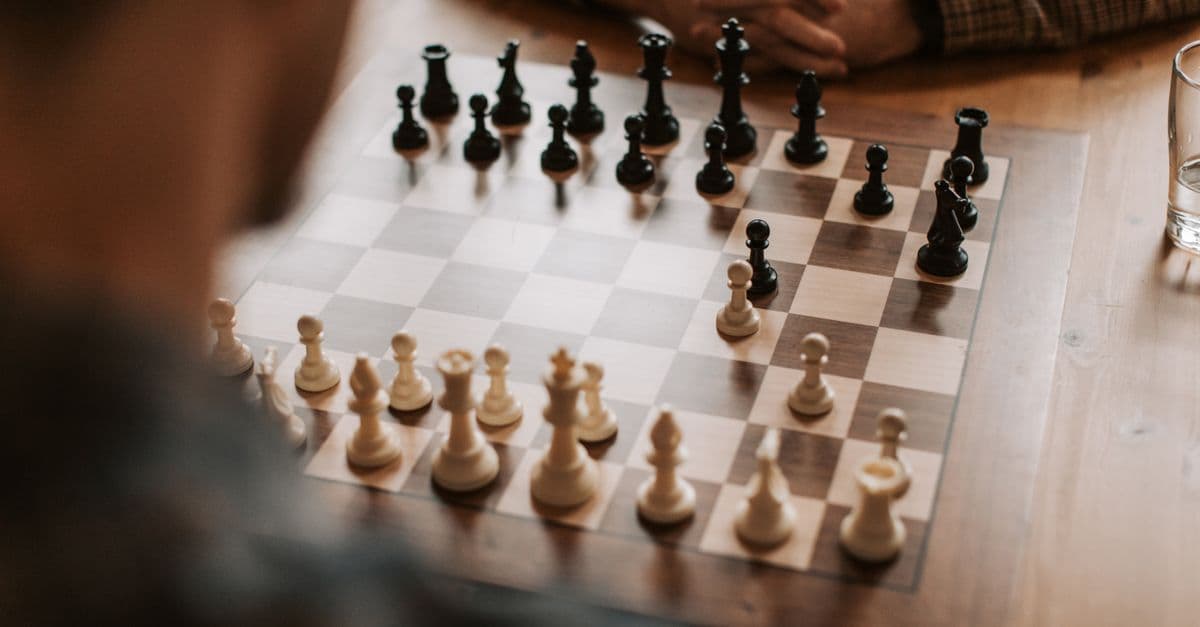
Photo: Vlada Karpovich / Pexels
John von Neumann was a Hungarian-American mathematician who, in the span of a single career, laid rigorous foundations for quantum mechanics, invented game theory, contributed essential mathematics to the atomic bomb, and described the stored-program computer architecture that every laptop, phone, and server uses today. Born in Budapest in 1903, he died in Washington, D.C., in 1957, at age 53. Colleagues who watched him work — including Hans Bethe, who called him the smartest person he had ever met — sometimes wondered whether he represented a qualitatively different kind of mind.
Early Life: Budapest and the Making of a Prodigy
János Lajos Neumann was born on December 28, 1903, in Budapest, then part of the Austro-Hungarian Empire. His father, Miksa Neumann, was a successful banker who in 1913 received a hereditary title of nobility from Emperor Franz Joseph; the family thereafter used the prefix "von." The household was wealthy, cultured, and intellectually ambitious — Miksa encouraged his three sons to compete in mental games and kept tutors for them from an early age.
The stories about von Neumann's childhood memory are well-attested. By age six he could divide eight-digit numbers in his head and converse in Ancient Greek. By age eight he had worked through differential and integral calculus. The mathematician Paul Halmos, who knew von Neumann well and wrote a memoir about him, recorded the telephone directory anecdote directly: von Neumann could memorize a page of a phone book after reading it once and recite the names, addresses, and numbers in order. This was not an isolated party trick; his ability to read a text once and recall it verbatim remained with him throughout his life.
Source: Paul Halmos, I Want to Be a Mathematician: An Automathography (1985) — Halmos worked with von Neumann at the Institute for Advanced Study and recorded memory anecdotes from direct observation.
His formal education followed an unusual path. His father, aware that a career in pure mathematics offered poor financial prospects, pushed him toward chemistry. Von Neumann earned a diploma in chemical engineering from ETH Zurich in 1925 while simultaneously completing a Ph.D. in mathematics from the University of Budapest — submitting both sets of examinations in the same year. His doctoral dissertation, on the axiomatization of set theory, was written when he was 22 and remains a standard reference in mathematical logic.
Privatdozent — an unsalaried academic lecturer in the German university system who earns income from student fees; the position served as a prerequisite for a full professorship.
In 1928, at age 24, von Neumann became the youngest Privatdozent in the history of the University of Berlin. His lectures there drew crowds of students who came specifically to watch him derive results at the blackboard that no one else could reproduce. In 1930, he accepted a visiting professorship at Princeton; by 1933, he was one of the six founding faculty members of the Institute for Advanced Study, alongside Albert Einstein and Hermann Weyl.
Major Discoveries: The Architecture of Modern Thought
The Mathematical Foundations of Quantum Mechanics
Von Neumann arrived at Göttingen in 1926 just as Werner Heisenberg and Erwin Schrödinger were developing their competing formulations of quantum mechanics. Heisenberg's matrix mechanics and Schrödinger's wave mechanics produced the same predictions but looked entirely different mathematically. Von Neumann demonstrated, in his 1932 book Mathematische Grundlagen der Quantenmechanik (Mathematical Foundations of Quantum Mechanics), that both formulations were equivalent representations of a single abstract structure — operators acting on a Hilbert space.
Hilbert space — an infinite-dimensional vector space equipped with an inner product, generalizing Euclidean geometry to the setting needed for quantum mechanical state descriptions.
This was not a cosmetic unification. Von Neumann also formulated the measurement problem in quantum mechanics with mathematical precision, introduced the concept of density matrices for mixed states, and proved (erroneously, as Bell later showed in 1964) that hidden variable theories could not reproduce quantum mechanical predictions. The error turned out to be scientifically productive: Bell's correction to von Neumann's proof led to the Bell inequalities and ultimately to experimental tests of quantum entanglement.
Source: J. von Neumann, Mathematische Grundlagen der Quantenmechanik, Springer (1932); English translation Princeton University Press (1955).
Game Theory: Decision-Making as Mathematics
In 1928, von Neumann published a proof of the minimax theorem, establishing that in any finite two-person zero-sum game, there exists an optimal mixed strategy that guarantees the best possible outcome regardless of the opponent's moves. This was the seed of game theory.
Zero-sum game — a situation in which one participant's gain is exactly equal to another's loss, so that the total payoff across all players is always zero.
The full development came in Theory of Games and Economic Behavior (1944), co-authored with economist Oskar Morgenstern. The book introduced the concept of the utility function, the solution concept of the Nash equilibrium's precursor (the minimax solution), and the framework of extensive-form games with full information. It created an entirely new discipline at the intersection of mathematics, economics, and strategy that now underlies modern microeconomics, evolutionary biology, political science, and artificial intelligence.
Source: J. von Neumann and O. Morgenstern, Theory of Games and Economic Behavior, Princeton University Press (1944) — the founding text of game theory.
Like two chess players who must commit to strategies before seeing each other's moves, the players in von Neumann's framework cannot rely on reading the opponent's signals in real time. Instead, they calculate the optimal strategy given all possible opponent responses — a shift from reactive reasoning to systematic anticipation that transformed economics.
The von Neumann Architecture
In 1945, von Neumann circulated a draft report on the design of the EDVAC computer that described, for the first time, a stored-program architecture: a machine in which the program instructions and the data they operate on are stored together in the same memory, rather than being hardwired or loaded separately on punched cards.
Stored-program architecture — a computer design in which instructions and data share a single unified memory, allowing programs to be treated as data and modified dynamically.
The report bore only von Neumann's name, which caused lasting resentment from J. Presper Eckert and John Mauchly, who had independently developed similar ideas for ENIAC. The attribution dispute remains contested among historians of computing. What is not contested is the report's influence: the architecture it described became the dominant design for virtually all general-purpose computers built over the following eight decades, and the phrase "von Neumann architecture" is now standard in computer science curricula worldwide.
Every modern computer — including the device you are reading this on — separates computation into a central processing unit, a memory unit where both instructions and data reside, input and output channels, and a control unit that fetches instructions from memory and executes them sequentially. That is the von Neumann architecture, unchanged in its essential logic since 1945.
The Manhattan Project and Nuclear Weapons Mathematics
Von Neumann arrived at Los Alamos in 1943 as a consultant and became one of the project's most valuable problem-solvers. His central contribution was the mathematics of implosion: the problem of designing an explosive lens that would compress a plutonium core symmetrically enough to achieve supercriticality and trigger a nuclear explosion.
The gun-type design used for the uranium bomb dropped on Hiroshima was relatively straightforward in its physics. The implosion design needed for plutonium — because reactor-produced plutonium-239 is contaminated with plutonium-240, which would cause premature detonation in a gun-type device — required precisely shaped conventional explosive charges to produce a perfectly spherical inward shock wave. Von Neumann developed the mathematical framework for this, performing extensive hand calculations and later some of the first large-scale numerical computations to model the implosion dynamics.
He was also involved in target selection discussions and advocated, controversially, for hitting targets without prior warning to maximize shock effect.
Source: Richard Rhodes, The Making of the Atomic Bomb (1986) — Pulitzer Prize-winning account with detailed technical history.
| Year | Contribution |
|---|---|
| 1925 | Chemical engineering diploma (ETH Zurich) + Ph.D. mathematics (Budapest) |
| 1928 | Minimax theorem — foundation of game theory |
| 1932 | Mathematical Foundations of Quantum Mechanics published |
| 1933 | Joins Institute for Advanced Study, Princeton |
| 1944 | Theory of Games and Economic Behavior with Morgenstern |
| 1945 | First Draft Report on the EDVAC — stored-program architecture |
| 1952 | Contributes to hydrogen bomb design; advises on Ivy Mike test |
| 1955 | Presidential Medal of Freedom |
| 1957 | Dies of cancer, Walter Reed Hospital, February 8 |
Lesser-Known Scientific Work
Von Neumann's published record is dense enough that several major contributions are routinely overlooked.
His work on operator algebras — the mathematical structures now called von Neumann algebras — was a foundational contribution to functional analysis with applications in quantum field theory and the mathematical treatment of quantum measurement. He developed these between 1929 and 1940 in a series of papers that most physicists at the time found too abstract to engage with; they are now among the core tools of mathematical physics.
His cellular automaton work in the late 1940s and early 1950s, developed partly to explore whether machines could self-replicate, led to the theoretical construction of a universal constructor — a machine that could build any structure, including a copy of itself, given a description of that structure and a sufficient supply of raw materials. The basic logical architecture von Neumann described for self-replication anticipates the relationship between DNA and the cellular machinery that reads and copies it, though he developed this without knowledge of DNA's structure (Watson and Crick published in 1953, shortly before von Neumann's cancer was diagnosed).
Source: John von Neumann, Theory of Self-Reproducing Automata, edited by Arthur Burks, University of Illinois Press (1966) — compiled from von Neumann's incomplete manuscripts.
He also made essential contributions to numerical analysis, co-developing with Herman Goldstine a rigorous error analysis of matrix computations and introducing the concept of condition numbers for matrix equations. This work established the theoretical foundations of scientific computing and is still taught in numerical methods courses.
Personal Life and Relationships
Von Neumann married twice. His first wife, Mariette Kövesi, whom he met in Budapest, married him in 1930 when he joined the Princeton faculty. Their daughter Marina was born in 1935. The marriage ended in divorce in 1937. His second wife, Klára Dán (known as Klari), was a Hungarian-Jewish socialite who had fled Europe before the war. They married in 1938 and remained together until his death.
The Princeton household that Klari managed became a social hub. Von Neumann and Klari hosted parties almost every weekend, sometimes continuing until well past midnight. Von Neumann was known as an enthusiastic and loud partygoer who could switch from a heated argument about Hapsburg history to a mathematics problem and back again in the space of a single conversation. He maintained an enormous repertoire of dirty jokes in multiple languages and used them deliberately to break the formality of academic gatherings.
His relationship with his colleagues at the Institute for Advanced Study was complex. Einstein, who worked in the same building for twenty years, was friendly but intellectually distant — their work occupied almost non-overlapping territories. Kurt Gödel, whose incompleteness theorems had shaken the mathematical foundations that von Neumann cared deeply about, was a closer intellectual companion and a fellow Hungarian exile.
Von Neumann drove dangerously and was known for causing accidents. According to multiple Princeton-era accounts, one particular intersection near the Institute was nicknamed "von Neumann's corner" because he had damaged his car there multiple times. He habitually read while driving, was cited for traffic violations, and dismissed the accidents with the equanimity of a man who was genuinely more interested in what he had been reading than in the condition of his car.
Source: Norman Macrae, John von Neumann (1992) — the primary full-length biography, drawing on interviews with Princeton colleagues.
Little-Known Habits and Quirks
Von Neumann worked with noise. In a reversal of the silence-requiring academic stereotype, he preferred to write and think with German march music playing, or while television blared in the background. Colleagues at the Institute who shared walls with him mentioned it; Stanislaw Ulam recalled that the sound of German folk songs drifting from von Neumann's office at Princeton was a constant feature of the building's atmosphere.
He had a competitive relationship with his own memory that bordered on performance. When colleagues checked a result against a reference, von Neumann would often recite the relevant passage, page number and all, from memory. Halmos wrote of watching von Neumann recall the content of a complete textbook chapter he had read years before, with the specific remark that it was not merely the logical structure he retained but the exact words.
Despite prodigious mathematical output, he was not a recluse. He attended baseball games, genuinely followed horses, and preferred the company of businesspeople and politicians at parties to other mathematicians, partly because, as he once told Ulam, he found non-scientists more willing to be surprised.
His relationship with food was enthusiastic. He was well-fed by the standards of his colleagues, hosted dinners where the food mattered as much as the conversation, and appreciated Hungarian cuisine specifically, ordering from New York Hungarian restaurants during his Princeton years. His weight increased substantially over the IAS years, which he appeared not to notice or not to care about.
The question of his religious beliefs was complicated. He was born Jewish, became nominally Catholic later in life, and was largely secular through his working years. As cancer advanced through his bones in 1956 and early 1957, he asked to see a Benedictine priest named Father Strittmatter. He converted to Catholicism, citing Pascal's wager — the argument that if there is any chance of heaven and eternal life, it is rational to be a believer regardless of one's prior probability estimate. Even Father Strittmatter noted that the conversion did not bring von Neumann visible peace or comfort; he remained terrified of death and of the loss of his mental capacity, which the cancer was progressively attacking.
Legacy
Von Neumann's intellectual estate is unusually broad. In mathematics, his contributions to set theory, functional analysis, ergodic theory, and operator algebras are standard curriculum in graduate programs. In economics and political science, game theory — which he essentially created — is a foundational tool. In computer science, the architecture he described is the architecture every general-purpose computer uses. In physics, the formalism of quantum mechanics he provided in 1932 remains the standard framework.
The Los Alamos hydrogen bomb tests he contributed to created the nuclear deterrence equilibrium that shaped Cold War geopolitics. His work at the Atomic Energy Commission and on the Air Force Scientific Advisory Board gave him direct influence over US nuclear policy in the early years of the Cold War.
The Neumann Prize, awarded by the Operations Research Society of America, recognizes work in the spirit of von Neumann's applied mathematics. The IEEE John von Neumann Medal is given for outstanding achievements in computer-related science. The Johnny von Neumann Computer Society is based in Budapest, near where he was born.
Hans Bethe, himself a Nobel laureate, said that of all the intellects he had encountered, von Neumann's was the one that made him most wonder whether human beings were all operating on the same hardware. Eugene Wigner, who had known von Neumann since their shared Budapest childhood, said simply that von Neumann's mind was unique.
FAQs
Q: What is the von Neumann architecture? A: The von Neumann architecture is a computer design in which program instructions and data are stored together in the same memory, allowing a single processor to execute different programs by loading different instructions from memory. Von Neumann described this in his 1945 First Draft Report on the EDVAC. It remains the structural basis of virtually all modern computers.
Q: Did John von Neumann really have a photographic memory? A: Multiple reliable witnesses, including mathematician Paul Halmos and physicist Stanislaw Ulam, recorded direct observations of von Neumann's near-perfect recall. He could recite pages of a telephone book after a single reading and reproduce the text of books he had read years earlier. The evidence is extensive enough that the "photographic memory" description, while imprecise technically, reflects a genuine and documented phenomenon.
Q: Why is game theory important? A: Game theory provides a mathematical framework for analyzing decision-making when multiple parties interact and each party's outcome depends on others' choices. Von Neumann's foundational work, developed in his 1944 book with Oskar Morgenstern, now underlies microeconomics, evolutionary biology, political science, and the design of AI systems for strategic games and negotiation.
Q: Why did von Neumann convert to Catholicism on his deathbed? A: He converted in 1956, after being diagnosed with terminal cancer. He told the attending priest, Father Strittmatter, that Pascal's wager provided the logical basis: if there is even a small probability of eternal damnation, a rational actor should adopt belief. His colleagues noted that the conversion did not ease his visible terror of dying.
Q: What killed John von Neumann? A: Von Neumann died on February 8, 1957, of cancer — almost certainly bone cancer or pancreatic cancer, the exact primary diagnosis varies in sources — at Walter Reed Army Medical Center in Washington. The cancer is widely attributed to radiation exposure during his years at Los Alamos, though this cannot be confirmed definitively.
Q: Did von Neumann invent the computer? A: He did not invent the computer, but he described the stored-program architecture that defines how modern computers are organized. The actual ENIAC machine was built by J. Presper Eckert and John Mauchly. Von Neumann's 1945 report on the EDVAC design — which circulated widely with only his name on it — shaped the field's direction so thoroughly that the underlying design philosophy bears his name.
Read next:
Follow new articles
Add SciHub101 to your feed reader to see new science and technology stories.
About the Author
SciHub101 is an independent science and technology publication founded and edited by Buğra Sözeri, a software engineer and app developer based in Türkiye. AI tools assist with drafting and research. Source documentation in the existing archive is uneven, and articles are being reviewed and corrected. The Editorial Team byline identifies editorial responsibility; it does not certify specialist or independent human review. Where we compare products, anything built by our own team is labelled as such — see the editorial guidelines and About page for how corrections and disclosures work.
Related Articles
Leonhard Euler: The Mathematician Who Owned Mathematics
Leonhard Euler wrote over 850 works, invented graph theory, gave us e^(iπ)+1=0, and produced his best work while blind. The story of history's most prolific mathematician.
Jocelyn Bell Burnell: The Astronomer Who Found Pulsars
Jocelyn Bell Burnell discovered pulsars in 1967 as a PhD student. Her Nobel Prize snub became science's most debated injustice. Here is the full story.
Stanislaw Ulam: Monte Carlo, the H-Bomb, and a Mind That Survived Everything
Stanislaw Ulam conceived the Monte Carlo method, co-created the Teller-Ulam H-bomb design, and survived brain surgery in 1946. His life, work, and legacy, sourced.
Game Theory Explained — Math of Strategic Decisions
Game theory explained: Nash equilibrium, Prisoner's Dilemma, evolutionary games, auctions, and real-world applications from biology to AI.
Hans Bethe: The Physicist Who Explained Why Stars Shine
Hans Bethe discovered the CNO cycle that powers stars, led Manhattan Project theory, won the 1967 Nobel Prize, and spent 70 years at Cornell advocating against nuclear weapons. He lived to 98.
John Bell: The Physicist Who Proved Einstein Wrong About Quantum Reality
John Bell's 1964 theorem showed quantum entanglement is real, not a gap in our knowledge. His life at CERN, Belfast roots, and death before his Nobel make his story uniquely poignant.