Alan Turing: The Marathon Runner Who Built the Digital Mind

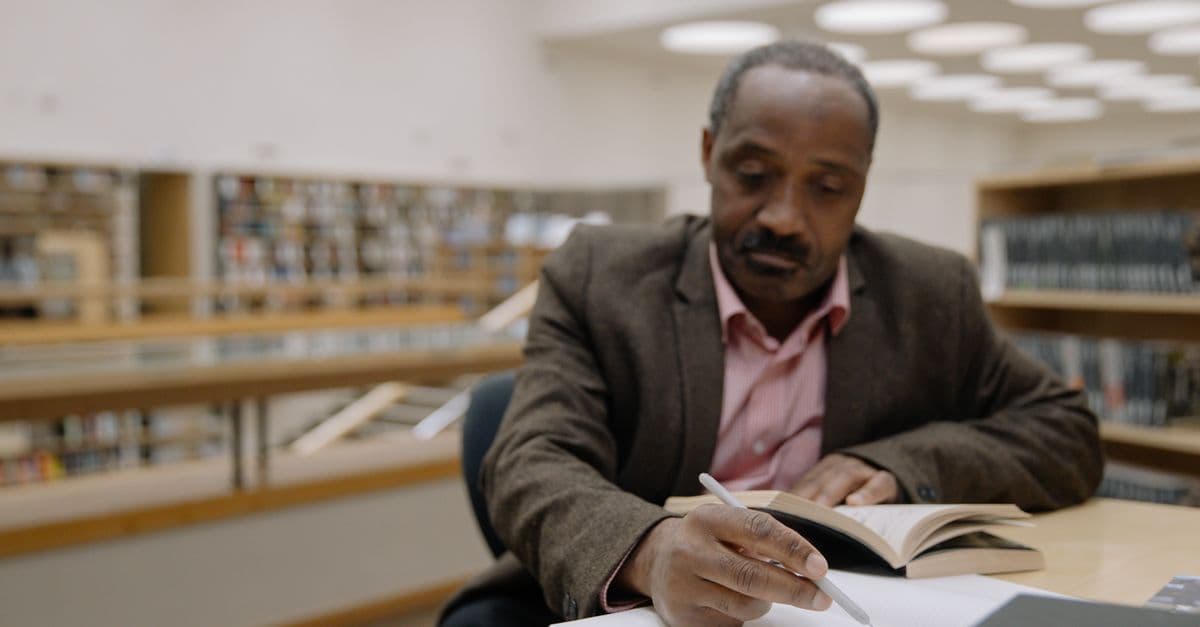
Photo: Mohammad Yasir / Pexels
Alan Turing (1912–1954) was a British mathematician, logician, and cryptanalyst whose theoretical work in the 1930s defined what computation means — and whose wartime codebreaking at Bletchley Park shortened World War II by an estimated two years. He is the founding father of computer science and artificial intelligence, a world-class distance runner, and one of history's most consequential scientists. He died at 41 under circumstances that remain contested.
Quick Biography
Alan Mathison Turing was born on June 23, 1912, in Maida Vale, London, to Julius and Ethel Turing. His father was a civil servant in the Indian Civil Service, and the family divided time between England and India, leaving Alan largely in the care of family friends. From childhood he displayed an intense, self-directed curiosity — he taught himself to read in three weeks, before starting school.
He was educated at Sherborne School in Dorset, where he showed extraordinary talent in mathematics and science despite a school culture that valued classics above all. At 16, he befriended Christopher Morcom, a fellow student whose intellect matched his own. Morcom died suddenly of tuberculosis in 1930; Turing was devastated, and the loss deepened his philosophical interest in whether a mind could survive its physical substrate — a question that animated his later work on machine intelligence.
Turing won a scholarship to King's College, Cambridge, graduating with first-class honours in mathematics in 1934. He was elected a Fellow of King's College in 1935. In 1936, while studying at Princeton under Alonzo Church, he published "On Computable Numbers, with an Application to the Entscheidungsproblem" — one of the most important papers in the history of mathematics. It introduced the theoretical Turing Machine, a conceptual device that formalized what it means to compute.
During World War II, Turing joined the Government Code and Cypher School at Bletchley Park in 1939. He was the principal architect of the Bombe, an electromechanical device that systematically cracked the German Enigma cipher, providing the Allies with intelligence that altered the course of the war. After the war he worked at the National Physical Laboratory designing an early stored-program computer and then at the Victoria University of Manchester.
In 1952, Turing was prosecuted under Victorian-era law for gross indecency following a relationship with a man. He accepted a program of chemical treatment as an alternative to imprisonment. He died on June 7, 1954, from cyanide poisoning. The official inquest ruled suicide; the method was attributed to a cyanide-laced apple found beside him, though the finding has never been definitively proven — see the quirks section below for the full picture. He was 41.
He received a posthumous royal pardon in 2013 and was named the face of the Bank of England £50 note in 2021.
Major Scientific Contributions
The Turing Machine (1936)
Turing's 1936 paper introduced the Turing Machine: an abstract device that reads and writes symbols on an infinite tape according to a table of rules. Any problem that can be solved algorithmically can be solved by such a machine. The paper answered Hilbert's Entscheidungsproblem (decision problem) in the negative — there is no algorithm that can decide, in general, whether an arbitrary mathematical statement is provable. In doing so, Turing also defined the concept of computation itself. Every computer ever built is, in principle, a physical realization of his abstract machine.
Codebreaking and the Bombe (1939–1945)
The German Enigma machine used a polyalphabetic substitution cipher with billions of possible configurations. Turing extended earlier Polish work to design the Bombe, which used logical contradictions to eliminate incorrect settings and identify the correct Enigma configuration for a given day. By 1942, Bletchley Park was decoding up to 84,000 Axis messages per month. Historian David Kahn and the official history of GCHQ credit Turing as the central figure in this effort. Winston Churchill called Bletchley Park personnel his "geese that laid the golden eggs — and never cackled."
The Turing Test and Machine Intelligence (1950)
Turing's 1950 paper "Computing Machinery and Intelligence," published in the journal Mind, opened with the line: "I propose to consider the question, 'Can machines think?'" He replaced this with the Imitation Game — now called the Turing Test — in which a machine passes if a human interrogator cannot reliably distinguish its text responses from a human's. Turing predicted that by the year 2000 a machine would fool 30% of interrogators for five minutes. This paper founded the philosophical and technical field of artificial intelligence and remains the most cited paper in AI's foundational literature.
Morphogenesis (1952)
In his final major paper, "The Chemical Basis of Morphogenesis," Turing proposed that the patterns seen in nature — zebra stripes, leopard spots, the arrangement of leaves on a stem — arise from the interaction of two chemical agents (activators and inhibitors) diffusing through tissue at different rates. This reaction-diffusion model, now called Turing patterns, was largely ignored during his lifetime. It was confirmed experimentally in the 1990s when researchers at the University of Bordeaux demonstrated the predicted chemical pattern formation in a gel reactor system. The patterns are now a central mechanism in developmental biology. For related ideas on biological pattern formation, see Charles Darwin: The Naturalist Who Rewrote Life's Story.
Turing's morphogenesis work was remarkable for another reason: he wrote it after his criminal prosecution in 1952, under conditions of social and psychological duress, and he wrote it as a biologist rather than a mathematician, teaching himself the chemistry and developmental biology required. The paper occupied him for roughly the last 18 months of his life. He appears to have found in it a new direction that gave him intellectual purpose after the destruction of his security career.
Stored-Program Computing (1945–1948)
Turing's 1945 proposal for the Automatic Computing Engine (ACE) at the National Physical Laboratory was among the first detailed designs for a stored-program electronic computer — a machine where the program is held in memory alongside the data, rather than wired into the hardware. His work at Manchester contributed to the development of the Manchester Mark 1, one of the first operational stored-program computers. Ada Lovelace had a century earlier grasped the concept of a general-purpose programmable machine; Turing built the theoretical and practical architecture that made it real.
Personal Life and Relationships
Turing's interior life was defined by two relationships above all others. The first was with Christopher Morcom, his closest friend at Sherborne School. Morcom was Turing's intellectual equal, the one person at school who shared his intensity for mathematics and science. Turing was also in love with him — he acknowledged this in letters written after Morcom's death, when he was no longer self-censoring. When Morcom died suddenly of tuberculosis in February 1930, Turing was 17 years old. He wrote to Morcom's mother almost immediately and maintained a correspondence with her for years afterward. The letters reveal a young man working through grief by turning it into philosophy: what is the mind? If Christopher's mind existed, where did it go? These questions drove Turing toward his later theoretical work on machine intelligence. The grief also deepened a certain solitariness that characterized him for the rest of his life.
The second defining relationship was with Joan Clarke, a fellow mathematician at Bletchley Park. They were engaged in 1941. Clarke was one of the few people at Bletchley whose mathematical ability matched Turing's, and she was his close professional collaborator as well as his companion. Their friendship survived his disclosure of his homosexuality and the end of the engagement, and Clarke later described it as one of the most important relationships of her life. She was not bitter about the engagement; she understood the impossible position he was in.
Turing's prosecution in 1952 arose not from surveillance or targeted investigation but from his own attempt to report a burglary. A man named Arnold Murray had been involved in the burglary. In the course of giving his account to police, the nature of Turing's relationship with Murray emerged. Turing did not lie to the police; he appears not to have anticipated the consequence, or to have calculated that the law was too absurd to be enforced. He was wrong. He was convicted under the 1885 Criminal Law Amendment Act and accepted "chemical castration" — a course of synthetic estrogen injections — as the alternative to imprisonment. His security clearance was revoked. He was barred from continued cryptographic work for the government and was no longer permitted contact with GCHQ.
Whether the prosecution drove him to suicide, as is commonly claimed, cannot be established with certainty. His close friend Robin Gandy, who found him dead, believed the death might have been accidental. His mother believed the same. Turing had resumed what appeared to be a normal life and was planning future work. The question will remain open.
Lesser-Known Habits and Quirks
He Chained His Teacup to a Radiator
This is one of the best-documented of Turing's practical eccentricities, sourced directly from colleagues at Bletchley Park and later at Manchester. Turing owned a particular government-issue mug that he was attached to using in his office. Rather than leave it in the communal kitchen where it might disappear, he secured it to the radiator in his office with a bicycle padlock and chain. Colleagues recalled that he kept the key on his person. When asked why he didn't simply label the mug, Turing reportedly responded that labels can be ignored but locks cannot. This approach — solving a social problem with a mechanical constraint — was entirely characteristic of how he approached the world.
He Was an Elite-Level Marathon Runner
Turing was a serious competitive runner. He used running not as recreation but as stress management and, by his own account, as a way to work through mathematical problems. His best recorded marathon time was 2 hours 46 minutes 3 seconds, run in 1947. To put this in context: the 1948 Olympic marathon gold medal was won in 2:34:51. Turing's time would have been competitive at the national level. He ran to and from work at Bletchley Park when he could — a distance of roughly 40 miles round trip from his billet — and reportedly ran between Bletchley and London on at least one occasion when transport was unavailable. When a colleague asked why he was training so hard, Turing reportedly said: "I have such a stressful job that the only way I can get it out of my mind is by running hard." His running career was documented by his Bletchley colleague and biographer Andrew Hodges in Alan Turing: The Enigma (1983).
He Proposed by Letter — Then Came Out
In 1941, Turing was working closely with mathematician Joan Clarke at Bletchley Park. He proposed marriage by letter, and she accepted. They were engaged for several months. Turing then told Clarke, in person, that he was homosexual and that the engagement could not continue. What is documented and remarkable — sourced directly from Clarke's later interviews and from Hodges's biography — is that Clarke said she was not surprised, that she still cared for him greatly, and that the two remained close friends and colleagues. Turing, by Clarke's account, had deep regret about causing her distress. Clarke later said the friendship was one of the most important of her life. The story is not one of deception: it is one of a man constrained by law and culture trying to navigate the impossible.
The Apple and the Cyanide: What the Evidence Actually Shows
The popular story — that Turing died after eating a cyanide-laced apple, inspired by the Snow White scene of the Wicked Queen — is a posthumous embellishment that has been challenged by historians. The facts are these: Turing was found dead in his bedroom on June 8, 1954. A half-eaten apple was beside him. The apple was never tested for cyanide. The inquest ruled death by cyanide poisoning from a jar found in his room, where he had been conducting electroplating experiments with potassium cyanide. His mother, Sara Turing, maintained to her death that it was an accidental poisoning from the experiment fumes; she considered the suicide ruling a fabrication. Biographer Andrew Hodges, who conducted the most thorough research, concluded that the circumstantial evidence points to deliberate ingestion but acknowledges the case is not airtight. The Snow White narrative — appealing as it is — was not mentioned at the inquest and appears to have entered the Turing mythology after the fact.
His Office Was Memorably Disheveled
Multiple colleagues at Manchester noted that Turing's office was in a state of organized disorder that bordered on impassable. Papers were stacked in piles on every horizontal surface; mathematical notation covered scraps of paper pinned to walls, stuffed into books, and scattered across his desk. He nonetheless could locate specific items when asked. His Manchester secretary recalled that she was forbidden to tidy the office because "the filing system is in my head."
He Had a Peculiar Habit With Hayfever
Andrew Hodges documents that Turing, who suffered from hayfever, dealt with it by cycling to work wearing a gas mask during pollen season in Manchester. Colleagues became accustomed to seeing him arrive at the Computing Machine Laboratory in this configuration. He did not appear to find this unusual. When asked about it he apparently explained the hayfever problem matter-of-factly, as if the mask were the obvious engineering solution.
He Read Children's Science Books for Pleasure
Turing's personal library and his letters to friends indicate that he regularly read popular science books aimed at children and young adults for relaxation. He found them, he said, clearer than technical papers and useful for checking whether he still understood something at a fundamental level. This habit was connected to his belief that genuine understanding should always be reducible to simple terms — a conviction that also shaped the way he wrote his own papers.
He Was a Committed Long-Distance Runner Who Trained Alone
Running was never social for Turing. He trained alone, often on routes of his own design, with no interest in club athletics. He ran to solve problems. Colleagues at Manchester recalled that if Turing was unavailable during the afternoon, the answer was usually that he was running. He would return, sometimes hours later, and immediately write down whatever mathematical insight had come to him on the route. This was not metaphorical. He treated the relationship between running and thinking as literal and practical: the physical activity unblocked something in his cognition that sitting at a desk did not. His decision to attempt competitive marathon racing was in character — once he had taken running seriously, measuring himself against a standard was the next logical step. His 1947 time of 2:46:03 placed him among the top amateur distance runners in Britain. He was prevented from competing in the 1948 Olympic trials only by an injury.
Famous Quotes
"We can only see a short distance ahead, but we can see plenty there that needs to be done." From "Computing Machinery and Intelligence," Mind, 1950. Turing was addressing the objection that machines can never truly think — he argued that this misses the point; what matters is what can be built right now.
"A man provided with paper, pencil, and rubber, and subject to strict discipline, is in effect a universal machine." From a 1948 lecture, "Intelligent Machinery." Turing was describing how a human following rules becomes, in the abstract, equivalent to a Turing Machine — a characteristically unsettling observation.
"I am not very impressed with theological arguments, whatever they may be used to support." From "Computing Machinery and Intelligence," 1950, in the section responding to the theological objection to machine thought. Turing's bluntness on this point was characteristic.
"Sometimes it is the people no one can imagine anything of who do the things no one can imagine." This quote is widely attributed to Turing but does not appear in his verified writings or documented correspondence. It appears in the 2014 film The Imitation Game and should be treated as a literary invention, not a historical source.
Legacy
Turing's legacy operates on three levels. In theoretical computer science, the Turing Machine remains the foundational model of computation; the Church-Turing thesis — that any effectively calculable function can be computed by a Turing Machine — is the bedrock of the discipline. In artificial intelligence, his 1950 paper launched a field; the Turing Test, while now philosophically contested, drove six decades of research. In wartime history, the declassification of Bletchley Park records in the 1970s and 1990s established that his codebreaking work was decisive. Another scientist whose work was shaped by the war is J. Robert Oppenheimer.
The injustice Turing suffered under the 1885 Criminal Law Amendment Act — prosecution, forced chemical treatment, loss of his security clearance — became, after his pardon and public rehabilitation, a landmark case in the history of civil rights for LGBTQ+ people in Britain. The Turing Law of 2017 posthumously pardoned thousands of men convicted under the same statute.
His face on the £50 note, introduced in 2021, is a recognition that computation itself — the foundation of the modern world — runs on architecture he built. For the direct line from Turing's theoretical work to modern machine learning, see the complete AI guide.
FAQ
Q: Did Alan Turing invent the computer? Not in the sense of building the first working machine. Turing invented the theoretical framework that defines computation: the Turing Machine. His ACE design and his work at Manchester contributed to early physical computers, but he is more accurately described as the founding theorist of computer science rather than the inventor of any specific hardware. Ada Lovelace a century earlier had conceived of a programmable machine; Charles Babbage designed one mechanically. Turing's contribution was to formalize what a computation is.
Q: Was Alan Turing's death ruled a suicide? The official 1954 inquest returned a verdict of suicide by cyanide ingestion. However, the apple found beside him was never tested, and his mother contested the finding until her death. Biographer Andrew Hodges concludes the evidence leans toward intentional death but acknowledges it is not conclusive. A 2012 review by the coroner's office did not change the ruling. The matter remains historically open.
Q: What was the Turing Test and has any machine passed it? The Turing Test (from his 1950 paper) asks whether a machine can produce text responses that a human judge cannot reliably distinguish from a human's. In 2014, a chatbot named "Eugene Goostman" was claimed by its creators to have passed; this was widely disputed by AI researchers who noted the bot was designed to deflect questions rather than answer them, and the judging conditions were not rigorous. No system has passed the test under conditions that satisfy the broader AI research community.
Q: What was Alan Turing's marathon time? His best recorded time was 2 hours 46 minutes 3 seconds, run in 1947. This is documented in Andrew Hodges's biography Alan Turing: The Enigma. It would have been competitive at the national amateur level at the time.
Q: Why was Alan Turing prosecuted? Under the 1885 Criminal Law Amendment Act (the same law used to prosecute Oscar Wilde), same-sex activity between men was a criminal offence in the United Kingdom. Turing was prosecuted in 1952 after reporting a burglary to police led to the discovery of his relationship with a man. He accepted chemical treatment as an alternative to imprisonment. The law was not repealed until 1967; Turing received a royal pardon in 2013.
Q: Who was Christopher Morcom and why does he matter to understanding Turing? Christopher Morcom was Turing's closest friend and first love at Sherborne School. Morcom died of tuberculosis in February 1930 when both were 17. Turing was devastated, and the loss became the emotional engine of his philosophical work on the nature of mind: if Christopher's mind existed, where did it go when his body died? This question — whether the mind is separable from the physical substrate — animated Turing's later work on machine intelligence and the Turing Test. Biographer Andrew Hodges identifies Morcom's death as the single most formative event of Turing's intellectual life.
Q: What is a Turing pattern, and where do we see them in nature? A Turing pattern arises when two chemical agents (an activator and an inhibitor) diffuse through a medium at different rates, producing repeating spatial patterns: stripes, spots, spirals. Turing described the mathematics in his 1952 paper. In nature, the mechanism explains the banding on zebra fish embryos, the spots on cheetah tails, the hexagonal packing of scales in lizards, and the ridged pattern of palatal rugae in mice — all confirmed experimentally after Turing's death. The paper was ignored for decades and is now one of the most cited in developmental biology.
Sources
- Hodges, Andrew. Alan Turing: The Enigma. Burnett Books / Hutchinson, 1983. (Definitive biography.)
- Turing, A.M. "On Computable Numbers, with an Application to the Entscheidungsproblem." Proceedings of the London Mathematical Society, series 2, vol. 42, 1936.
- Turing, A.M. "Computing Machinery and Intelligence." Mind, vol. 59, no. 236, 1950.
- Turing, A.M. "The Chemical Basis of Morphogenesis." Philosophical Transactions of the Royal Society B, vol. 237, 1952.
- Copeland, B. Jack. Turing: Pioneer of the Information Age. Oxford University Press, 2012.
- Leavitt, David. The Man Who Knew Too Much: Alan Turing and the Invention of the Computer. W.W. Norton, 2006.
- National Museum of Computing, Bletchley Park. https://www.tnmoc.org/
Follow new articles
Add SciHub101 to your feed reader to see new science and technology stories.
About the Author
SciHub101 is an independent science and technology publication founded and edited by Buğra Sözeri, a software engineer and app developer based in Türkiye. AI tools assist with drafting and research. Source documentation in the existing archive is uneven, and articles are being reviewed and corrected. The Editorial Team byline identifies editorial responsibility; it does not certify specialist or independent human review. Where we compare products, anything built by our own team is labelled as such — see the editorial guidelines and About page for how corrections and disclosures work.
Related Articles

Albert Einstein: The Eccentric Genius Who Hated Socks
Albert Einstein's life, discoveries, and verified quirks: no socks, a stolen brain, violin obsessions, and the Nobel Prize money divorce deal.

Werner Heisenberg: Uncertainty, Helgoland, and the Nazi Bomb
Werner Heisenberg discovered the uncertainty principle during a hay-fever retreat, then led the Nazi nuclear program. His verified biography, including the contested Copenhagen meeting.
Claude Shannon: The Bell Labs Tinkerer Who Invented Information
Claude Shannon founded information theory in 1948, proved Boolean algebra runs circuits in 1937, built a maze-solving mouse, and juggled on a unicycle through Bell Labs hallways.

Ernest Rutherford: The New Zealander Who Split the Atom
Ernest Rutherford discovered the atomic nucleus, named alpha and beta radiation, and mentored 11 future Nobel laureates. His biography, gold foil experiment, and legacy.

Hans Bethe: The Physicist Who Explained Why Stars Shine
Hans Bethe discovered the CNO cycle that powers stars, led Manhattan Project theory, won the 1967 Nobel Prize, and spent 70 years at Cornell advocating against nuclear weapons. He lived to 98.

Hermann von Helmholtz: The Physicist Who Measured a Thought
Hermann von Helmholtz formulated energy conservation, invented the ophthalmoscope, measured nerve impulse speed, and trained Heinrich Hertz. His full biography and science.