Charles Darwin: The Reluctant Revolutionary Who Ate His Specimens
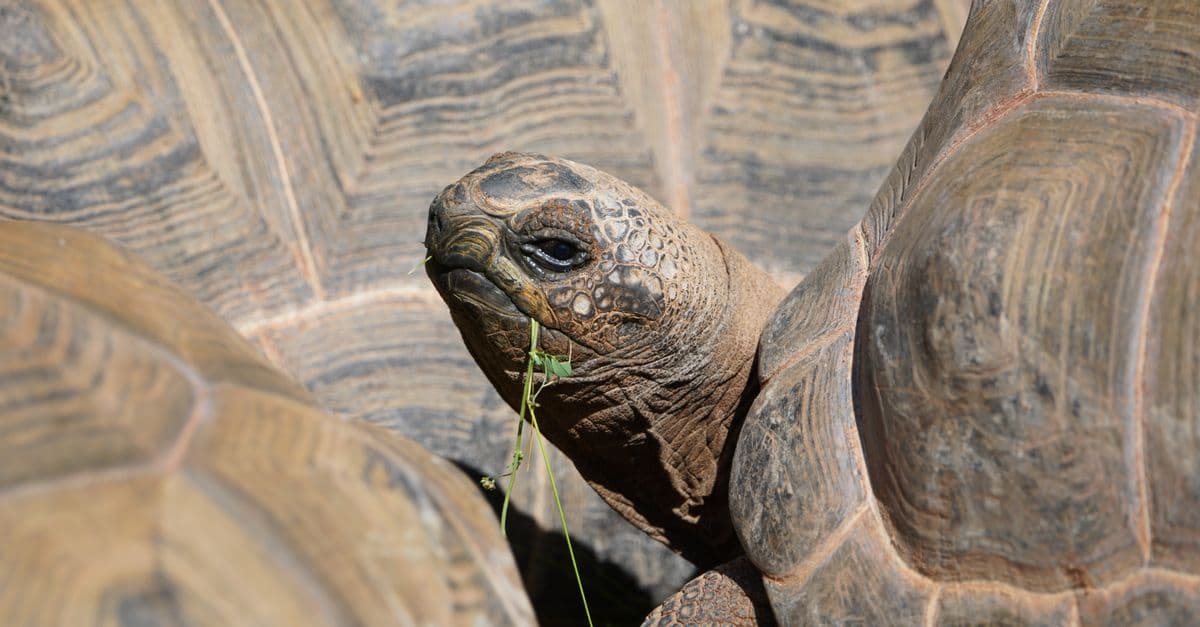
Photo: René Wechet / Pexels
Charles Darwin (1809–1882) was an English naturalist and geologist whose theory of evolution by natural selection — published in On the Origin of Species in 1859 — stands as one of the most consequential ideas in the history of science. He spent five years sailing the world on HMS Beagle, twenty years refining his theory before publishing it, and the rest of his life eating unusual animals, playing backgammon, and suffering from a mysterious chronic illness that may have been largely anxiety-driven. Behind the long white beard of his later portraits was a man of remarkable warmth, meticulous habits, and genuine eccentricity.
Quick Biography
Charles Robert Darwin was born on February 12, 1809, in Shrewsbury, England, into a prosperous and intellectually distinguished family. His grandfather was Erasmus Darwin, the physician-poet who had written speculatively about transmutation of species decades earlier. His father, Robert Darwin, was a wealthy doctor; his mother, Susannah, a daughter of the potter Josiah Wedgwood. She died when Charles was eight.
Darwin was an unremarkable student. He began a medical degree at Edinburgh, was repulsed by surgery performed without anesthesia, and transferred to Christ's College, Cambridge, to study theology — a common route to a country parson's life. He was passionate about beetle collecting and natural history but took his degree without distinction in 1831. What changed everything was a letter offering him a berth as a gentleman companion to the captain of HMS Beagle, embarking on a surveying voyage around South America.
The voyage lasted from December 1831 to October 1836. Darwin visited the Cape Verde Islands, Brazil, Patagonia, the Galapagos Archipelago, Tahiti, New Zealand, and Australia, collecting thousands of specimens and keeping exhaustive journals. The Galapagos mockingbirds — not, as the mythology has it, the finches, which he initially misidentified by island — planted the first doubts about the fixity of species.
Back in England, Darwin spent years consolidating his collections and corresponding with specialists. By 1838 he had sketched the key mechanism: variation, inheritance, and natural selection operating over geological time. He sat on the idea. In 1842 he wrote a 35-page private sketch; in 1844 an expanded 230-page essay. He told only a handful of confidants, including botanist Joseph Hooker, who received the secret with the memorable response: "It is almost like confessing a murder."
The catalyst for publication was a letter from Alfred Russel Wallace in 1858, outlining an almost identical theory. Darwin and Wallace presented jointly to the Linnean Society on July 1, 1858 — a scientific priority dispute resolved with remarkable grace on both sides. Darwin then wrote On the Origin of Species in thirteen months and published it on November 24, 1859. He married his cousin Emma Wedgwood in 1839; they had ten children, seven of whom survived to adulthood. He died on April 19, 1882, and was buried in Westminster Abbey, yards from Isaac Newton.
Major Scientific Contributions
Evolution by Natural Selection
Darwin's central argument in On the Origin of Species was that species change over time through a process he called natural selection. Individuals within a population vary; some variants are better suited to their environment and survive and reproduce more successfully; those traits are inherited by offspring. Over sufficient time, this process produces new species. The idea required deep time — the geological timescales that Charles Lyell's uniformitarian geology had established — and it required that inheritance work reliably, even though Darwin had no knowledge of the mechanism (Mendel's pea experiments sat unpublished and unread until after Darwin's death).
A concrete example of natural selection Darwin himself documented: the beak morphology of Galapagos mockingbirds on different islands. Birds on islands with hard, enclosed seeds had stouter, more forceful beaks than those on islands with soft fruits. Darwin could not yet explain why offspring resembled parents, but he could show, across hundreds of specimens, that trait variation tracked environmental pressure with a consistency that accident could not explain.
For a deeper look at how this process works, see How Evolution by Natural Selection Actually Works.
The Descent of Man (1871)
On the Origin of Species conspicuously avoided the question of human origins. In 1871 Darwin addressed it directly in The Descent of Man, and Selection in Relation to Sex. He argued that humans share common ancestors with other primates, that human mental faculties differ from those of other animals in degree rather than kind, and that sexual selection — competition for mates — explains many features of human anatomy and behavior that natural selection alone does not.
The book introduced sexual selection as a second major evolutionary mechanism. Darwin distinguished between two forms: male-male competition (where males fight for access to females, producing antlers, tusks, and larger body size) and female choice (where female preference for certain male traits drives the elaboration of those traits over generations). Peacock tails were his most striking example: a trait so energetically costly that only natural selection acting through female preference could account for its persistence.
Coral Reef Formation Theory
Darwin proposed in 1842 that coral atolls form in three stages: fringing reef, barrier reef, then atoll, as the volcanic island beneath them subsides over geological time. This theory, developed largely from reasoning during the Beagle voyage, was confirmed by deep drilling in the 20th century and remains the accepted explanation.
The confirmation came in 1952 when US military drillings at Eniwetok Atoll in the Marshall Islands — conducted as part of nuclear weapons tests — penetrated 1,400 meters of coral limestone before hitting basalt bedrock. Darwin had predicted exactly this: a deep cone of accumulated coral sitting atop a sunken volcano. The drillers confirmed it 110 years after he proposed it.
The Formation of Vegetable Mould Through the Action of Worms (1881)
Darwin's final book, published a year before his death, was about earthworms. He had studied them for forty years and established that they are among the most important agents of soil formation on Earth — that the entire upper layer of agricultural soil in England had passed through the bodies of earthworms over centuries. It sold faster in its first year than On the Origin of Species had. This is a fact that amuses ecologists to this day.
The book was not a retirement project. Darwin conducted proper experiments: he measured how quickly objects placed on the surface of soil sank over years as worms turned the earth beneath them, and he calculated the weight of material per hectare that passed through worm casts annually — approximately 10–18 tonnes per hectare in typical English farmland. The method was careful, quantitative, and characteristic.
Barnacles, Orchids, and the Craft of Natural History
Between Origin and Descent, Darwin published eight detailed monographs: two volumes on living barnacles and two on fossil barnacles (a ten-year project), a book on the fertilization mechanisms of orchids, one on climbing plants, one on insectivorous plants, and one on cross- and self-fertilization. These were not tangential hobbies — they were Darwin demonstrating, methodically and irrefutably, that natural selection explains adaptations at every level of biological complexity. His work on plant biology and evolutionary adaptation remains foundational.
Lesser-Known Habits and Quirks
He Ate the Animals He Studied
Darwin was a founding member of the Glutton Club at Cambridge — a dining society explicitly organized to eat "birds and beasts which were before unknown to human palate." They got through hawk and bittern before disbanding after a meal of brown owl, which Darwin described as "indescribably bad." On the Beagle voyage, Darwin ate puma (which he described as tasting like veal), armadillo (roasted in its shell), and was particularly enthusiastic about a large tortoise he had been studying in the Galapagos. He also ate iguana and, on one occasion, realized mid-meal that the "very curious bird" he was eating was a rare specimen of rhea he had been searching for. He rescued what remained of the carcass and sent it to ornithologist John Gould, who named it Rhea darwinii. These accounts are documented in Darwin's Beagle diary and his letters, published in The Correspondence of Charles Darwin (Cambridge University Press).
The Barnacle Obsession: Eight Years on One Order
Between 1846 and 1854, Darwin spent eight years classifying barnacles — every known species, living and fossil, in four dense monographs. His family life bent around the project. His children grew up accepting it as normal: one of his sons, visiting a friend's house, reportedly asked "But where does your father do his barnacles?" assuming every adult was similarly occupied. Darwin described the period as necessary preparation for writing Origin — he wanted to have done serious monograph-level taxonomy before claiming to overturn how species were understood. The work earned him the Royal Society's Royal Medal in 1853. But he was relieved when it was over; he wrote to Joseph Hooker that he had been "for the last half-month daily expecting to finish" and was exhausted by the sheer volume of specimens.
Daily Backgammon with Emma
Darwin played backgammon with his wife Emma almost every evening of their marriage. He kept meticulous score for years. According to his son Francis Darwin's memoir The Life and Letters of Charles Darwin, Charles tracked the running tally obsessively and would announce it to visitors. The exact score he recorded at one point: he led Emma by some 2,795 games to 2,490. Emma, by all accounts, gave as good as she got. The game served as a structuring ritual for a man whose days were otherwise governed by chronic illness and the social anxiety that came with his growing fame.
Twenty Years of Anxiety-Induced Illness
Darwin was plagued by a debilitating illness from his late twenties until his death. Symptoms included chronic nausea and vomiting, severe headaches, heart palpitations, skin problems, and exhaustion. He vomited regularly, often before any significant social occasion, public lecture, or correspondence with someone whose opinion he valued. He tried dozens of treatments, including hydrotherapy (spending weeks at water-cure establishments), and found some relief in the cold-water regimen at Malvern under Dr. James Gully.
The cause of "Darwin's illness" has been debated by medical historians for over a century. Proposed diagnoses include Chagas disease (contracted from a triatomine bug bite in South America), lupus, Crohn's disease, arsenic poisoning from a Victorian hair tonic, and cyclical vomiting syndrome. The most thorough modern analysis, by Ralph Colp Jr. in Darwin's Illness (2008), concludes that while a physical component cannot be excluded, the pattern of symptoms — strongly triggered by social stress, anxiety about publication, and conflict — is most consistent with severe anxiety disorder with psychosomatic expression. Darwin himself suspected his symptoms worsened with "excitement," which he treated as synonymous with intellectual or social pressure.
The illness had a structural effect on Victorian science: it made Down House, his country retreat, into his working laboratory. He rarely traveled, rarely attended London meetings, and communicated primarily by letter — which has left historians an extraordinarily rich correspondence archive.
He Was Terrified of Publishing His Own Theory
Darwin understood what natural selection implied for religion and for his own social standing. Emma Darwin was a devout Christian; Darwin had trained for the Church of England. The twenty-year gap between his 1838 private sketch and the 1859 publication was not scientific caution alone — it was dread. He wrote to Hooker in 1844: "I am almost convinced (quite contrary to the opinion I started with) that species are not (it is like confessing a murder) immutable." The murder analogy — received, then echoed — captures how dangerous the idea felt to him. He required Wallace's letter to finally force his hand.
He Had a "Thinking Path" He Walked Every Day
Darwin built a gravel path around the edge of his garden at Down House in Kent, which he called the "Sandwalk." He walked it every day, usually multiple circuits, using flint stones to count his laps. He called it his "thinking path." Visitors and family members reported that the sound of crunching gravel was a regular feature of life at Down House, and that Darwin was not to be disturbed on the Sandwalk except in emergencies. The path still exists at Down House, now a museum managed by English Heritage.
A Note on "Survival of the Fittest"
Darwin did not coin the phrase "survival of the fittest." That phrase was coined by philosopher Herbert Spencer in his 1864 work Principles of Biology, written after reading Origin. Darwin adopted the phrase in the fifth edition of On the Origin of Species (1869) as a synonym for natural selection, a decision he later regretted as imprecise. The concept behind it is Darwin's; the phrase is Spencer's. This distinction matters because Spencer's formulation became the basis for Social Darwinism — an ideological program Darwin never endorsed and would have found repugnant.
He Never Visited the Galapagos Again
Darwin spent only five weeks in the Galapagos during the Beagle voyage in 1835. He never returned. Paradoxically, the islands most associated with his name made a relatively modest impression on him at the time. His Galapagos journal entries are less effusive than those from Brazil. The significance of the Galapagos observations became clear only later, when specialists in London helped him identify and classify what he had collected. The famous finches that bear his name were initially sorted by Darwin into unrelated groupings; it was ornithologist John Gould who identified them as distinct species, all derived from a common ancestor.
Personal Life and Relationships
Emma Wedgwood Darwin
Darwin's marriage to his first cousin Emma Wedgwood in January 1839 was, by the standards of Victorian scientific marriages, remarkably equal. Darwin drew up a famous pro/con list before proposing, weighing the benefits of marriage ("constant companion and a friend in old age") against its costs ("less money for books"). He proposed; Emma accepted, apparently unaware of the analysis. They were, by all accounts, genuinely devoted to each other.
Emma was a devout Unitarian Christian; Charles, as his work developed, moved steadily away from any formal religious belief. This created a quiet tension neither addressed publicly. Emma worried, in letters to Charles, that his views would separate them after death. Darwin was aware of her concern and chose not to inflame it. The correspondence between them in the years around Origin's publication is careful, affectionate, and silent on theology in a way that speaks volumes.
They had ten children together, of whom three died young: Mary Eleanor at 23 days, Charles Waring at 18 months, and most devastatingly, Anne Elizabeth at age ten. Anne's death in 1851 from tuberculosis was the event that most thoroughly extinguished whatever remained of Darwin's Christian faith. He wrote almost nothing about it publicly; privately, the correspondence shows a man undone.
His Children and the Down House Household
Darwin was, by the accounts of his children, an affectionate and engaged father. He allowed his children to use his study, apparently accepting interruption as a cost of family life. He played with them, told stories, and maintained his characteristic warmth. His son Francis later recalled that Darwin would allow children to use his upstairs study for their projects if they promised not to disturb his work. Several of his children went on to distinguished careers: Francis became a botanist and Darwin's primary biographer; George became a mathematician and astronomer; Horace became a scientific instrument maker. Leonard served as a soldier and later promoted eugenicist ideas his father never endorsed.
The Wallace Question
The relationship between Darwin and Alfred Russel Wallace deserves more nuance than the standard "gentlemanly resolution" account allows. Wallace had arrived at natural selection independently, working in the Malay Archipelago. When his 1858 letter arrived, Darwin was devastated — twenty years of work apparently about to be preempted. The joint presentation to the Linnean Society on July 1, 1858, was arranged by Hooker and Lyell; Wallace was not present and was not consulted. He accepted the arrangement afterward with grace. The power imbalance between the established English gentleman-scientist and the working-class Welsh naturalist writing from the tropics is not incidental. Darwin and Wallace remained cordial for decades; Wallace was a pallbearer at Darwin's funeral in 1882.
Lesser-Known Scientific Work
The Expression of the Emotions in Man and Animals (1872)
Between Descent and Worms, Darwin published a study of emotional expression that is now regarded as foundational to the psychology of emotion. He argued that human facial expressions of fear, disgust, grief, and happiness are homologous with those of other mammals — that they are evolutionary residuals of behaviors with adaptive functions. He used photographs, including early clinical photographs of facial muscle stimulation by French neurologist Duchenne de Boulogne, to make the argument visually. This was one of the first uses of photography as scientific evidence in psychology.
Darwin collected data on emotional expression from missionaries and colonial administrators around the world, asking standardized questions about how people in non-Western societies expressed emotions. His methodology was crude by modern standards, but the core argument — that emotional expression is partly innate and cross-cultural — has substantial modern support from the work of Paul Ekman and others in evolutionary psychology.
The Power of Movement in Plants (1880)
A year before the earthworm book, Darwin published a study of plant movement with his son Francis. They documented that plant shoots move in a slow, spiraling pattern called circumnutation as they grow, and that the tips of shoots are sensitive to light and gravity. Darwin proposed that the tip transmits a signal downward to cause bending — a hypothesis that anticipated the later discovery of plant hormones (auxins) by 50 years. The mechanism Darwin inferred from careful observation was confirmed by Frits Went and others in the 1920s.
Famous Quotes
"It is not the strongest of the species that survives, nor the most intelligent that survives. It is the one that is most adaptable to change." This quote is universally attributed to Darwin but does not appear in any of his published works or known correspondence. It appears to have originated in a 1963 business management text that paraphrased Darwin's ideas. It is useful, but it is not Darwin.
"A man who dares to waste one hour of time has not discovered the value of life." From a letter to his sister Susan, written in 1836 during the Beagle voyage. Darwin at 27, already impatient with idleness.
"I have called this principle, by which each slight variation, if useful, is preserved, by the term of Natural Selection." From On the Origin of Species (1859), Chapter 4. The clearest statement of the central mechanism.
"The love for all living creatures is the most noble attribute of man." From The Descent of Man (1871). Darwin's affection for animals was not merely scientific — it was moral. He was an early advocate for legislation against animal cruelty.
"False facts are highly injurious to the progress of science, for they often endure long; but false views, if supported by some evidence, do little harm, for every one takes a salutary pleasure in proving their falseness." From The Descent of Man (1871). An epistemological observation that reads as relevant as ever.
Legacy
Darwin's theory of evolution by natural selection is the unifying framework of modern biology. Every field that touches living organisms — genetics, medicine, ecology, paleontology, microbiology, behavioral science — operates within the framework Darwin established in 1859. The discovery of DNA and the genetic code, by Francis Crick, James Watson, and Rosalind Franklin, provided the molecular mechanism that Darwin's theory required but lacked.
Culturally, Darwin's legacy is contested. The theory was weaponized by Social Darwinists, eugenicists, and others who misappropriated it for ideological purposes that Darwin himself opposed. The man who wrote lovingly about earthworms, wept at the death of his daughter Annie, and ate armadillo with scientific enthusiasm left a body of work that is simultaneously one of humanity's greatest intellectual achievements and one of its most persistently misunderstood.
Down House in Downe, Kent, is open to visitors. The Complete Correspondence of Charles Darwin — over 15,000 letters — is freely available online through the Darwin Correspondence Project at Cambridge University.
FAQ
Q: Did Darwin drop balls off the Leaning Tower of Pisa to prove his theory? No — that story is associated (probably also apocryphally) with Galileo. Darwin never performed such an experiment. His method was observation, collection, and correspondence, not dramatic public demonstrations.
Q: Did Darwin renounce evolution on his deathbed? No. This claim, sometimes called the "Lady Hope Story," originates in an 1915 account by Elizabeth Cotton (Lady Hope) who claimed to have visited Darwin on his deathbed and heard him recant. Darwin's children — including his son Francis, who was present — categorically denied it. Darwin's daughter Henrietta called the story "entirely untrue." There is no credible evidence for any such recantation.
Q: Was Darwin the first person to propose that species change over time? No. His grandfather Erasmus Darwin, Jean-Baptiste Lamarck, and others had proposed transmutation theories before him. Darwin's contribution was the mechanism — natural selection — and the overwhelming empirical evidence he assembled to support it.
Q: Why did Darwin wait twenty years to publish his theory? Multiple reasons: personal anxiety about the religious and social implications, perfectionism, chronic illness, and the demands of earlier publication projects (barnacle monographs, etc.). The trigger for publication was Alfred Russel Wallace's 1858 letter, which showed Darwin he was about to be scooped on the discovery he had been developing for two decades.
Q: Did the Galapagos finches inspire Darwin's theory? Partly, and later than the mythology suggests. Darwin collected the finches during the Beagle voyage but did not correctly identify them as related species. Ornithologist John Gould identified them as distinct species sharing a common ancestor after Darwin returned to England. The realization contributed to Darwin's thinking but was not the single "eureka" moment popular accounts describe.
Q: What was Darwin's relationship with religion? Darwin was raised Church of England and trained briefly for the clergy. His views shifted gradually toward agnosticism — a word coined by his friend Thomas Huxley. Darwin himself used the term "agnostic" in his later life. He was not an anti-religious polemicist; he thought carefully about the question and was most moved toward disbelief by the problem of animal suffering rather than by the conflict between natural selection and Genesis.
Q: Did Darwin and Wallace ever dispute credit publicly? No. Both men handled the joint 1858 presentation without public acrimony. Wallace consistently deferred to Darwin throughout his life and referred to natural selection as "Darwin's theory." In his later years Wallace diverged from Darwin on the question of human mental evolution, arguing that natural selection alone could not explain the human intellect — a position Darwin found unconvincing.
Q: How many species has Darwin's theory generated predictions about that were later confirmed? The number is effectively incalculable. Every fossil discovery that fills a predicted gap in the evolutionary record, every case of observed speciation, every biogeographic pattern matching predicted common descent — all represent confirmed predictions. The most celebrated single case is Darwin's prediction, in his 1862 book on orchid fertilization, that a moth with a 30-cm proboscis must exist to pollinate a Malagasy orchid with a 30-cm nectary. The moth, Xanthopan morgani praedicta ("predicted"), was discovered in Madagascar in 1903 and photographed in the act of pollinating the orchid in 1992.
Sources
- Darwin, Charles. On the Origin of Species. John Murray, 1859.
- Darwin, Francis, ed. The Life and Letters of Charles Darwin. John Murray, 1887.
- Colp, Ralph Jr. Darwin's Illness. University Press of Florida, 2008.
- Desmond, Adrian, and James Moore. Darwin: The Life of a Tormented Evolutionist. W.W. Norton, 1991.
- Keynes, Richard. Charles Darwin's Beagle Diary. Cambridge University Press, 1988.
- Darwin, Charles. The Formation of Vegetable Mould, Through the Action of Worms. John Murray, 1881.
- Darwin, Charles. The Expression of the Emotions in Man and Animals. John Murray, 1872.
- The Darwin Correspondence Project. https://www.darwinproject.ac.uk/
- van Wyhe, John, ed. The Complete Work of Charles Darwin Online. http://darwin-online.org.uk/
Follow new articles
Add SciHub101 to your feed reader to see new science and technology stories.
About the Author
SciHub101 is an independent science and technology publication founded and edited by Buğra Sözeri, a software engineer and app developer based in Türkiye. AI tools assist with drafting and research. Source documentation in the existing archive is uneven, and articles are being reviewed and corrected. The Editorial Team byline identifies editorial responsibility; it does not certify specialist or independent human review. Where we compare products, anything built by our own team is labelled as such — see the editorial guidelines and About page for how corrections and disclosures work.
Related Articles

Edward Jenner: The Vaccine Pioneer Who Was a Fellow for Studying Cuckoos
Edward Jenner invented the smallpox vaccine in 1796 but was elected to the Royal Society for studying cuckoos. His verified biography, ethics, and medical legacy.

Ada Lovelace: Poet of Mathematics and the First Computer Program
Ada Lovelace's life, discoveries, and verified quirks: Lord Byron's daughter, calling math 'poetical science', a gambling algorithm addiction, and the world's first published program.

Lynn Margulis: The Scientist Who Proved We Are All Collaborators
Lynn Margulis overturned evolutionary theory by proving mitochondria and chloroplasts were once free-living bacteria. Rejected 15 times, she was eventually vindicated completely.
Evolution and Natural Selection — How Life Changes
Darwin's theory, modern synthesis, mechanisms, evidence, speciation, and human evolution — explained clearly with common misconceptions corrected.
Darwin's Finches: The Evolution Experiment That Changed Biology
Charles Darwin's observations of finch beaks in the Galápagos Islands became the cornerstone of evolutionary theory. A century later, scientists watched evolution happen in real-time on those same islands.

Aristotle: The Man Who Dissected 500 Species and Got the Brain Completely Wrong
Aristotle founded systematic biology, logic, and Western philosophy, dissected hundreds of species, taught Alexander the Great — and was catastrophically wrong about the brain. A verified biography.