Edward Jenner: The Vaccine Pioneer Who Was a Fellow for Studying Cuckoos — SciHub101
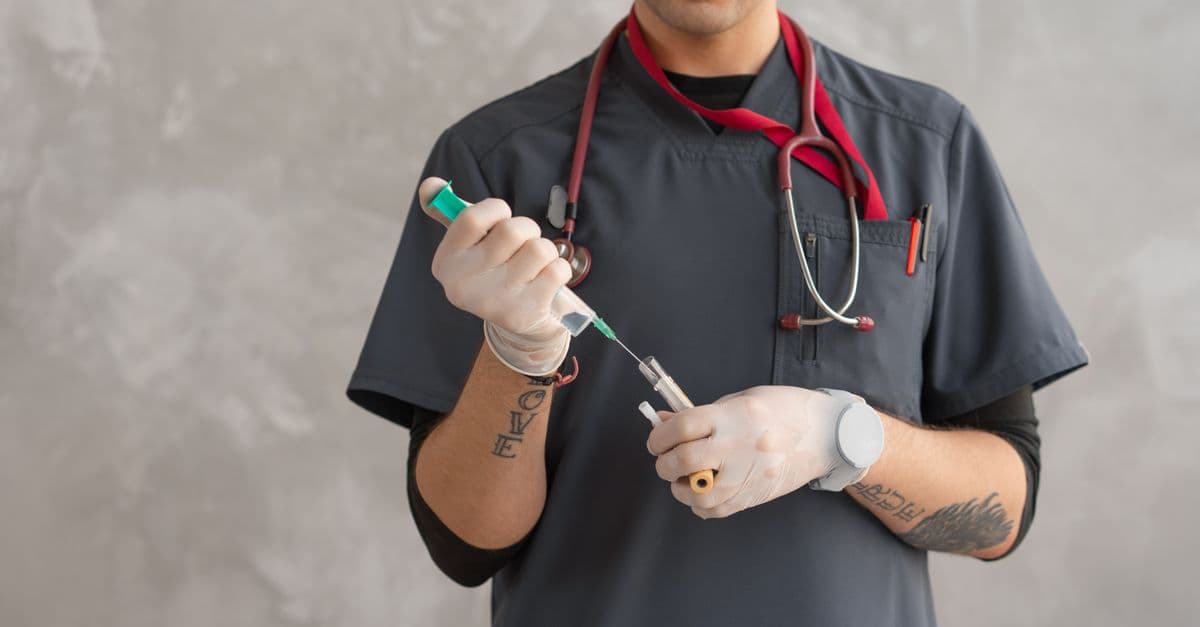
Photo: Mikhail Nilov / Pexels
Edward Jenner (1749–1823) ended smallpox's reign as the most lethal infectious disease in human history. His 1796 demonstration that inoculation with cowpox material protected against smallpox was the founding act of immunology and introduced the concept of vaccination — a word derived from vacca, Latin for cow. He was elected to the Royal Society not for this discovery but for a painstaking study of how cuckoos eject other birds' eggs from nests. He built a garden hut he called the "Temple of Vaccinia" to give free vaccinations to the rural poor. And the ethical status of his original experiment on an eight-year-old boy is a question that still appears in bioethics courses.
Quick Biography
Edward Jenner was born on May 17, 1749, in Berkeley, Gloucestershire, England, the eighth of nine children of the Reverend Stephen Jenner, vicar of Berkeley. His father died when Edward was five; he was raised by an older brother. At eight he underwent variolation — the then-standard method of smallpox prevention, in which material from a mild smallpox case was deliberately introduced into a healthy person to produce controlled infection and immunity. The procedure was dangerous, causing actual smallpox in a small percentage of recipients, and was preceded by preparation procedures including bleeding and purging that were likely more harmful than the variolation itself. Jenner reportedly found the experience traumatic and retained a lifelong interest in finding something safer.
He was apprenticed at thirteen to Daniel Ludlow, a surgeon in Chipping Sodbury, then from 1770 spent two years in London training under John Hunter, the most important anatomist and surgeon of the era. Hunter urged Jenner to investigate phenomena rather than simply speculate — "Don't think, try," he reportedly told him — and the two maintained a correspondence until Hunter's death in 1793. Jenner returned to Berkeley in 1773 and practiced as a country physician for the rest of his life, declining Hunter's repeated invitations to come to London and declining, in 1788, a lucrative London practice that would have made him wealthy.
In 1788 he married Catherine Kingscote of Kingscote, Gloucestershire; they had three children. He lived in Berkeley House, a modest property, and set up the "Temple of Vaccinia" — a small thatched garden hut — to vaccinate the local poor for free. He died on January 26, 1823, of an apparent stroke.
Major Scientific Contributions
The Smallpox Vaccine (1796)
The observation that milkmaids who contracted cowpox appeared resistant to smallpox was not unique to Jenner — it was a piece of rural folk knowledge circulating in Gloucestershire and possibly elsewhere in England. What Jenner did was test it systematically and publish the results.
On May 14, 1796, Jenner took material from a cowpox lesion on the hand of Sarah Nelmes, a milkmaid, and inoculated it into James Phipps, the eight-year-old son of his gardener, through two scratches on the boy's arm. Phipps developed a mild cowpox reaction and recovered. On July 1, Jenner inoculated Phipps with actual smallpox material. Phipps showed no reaction — he was immune. Jenner repeated the cowpox challenge a few weeks later, and again Phipps did not develop smallpox.
Jenner wrote up the results and submitted them to the Royal Society. The Society rejected the paper as insufficiently documented. Jenner expanded it, added more cases — twenty-three in total — and published privately in 1798 as An Inquiry into the Causes and Effects of the Variolae Vaccinae. He coined the term "variolae vaccinae" (smallpox of the cow) and introduced the word "vaccination" for the procedure.
The spread of vaccination was rapid by the standards of the era. Napoleon vaccinated his entire army in 1805 and ordered that anyone requesting vaccination should receive it — releasing British prisoners specifically to allow Jenner access, because, he said, Jenner had done more for Europe than any single man alive. By 1801 more than 100,000 people had been vaccinated in Britain. The British Parliament granted Jenner £10,000 in 1802 and a further £20,000 in 1807. Parliament also created a National Vaccine Establishment in 1808. The global eradication of smallpox — achieved in 1980, declared by the World Health Organization — is the direct institutional descendant of Jenner's 1798 pamphlet.
The Ethics of the Phipps Experiment
By modern standards, the experiment on James Phipps is ethically problematic in multiple ways. Phipps was a child; his consent was not obtained nor could it be — he was eight years old. His father, as the gardener employed by Jenner, was in a subordinate position that raises questions about the voluntariness of any agreement. The challenge with live smallpox material — the July 1 inoculation — exposed Phipps to a potentially lethal disease. No institutional review of any kind existed; the concept of research ethics oversight would not emerge for more than a century.
Historians of medicine treat this as a genuine ethical complexity rather than a simple condemnation. The variolation that Jenner himself had undergone as a child involved similar risks without similar benefits to anyone but the patient; challenge experiments using live pathogens were standard practice in the period. The question of whether Jenner exploited Phipps or performed what was, for 1796, a reasonably careful experiment is contested. Jenner himself maintained a relationship with Phipps throughout his life, eventually giving him the cottage where he lived as a gift. Phipps was vaccinated multiple times over the following years, lived to adulthood, and never contracted smallpox.
The experiment is regularly analyzed in bioethics curricula as an example of how standards of research ethics are historically contingent — actions that were unremarkable in their time may be clearly impermissible by later standards, without those later standards being anachronistically applied as a verdict on the original actor.
The Cuckoo Paper (1788)
Jenner's election to the Royal Society in 1788 was based entirely on a paper he had spent nearly twenty years preparing: a study of the European cuckoo (Cuculus canorus) and specifically of the mechanism by which newly hatched cuckoo chicks eject the host bird's eggs and chicks from the nest.
The conventional belief at the time was that the adult cuckoo removed the other eggs. Jenner observed repeatedly and carefully — over years, not days — that the ejection was performed by the cuckoo chick itself, within hours of hatching. The newly hatched cuckoo has a hollow in the middle of its back, present only for a few days after hatching, which it uses to position the host's eggs and chicks before heaving them over the rim of the nest. Jenner described this mechanism in accurate anatomical detail, correctly identifying the back-hollow, which later observations have confirmed and extended.
John Hunter communicated the paper to the Royal Society. It was published in the Philosophical Transactions and Jenner was elected FRS on the basis of it. Smallpox vaccination, the contribution that would dominate his historical reputation, came eight years later. The Royal Society fellowship was for the cuckoos.
Observations on Migration and Natural History
Jenner published several papers on natural history, including observations on bird migration — specifically the behavior of the cuckoo in autumn. He corresponded extensively with Hunter on natural history subjects. His country practice gave him sustained access to rural wildlife in ways that urban scientists of the era lacked, and he used it. The natural history work is not the center of his scientific legacy but it was, at the time, the credential that got him into the Royal Society.
Personal Life and Lesser-Known Work
Marriage, Family, and Grief
Jenner married Catherine Kingscote in March 1788, the same year he was elected to the Royal Society. Catherine was from a Gloucestershire landed family; the marriage was socially conventional for a country gentleman-physician of Jenner's standing. They had three children: Edward, born 1789; George, born 1793; and Catherine Mary, born 1794. Jenner vaccinated all three of his children against smallpox.
The family's history was marked by medical tragedy. His son Edward Jr., named for his father, died in 1810 at the age of twenty-one from tuberculosis. Catherine, Jenner's wife, also suffered from tuberculosis, which was then called consumption, and died in 1815 — eight years before Jenner himself. Jenner buried two of the most important people in his life within five years. His surviving son George outlived him; his daughter Catherine Mary married and established a family in Gloucestershire. Jenner's later years, from Catherine's death in 1815 until his own death in 1823, were spent largely in Berkeley, pursuing vaccination advocacy and natural history, increasingly alone.
The emotional weight of these losses is visible in Jenner's correspondence from the period. He wrote to friends that he felt himself "worn down by afflictions" and that the recognition coming to him publicly — the Parliamentary grants, the French honor, the letters from heads of state — felt hollow against the personal losses. The contrast between his international fame and his private grief is one of the more humanizing aspects of his later biography.
The Angina Pectoris Paper
Before the vaccination work that would define his historical reputation, Jenner made a significant clinical contribution to cardiology. In 1799 he published "An Inquiry Regarding the Ossification or Callous Formation in the Tunics of the Aorta" in the Transactions of a Society for the Improvement of Medical and Chirurgical Knowledge. More importantly, working with Hunter — who himself suffered from angina pectoris and died during a hospital board meeting, essentially of a cardiac event, in 1793 — Jenner conducted post-mortem examinations that revealed the connection between coronary artery disease and the clinical symptoms of angina.
Jenner dissected Hunter's heart after his death and found the coronary arteries severely calcified and obstructed. He had for years suspected that Hunter's angina was directly related to coronary obstruction — a connection that was not generally accepted in clinical medicine at the time, which tended to attribute angina to stomach or nervous causes. Jenner communicated his findings to the profession, contributing to the gradual clinical recognition of coronary artery disease as a distinct pathological entity. The angina work was a genuine clinical scientific contribution that would receive more historical recognition had it not been entirely overshadowed by vaccination.
Fossil Collecting and the Hot Air Balloon
Jenner had interests well beyond medicine and natural history. He was an active fossil collector in an era when systematic paleontology was in its infancy. The Gloucestershire countryside around Berkeley sits on Jurassic limestone beds, and Jenner collected and documented fossils from local exposures. He corresponded with members of the geological community and contributed specimens; he was part of the network of provincial natural history collectors who formed the grassroots base of early British geology.
On July 2, 1784, Jenner made an ascent in a hot air balloon from the grounds of Berkeley. The flight was not a major scientific experiment but rather a gentleman's engagement with one of the most dramatic new technologies of the era — the Montgolfier brothers' balloon flights had captured European public attention the year before, and numerous English gentlemen of science were attempting similar ascents. Jenner's 1784 flight was one of the early English balloon ascents. The primary documentation is in his correspondence and in local accounts; it is mentioned in John Baron's biography. The flight lasted approximately one hour and covered a distance estimated at several miles. For a physician with a scientific temperament, the opportunity to observe the countryside from altitude was not merely a novelty; Jenner noted the visual experience in letters.
Quirks and Character
The "Temple of Vaccinia"
In his garden in Berkeley, Jenner built a small thatched hut — twelve feet by nine feet, described in contemporaneous accounts — which he called the Temple of Vaccinia. The name was partly self-deprecating, partly earnest. He used the hut specifically to vaccinate rural poor people who could not afford to see a physician or were not welcome in a domestic consultation setting.
The hut functioned as what we would now call a walk-in clinic. Jenner vaccinated hundreds of people there, for free, over the years following 1796. He was aware that the financial barrier to vaccination was real — the rural poor of Gloucestershire had no mechanism to pay him — and he removed the barrier entirely for that population. The hut still stands, or stood as of the early twentieth century; it is depicted in period illustrations.
The Temple of Vaccinia is historically significant not just as a personal quirk but as an early model of what would later become public vaccination campaigns. The idea that vaccination should be freely and universally available — not sold as a physician service — originated with Jenner's practice and was argued for by him explicitly in his correspondence with Parliament when the National Vaccine Establishment was being debated.
He Was Rejected by the Royal Society for His Vaccine Work
The Royal Society's rejection of Jenner's initial vaccination paper in 1797 is one of the more ironic decisions in the history of science. The Society's position was that the evidence was insufficient — two cases, insufficiently documented — and that Jenner risked his existing reputation (built on the cuckoo paper) by pressing a claim that could not yet be proven.
Jenner expanded the paper, documented twenty-three cases, and published privately at his own expense. The private publication became one of the most cited medical documents of the following century. The Royal Society never formally acknowledged the significance of the vaccination paper in Jenner's lifetime, though Parliament did so twice, with substantial grants.
The episode is a useful historical corrective to the idea that great scientific institutions recognize great scientific contributions immediately. The Royal Society elected Jenner for cuckoos, ignored his vaccine paper, and watched as Parliament, Napoleon, and the global medical community recognized what it had declined to publish.
The Milkmaid Origin Story
The standard popular account of Jenner's discovery holds that a milkmaid told him "I shall never have smallpox, for I have had cowpox," and that this single remark launched twenty years of investigation. The story is partly mythologized. The milkmaid quote — in various forms — appears in multiple Victorian accounts of Jenner's life but is not definitively sourced to a specific individual or dated occasion.
What is documentable is that the folk belief was widespread in Gloucestershire, that Jenner was collecting observations about cowpox resistance from at least 1778, and that he discussed the subject with Hunter in correspondence for years before the 1796 experiment. The discovery was the result of sustained, methodical attention to a folk observation rather than a single conversation. The milkmaid story is not false — it captures the type of evidence Jenner was collecting — but it compresses and dramatizes a much longer investigative process.
The Napoleon Connection
When Napoleon issued his order to vaccinate the French army in 1805, he was told by an aide that Jenner was English and currently at war with France. Napoleon's reported response: "I cannot be angry with one of the greatest benefactors of mankind." He released British prisoners held in France specifically so that those requesting vaccination from Jenner could receive it. When intermediaries later wrote to Napoleon on behalf of British prisoners requesting release, Napoleon refused most petitions. If the petition mentioned Jenner's name, he reportedly released the prisoner.
The primary sources for this story are French administrative records and the letters of Jenner's intermediaries. The precise Napoleon quotes are reported secondhand and should be treated as characteristic rather than verbatim. The policy reality — that Napoleon vaccinated his army and that French vaccination was rapid and large-scale — is documented in French medical records of the period. For the parallel development of germ theory and immunology after Jenner, see Louis Pasteur's biography.
His Own Grief Clinic, His Own Mortality
Jenner spent the last years of his life in Berkeley, increasingly recognized internationally and increasingly alone domestically. After Catherine's death from tuberculosis in 1815, he gave up the idea of returning to a full London practice and worked as a country physician and vaccination advocate until a few days before his death. He suffered a stroke on January 25, 1823, and died the following morning at the age of seventy-three.
His will left relatively modest means — consistent with a career in which he had given away free vaccinations for decades and donated substantial energy to public rather than private health. He was buried in the chancel of Berkeley church, beside his wife Catherine and his son Edward Jr. The small churchyard burial is in sharp contrast to the scale of what his work had set in motion: a global vaccination program that would, 157 years later, eradicate the disease he had spent his life fighting. For how the theory behind vaccination was eventually explained at the cellular level, see Louis Pasteur's biography.
Famous Quotes
"The deviation of man from the state in which he was originally placed by nature seems to have proved to him a prolific source of diseases." From An Inquiry into the Causes and Effects of the Variolae Vaccinae (1798). Jenner's opening observation that agricultural civilization had altered the relationship between humans and animal pathogens — a remarkably modern framing.
"I hope that some day the practice of producing cowpox in human beings will spread over the world — when that day comes, there will be no more smallpox." Attributed in multiple sources to Jenner's correspondence, circa 1801. The global eradication of smallpox was declared in 1980, 157 years after his death.
"The joy I felt at the prospect before me of being the instrument destined to take away from the world one of its greatest calamities... was so excessive that I sometimes found myself in a kind of reverie." From Jenner's correspondence, quoted in John Baron's Life of Edward Jenner (1827).
Legacy
Jenner's contribution is unique in the history of medicine in having a measurable outcome that is fully realized: smallpox is extinct as a human disease. The 1980 WHO declaration of eradication is the endpoint of a causal chain that begins with the James Phipps experiment in 1796. No other scientist in history can point to the complete elimination of a disease as the outcome of their individual work.
The vaccination concept Jenner established — controlled exposure to a weakened or related pathogen to produce immunity — became the foundational principle of immunology and remains so. The vaccines for polio, measles, typhoid, cholera, and dozens of other diseases are direct extensions of the principle he demonstrated. For the germ theory that provided the mechanism Jenner lacked — an explanation of why vaccination worked — see Louis Pasteur's biography and Marie Curie's broader scientific era.
The ethical debate around the Phipps experiment seeded the development of modern research ethics. The question of when a researcher may expose a non-consenting subject to risk for the potential benefit of others was first forced into serious consideration by Jenner's case, and has been elaborated by bioethicists ever since.
FAQ
Q: Who was James Phipps and what happened to him? James Phipps was the eight-year-old son of Jenner's gardener. On May 14, 1796, Jenner inoculated him with cowpox material from milkmaid Sarah Nelmes, then challenged him with live smallpox on July 1. Phipps showed immunity. By modern bioethical standards, the experiment was impermissible — a child's consent could not be obtained, his father was in a subordinate employment relationship, and the challenge involved a potentially lethal pathogen. Jenner maintained a relationship with Phipps throughout his life and eventually gave him a cottage. Phipps lived to adulthood and never contracted smallpox.
Q: Why was Jenner elected to the Royal Society for cuckoos? Jenner's 1788 paper on cuckoo behavior — specifically describing how newly hatched cuckoo chicks eject host eggs and chicks from the nest using a temporary hollow in their backs — was a rigorous zoological observation based on years of field study. John Hunter communicated it to the Royal Society, which elected Jenner FRS on its basis. His vaccination work came eight years later; the Royal Society rejected the initial vaccination paper as insufficiently evidenced.
Q: Did Jenner know why vaccination worked? No. Jenner knew empirically that cowpox inoculation produced immunity to smallpox; he did not know the mechanism. Germ theory — the understanding that infectious diseases are caused by microorganisms that trigger immune responses — was developed by Pasteur and Koch decades after Jenner's death. Jenner had functional vaccination without a mechanistic theory.
Q: What was the "Temple of Vaccinia"? A small thatched hut in Jenner's garden in Berkeley, Gloucestershire, where he vaccinated the rural poor for free. It functioned as an early walk-in vaccination clinic and is considered a model for the later public vaccination campaigns Jenner advocated for with Parliament.
Q: How quickly did vaccination spread after 1798? Very rapidly. By 1801, more than 100,000 people had been vaccinated in Britain. Napoleon vaccinated the entire French army in 1805. The British Parliament created a National Vaccine Establishment in 1808. By the 1820s vaccination programs were underway across Europe and in the Americas.
Q: What was Jenner's contribution to cardiology? Before his vaccination work, Jenner conducted post-mortem examinations connecting coronary artery disease to the clinical symptoms of angina pectoris. After the death of his mentor John Hunter in 1793, Jenner dissected Hunter's heart and found severely calcified coronary arteries — providing evidence for the coronary origin of angina at a time when the connection was not medically accepted. This clinical observation contributed to the eventual recognition of coronary artery disease as a distinct pathological condition.
Q: Did Jenner fly in a hot air balloon? Yes. On July 2, 1784, Jenner made an ascent in a hot air balloon from the grounds of Berkeley. This was less than a year after the Montgolfier brothers' demonstrations in France had sparked a wave of English balloon flights among scientifically curious gentlemen. The flight lasted approximately one hour. It is documented in his correspondence and in John Baron's biography.
Q: What happened to Jenner's family? Jenner's wife Catherine Kingscote died of tuberculosis in 1815, eight years before Jenner himself. His son Edward Jr. had died of tuberculosis in 1810 at age twenty-one. These losses defined Jenner's later years. He was buried beside Catherine and Edward Jr. in Berkeley church following his death from a stroke on January 26, 1823, at age seventy-three.
Sources
- Jenner, Edward. An Inquiry into the Causes and Effects of the Variolae Vaccinae. London, 1798.
- Baron, John. The Life of Edward Jenner. 2 vols. Henry Colburn, 1827–1838.
- Razzell, Peter. Edward Jenner's Cowpox Vaccine: The History of a Medical Myth. Caliban Books, 1977.
- Bazin, Hervé. The Eradication of Smallpox: Edward Jenner and the First and Only Eradication of a Human Infectious Disease. Academic Press, 2000.
- Fenner, F., et al. Smallpox and Its Eradication. World Health Organization, 1988.
- Jenner, Edward. "Observations on the Natural History of the Cuckoo." Philosophical Transactions of the Royal Society 78 (1788): 219–237.
- Fisher, Richard B. Edward Jenner, 1749–1823. Andre Deutsch, 1991.
- Blower, S., and R. McLean. "Prophylactic Vaccines, Risk Behavior Change, and the Probability of Eradicating HIV in San Francisco." Science 265 (1994): 1451–1454. [For context on vaccine logic]
Follow new articles
Add SciHub101 to your feed reader to see new science and technology stories.
About the Author
SciHub101 is an independent science and technology publication founded and edited by Buğra Sözeri, a software engineer and app developer based in Türkiye. AI tools assist with drafting and research. Source documentation in the existing archive is uneven, and articles are being reviewed and corrected. The Editorial Team byline identifies editorial responsibility; it does not certify specialist or independent human review. Where we compare products, anything built by our own team is labelled as such — see the editorial guidelines and About page for how corrections and disclosures work.
Related Articles
Galileo Galilei: The Finger in the Museum and the Man Who Talked Back to Rome — SciHub101
Galileo Galilei's life, discoveries, and verified quirks: his preserved finger on display, three illegitimate children, the Inquisition recantation, and the apocryphal 'Eppur si muove'.
Charles Darwin: The Reluctant Revolutionary Who Ate His Specimens — SciHub101
Charles Darwin's life, discoveries, and verified quirks: eating exotic animals, daily backgammon with his wife, decades of anxiety-induced vomiting, and the theory that changed biology.
Vaccination: The Invention That Has Saved More Lives Than Any Other
Vaccination began with cowpox, a boy named James Phipps, and Edward Jenner in 1796. Discover how the science of immunization works and why it remains our most powerful public health tool.
The Jenner Smallpox Vaccination: The First Vaccine
Edward Jenner vaccinated James Phipps with cowpox in 1796 and created the world's first vaccine. Learn how the experiment worked and why it ended smallpox.
History of Vaccines — From Jenner to mRNA
From variolation and Jenner's cowpox to Pasteur, polio, smallpox eradication, and mRNA — the full history of vaccines and modern frontiers.

How Vaccines Were Invented: The History That Saved Hundreds of Millions of Lives
From smallpox to COVID-19, vaccines are humanity's most powerful medical technology. Here's how we discovered them.