The Jenner Smallpox Vaccination: The First Vaccine
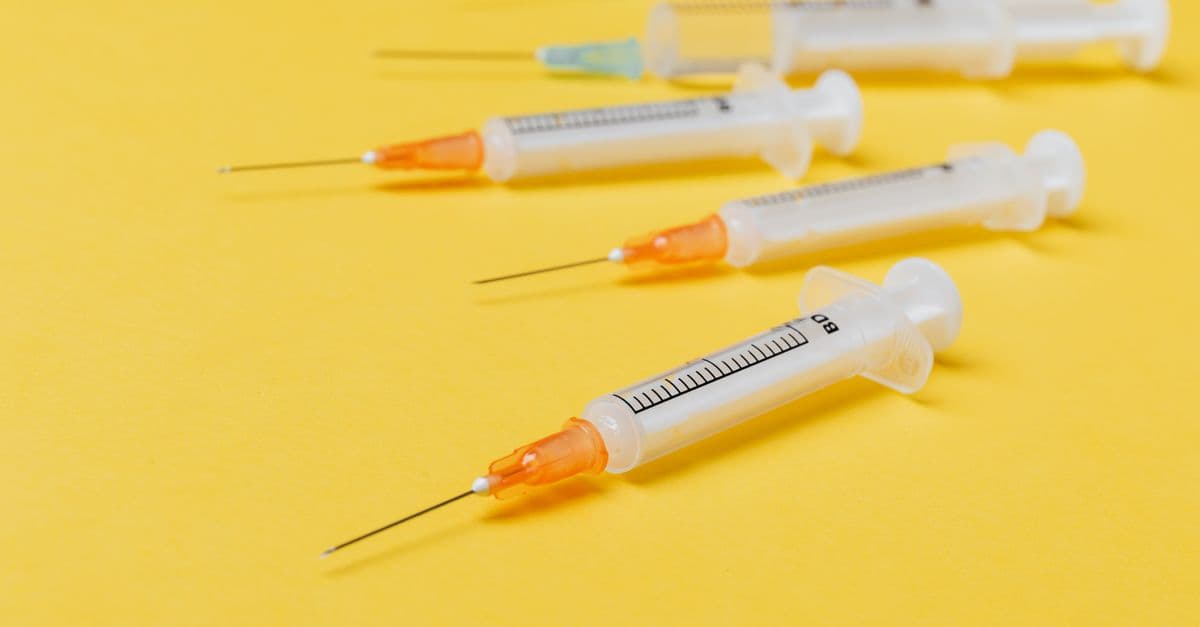
Photo: www.kaboompics.com / Pexels
On the morning of May 14, 1796, a country doctor in Berkeley, England, scraped pus from a blister on a milkmaid's hand and rubbed it into two shallow cuts on the arm of an eight-year-old boy. The boy was not seriously ill afterward. Seven weeks later, the doctor inoculated him with material taken directly from a smallpox pustule. Still nothing happened. That sequence — cowpox in, smallpox repelled — became the template for every vaccine ever made. The word "vaccine" itself is a direct descendant of that afternoon.
What Smallpox Was, and Why It Had to Be Stopped
Smallpox was one of the most lethal infectious diseases in human history. Caused by the variola virus, it killed an estimated 300 to 500 million people in the twentieth century alone — more than both world wars combined.
Variola virus — the pathogen responsible for smallpox, a member of the Orthopoxvirus genus. Two strains existed: variola major, with a case fatality rate of roughly 30%, and variola minor, a milder variant with a fatality rate under 1%.
The disease progression was brutal. After a two-week incubation, victims developed high fever, headache, and back pain. Within days, a characteristic rash erupted across the entire body, progressing through stages from flat red spots to raised bumps to fluid-filled pustules that ruptured and crusted. Survivors were often permanently scarred, and roughly one-third of survivors went blind.
Source: Fenner, F. et al. (1988), Smallpox and Its Eradication, World Health Organization — the definitive epidemiological history of smallpox, estimating 300–500 million deaths in the 20th century.
In eighteenth-century England, smallpox killed roughly 10% of the entire population. Among children, the death rate was even higher: one in three children who contracted the disease died from it.
Source: Razzell, P. (1977), The Conquest of Smallpox, Caliban Books — demographic analysis of smallpox mortality in 18th-century England.
The disease was so embedded in European life that those who survived it were considered permanently changed — "pockmarked" by scars, possibly immune, and thus valuable as servants and soldiers who could be sent into infected areas without risk.
The Technology That Came Before: Variolation
Jenner did not invent protection against smallpox from nothing. A practice called variolation — or inoculation — had been in use across the Ottoman Empire and parts of Asia for at least a century before Jenner's experiment.
Variolation — the deliberate inoculation of a healthy person with material taken from a smallpox pustule, causing a (usually) milder infection and lifelong immunity. Not to be confused with vaccination, which uses a related but distinct pathogen.
The technique was introduced to Britain by Lady Mary Wortley Montagu, who observed it in Constantinople in 1717 and had her own children inoculated. By the 1720s, the practice had royal endorsement — King George I had prisoners tested with variolation before authorizing its use on his own grandchildren.
Source: Miller, G. (1957), The Adoption of Inoculation for Smallpox in England and France, University of Pennsylvania Press — history of variolation introduction to Britain.
Variolation worked, but it carried a real mortality risk. The procedure killed roughly 1 in 50 to 1 in 200 patients — compared to the 1 in 3 to 1 in 5 risk from natural smallpox, this was a calculated gamble. It also risked starting local outbreaks, since the variolated person was briefly contagious with real smallpox.
What Jenner proposed was fundamentally different: exposure to a related but less dangerous pathogen that would train the immune system without causing smallpox at all.
Edward Jenner: Country Doctor, Keen Observer
Edward Jenner was born in 1749 in Berkeley, Gloucestershire, and spent most of his career as a rural physician there. He was not an academic or an institutional scientist. He was a general practitioner who listened carefully to local folk knowledge.
The piece of folk knowledge that interested him was this: milkmaids who had contracted cowpox — a relatively mild disease that produced blisters on their hands — appeared to be immune to smallpox. This was not a scientific claim in 1796; it was a repeated observation, the kind of pattern that country people noticed over generations.
Cowpox was caught from the udders of infected cows. It caused fever and painful pustules on the hands of the people who milked them, but it resolved without serious complications. And the women who had it seemed to go through smallpox epidemics untouched.
Jenner spent roughly two decades thinking about this before he acted on it. He documented earlier cases, noted the pattern carefully, and finally decided to test it directly.
Source: Jenner, E. (1798), An Inquiry into the Causes and Effects of the Variolae Vaccinae, published by the author — the original monograph, presenting the experimental cases including Phipps.
The Experiment: May 14 and July 1, 1796
The subject was James Phipps, the eight-year-old son of Jenner's gardener. The source was Sarah Nelmes, a milkmaid who had developed fresh cowpox blisters on her hand after contact with a cow named Blossom.
On May 14, 1796, Jenner made two small incisions on James Phipps's arm and introduced cowpox material from Sarah Nelmes's pustules directly into the cuts. This is the moment modern vaccination dates itself from.
James developed a mild fever and some local discomfort over the following days, consistent with a cowpox infection. He recovered fully.
On July 1, 1796 — six weeks after the cowpox inoculation — Jenner inoculated James Phipps with variolous material: fresh smallpox matter, the standard variolation procedure of the era. James did not develop smallpox. Jenner repeated the smallpox challenge again months later, with the same result.
Source: Jenner, E. (1798), An Inquiry into the Causes and Effects of the Variolae Vaccinae — Jenner's own description of the Phipps case and subsequent challenge experiments.
The logical structure of the experiment was clean: (1) expose to cowpox, (2) challenge with smallpox, (3) observe that smallpox does not take hold. If the second step had produced smallpox, cowpox would have been ruled out as a protective agent. The fact that it did not was a controlled test of the hypothesis in a way that variolation reports never were.
Source: Riedel, S. (2005), "Edward Jenner and the history of smallpox and vaccination," Baylor University Medical Center Proceedings, 18(1), 21–25 — review of Jenner's experimental logic and historical context.
The Cow Named Blossom and the Milkmaid's Pustule
These names are not invented. Blossom's hide is preserved to this day at St. George's Hospital Medical School at the University of London. The cow whose infection made its way through Sarah Nelmes's hand to James Phipps's arm is a real artifact in the history of medicine.
Source: Pead, P. J. (2003), "Benjamin Jesty: new light in the dawn of vaccination," Lancet, 362(9401), 2104–2109 — also notes that a farmer named Benjamin Jesty inoculated his family with cowpox as early as 1774, though he published nothing.
The Jesty precedent is worth noting: Jenner was not necessarily the first person to attempt cowpox inoculation, but he was the first to publish a systematic account, to challenge his subjects with real smallpox to verify protection, and to document and distribute the method. Science advances by publication and verification, not by private action.
The Publication and the Coinage of "Vaccine"
Jenner submitted his findings to the Royal Society in 1797. The Society rejected the paper — not because the results were implausible, but because the claim was too extraordinary to publish without more evidence. The two-subject study (Phipps and a handful of other cases Jenner had documented) was not, by the Society's judgment, sufficient.
Jenner gathered more cases — a total of 23 by the time he self-published in 1798 — and released his findings as a privately printed monograph: An Inquiry into the Causes and Effects of the Variolae Vaccinae.
Variolae vaccinae means, in Latin, "the pustules of the cow." The term is the direct ancestor of "vaccine" — from vacca, the Latin word for cow. Every vaccine against every disease owes its name to Blossom.
Source: Jenner, E. (1798), An Inquiry into the Causes and Effects of the Variolae Vaccinae — the coinage of the term and the experimental record are both in this document.
Why the Immune System Responded the Way It Did
Jenner had no concept of viruses, antibodies, or the immune system as modern science understands it. He worked entirely from observation. The mechanism became clear only over the following two centuries.
The cowpox virus (Cowpox orthopoxvirus, now known to be a distinct species from the original Jenner-era material) and the variola virus share enough surface protein structures — antigens — that an immune response generated against one produces cross-reactive antibodies effective against the other. Think of it like a key that fits two different locks: the immune system makes a key shaped by cowpox, and that key also happens to open the smallpox lock.
Antigen — a molecular structure on a pathogen's surface that the immune system recognizes and responds to. The immune system generates antibodies specifically shaped to bind to antigens.
Cross-reactive immunity — when antibodies or immune cells generated against one pathogen's antigens also bind to structurally similar antigens on a different pathogen, conferring partial or full protection against the second pathogen.
The orthopoxvirus family — which includes variola (smallpox), cowpox, vaccinia (the virus used in modern smallpox vaccines), and monkeypox — is closely related enough that immunity to one member confers significant, sometimes complete, protection against the others.
Source: Moss, B. (2011), "Smallpox vaccines: targets of protective immunity," Immunological Reviews, 239(1), 8–26 — review of orthopoxvirus cross-immunity.
Jenner's method worked not because he understood the mechanism but because he followed the evidence carefully enough to identify a relationship that was real.
The Reception: Rapid Adoption and Persistent Opposition
The reception of vaccination was notably faster than many medical breakthroughs receive today. Within a year of the 1798 publication, physicians across Britain were requesting cowpox material. By 1800, vaccination had reached North America, Europe, and the Ottoman Empire.
Napoleon, who was at war with Britain, made a pointed exception to his blockade of British goods: he allowed Jenner's vaccine to cross the Channel, and had his entire army vaccinated. When Jenner wrote to Napoleon requesting the release of several English prisoners, Napoleon initially refused — then relented, reportedly saying he could refuse Jenner nothing.
Source: Bazin, H. (2000), The Eradication of Smallpox: Edward Jenner and the First and Only Eradication of a Human Infectious Disease, Academic Press — account of vaccination's spread across Europe including Napoleon episode.
Resistance came primarily from two directions. Variolation practitioners, whose livelihood depended on the older technique, were slow to switch. More persistently, religious opponents argued that mixing human and animal material was unnatural and ungodly. Editorial cartoons of the period showed vaccinated patients growing cow heads from their arms.
The British government addressed the adoption question with legislation. The Vaccination Act of 1840 made variolation illegal and offered free vaccination to all. The Vaccination Act of 1853 made infant vaccination compulsory — the first compulsory vaccination law in any country.
Source: Durbach, N. (2005), Bodily Matters: The Anti-Vaccination Movement in England, 1853–1907, Duke University Press — history of legislative response and anti-vaccination opposition.
The Timeline
| Date | Event |
|---|---|
| 1717 | Lady Mary Wortley Montagu introduces variolation to Britain from Constantinople |
| 1774 | Benjamin Jesty inoculates his family with cowpox in Dorset (unpublished) |
| May 14, 1796 | Jenner inoculates James Phipps with cowpox from Sarah Nelmes |
| July 1, 1796 | Phipps challenged with smallpox; no disease develops |
| 1797 | Royal Society rejects Jenner's first submission for insufficient evidence |
| 1798 | Jenner self-publishes An Inquiry with 23 documented cases |
| 1800 | Vaccination reaches North America and most of Europe |
| 1802 | British Parliament grants Jenner £10,000 (roughly £1.4 million today) |
| 1840 | Vaccination Act: variolation made illegal, free vaccination offered |
| 1853 | Compulsory infant vaccination law passed in Britain |
| 1967 | WHO launches global smallpox eradication campaign |
| October 26, 1977 | Last natural case of smallpox (variola major): Ali Maow Maalin in Somalia |
| May 8, 1980 | WHO officially declares smallpox eradicated |
The Only Human Disease Ever Eradicated
Smallpox is the only infectious disease in human history to have been completely eradicated through a vaccination campaign. Not controlled. Not reduced to low endemic levels. Eliminated from the species.
The eradication campaign ran from 1967 to 1980. The WHO strategy evolved over the course of the campaign — early mass vaccination was replaced by a more targeted "ring vaccination" approach, in which every known case was surrounded by vaccinating all contacts, cutting off transmission chains before they could spread.
Source: Fenner, F. et al. (1988), Smallpox and Its Eradication, WHO — comprehensive account of the global eradication campaign.
The last naturally occurring case of variola major (the lethal form) was recorded in Bangladesh in 1975. The last case of any natural smallpox infection occurred in Somalia on October 26, 1977. A laboratory-acquired infection at the University of Birmingham in 1978 killed one person — Janet Parker, a medical photographer — and led to the destruction of all research stocks except those held at two WHO-designated repositories: the CDC in Atlanta and the VECTOR Institute in Novosibirsk.
Those two stocks still exist. Whether they should be destroyed has been debated at the WHO for decades, with no consensus reached as of 2026.
Source: WHO (2011), "Smallpox vaccines," WHO Technical Report Series 964 — current status of variola stocks and debate over destruction.
What Jenner Got Wrong — and Why It Doesn't Matter
Jenner made several errors in his original work that are worth examining, because they illuminate how science actually advances.
He believed the "true cowpox" that protected against smallpox was a specific form of the disease that had originated in horses (which he called "grease") and spread to cattle. This was incorrect. Cowpox and horse grease are not the same pathogen.
He also believed the protection was permanent. It is not. Immunity from vaccination wanes over roughly 5 to 10 years for protection against infection, though it remains more durable against severe disease and death for longer.
Source: Hammarlund, E. et al. (2003), "Duration of antiviral immunity after smallpox vaccination," Nature Medicine, 9(9), 1131–1137 — measured persistence of smallpox vaccine immunity in people vaccinated decades earlier.
What Jenner got right was the relationship: cowpox exposure prevents smallpox. The mechanism was wrong, the permanence was wrong, the pathogen origin story was wrong. But the experimental logic — expose, challenge, observe — was sound, and the result was real.
The history of medicine is full of correct results obtained by people who did not know why they were correct. Jenner's experiment is a particularly clean example: the observation preceded the theory by roughly 80 years.
What People Get Wrong About Jenner's Experiment
"Jenner invented vaccination from nothing." He built on decades of folk observation about milkmaids and cowpox, on the existing practice of variolation, and on at least one documented prior attempt (Benjamin Jesty, 1774). His contribution was systematic documentation, challenge testing, and publication — the scientific apparatus that turned a folk observation into a replicable procedure.
"The experiment was unethical by any standard." It was conducted without the formal consent frameworks modern medicine requires, and the subject was a child. But the context matters: variolation was already being done to children as a common medical procedure, often with parental consent. Jenner believed, with reasonable grounds, that cowpox inoculation was safer than variolation. He was right. The ethical frameworks for evaluating this experiment cannot be cleanly imported from 2026 into 1796.
"The Royal Society rejected Jenner because they were closed-minded." The Society asked for more evidence before publishing a claim that a disease could be prevented by inoculating with material from a different species. That is not closed-mindedness; that is appropriate scientific skepticism for an extraordinary claim. Jenner responded by gathering more evidence and publishing a more complete case series.
"Vaccines are named after Jenner." Vaccines are named after cows. Vacca is Latin for cow. Jenner coined "variolae vaccinae" — the smallpox of cows — and Louis Pasteur later generalized "vaccine" to apply to any immunological preparation, explicitly honoring Jenner.
Source: Plotkin, S. (2014), "History of vaccination," PNAS, 111(34), 12283–12287 — traces etymology of "vaccine" and Pasteur's generalization.
FAQs
Q: Who was James Phipps, and did he consent to the experiment?
A: James Phipps was the eight-year-old son of Jenner's gardener. No formal consent as modern medicine would require it was obtained — the concept did not exist in 1796. His father, a trusted employee, presumably agreed to the procedure. Jenner later built Phipps a cottage and kept him as a beneficiary throughout his life. Phipps lived to age 65 and received multiple re-vaccinations over the years.
Q: Was Jenner the first person to use cowpox to prevent smallpox?
A: Probably not. Benjamin Jesty, a Dorset farmer, inoculated his wife and sons with cowpox in 1774, apparently with protective effect. Jesty made no attempt to publish or systematically test his approach. Jenner's contribution was the documented experimental protocol — inoculation, challenge with smallpox, and systematic case series — that made the finding reproducible and communicable to other physicians.
Q: What is the modern smallpox vaccine made of?
A: The smallpox vaccines used in the eradication campaign and held in strategic stockpiles today use vaccinia virus, a closely related orthopoxvirus, rather than the original cowpox. Vaccinia may be a hybrid or variant that diverged from cowpox at some point in the 19th century during vaccine production. The exact origins of vaccinia are still not completely resolved.
Q: Why is smallpox the only eradicated human disease?
A: Several characteristics made smallpox eradicable: it infects only humans (no animal reservoir to reinfect from), infection is always visible (the distinctive rash meant cases could be identified and isolated), the vaccine confers strong protection, and there is no asymptomatic carrier state. Diseases like polio and measles — still targeted for eradication — face harder challenges, particularly around asymptomatic transmission and persistent animal or environmental reservoirs.
Q: Does smallpox vaccination still happen today?
A: Routine vaccination stopped in most countries by the mid-1970s as eradication neared. Military personnel in several countries, laboratory workers handling orthopoxviruses, and some public health responders receive vaccination today. Strategic stockpiles exist for emergency use. The re-emergence of mpox (formerly monkeypox) as a global health concern has renewed interest in orthopoxvirus vaccination for general populations.
Q: What was Jenner's main scientific error?
A: Jenner incorrectly believed the protective cowpox originated from a horse disease called "grease" and that the immunity it conferred was permanent. Modern immunology shows that immunity from smallpox vaccination wanes significantly within 5 to 10 years, though older studies suggest prolonged T-cell memory may provide partial protection for much longer.
The Takeaway
Edward Jenner took a piece of folk wisdom — that milkmaids did not get smallpox — and turned it into a testable hypothesis by doing the simplest thing imaginable: he inoculated a boy with cowpox and then tried to infect him with smallpox. When the smallpox did not take, he documented the experiment, published it, and gave the method away freely. The result, 184 years later, was the only complete eradication of a human infectious disease in history. The logic of every vaccine made since traces back to that afternoon in Berkeley: teach the immune system to recognize a pathogen before the pathogen arrives.
Read next:
Weekly digest
Stay ahead of the curve
Get the best science, AI, and tech stories delivered to your inbox every week. No spam — unsubscribe any time.
About the Author
SciHub101 is an independent science and technology publication founded and edited by Buğra Sözeri, a software engineer and app developer based in Türkiye. Articles are drafted against peer-reviewed literature and primary sources, fact-checked, and edited by a human before publication. Where we compare products, anything built by our own team is labelled as such — see the editorial guidelines and About page for how corrections and disclosures work.
Related Articles
The Joule Paddle Wheel Experiment: Proving Heat Is a Form of Energy
James Joule used falling weights and spinning paddles to prove that mechanical work and heat are the same thing — establishing the first law of thermodynamics and the SI unit that bears his name.
The Iowa Gambling Task: How Emotions Drive Decisions
How a 1994 card game revealed that gut feelings guide rational decisions. The Iowa Gambling Task and the somatic marker hypothesis, explained.
Vaccination: The Invention That Has Saved More Lives Than Any Other
Vaccination began with cowpox, a boy named James Phipps, and Edward Jenner in 1796. Discover how the science of immunization works and why it remains our most powerful public health tool.

Edward Jenner: The Vaccine Pioneer Who Was a Fellow for Studying Cuckoos — SciHub101
Edward Jenner invented the smallpox vaccine in 1796 but was elected to the Royal Society for studying cuckoos. His verified biography, ethics, and medical legacy.
History of Vaccines — From Jenner to mRNA
From variolation and Jenner's cowpox to Pasteur, polio, smallpox eradication, and mRNA — the full history of vaccines and modern frontiers.
Jenner's Smallpox Vaccine: The First Vaccine and Modern Immunology
In 1796, Edward Jenner deliberately infected a boy with cowpox to test if it would protect against smallpox. His bold experiment launched vaccination and saved millions of lives.