History of Vaccines — From Jenner to mRNA
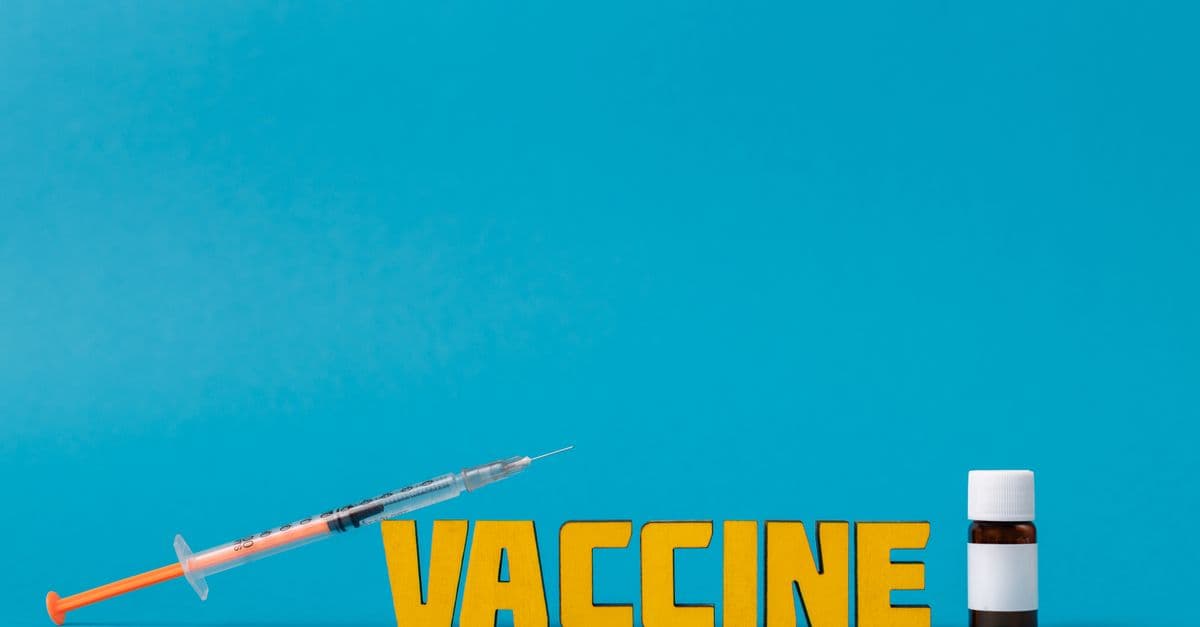
Photo: Thirdman / Pexels
Vaccines are arguably the single greatest public-health intervention in human history, preventing an estimated 154 million deaths in the past 50 years according to WHO/Lancet modeling. Yet the road from ancient folk practices to mRNA platforms spans more than a thousand years, four continents, and a series of intellectual leaps that repeatedly redefined what medicine could do.
Before Vaccines: Variolation
Long before Edward Jenner, people across Asia and Africa observed that smallpox survivors never caught the disease twice. The practical response was variolation (also called inoculation) — the deliberate transfer of material from a smallpox pustule into a healthy person's skin or nostril to induce a mild, controlled infection.
- China, as early as the 10th–16th centuries: dried smallpox scabs blown into the nose.
- India and the Ottoman Empire: pus from a mild case scratched into the arm.
- West Africa: cutaneous variolation widespread by the 17th century.
Variolation reached Europe in 1721 through Lady Mary Wortley Montagu, wife of the British ambassador to Constantinople, who had her own children inoculated and promoted the practice in London. Mortality from variolation was about 1–2% — compared with 20–30% for natural smallpox, a dramatic improvement, but unacceptable by modern standards.
Jenner and the First True Vaccine (1796)
Country physician Edward Jenner in Gloucestershire noticed that milkmaids who had caught cowpox — a mild bovine disease — appeared immune to smallpox. On May 14, 1796, he scratched cowpox material from milkmaid Sarah Nelmes's hand into the arm of an eight-year-old boy, James Phipps. Six weeks later he challenged Phipps with live smallpox. The boy did not get sick.
Jenner published his results in 1798. He coined the term vaccination from the Latin vacca (cow) and vaccinia (cowpox). The Royal Society initially rejected his paper. Within a decade vaccination had spread across Europe and the Americas, and Napoleon vaccinated his entire army in 1805 — even awarding Jenner a medal while at war with Britain.
Pasteur and the Birth of Microbiology
Jenner had no idea why cowpox protected against smallpox — germ theory did not yet exist. That foundation came from Louis Pasteur and Robert Koch in the late 1800s. Pasteur generalized Jenner's principle by discovering attenuation: weakening a pathogen in the lab so it could induce immunity without disease.
- 1879 — Chicken cholera vaccine (Pasteur's first attenuated vaccine, accidental).
- 1881 — Anthrax vaccine, publicly demonstrated at Pouilly-le-Fort.
- 1885 — Rabies vaccine, used successfully on nine-year-old Joseph Meister after a dog bite — the first post-exposure vaccine.
Pasteur generalized Jenner's word: he proposed vaccine should refer to any such immunization, "in honor of his merit and of the immense service that he rendered to humanity."
The 20th Century Explosion
Once microbes could be cultivated, attenuated, killed, or chemically inactivated, vaccines proliferated:
- 1890s — Diphtheria and tetanus antitoxins (von Behring, Nobel 1901).
- 1923–1927 — Diphtheria toxoid (Glenny, Ramon).
- 1926 — Pertussis (whole-cell).
- 1937 — Yellow fever (Theiler, Nobel 1951).
- 1955 — Polio (Salk, inactivated) — celebrated in the U.S. as a national triumph.
- 1961 — Polio (Sabin, oral attenuated) — easier to administer.
- 1963 — Measles (Enders).
- 1967–1971 — Mumps, rubella (Hilleman).
Maurice Hilleman, the prolific Merck virologist, developed or co-developed more than 40 vaccines and is credited with saving more lives than any other 20th-century scientist.
Smallpox: The First and Only Human Disease Eradicated
By the 1950s, smallpox still killed roughly 2 million people per year worldwide. In 1967 the WHO launched the Intensified Smallpox Eradication Programme, led by D.A. Henderson. Its strategy: ring vaccination — instead of mass-vaccinating populations, surveillance teams found each new case and vaccinated everyone in the surrounding community.
- 1977 — Last natural case: Ali Maow Maalin, a hospital cook in Merca, Somalia.
- 1978 — Last fatal case: laboratory accident in Birmingham, UK (Janet Parker).
- May 8, 1980 — WHO formally declared smallpox eradicated. The first and still only human disease ever eliminated by deliberate human action.
The estimated cost of the eradication campaign was around $300 million — recouped within months by ending the worldwide costs of vaccination, treatment, and lost productivity. Cold War rivals (the U.S. and Soviet Union) collaborated on this campaign even at the height of tensions.
The only other disease eradicated by humans is rinderpest (a cattle plague), declared eradicated in 2011.
Diseases on the Brink
| Disease | Status (2026) | Notes |
|---|---|---|
| Smallpox | Eradicated 1980 | Stocks held only at CDC and Vector (Russia) |
| Rinderpest | Eradicated 2011 | Cattle only |
| Polio | >99% reduced since 1988 | Endemic only in Afghanistan & Pakistan; cVDPV outbreaks elsewhere |
| Guinea worm | <20 human cases/yr | Carter Center campaign — last few hundred animal cases |
| Measles | Resurgent since 2020 | Vaccine coverage dropped during COVID-19 disruption |
| Rubella | Eliminated in Americas | Global elimination targeted |
| Lymphatic filariasis | Targeted 2030 | Mass drug administration |
The polio program (Global Polio Eradication Initiative, 1988) reduced wild cases from ~350,000/yr to under 10/yr. Wild type 2 (1999) and type 3 (2020) are eradicated; only wild type 1 remains, and circulating vaccine-derived poliovirus (cVDPV) outbreaks complicate the endgame.
A Vaccine Milestones Timeline
| Year | Milestone |
|---|---|
| ~1000 CE | Variolation practiced in China |
| 1721 | Lady Montagu introduces variolation to Britain |
| 1796 | Jenner — cowpox / smallpox vaccine |
| 1885 | Pasteur — rabies vaccine |
| 1923 | Diphtheria toxoid |
| 1955 | Salk polio vaccine |
| 1963 | Measles vaccine |
| 1980 | WHO declares smallpox eradicated |
| 1981 | First hepatitis B vaccine (plasma-derived) |
| 1986 | First recombinant DNA vaccine (HepB) |
| 2006 | HPV vaccine (cervical cancer prevention) |
| 2019 | First Ebola vaccine licensed (rVSV-ZEBOV) |
| 2020 | COVID-19 mRNA vaccines authorized (Pfizer-BioNTech, Moderna) |
| 2021 | First malaria vaccine (RTS,S) recommended by WHO |
| 2023 | RSV vaccines approved for older adults & infants |
| 2024 | Self-amplifying mRNA flu vaccine (Japan) |
| 2026 | Multiple personalized cancer mRNA vaccines in Phase III |
The mRNA Revolution
For decades, vaccines required growing the pathogen (or a protein from it) in eggs, cells, or yeast — slow and expensive. Messenger RNA vaccines flip the model: deliver a fragment of synthetic mRNA encoding a viral protein (e.g., SARS-CoV-2 spike), and let the patient's own cells make the antigen, which the immune system then learns to recognize.
The foundational work by Katalin Karikó and Drew Weissman (Nobel Prize, 2023) on modified nucleosides solved the problem of mRNA triggering destructive inflammation. Lipid nanoparticles solved delivery. When COVID-19 emerged in January 2020, the Moderna vaccine sequence was designed in two days and the first dose was in a human arm by March — an unprecedented speed.
mRNA is now a platform: change the sequence, keep the manufacturing. This enables:
- Personalized cancer vaccines — encoding neoantigens from a patient's own tumor. Phase III trials for melanoma (Moderna + Merck) reported 49% reduction in death or recurrence in 2024.
- Combination respiratory vaccines — flu + COVID + RSV in one shot, in late-stage trials.
- HIV vaccines — multiple candidates in trials after decades of failure.
- Universal flu vaccines — targeting conserved hemagglutinin stem regions.
For deeper detail, see our companion articles on how vaccines work and mRNA and the COVID-19 platform, plus the underlying history of antibiotics for context on parallel infectious-disease revolutions.
2026 Frontiers
- Cancer vaccines — personalized mRNA for melanoma, pancreatic, glioblastoma.
- HIV — mosaic and germline-targeting immunogens in trials.
- Universal influenza — multiple candidates aiming to end annual reformulation.
- Maternal vaccines — RSV, GBS protecting newborns via placental antibody transfer.
- Thermostable vaccines — eliminating cold chain to reach the last mile.
- Microarray patches — dissolvable microneedle patches for self-administration.
FAQs
Q: How is a vaccine different from variolation? A: Variolation used live smallpox virus from a mild case — sometimes causing fatal disease. Vaccination uses a different (cowpox) or weakened/killed/synthetic version of the pathogen that cannot cause the disease but trains immunity. Modern vaccines are vastly safer than variolation.
Q: Could smallpox come back? A: Frozen virus stocks remain at the U.S. CDC and Russia's VECTOR institute, kept for research. Accidental or deliberate release is a recognized biosecurity concern; smallpox vaccine stockpiles are maintained worldwide. Outside these stocks, no natural reservoir exists.
Q: Why hasn't polio been eradicated yet? A: Conflict zones, vaccine hesitancy, healthcare access, and circulating vaccine-derived poliovirus (from the oral attenuated vaccine) complicate the endgame. The world is months of clean surveillance away in principle, but those months have stretched into decades.
Q: Were COVID-19 mRNA vaccines rushed? A: The timeline was unprecedented, but no clinical trial phases were skipped. mRNA platforms had been studied for over 20 years; SARS-1 and MERS research gave a head start on coronavirus spike protein; trials enrolled tens of thousands and used standard endpoints; manufacturing scaled in parallel with trials (financially risky but scientifically routine).
Q: How long does vaccine immunity last? A: It varies. Tetanus and diphtheria need boosters every ~10 years. Measles, mumps, rubella, and HPV appear to confer decades-long protection. Influenza and SARS-CoV-2 require updates due to rapid antigenic drift. The yellow fever vaccine appears to give lifelong protection from a single dose.
Q: Can mRNA alter my DNA? A: No. mRNA is single-stranded, never enters the cell nucleus, and is degraded within hours to days. It carries instructions to ribosomes in the cytoplasm and is then broken down. There is no mechanism by which it could integrate into the genome.
Sources
- Plotkin, S. A. (2014). "History of vaccination." PNAS.
- WHO (1980). "Declaration of Global Eradication of Smallpox."
- Henderson, D. A. (2009). Smallpox: The Death of a Disease.
- Toda, M. et al. (2024). "Contribution of vaccination to improved survival and health." The Lancet.
- Karikó, K. & Weissman, D. (2005). "Suppression of RNA recognition by Toll-like receptors..." Immunity.
- Nobel Prize Committee (2023). "The Nobel Prize in Physiology or Medicine 2023."
- Global Polio Eradication Initiative (polioeradication.org).
- Moderna / Merck (2024). "KEYNOTE-942 / mRNA-4157 Phase IIb melanoma results."
Follow new articles
Add SciHub101 to your feed reader to see new science and technology stories.
About the Author
SciHub101 is an independent science and technology publication founded and edited by Buğra Sözeri, a software engineer and app developer based in Türkiye. AI tools assist with drafting and research. Source documentation in the existing archive is uneven, and articles are being reviewed and corrected. The Editorial Team byline identifies editorial responsibility; it does not certify specialist or independent human review. Where we compare products, anything built by our own team is labelled as such — see the editorial guidelines and About page for how corrections and disclosures work.
Related Articles

What Is Light? Photons and Wave-Particle Duality
Light is both wave and particle. Explore photons, the electromagnetic spectrum, polarization, lasers, and quantum entanglement explained simply.
How Glasses Work — Correcting Vision Explained
How glasses, contacts, and laser surgery correct myopia, hyperopia, astigmatism, and presbyopia — the physics and biology of clear vision.
Vaccination: The Invention That Has Saved More Lives Than Any Other
Vaccination began with cowpox, a boy named James Phipps, and Edward Jenner in 1796. Discover how the science of immunization works and why it remains our most powerful public health tool.

How Vaccines Were Invented: The History That Saved Hundreds of Millions of Lives
From smallpox to COVID-19, vaccines are humanity's most powerful medical technology. Here's how we discovered them.
How Vaccines Work — and Why Some People Refuse Them
Vaccines taught the immune system to beat smallpox, polio, and measles, and a 2024 Lancet study estimated they averted 154 million deaths in 50 years. Yet hesitancy persists. Here is the immunology, the safety evidence, and the psychology behind refusal.
How We Know Vaccines Are Safe — The Evidence
Vaccine safety is one of the most studied topics in medicine. Here's a clear, science-based examination of what the evidence really shows.