How Glasses Work — Correcting Vision Explained
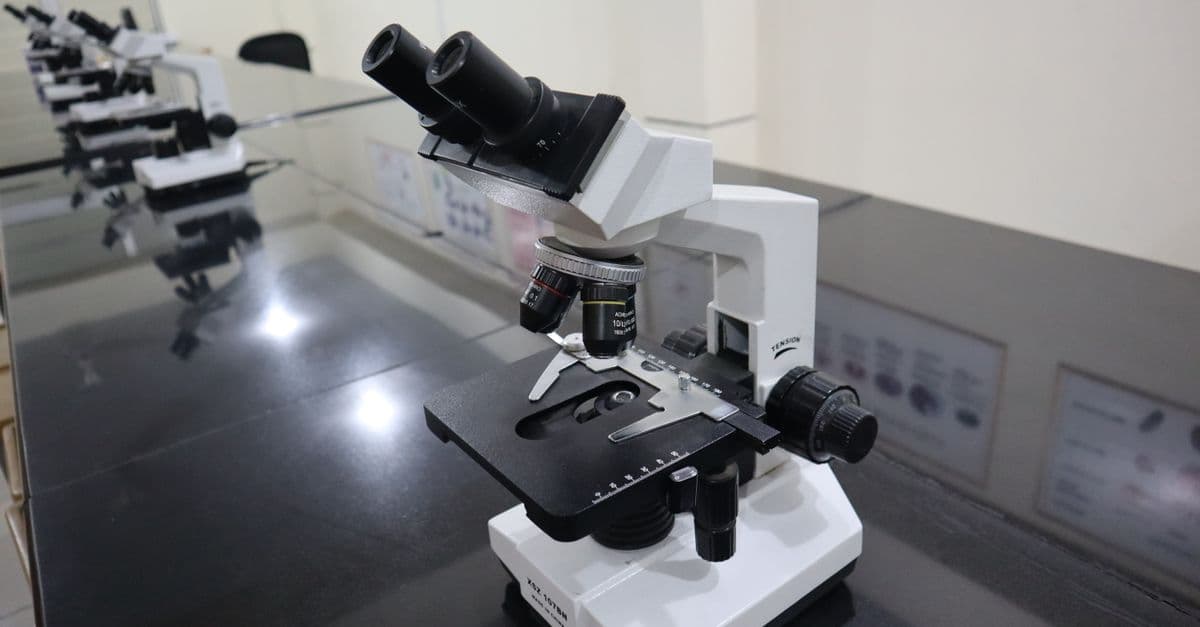
Photo: Ayaz khan / Pexels
Roughly 2.6 billion people worldwide wear glasses or contact lenses. For something so common, the physics behind vision correction is wonderfully elegant — and the engineering has come a long way from medieval reading stones to laser-cut corneas. This article explains what goes wrong in the eye, how lenses fix it, and how surgical alternatives work.
How the Eye Focuses Light
Light enters the eye through the cornea (which does about two-thirds of the focusing work), passes through the pupil, then the crystalline lens (which fine-tunes focus by changing shape — accommodation), and finally lands on the retina at the back of the eye. Photoreceptors there convert light to neural signals. For clear vision, light from every point in the scene must converge precisely on the retina.
When the eye's optical geometry is even slightly off, that focal point lands in front of or behind the retina — and the world goes blurry.
The Four Major Refractive Errors
Myopia (Nearsightedness)
The eyeball is too long (or the cornea too curved), so light from distant objects focuses in front of the retina. Distant things blur; near things stay sharp. Myopia rates have exploded globally — over 80% of young adults in parts of East Asia, projected to reach 50% globally by 2050 (Brien Holden Vision Institute). Correction: a concave (minus) lens diverges light slightly before it enters the eye, shifting the focal point back onto the retina.
Hyperopia (Farsightedness)
The eyeball is too short, so light from near objects would focus behind the retina. The young eye compensates by accommodating, but this causes eye strain and headaches. Correction: a convex (plus) lens converges light slightly, moving the focal point forward.
Astigmatism
The cornea or lens has an irregular curvature — more like an American football than a basketball. Light focuses at different points along different axes, blurring vision at all distances. Correction: a cylindrical (toric) lens with different power along different meridians.
Presbyopia
With age (~40+), the crystalline lens stiffens and loses the ability to change shape — accommodation fails. Reading menus becomes a struggle. Correction: reading glasses, bifocals, progressives, or multifocal contacts. Nearly everyone develops presbyopia by their 50s; it's a natural part of aging, not a disease.
The Physics: Snell's Law and Diopters
When light passes from one medium to another (air to glass, glass to air), it bends — described by Snell's law: n₁ sin(θ₁) = n₂ sin(θ₂), where n is the refractive index of each medium.
Lens strength is measured in diopters (D), defined as the reciprocal of the focal length in meters. A +2 D lens focuses parallel light to 0.5 meters. Prescription lenses typically range from −10 D (severe myopia) to +6 D or more (severe hyperopia). For astigmatism, the prescription also includes cylindrical power and axis.
Lens Materials and Coatings
Modern eyewear is a small marvel of materials science:
- Standard plastic (CR-39) — refractive index ~1.5, lightweight, affordable
- Polycarbonate — impact-resistant, ideal for kids and sports
- High-index plastics (1.6, 1.67, 1.74) — thinner lenses for strong prescriptions
- Glass — sharp optics but heavy and breakable; rarely used today
Coatings add functionality: anti-reflective (AR) coatings reduce glare and improve clarity; scratch-resistant coatings extend life; photochromic lenses (Transitions) darken in UV light; polarized lenses cut reflective glare. Blue-light filtering coatings are heavily marketed, but a 2023 Cochrane review found no strong evidence they help with digital eye strain or sleep — the dose of screen blue light is simply too low to matter much.
Contact Lenses — Optics On the Cornea
Contact lenses sit directly on the tear film and effectively replace part of the cornea's refractive power. Types:
- Rigid gas-permeable (RGP) — durable, sharp optics, slower to adapt to
- Soft hydrogel — comfortable, easy to adapt, less oxygen permeability
- Silicone hydrogel — modern standard; high oxygen permeability allows extended wear
- Daily disposables — single-use, lowest infection risk, now the dominant prescription
- Toric — corrects astigmatism, with weighted design to maintain orientation
- Multifocal — corrects presbyopia with concentric zones of different power
- Orthokeratology (Ortho-K) — rigid lenses worn overnight to reshape the cornea; clear vision the next day without correction, and growing evidence it slows myopia progression in children
Vision Correction Options — Comparison Table
| Option | How It Works | Pros | Cons |
|---|---|---|---|
| Glasses | External lenses | Cheap, easy, no eye contact | Can fog, fall off, look unwanted |
| Soft contacts | Lens on cornea | Invisible, peripheral vision | Daily care, infection risk |
| RGP contacts | Rigid lens on cornea | Sharper optics | Adaptation period |
| Ortho-K | Overnight cornea reshaping | No daytime correction needed | Effect wears off, kids only studied |
| LASIK | Excimer laser reshapes cornea | Permanent, fast recovery | Dry eye, halos, irreversible |
| PRK | Surface laser ablation | No flap (good for thin corneas) | Painful 3–5 day recovery |
| SMILE | Femtosecond laser, small incision | Less dry eye, faster healing | Newer, fewer long-term studies |
| ICL | Implantable contact lens | Reversible, for high myopia | Intraocular surgery risks |
| Multifocal IOL | Replaces natural lens (cataract) | Treats presbyopia + cataract | Halos, lower contrast |
| Vuity drops | Pilocarpine shrinks pupil | No glasses for mild presbyopia | Headache, dim vision, 6h effect |
Refractive Surgery — How Lasers Reshape the Cornea
LASIK (1999, FDA-approved) is the most common refractive surgery. A femtosecond laser cuts a thin corneal flap, and an excimer laser ablates the underlying stroma to reshape it — flattening the cornea for myopia, steepening it for hyperopia. The flap is replaced and seals without sutures. Recovery is fast (often clear vision next day), and large studies show 90%+ patients reach 20/40 or better, with most reaching 20/20.
Complications include dry eye (often persistent), halos and glare at night, and rarely ectasia (corneal weakening). LASIK is irreversible, and not everyone is a candidate — thin corneas, large pupils, or unstable prescriptions disqualify many patients.
PRK is essentially LASIK without the flap — the corneal epithelium is removed and regrows over 3–5 days. Slower and more painful recovery, but better for thin corneas and high-risk activities (military, contact sports).
SMILE (Small Incision Lenticule Extraction), approved by the FDA in 2016, uses only a femtosecond laser to cut a disc-shaped lenticule inside the cornea, which is extracted through a tiny incision. Less disruption of corneal nerves means less dry eye.
For very high prescriptions or thin corneas, Implantable Collamer Lenses (ICLs) are surgically placed inside the eye — a reversible alternative to laser surgery.
Presbyopia Without Glasses
The 2021 FDA approval of Vuity (pilocarpine eye drops) gave the first pharmaceutical option for presbyopia. The drops shrink the pupil, increasing depth of field via the pinhole effect, with effects lasting ~6 hours. They work best for mild presbyopia and don't replace reading glasses for everyone.
For cataract patients, multifocal intraocular lenses (IOLs) replace the cloudy lens with one offering multiple focal zones — solving cataracts and presbyopia in one surgery, though some patients report halos and lower contrast sensitivity.
Vision is one of our most studied senses; for the biology side, see how the eye and retina work and the neuroscience of color perception.
FAQs
Q: Does wearing glasses make your eyes worse? A: No. Properly prescribed glasses don't weaken the eye. Myopia progression in children is driven by eye growth and behavior (screen time, lack of outdoor light), not lens wearing.
Q: Are blue-light glasses worth it? A: Probably not for most people. Cochrane reviews in 2023 found no clear benefit for eye strain or sleep at typical screen exposures.
Q: How long does LASIK last? A: The reshaping is permanent, but the eye keeps aging. Most patients have stable vision for 10+ years, but presbyopia eventually arrives like for everyone.
Q: Can children wear contact lenses? A: Yes, with parental supervision. Ortho-K specifically is FDA-approved for kids and shows myopia-slowing benefits in randomized trials.
Q: Why do I need reading glasses now if I've always had perfect vision? A: Presbyopia is age-related lens stiffening — it happens to nearly everyone in their 40s regardless of prior prescription.
Q: Are daily disposables really safer than monthly contacts? A: Yes. Studies consistently show lower rates of microbial keratitis and contact-lens-related complications because there's no buildup or storage exposure.
Sources
- Holden, B. A. et al. (2016) "Global Prevalence of Myopia and High Myopia and Temporal Trends from 2000 through 2050," Ophthalmology
- Sandoval, H. P. et al. (2016) "Modern laser in situ keratomileusis outcomes," J Cataract Refract Surg
- Singh, M. K. et al. (2023) "Blue-light filtering spectacle lenses for visual performance, sleep, and macular health," Cochrane Database of Systematic Reviews
- American Academy of Ophthalmology — Preferred Practice Patterns (2024)
- FDA Approval Documents — Vuity (2021), SMILE (2016)
- WHO World Report on Vision (2019)
Follow new articles
Add SciHub101 to your feed reader to see new science and technology stories.
About the Author
SciHub101 is an independent science and technology publication founded and edited by Buğra Sözeri, a software engineer and app developer based in Türkiye. AI tools assist with drafting and research. Source documentation in the existing archive is uneven, and articles are being reviewed and corrected. The Editorial Team byline identifies editorial responsibility; it does not certify specialist or independent human review. Where we compare products, anything built by our own team is labelled as such — see the editorial guidelines and About page for how corrections and disclosures work.
Related Articles
History of Vaccines — From Jenner to mRNA
From variolation and Jenner's cowpox to Pasteur, polio, smallpox eradication, and mRNA — the full history of vaccines and modern frontiers.
Why Does Ice Float? The Physics of Water
Why does ice float? Most substances get denser when frozen — water doesn't. The hydrogen bond explanation, and why this anomaly makes life on Earth possible.
The Most Important Scientific Discoveries of 2025: Breakthroughs and Their Impact
2025 marked significant scientific progress across multiple disciplines: a structural biology breakthrough in protein folding, advances in quantum computing error correction, discovery of a novel class of high-temperature superconductors, clinical trials demonstrating efficacy of novel Alzheimer's disease therapies, successful gene therapy applications for hereditary blindness, and confirmation of predicted gravitational wave signatures. This article examines the most consequential discoveries of 2025 — those that represent genuine advances in human knowledge, demonstrate technological capability, or have immediate clinical applications — explaining the science, why each discovery matters, and the implications for future research.
How Lasers Work: The Physics of Light Amplification
Lasers cut steel, read your Blu-ray discs, guide missiles, and perform eye surgery. They all rely on a quantum trick Einstein predicted in 1917.
How Lasers Work: The Physics Explained
Lasers are in your phone, your doctor's office, and the world's most precise measuring instruments. Here's the beautiful quantum physics behind them.
What Is Emergence — How Complex Systems Create New Realities
Individual neurons don't think. Individual water molecules aren't wet. But billions of them together produce consciousness and liquid flow. Emergence — when the whole becomes more than the sum of its parts — is one of science's most profound concepts.