What Is Light? Photons and Wave-Particle Duality
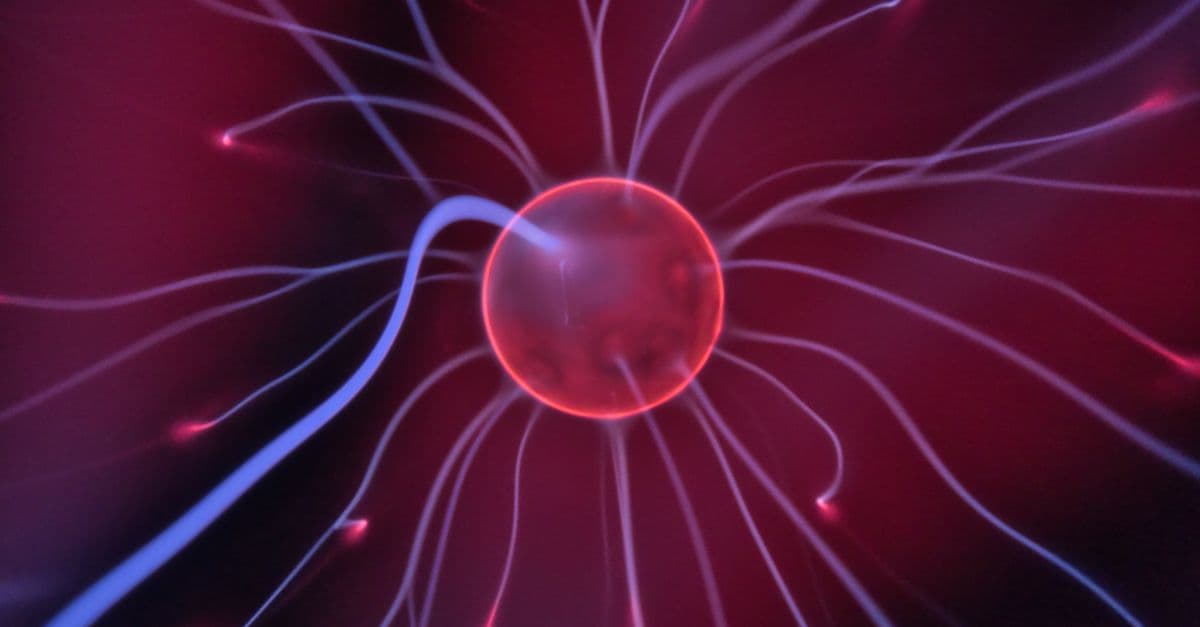
Photo: R Bude / Pexels
Light is the most familiar thing in physics and the strangest. It travels at 299,792,458 meters per second through vacuum, behaves like a wave in one experiment and a particle in another, and carries almost everything we know about the universe across billions of light-years to our eyes and telescopes. To explain what light is, physicists had to invent quantum mechanics.
A Brief History of Light Theories
The story of light is a 350-year argument between two camps.
Newton's corpuscles (1670s). Isaac Newton proposed that light is a stream of tiny particles ("corpuscles") shot out by luminous objects. His prism experiments showed white light splits into colors — which he interpreted as different particle types. His authority kept this view dominant for over a century.
Huygens' waves (1678). Christiaan Huygens argued light is a wave propagating through a medium (the hypothetical "luminiferous ether"). Waves explained refraction and diffraction more cleanly than particles, but Newton's reputation won the early debate.
Young's double-slit (1801). Thomas Young performed the experiment that ended the first round. Shining light through two narrow slits produced an interference pattern of bright and dark bands on a screen — the unmistakable signature of waves overlapping. Particles can't interfere with themselves. The wave camp won.
Maxwell's equations (1865). James Clerk Maxwell unified electricity and magnetism into four equations. The math predicted self-propagating electromagnetic waves traveling at a specific speed — exactly the measured speed of light. Light is an electromagnetic wave. Triumph for the wave theory.
Einstein's photons (1905). Then the wave theory broke. The photoelectric effect — light knocking electrons out of metal — refused to behave like a wave. Brighter light didn't make ejected electrons faster, only more numerous. Higher-frequency light did make them faster. Einstein proposed that light comes in discrete energy packets, "quanta," with energy proportional to frequency: E = hf, where h is Planck's constant. This won him the 1921 Nobel Prize, not relativity. The particle was back — now called the photon.
Wave-Particle Duality
Modern physics resolved the paradox: light is neither classical wave nor classical particle. It is a quantum field excitation. A photon is the smallest possible unit ("quantum") of the electromagnetic field. Depending on how you measure it, it shows wave-like or particle-like behavior — but it is always the same underlying thing.
A photon's energy is set by frequency alone:
- E = hf (energy = Planck's constant × frequency)
- E = hc/λ (equivalent form using wavelength)
Higher frequency = more energetic photon. This is why ultraviolet sunburns you but visible light doesn't — UV photons individually carry enough energy to damage DNA, visible photons don't.
The Electromagnetic Spectrum
Visible light is a thin slice of a vast continuum. Everything from radio waves to gamma rays is the same phenomenon — oscillating electromagnetic fields — differing only in frequency and wavelength.
| Band | Wavelength | Photon energy | What it does |
|---|---|---|---|
| Radio | >1 m | <10⁻⁶ eV | Carries broadcasts, Wi-Fi |
| Microwave | 1 mm – 1 m | 10⁻⁶ – 10⁻³ eV | Heats water, radar, 5G |
| Infrared | 700 nm – 1 mm | 0.001 – 1.7 eV | Thermal radiation, remotes |
| Visible | 400 – 700 nm | 1.7 – 3.1 eV | What our eyes detect |
| Ultraviolet | 10 – 400 nm | 3.1 – 124 eV | Sunburn, sterilization |
| X-ray | 0.01 – 10 nm | 124 eV – 124 keV | Medical imaging |
| Gamma | <0.01 nm | >124 keV | Nuclear decay, cancer therapy |
How Photons Interact with Matter
When a photon meets matter, four things can happen.
Absorption. The photon's energy is taken up by an atom or molecule, usually exciting an electron to a higher energy level. Pigments work this way — chlorophyll absorbs red and blue, reflects green.
Transmission. The photon passes through. Glass transmits visible light because its electrons have no energy gaps matching visible photon energies — there's nothing to absorb. UV does get absorbed (which is why ordinary glass blocks UV), and so does deep infrared.
Reflection. Photons bounce off a surface. Mirrors reflect via free electrons in a thin metal layer; white surfaces reflect by diffuse scattering.
Scattering. Photons are redirected without absorption. Rayleigh scattering (off particles much smaller than the wavelength) scatters blue light ~10× more strongly than red — that's why the sky is blue and sunsets are red. Mie scattering (off particles comparable to the wavelength) scatters all colors roughly equally — clouds, fog, and milk are white for this reason.
Photon Polarization
Light's electric field oscillates perpendicular to its direction of travel. The orientation of that oscillation is polarization. Most natural light is unpolarized — fields point in all directions. Polarizing filters block all but one orientation, which is why polarized sunglasses cut horizontal glare off water and roads.
Each photon also carries one unit of spin angular momentum — either left or right circular polarization. This is a deeply quantum property with no classical analog.
Lasers — Coherent Photons
Einstein predicted stimulated emission in 1917: a photon hitting an excited atom can trigger emission of a second, identical photon — same frequency, same phase, same direction. Cascade this and you get a beam of perfectly coordinated photons. Theodore Maiman built the first working laser in 1960 using a ruby crystal. Lasers now drive fiber-optic internet, barcode scanners, eye surgery, semiconductor manufacturing, and gravitational-wave detection at LIGO.
Entangled Photons and Quantum Communication
Two photons can be created in an entangled state, where measuring one instantly determines the other's polarization, no matter how far apart they are. Einstein called this "spooky action at a distance" and didn't believe it. John Bell's 1964 theorem made it testable; Alain Aspect's experiments in the 1980s and Nobel-winning follow-ups confirmed it. Entangled photons now underpin quantum key distribution — encryption that detects any eavesdropping by physical law, not math.
What Light Shows Us
Almost everything we know about distant astronomy comes from photons. Spectral lines reveal a star's composition, temperature, and motion (via redshift). The cosmic microwave background — photons released 380,000 years after the Big Bang — maps the early universe. Telescopes from radio to gamma-ray each open a different window. Even gravitational-wave detectors use laser photons to sense distortions smaller than a proton's width.
Photon Detection and How Eyes and Instruments See Light
Detecting a photon requires catching its energy. The human eye accomplishes this through a remarkable protein called rhodopsin, present in rod cells of the retina. A single visible photon (green light, around 2.3 eV) can trigger rhodopsin to change shape, causing a cascade that eventually sends a signal to the brain. This means humans can, in principle, detect individual photons — your eye's sensitivity is limited not by optics but by biological noise and signal-processing thresholds.
Telescopes scale this principle up. The Hubble Space Telescope collects photons that have traveled for billions of years, focusing them onto the same silicon chips that power digital cameras — devices called CCDs (charge-coupled devices) that convert each arriving photon into an electronic signal with efficiency near 90%. The supermassive black hole photograph released by the Event Horizon Telescope collaboration in 2019 was constructed from photons so few that individual arrivals had to be counted and mapped.
X-ray and gamma-ray detection require different physics. X-rays pass through most materials, so detectors use clever tricks: a scintillation detector uses a crystal (like sodium iodide) that fluoresces when hit by an X-ray, converting the high-energy photon into visible light that a photomultiplier tube then detects. A semiconductor detector (like those in modern medical CT scanners) directly converts X-ray energy into electrical current without an intermediate step.
The photoelectric effect that puzzled physicists in 1905 is now the basis of nearly all light detection: a photon ejects an electron, and we measure the electron's energy. Understanding exactly how many photons arrive, at what times, and with what energies is the foundation of modern observational astronomy.
Source: Hecht, E. (2017). Optics (5th ed.). Pearson. Chapter 3 on photon interactions.
The Speed of Light and Relativity: Why c Is Absolute
Light's constancy was strange. Newton's laws predicted that light should travel faster or slower depending on the observer's motion — if you chase a light beam, it should seem slower. But experiments showed light's speed is always 299,792,458 m/s, regardless of the observer's velocity. Einstein's special relativity (1905) resolved this by declaring c the universal speed limit.
The profound consequence: time and space are not absolute. A moving observer measures shorter distances and slower clocks. This is not a biological illusion but a real property of spacetime. At everyday speeds this effect is negligible; at 99% light speed, time dilates by a factor of 7. A spacecraft traveling at 0.99c would experience decades while billions of years pass on Earth.
High-speed particles confirm this. Muons, created when cosmic rays hit Earth's atmosphere, decay in 2.2 microseconds in their rest frame. They travel at 0.998c, creating a moving clock that runs slower due to time dilation. Muons live long enough to reach Earth's surface — without relativistic time dilation, almost none would. GPS satellites must account for relativistic time dilation: their clocks run ~45 microseconds per day faster than Earth's due to weaker gravity, but move so fast (7,500 m/s) that their clocks run ~7 microseconds slower. The net effect is +38 microseconds/day, which must be corrected or GPS navigation fails.
Light, therefore, is not just a phenomenon — it's woven into the fabric of reality itself.
Source: Einstein, A. (1905). "On the electrodynamics of moving bodies." Annalen der Physik, 17(10), 891–921.
Absorption Spectra and What Light Reveals About Matter
When photons encounter atoms, only specific frequencies get absorbed. An atom has discrete energy levels, and a photon can be absorbed only if its energy exactly matches a transition between levels. This produces absorption spectra — dark lines at specific frequencies in an otherwise continuous spectrum.
These lines are fingerprints. The yellow sodium D-lines (at 589.0 and 589.6 nm) are unmistakable; hydrogen's Balmer series (red Hα at 656 nm, cyan Hβ at 486 nm) is another signature. Astronomers use spectroscopy to determine what atoms and molecules are in distant stars and galaxies. The sun's spectrum shows hundreds of absorption lines (Fraunhofer lines) — evidence of iron, magnesium, silicon, calcium, and dozens of other elements.
Redshift — the stretching of light's wavelength due to the Doppler effect or gravitational effects — tells us whether distant objects are moving toward or away from us. The recession velocity is proportional to redshift. This is how Edwin Hubble discovered in 1929 that the universe is expanding, and how contemporary observations show that expansion is accelerating (for which the 2011 Nobel Prize was awarded).
Emissions are the inverse: when an electron falls from a higher energy level to a lower one, it releases a photon at a specific frequency. This is how neon signs glow (neon excited by electric current emits orange light at 650 nm) and how lasers work — stimulate a transition and extract a coherent beam.
The marriage of light and quantum mechanics made atomic physics possible: atoms emit and absorb light at quantized frequencies, and those frequencies reveal the structure of atoms themselves. Spectroscopy transformed astronomy from observing positions of stars to understanding their composition, temperature, motion, and evolution.
Source: Fraunhofer, J., & Schwerd, B. (1843). "Untersuchungen des Sonnenlichts." Abhandlungen der Bayerischen Akademie der Wissenschaften, 8.
Blackbody Radiation and Planck's Law
The sun glows yellow, a filament glows red, and hot metal turnings glow orange. The color depends on temperature, not material — a phenomenon called blackbody radiation. A perfect absorber at temperature T emits light whose spectrum is determined entirely by T. This was a profound observation, but it broke 19th-century physics.
Classical physics — Maxwell's equations plus thermodynamics — predicted that objects should emit infinite energy at ultraviolet frequencies. This "ultraviolet catastrophe" made no sense. Experiments showed objects emit a finite spectrum that peaks at a specific wavelength and drops to zero at high frequencies. Something was fundamentally wrong with classical physics.
In 1900, Max Planck solved the crisis by proposing that light cannot be emitted in arbitrarily small amounts — only in discrete chunks proportional to frequency: E = hf. This leap of faith (he didn't believe it at the time) implied that light is "quantized." Planck's blackbody law, B(λ, T) = (8πhc/λ⁵) / [exp(hc/λk_B T) - 1], perfectly predicted the observed spectrum. His constant h = 6.626 × 10⁻³⁴ joule-seconds is now fundamental to quantum mechanics.
Planck's formula has profound practical consequences. Wien's displacement law, derived from Planck's law, states that a hotter object's peak emission shifts to shorter wavelengths: λ_peak = (2.898 × 10⁻³ m·K) / T. The sun (T ≈ 5,800 K) peaks in visible green, why the sun looks yellow from space (and why our eyes evolved to be most sensitive there). A cooling supernova. About 20 km wide but containing more mass than the Sun.">neutron star (T ≈ 10,000 K when freshly born) emits mostly X-rays; eons later, at T ≈ 100 K, it emits infrared. Astronomers use this to infer stellar temperatures. It's also why the cosmic microwave background — radiation left over from the Big Bang — is now just 2.7 K and appears as a faint hum of microwaves throughout the universe.
Blackbody radiation revealed that energy is quantized, that the smallest possible change in electromagnetic energy is one photon. This single insight sparked quantum mechanics and changed physics forever.
Source: Planck, M. (1900). "Zur Theorie des Gesetzes der Energieverteilung im Normalspektrum." Verhandlungen der Deutschen Physikalischen Gesellschaft, 2, 237–245.
Virtual Photons and the Quantum Vacuum
Quantum mechanics teaches that empty space is not empty. The quantum field underlying light is seething with activity. By Heisenberg's uncertainty principle, a photon's energy and lifetime are inversely related: ΔE · Δt ≈ h/4π. This means the vacuum can briefly spawn virtual photons — photons that exist for a time so short that their existence violates energy conservation by an amount tolerable to quantum uncertainty.
These virtual photons are not just conceptual; they have measurable effects. Virtual photon exchange is how charged particles interact. An electron and proton attract because they exchange virtual photons in a continuous dance. The Coulomb force law, F = kq₁q₂/r², emerges from this quantum exchange.
Another consequence: the Casimir effect. Place two neutral metal plates a few nanometers apart in a vacuum. The gap is too narrow for longer-wavelength virtual photons to exist, so fewer virtual photons fit between the plates than outside. The unbalanced pressure from virtual photons outside pushes the plates together. This tiny but measurable force was first confirmed by Dutch physicist Hendrik Casimir in 1948 and has been verified countless times since. The Casimir effect is not magic — it follows from quantum field theory — but it shows the vacuum has structure and energy.
Virtual photons also limit how precisely we can measure distance. At scales smaller than the Planck length (10⁻³⁵ m), quantum fluctuations of the vacuum create virtual black holes that destroy locality. No measurement can define position below this limit. This is why quantum gravity is so hard: the vacuum itself becomes uncertain at the deepest scales.
The quantum vacuum illustrated by virtual photons is one of the great mysteries at the intersection of quantum mechanics and relativity. It hints that "empty space" is the most complicated thing in physics.
Source: Casimir, H. B. G. (1948). "On the attraction between two perfectly conducting plates." Proceedings of the Royal Netherlands Academy of Arts and Sciences, 51(7), 793–795.
Optical Applications and Photon Engineering
Controlling photons has become an engineering discipline. Fiber-optic cables use total internal reflection to trap light inside glass strands thinner than human hair. Light bounces off the cylindrical glass-air boundary at shallow angles, confined by refraction. A single fiber can transmit hundreds of terabits per second of data — the backbone of the internet. The loss is so low (~0.2 dB/km in modern fiber) that a photon can travel 50 km before half its energy is absorbed. This is why transoceanic cables are laid by ships, and why a single cable can connect continents with negligible latency.
Photonic integrated circuits — chips that manipulate light instead of electrons — are emerging as a complement to electronic processors. Waveguides etch channels in silicon that confine light to navigate across a chip. Tiny ring resonators filter specific wavelengths. Phase modulators twist the polarization. Semiconductor lasers pump data at petabit speeds. Some of the fastest AI inference chips under development pair electronic compute with photonic I/O — offloading the vast data movement problem to photons.
Quantum optics — the engineering of single photons — is advancing fast. A single-photon source uses an atom or quantum dot to emit exactly one photon on demand. Quantum key distribution systems use this to transmit unhackable encryption: eavesdropping requires measuring a photon, which disturbs its state, leaving a detectable trace. China's Micius satellite uses this to distribute quantum keys to ground stations, demonstrating that unhackable communication is feasible across continents.
Metasurfaces — ultrathin structures with features much smaller than light's wavelength — can redirect, focus, or shape light in ways ordinary lenses cannot. A millimeter-scale metalens can now do what required a centimeter glass lens a decade ago. This is enabling flat cameras, compact projectors, and new types of virtual-reality displays.
The control of photons is reshaping technology, communications, computing, and measurement science. What was once pure physics is becoming engineering infrastructure.
Source: Richardson, D. J., Fini, J. M., & Nelson, L. E. (2013). "Space-division multiplexing in optical fibres." Nature Photonics, 7(5), 354–362.
The Takeaway
Light is perhaps physics' deepest teacher. For three centuries, explaining light drove theory: Newton's corpuscles sparked the wave-particle debate, Maxwell's equations unified electricity and magnetism, and the photoelectric effect forced Einstein to invent the photon and, ultimately, relativity itself. Light is energy; light is information; light is the medium through which we know the distant universe. A photon traveling from the sun's core takes 100,000 years to reach the surface, then 8 minutes to reach us — carrying the story of nuclear fusion written in its wavelength. The gravitational waves detected by LIGO in 2015 were spotted only because laser photons sense spacetime distortions smaller than a proton's width. And the cosmic microwave background — ancient photons from the early universe — has been the most precise map we possess of the Big Bang's aftermath. Light is not just what we see with; it is what the universe uses to reveal itself.
Frequently Asked Questions
Q: Do photons have mass?
A: No, photons have zero rest mass. They always travel at the speed of light and cannot be slowed or stopped — only absorbed. They do have momentum (p = E/c), which is why photons can exert pressure, how solar sails work, and how light carries energy across space.
Q: How can light be both a wave and a particle?
A: It isn't really either in the everyday sense. A photon is an excitation of the quantum electromagnetic field. "Wave" and "particle" are classical metaphors that each capture half of its behavior. The full mathematics of quantum field theory is the only fully accurate description.
Q: Why does light slow down in water or glass?
A: Photons themselves always move at c, but in a medium they are continually absorbed and re-emitted by atoms, producing an effective slower propagation. The refractive index is the ratio of light's speed in vacuum to its speed in the medium, and explains why light bends (refracts) entering a denser medium.
Q: What color is the sun, really?
A: Roughly white. The sun emits across the visible spectrum with a peak in green (~500 nm). It looks yellow from Earth because the atmosphere Rayleigh-scatters blue away, leaving mostly yellow and red photons to reach your eyes.
Q: Are photons the only force-carrying particle?
A: No. Photons mediate the electromagnetic force. W and Z bosons mediate the weak nuclear force, gluons mediate the strong nuclear force, and a hypothetical graviton would mediate gravity. Photons are unique in being massless, stable, and easy to detect.
Q: Can two photons collide?
A: Rarely. Photons don't interact directly under normal conditions. At extreme energies (like those in collider experiments), they can briefly form virtual electron-positron pairs and scatter — a process called Delbrück scattering, finally directly observed at the LHC in 2017.
Read next
Follow new articles
Add SciHub101 to your feed reader to see new science and technology stories.
About the Author
SciHub101 is an independent science and technology publication founded and edited by Buğra Sözeri, a software engineer and app developer based in Türkiye. AI tools assist with drafting and research. Source documentation in the existing archive is uneven, and articles are being reviewed and corrected. The Editorial Team byline identifies editorial responsibility; it does not certify specialist or independent human review. Where we compare products, anything built by our own team is labelled as such — see the editorial guidelines and About page for how corrections and disclosures work.
Related Articles
The Dark Side of the Moon — Myths and Facts
The Moon's far side isn't dark — it just faces away from Earth. Tidal locking, crater asymmetry, Chang'e missions, and what's really there.

History of Vaccines — From Jenner to mRNA
From variolation and Jenner's cowpox to Pasteur, polio, smallpox eradication, and mRNA — the full history of vaccines and modern frontiers.
Why Is Glass Transparent? The Physics of Light Passing Through
Glass is transparent because visible photons lack the energy to excite its electrons and its uniform, grain-free structure scatters almost nothing sideways.

Double-Slit Experiment: Quantum Weirdness Explained
Discover how light acts as both particle and wave, fundamentally challenging our understanding of reality


How Mirrors Work — The Physics of Reflection
Mirrors don't actually flip left and right — they flip front to back. The physics of reflection, from bronze polish to the 39-meter ELT telescope.