Quantum Physics Explained — A Beginner's Guide

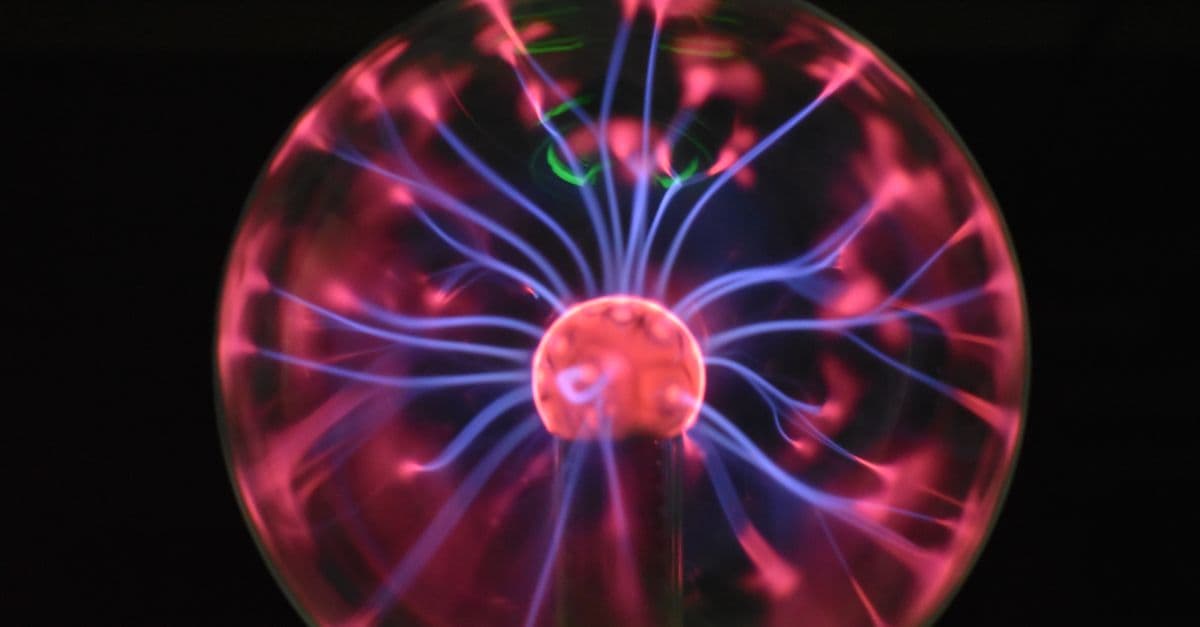
Photo: www.kaboompics.com / Pexels
Quantum physics has a reputation for being weird, but it's not magic. It's the most accurately tested theory in the history of science, with predictions matching experiment to better than one part in a billion in some cases. The weirdness comes from one fact: the rules that govern atoms and photons don't match the intuitions we built up from rolling balls and throwing rocks. This guide walks through the core ideas — without equations — and clears up some common misconceptions about what quantum physics actually says.
Classical vs Quantum: What Changed
Classical physics, the world of Newton and Maxwell, assumes that:
- Properties like energy, momentum, and position are continuous — they can take any value.
- A particle has a definite position and velocity at every moment.
- Measuring something doesn't fundamentally disturb it (in principle).
- Reality is local — distant objects can't instantly affect each other.
Quantum physics breaks every one of those assumptions for very small systems. Energy comes in discrete chunks called quanta — indivisible packets of energy that particles absorb and emit. Particles don't have definite properties until measured. Measurement is part of the physics, not a passive observation. And entangled particles show correlations that no local theory can explain.
Quantum mechanics — the mathematical framework describing the behavior of matter and energy at the atomic and subatomic scale, based on wave-particle duality, uncertainty, and superposition.
The shift began with Max Planck in 1900, who found he could explain the spectrum of hot objects only by assuming light energy is emitted in discrete packets (E = hf, where h is Planck's constant and f is frequency). This solved a crisis in physics: classical theory predicted that hot objects should emit infinite energy at short wavelengths — a contradiction with reality called the "ultraviolet catastrophe." Einstein in 1905 showed the same idea explained the photoelectric effect — light hitting metal and knocking electrons free, with the electrons' energy depending on light frequency, not intensity. This was the work that won him the 1921 Nobel Prize, not relativity, which shows how central quantization was to early quantum theory.
Source: Planck, M. (1900). "Zur Theorie des Gesetzes der Energieverteilung im Normalspektrum." Verhandlungen der Deutschen Physikalischen Gesellschaft.
The Birth of Quantum Theory (1900–1930)
The revolution in physics between 1900 and 1930 was as radical as any in the history of science. After Planck's breakthrough, the floodgates opened. In 1913, Niels Bohr proposed his famous model of the atom with electrons orbiting a nucleus in discrete energy levels — an idea that defied classical physics (accelerating electrons should radiate away their energy and spiral into the nucleus) but explained atomic spectra perfectly. Bohr's model was crude compared to what came later, but it crystallized one key insight: the microscopic world runs by different rules.
In the mid-1920s, two formulations emerged almost simultaneously. Werner Heisenberg developed matrix mechanics, treating quantum states as mathematical arrays (matrices) that evolve according to strict rules. Months later, Erwin Schrödinger introduced wave mechanics, the wavefunction formalism that visualizes the electron as a probability wave. They looked entirely different, but in 1926, John von Neumann and others proved they were mathematically identical — just two languages for the same physics. This unification was profound: it showed the theory was not an ad hoc patch but a coherent framework.
By 1930, the Copenhagen interpretation — associated with Bohr and Heisenberg — had become the working standard in most physics departments. It was pragmatic: the math works, don't worry about what it means. Nature, at the quantum level, is probabilistic and observation-dependent. The philosophical discomfort — Einstein's famous "God does not play dice" — never diminished the theory's predictive power.
Source: von Neumann, J. (1955). Mathematical Foundations of Quantum Mechanics. Princeton University Press.
Quantum Tunneling: A Particle That Shouldn't Escape
One of quantum mechanics' most counterintuitive predictions is quantum tunneling — the ability of a particle to pass through a barrier it classically shouldn't be able to overcome. Imagine a ball rolling toward a hill with insufficient kinetic energy to climb it. In classical mechanics, the ball stops and rolls back. In quantum mechanics, the wavefunction extends slightly beyond the barrier; there's a nonzero probability the particle will be found on the other side, even though there was no path over the top.
Quantum tunneling — a quantum mechanical phenomenon where a particle has a nonzero probability of crossing an energy barrier, despite classically lacking sufficient energy to do so.
This is not magic. The wavefunction describes probability amplitudes, and at quantum scales, wavefunctions are "fuzzy." A confined electron or nucleus doesn't have a sharply defined boundary — it's smeared out as a probability distribution. The tails of that distribution can reach into and past potential barriers. The probability of tunneling depends exponentially on the width and height of the barrier and on the particle's mass. Heavy particles tunnel almost never; light electrons tunnel readily.
Tunneling is not merely theoretical. It explains alpha decay — why radioactive nuclei spontaneously emit helium nuclei even though the nuclear potential energy well is much deeper than the alpha particle's energy. An alpha particle trapped in a nucleus has some chance each moment of tunneling out, giving radioactive decay its exponential character. Without tunneling, the sun's core would not initiate fusion (the nuclei would need too much kinetic energy to overcome the Coulomb repulsion), and there would be no stellar nucleosynthesis — no heavy elements, no planets, no life. The entire periodic table exists because of quantum tunneling.
Tunneling is also the mechanism behind tunnel diodes and scanning tunneling microscopes (STMs), which use the tunneling current between a sharp tip and a surface to image individual atoms. Gerd Binnig and Calvin Quate won the 1986 Nobel Prize in Physics for inventing the STM, which demonstrated that tunneling is not just a laboratory curiosity but a practical tool for nanoscale imaging.
Source: Binnig, G., Quate, C. F., & Gerber, C. (1986). "Atomic Force Microscope." Physical Review Letters, 56(9), 930-933.
Wave-Particle Duality
Light sometimes behaves like a wave (it diffracts around obstacles, interferes with itself) and sometimes like a particle (the photoelectric effect, individual photon detections in a camera). This is not a contradiction — it's a feature of quantum systems that classical intuition cannot accommodate. Matter does the same thing: electrons, neutrons, atoms, and even large molecules can produce interference patterns like waves do.
The classic demonstration is the double-slit experiment. Send electrons one at a time at a barrier with two slits and a detector behind it. Each electron lands at a single spot — particle-like. But over many electrons, an interference pattern emerges — the same kind of pattern light produces when it passes through both slits and interferes with itself. If you add a detector that records which slit each electron went through, the interference disappears. The act of getting which-path information destroys the wave behavior. This is not because the detector disturbs the electron's trajectory; rather, having that information fundamentally changes the quantum state.
Quantum mechanics describes this with a wavefunction, a mathematical object whose squared magnitude gives the probability of finding the particle in any location. The wavefunction is not physical — it's a probability amplitude. It evolves according to the Schrödinger equation when the system is isolated, but when measured, it "collapses" to a definite outcome (at least in the Copenhagen interpretation — other interpretations handle this differently).
The Uncertainty Principle
In 1927, Werner Heisenberg showed that certain pairs of properties — most famously position and momentum — cannot both be known to arbitrary precision at the same time. The more precisely you pin down one, the more uncertain the other becomes. Mathematically, Δx · Δp ≥ ħ/2 (where ħ is the reduced Planck constant). This is not merely observational uncertainty; it's fundamental.
This is not a limitation of our measuring instruments. It's a property of nature itself, built into the mathematics of waves. A wave perfectly localized in space — one with zero width — is made of a wide, spread-out range of wavelengths (which correspond to momenta), and vice versa. The same Fourier mathematical trade-off applies to musical signals: a perfectly short tone (perfectly localized in time) has no well-defined pitch (no well-defined frequency), and a pure tone has indefinite start and end times.
Source: Heisenberg, W. (1927). "Über den anschaulichen Inhalt der quantentheoretischen Kinematik und Mechanik." Zeitschrift für Physik.
The philosophical implications were debated for decades. Einstein argued this showed quantum mechanics was incomplete. But every test confirms Heisenberg was right: nature really does have this built-in fuzziness. It's not a practical measurement problem; it's a fundamental feature of reality at small scales.
Superposition and the Measurement Problem
Before measurement, a quantum system can be in a superposition of multiple states — meaning the wavefunction is a sum of contributions from each possible outcome. An electron's spin can be "up + down" simultaneously; a photon can take both paths of an interferometer at once; a particle can have multiple possible energies at once. When measured, one outcome happens, and the wavefunction "collapses" to that state.
Superposition — a quantum state described as a combination of multiple possible states, each with an associated probability; the system does not have a definite value until measured.
Schrödinger's cat was a thought experiment designed by Erwin Schrödinger in 1935 to highlight how strange this gets when scaled up. A cat in a sealed box, its fate tied to a single radioactive atom (which has a 50% chance of decaying), would on paper be in a superposition of alive and dead until someone opens the box and observes it. Schrödinger's point was that this seems absurd — and he was right that something else must be going on at macroscopic scales. That "something else" is decoherence (discussed below), and it explains why we don't see superpositions of cats.
The measurement problem — how the indefinite superposition becomes a definite outcome — remains philosophically contentious, but it does not affect quantum theory's predictions. The math works perfectly; the interpretation is what's debated.
Entanglement
Two particles prepared together can become entangled, meaning their properties are correlated in a way no classical system can mimic. Measure one and you instantly know something about the other, no matter how far apart they are. Einstein hated this and called it "spooky action at a distance." He, Podolsky, and Rosen argued in 1935 that quantum mechanics must be incomplete and that hidden variables determined the outcomes in advance.
In 1964, John Bell showed this was testable. Local hidden-variable theories must obey a statistical inequality (Bell's inequality); quantum mechanics predicts violations of it. Experiments starting with Alain Aspect in the 1980s consistently violated Bell's inequality. Aspect, John Clauser, and Anton Zeilinger shared the 2022 Nobel Prize in Physics for this line of work. Nature really is non-local in this specific, technical sense — the correlations between entangled particles are stronger than any local theory allows. However, no information can be sent faster than light through entanglement; the outcomes are individually random and cannot be controlled.
Source: Bell, J. S. (1964). "On the Einstein-Podolsky-Rosen Paradox." Physics, 1(3), 195-200.
Entanglement is now a resource in quantum computing and quantum cryptography. How quantum computers actually work exploits entanglement alongside superposition to achieve computational speedups for certain problem classes.
Interpretations
The math of quantum mechanics is completely settled. What it means is not. Major interpretations include:
- Copenhagen (Bohr, Heisenberg). The wavefunction is a tool for predicting measurement outcomes; on measurement, it "collapses." Don't ask what happens between measurements — that question is meaningless.
- Many-worlds (Everett). No collapse — every possible outcome happens in a branching multiverse. All possibilities are realized; we experience one branch.
- Pilot wave (de Broglie–Bohm). Particles have definite positions at all times, guided by a real, non-local pilot wave. This reproduces all quantum predictions but is more complex.
- QBism and relational interpretations. Quantum states describe an observer's information or personal beliefs, not objective reality. Different observers can assign different states to the same system.
- Objective collapse theories. The wavefunction is real and actually collapses when systems reach a certain size or complexity — not at measurement, but spontaneously.
There is currently no experimental way to distinguish most of these. They make identical predictions. Working physicists mostly shrug and use whichever interpretation feels intuitive for their calculation.
Quantum Field Theory: The Modern Framework
Quantum mechanics as described above — particles with wavefunctions, discrete energy levels, tunneling — is foundational but incomplete. The full picture of the quantum world requires quantum field theory (QFT), developed primarily between 1930 and 1960 by physicists including Paul Dirac, Julian Schwinger, Richard Feynman, and Freeman Dyson. QFT unifies quantum mechanics with special relativity and explains particles not as fixed objects but as excitations of underlying quantum fields that permeate all space.
Quantum field theory — a theoretical framework combining quantum mechanics and special relativity, in which all particles are excitations of underlying quantum fields; the foundation of the Standard Model of particle physics.
In QFT, there is no such thing as an "electron" apart from the electron field. An electron is a ripple or quantum of the electron field, just as a photon is a quantum of the electromagnetic field. When an electron and positron collide, they don't disappear mysteriously — the excitations in their respective fields annihilate, releasing energy that can create new particles (photons, for instance). This framework explains how particles are created and destroyed and why antiparticles exist. It also correctly predicts the behavior of light and matter with extraordinary precision.
QFT also introduced the concept of virtual particles. For a brief moment permitted by the uncertainty principle (Δt · ΔE ≥ ħ/2), fields can spontaneously fluctuate, creating particle-antiparticle pairs that vanish almost immediately. These virtual particles have no direct reality but mediate interactions — for instance, two electrons repel each other by exchanging virtual photons. This mechanism, calculable via Feynman diagrams (pictorial representations of particle interactions), allows QFT to make precise, testable predictions. The anomalous magnetic moment of the electron, mentioned earlier (predicted to 12 decimal places), emerges naturally from QFT calculations including virtual-particle loops.
Source: Feynman, R. P. (1949). "The Theory of Positrons." Physical Review, 76(6), 749-759.
The Standard Model of particle physics is built entirely on QFT, and it has been tested to extraordinary precision. Predictions of rare decay rates, cross-sections for particle collisions (like those at CERN's Large Hadron Collider), and fundamental constants all match experiment. QFT is not perfect — it doesn't incorporate gravity and encounters infinities in some calculations (though these are managed via renormalization, a technique that removes infinities in a systematic way) — but it is arguably the most successful scientific theory ever developed.
Real Experiments: Quantum Effects at Work
Quantum mechanics is not an abstract theory confined to thought experiments. Laboratory confirmation of its predictions comes from numerous clever experiments:
The double-slit experiment with electrons. In the 1920s, Clinton Davisson and Lester Germer fired electrons at a nickel crystal and observed diffraction patterns — direct evidence that electrons have wave properties. Their electron wavelength, calculated via de Broglie's relation (λ = h/p, linking wavelength to momentum), matched experiment perfectly. Later, refined versions of the double-slit experiment with single electrons confirmed the interference pattern builds up even when only one electron is in the apparatus at a time.
Bell test experiments. Starting with Alain Aspect's work in 1981–82, experiments have tested Bell's inequality using entangled photons. Aspect's team sent entangled photons to distant detectors and showed that the correlations in their polarizations violated Bell's inequality by many standard deviations. Subsequent experiments (by Weihs, Weihs, Clauser, and others) closed potential loopholes (like the "detection loophole" — the assumption that the subset of particle pairs successfully detected is representative). By 2022, the evidence was overwhelming enough that the Nobel Prize in Physics was awarded to Aspect, Clauser, and Anton Zeilinger for "experimental work on entanglement with photons."
Source: Aspect, A., Grangier, P., & Roger, G. (1982). "Experimental Tests of Bell's Theorem Using Time-Varying Analyzers." Physical Review Letters, 49(25), 1804-1807.
Quantum tunneling in radioactive decay. Measure the decay rate of radioactive nuclei, and you observe exponential decay predicted by quantum tunneling. The half-lives of different isotopes vary wildly — from nanoseconds to billions of years — depending on the tunneling probability, which is exquisitely sensitive to the barrier height and width. A small change in energy can change the decay rate by orders of magnitude. This is not chance; it is tunneling probability at work. Without quantum tunneling, the sun wouldn't shine, and the universe would be barren.
Scanning tunneling microscopy. Point a sharp metal tip toward a conducting surface, apply a tiny voltage, and measure the tunneling current. Move the tip in a raster pattern, and you can resolve individual atoms. This technique has imaged atoms on silicon, carbon, and other surfaces, confirming that atoms are real and at the scales quantum mechanics predicts. The contrast in a tunneling microscope comes directly from the quantum tunneling probability — an astonishing direct observation of quantum mechanical phenomena.
These experiments (and hundreds more) show that quantum mechanics is not speculation or philosophy. It is the bedrock of our understanding of nature, tested to fantastic precision.
Why We Don't See Quantum Effects in Everyday Life
The key concept is decoherence. Quantum superpositions are fragile; any interaction with the environment — air molecules, thermal radiation, vibrations — leaks information out and effectively forces the system into one classical-looking outcome. A quantum computer's qubits must be isolated at near-absolute-zero temperatures precisely to prevent this. Large warm objects decohere in tiny fractions of a second, which is why a coffee cup is never in a superposition of "on the table" and "on the floor." Newton's laws emerge as the average behavior of quantum mechanics in the limit of large, decohered systems. The classical world is real; it's just an approximation of the deeper quantum one.
This is why quantum mechanics doesn't feel "weird" in daily life. Objects with billions of atoms decohere so rapidly that they effectively collapse to classical states. But atoms, electrons, and photons remain quantum throughout their existence, and their quantum behavior is essential to chemistry, biology, and technology.
Practical Applications and Evidence
Quantum theory is not abstract philosophy — it is the foundation of:
- Atomic structure and chemistry — explains the periodic table, chemical bonding, molecular geometry, and why atoms are stable (classical electron orbits should collapse into the nucleus).
- Semiconductors and transistors — band-gap energy levels, junction physics, and electron tunneling. Every computer chip relies on quantum mechanics.
- Lasers and light emission — stimulated emission (Einstein, 1917), spontaneous emission, and laser amplification exploit quantum transitions.
- MRI scanners — nuclear spin resonance in a magnetic field, a purely quantum phenomenon.
- LEDs and solar cells — band-gap physics governs photon absorption and generation.
- Quantum computing — uses superposition and entanglement as computational resources. Quantum computing explained covers modern developments.
- Radioactive decay and nuclear medicine — governed by quantum tunneling and energy level transitions.
- Precision measurements — atomic clocks, atomic interferometry, and gravitational sensors all exploit quantum coherence.
The precision tests are remarkable. The electron's magnetic moment is predicted by quantum electrodynamics to 12 decimal places, matching experiment. The fine structure constant (which governs atomic spectra and chemical properties) is predicted to similar precision. No theory in the history of science has been tested this accurately.
Source: Hanneke, D., et al. (2008). "New Measurement of the Electron Anomalous Magnetic Moment." Physical Review Letters, 100(12), 120801.
Classical vs Quantum: Comparison
| Property | Classical | Quantum |
|---|---|---|
| Energy | Continuous | Quantized in discrete levels |
| Particle path | Single definite trajectory | Superposition of possibilities |
| Measurement | Passive observation | Actively changes the system |
| Position + momentum | Both knowable exactly | Limited by Heisenberg uncertainty |
| Distant correlations | Local only | Non-local entanglement |
| Best at describing | Planets, cars, billiard balls | Atoms, photons, electrons |
| Time evolution | Deterministic | Probabilistic (Copenhagen) or deterministic in branches (many-worlds) |
Quantum mechanics supersedes classical mechanics; classical physics emerges in the limit of large, warm, isolated systems.
Modern Quantum Technologies and the 2020s Frontier
The practical applications of quantum mechanics have evolved rapidly in recent decades. Beyond the mature technologies (semiconductors, lasers, MRI), new quantum-enabled devices are coming online. Quantum computing, using superposition and entanglement as resources, promises exponential speedups for certain problems (factoring large numbers, simulating molecular systems, optimization). Companies like Google, IBM, and IonQ have built working quantum computers with 50–1000 qubits. Google's 2019 claim of "quantum supremacy" (now called "quantum advantage") — solving a problem in 200 seconds that a classical supercomputer would take 10,000 years to solve — sparked both celebration and skepticism, but the underlying physics was sound.
Quantum sensing exploits quantum coherence to achieve measurement precision beyond the "standard quantum limit" set by shot noise. Atomic clocks, which use quantum transitions in atoms, are now so precise (losing only 1 second per 15 billion years) that they constrain fundamental physics and enable GPS. Quantum radar and quantum lidar are emerging technologies that use entangled photons to detect objects with far better resolution than classical radar.
Quantum cryptography, particularly quantum key distribution (QKD), uses quantum states to distribute encryption keys. The Heisenberg uncertainty principle guarantees that any eavesdropping attempt disturbs the quantum state, alerting the users. China's Micius satellite (launched 2016) has demonstrated space-to-ground quantum key distribution, and several countries are building quantum-secure communication networks.
Quantum simulation — using one quantum system to simulate another — promises insights into exotic materials, chemical reactions, and fundamental physics. A quantum computer designed to simulate the electronic structure of a molecule (a difficult classical problem) could help design new drugs or materials.
None of these technologies are fully deployed at scale yet, but all are grounded in quantum mechanics predictions tested over decades. The next frontier is scaling up quantum devices while managing decoherence — the eternal enemy of quantum information.
Source: Arute, F., et al. (2019). "Quantum Supremacy Using a Programmable Superconducting Processor." Nature, 574(7779), 505-510.
Frequently Asked Questions
Q: Is the observer effect about human consciousness?
A: No. "Observation" in quantum physics means any physical interaction that records information. A photon hitting a detector counts as observation. Consciousness has no special role — the wave function doesn't care who is looking. This is a common misconception that confuses quantum mechanics with mysticism.
Q: Can entanglement send messages faster than light?
A: No. The outcomes of measurements on entangled particles are correlated, but individually random and uncontrollable. The no-communication theorem proves you cannot use entanglement to transmit information faster than light. You need classical communication channels to coordinate the results.
Q: Is Schrödinger's cat really both alive and dead?
A: No — that was Schrödinger's original joke. Macroscopic objects like cats decohere so fast that they're effectively always in one definite state. The superposition interpretation applies strictly to isolated quantum systems. The cat is an absurdist critique of naively applying quantum rules to everyday objects.
Q: Is quantum physics just a theory, not proven?
A: It's the most precisely confirmed theory in physics. Predictions like the electron magnetic moment match experiment to 12 decimal places. Every transistor, LED, and laser relies on quantum mechanics working exactly as predicted. This is not a matter of belief — it's engineering reality.
Q: Do I need to understand quantum physics to use quantum technologies?
A: No — most engineers and technicians use well-developed models and design rules without re-deriving quantum foundations. But understanding the principles helps you grasp why semiconductors work, how lasers emit light coherently, and why quantum computers differ from classical computers.
Q: Is reality random or deterministic at the quantum level?
A: Standard quantum mechanics says individual outcomes are fundamentally random — the best you can predict is probabilities. Some interpretations (many-worlds, pilot wave) recover a kind of determinism in the background, but those interpretations make identical experimental predictions and remain untestable so far. It's a philosophical question hiding behind testable physics.
The takeaway
Quantum physics isn't magic or mysticism — it's the mathematical description of reality at the atomic scale, tested to extraordinary precision. The core ideas — quantization, wave-particle duality, uncertainty, superposition, and entanglement — follow from a few principles about waves and probability. They seem weird because evolution shaped our intuition for rolling balls and throwing rocks, not for electrons and photons. But the weirdness is nature's, not the theory's. Quantum mechanics underpins every transistor, laser, and medical scanner on Earth, and understanding its core ideas helps you see that modern technology isn't magic — it's applied physics.
Read next:
Follow new articles
Add SciHub101 to your feed reader to see new science and technology stories.
About the Author
SciHub101 is an independent science and technology publication founded and edited by Buğra Sözeri, a software engineer and app developer based in Türkiye. AI tools assist with drafting and research. Source documentation in the existing archive is uneven, and articles are being reviewed and corrected. The Editorial Team byline identifies editorial responsibility; it does not certify specialist or independent human review. Where we compare products, anything built by our own team is labelled as such — see the editorial guidelines and About page for how corrections and disclosures work.
Related Articles

Game Theory Explained — Math of Strategic Decisions
Game theory explained: Nash equilibrium, Prisoner's Dilemma, evolutionary games, auctions, and real-world applications from biology to AI.

How Volcanoes Work — Magma to Eruption
Where magma comes from, why volcanoes form at plate boundaries and hotspots, eruption types, the VEI scale, and how scientists monitor them.
Quantum Mechanics Explained — The Physics of the Very Small
Quantum mechanics is the most accurate theory ever tested, the foundation of every modern computer, and almost impossible to intuit. Here's a clear, math-light tour of what it actually says.

What Is the Many-Worlds Interpretation of Quantum Mechanics?
Every quantum event creates branching parallel universes, at least according to one leading interpretation of quantum theory. It sounds insane, but many physicists consider it the most literal reading of the equations.

What Is the Speed of Dark — And Other Things That Move Faster Than Light
Nothing with mass can reach the speed of light. But shadows, spots of light, and the expansion of the universe can move faster than light without violating physics. Here's the strange truth about superluminal motion.

Quantum vs Subatomic vs Atomic — The Difference Explained
"Quantum," "subatomic," and "atomic" sound similar and get used interchangeably — but they describe different scales and concepts. Here's a clear explanation that untangles them.