Quantum Mechanics Explained — The Physics of the Very Small
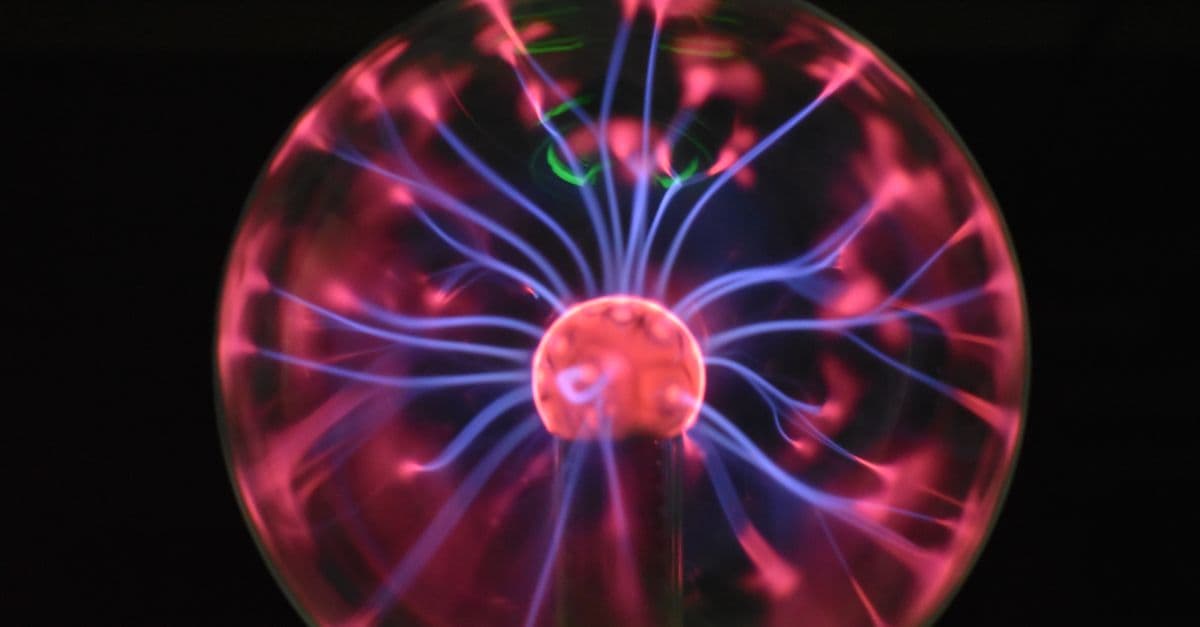
Photo: Gergő / Pexels
Quantum mechanics is, by every test we've thrown at it, the most accurate theory in the history of science. It correctly predicts the behaviour of atoms, electrons, photons, and chemistry to 12 decimal places. Every modern computer, MRI machine, laser, LED, and solar cell exists because of it.
It's also the most counterintuitive theory ever produced. Particles act like waves, observation changes outcomes, and pairs of particles share information across the universe. Here's a math-light tour of what quantum mechanics actually says — and what it doesn't.
Key takeaways
- At very small scales, nature behaves differently from everyday physics.
- Particles can act like waves; waves can act like particles (wave-particle duality).
- We can't simultaneously know certain pairs of properties precisely (uncertainty principle).
- Particles can be in multiple states at once (superposition) until measured.
- Distant particles can be linked (entanglement) in ways classical physics can't explain.
- Quantum mechanics works perfectly — but interpretations of why it works are still debated.
The first hint: light is weird
For 200 years, physicists argued whether light was a wave or a particle. Newton said particle. Young (the famous double-slit experiment, 1801) showed wave behaviour. Einstein, in 1905, showed the photoelectric effect — light hitting metal kicks out electrons in discrete packets, like particles (Nobel Prize, 1921).
The answer: both, depending on how you look. Light is composed of photons — particles that have wave-like properties. The same is true of electrons, atoms, and even small molecules. Wave-particle duality applies to everything at small enough scales.
The double-slit experiment
The most famous experiment in physics. Send electrons one at a time through two narrow slits onto a detector screen. Two predictions:
- Particle behaviour: Each electron goes through one slit. The screen shows two stripes corresponding to the slits.
- Wave behaviour: Each electron acts as a wave, goes through both slits simultaneously, and interferes with itself. The screen shows multiple stripes — an interference pattern.
What actually happens: the interference pattern. Even sent one at a time. Electrons interfere with themselves.
Now place a detector at the slits to see which one each electron goes through. The interference pattern disappears. The electrons start acting like particles.
The mere act of measurement changes the outcome. This is the heart of quantum weirdness.
Superposition
Before measurement, a quantum object can be in multiple states simultaneously. An electron can spin up and spin down. A photon can be polarised horizontally and vertically. The famous metaphor: Schrödinger's cat can be alive and dead before you open the box.
Once you measure, the superposition collapses to one definite state. Why measurement does this — and what counts as measurement — is one of the deepest unresolved questions in physics.
The uncertainty principle
Werner Heisenberg's 1927 result: certain pairs of properties can't both be known precisely at the same time. The most famous pair is position and momentum. The more precisely you know where a particle is, the less precisely you can know its momentum, and vice versa.
This isn't a measurement limitation — it's a fundamental property of nature. Quantum particles literally don't have simultaneous precise values of these properties.
Entanglement
When two particles interact under the right conditions, they can become entangled — their properties are linked in ways that don't depend on distance. Measure one particle's spin, and you instantly know the other's, even if it's a galaxy away.
Einstein famously called this "spooky action at a distance" and didn't believe it. Decades of experiments have confirmed entanglement is real. The most precise test (the 2022 Nobel Prize in Physics) ruled out essentially all classical alternatives.
Entanglement doesn't allow faster-than-light communication — you can't control what your measurement reveals. But it's the basis of quantum computing, quantum cryptography, and quantum teleportation.
Quantum tunnelling
Classical physics says a ball can't roll over a hill it doesn't have enough energy to climb. Quantum physics says it can, with some probability. This is tunnelling — particles passing through energy barriers they "shouldn't" be able to cross.
Tunnelling explains:
- How the Sun fuses hydrogen (protons tunnel through their mutual electrical repulsion).
- How alpha particles escape atomic nuclei (radioactive decay).
- How transistors work (electron tunnelling drives modern electronics).
- How GPS works (atomic clocks rely on quantum effects).
What quantum mechanics is good for
Quantum mechanics underlies essentially all modern technology:
- Transistors in every computer chip.
- Lasers in everything from CD players to surgery to fibre-optic communication.
- MRI scanners using quantum spin properties of protons.
- LEDs for displays and lighting.
- Solar cells, exploiting the photoelectric effect.
- Atomic clocks behind GPS, financial timing, and scientific measurement.
- Quantum computers — early-stage but rapidly advancing.
What it doesn't say
Quantum mechanics is often misused in popular culture to support claims about:
- Consciousness creating reality (no — measurement isn't necessarily conscious).
- Manifesting through thoughts (no — quantum effects don't extend to macroscopic intentions).
- Mind-body healing (no — health remains classical biology).
- Quantum jumps in self-improvement (no — borrowed terminology, not physics).
The quantum world is real, weird, and well-understood. The "quantum mysticism" you find in self-help books is mostly poetic license.
Interpretations of quantum mechanics
The math works perfectly. What it means is debated. Major interpretations:
Copenhagen interpretation
The default for decades. Says wave functions describe what we know, and measurement collapses the wave function to a definite outcome. Doesn't try to explain "why."
Many-worlds interpretation
Hugh Everett, 1957. Says wave functions never collapse — every possible outcome happens, in different branching universes. The branch you experience is just one of many. Increasingly popular among working physicists.
Pilot wave (Bohmian mechanics)
Particles always have definite positions, guided by an invisible "pilot wave." Reproduces all quantum predictions, but requires non-local hidden variables. Mostly out of fashion, but has supporters.
QBism (Quantum Bayesianism)
Wave functions describe an observer's beliefs, not external reality. Quantum mechanics is a tool for updating expectations, not a description of nature.
The fact that physics has multiple interpretations of its most successful theory tells you something important: we know what nature does, we don't fully know what it is.
Quantum Computing and Practical Applications
Quantum computers exploit superposition and entanglement to solve specific problems faster than classical computers. A quantum bit (qubit) can be 0, 1, or both simultaneously. A computer with 300 qubits could represent 2^300 states at once.
This power applies to specific problems: factoring large numbers (threatening RSA encryption), simulating molecular behavior (drug discovery), optimization problems (routing, scheduling). It won't make all computers faster — most everyday tasks run fine on classical machines.
As of 2026, IBM's quantum computers achieve ~500 qubits, Google has demonstrated "quantum advantage" for specific problems, and researchers are fighting decoherence (superposition collapses from environmental interference). Practical quantum internet and large-scale quantum computing remain years away.
Source: Nature (2024) — "Quantum Computing Progress and Timeline Challenges"
The Quantum-Classical Boundary and Decoherence
The decoherence problem: why don't we see superposition and entanglement in everyday objects? A quantum particle in isolation exhibits these effects. A particle surrounded by billions of others (like atoms in a cup of coffee) loses coherence through countless tiny interactions.
The decoherence threshold—the size at which quantum effects effectively disappear—remains an active research area. Small quantum systems (single electrons, photons, cold atoms) maintain superposition for microseconds to seconds. Larger systems (viruses, bacteria) decohere in nanoseconds. Objects you can see (cats, baseballs, cars) are so large they're essentially classically locked.
Some researchers argue life exploits quantum effects at scales that shouldn't work (photosynthesis, bird magnetoreception). If true, biology maintains quantum coherence longer than lab systems do—a puzzle still being solved.
Bell's Theorem and Nonlocality
Bell's theorem (1964): no theory using only local hidden variables can reproduce all quantum predictions. This sounds abstract, but its implications are radical: either (1) quantum mechanics is incomplete, (2) properties don't exist before measurement, or (3) information can propagate faster than light (which would violate relativity).
Experiments since the 1970s have closed loopholes one by one. The 2022 Nobel Prize went to experiments ruling out nearly all classical alternatives. Most physicists now accept nonlocality: information about entangled particles is not determined before measurement, yet measurement on one instantly affects the other.
This doesn't allow faster-than-light communication (you can't control your measurement result), so it doesn't violate relativity. But it means the universe is more interconnected than everyday intuition suggests.
Source: Nobel Prize Committee (2022) — "The Nobel Prize in Physics for experiments with entangled photons"
The Measurement Problem and Modern Research
The biggest unsolved problem in quantum mechanics: what counts as measurement, and why does it cause collapse? A hydrogen atom's electron exists in a superposition until measured. Is measurement the moment a detector fires? The moment a human looks at the detector? When the information enters human consciousness?
Different interpretations offer different answers, leading to different predictions for edge cases. This matters for quantum computing (measuring affects results) and quantum foundations research.
Current research directions include:
- Testing even more exotic interpretations
- Developing quantum mechanics for gravity
- Understanding how quantum mechanics connects to cosmology
- Improving quantum error correction for practical computing
The Schrödinger Equation: Quantum Mechanics' Core
While we've avoided math so far, understanding quantum mechanics requires at least a conceptual grasp of its central equation. Erwin Schrödinger's equation (1926) describes how a quantum particle's wave function evolves over time:
iℏ ∂ψ/∂t = -ℏ²/2m ∇²ψ + V(x)ψ
This looks like nonsense if you've never seen calculus, but it encodes everything quantum:
- ψ (psi): The wave function — a mathematical object whose square gives the probability of finding the particle at a location.
- ℏ (h-bar): Planck's constant, the fundamental quantum scale.
- V(x): The potential energy (the environment the particle is in).
The equation says: the wave function evolves in time (left side) based on the particle's energy and environment (right side).
Key insight: the Schrödinger equation predicts superposition. Until measured, a particle is described by a wave function that's a sum of multiple possible states. Measurement "collapses" this superposition to one outcome.
Why does measurement collapse? The equation doesn't say. This is the measurement problem — the gap between what mathematics predicts and what experiments show.
For practical use, physicists solve Schrödinger's equation for specific systems (hydrogen atom, harmonic oscillator, quantum well) and get exact predictions of energy levels and probabilities. It works perfectly. But interpreting the wave function philosophically — what does ψ represent before measurement? — remains contentious.
Source: Griffiths (2018) — Introduction to Quantum Mechanics; Zurek (2003) — "Decoherence and the transition from quantum to classical"
Quantum Tunnelling in Nature and Technology
Quantum tunnelling is more than a theoretical curiosity — it's essential to life and technology.
In nature:
- Stellar nucleosynthesis: The Sun's core is 15 million Kelvin, hot enough to fuse hydrogen into helium. Except: the protons never quite have enough energy to overcome their electrical repulsion. They tunnel through the barrier, and the Sun shines. Without tunnelling, stars wouldn't ignite. This process is explored in depth in our article on nuclear fusion energy.
- Radioactive decay: Alpha particles (helium nuclei) escape atomic nuclei even though they're trapped by the nuclear force. They tunnel through. This is how radioactive dating works — the decay rate depends on tunnelling probability.
- Biochemistry: Some enzyme reactions rely on quantum tunnelling of electrons and protons. The reaction rates wouldn't make sense without it.
In technology:
- Tunnel diodes: Electrons tunnel through semiconductor junctions, creating circuits with unusual properties (negative resistance) used in oscillators and switches.
- Scanning tunnelling microscope (STM): Apply a voltage between a sharp tip and a sample surface a few nanometers apart. Electrons tunnel across the gap; the tunnelling current reveals the surface's atomic structure. This won the 1986 Nobel Prize.
- Flash memory: Electrons tunnel through a thin oxide layer to store charge. Every USB stick, SSD, and smartphone relies on this.
- OLED displays: In organic LEDs, charge carriers tunnel through organic layers, producing light.
The phenomenon that once seemed purely abstract is now used billions of times per day in consumer electronics.
Source: Krane (1988) — Introductory Nuclear Physics; Crommie et al. (1993) — "Imaging standing waves in a 2D electron gas"
Quantum Cryptography and Quantum Key Distribution
Quantum mechanics enables a form of encryption that's theoretically unhackable: quantum key distribution (QKD).
The problem: Sharing a secret key is hard. If you send it over an insecure channel, eavesdroppers intercept it. If you meet in person, that's impractical for most applications.
The quantum solution (BB84 protocol): Encode a key in the quantum polarization states of photons. The key principle: measuring a quantum system disturbs it. If an eavesdropper intercepts and measures the photons, they collapse the superposition, changing subsequent measurements. The legitimate parties can detect this interference.
How it works:
- Alice sends photons in random polarizations (encoding 0s and 1s).
- Bob measures them in random bases. He'll get about 50% correct by guessing the basis.
- Alice and Bob publicly announce which bases they used (but not the results).
- They discard measurements where they guessed the wrong basis, keeping only the 50% they got right.
- Alice and Bob now share a secret key. Any eavesdropping attempt would've changed results, which they can detect statistically.
Practical deployment: Quantum key distribution exists today. Networks like China's Micius satellite and Europe's Quantum Internet Alliance demonstrate continent-scale QKD. However, it's still expensive (~$100K+installations) and slow (kilobits per second, vs. terabits for classical networks). It's primarily used by governments and financial institutions for highly sensitive communications.
The promise: information-theoretic security. Unlike RSA encryption (secure only because factoring is computationally hard), QKD is secure because of physics—an eavesdropper is fundamentally unable to steal the key without detection.
Source: Bennett & Brassard (1984) — "Quantum cryptography: Public key distribution and coin tossing"; NIST (2024) — "Post-Quantum Cryptography"
Quantum Mechanics and the Classical Boundary
One of the deepest mysteries: why don't we see quantum effects at large scales? You don't see tables or cats in superposition. Why not?
The answer is decoherence: the environment. A quantum particle isolated in the lab can maintain superposition for seconds or more. A particle surrounded by air molecules, photons, heat, and other particles loses superposition in nanoseconds through countless subtle collisions. The "environment" continuously measures the particle, collapsing its superposition.
Decoherence timescale depends on system size and complexity:
- Single electron: microseconds to milliseconds
- Quantum dot (1000 atoms): nanoseconds
- Virus (~1 million atoms): picoseconds
- Dust mote (~10^15 atoms): femtoseconds (one millionth of a nanosecond)
- Cat (~10^28 atoms): instantly on any timescale
There's no sharp boundary—it's a continuous transition. Objects become effectively classical when decoherence is so fast that superposition never accumulates.
This resolves Schrödinger's cat paradox: the cat isn't really alive-and-dead. The superposition is immediately destroyed by environmental decoherence (the cat is warm, surrounded by air, full of bacteria constantly measuring it). The thought experiment exposes the absurdity of applying quantum rules to macroscopic objects, but nature doesn't make this mistake—decoherence does.
This understanding has practical implications: quantum computers must be isolated (ultra-cold, ultra-high vacuum) to preserve superposition long enough to compute. The engineering challenge of maintaining coherence is often harder than the physics itself.
Source: Zurek (2003) — "Decoherence, einselection, and the quantum origins of the classical"; Dirac (1927) — the foundational work on quantum mechanics
Open Questions and the Limits of Quantum Mechanics
Despite its success, quantum mechanics has limits and open questions:
Gravity: Quantum mechanics and general relativity (Einstein's theory of gravity) are incompatible. At scales involving both (the centre of black holes, the Big Bang), quantum mechanics breaks down. Resolving this requires quantum gravity—a theory that hasn't been found.
The hard problem of measurement: Why does measurement collapse the wave function? Is collapse real, or is the universe branching into many worlds (many-worlds interpretation)? Or is there something else entirely? This isn't just philosophy—different interpretations predict different outcomes for quantum computing edge cases.
Quantum thermodynamics: How does entropy work in quantum systems? The arrow of time (why past looks different from future) is unexplained at the quantum level.
Quantum consciousness: Penrose and others have suggested consciousness might involve quantum effects in the brain. Most neuroscientists think this is unlikely (the brain is warm and wet, decoherence dominates), but it remains speculative. Interestingly, understanding how consciousness actually works remains one of the deepest problems in science.
Quantum foundation experiments: Testing increasingly exotic predictions (testing Bell's theorem under different conditions, testing quantum mechanics at larger scales, testing alternative interpretations) remains an active research direction.
Source: Penrose (1989) — The Emperor's New Mind; Zeilinger (2010) — Dance of the Photons
What this means
Quantum mechanics is the most successful theory in physics — not by a small margin, but by a wide margin. It predicts nature's behavior to 12+ decimal places. Every semiconductor, laser, and LED exists because of it.
Yet it remains profoundly mysterious. We know what it says, but interpretation — what it means about reality — remains debated among the world's best physicists. This combination of empirical success and conceptual mystery makes quantum mechanics unique in science: a theory you can bet your career and technology on, while still not being sure what it's telling you about nature itself.
Frequently Asked Questions
Q: Does measuring something in quantum mechanics require consciousness?
A: No. "Measurement" in the technical sense means any interaction that records information about a particle's state — it could be a photon detector, a gravity sensor, or any physical interaction. Consciousness is not required; the interaction is what matters for wave function collapse.
Q: Is quantum mechanics complete, or is it missing something?
A: Within its domain (atomic and subatomic scales), it's complete and perfectly predictive. However, it doesn't include gravity, which is why physicists seek a theory of quantum gravity. The broader question (is reality fundamentally quantum?) remains open.
Q: Why don't macroscopic objects exhibit superposition?
A: They technically do, but decoherence makes it unmeasurable. A cat-sized object interacts with trillions of particles per second, causing superposition to collapse nearly instantaneously. The boundary between quantum and classical regimes is decoherence, which occurs faster for larger systems.
Q: Can quantum computers break encryption?
A: Yes, theoretically. Shor's algorithm (1994) shows that a large quantum computer could factor RSA-encrypted keys in polynomial time. This is why governments and companies are developing "quantum-resistant" encryption now, before practical large quantum computers exist.
Q: What's the difference between superposition and entanglement?
A: Superposition means a single particle is in multiple states simultaneously (spin up and down). Entanglement means two or more particles are linked so that measuring one instantly affects the others, regardless of distance. A single particle can be in superposition; entanglement requires multiple particles.
Q: Could experiments prove quantum mechanics wrong?
A: Highly unlikely. It's been tested to incredible precision across a century with zero failures—more than any theory in history. Future theories (like quantum gravity) will likely extend it to new domains, but won't contradict it where it's been verified.
Read next:
- The Double-Slit Experiment Explained
- Heisenberg's Uncertainty Principle Explained
- Quantum Entanglement Explained
Related Reading (keep existing links)
Quantum mechanics is the most successful, most counterintuitive, and most widely used theory in modern physics. It tells us that at the smallest scales, particles behave like waves, observation changes outcomes, and entangled pairs share information instantly across distances. It's the foundation of all modern electronics, the lens for chemistry and biology at the molecular level, and the playground for the next century of computing. We don't fully understand what it means — but we know exactly what it predicts, and so far, every experiment has confirmed it.
Related Reading
- What Is the Speed of Dark — And Other Things That Move Faster Than Light
- Nuclear Fusion Energy Explained — The Power of the Stars
- What Is the Many-Worlds Interpretation of Quantum Mechanics?
- Quantum vs Subatomic vs Atomic — The Difference Explained
- What Is Quantum Gravity — The Theory That Could Unite Physics?
Follow new articles
Add SciHub101 to your feed reader to see new science and technology stories.
About the Author
SciHub101 is an independent science and technology publication founded and edited by Buğra Sözeri, a software engineer and app developer based in Türkiye. AI tools assist with drafting and research. Source documentation in the existing archive is uneven, and articles are being reviewed and corrected. The Editorial Team byline identifies editorial responsibility; it does not certify specialist or independent human review. Where we compare products, anything built by our own team is labelled as such — see the editorial guidelines and About page for how corrections and disclosures work.
Related Articles

Quantum vs Subatomic vs Atomic — The Difference Explained
"Quantum," "subatomic," and "atomic" sound similar and get used interchangeably — but they describe different scales and concepts. Here's a clear explanation that untangles them.

What Is Entropy — and Why the Universe Keeps Running Down
Entropy is the reason ice melts, eggs don't unscramble, and the universe is heading toward a quiet, cold end. Here's what entropy actually is — and why it's the most powerful idea in physics.

Quantum Physics Explained — A Beginner's Guide
Wave-particle duality, uncertainty, superposition, entanglement — what quantum physics actually says, what it predicts, and what it doesn't.

What Is the Many-Worlds Interpretation of Quantum Mechanics?
Every quantum event creates branching parallel universes, at least according to one leading interpretation of quantum theory. It sounds insane, but many physicists consider it the most literal reading of the equations.

What Is the Speed of Dark — And Other Things That Move Faster Than Light
Nothing with mass can reach the speed of light. But shadows, spots of light, and the expansion of the universe can move faster than light without violating physics. Here's the strange truth about superluminal motion.
Schrödinger's Cat: The Thought Experiment Physicists Misuse Most
Schrödinger's cat was designed in 1935 to mock quantum mechanics, not celebrate it. Here's what Schrödinger actually argued and what modern physics says now.