What Is the Speed of Dark — And Other Things That Move Faster Than Light
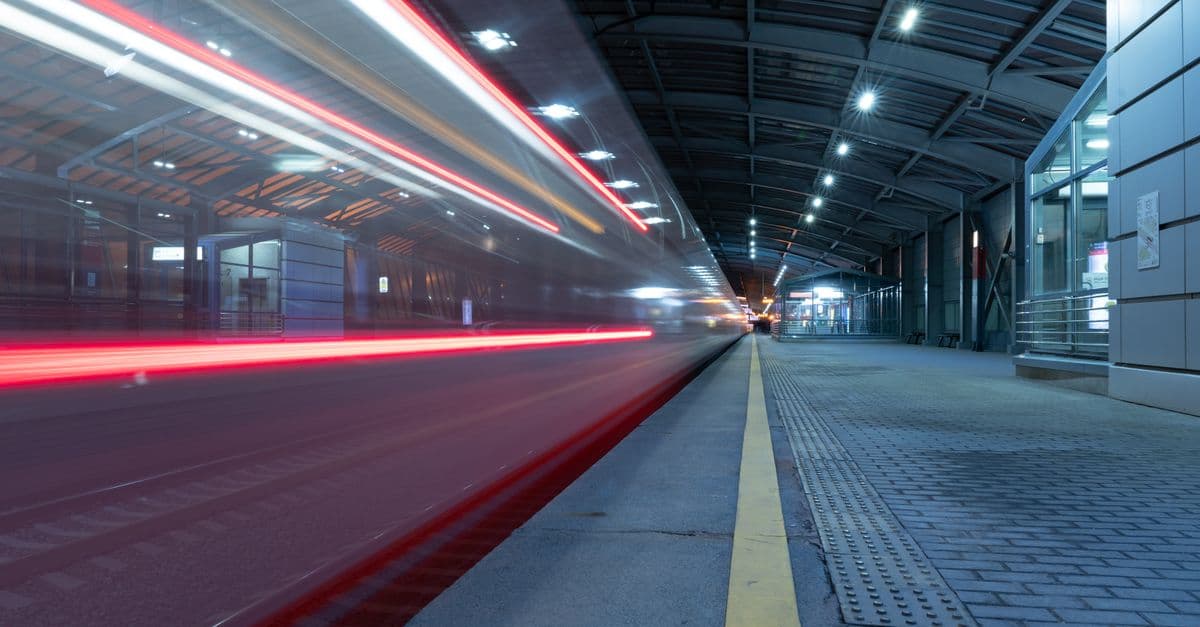
Photo: M.Emin BİLİR / Pexels
Einstein's relativity says nothing can travel faster than light. The speed of light in vacuum, c, is exactly 299,792,458 metres per second — exact because, since 1983, the metre itself has been defined from it. It is the cosmic speed limit, built into the geometry of spacetime. And yet shadows can move faster than light. So can spots of light on distant surfaces, the crests of certain waves, and — in a carefully defined sense — distant galaxies. Quantum correlations appear to link particles instantly across any distance.
None of this violates Einstein. The reason is more interesting than the paradox: the speed limit is not really about "things" at all. It is a limit on how fast cause can reach effect — how fast energy, matter or information can get from one place to another. Once you see that, every apparent exception falls into place.
Key takeaways
- The speed of light in a vacuum (c) is exactly 299,792,458 m/s, a defined constant.
- Nothing with mass can reach c — the energy required grows without limit.
- Shadows and light spots can sweep faster than c, but nothing physical travels along their path.
- Phase velocity of a wave can exceed c; the front of a signal never does.
- Quantum entanglement produces correlations that can't be used to send messages.
- Cosmic expansion makes distant galaxies recede faster than c, and we can still see some of them.
A short history of the speed limit
Light's speed was first shown to be finite in 1676, when Ole Rømer noticed that eclipses of Jupiter's moon Io ran early or late depending on Earth's distance from Jupiter — the full story is in our article on Rømer's Io measurement. In 1849 Hippolyte Fizeau made the first measurement on Earth, using a spinning toothed wheel and a mirror several kilometres away (see Fizeau's toothed-wheel experiment).
The deeper leap came in 1905. Einstein's special theory of relativity took the constancy of the speed of light for every observer as a starting postulate, and showed that time and space must then stretch and shrink to keep it constant. Our guide to Einstein's relativity covers both the special and general theories; the important point here is that c turned out to be not just a property of light, but the conversion factor between space and time.
| Year | Milestone |
|---|---|
| 1676 | Rømer infers a finite light speed from Io's eclipses |
| 1849 | Fizeau's toothed wheel: first terrestrial measurement |
| 1905 | Einstein's special relativity makes c invariant for all observers |
| 1934 | Pavel Cherenkov observes the blue glow later named after him |
| 1983 | The metre is redefined in terms of c, fixing it at 299,792,458 m/s |
| 1994 | Alcubierre proposes a "warp drive" spacetime |
| 2011–2012 | OPERA's apparent faster-than-light neutrinos are traced to equipment faults |
| 2015 | First loophole-free Bell tests confirm quantum non-locality |
Why nothing with mass can reach light speed
In special relativity, the energy of an object with rest mass m moving at speed v is
E = γmc²
where γ = 1/√(1 − v²/c²) is the Lorentz factor.
As v approaches c, γ grows without bound. Reaching c exactly would require infinite energy. This is not a technological limitation like the sound barrier once was — it follows from the structure of spacetime itself.
| Speed (fraction of c) | Lorentz factor γ | Energy relative to rest energy |
|---|---|---|
| 0.5 | 1.15 | 1.15× |
| 0.9 | 2.29 | 2.29× |
| 0.99 | 7.09 | 7.09× |
| 0.999 | 22.4 | 22.4× |
| 0.999999 | 707 | 707× |
Values computed from γ = 1/√(1 − v²/c²).
Each extra "9" costs vastly more energy than the last. Protons in the Large Hadron Collider move within a tiny fraction of a percent of c, and still never reach it.
The same γ appears in time dilation: a clock moving at 0.99c runs about seven times slower as measured by a stationary observer. This is not a theoretical curiosity — satellite navigation must correct for it every day, as explained in how GPS uses Einstein's relativity.
Massless particles behave oppositely. Photons, and gluons and gravitational waves as far as we know, must travel at exactly c in vacuum. They cannot go slower. In 2017, gravitational waves and gamma rays from the same neutron-star merger arrived within about two seconds of each other after travelling roughly 130 million years, showing that gravity and light share the same speed to extraordinary precision.
The speed of dark
Here is the question in the title: how fast does darkness move?
The honest first answer is that darkness doesn't move at all. Darkness is the absence of light. When you switch off a lamp, the room goes dark because the last emitted light finishes travelling outward and is absorbed — the "darkness" arrives at exactly the speed of light, since it is just the trailing edge of the light.
The more interesting case is the edge of a shadow, or the boundary of a spot of light. These can move faster than light, and the geometry is simple.
The lighthouse
Imagine a lighthouse whose beam rotates once per second. The spot where the beam hits a wall moves with speed v = ωr, where ω is the angular speed and r the distance to the wall.
- Wall at 1 km: the spot moves at about 6.3 km/s.
- Wall at 100,000 km: the spot moves at about 628,000 km/s — more than twice c.
The boundary between lit and unlit wall — the edge of the "dark" — moves at the same speed as the spot.
The laser pointer and the Moon
You don't need a giant lighthouse. The Moon is about 384,400 km away. Flick a laser pointer so its aim swings through one radian (about 57°) in a second, and the spot — if the beam were strong enough to see on the Moon — would sweep across the lunar surface at about 384,400 km/s, faster than light. A modest flick of the wrist is all it takes. (The spot would appear on the Moon about 1.3 seconds after you moved your hand, because each photon still makes the trip at c.)
Why this doesn't break relativity
The spot is not a thing. It is a pattern made of different photons at each moment. Each photon flies in a straight line from the laser to the Moon at exactly c. The photons that land at point A have no connection to the photons that land at point B; both sets were sent by your hand at different moments.
So a person standing at point A cannot use the spot to send a message to someone at point B. Nothing travels from A to B. The cause of each illuminated point is back at the laser, and that cause reaches each point at light speed. The same logic applies to the shadow of your hand projected on a distant cloud: the shadow's edge can sweep faster than light, but the shadow carries no energy and no information from one place on the cloud to another.
This distinction — between a pattern that moves and a signal that travels — runs through every example below.
Scissors, rulers and the "rigid rod" problem
Close a very long pair of scissors. The point where the blades cross can, in principle, move faster than light if the blades are long and the angle between them small enough. Again, the crossing point is a geometric location, not an object. The metal atoms at the crossing point are always different atoms.
A related trap is the "perfectly rigid rod." Push one end of a rod a light-year long, and surely the other end moves instantly? No. Pushing one end compresses the atoms there, and the compression propagates along the rod at the speed of sound in the material — kilometres per second, far slower than light. Truly rigid bodies cannot exist in relativity, precisely because they would transmit signals instantly.
The scissors and the rod together make a useful test: anything that could carry a push, a pull or a message is limited to c. Anything that moves faster than c turns out to be an intersection, a shadow, a phase or a coincidence of timing.
Phase velocity, group velocity and front velocity
Waves give the most technical — and most often misquoted — examples of superluminal motion.
A wave has several "speeds":
| Velocity | What it describes | Can it exceed c? |
|---|---|---|
| Phase velocity | Speed of an individual crest of a single-frequency wave | Yes, routinely |
| Group velocity | Speed of the envelope (peak) of a pulse | Yes, in special media with anomalous dispersion |
| Front velocity | Speed of the very first disturbance of a signal | No — never exceeds c |
| Signal / energy velocity | Speed at which information or energy arrives | No |
Phase velocity exceeds c in many everyday systems. In a metal waveguide carrying microwaves, the phase velocity is always greater than c while the group velocity is less; their product equals c². In a plasma such as Earth's ionosphere, radio waves likewise have superluminal phase velocity. Crests moving faster than light do not carry anything: an endless, perfectly repeating wave contains no news.
Group velocity is subtler. In materials near an absorption line, a pulse's peak can emerge from the far side of a sample before the peak entered — a group velocity greater than c, or even negative. Experiments have demonstrated this. But the effect works by reshaping the pulse: the medium attenuates the trailing part and the leading edge's tail is amplified, so the output peak is built from the early part of the pulse that was already on its way. No new information arrives early.
The rigorous statement, worked out by Arnold Sommerfeld and Léon Brillouin in 1914, is that the front of a signal — the first instant anything changes — never travels faster than c in any causal medium. That is the speed that matters for causality.
Slow light and Cherenkov radiation
The speed of light in a medium is less than c. In water it is about 0.75c; in ordinary glass about 0.67c. This is the origin of refraction.
The slowdown can be pushed to extremes. In 1999, Lene Hau's group at Harvard used a technique called electromagnetically induced transparency in an ultracold sodium gas to slow a light pulse to 17 metres per second — about 60 km/h, a typical urban driving speed (Hau et al., Nature 397, 1999). Later experiments stopped and stored light pulses entirely, then released them.
Because light is slow in a medium, a charged particle can outrun it there while still moving slower than c. When an electron or other charged particle moves through water faster than light does in water, it emits Cherenkov radiation — an electromagnetic shock wave, the optical analogue of a sonic boom. It is the blue glow seen in the cooling pools of research reactors. The cone angle θ of the radiation obeys cos θ = 1/(nβ), where n is the refractive index and β = v/c, so the effect only switches on when β > 1/n.
Cherenkov radiation is the only item in this article where something physical genuinely outruns light — but only light in that material, never c. Detectors that exploit it are central to neutrino physics: huge water tanks such as Super-Kamiokande catch the faint Cherenkov cones of particles created when neutrinos interact.
Quantum entanglement: spooky correlations, no messages
Einstein called entanglement "spooky action at a distance" and suspected it showed quantum mechanics was incomplete.
Two entangled particles share a single quantum state. Measure the spin of particle A along some direction and get "up," and a measurement of B along the same direction will give the anti-correlated result "down," however far apart they are. In 1964 John Bell proved that if each particle carried hidden instructions fixed in advance, the correlations across different measurement directions would obey a limit — Bell's inequality. Quantum mechanics predicts that limit is broken.
Experiments say quantum mechanics wins. Alain Aspect's tests in the early 1980s switched measurement settings while photons were in flight (see the Aspect Bell test), and Aspect, John Clauser and Anton Zeilinger shared the 2022 Nobel Prize in Physics for experiments with entangled photons. In 2015 a team at Delft closed the main loopholes simultaneously, using entangled electron spins 1.3 km apart and measuring a Bell parameter S = 2.42 ± 0.20, above the classical limit of 2 (Hensen et al., 2015).
So the correlations are real and can't be explained by local hidden instructions. Can they send a signal faster than light? No — and this is the crucial part.
Each individual outcome is random. When you measure A, you cannot choose whether you get "up" or "down." Your partner, measuring B, sees a random 50/50 sequence no matter what you do. The correlation appears only when the two lists of results are brought together and compared — which needs an ordinary, light-speed-limited channel. This is the no-communication theorem: nothing done at A changes the statistics of results at B alone.
The same limitation applies to quantum teleportation, which moves a quantum state from one particle to another but requires sending two classical bits for every qubit teleported. More on what entanglement does and does not do is in our explainer on quantum entanglement.
The expansion of the universe
Here the story is genuinely different, because whole galaxies are involved.
The universe is expanding: on large scales, the distance between galaxies grows over time. For nearby galaxies, the recession speed is proportional to distance — Hubble's law, v = H₀d. With a Hubble constant of about 70 km/s per megaparsec, the distance at which recession speed equals c — the Hubble sphere — is c/H₀ ≈ 4,300 megaparsecs, or about 14 billion light-years.
Galaxies beyond that distance are receding from us faster than light right now. That's not a violation of relativity because special relativity's speed limit applies to things moving past each other at the same place. Recession velocity in cosmology isn't motion through space; it's the rate at which the proper distance between two far-apart points is growing. In general relativity there is no rule limiting that rate.
A common error: "we can never see them"
It is often said that light from galaxies receding faster than light can never reach us. That's wrong, and the correction is one of the most counter-intuitive results in cosmology. As Tamara Davis and Charles Lineweaver showed in their paper "Expanding Confusion" (2003), we routinely observe galaxies whose recession velocities exceeded c when they emitted the light we now see, and some that exceed c today.
How? A photon emitted toward us from beyond the Hubble sphere initially loses ground. But the Hubble sphere itself grows over time, and eventually it can overtake the photon, which then finds itself in a region receding slower than c and makes headway. The boundary that truly marks "never" is the cosmic event horizon, which lies farther out than the Hubble sphere and depends on how the expansion behaves in the future. In a universe dominated by dark energy, events beyond it will never be seen by us, however long we wait.
| Cosmological boundary | What it means |
|---|---|
| Hubble sphere (~14 billion light-years) | Where recession speed equals c today |
| Event horizon (farther out) | Beyond it, light emitted today will never reach us |
| Particle horizon (~46 billion light-years) | Current distance to the most distant matter whose light could have reached us — the edge of the observable universe |
For the size and shape of what we can see, see how much of the universe we can actually see.
Inflation: the very early universe
In the standard picture, a fraction of a second after the Big Bang the universe went through cosmic inflation, an extremely rapid, accelerating expansion that grew distances by an enormous factor — commonly quoted as at least 10²⁶ — in a tiny fraction of a second.
Points that were close together were driven apart at speeds vastly exceeding c. As with today's expansion, this was space stretching, not matter moving through space, so no relativity violation occurred. Inflation is attractive because it explains why the cosmic microwave background has nearly the same temperature in all directions, even from regions that otherwise would never have exchanged light, and why space appears geometrically flat. It remains a well-supported but not yet confirmed theory; its predicted signature in the polarisation of the cosmic microwave background has not been detected.
Apparent superluminal motion in quasar jets
Astronomers see blobs of plasma in the jets of quasars and other active galaxies appearing to cross the sky at several times the speed of light. This was first noticed in radio observations in the 1970s.
The explanation is an effect of geometry and light-travel time. Suppose a blob moves at 0.99c almost straight toward us at a small angle. Over a year it travels nearly a light-year, but because it has also come almost a light-year closer, the light it emits at the end of the year arrives only slightly later than the light from the start. A sideways shift that took a year to happen appears compressed into a much shorter interval, so the apparent transverse speed comes out greater than c. The formula is
β_apparent = β sin θ / (1 − β cos θ)
where β is the true speed in units of c and θ the angle to our line of sight. For β = 0.99 the maximum apparent speed is about 7c. The jets really are relativistic, but nothing in them exceeds c.
Things that sound faster than light but aren't
The OPERA neutrinos
In September 2011 the OPERA experiment reported that neutrinos sent from CERN to Gran Sasso in Italy arrived about 60 nanoseconds early, implying a speed slightly above c. The collaboration itself asked for scrutiny. The anomaly was traced to equipment problems, including a loose fibre-optic cable, and the revised analysis found arrival times consistent with c: 6.5 nanoseconds early with uncertainties of about ±7–8 ns each for statistical and systematic error (OPERA collaboration, revised 2012). The full story is in our article on the OPERA anomaly.
Quantum tunnelling
Particles can pass through energy barriers they classically could not cross. Some experiments suggest the time spent "inside" a barrier is very short, and the Hartman effect implies the delay stops growing with barrier thickness — which naively implies superluminal speed. How to define tunnelling time is still debated. As with group velocity, the transmitted pulse is a reshaped version of its leading part, and no signal front outruns c. Our explainer on quantum tunnelling covers the mechanism.
Tachyons
Hypothetical particles that always travel faster than light, called tachyons, are allowed mathematically if their mass is imaginary. None has ever been detected, and in modern field theory a "tachyonic" field is usually read as a sign of an unstable system rather than as real faster-than-light particles.
Warp drives and wormholes
General relativity allows more creative geometries. In 1994 Miguel Alcubierre described a spacetime in which a region of space contracts in front of a ship and expands behind it, carrying a "bubble" along faster than light as seen from outside, while the ship itself is locally at rest (Alcubierre, Class. Quantum Grav. 1994). The catch, stated in the paper itself, is that it requires exotic matter with negative energy density. Quantum effects such as the Casimir effect produce small negative energy densities, but nothing remotely like the amounts needed is known to exist. Later analyses also found that the crew could not steer or create the bubble from inside, because the front of the bubble is causally disconnected from the ship.
Traversable wormholes face the same obstacle: they too need exotic matter to stay open.
Why the limit is really about causality
Why do physicists treat c so seriously? Because of what faster-than-light signals would do to time order.
In special relativity, observers moving relative to each other disagree about whether two distant events happened at the same time. For events that light could connect (timelike or lightlike separated), everyone agrees which came first. For events too far apart for light to connect them (spacelike separated), different observers can disagree about the order.
If you could send a signal faster than light, then in some reference frames that signal would arrive before it was sent. Combine two such signals, sent by observers in relative motion, and you can send a message into your own past — the "tachyonic antitelephone." That leads to the familiar paradoxes: you could warn yourself not to send the warning.
This is the real reason every apparent exception above turned out to carry no information. Shadows, phases, correlations and recession speeds can all exceed c because none of them lets one event cause another outside the light cone.
Frequently asked questions
Q: What is the speed of dark? A: Darkness is the absence of light, so it has no speed of its own. When a light switches off, darkness arrives at the speed of light, but the edge of a moving shadow or light spot can sweep across a distant surface faster than light.
Q: Could a warp drive exceed the speed of light? A: Alcubierre's 1994 solution of Einstein's equations allows a bubble of spacetime to move faster than light, but it needs exotic negative-energy matter in amounts not known to exist, and no engineering route is known.
Q: Can quantum entanglement send messages faster than light? A: No. Each measurement result is random, and the correlation only shows up when results are compared over an ordinary channel. The no-communication theorem rules out faster-than-light signalling.
Q: Would faster-than-light travel allow time travel? A: In special relativity, a faster-than-light signal would arrive before it was sent in some reference frames, which could allow messages to the past and causal paradoxes. This link to causality is why physicists take the limit seriously.
Q: Does light always travel at c? A: In vacuum, yes, for every observer regardless of the motion of the source. In a material light is slower — about 0.75c in water — and it has been slowed to 17 m/s in an ultracold gas.
Q: Can we see galaxies receding faster than light? A: Yes. Light from beyond the Hubble sphere can still reach us because the Hubble sphere grows over time. Only events beyond the cosmic event horizon are permanently hidden.
Q: Did the OPERA experiment prove neutrinos travel faster than light? A: No. The 2011 anomaly was traced to equipment faults, including a loose fibre-optic cable, and the corrected result was consistent with the speed of light.
The bottom line
The speed of light in vacuum is a universal constant and the speed limit for cause and effect. Nothing with mass can reach it. But "moving faster than light" is not the same as "carrying information faster than light." Shadows and laser spots are patterns made of different photons; phase and group velocities describe the shape of a wave rather than its front; entangled particles share correlations that can't be steered; quasar jets only look superluminal because of light-travel time; and distant galaxies recede faster than light because space between us is growing. In every case the rule that survives is the deeper one: no cause can reach an effect faster than light. So far, that limit appears absolute.
Sources
- Alcubierre, M. (1994). The warp drive: hyper-fast travel within general relativity. Classical and Quantum Gravity 11, L73.
- Davis, T. M. & Lineweaver, C. H. (2003). Expanding Confusion: common misconceptions of cosmological horizons and the superluminal expansion of the Universe.
- Hensen, B. et al. (2015). Loophole-free Bell inequality violation using electron spins separated by 1.3 km.
- OPERA Collaboration (2011, revised 2012). Measurement of the neutrino velocity with the OPERA detector in the CNGS beam.
- Hau, L. V. et al. (1999). Light speed reduction to 17 metres per second in an ultracold atomic gas. Nature 397, 594–598.
Related Reading
Follow new articles
Add SciHub101 to your feed reader to see new science and technology stories.
About the Author
SciHub101 is an independent science and technology publication founded and edited by Buğra Sözeri, a software engineer and app developer based in Türkiye. AI tools assist with drafting and research. Source documentation in the existing archive is uneven, and articles are being reviewed and corrected. The Editorial Team byline identifies editorial responsibility; it does not certify specialist or independent human review. Where we compare products, anything built by our own team is labelled as such — see the editorial guidelines and About page for how corrections and disclosures work.
Related Articles

How Many Humans Have Ever Lived? The Statistics of Human Existence
Are the dead outnumbered by the living? How do 8 billion people today compare to all of human history? Demographers have actually calculated this — and the answer reveals surprising truths about our species.

Why You Can't Feel the Earth Spinning at 1,600 km/h
At the equator, you're moving at 1,674 km/h because the Earth is rotating. You can't feel it. Here's the Newtonian mechanics and relativistic physics that explain why — and the real clues that reveal Earth's rotation.
Quantum Physics Explained — A Beginner's Guide
Wave-particle duality, uncertainty, superposition, entanglement — what quantum physics actually says, what it predicts, and what it doesn't.

How GPS Uses Einstein's Relativity Every Single Day
Your phone's navigation relies on corrections from both special and general relativity. Without Einstein, GPS would be off by kilometers within hours.
The Theory of Relativity Explained for Beginners
Time slows down, space bends, and mass becomes energy. Einstein's relativity is strange but beautifully logical.

What Is the Many-Worlds Interpretation of Quantum Mechanics?
Every quantum event creates branching parallel universes, at least according to one leading interpretation of quantum theory. It sounds insane, but many physicists consider it the most literal reading of the equations.