How GPS Uses Einstein's Relativity Every Single Day

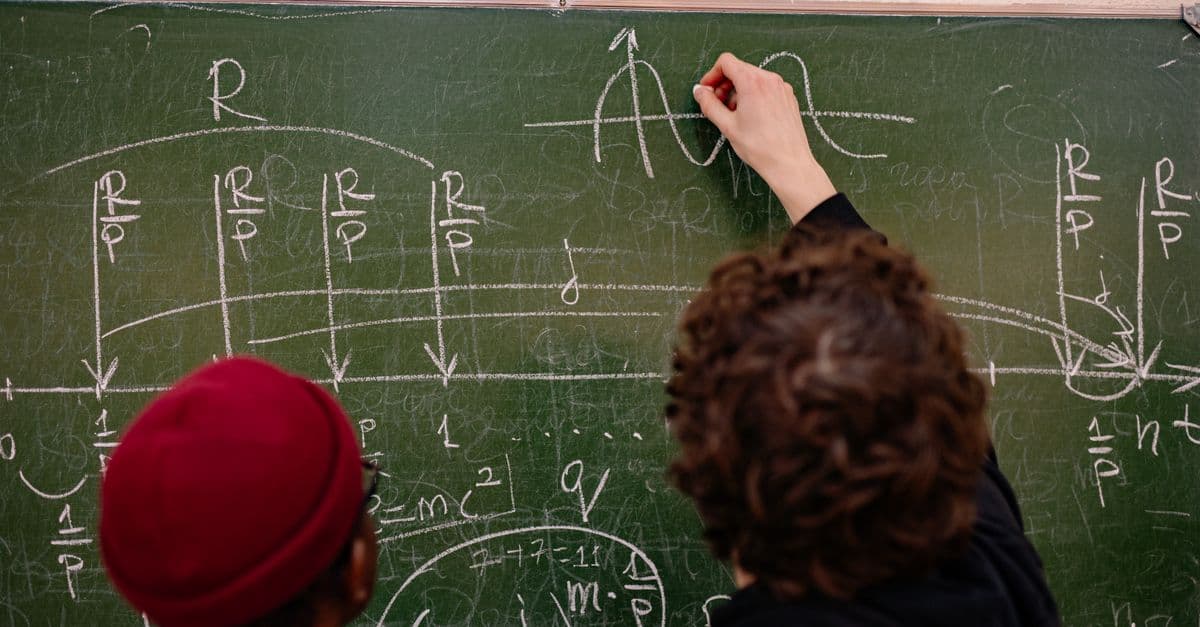
Photo: cottonbro studio / Pexels
Every time your phone draws a blue dot on a map, it is running a live experiment in general and special relativity. Not metaphorically — literally. The satellites overhead carry atomic clocks that Einstein's equations predict should drift out of sync with clocks on the ground, and engineers had to build that drift into the system from day one. Skip the correction and a modern GPS receiver would be wrong by about 10 kilometers (6.2 miles) after just one day, and by dozens of kilometers within a week.
When the U.S. Department of Defense started designing what became GPS in the early 1970s, some engineers argued the relativistic effects were too small to matter for a military positioning system. Others, including physicist Neil Ashby at the University of Colorado Boulder, pushed to include the corrections from the start (Ashby, 2003, Living Reviews in Relativity). The skeptics lost the argument, and it is a good thing they did — GPS today is arguably the most consequential real-world confirmation of relativity ever built, and it runs the test continuously, for billions of users, without anyone noticing.
Key takeaways
- GPS satellites carry atomic clocks that must stay synchronized to within tens of nanoseconds
- General relativity: weaker gravity at satellite altitude makes clocks run about 45,900 nanoseconds fast per day
- Special relativity: orbital velocity makes satellite clocks run about 7,200 nanoseconds slow per day
- Net effect: about +38,600 nanoseconds per day; uncorrected, GPS position errors would grow by roughly 10 km/day
- Engineers pre-tune satellite clock frequency to 10.22999999543 MHz (instead of 10.23 MHz) before launch to cancel the drift
How GPS Actually Works
The Global Positioning System is a constellation of at least 24 operational satellites orbiting at roughly 20,200 kilometers (12,550 miles) altitude, in what is called medium Earth orbit. Each satellite carries multiple atomic clocks, usually a mix of cesium and rubidium standards, accurate to about 20-30 nanoseconds (GPS.gov, official U.S. government site). Every satellite continuously broadcasts a signal carrying two pieces of information: exactly where it is, and exactly when it sent the signal.
Your receiver — the chip inside your phone, car, or handheld GPS unit — listens for signals from at least four satellites at once. For each one, it measures how long the signal took to arrive. Because radio signals travel at the speed of light, that travel time converts directly into a distance: multiply the elapsed time by roughly 300,000 kilometers per second and you get how far away that satellite was when it sent the signal. With distances to four known points in space, the receiver solves a system of equations to pin down its own position in three dimensions, plus a correction for its own imprecise clock. Think of it as a very fast, very precise version of the old technique of triangulating your position from three lighthouses, except the "lighthouses" are moving at 3.87 kilometers per second and the light is a radio pulse instead of a beam.
The entire system lives or dies on timing precision. Light — and radio waves, which travel at the same speed — covers about 30 centimeters (roughly one foot) in a single nanosecond. That means a timing error of just one microsecond (a millionth of a second) translates into a position error of about 300 meters (984 feet). To deliver the meter-level accuracy that modern navigation apps assume, the atomic clocks flying around Earth at 14,000 km/h have to stay synchronized with ground clocks to within a few tens of nanoseconds, sustained over days and weeks of continuous operation.
This is where the trouble — and Einstein — comes in. A clock in orbit does not tick at the same rate as an identical clock sitting on your desk, for two entirely separate physical reasons, and both have to be corrected or the whole system falls apart.
Relativistic Effect 1: Altitude and Gravity
General relativity, Einstein's 1915 theory of gravity, describes gravity not as a force pulling objects together but as the curvature of spacetime caused by mass. One consequence of that curvature is gravitational time dilation: clocks deeper inside a gravitational well — closer to a massive object — tick more slowly than clocks farther away. This has been measured directly on Earth, in one striking case with two clocks separated by a height difference of about a foot (NIST, 2010), and more recently down to millimeter-scale height differences in optical lattice clocks (Physics World, 2022).
GPS satellites orbit at about 20,200 km altitude, far enough out that Earth's gravitational pull there is significantly weaker than at the surface — roughly a quarter of the surface strength. Because the satellite clocks sit in a shallower part of Earth's gravitational well than clocks on the ground, general relativity predicts they should run faster, not slower, than identical ground clocks.
The math works out to about 45,900 nanoseconds (45.9 microseconds) of gain per day, purely from the altitude difference (Ashby, 2003). Left uncorrected, that single effect alone would add up to a position error of roughly 13.7 kilometers (8.5 miles) after just one day. It is by far the larger of the two relativistic effects at play in GPS, which surprises people who assume speed dominates — in this system, gravity wins.
Why does weaker gravity make a clock run faster?
Spacetime curvature near a mass slows the local flow of time relative to a distant observer — this is why clocks near black holes appear to almost stop from far away. GPS satellites sit in weaker curvature than ground clocks, so from Earth's perspective their onboard clocks run measurably faster, gaining about 45.9 microseconds daily.
Relativistic Effect 2: Orbital Velocity
Special relativity, Einstein's earlier 1905 theory, predicts a separate and opposite effect: a moving clock runs slow relative to a stationary observer, an effect called velocity time dilation or kinematic time dilation. It is the same physics behind the famous twin paradox thought experiment, where a twin who travels at high speed and returns ages less than the twin who stayed home.
GPS satellites move at about 3.87 kilometers per second (roughly 13,900 km/h, or 8,700 mph) relative to the ground. That is fast by everyday standards — faster than a rifle bullet — but it is still a tiny fraction of the speed of light, so the resulting time dilation is small compared to the gravitational effect. Special relativity predicts the satellite clocks should run slow by about 7,200 nanoseconds (7.2 microseconds) per day purely because of that orbital speed.
A useful analogy: imagine two identical metronomes, one sitting still on a table and one strapped to a fast-spinning fan blade. From the standpoint of relativity, the moving metronome ticks slightly slower, not because anything is mechanically wrong with it, but because time itself is passing at a different rate for something in motion relative to a "stationary" observer. The GPS satellite is the metronome on the fan blade — moving fast enough that the effect is measurable with atomic precision, but far too slowly for a human to ever notice without a clock accurate to nanoseconds.
Why doesn't the velocity effect cancel out the gravity effect exactly?
Because the two effects come from different physics and scale differently with orbital altitude. Gravitational time dilation depends on the strength of the gravitational field at that altitude; velocity time dilation depends on orbital speed, which itself depends on altitude through orbital mechanics. At GPS altitude the two happen to be far apart in magnitude (45.9 μs versus 7.2 μs), not equal.
The Combined Effect and How Engineers Fix It
The two relativistic effects point in opposite directions, so the net result is their difference, not their sum:
| Effect | Cause | Direction | Magnitude per day |
|---|---|---|---|
| General relativity (gravity) | Weaker gravity at 20,200 km altitude | Clock runs fast | +45,900 nanoseconds |
| Special relativity (velocity) | Orbital speed of 3.87 km/s | Clock runs slow | −7,200 nanoseconds |
| Net relativistic drift | Combined | Clock runs fast | +38,600 nanoseconds |
Table: The two relativistic corrections applied to every operational GPS satellite clock, based on Ashby (2003), Living Reviews in Relativity.
That roughly 38,600-nanosecond (38.6-microsecond) net daily gain sounds trivial, but multiplied out through the speed-of-light conversion, it would cause GPS positions to drift by about 10-11 kilometers per day. Left uncorrected for a week, the accumulated error would exceed 80 kilometers, at which point the system stops being useful for anything, including military applications it was originally built for.
Rather than correct the clock's output in software after the fact, GPS engineers took a more elegant route: they detune the clock's actual oscillation frequency before the satellite ever launches. Each satellite's atomic clock is built and calibrated to run at 10.22999999543 megahertz on the ground — very slightly slower than the system's nominal 10.23 megahertz. Once the satellite reaches orbit, the combined relativistic effects speed the clock back up by almost exactly the right amount, so it ends up ticking at the correct 10.23 MHz as observed from the ground (Furuno GNSS technical column, 2024). This pre-launch offset is documented in the GPS Interface Specification, IS-GPS-200, the public engineering document that defines how every satellite in the constellation behaves.
That is not the end of the corrections, either. Because GPS satellites orbit in slightly elliptical, not perfectly circular, paths, their altitude and speed both vary continuously, which adds a small additional periodic wobble to the relativistic correction — engineers call this the eccentricity correction, and GPS receivers apply it in real time using orbital parameters broadcast in the satellite's navigation message. On top of that, engineers must also account for the Sagnac effect, a separate relativistic phenomenon caused by Earth's rotation during the roughly 67-86 millisecond signal travel time from satellite to receiver. Ignoring the Sagnac correction can introduce position errors of more than 30 meters (Journal of Geodesy, 2024), which is why every GNSS receiver applies it as a standard part of the calculation, whether or not the engineer who wrote the firmware ever thinks about Einstein while doing it.
Ground control stations run by the U.S. Space Force continuously monitor the entire satellite constellation and upload correction data to keep the clocks synchronized against a master time standard, catching any drift the built-in relativistic offset does not perfectly cancel.
Testing Relativity With GPS Data
GPS is not just a beneficiary of relativity — it doubles as one of the longest-running, most rigorously checked experimental tests of the theory ever conducted. Engineers and physicists have compared the predicted relativistic corrections against the measured drift of satellite clocks for decades, and the agreement is essentially exact, within the limits of measurement precision (Ashby, 2003).
This is not the first time relativity has been checked against a moving clock. In October 1971, physicists Joseph Hafele and Richard Keating flew four cesium atomic clocks around the world on commercial airliners, first eastward and then westward, and compared them against a reference clock at the U.S. Naval Observatory. The eastward-flying clocks lost 59 nanoseconds and the westward-flying clocks gained 273 nanoseconds relative to the ground clock, matching Einstein's predictions within experimental error. You can read the full breakdown of how the Hafele-Keating experiment proved time dilation — it used commercial jets instead of satellites, but the same two relativistic effects were at work, just at slower speeds and lower altitudes.
GPS data has also been used to test the Shapiro delay, a general relativistic effect in which radio and light signals passing near a massive object are slightly delayed by the curvature of spacetime the object creates, and tests of the equivalence principle, the foundational idea in general relativity that gravity and acceleration are locally indistinguishable. GPS receivers flown aboard the TOPEX/Poseidon oceanography satellite were specifically used to run additional independent relativity checks against the theory's predictions (Ashby, 2003). Every one of these tests has come back consistent with general relativity, adding to more than a century of confirmations stretching back to Arthur Eddington's 1919 solar eclipse observations.
Beyond GPS: Other Systems Face the Same Physics
GPS was first, but it is not alone. Russia's GLONASS, the European Union's Galileo, and China's BeiDou systems all orbit at comparable altitudes and speeds, and all must apply their own versions of the same relativistic corrections. Every global navigation satellite system (GNSS) in operation today does relativistic physics behind the scenes, whether or not the average user, or even the average engineer maintaining it, thinks about Einstein while using it.
The corrections matter even more as timing technology gets more precise. Modern optical lattice clocks, the current state of the art in timekeeping, are accurate to roughly 1 part in 10^17 or better — precise enough to detect the gravitational time dilation caused by lifting the clock a single millimeter off a table (Physics World, 2022). Researchers at NIST first demonstrated this kind of "personal-scale" relativity in 2010, comparing two aluminum-ion clocks separated by about a foot of height and by a modest walking speed, and detecting a real, measurable difference in elapsed time (NIST, 2010). That precision is opening the door to a discipline called relativistic geodesy: measuring differences in Earth's shape, and even detecting underground mass anomalies like oil deposits or magma chambers, purely by comparing how fast clocks tick at different locations.
The same underlying physics also shows up outside satellite systems entirely. Astronauts aboard the International Space Station experience a net time dilation effect from their orbital speed that outweighs the (much smaller) reduction in gravity at their orbital altitude, meaning ISS crew members age very slightly slower than people on the ground — astronaut Scott Kelly returned from a year in orbit measurably younger than his Earth-bound twin, a difference of roughly 8.6 milliseconds. The full mechanism behind that effect, including what would happen to the same physics near a black hole, is covered in why time runs differently for astronauts in space.
Common Confusion: What People Get Wrong About GPS and Relativity
A common misconception is that GPS receivers themselves apply relativity corrections in real time, constantly recalculating for Einstein as your phone updates your position. In practice, the largest correction — the constant 38.6-microsecond daily drift — is handled once, before launch, by physically detuning the satellite clock's frequency. Your phone's chip does not need to run relativity equations to get this part right; the correction is already baked into the signal it receives.
Another frequent mix-up is treating "special relativity" and "general relativity" as interchangeable in this context. They are two distinct theories predicting two distinct, opposite effects. Special relativity (1905) deals with time dilation from relative motion and applies regardless of gravity. General relativity (1915) deals with time dilation from gravitational field strength, sometimes called gravitational redshift or the Pound-Rebka effect when measured in a lab. GPS needs both, and they partially cancel — but only partially. If someone tells you "GPS proves general relativity," they are technically leaving out half the story.
Some people also assume GPS accuracy problems in daily life (a car navigation app placing you on the wrong street, or a hiking app drifting by 10 meters) are relativity's fault. They almost never are. As explained above, the relativistic corrections are handled with extraordinary precision at the satellite level. Real-world GPS error comes from atmospheric delays as the signal passes through the ionosphere and troposphere, multipath interference from signals bouncing off buildings, and receiver-side clock and antenna limitations — not from any leftover Einstein correction.
FAQ
Q: Would GPS work without relativistic corrections? No. Without them, position errors would grow at roughly 10 kilometers per day, and the system would become effectively useless within days. GPS's designers recognized this in the 1970s and built the corrections into the satellites from the start, based largely on the analytical work of physicist Neil Ashby. GPS is, in effect, a continuously operating test of relativity.
Q: Why do GPS receivers need four satellites for positioning? Three satellites provide enough data to fix a position in three dimensions if the receiver's clock is perfectly accurate. Because a phone or car receiver uses a cheap quartz clock rather than an atomic one, a fourth satellite measurement is needed to solve for the receiver's own clock error simultaneously with its position.
Q: How large is the GPS relativistic correction in real numbers? The net effect is about 38,600 nanoseconds (38.6 microseconds) of clock gain per day, made up of +45,900 nanoseconds from weaker gravity at altitude (general relativity) and −7,200 nanoseconds from orbital speed (special relativity). Engineers cancel this by tuning each satellite's clock to run at 10.22999999543 MHz on the ground rather than the nominal 10.23 MHz.
Q: Are other technologies affected by relativity besides GPS? Yes. Particle accelerators must account for time dilation when calculating how far unstable particles travel before decaying. Medical PET scanners rely on gamma rays produced by electron-positron annihilation, a direct consequence of E=mc² and special relativity. Precision atomic clocks used in metrology labs can detect gravitational time dilation across height differences of just millimeters.
Q: How accurate is modern consumer GPS? Standard consumer GPS is typically accurate to about 3-5 meters horizontally. Differential GPS, which uses fixed ground reference stations to cancel out shared errors, can reach sub-meter accuracy, and specialized surveying or precision-agriculture receivers can achieve sub-centimeter accuracy. None of this residual error comes from relativity, which is corrected to a far higher precision than any of these other error sources.
Q: Who first calculated the relativistic corrections for GPS? Physicist Neil Ashby at the University of Colorado Boulder did much of the foundational analytical work starting in the late 1970s, and continued refining it for decades. His 2003 review paper in Living Reviews in Relativity, "Relativity in the Global Positioning System," remains the standard technical reference engineers cite for the gravitational, velocity, and Sagnac corrections used in the system today.
Q: Does the Hafele-Keating airplane experiment use the same physics as GPS? Yes. Both involve the same two competing effects — velocity time dilation from special relativity and gravitational time dilation from general relativity — just at very different speeds and altitudes. The 1971 Hafele-Keating flights moved at a few hundred kilometers per hour and a few kilometers of altitude; GPS satellites move at nearly 14,000 km/h at 20,200 km altitude, making the relativistic effects thousands of times larger and far easier to measure precisely.
Q: What is the Sagnac effect, and does it matter for GPS? The Sagnac effect is a timing shift caused by Earth's rotation during the roughly 67 to 86 milliseconds it takes a GPS signal to travel from satellite to receiver. Ignoring it can introduce position errors exceeding 30 meters, so every GNSS receiver applies a Sagnac correction as a routine part of calculating a position, separate from the gravitational and velocity corrections applied to the satellite clock itself.
Q: Could GPS satellites just use a different, non-relativistic clock design to avoid the problem? No — the effect is a property of spacetime itself, not a flaw in any particular clock technology. Any sufficiently precise clock, cesium, rubidium, hydrogen maser, or optical lattice, would show the identical relativistic drift at GPS altitude and speed, because the drift comes from the physics of the orbit, not the mechanism used to measure time.
Q: Does relativity affect GPS accuracy on the ground differently at the equator versus the poles? The core orbital corrections (altitude and speed) are essentially the same for all GPS satellites regardless of the receiver's location on Earth, since satellite orbits are the dominant factor. Location-dependent effects on accuracy — atmospheric delay, satellite geometry overhead, multipath — are real but are separate from, and generally larger than, any residual relativistic effect.
The takeaway
GPS is not a system that merely accounts for relativity as an inconvenient technical footnote — it depends on it in a way that is impossible to route around. Two independent relativistic effects, one from gravity and one from velocity, pull satellite clocks in opposite directions by tens of thousands of nanoseconds every single day, and only a precisely engineered pre-launch frequency offset keeps the entire global navigation system usable. Every blue dot on a map is a small, continuous confirmation that Einstein was right, running quietly in orbit whether anyone notices or not.
Read next:
Follow new articles
Add SciHub101 to your feed reader to see new science and technology stories.
About the Author
SciHub101 is an independent science and technology publication founded and edited by Buğra Sözeri, a software engineer and app developer based in Türkiye. AI tools assist with drafting and research. Source documentation in the existing archive is uneven, and articles are being reviewed and corrected. The Editorial Team byline identifies editorial responsibility; it does not certify specialist or independent human review. Where we compare products, anything built by our own team is labelled as such — see the editorial guidelines and About page for how corrections and disclosures work.
Related Articles

Why Humans Dream: What the Science of Sleep Actually Reveals
Dreams are not random brain noise or Freudian wish-fulfillment. Neuroscience points to a far more functional and surprising explanation.

Food Allergies vs. Food Intolerance: The Science Explained
They both make you feel terrible after eating certain foods. But a food allergy and a food intolerance are different biological mechanisms, and confusing them can be dangerous.

How GPS Satellites Know Your Location
GPS uses clocks accurate to a billionth of a second and Einstein's relativity to pinpoint you anywhere on Earth within meters.

The Mysteries of Time: Why Aging Slows Down in Space
Astronauts return from space slightly younger than they would have been on Earth. The explanation is real physics — Einstein's theory of relativity — and it has measurable consequences for everything from GPS to interstellar travel.
Why Time Moves Slower Near Gravity
Time moves slower near gravity because mass curves spacetime, and general relativity says clocks deeper in that curvature tick at a measurably slower rate.
The Theory of Relativity Explained for Beginners
Time slows down, space bends, and mass becomes energy. Einstein's relativity is strange but beautifully logical.