Technology
Complete Technology Guide 2026 — How Modern Tech Works
The complete guide to technology in 2026: how the internet, semiconductors, and quantum computing work, AI hardware, cybersecurity, and what's coming next.
143 articles tagged with #technology
The complete guide to technology in 2026: how the internet, semiconductors, and quantum computing work, AI hardware, cybersecurity, and what's coming next.

A physics engine running a single frame makes thousands of calculations to move objects, detect collisions, and keep the simulation stable. Understanding how this works reveals why games feel the way they do — and why physics bugs happen.

All-or-nothing digital detoxes often fail because they ignore how attention works. Dopamine is not a single 'reward chemical' that devices hijack; attention is regulated by competing goals and environmental design. Cold-turkey phone abandonment creates acute stress, backfiring when triggered by normal workplace communication needs. The evidence suggests incremental reduction, boundary-setting, and environmental redesign are more sustainable than elimination. This guide covers the research on attention and distraction, what the dopamine narrative misses, realistic detox strategies (app limits, notification management, device-free zones), and how to measure success without falling into the shame spiral that makes rebound compulsive use worse. Goal: restore agency over attention, not punish yourself for being human.

Ethereum is a blockchain network that extends cryptocurrency beyond Bitcoin's payments functionality to programmable contracts and decentralized applications. Unlike Bitcoin, which is primarily a peer-to-peer currency, Ethereum allows developers to deploy software (smart contracts) that executes agreements automatically without intermediaries. The Ethereum network operates on a proof-of-stake consensus mechanism (as of 2022), meaning validators stake cryptocurrency to secure the network rather than competing to solve mathematical puzzles. Ethereum's cryptocurrency, Ether (ETH), is used to pay for transaction fees (gas) and to incentivize validators. Ethereum has become the largest platform for decentralized finance (DeFi), non-fungible tokens (NFTs), and decentralized autonomous organizations (DAOs). This article explains how Ethereum works technically, the role of smart contracts and validators, current layer 2 scaling solutions, real use cases, and informed criticisms of the system. This is educational information about mechanisms, not investment advice.

In March 2021, a digital image file sold at Christie's for $69.3 million. The buyer received no physical object and no copyright. What they received was an entry on a blockchain tying a unique token to their wallet address. That is what an NFT is, and it is more specific and more limited than the hype made it sound.

Ransomware attacks tripled year-over-year between Q1 2024 and Q1 2025. The average time attackers spend exploiting a known vulnerability dropped from 700 days in 2020 to 44 days in 2025. AI is now on both sides of every attack. Here is what the current threat landscape looks like, what is driving it, and what organizations and individuals can do about it.

TikTok's For You Page (FYP) is powered by a recommendation engine that does one thing obsessively: predict which video you will watch longest. It uses watch time, replays, shares, and dozens of secondary signals to build a real-time model of your interests — then tests that model continuously by mixing in new content. Understanding the mechanics explains why the feed feels eerily accurate and why some videos reach millions of people who have never heard of the creator.

Building a website in 2026 requires zero coding knowledge for most use cases — but the choices you make in the first hour determine whether you're fighting the tool for years or growing smoothly. Here is what the options actually are, what they cost, and the path most first-timers should take.
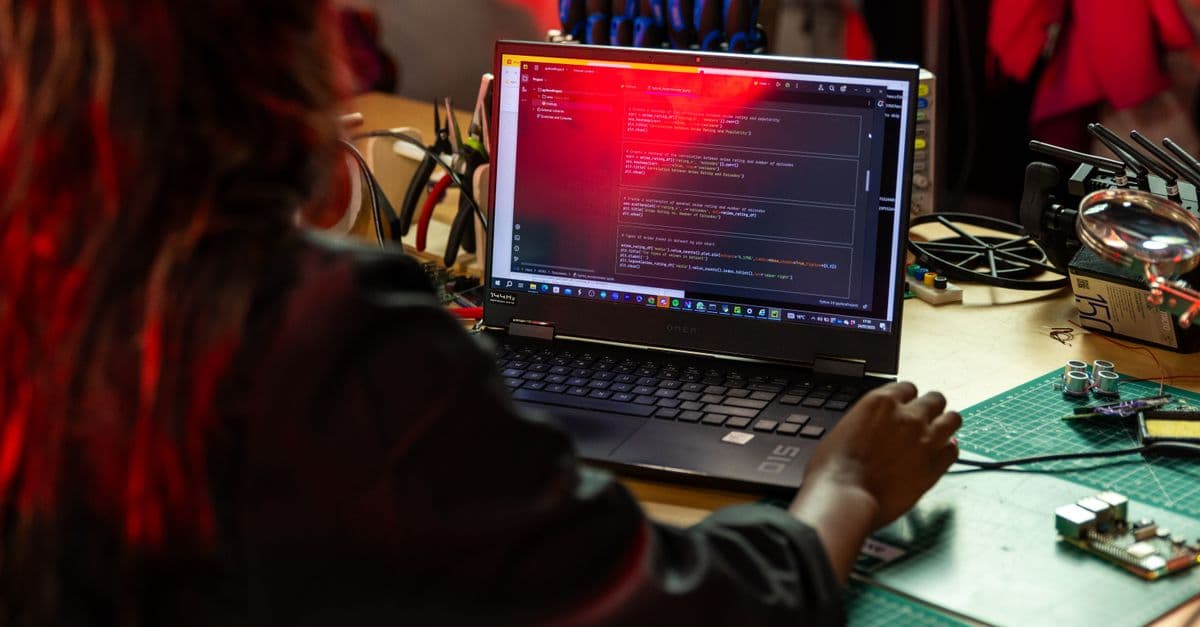
A laptop purchase is a $1,000-$3,000 decision that you will live with for 4-5 years. The specifications that matter depend entirely on your use case: a student writing essays needs different hardware than a software developer compiling code or a video editor rendering footage. CPU, GPU, RAM, and storage determine performance; display quality and battery life determine daily usability. The trap is specification obsession—comparing gigahertz and cores without understanding actual workload demands. This guide breaks down what each component means, the realistic use-case tiers (student, creator, developer, gamer), the hardware tradeoffs, and the mistakes that lead to wrong purchases. A $600 laptop perfectly suited to your needs serves you better than a $2,500 laptop that is over-specified for your work.

iPhone batteries degrade through cyclical charging—the repeated charge and discharge cycle that every rechargeable lithium battery experiences. After 500 full charge cycles, most iPhone batteries retain 80 percent capacity; after 1,000 cycles, 60 percent. Battery degradation is not a defect; it is the thermodynamic cost of using electrochemical energy storage. However, specific charging habits and software settings can extend battery lifespan and maximize daily runtime. The tactics are science-based: keeping batteries cool, charging to 80 percent rather than 100 percent, avoiding deep discharges, and managing background processes. Most battery drain myths are false (closing apps does not help; wi-fi does not drain faster than LTE). This guide separates fact from myth, explains the science of lithium-ion batteries, and provides specific settings and habits that work.

Ad blocker detection is an arms race. Publishers plant decoy elements, probe blocked URLs, and in rare cases use CSS or HTTP 103 Early Hints to notice a blocker without running any JavaScript.

Open source software underpins the global internet, powering 96% of Fortune 500 companies' web servers, the entire Linux ecosystem, and billions of devices from Android phones to cloud infrastructure. Yet 'open source' means something precise: source code publicly available under a legal license that permits modification, redistribution, and private use, with no single vendor lock-in. This article examines the three dominant license models (GPL, MIT, Apache), how projects sustain themselves through sponsorship and foundations, the economics that make open source viable, and why enterprises depend on it despite the paradox of free software powering trillion-dollar industries.