What Are NFTs? A Clear Explanation of Non-Fungible Tokens
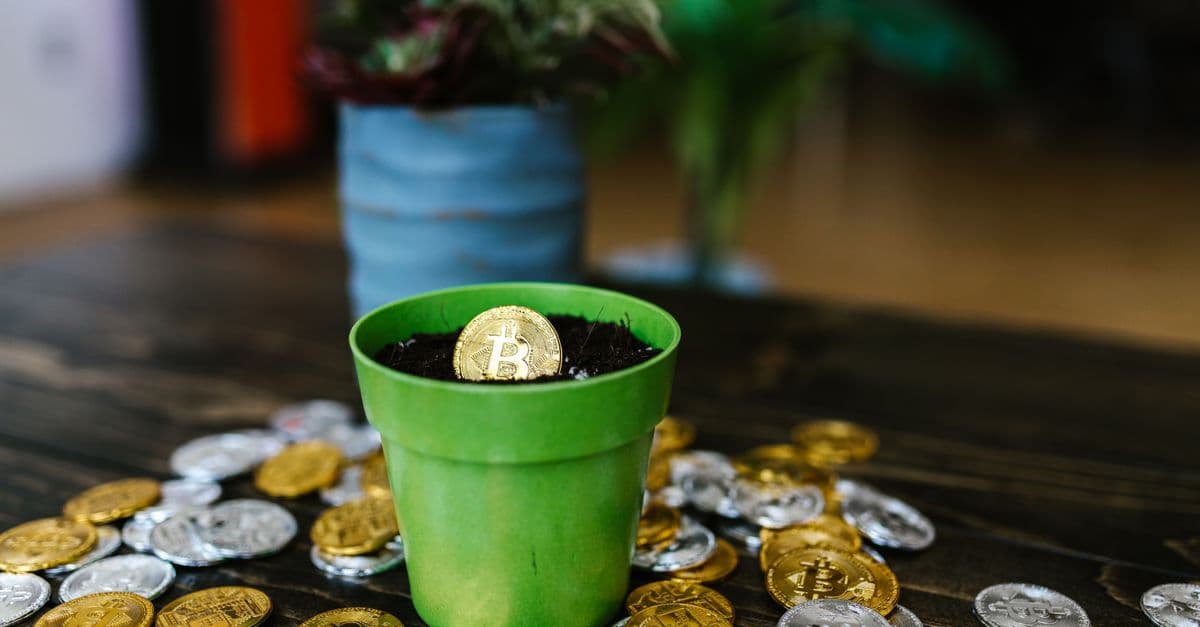
Photo: Alesia Kozik / Pexels
On March 11, 2021, a digital artist known as Beeple sold a piece called Everydays: The First 5000 Days at Christie's auction house for $69.3 million. The work was a JPEG file — a collage of 5,000 digital images. No physical object changed hands. The file was not encrypted or locked behind a paywall. Anyone could right-click it and save a copy. What the buyer received was an NFT: a token on the Ethereum Bitcoin.">blockchain recording that a specific cryptographic asset — the official, verifiable "original" of the work — belonged to their wallet address. The sale was treated as either a milestone in digital art history or the peak of a speculative mania, depending on who you asked. Both interpretations contain truth. Understanding which requires understanding what an NFT technically is and is not.
This article is educational. It does not constitute investment advice. Cryptocurrency and NFT markets are highly volatile and speculative.
The Technical Foundation: What Makes Something "Non-Fungible"
Fungible — interchangeable on a unit-for-unit basis with identical value. One dollar bill is fungible with another dollar bill. One Bitcoin is fungible with another Bitcoin. You can swap them without either party gaining or losing anything, because each unit is identical to every other unit of the same denomination.
Non-fungible — unique, not interchangeable. A specific seat at a baseball game is non-fungible with a different seat — they are at different locations and have different views. A painting is non-fungible with a reproduction. A domain name is non-fungible with a different domain name, even if both are "dot com." Non-fungible assets have individual identities that distinguish them from other assets of the same general category.
An NFT (non-fungible token) is a record on a blockchain that assigns unique identity and verifiable ownership to a specific digital (or occasionally physical) asset. Each NFT has a distinct token ID on its contract address, recorded permanently on the blockchain ledger. The token cannot be replicated or duplicated — there is, by definition, only one of each token ID on a given contract.
The standard that enabled NFTs on Ethereum is called ERC-721, proposed by William Entriken, Dieter Shirley, Jacob Evans, and Nastassia Sachs in January 2018. ERC-721 defines the technical interface — the functions and data structures — that a smart contract must implement to create and track unique tokens. Before ERC-721, Ethereum tokens were fungible (governed by the earlier ERC-20 standard). ERC-721 provided the technical specification for tokens that are individually distinct.
Source: Entriken, W., Shirley, D., Evans, J., and Sachs, N. (2018), "ERC-721 Non-Fungible Token Standard," Ethereum Improvement Proposals — the original technical standard specification for non-fungible tokens on Ethereum, available at ethereum.org.
Source: National Institute of Standards and Technology (2024), NIST Internal Report 8472: Non-Fungible Token Security — comprehensive technical analysis of NFT architecture, security properties, and risks, from the US federal standards agency.
How NFTs Actually Work: Smart Contracts, Metadata, and Ownership
An NFT is created (or "minted") through a smart contract on a blockchain — a program that runs automatically on the blockchain's distributed network of computers. The smart contract records: a unique token ID, the current owner's wallet address, and a pointer (typically a URL) to the metadata that describes the associated asset.
Smart contract — a self-executing program stored on a blockchain that automatically carries out predefined operations when specified conditions are met. Smart contracts require no human intermediary to execute — they run on the blockchain's decentralized network. An NFT smart contract manages the minting of new tokens and the transfer of ownership between wallets.
The metadata — the information about what the NFT represents — is stored separately from the token itself. This is a critical technical detail that is frequently misunderstood. The NFT on the blockchain contains a small data record including the token ID and a URL that points to the metadata (which includes the name, description, and image of the NFT). The actual image file is typically not stored on the blockchain; it is stored elsewhere — on the NFT platform's servers, on decentralized storage systems like IPFS (the InterPlanetary File System), or in other locations.
This means that "owning" an NFT is not the same as owning the underlying file. The file can be copied by anyone. The blockchain record cannot be duplicated — there is only one ownership record per token ID. The NFT records that a specific wallet address holds the verifiable "original" token associated with that metadata, but it does not prevent others from copying the image.
Think of it like a property deed. A deed records that you own a house. A photograph of your house can be taken by anyone. The photograph is not the deed, and the deed is not the house — it is the legal record of ownership. An NFT is similar: the record is verifiable and unique even if the underlying content is freely reproducible.
Source: Ethereum Foundation (2024), "Non-fungible tokens (NFTs)," ethereum.org — official technical explanation of NFT mechanics, ERC-721 standard, and the distinction between on-chain token records and off-chain content.
What NFTs Do and Don't Transfer to the Buyer
The gap between what NFT buyers thought they were purchasing and what they were technically receiving was a source of substantial confusion during the 2021 boom. These distinctions matter:
What buying an NFT typically does transfer:
- The blockchain record of ownership of that specific token ID
- The ability to resell, transfer, or gift the token to another wallet
- Membership or access benefits if the project explicitly grants them (e.g., access to a private Discord, exclusive content)
- Bragging rights and social signaling within communities that recognize the token
What buying an NFT typically does not transfer:
- Copyright to the underlying artwork or image (copyright remains with the creator unless explicitly transferred by separate legal agreement)
- Exclusive display rights — the file remains viewable by anyone
- Any guarantee of monetary value
- Physical ownership of anything
- Legal rights to the associated asset beyond the token itself
The copyright point has caused legal disputes. Several NFT projects faced challenges when buyers assumed they had purchased the right to commercialize the artwork and created merchandise, only to be informed that copyright remained with the original artist. Each NFT project has its own terms, and those terms are not standardized.
Source: U.S. Copyright Office (2023), Copyright and Artificial Intelligence — Part 1: Digital Replicas — discussion of copyright and digital asset ownership, relevant to understanding what intellectual property rights attach to NFT ownership.
The 2021 Boom: What Happened and Why
The NFT market's explosion in early 2021 was rapid and, in retrospect, characteristic of speculative asset manias. Several factors converged.
The COVID-19 pandemic had pushed large amounts of retail investor activity online, and stimulus payments provided capital to speculate with. Cryptocurrency prices — Bitcoin and Ethereum — had risen sharply, creating a pool of crypto holders with substantial paper gains looking for new opportunities within the crypto ecosystem. The Beeple Christie's sale provided mainstream media validation that gave NFTs perceived legitimacy. Social media created rapid amplification of price gains.
In the first quarter of 2021, more than $200 million was spent on NFTs — up from roughly $33 million in the entirety of 2020. Monthly NFT trading volumes on platforms like OpenSea reached peaks of several billion dollars in August and September 2021. Specific collections — CryptoPunks, Bored Ape Yacht Club — reached floor prices (the minimum price to purchase any NFT in the collection) equivalent to hundreds of thousands of dollars per token.
The driving logic was partly speculative (buy now, sell higher), partly social (membership in exclusive communities), and partly genuine interest in digital art and ownership mechanisms. These motivations were unevenly distributed across buyers.
Source: NonFungible.com and DappRadar (2021–2022), NFT market transaction data — aggregated on-chain trading volume data for the NFT market, referenced in multiple journalism sources including The Wall Street Journal and Financial Times.
The Crash: From Peak to Decline
The NFT market peaked in August–September 2021 and began declining sharply in the first half of 2022. By May 2022, The Wall Street Journal reported that daily NFT sales had fallen 92% from their September 2021 peak, and the number of active wallets in the NFT market had fallen 88% from its November 2021 high.
The broader crypto market declined steeply in 2022, taking NFT values down with it. Several high-profile collapses — most notably the FTX exchange bankruptcy in November 2022 — further eroded confidence in crypto-adjacent assets.
By early 2025, the contraction had continued. Total NFT sales volume had fallen from approximately $4.1 billion in the first quarter of 2024 to roughly $1.5 billion in the first quarter of 2025 — a 63% year-over-year decline. Active wallets trading NFTs fell approximately 96% from the 2021 peak of around 529,000 to under 20,000. The vast majority of NFT projects from the 2021 era that traded at substantial prices are now either worthless or worth a fraction of their peak values.
This trajectory is not unusual for speculative manias. Similar patterns appeared in the dot-com bubble (1999–2001), the Beanie Baby collectibles craze of the late 1990s, and other collectible asset booms. The price collapse does not necessarily mean the underlying technology was valueless; it means prices during the boom significantly exceeded any rational assessment of utility value.
Source: DappRadar (2025), Q1 2025 NFT Industry Report — quarterly data on NFT trading volumes, active wallets, and market segments.
Real Use Cases Beyond Speculation: Where NFTs Have Genuine Utility
Separating the speculative mania from the underlying technology reveals several contexts where NFTs provide genuine, practical utility.
Digital art provenance and royalties — Before NFTs, digital artists had no reliable way to sell originals (every copy is a perfect copy) or to receive royalties when their work was resold. NFT smart contracts can include royalty clauses that automatically send a percentage of every secondary sale back to the original creator. This is a genuine structural improvement for digital artists, independent of any specific price level.
Gaming and virtual goods — Video games have sold digital items (skins, characters, equipment) for decades. NFTs allow those items to be owned by players in a wallet they control, rather than locked to a single platform that can shut down, modify, or revoke ownership at will. Games like Axie Infinity used this model extensively. The portability and interoperability of NFT-based game assets remain theoretical in most cases, but the principle of player-controlled digital ownership is a legitimate use case.
Ticketing and access passes — NFT-based tickets can prevent counterfeiting (the blockchain record is verifiable), enable automatic royalties to artists when tickets are resold on secondary markets, and persist as digital collectibles after the event. Several music artists and sports organizations have experimented with NFT ticketing.
Authentication and physical-digital linking — Nike's "CryptoKicks" patent described using NFTs to verify the authenticity of physical sneakers, linking a physical product to a unique on-chain record. This anti-counterfeiting application is independent of any speculative market — the blockchain record is a tamper-resistant certificate of authenticity.
Domain names and digital identity — The Ethereum Name Service (ENS) issues NFT-based domain names (e.g., "yourname.eth") that function as human-readable wallet addresses. These are utility NFTs with ongoing practical use that did not collapse with the speculative market.
Source: Nike, Inc. (2019), US Patent 10,505,726, "CryptoKicks" — Nike's patent for NFT-based sneaker authentication, illustrating a legitimate non-speculative use case.
Source: Ethereum Name Service (2024), ENS documentation — technical and usage documentation for the ENS system, one of the most actively used NFT applications.
The Criticisms: What NFT Skeptics Got Right
The collapse of the speculative NFT market validated several criticisms that were raised during the boom.
Most NFTs provided no intrinsic utility. A JPEG of a cartoon ape has no productive capacity, generates no cash flow, and provides no service. Its value was entirely dependent on the belief that others would pay more for it in the future — the textbook definition of a speculative bubble.
Environmental concerns were legitimate. Ethereum's proof-of-work consensus mechanism (used before September 2022) consumed substantial electricity for every transaction, including NFT mints and trades. The scale of NFT activity in 2021 added meaningfully to this consumption. Ethereum's "Merge" to proof-of-stake in September 2022 reduced Ethereum's energy consumption by approximately 99.95%, largely addressing this criticism for Ethereum-based NFTs.
The "ownership" was often illusory. Because NFT metadata often pointed to URLs on centralized servers, if those servers went offline, the NFT's associated content would disappear — leaving owners with a token pointing to nothing. This "link rot" problem affected numerous early NFT projects whose platforms shut down or changed storage infrastructure.
Wash trading inflated volume figures. Research by Chainalysis and academic groups documented that a significant fraction of reported NFT trading volume involved wash trades — selling tokens to oneself or affiliated parties to artificially inflate apparent demand and price.
Source: Chainalysis (2022), 2022 Crypto Crime Report — on-chain analysis of NFT wash trading and market manipulation, documenting the scale of artificial volume inflation.
Source: Ethereum Foundation (2022), "The Merge" documentation — technical explanation of Ethereum's transition to proof-of-stake and the resulting energy reduction.
Where NFTs Stand in 2026
The speculative market for profile-picture NFT collections is largely dormant. Most projects from the 2021 boom are illiquid or worthless. The platforms that once focused exclusively on NFT trading have rebranded toward broader crypto services.
What persists is the infrastructure: the ERC-721 standard, the smart contract tooling, the wallet ecosystem, and the use cases that have genuine utility (gaming assets, ticketing, authentication, ENS). NFT technology is now more accurately described as a component of broader blockchain and Web3 infrastructure than as a standalone investment category.
The technology question and the investment question are separate. NFTs as a cryptographic mechanism for recording unique digital ownership on a blockchain are technically sound and find genuine application. NFTs as a speculative asset class showed the same pattern as most speculative manias: rapid price inflation driven by narratives and momentum, followed by collapse when buyers ran out and sentiment reversed.
For related educational content on the financial system, see our explainer on what a recession is and our guide to understanding bonds and fixed income.
Source: DappRadar (2025), Q1 2025 NFT Industry Report — current market data showing the continued contraction in NFT trading volumes and active wallet counts through early 2026.
Frequently Asked Questions
Q: What exactly do you own when you buy an NFT?
A: You own a record on a blockchain — a unique token ID on a specific smart contract address, associated with your wallet address. That record points to metadata describing the NFT. You do not automatically own the copyright to the underlying image or file, the exclusive right to view or display it, or any physical asset. What rights attach to NFT ownership depend entirely on the specific terms set by the creator or project.
Q: Why did NFT prices collapse after 2021?
A: Several interacting factors: speculative demand dried up as crypto markets declined broadly in 2022; the broader macroeconomic environment (rising interest rates) reduced appetite for speculative assets; high-profile failures in the crypto ecosystem (FTX collapse, Terra/Luna collapse) eroded confidence; and the intrinsic utility of most NFT collections was limited, leaving nothing to support prices once speculative momentum reversed. By early 2025, active NFT trading wallets had fallen approximately 96% from the 2021 peak.
Q: Can NFTs be used for anything useful beyond speculation?
A: Yes. Genuine utility use cases include: digital art provenance and creator royalties on secondary sales; gaming assets owned by players in their own wallets; ticketing that prevents counterfeiting and enables automatic royalties on resale; physical product authentication (Nike's CryptoKicks patent); and blockchain-based domain names (Ethereum Name Service). These use cases existed before the 2021 mania and persist after the speculative collapse.
Q: Are NFTs the same as cryptocurrency?
A: No. Cryptocurrencies (Bitcoin, Ether) are fungible — each unit is identical and interchangeable. NFTs are non-fungible — each token is unique and not interchangeable with any other token. NFTs are often bought and sold using cryptocurrency, and they live on cryptocurrency blockchains, but they are a distinct type of digital asset with different properties.
Q: What is the ERC-721 standard?
A: ERC-721 is a technical standard for the Ethereum blockchain, proposed in January 2018, that defines how unique non-fungible tokens are created and tracked in smart contracts. It specifies the functions and data structures required to mint tokens with distinct IDs, record ownership, and enable transfers. It is the technical foundation of nearly all Ethereum-based NFTs.
Q: Is the NFT market dead?
A: The speculative market for profile-picture collections is substantially collapsed relative to its 2021 peak. By early 2025, trading volumes had fallen more than 60% year-over-year and active wallets had fallen 96% from peak. However, the underlying technology continues to be used in gaming, ticketing, authentication, and domain name applications. Whether the speculative market recovers depends on factors — crypto sentiment, broader macroeconomics, new use cases — that are not possible to predict with confidence.
Read next:
Follow new articles
Add SciHub101 to your feed reader to see new science and technology stories.
About the Author
SciHub101 is an independent science and technology publication founded and edited by Buğra Sözeri, a software engineer and app developer based in Türkiye. AI tools assist with drafting and research. Source documentation in the existing archive is uneven, and articles are being reviewed and corrected. The Editorial Team byline identifies editorial responsibility; it does not certify specialist or independent human review. Where we compare products, anything built by our own team is labelled as such — see the editorial guidelines and About page for how corrections and disclosures work.
Related Articles

Countries with the Highest Purchasing Power (Ranked 2025)
Luxembourg tops the world in purchasing power per capita at approximately $127,674 nominal GDP — but by purchasing power parity, Switzerland, Singapore, Norway, and the United States compete closely for the positions that matter most to daily living standards. This ranking covers the top 15 countries by Numbeo's Local Purchasing Power Index 2025, cross-referenced with IMF PPP GDP per capita, with methodology, caveats, and an explanation of why nominal wealth and real purchasing power so often diverge.
Understanding Bonds and Fixed Income: How They Work
Bonds are one of the largest asset classes in the world, yet most people find them less intuitive than stocks. The core logic — lending money in exchange for interest payments and repayment of principal — is simple. The details that determine whether a bond is valuable or risky require understanding a handful of precise relationships: price and yield move in opposite directions, duration measures sensitivity to interest rates, and the yield curve tells a story about economic expectations. This is what you need to understand those details.
Ethereum in 2026: How It Works and What to Know
Ethereum is a blockchain network that extends cryptocurrency beyond Bitcoin's payments functionality to programmable contracts and decentralized applications. Unlike Bitcoin, which is primarily a peer-to-peer currency, Ethereum allows developers to deploy software (smart contracts) that executes agreements automatically without intermediaries. The Ethereum network operates on a proof-of-stake consensus mechanism (as of 2022), meaning validators stake cryptocurrency to secure the network rather than competing to solve mathematical puzzles. Ethereum's cryptocurrency, Ether (ETH), is used to pay for transaction fees (gas) and to incentivize validators. Ethereum has become the largest platform for decentralized finance (DeFi), non-fungible tokens (NFTs), and decentralized autonomous organizations (DAOs). This article explains how Ethereum works technically, the role of smart contracts and validators, current layer 2 scaling solutions, real use cases, and informed criticisms of the system. This is educational information about mechanisms, not investment advice.
Countries with the Highest Cryptocurrency Adoption (2025 Ranked)
India has the world's largest absolute number of crypto holders. Nigeria leads Sub-Saharan Africa as a proportion of population. El Salvador made Bitcoin legal tender. The US and EU are the largest crypto markets by value. Here's the full global cryptocurrency adoption map and what drives it.
What Is Bitcoin — and How Does It Actually Work?
Bitcoin is digital money that nobody controls. Sounds simple — but underneath is a remarkable feat of cryptography, economics, and game theory. Here's how it really works.

Countries with the Most Cryptocurrency Users (2025 Ranked)
India has the most cryptocurrency users of any country — 93 million crypto holders. The United States has the largest crypto market by value with $1 trillion+ in holdings. El Salvador made Bitcoin legal tender in 2021 — the first country to do so.