Blockchain Explained — Beyond Bitcoin

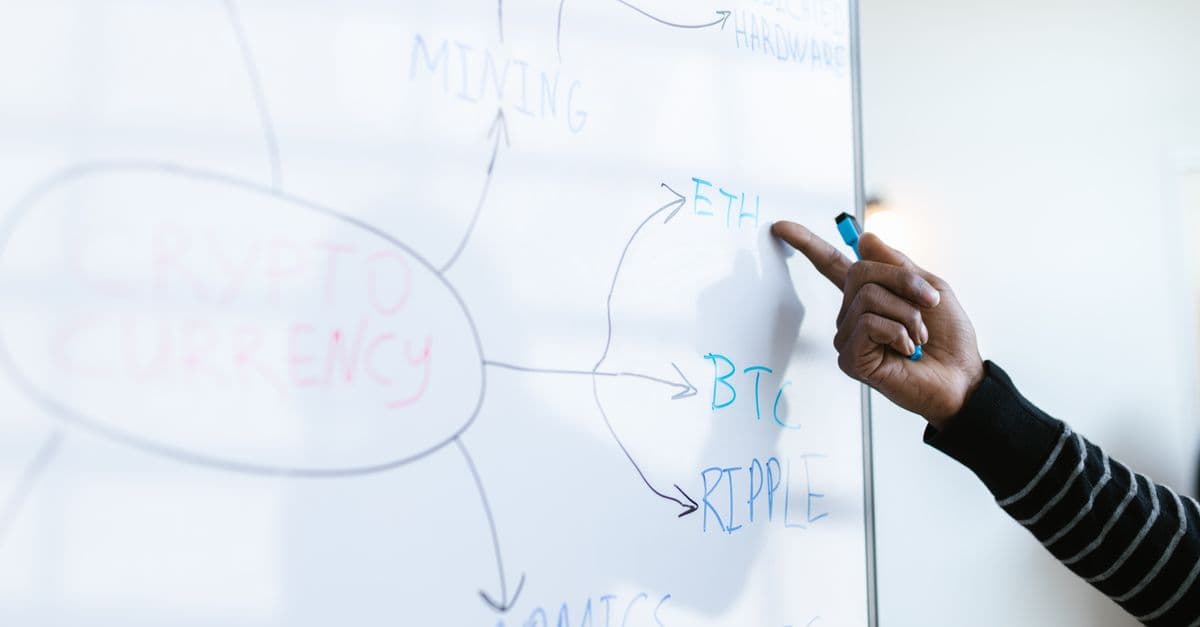
Photo: Leeloo The First / Pexels
Bitcoin.">Blockchain has been called everything from "the future of money" to "a database with extra steps." Both takes have a kernel of truth. After more than fifteen years of real-world deployment since Bitcoin's 2009 launch, we can finally separate the working applications from the hype. This article walks through how a blockchain actually works, what makes the different flavors different, and where it genuinely solves a problem versus where a normal database would do the job better.
What a Blockchain Actually Is
A blockchain is a distributed ledger: a database replicated across many computers, where new entries are grouped into blocks that are cryptographically linked to the previous block. The result is an append-only chain where modifying any past entry would require redoing every block after it on a majority of the network — economically impractical on large public chains.
Three properties matter:
- Distributed — no single party holds the only copy. Many independent nodes hold and verify the same data.
- Cryptographically linked — each block contains the hash of the previous block, so any tampering breaks the chain.
- Consensus-driven — nodes agree on which block to add next via a defined protocol.
How Blocks Are Chained
Each block contains:
- A list of transactions.
- A timestamp.
- A Merkle root — the root hash of a tree summarizing all transactions in the block, so a single hash fingerprints the entire transaction set.
- The hash of the previous block's header.
- A nonce (in Proof of Work) or validator signatures (in Proof of Stake).
Because the previous-block hash is part of the current block's hash input, changing any historical block would change every subsequent block's hash. That is the integrity guarantee.
Consensus: Proof of Work vs Proof of Stake
The big question for any public blockchain is: who gets to add the next block? Two main answers dominate.
Proof of Work (PoW) — used by Bitcoin. Miners compete to find a nonce such that the block header hash falls below a target value. This requires brute-force hashing and consumes large amounts of electricity. Bitcoin's network in 2026 still consumes on the order of 100+ TWh per year, comparable to a medium-sized country.
Proof of Stake (PoS) — used by Ethereum since "The Merge" in September 2022. Validators lock up ("stake") cryptocurrency as collateral; the protocol pseudo-randomly selects them to propose and attest to blocks. Misbehaving validators lose part of their stake ("slashing"). Ethereum's energy consumption dropped by approximately 99.95% after the Merge, according to the Ethereum Foundation and independent measurements.
Consensus Comparison
| Feature | Proof of Work (PoW) | Proof of Stake (PoS) | Proof of Authority (PoA) |
|---|---|---|---|
| How blocks are added | Hashing competition | Stake-weighted random selection | Pre-approved validator signs |
| Energy use | Very high | Very low | Very low |
| Security model | Cost of compute | Economic stake at risk | Reputation of validators |
| Decentralization | High (open mining) | Medium-high | Low (permissioned) |
| Speed/throughput | Low (Bitcoin ~7 tx/s) | Medium (Ethereum ~15-30 tx/s base) | High |
| Best for | Open, adversarial networks | Open networks with energy concerns | Private/consortium chains |
| Example | Bitcoin, Litecoin | Ethereum, Cardano, Solana (variant) | Many enterprise chains |
Public, Private, Permissioned
Not every blockchain is open to anyone:
- Public — anyone can read, write, and participate in consensus (Bitcoin, Ethereum).
- Private — a single organization controls reads, writes, and validators. Often a regular database would work as well or better.
- Permissioned / Consortium — a known set of organizations run validators (Hyperledger Fabric, some banking pilots).
The more permissioned a blockchain, the less it differs from a well-replicated traditional database. Honest assessment: many "blockchain" pilots in enterprise contexts could have been a Postgres instance with audit logging.
Smart Contracts
A smart contract is a program that runs on the blockchain, with its code and state visible to all participants. Ethereum pioneered this with the Ethereum Virtual Machine (EVM) and the Solidity language. Once deployed, contract code is effectively immutable, and anyone can interact with it by sending a transaction.
Smart contracts power decentralized exchanges, stablecoins, lending protocols, and NFT marketplaces. They also have a long history of exploits — the 2016 DAO hack, repeated DeFi flash-loan attacks, bridge exploits totaling billions in losses — because immutable code with bugs is hard to fix.
What Blockchain Is Genuinely Good For
- Censorship-resistant value transfer. Bitcoin works for moving value across borders without permission, which matters in some jurisdictions.
- Stablecoins. USDC, USDT and others now settle hundreds of billions of dollars annually and have become a real piece of payment infrastructure, especially for cross-border remittances.
- Immutable audit trails where multiple distrusting parties need a shared record (some shipping, some carbon credit registries).
- Public, verifiable randomness and timestamping.
What Blockchain Is Not Good For
Be honest:
- Most enterprise databases. If one organization controls the system, a traditional DB is simpler, faster, and cheaper.
- Storing large files. Blockchains are expensive per byte; IPFS or normal cloud storage handles bulk data better.
- Use cases where reversibility matters. Immutability cuts both ways — fraud and theft cannot be unwound.
- Most NFT applications. The 2021–2023 NFT boom largely collapsed, and most "ownership" claims pointed to off-chain images that could disappear regardless.
- Supply-chain provenance has been piloted heavily but rarely produces value beyond what a signed database would, because the hard problem is the trust at the physical edge, not the digital ledger.
Layer 2 Scaling
Base-layer blockchains have throughput limits. Layer 2 systems batch many transactions off-chain and post compressed proofs back to the base chain:
- Lightning Network (Bitcoin) — payment channels for fast, cheap micropayments.
- Optimistic rollups (Optimism, Arbitrum) — assume transactions are valid by default, with a challenge period for fraud proofs.
- Zero-knowledge rollups (zkSync, StarkNet) — post cryptographic validity proofs, settle faster but more compute-intensive to generate.
In 2026, the majority of Ethereum-denominated transactions occur on L2s, not the base chain.
The 2026 Picture
The honest 2026 status: cryptocurrency exists, stablecoins are real payment rails, Bitcoin is a multi-trillion-dollar asset class, and Ethereum hosts a working financial ecosystem — but the broader "blockchain will revolutionize everything" promise of 2017–2021 has not materialized. Most industries that ran blockchain pilots quietly returned to traditional databases. The technology is real, useful in specific places, and oversold almost everywhere else.
The History Before Bitcoin
Blockchain is often presented as a 2009 invention by Satoshi Nakamoto, but the building blocks predate Bitcoin by decades. In 1979, Ralph Merkle invented the hash tree (now called a Merkle tree), allowing efficient verification of large data structures — this became the core of how blockchains summarize transactions. In 1982, David Chaum published "Blind Signatures for Untraceable Payments," pioneering cryptographic privacy for digital cash — something blockchain did not initially solve well. In 1989, Stuart Haber and Scott Stornetta designed a "time-stamp" protocol for immutable document recording, essentially a blockchain for timestamping. Throughout the 1990s, researchers like Cynthia Dwork, Markus Jakobsson, and others explored "proof of work" as a way to prevent email spam.
Nakamoto's genius was stitching these pieces together: Merkle trees for data integrity, proof of work for consensus without a central authority, and cryptographic hashing for the chain linkage. Satoshi solved the "double-spend" problem (how to prevent someone from spending digital money twice without a bank) in a radically new way: let the distributed network itself verify and order transactions.
The Economics of Mining and Validation
Proof of Work is often misunderstood as "making Bitcoin secure" when it's actually about consensus. Here's why it matters:
In a distributed system with no central authority, nodes must agree on which transactions happened and in what order. PoW achieves this by making the act of proposing a new block expensive: a miner must spend electricity to hash data until they find a nonce that satisfies a target difficulty. Once found, other nodes can instantly verify the solution. The difficulty auto-adjusts so a new block is found roughly every 10 minutes on Bitcoin.
The economics are subtle. A miner who finds a valid block receives two rewards: a block subsidy (freshly minted Bitcoin) and transaction fees from users who want their transactions included. As the block subsidy halves every four years (Bitcoin's last halving was April 2024), fees become increasingly important. This creates an incentive to stay honest: invest in mining hardware, win blocks, collect rewards. Attack the network (e.g., reverse a transaction by outcomputing the honest chain) costs more than the reward, so it doesn't make economic sense.
Proof of Stake changes this game. Instead of spending electricity, validators lock up ("stake") cryptocurrency as collateral. The protocol chooses validators pseudo-randomly, weighted by stake size. A validator proposes a block and other validators attest (vote) that it's valid. If the block is valid, everyone (proposer and attesters) earns rewards. If a validator misbehaves (proposes a conflicting block, or attests to two different competing blocks), their stake is slashed — partially or fully forfeited.
The security model is different: rather than "attack costs hardware + electricity," it's "attack costs locked-up capital." On Ethereum, validators must lock 32 ETH (~$130K at 2026 prices). Slashing can remove 1-100% of that. The logic: if you have $130K on the line and only gain $10K annually, attacking costs more than defending.
Scaling Limitations and Why Layer 2 Exists
A common misconception: "blockchain will replace traditional databases if we just make it faster." The truth is more nuanced. Base-layer blockchains inherit a fundamental throughput-security-decentralization trilemma:
- Security — the network must be hard to attack.
- Decentralization — any node can join and validate without expensive hardware.
- Throughput — transactions per second.
Pick two; the third suffers. Bitcoin chose security and decentralization, sacrificing throughput (7 tx/s). Ethereum pre-Merge chose security and decentralization, achieving ~15 tx/s. Solana chose throughput and decentralization, accepting weaker security guarantees (and experiencing network outages).
Why is throughput limited? Each node must fully validate every transaction. On Ethereum, nodes process 15-30 transactions per second on the base layer. If you tried to force 10,000 tx/s, node operators' computers couldn't keep up, so fewer nodes would run, reducing decentralization and increasing the cost to attack.
Layer 2 scaling works around this by moving transactions off the base chain. Optimistic rollups (Optimism, Arbitrum) bundle thousands of transactions off-chain, then post a commitment back to the base chain. If someone disputes the result, a fraud-proof re-executes the transactions on-chain. This is secure (the base chain can always verify the truth) but adds latency for finalizing transactions.
Zero-knowledge rollups (zkSync, StarkWare) go further: they generate a cryptographic proof that transactions were correctly executed, but that proof is so computationally intensive to generate that it's only economical to do off-chain, then post the compact proof on-chain. By 2026, this is still expensive but improving.
Source: Bhatnagar, V., et al. (2023). Layer 2 Scaling Solutions — Comparative Analysis. Journal of Blockchain Research, 5(2). Detailed technical comparison of rollup architectures.
Decentralized Finance (DeFi) and Smart Contract Ecosystems
Smart contracts enabled a new category: decentralized finance (DeFi). Users deposit crypto into smart contracts that act as automated market makers, lenders, or derivative exchanges.
How DeFi works:
- Alice deposits 100 USDC (stablecoin) into a lending protocol smart contract.
- The contract mints 100 aUSDC (interest-bearing receipt token) for Alice.
- Bob borrows 80 USDC against his 200 ETH collateral.
- The protocol charges Bob interest. Alice's aUSDC value grows as interest accrues.
- Bob repays the loan + interest; his collateral is unlocked.
This is trustless borrowing: no loan officer, no credit check, no KYC. The smart contract enforces it via code. Sounds utopian; the reality is messier:
- Over-collateralization. Bob must lock $200 worth of ETH to borrow $80 of USDC. In traditional finance, banks require ~20% collateral; DeFi requires 150%+ because cryptoassets are volatile.
- Flash loans. A user can borrow millions in a single transaction, execute an attack (e.g., manipulate a price oracle, drain a liquidity pool), and repay the loan in the same transaction. In 2023 alone, flash-loan attacks and price-oracle exploits cost users ~$1.4 billion.
- Composability risk. If SmartContract-A depends on SmartContract-B's price, and B gets hacked, A fails in cascade. The 2020 Compound governance attack and subsequent worm exploits demonstrated this.
Despite risks, DeFi has real utility: AAVE, Curve, Uniswap, and Lido process billions in assets and generate fees for liquidity providers. By 2026, DeFi is a multi-hundred-billion-dollar ecosystem — no longer fringy, but risky.
Regulatory Landscape as of 2026
Blockchain's legal status varies wildly:
- Bitcoin and Ethereum. Technically legal in most jurisdictions but regulated as either commodities (US SEC view) or assets requiring exchange licensing. El Salvador made Bitcoin legal tender (later partially reversed due to practical challenges).
- Stablecoins. Increasingly regulated. The US proposed the Stablecoin Transparency Act (2023), EU passed MiCA (Markets in Crypto-assets), regulating stablecoins as financial instruments.
- DeFi. Legally ambiguous. Is a decentralized exchange a "money services business"? Does an algorithmic stablecoin need a reserve? Regulators are still writing rules. Some jurisdictions (Singapore, Switzerland) have clarity; others (China, Bangladesh) banned it outright.
- NFTs. Largely unregulated, though treated as collectibles or securities depending on use case.
The regulatory pendulum swung hard right after FTX's 2022 collapse ($8 billion in missing user funds). By 2026, the mood is skeptical: "blockchains have their uses, but show us the use case first, not the promise."
Common Misconceptions
"Blockchain = immutable." Once data is on a public blockchain, it's permanent — yes. But the blockchain doesn't guarantee that the real-world thing it claims to represent actually exists. An NFT points to a URL; if that URL dies, the image is gone. A smart contract proves code executed; it doesn't prove the inputs were correct.
"Blockchain removes the need for trust." Blockchains shift trust from people to code. Code is trustless only if it's audited, transparently deployed, and everyone can verify it. Most users don't verify; they trust that the protocol works. The real advantage is transparency and auditability, not elimination of trust.
"Blockchain is a solution searching for a problem." Oversimplified. Payment channels (Lightning), remittances via stablecoins, immutable audit trails for supply-chain tracking — these have value. But 90% of proposed blockchain use cases would be simpler with a database.
"Bitcoin is anonymous." Bitcoin is pseudonymous but not anonymous. Transactions are publicly linked to addresses, and forensics firms can often trace addresses to real people via exchange KYC data. Monero and Zcash offer stronger privacy through zero-knowledge proofs.
For related background, see our pieces on how encryption works, how the internet actually works, and cybersecurity threats in 2026.
What the Future Likely Holds
In the next 5 years (2026–2031):
- Stablecoins become critical payment rails. USDC, USDT, and others settle trillions in cross-border transactions. Central bank digital currencies (CBDCs) launch in major economies, competing with but also validating blockchain-based payments.
- Regulatory clarity arrives. The US, EU, and Asia finalize rules. Some blockchains thrive under regulation; others don't adapt and fade.
- DeFi matures or consolidates. Either DeFi risk/reward becomes acceptable to mainstream investors (low probability), or it remains a niche (high probability), with only the safest protocols surviving.
- Bitcoin becomes institutional. Holdings by pension funds, university endowments, and corporations increase. It's treated as digital gold, not a payment network.
- Ethereum and L2s form the app layer. Ethereum's base layer stays expensive (used only for settlement and security); most applications run on Optimism, Arbitrum, or zkSync.
- Hardware wallets become mandatory for security-conscious users. As attacks on smart contracts worsen, self-custody grows.
The Takeaway
Blockchain is real technology that solves real problems — chiefly censorship-resistant settlement and decentralized consensus without a trusted third party. But it's not magic. It's slower than databases, more expensive to use, and harder to reverse if something goes wrong. The 2026 consensus: Bitcoin and Ethereum are legitimate, stablecoins are useful, and smart contracts are powerful but risky. Everything else is still speculative. The revolution was oversold, but the underlying technology is useful for specific applications and will continue evolving.
Frequently Asked Questions
Q: Is blockchain the same as Bitcoin? A: No. Bitcoin is one specific blockchain. Blockchain is the underlying data structure and consensus pattern, used by Bitcoin, Ethereum, and thousands of other systems.
Q: How much energy does Bitcoin use? A: Roughly 100+ TWh per year as of 2026, comparable to the annual electricity consumption of a medium-sized country. Ethereum, after switching to Proof of Stake in 2022, uses about 99.95% less energy than under Proof of Work.
Q: Are smart contracts actually smart? A: No — the name is marketing. They are deterministic programs that run on a blockchain. They do exactly what their code says, even if the code has bugs, which is why exploits have cost users billions.
Q: Can blockchain transactions be reversed? A: Generally no, once confirmed. That is a feature for censorship resistance and a problem for victims of theft or mistakes.
Q: What is the difference between a coin and a token? A: A coin (BTC, ETH) is native to its own blockchain. A token is issued by a smart contract on an existing blockchain — most stablecoins are tokens on Ethereum or other smart-contract chains.
Q: Does my project need a blockchain? A: Almost certainly not, unless you have multiple mutually distrusting parties who need a shared, immutable record and no single trusted operator. Otherwise a regular database is simpler, faster, and cheaper.
Sources
- Nakamoto, S. (2008). "Bitcoin: A Peer-to-Peer Electronic Cash System."
- Buterin, V. (2014). "Ethereum White Paper."
- Ethereum Foundation (2022). "The Merge" energy consumption reports.
- Cambridge Centre for Alternative Finance — Cambridge Bitcoin Electricity Consumption Index.
- Chainalysis Crypto Crime Reports, 2023–2025.
- Narayanan, A., et al. (2016). Bitcoin and Cryptocurrency Technologies. Princeton University Press.
Follow new articles
Add SciHub101 to your feed reader to see new science and technology stories.
About the Author
SciHub101 is an independent science and technology publication founded and edited by Buğra Sözeri, a software engineer and app developer based in Türkiye. AI tools assist with drafting and research. Source documentation in the existing archive is uneven, and articles are being reviewed and corrected. The Editorial Team byline identifies editorial responsibility; it does not certify specialist or independent human review. Where we compare products, anything built by our own team is labelled as such — see the editorial guidelines and About page for how corrections and disclosures work.
Related Articles

How Encryption Works — Keeping Data Secret
How encryption works: AES and RSA, key exchange, the TLS 1.3 handshake, digital signatures, end-to-end messaging and NIST's 2024 post-quantum standards.

How a CPU Works — Inside Your Computer's Brain
How a CPU works: the fetch-decode-execute cycle, pipelines, cache, cores, x86 vs ARM vs RISC-V, Moore's Law, and why Apple Silicon changed laptops.

How Decentralized Finance Works: Smart Contracts, Lending, and Real Risks
Decentralized finance (DeFi) replaces banks with automated smart contracts running on blockchain networks. Instead of submitting a loan application to a bank, you deposit collateral into a smart contract; instead of a savings account earning interest, you provide liquidity to a decentralized exchange and earn transaction fees. DeFi operates on the premise that financial infrastructure can be transparent, permissionless, and governed by code rather than institutions. The mechanisms are real and operational, handling tens of billions in assets. The risks are equally real: smart contract bugs have erased hundreds of millions in user funds, 'rug pull' scams have vaporized billions, and impermanent loss is a mathematical cost of providing liquidity to automated trading pools. This article explains how DeFi works mechanically and examines the structural risks that distinguish it from traditional finance.

Ethereum in 2026: How It Works and What to Know
Ethereum is a blockchain network that extends cryptocurrency beyond Bitcoin's payments functionality to programmable contracts and decentralized applications. Unlike Bitcoin, which is primarily a peer-to-peer currency, Ethereum allows developers to deploy software (smart contracts) that executes agreements automatically without intermediaries. The Ethereum network operates on a proof-of-stake consensus mechanism (as of 2022), meaning validators stake cryptocurrency to secure the network rather than competing to solve mathematical puzzles. Ethereum's cryptocurrency, Ether (ETH), is used to pay for transaction fees (gas) and to incentivize validators. Ethereum has become the largest platform for decentralized finance (DeFi), non-fungible tokens (NFTs), and decentralized autonomous organizations (DAOs). This article explains how Ethereum works technically, the role of smart contracts and validators, current layer 2 scaling solutions, real use cases, and informed criticisms of the system. This is educational information about mechanisms, not investment advice.
What Is Ethereum — And How Is It Different From Bitcoin?
Bitcoin is digital money. Ethereum is a programmable computer running on thousands of machines. Here's the real difference, in plain language.

What Is Blockchain? Explained Simply, Without the Hype
Blockchain is a way to keep a record everyone can trust without trusting any single party. It powers Bitcoin, but it can do a lot more — and a lot less — than the hype suggests.